The Senecio viminalis, Kleinia longiflora and Curio avasimontanus (Asteraceae: Senecioneae) conundrum
Abstract
BACKGROUND: As part of an ongoing revision of Senecio, it is apparent that Senecio viminalis Bremek. is a distinct species. It was therefore surprising that together with Kleinia longiflora DC., Kleinia scottioides C.Jeffrey and Senecio garcianus Schltr. it has been listed as a synonym of Curio avasimontanus (Dinter) P.V.Heath in some of the world's main taxonomic databases. AIM & OBJECTIVES: To clarify the status of the names and synonyms in this species group and to provide a verifiable reference for nomenclature in taxonomic databases. METHODS: Specimens in the National Herbarium (PRE) and all available images of specimens from other herbaria (NBG, NH & SAM) and those on JSTOR were studied. Localities were obtained from the SANBI herbaria collections and the iNaturalist database. A distribution map was prepared in QGIS 3.22.7. Morphological observations were made in the field and from dried specimens and FAA collections. RESULTS: It is established that Senecio viminalis, Kleinia longiflora, Lopholaena cneorifolia and Kleinia scottioides are distinct and valid taxa, whilst Curio avasimontanus is a synonym of Lopholaena cneorifolia (DC.) S.Moore, and Senecio garcianus a synonym of Senecio viminalis. This study provides the corrected nomenclature, comparative descriptions and images to clearly distinguish the three species. CONCLUSION: Descriptions, illustrations and a distribution map for the three current southern African species are given with some notes on each species.
Compositae; databases; distribution maps; Lopholaena; nomenclature; taxonomic names; synonyms; taxonomy
Introduction
Numbering about 26 genera and 560 species, the Senecioneae are the largest tribe of Asteraceae in southern Africa (Koekemoer et al. 2023). Although some genera like Euryops (Cass.) Cass. and Othonna L. are clearly defined by their involucral bracts and cypsela morphology, the circumscription of many other genera like Kleinia Mill., Senecio L. and Lopholaena DC. is still uncertain (Hilliard 1977; Jeffrey 1979; Nordenstam et al. 2010; Pelser et al. 2007, 2010). Senecio is a very large complex genus from which several genera have been separated in recent years: Bolandia (Cron et al. 2006), Capelio (Nordenstam 2002), Caputia (Nordenstam & Pelser 2012), Curio (Heath 1997), Mesogramma (Nordenstam & Pelser 2005) and Oresbia (Cron & Nordenstam 2006). Most species of Senecio have radiate capitula and bright yellow florets, but there are many with pink rays and discoid capitula with purple or lilac florets. The genus includes herbs, shrubs, rhizomatous species and succulents, and scientists have yet to find an acceptable phylogeny for the whole genus.
The three genera under discussion in this paper all share the common tribal character of uniseriate bracts and their placing in the tribe is not disputed. Lopholaena species have white florets with lobes that are not spreading and capitula that lacks calyculus bracts while species of Kleinia have discoid capitula with red, yellow or cream florets, spreading lobes and minute calyculus bracts. This genus is probably not monophyletic and further molecular studies are needed to support this.
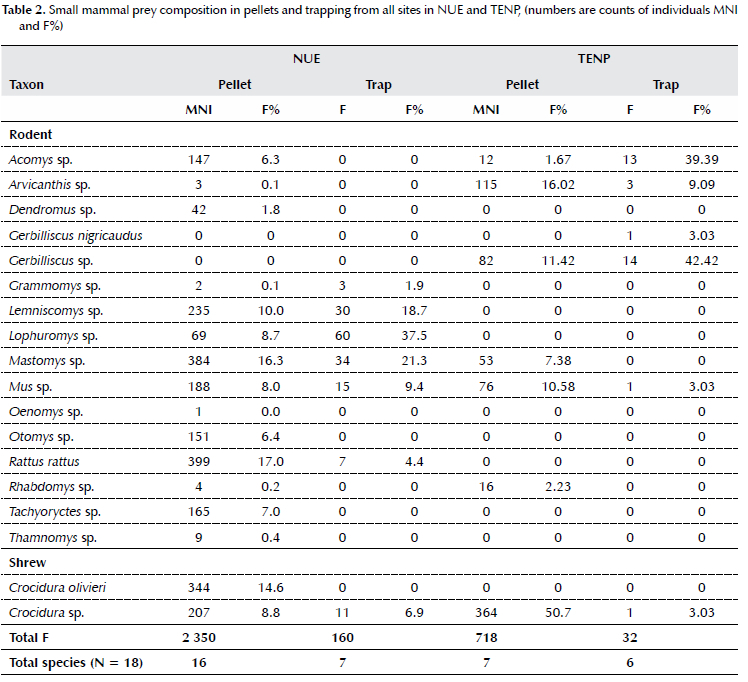
Databases of taxonomic names generally follow taxonomic revisions, but this is not always the case. In one such example from the 'Catalogue of Life' (CoL 2015, Orrell et al. 2018), Curio avasimontanus (Dinter) P.V.Heath is listed as a current name, with Kleinia longiflora DC., Kleinia scottioides C.Jeffrey, Othonna avasimontana (Dinter) Dinter, Senecio avasimontanus Dinter, Senecio garcianus Schltr., Senecio longiflorus (DC.) Sch. Bip., Senecio viminalis Bremek. and Cineraria angulosa E.Mey. ex DC. (ambiguous) as synonyms. This catalogue listed its source data as 'World Plants: Synonymic Checklists of the Vascular Plants of the World' (Hassler 2025). Other major databases that were consulted vary in the status they accord these names (Table 1). Accordingly, I have examined the taxonomic status of these taxa and present the findings of this study.
Materials and methods
Specimens in the National Herbarium (PRE) [abbreviations following Tiers (2023)] and all available images of specimens from other herbaria (NBG, NH & SAM) and those on JSTOR (2024) were studied. Images of all relevant type specimens were seen. Type specimens for accepted names are illustrated. Lectotypification for Senecio viminalis is formalised.
Localities were obtained from the SANBI herbaria collections, downloaded from BODATSA (SANBI 2024), as well as records on the iNaturalist database (https://www.inaturalist.org/observations, accessed June 2025). The distribution map was prepared in QGIS 3.22.7. 'Southern Africa' refers to the floristic region that includes Botswana, eSwatini, Lesotho, Namibia and South Africa. Taxon author abbreviations and protologue citations follow IPNI (https://www.ipni.org). A small selection of specimens is selected for each species to reflect important morphological characteristics.
Morphological observations were made in the field, also on material collected in Formalin Acetic-Alcohol and dried specimens. Where applicable, terminology follows Bremer (1994) and Beentje (2016). Leaf measurements were made on dry material from leaves in the mid portion of the stem. Leaf width is measured across the broadest section. Leaf length measurements excludes the petiole. At least 10 specimens per species were measured.
Results
It is clear that users should not blindly follow and copy information from taxonomic world databases, which are not founded on taxonomic revisions. For South Africa, BODATSA is the accepted database to follow. This database is continuously updated according to the latest revisions. In cases where there are disputes or alternative published opinions, the publications are discussed amongst experts before a consensus revision is incorporated (Victor et al. 2024).
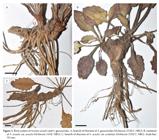
Lopholaena cneorifolia (DC.) S.Moore (Figure 1) was first described as Doria cneorifolia DC. (Candolle, 1838), but the name was later transferred to Othonna by Schulz (1844) and subsequently to Hertia (Kuntze 1891) before it was included in Lopholaena (Moore 1904). The nomenclature associated with this taxon gives some indication to the unstable generic circumscriptions in the tribe.

In their revision of Lopholaena, Phillips and Smith (1934) treated Senecio avasimontanus Dinter (1923) (Figure 2) and the later combination Othonna avasimontana (Dinter) Dinter (1928) as synonyms of L. cneorifolia. This taxonomy was rejected without comment by Heath (1997), who transferred the name S. avasimontanus to the new genus Curio as Curio avasimontanus (Dinter) P.V.Heath, thereby reinstating the taxon as distinct from L. cneorifolia. This treatment led to the subsequent incorrect application of the name.
Kleinia longiflora DC. (Candolle 1838) (Figure 3) was regarded as a species of Senecio (Schultz, 1845) for a short period before it was transferred back to Kleinia. This taxon is morphologically very different from most species in the genus, but similar to other stem-succulent Kleinia species like K. odora DC. (Arabia and tropical Africa) and K. squarrosa Cufod. (tropical Africa) (Halliday 1988). K. longiflora only occurs in Africa south of the equator and is distinguished by its creamy-white florets with spreading lobes, and sessile lanceolate leaves, 20-33 × 6-9 mm.
Senecio viminalis Bremek. (Figure 4) was described by Bremekamp (1935) from plants collected on the Soutpansberg in Limpopo province, South Africa. The unpublished manuscript name 'Senecio garcianus' also applies to this species and appears on a specimen collected by Rudolf Schlechter in Ressano Garcia (Maputo, Mozambique). These two remote areas cover the eastern and western extremes of the distribution range of the species.
Kleinia scottioides C.Jeffrey was described relatively recently (Jeffrey 1986) from Kenya (Figure 5). It occurs outside the southern African floristic region and is not included in the taxonomic section of this paper.
The three species treated here are very distinct and cannot be confused with each other or with other species in the respective genera (Phillips & Smith 1934; Halliday 1988; Bremekamp 1935). A summary of the distinguishing characters is given in Table 2. Their distribution in southern Africa is shown in Figure 6. Kleinia longiflora is the most widespread of the three species, occurring through western and interior southern Africa north to tropical Africa. Its distribution overlaps with that of Lopholaena cneorifolia in the west and Senecio viminalis in the east. Whilst it may share the same habitat as L. cneorifolia it prefers a drier habitat than S. viminalis.
Taxonomic treatment
Kleinia longiflora
Kleinia longiflora DC., Prodromus systematis naturalis regni vegetabilis [A.P. de Candolle] 6: 337 (1838). Senecio longiflorus (DC.) Sch.Bip. in Flora 28: 499 (1845). Type: South Africa, Northern Cape, 'Cap. Bonae Spei in regione Trans-Gariepina inter Klaarwater et Nu-Gariep', Burchell 1718 (G-DC [G00471377], holo.-image!). Figure 7.
Local names
Sjambok bush; sambokbossie (Afrikaans).
Description
Multi-stemmed, tufted, copiously branched, succulent shrub up to 1.5 m tall. Stems erect or sprawling, terete, up to 10 mm diam., smooth, with abscission scars of old inflorescences or leaves at regular intervals, glaucous with intermittent clear (or dark purplish in older plants) and white-dotted longitudinal lines, up to 10 mm diam. Leaves short-lived, rarely present at the flowering stage, subsessile, oblong-elliptic, acuminate, fleshy, with prominent midvein, 20-33 × 6-9 mm, glossy. Inflorescence of 2 to 18 capitula in terminal, sub-terminal or lateral corymbs. Capitula subsessile, discoid, narrowly cylindrical, 14-22 mm long, ± 5 mm diam. Involucre smooth with 3 to 6 scale-like calyculus bracts. Involucral bracts 6 or 7 in a single series, 15-20 mm long, fused at the very base, persistent and spreading star-like after releasing the achenes. Disc florets 6(-15), creamy white to yellowish, protruding beyond the bracts, lobes short, spreading; style yellow, with long style arms, tips triangularly tufted. Pappus bristles 21-33 mm long, silky, exserted for almost whole length at maturity. Achenes ribbed, sparsely hairy between ribs.
Flowering time
Mainly July to October, but also in other months.
Distribution and habitat
Limpopo, North West, Gauteng, Mpumalanga, Free State, Northern Cape, Western Cape, Eastern Cape, Botswana, eSwatini, Lesotho, Namibia, Mozambique, Zimbabwe; favouring arid environments and rocky areas in a wide variety of biomes, mainly Savanna, Grassland, Succulent Karoo, Desert and Nama-Karoo. Alt 250-1 880 m.
NotesKleinia longiflora is by far the most common species of the genus in southern Africa, extending its distribution into Angola, Malawi, Zambia and Zimbabwe. Species of Kleinia Mill. are categorised into two subgenera (Halliday, 1988). The first subgenus (Notonia) has large, long-pedunculate capitula with 20 or more bright yellow or red florets (e.g. the South African species: K. cephalophora Compton, K. fulgens Hook.f. and K. galpinii Hook.f.). Species of this subgenus are distributed throughout Africa, Arabia, Canary Islands, Madagascar, Socotra, India and Sri Lanka. The second subgenus (Kleinia) has narrow subsessile capitula like K. longiflora with mostly fewer than 10 yellowish or cream-coloured florets, and most of the species are distributed outside the southern African region, e.g. K. madagascariensis (Humbert) P.Halliday (Madagascar), K. neriifolia Haw. (Spain, Portugal & Canary Islands), K. odora (Forssk.) DC. (Kenya, Uganda, Ethiopia, Yemen & Arabian Peninsula) and K. scottii (Balf.f.) P.Halliday (Socotra).
Selected voucher specimens
BOTSWANA, c. 19 km S of Botswana border on Plumtree-Francistown road, 5 Oct. 1960, Leach 10483 (PRE).
ESWATINI, Mbabane, Komati Old Ferry, 26.38°S, 31.13°E, 3 Oct. 1962, Compton 30506 (PRE).
SOUTH AFRICA, Free State: Bethulie, Tussen Die Riviere Wildtuin, 30.38°S, 26.13°E, 14 Nov. 1970, Roberts 5363 (PRE). Northern Cape: Richtersveld, Tatasberg, southern slope among large rocks, 28.38°S, 17.38°E, 4 Oct. 1991, Germishuizen 5368 (PRE). Kimberley, Wimbledon Farm, 1 Oct. 1950, Badenhorst 60 (PRE); Namaqualand, Springbok, Hester Malan Reserve, 29.63°S, 17.88°E (-DB) 28 Oct. 1974, Rosch & Le Roux 1086 (PRE). North West: Makhubung, 25.91°S, 25.53°E, 20 Sept. 2017, Ndou 35 (PRE). Western Cape: Murraysburg District, Rietfontein Farm, 32.13°S, 23.63°E, 13 Oct. 1983, Retief & Reid 517 (PRE).
Lopholaena cneorifolia
Lopholaena cneorifolia (DC.) S.Moore in Bulletin de l'Herbier Boissier ser. 2, 4(10): 1021 (1904). Doria cneorifolia DC., Prodromus [A.P. de Candolle] 6: 470 (1838). Othonna cneorifolia (DC.) Sch.Bip. in Flora oder algemeine botanische Zeitung 27: 769 (1844). Hertia cneorifolia (DC.) Kuntze, Revisio generum plantarum 1: 344 (1891)). Type: South Africa, Northern Cape, 'Camisbergen' [Kamiesberg], Drege (G-DC [ G00473706], holo.-image!). Figure 8.
Senecio avasimontanus Dinter in Repertorium specierum novarum regni vegetabilis 19: 141 (1923). Othonna avasimontana (Dinter) Dinter in Repertorium specierum novarum regni vegetabilis, Beiheft 53: 112, in obs. (1928). Curio avasimontanus (Dinter) P.V.Heath in Calyx 5(4): 136 (1997). Type: Namibia, 'Great Namaqualand: Aus, on granite mountains', 5 Jul. 1922, K. Dinter 3573 (B100094267-image!, lecto., designated here; B100094266, HBG-504905-image!, PRE0207620-0!, PRE0587527-0!, isolecto.). Figure 2.
The Dinter 3573 specimen (sheet B100094267) is chosen as lectotype as it includes a description and two branches of a flowering plant. In his original description Dinter (1923) also quoted Dinter 2946, but this specimen is sterile.
Local names
Gariep fluff bush; springbokbossie, vaalbos (Afrikaans)
Description
Erect, rigid, bushy shrub, up to 1.2 m high, generally with a single main stem branching copiously near the ground and along the stems, glabrous in all parts, lower branches mostly nude with remnants of old leaf bases, upper branches closely leafy. Leaves sessile, linear to narrowly or broadly lanceolate-oblanceolate, flattened to almost cylindrical, 27-60(-96) × 2-9 mm, obtuse to acute, fleshy-coriaceous, with distinct midrib, glabrous and glaucescent. Inflorescence a terminal, dense panicle of 3-25(60) heads, often partly hidden by leaves. Capitula discoid, 6(8)-flowered, 12-19 mm long. Involucre cylindric-campanulate, without calyculus; bracts 5 or 6, in a single series, lanceolate to oblong-lanceolate, 12-19 mm long, acuminate, fused at very base only, margins winged, wings ± half the width of bracts, translucent, becoming almost woody at maturity, persistent after fruiting, calyculus bracts absent or reduced to 1 or 2 scales in the central part of the pedicel. Disc florets creamy white, upper half exserted from involucral and inflated at maturity, lobes short, erect, closing around style. Pappus of silky bristles, in many rows, 12-14 mm long, ± as long as involucral bracts, exserted more than half at maturity. Achenes cylindric, 6-8 mm long, densely white-tomentose.
Flowering time
April to December, with the peak between July and September.
Distribution and habitat
From the Lüderitz and Aus areas in Namibia through Namaqualand to near Garies in Northern Cape, South Africa, with a disjunct eastern distribution in the Postmasburg District; favouring rocky soils and crevices on large granite rocks and is often found in deep sand amongst rocks. Figure 6.
Selected voucher specimens
NAMIBIA, Aus, 5 mi. [8 km] S of Aus and N of farmhouse Kubub, 26.63°S, 23.38°E, 12 Aug. 1959, Giess & Van Vuuren 796 (PRE); S of Lüderitz, Diamond area no. 1, E of Klinghardt Mountains, 27.44°S, 16.04°E, 5 Aug. 2001, Burgoyne 8344 (PRE); Windhoek District, Regenstein WIN 32 FA, auf Gipfel von Grossherzog Friederichberg, 22.63°S, 17.13°E, 2 Jul. 1972, Giess 12345 (PRE); Windhoek, Grossherzog Friedric, Regenstein Farm WIN 32, 22.63°S, 17.13°E, 1 Sept. 1974, Giess 13583 (PRE); Regenstein, 22.63°S, 17.13°E, 22 Aug. 1972, Merxmueller & Giess 28009 (PRE).
SOUTH AFRICA, Northern Cape: Richtersveld, Stinkfonteinberge, SW of Van Zylsrus, upper E slopes and summit ridge, 28.63°S, 17.13°E, 4 Sept. 1977 Oliver, Tolken & Venter 642 (PRE); Olifantshoek; 10 km vanaf Olifantshoek na Upington, 28.13°S, 22.63°E, 12 Jul. 1982, Van Wyk 5723 (PRE); Witsand, between Volop and Olifantshoek, 28.67°S, 22.37°E, 1 Jul. 1985, Fabricius 13666 (PRE); Ouplaas Farm 304, Relevé: 210/43, 28.13°S, 23.38°E, 26 Apr. 1981, Gubb 210/43 (PRE); 'Lime Acres', Britz Game Farm, 28.38°S, 23.42°E, 20 Aug. 2003, Zietsman & Preece 219 (PRE); 5 km N of Concordia, 29.38°S, 17.88°E, 20 Jun. 1992, Bruyns 5159 (PRE); Goegap Nature Reserve, foothills of Carolusberg, 29.64°S, 18.00°E, 7 Oct. 2015, Koekemoer 4741 (PRE); 3 mi [4.8 km] E of Kamieskroon on W slope of Kamiesberg, 24 Sept. 1948, Acocks 14982 (PRE).
Senecio viminalis
Senecio viminalis Bremek. in Annals of the Transvaal Museum 15: 263 (1933). Type: South Africa, Limpopo Province, 'Zoutpansberg [Soutpansberg], Waterpoort, 22 Jan. 1931, Bremekamp & Schweickerdt 308 (Transvaal Museum number 29775), PRE0228182-0!, lecto., designated here; PRE0587156-0 (Herbarium Universitas Pretoriensis 2458)!, isolecto. Figure 9.
Senecio garcianus Schltr. ms.
NotesNo holotype was designated, and the name is therefore lectotypifed here. The specimen originally deposited at the Transvaal Museum had 'Type!' written after the taxon name and 'Holo' in pencil above the label and was therefore selected over the other specimen originally held at the University of Pretoria. Both specimens are currently in PRE.
It is unlikely that S. viminalis will remain in the genus Senecio, but pending clarification through molecular studies it is premature to make a taxonomic change at this stage. The taxon shares several characters, viz. stem morphology, discoid capitula, capitulum dimensions, white florets, pappus exserted well above involucre at maturity, and style tip morphology with Kleinia longiflora, but the distinctive floret shape is shared with Lopholaena species.
Local names
Leafless climbing senecio; umhlambamasi, uqobaqoba (Zulu)
Description
Much-branched, vigorous succulent trailing or scrambling shrub. Stems flexible, terete, glabrous, up to 10 mm diam., mostly bare with leaves on the new growth only, with clear sap, easy to snap or break off and spreads vegetatively. Leaves short-lived, broadly spathulate to suborbicular, contracted abruptly at base to a short petiole, 13-44 × 6-14 mm, mucronate, succulent, glabrous, glossy, dark green, margins entire, wavy. Inflorescence of 3 to 40 capitula in compact corymbose terminal panicles. Capitula discoid, 6-flowered, peduncle 2-6 mm long. Involucre narrowly cylindric, 5, in a single series, oblong-lanceolate, 11-17 mm long, receptacle succulent, calyculus of a few very small scales. Disc florets 6, white, strong sweet-scented, exserted from involucre for at least their length, inflated in uppermost part, lobes folding tightly around style, style tip tufted. Pappus of several rows of silky bristles, obscured by involucre at flowering time, exserted at fruiting stage, up to 19-31 mm long. Achenes up to 6 mm long, cylindric, ribbed, glabrous.
Flowering time
October to January.
Distribution and habitat
Extending from the Soutpansberg range in Limpopo, South Africa, through Mpumalanga to KwaZulu-Natal, Eswatini and Mozambique; occupies various habitats from dry thicket and bushveld to river margins, palm fields and coastal plains, at altitudes from sea level to about 1 200 m above. Plants occasionally grow in dense clumps but are mostly found scrambling over shrubs or into trees. The soft and juicy young growth and leaves are browsed by game. Figure 6.
Selected voucher specimens
ESWATINI, Stegi District, Malinda Hills, 26 Jan. 1954, Codd 8378 (PRE); Malinda Hill, 9 Feb. 1957, Compton 26666 (PRE); Hlatikulu District, Ingwavuma Poort, 9 Feb. 1957, Compton 29080 (PRE).
SOUTH AFRICA, KwaZulu-Natal: Vryheid Lebombo Mts., Louwsburg, between Pongola and Mkuze, 27.58°S, 31.29°E, 19 Jan. 1977, Balsinhas 3097 (PRE); Zululand District, Eshowe, 28.89°S, 31.47°E, 1 Jul. 1945, Smith 8802 (PRE); Limpopo: Tshituni District, 22.88°S, 30.05°E, 30 Dec. 1980, Mugwedi 1351 (PRE); Soutpansberg District, Farm Mooiplaas, at entrance gate from N1, 22.95°S, 29.92°E, 12 Feb. 1992, Hahn 313 (PRE); Venda, Nwanedi National Park, SE Gate, 22.58°S, 30.42°E, 15 Jan. 1989, Hardy 6883 (PRE); Soutpansberg District, Wyliespoort, 4.5 mi. [7.2 km], E of Post Office Wyliespoort, 25 Dec. 1960, Baylis 10616 (PRE); Kremetartboom 455 FA, 20 km E of Hoedspruit, 24.37°S, 31.10°E, 26 Feb. 1979, Zambatis 875 (PRE).
Competing interests
The author has no personal or financial conflict of interest in writing this article.
Acknowledgements
A special word of thanks to all the iNaturalist observers who take the time to contribute images. These images are a very valuable source of information of the variation and distribution of plant species. Reviewers are thanked for constructive criticism and comments.
References
- Beentje, H., 2016, The Kew plant glossary, an illustrated dictionary of plant terms, ed. 2, Kew Publishing, Kew.
- Bremekamp, C.E.B., 1933, 'New or otherwise noteworthy plants from the Northern Transvaal', Annals of the Transvaal Museum, 15, pp. 233-264.
- Bremer, K., 1994, Asteraceae: cladistics and classification, Timber Press, Portland, Oregon.
- Candolle, A.P. de, 1838 [1837], 'Compositae', Prodromus systematis naturalis regni vegetabilis, 6, 337, 470, 687, Treuttel et Würtz, Paris.
-
Catalogue of Life (CoL), 2015, viewed 25 June 2025, http://www.catalogueoflife.org.
» http://www.catalogueoflife.org - Cron, G.V., Balkwill, K. & Knox, E., 2006, 'Bolandia (Asteraceae, Senecioneae): a new genus endemic to southern Africa', Novon 16, 224-230.
- Cron, G.V. & Nordenstam, B., 2006, 'Oresbia, a new South African genus of the Asteraceae, Senecioneae', Novon 16, 216-223.
- Dinter, K., 1923, 'Senecio avasimontanus', Repertorium specierum novarum regni vegetabilis, 19, 141.
- Dinter, K., 1928, 'Othonna avasimontana', Repertorium specierum novarum regni vegetabilis, Beiheft, 53, 112.
- Halliday, P., 1988, 'Noteworthy species of Kleinia', Hooker's icones plantarum 39, 4, 128-132, Whitstable Litho Ltd., Whitstable, Kent.
-
Hassler, M., 2025, World Plants, synonymic checklist and distribution of the world flora, version 18.2, viewed on 25 June 2025, https://www.worldplants.de.
» https://www.worldplants.de - Heath, P.V., 1997, 'Three new generic names in Asteraceae (part 1)', Calyx 5,4, 136, 137.
- Hilliard, O.M., 1977, Compositae in Natal, University of Natal Press, Pietermaritzburg.
- Jeffrey, C., 1979, 'Generic and sectional limits in Senecio (Compositae): II. Evaluation of some recent studies', Kew Bulletin 34, 49-58.
- Jeffrey, C., 1986, 'Kleinia scottioides', Kew Bulletin 41,4, 925.
-
JSTOR, 2024, 'Global Plants', viewed June 2025, http://plants.jstor.org.
» http://plants.jstor.org - Koekemoer, M., Steyn, H.M. & Bester, S.P., 2023. Flowering plant families of southern Africa, Strelitzia 46, South African National Biodiversity Institute, Pretoria.
- Kuntze, O., 1891, Revisio generum plantarum 1,1, 344, Arthur Felix, Leipzig.
- Nordenstam, B., 2002, 'Capelio B. Nord., a new name for a South African genus of the Senecioneae, and the description of a new species', Compositae Newsletter 38, 71-78.
- Nordenstam, B. & Pelser, P.B., 2005, 'Dauresia and Mesogramma: one new and one resurrected genus of the Asteraceae-Senecioneae from southern Africa', Compositae Newsletter 42, 74-88.
- Nordenstam, B. & Pelser, P.B., 2012, 'Caputia, a new genus to accommodate four succulent South African Senecioneae (Compositae) species', Compositae Newsletter 50, 56-60.
- Nordenstam, B., Pelser, P., Kadereit, J.W. & Watson, L., 2010, 'Chapter 34: Senecioneae', In V.A. Funk, A. Susanna, T.F. Stuessy & R.J. Bayer (eds), Systematics, Evolution and Biogeography of Compositae, (pp. 503-521), IAPT, Vienna, Austria.
- Moore, S., 1904, 'Compositae', Bulletin de l'Herbier Boissier ser. 2,4, 1021.
- Orrell, T.M., Roskov, Y.R. & Abucay, L. (eds), 2018, Species 2000 & ITIS Catalogue of Life Naturalis, Leiden, The Netherlands.
-
Pelser, P.B., Nordenstam, B., Kadereit J.W. & Watson, L.E., 2007, 'An ITS phylogeny of tribe Senecioneae (Asteraceae) and a new delimitation of Senecio L.', Taxon 56, 1077-1104, https://doi.org/10.2307/25065905.
» https://doi.org/10.2307/25065905 -
Pelser, P.B., Kennedy, A.H., Tepe, E.J., Shidler, J.B., Nordenstam, B., Kadereit, J.W. & Watson, L., 2010, 'Patterns and causes of incongruence between plastid and nuclear Senecioneae (Asteraceae) phylogenies', American Journal of Botany 97,5, 856-873, https://doi.org/10.3732/ajb.0900287.
» https://doi.org/10.3732/ajb.0900287 - Phillips, E.P. & Smith, C.A., 1934, 'A revision of the genus Lopholaena DC', Transactions of the Royal Society of South Africa 21, 221-238.
- Schultz Bipontinus, C.H., 1844, 'Enumeratio Compositarum', Flora oder algemeine botanische Zeitung 27, 767-786.
- Schultz Bipontinus, C.H., 1845, 'Compositae' Flora oder algemeine botanische Zeitung 28, 497-512.
-
South African National Biodiversity Institute (SANBI), 2024, 'Botanical Database of southern Africa (BODATSA)', [dataset], http://posa.sanbi.org.
» http://posa.sanbi.org -
The International Plant Names Index and World Checklist of Vascular Plants (IPNI), 2023, viewed on 25 June 2025, http://www.ipni.org and https://powo.science.kew.org.
» http://www.ipni.org -
Thiers, B., 2023 (continuously updated), 'Index herbariorum: A global directory of public herbaria and associated staff: New York Botanical Garden's Virtual Herbarium', viewed 25 June 2025, http://sweetgum.nybg.org/ih.
» http://sweetgum.nybg.org/ih -
Victor, J.E., Klopper, R.R., Winter, P.J.D. & Le Roux, M.M., 2024. 'The plant checklist: Building the foundation of botanical knowledge in South Africa', Taxon 73, 4, 943-948, https://doi.org/10.1002/tax.13169.
» https://doi.org/10.1002/tax.13169

Accepted: 8 June 2026
Published: 30 September 2026