Exploring gender differences in visio-spatial intelligence and gaze behaviour: A review of existing research
Abstract
BACKGROUND: Previous research has explored gender differences in visuo-spatial intelligence and gaze behaviour; however, no comprehensive review has synthesised findings across parameters or examined their underlying causes. AIM: This review critically evaluates literature on gender differences in gaze behaviour and visuo-spatial intelligence. It integrates findings from visual software (cognitive and perceptual processes) and visual hardware (biological and physiological capacities), identifies methodological inconsistencies, and examines sociocultural moderators influencing performance. A dual-framework approach is proposed to explain the interaction between these domains. METHOD: Electronic searches were carried out across multiple databases, including Current Contents, ScienceDirect, EBM Reviews, CISTI Source (1990-February 2025), Google Scholar, SportDiscus (1990-February 2025), PubMed (1990-February 2025), the Cochrane Database of Systematic Reviews, and various international e-catalogues. RESULTS: Seventy-seven full-text articles were reviewed. Consistent gender differences were observed in both biological capacities and cognitive strategies, although methodological variations contributed to inconsistencies. Sociocultural factors such as play experience and training exposure were identified as influential moderators. CONCLUSION: Gender differences in visio-spatial skills reflect biological, cognitive and social influences. An interactionist framework is recommended for future research. CONTRIBUTION: This review advances understanding by introducing the distinction between 'visual hardware' and 'visual software', critically evaluating eye-tracking research and proposing a more nuanced interactionist framework for future investigations.
visio-spatial intelligence; gaze behaviour; vision; visual skills; gender differences
Introduction
Vision is a multifaceted cognitive process that involves not only the perception of images, but also their interpretation and comprehension. While sight refers to the sharpness of an image projected onto the retina,123
Visio-spatial intelligence refers to the capacity to receive, comprehend and manipulate visual and spatial information. It requires abilities such as pattern recognition, environmental navigation and mental rotation of objects.4556
Research has consistently demonstrated cognitive differences between men and women, with these disparities persisting into adulthood.78,9 Studies on visio-spatial ability indicate that men perform better in spatial reasoning tasks such as geographic orientation and navigation.10,11 For instance, men are more adept at navigating unfamiliar environments using landmarks and spatial cues.11
Evidence suggests that these cognitive differences become more pronounced during adolescence, highlighting the influence of both biological and environmental factors on cognitive development.1213
Gaze behaviour refers to the patterns and movements of a person's eyes when observing objects, scenes or people. It encompasses various aspects of visual attention, including where individuals direct their gaze, the duration of their focus on specific areas and the transitions of their eyes between different points.14,15 While gaze perception generally triggers a strong and automatic shift in spatial attention, there are noticeable individual differences in the extent of this response.161718
This review seeks to determine the degree of gender disparities in visio-spatial intelligence197,12 no thorough review has systematically compiled these findings across visual software (cognitive and perceptual processing strategies) and visual hardware (biological and physiological capacities) or examined how these domains interact. Because of methodological differences, a lack of integration of biological and sociocultural moderators and a lack of focus on task-specific contextual factors, existing evidence is even less consistent. To fill in these gaps, this review synthesises previous and current research and suggests a refined dual-framework approach that makes a distinction between visual software and visual hardware to provide a more coherent and clear understanding of gender differences in gaze behaviour and visio-spatial intelligence.
Research methods and design
A comprehensive literature review was conducted to examine gender differences in visio-spatial intelligence and gaze behaviour. Electronic searches were performed across multiple databases, including Current Contents, ScienceDirect, EBM Reviews, CISTI Source (1990-2025), Google Scholar, SportDiscus (1990-2025), PubMed (1990-2025), Cochrane Database of Systematic Reviews and various international e-catalogues.
The search strategy involved keyword combinations using Medical Subject Headings (MeSH), including 'gender differences', 'vision', 'males', 'females', 'depth perception', 'eye coordination', 'gaze behaviour', 'visual skills', 'accommodation facility', 'fixation skill', 'saccadic eye movements', 'visual perception', 'reaction time', 'peripheral awareness', 'visual memory' and 'concentration'. These terms were refined and systematically merged for the final search. Only peer-reviewed articles published in English were included. Relevant original studies were identified, categorised and selected for further analysis.
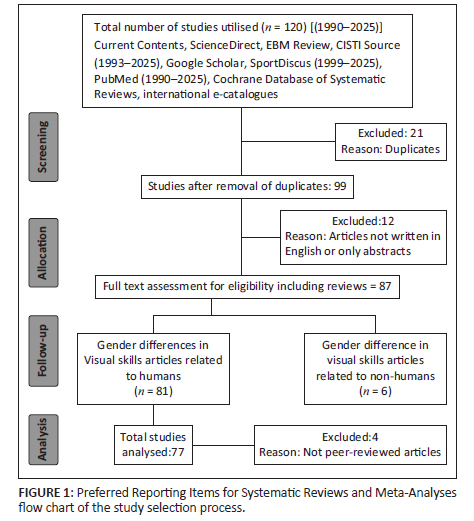
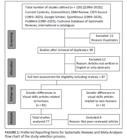
An overview of the article selection process is illustrated in Figure 1.
Inclusion criteria
Studies were included in this review if they met a defined set of inclusion criteria designed to ensure both scientific rigour and contextual relevance. Eligible studies involved participants across all age groups, including children, adolescents, adults and older adults, and included both male and female subjects. Research encompassing both clinical and non-clinical populations was considered, provided that the study investigated the impact of sex or gender on visio-spatial intelligence, gaze behaviour or related cognitive functions. In addition, studies were required to address biological, social, educational or cultural factors that may influence visio-spatial intelligence and gaze behaviour. Only studies written in English or accompanied by accessible full-text translations were considered. To ensure quality and reliability, included studies had to be published in peer-reviewed journals, academic conference proceedings or other credible scholarly sources. Finally, publications from the past 10 to 15 years were prioritised to maintain contemporary relevance, although seminal or foundational works were also included where appropriate to provide historical context.
Exclusion criteria
Studies were excluded from this review if they failed to meet specific relevance and quality criteria. Specifically, studies were omitted if they did not explicitly focus on gender differences in visio-spatial intelligence and gaze behaviour, or if they examined general intelligence without a direct emphasis on visio-spatial skills. Research that addressed visio-spatial abilities and gaze behaviour in contexts unrelated to cognitive intelligence, such as purely motor tasks or spatial activities lacking cognitive assessment, was also excluded. Studies investigating neurological or clinical disorders were not considered unless they directly examined gender differences in visio-spatial intelligence and gaze behaviour. In addition, studies conducted solely on non-human subjects were excluded, as were unpublished works, including dissertations, conference abstracts lacking full papers, opinion pieces and editorials. Finally, studies written in languages other than English without a reliable translation were not included in the review.
Data extraction
Studies that did not meet the inclusion criteria were excluded from the final analysis. The first author systematically collected and reviewed all relevant data, ensuring a thorough assessment of key findings related to gender differences in visio-spatial intelligence and gaze behaviour. Each study's eligibility was evaluated for full-text analysis. To enhance accuracy and reliability, one of the co-authors reviewed and approved the selected studies. Any discrepancies identified during this process were resolved through discussion and revision to ensure clarity and precision in the final dataset.
Results
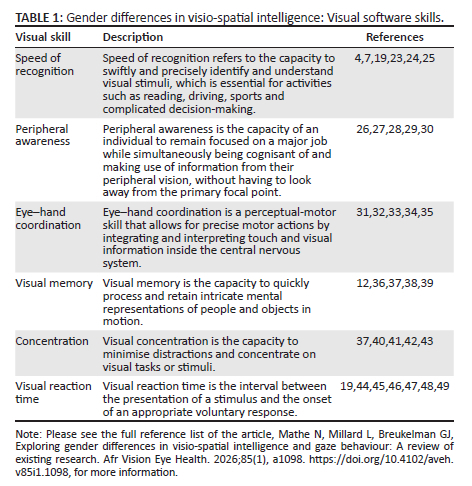
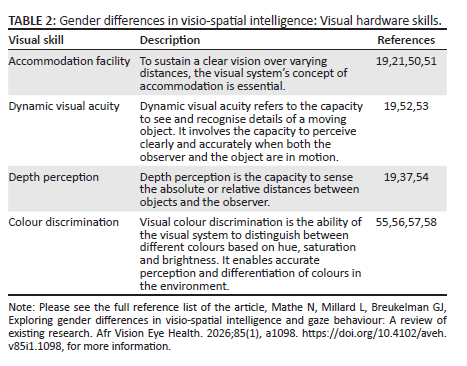
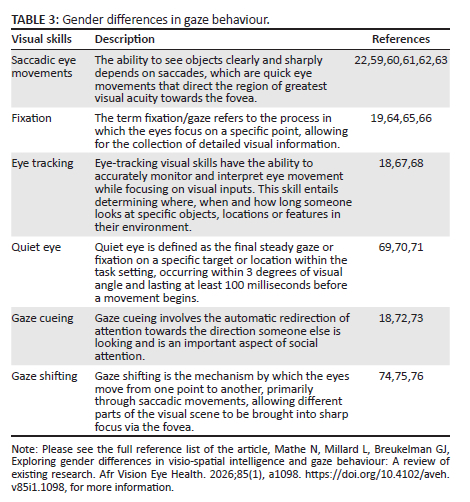
This study initially identified 120 citations through electronic searches and selected 87 full-text English-language papers for review. After eliminating duplicates and assessing the full-text articles, 77 full-text remained for analysis. Several studies were identified that examined differences in visio-spatial intelligence, with some reporting variations, while others found no differences. Table 1 presents a list of visual software skills with gender differences, while Table 2 outlines all visual hardware skills with gender differences, including descriptions of each visual skill. Table 3 provides an overview of visual skills related to gaze behaviour and gender differences.
Discussion
Extensive research has examined gender variations in visio-spatial intelligence and gaze behaviour, offering insight into potential differences between men and women in spatial reasoning, visual processing and attention.12
Gender differences in visual skills are typically categorised into two main areas: visual hardware and visual software.2020207,21 These categorisations help us understand how biological and cognitive factors contribute to differences in visual abilities.12,22
Gender differences in visual software skills
Speed of recognition
While some evidence suggests gender-based differences in processing speed, such claims require scrutiny. For instance, although Mathe et al.423,24 tend to associate this with social cognition, but such conclusions may overlook confounding variables such as sociocultural conditioning and sample diversity. Conversely, the observation that men excel in dynamic spatial environments257,19 Gender effects do exist, but they are mitigated by context and experience.
Peripheral awareness
Research suggesting that women may exhibit heightened peripheral sensitivity26,27,28 often frames this in terms of environmental monitoring and evolutionary roles such as caregiving or foraging. However, such interpretations risk reinforcing outdated gender essentialist views without accounting for broader contextual factors, such as modern environmental demands or task-specific training. David et al.2930
Eye-hand coordination
While men are often reported to outperform women in tasks requiring rapid, forceful movements, and women tend to excel in precision-based tasks,31,32,33 these distinctions may oversimplify a complex interaction of biological factors, including hormonal influences and neuroanatomical differences, alongside sociocultural conditioning.3435
Visual memory
Women generally show advantages in object recognition, facial memory and recalling visual details, potentially linked to stronger verbal and episodic memory processes. Conversely, men often outperform women in spatial memory tasks, such as mental rotation and navigation.12,36,37 While biological factors such as brain structure likely contribute, social and environmental influences also play critical roles in shaping these abilities.383939
Concentration
Some research suggests men outperform women in dynamic visual tracking, whereas women may excel in sustained attention and detail-oriented tasks.37,40,41 However, these findings are not universally replicable, indicating that gender effects on concentration may be context-dependent and moderated by task design. Neurobiological factors, including brain structure and hormonal influences, are often proposed explanations,30,42 but the extent to which these directly cause attentional differences remains unclear. In addition, sociocultural influences, such as differential exposure to certain activities during development, complicate interpretations.43
Visual reaction time
Studies typically show men outperforming women in speed, particularly in rapid motor response tasks.44,45 This gender difference is often attributed to biological factors such as hormonal influences like testosterone, greater muscle mass and neuromuscular efficiency.1946,47 Conversely, women's superior performance in accuracy-focused and sustained attention tasks4849
Gender differences in visual hardware skills
Accommodation facility
Some studies suggest women may exhibit superior accommodation ability, potentially because of ocular anatomical differences or hormonal influences.19,21 However, conflicting evidence exists, with other research reporting no significant gender differences.5051
Dynamic visual acuity
Research indicates that men generally demonstrate superior dynamic visual acuity possibly because of a higher density of rod cells in the retina, which are more sensitive to motion.525319
Depth perception
Research shows that men generally demonstrate superior depth perception, especially in tasks requiring spatial awareness, consistent with broader findings showing male advantages in mental rotation and navigation tasks.371954
Colour discrimination
Evidence suggests that men may exhibit poorer discrimination in the middle of the spectrum, particularly for greenish tones,55,56 while women tend to show greater sensitivity to long-wavelength colours.5758
Gender differences in gaze behaviour
Saccadic eye movements
Research reports that men typically have faster saccadic velocities and shorter latencies than women;592260,61 Importantly, findings are not consistent across all studies, with some showing no significant gender differences,6263
Fixation
Research indicates men generally exhibit shorter fixation durations and more frequent shifts in attention, whereas women tend to have longer fixations, suggesting a more detail-focused processing approach.19,64,65 While neurological explanations point to men's greater reliance on right-hemisphere spatial processing and women's more bilateral hemisphere engagement during complex visual tasks,66
Eye tracking
Studies suggest that women exhibit stronger gaze-cueing effects, sustain longer eye contact and shift gaze more frequently during social interactions.18,67 This pattern reflects greater attention to facial features and emotional cues, implying heightened sensitivity to social and contextual information.68
Quiet eye
Research shows mixed findings697071
Gaze cueing
A study conducted by Bayliss et al.187273
Gaze shifting
Findings are inconsistent.747576
Limitations
Even though this review summarises many studies, a number of limitations should be noted. Firstly, because studies showing substantial gender differences are more likely to appear in the published literature than studies reporting null findings, publication bias may have had an impact on the overall patterns described. Secondly, there are significant methodological variations across the included research, including variations in sample demographics, cultural contexts, assessment instruments and definitions of gaze behaviour and visio-spatial intelligence. Inconsistencies across studies may be partially explained by this heterogeneity, which makes direct comparison challenging. Ecological validity is further limited by the fact that many studies use controlled laboratory activities that might not accurately reflect gaze behaviour or visual processing in the actual world. These drawbacks show that to support future findings, more standardised, long-term and contextually varied research is required.
Conclusion
This review shows that gender variations in gaze behaviour and visio-spatial intelligence are intricate, multidimensional and influenced by a combination of biological, cognitive and sociocultural factors. Women typically exhibit advantages in visual memory, peripheral awareness and socially oriented gaze behaviours, whereas men frequently show strengths in activities involving spatial orientation, mental rotation and dynamic visual processing. Crucially, these variations are not universal and frequently rely on context, training exposure, task type and methodological design.
This review illustrates how biological abilities and cognitive-perceptual strategies interact to influence visual behaviour across genders by integrating findings through the suggested visual hardware-visual software framework. This dual-framework approach gives future research a systematic direction and a firmer foundation for analysing discrepancies in earlier findings. To advance knowledge and promote equitable practices in educational, athletic and professional contexts, more research employing longitudinal, ecologically sound and culturally diverse methodology is required.
Competing interests
The authors declare that they have no financial or personal relationships that may have inappropriately influenced them in writing this article.
CRediT authorship contribution
Nonkululeko Mathe: Conceptualisation, Formal analysis, Investigation, Methodology, Visualisation, Writing - original draft and Writing - review and editing. Lourens Millard: Conceptualisation, Formal analysis, Visualisation, Project administration and Writing - review and editing. Gerrit J. Breukelman: Visualisation, Supervision and Writing - review and editing.
All authors reviewed the article, contributed to the discussion of results, approved the final version for submission and publication and take responsibility for the integrity of its findings.
Ethical considerations
This article followed all ethical standards for research without direct contact with human or animal subjects.
Funding information
This research received no specific grant from any funding agency in the public, commercial or not-for-profit sectors.
Data availability
No new data were generated or analysed in this study. All data referenced are publicly available in the cited sources.
Disclaimer
The views and opinions expressed in this article are those of the authors and are the product of professional research. They do not necessarily reflect the official policy or position of any affiliated institution, funder, agency or that of the publisher. The authors are responsible for this article's results, findings and content.
References
Acknowledgements
Literature search strategy
-
1. Khanal S. Impact of visual skills training on sports performance: Current and future perspectives. Adv Ophthalmol Vis Syst. 2015;2(1):00032. https://doi.org/10.15406/aovs.2015.02.00032
» https://doi.org/10.15406/aovs.2015.02.00032 -
2. Wang C, Yan A, Deng W, Qi C. Effect of tennis expertise on motion-in-depth perception at different speeds: An event-related potential study. Brain Sci. 2022;12(9): 1160. https://doi.org/10.3390/brainsci12091160
» https://doi.org/10.3390/brainsci12091160 -
3. Higuchi T. Visuomotor control of human adaptive locomotion: Understanding the anticipatory nature. Front Psychol. 2013;4:277. https://doi.org/10.3389/fpsyg.2013.00277
» https://doi.org/10.3389/fpsyg.2013.00277 -
4. Mathe N, Millard L, Breukelman GJ, Mathunjwa M. Differences in visio-spatial intelligence between non-athletes and netball players. Front Sports Act Living. 2023;5:1109967. https://doi.org/10.3389/fspor.2023.1109967
» https://doi.org/10.3389/fspor.2023.1109967 -
5. Wilkins L, Appelbaum LG. An early review of stroboscopic visual training: Insights, challenges and accomplishments to guide future studies. Int Rev Sport Exerc Psychol. 2020;13(1):65-80. https://doi.org/10.1080/1750984X.2019.1582081
» https://doi.org/10.1080/1750984X.2019.1582081 -
6. Hyönä J, Li J, Oksama L. Eye behavior during multiple object tracking and multiple identity tracking. Vision. 2019;3(3):37. https://doi.org/10.3390/vision3030037
» https://doi.org/10.3390/vision3030037 -
7. Ackerman PL, Cianciolo AT. Cognitive, perceptual-speed, and psychomotor determinants of individual differences during skill acquisition. J Exp Psychol Applied. 2000;6(4):259. https://doi.org/10.1037//1076-898X.6.4.259
» https://doi.org/10.1037//1076-898X.6.4.259 - 8. Halpern DF. Sex differences in cognitive abilities. Mahwah, NJ: Psychology Press; 2000.
- 9. Hines M. Brain gender. Oxford: Oxford University Press; 2005.
-
10. Driscoll I, Hamilton DA, Yeo RA, Brooks WM, Sutherland RJ. Virtual navigation in humans: The impact of age, sex, and hormones on place learning. Horm Behav. 2005;47(3):326-335. https://doi.org/10.1016/j.yhbeh.2004.11.013
» https://doi.org/10.1016/j.yhbeh.2004.11.013 -
11. Iachini T, Sergi I, Ruggiero G, Gnisci A. Gender differences in object location memory in a real three-dimensional environment. Brain Cogn. 2005;59(1):52-59. https://doi.org/10.1016/j.bandc.2005.04.004
» https://doi.org/10.1016/j.bandc.2005.04.004 -
12. Herlitz A, Rehnman J. Sex differences in episodic memory. Curr Dir Psychol Sci. 2008;17(1):52-56. https://doi.org/10.1111/j.1467-8721.2008.00547.x
» https://doi.org/10.1111/j.1467-8721.2008.00547.x -
13. Caldera YM, McCulp A, O'Brien A, Truglio RT, Alvarez M, Huston AC. Children's play preferences, construction play with blocks, and visual-spatial skills: Are they related? Int J Behav Dev. 1999;23:855-872. https://doi.org/10.1080/016502599383577
» https://doi.org/10.1080/016502599383577 -
14. Land MF. Vision, eye movements, and natural behavior. Vis Neurosci. 2009;26(1):51-62. https://doi.org/10.1017/S0952523808080899
» https://doi.org/10.1017/S0952523808080899 - 15. Fathi A, Li Y, Rehg JM. Learning to recognize daily actions using gaze. In: Leibe B, Matas J, Sebe N, Welling M, editors. Computer vision-ECCV 2012: 12th European conference on computer vision, Florence, Italy. Proceedings, Part I 12; 2012 Oct 07-13, Cham: Springer Berlin Heidelberg; 2012, p. 314-327.
-
16. Wilkowski BM, Robinson MD, Friesen CK. Gaze-triggered orienting as a tool of the belongingness self-regulation system. Psychol Sci. 2009;20(4):495-501. https://doi.org/10.1111/j.1467-9280.2009.02321.x
» https://doi.org/10.1111/j.1467-9280.2009.02321.x - 17. Kulms P, Krämer NC, Gratch J, Kang SH. It's in their eyes: A study on female and male virtual humans' gaze. In: Cassell J, Kopp S, Krämer B, André E, editors. Intelligent virtual agents: 10th international conference, IVA 2011. Proceedings 11; 2011 Sep 15-17; Reykjavik, Iceland. Springer Berlin Heidelberg; 2011, p. 80-92.
-
18. Bayliss AP, Di Pellegrino G, Tipper SP. Sex differences in eye gaze and symbolic cueing of attention. Q J Exp Psychol A. 2005;58(4):631-650. https://doi.org/10.1080/02724980443000124
» https://doi.org/10.1080/02724980443000124 -
19. Millard L, Breukelman GJ, Mathe N. Comparing visio-spatial intelligence in amateur rugby and netball players using hand-eye coordination tests. Afr Eye Health. 2024;83(1):955. https://doi.org/10.4102/aveh.v83i1.955
» https://doi.org/10.4102/aveh.v83i1.955 - 20. Ludeke A, Ferreira JT. The difference in visual skills between professional versus non-professional rugby players. S Afr Optom. 2003;62(4):150-158.
- 21. Agarwal P. Sway: Unravelling unconscious bias. London: Bloomsbury Publishing; 2020.
- 22. Lee, J.J. The causes of individual differences. Cambridge, MA: Harvard University; 2011.
- 23. Magar A. Exploring the impact of reading visually complex scripts on attentional processes and visual discrimination and search skills [Doctoral dissertation]. Brimigham, UK: University of Birmingham; 2023.
-
24. Wingenbach TS, Ashwin C, Brosnan M. Sex differences in facial emotion recognition across varying expression intensity levels from videos. PLoS One. 2018;13(1):e0190634. https://doi.org/10.1371/journal.pone.0190634
» https://doi.org/10.1371/journal.pone.0190634 -
25. McGivern RF, Adams B, Handa RJ, Pineda JA. Men and women exhibit a differential bias for processing movement versus objects. PLoS One. 2012;7:e32238. https://doi.org/10.1371/journal.pone.0032238
» https://doi.org/10.1371/journal.pone.0032238 - 26. Planer PM. Sports vision manual. International academy of sports vision. Harrisburg, PA: International Academy of Sports Vision; 1994, p. 19-20.
-
27. Owsley C, Ball K, Keeton DM. Relationship between visual sensitivity and target localization in older adults. Vis Res. 1995;35(4):579-587. https://doi.org/10.1016/0042-6989(94)00166-J
» https://doi.org/10.1016/0042-6989(94)00166-J -
28. Nougier V, Bard C, Fleury M, Teasdale N. Contribution of central and peripheral vision to the regulation of stance. Gait Posture. 1997;5(1):34-41. https://doi.org/10.1016/S0966-6362(96)01071-5
» https://doi.org/10.1016/S0966-6362(96)01071-5 -
29. David SS, Foot HC, Chapman AJ. Children's sensitivity to traffic hazard in peripheral vision. Appl Cogn Psychol. 1990;4(6):471-484. https://doi.org/10.1002/acp.2350040606
» https://doi.org/10.1002/acp.2350040606 -
30. Handa RJ, McGivern RF. Steroid hormones, receptors, and perceptual and cognitive sex differences in the visual system. Curr Eye Res. 2015;40(2):110-127. https://doi.org/10.3109/02713683.2014.952826
» https://doi.org/10.3109/02713683.2014.952826 - 31. Bard C, Fleury M, Hay L. Development of eye-hand coordination across the life span. Columbia, SC; 1990.
-
32. Swathi B, Srivastava S, Krishnaprasad KM. Gender difference in hand-eye coordination in young adults - A cross-sectional study. J Clin Diagn Res. 2023;17:YC15-YC18. https://doi.org/10.7860/JCDR/2023/59208.17430
» https://doi.org/10.7860/JCDR/2023/59208.17430 -
33. Szabo DA, Neagu N, Teodorescu S, Sopa IS. Eye-hand relationship of proprioceptive motor control and coordination in children 10-11 years old. Health Sports Rehabil Med. 2020;21(3):185-191. https://doi.org/10.26659/pm3.2020.21.3.185
» https://doi.org/10.26659/pm3.2020.21.3.185 - 34. Duffy L. Gender differences in target throwing skills and dart playing performance: Evidence from elite dart players [Doctoral dissertation]. London: Middlesex University; 2002.
-
35. Orhan İ, Aktop A, Pekaydın Y. An investigation of hand-eye coordination, attention, balance and motor skill in school children. Eur Proc Soc Behav Sci. 2018;42:11-18. https://doi.org/10.15405/epsbs.2018.06.02.2
» https://doi.org/10.15405/epsbs.2018.06.02.2 -
36. Voyer D, Postma A, Brake B, Imperato-McGinley J. Gender differences in object location memory: A meta-analysis. Psychon Bull Rev. 2007;14:23-38. https://doi.org/10.3758/BF03194024
» https://doi.org/10.3758/BF03194024 - 37. Lawton CA. Gender, spatial abilities, and wayfinding. In: Gruber CL, Rosenthal RE, editors. Handbook of gender research in psychology: Volume 1: Gender research in general and experimental psychology. New York, NY: Springer; 2010, p. 317-341.
-
38. Keith TZ, Reynolds MR, Roberts LG, Winter AL, Austin CA. Sex differences in latent cognitive abilities ages 5 to 17: Evidence from the differential ability scales - Second edition. Intelligence. 2011;39:389-404. https://doi.org/10.1016/j.intell.2011.06.008
» https://doi.org/10.1016/j.intell.2011.06.008 -
39. Palejwala MH, Fine JG. Gender differences in latent cognitive abilities in children aged 2 to 7. Intelligence. 2015;48:96-108. https://doi.org/10.1016/j.intell.2014.11.004
» https://doi.org/10.1016/j.intell.2014.11.004 -
40. Sörqvist P, Dahlström Ö, Karlsson T, Rönnberg J. Concentration: The neural underpinnings of how cognitive load shields against distraction. Front Hum Neurosci. 2016;10:221. https://doi.org/10.3389/fnhum.2016.00221
» https://doi.org/10.3389/fnhum.2016.00221 -
41. Ma MY, Wei CC. A comparative study of children's concentration performance on picture books: Age, gender, and media forms. Interact Learn Environ. 2016;24(8):1922-1937. https://doi.org/10.1080/10494820.2015.1060505
» https://doi.org/10.1080/10494820.2015.1060505 -
42. Schneider F, Habel U, Kessler C, Salloum JB, Posse S. Gender differences in regional cerebral activity during sadness. Hum Brain Mapp. 2000;9(4):226-238. https://doi.org/10.1002/(SICI)1097-0193(200004)9:4<226::AID-HBM4>3.0.CO;2-K
» https://doi.org/10.1002/(SICI)1097-0193(200004)9:4<226::AID-HBM4>3.0.CO;2-K - 43. Reilly D, Neumann DL, Andrews G. Gender differences in spatial ability: Implications for STEM education and approaches to reducing the gender gap for parents and educators. In: Harris KS, Andrews JM, Wilson SW, editors. Visual-spatial ability in STEM education: Transforming research into practice. Cham: Springer International Publishing; 2016, p. 195-224.
- 44. Jain AK, editor. Reaction time (visual and auditory) and reflex time [chapter 23]. In Manual of practical physiology for MBBS. 4th ed. New Delhi: Avichal Publishing Company; 2012, p. 277-279.
-
45. Bianco V, Berchicci M, Quinzi F, Perri RL, Spinelli D, Di Russo F. Females are more proactive, males are more reactive: Neural basis of the gender-related speed/accuracy trade-off in visuo-motor tasks. Brain Struct Funct. 2020;225:187-201. https://doi.org/10.1007/s00429-019-01998-3
» https://doi.org/10.1007/s00429-019-01998-3 - 46. Coşkun B, Kocak S, Saritaş N. The comparison of reaction times of karate athletes according to age, gender and status. Children. 2014;73(2):152.
- 47. İrez GB. Pilates exercise positively affects balance, reaction time, muscle strength, number of falls and psychological parameters in 65+ years old women [Doctoral dissertation]. Ankara: Middle East Technical University; 2009.
-
48. Halpern DF, Benbow CP, Geary DC, Gur RC, Hyde JS, Gernsbacher MA. The science of sex differences in science and mathematics. Psychol Sci Public Interest. 2007;8(1):1-51. https://doi.org/10.1111/j.1529-1006.2007.00032.x
» https://doi.org/10.1111/j.1529-1006.2007.00032.x -
49. Parasuraman R, Jiang Y. Individual differences in cognition, affect, and performance: Behavioral, neuroimaging, and molecular genetic approaches. Neuroimage. 2012;59(1):70-82. https://doi.org/10.1016/j.neuroimage.2011.04.040
» https://doi.org/10.1016/j.neuroimage.2011.04.040 -
50. Muzaliha MN, Nurhamiza B, Hussein A, et al. Visual acuity and visual skills in Malaysian children with learning disabilities. Clin Ophthalmol. 2012;6:1527-1533. https://doi.org/10.2147/OPTH.S33270
» https://doi.org/10.2147/OPTH.S33270 -
51. Logan NS, Radhakrishnan H, Cruickshank FE, et al. IMI accommodation and binocular vision in myopia development and progression. Invest Ophthalmol Vis Sci. 2021;62(5):4. https://doi.org/10.1167/iovs.62.5.4
» https://doi.org/10.1167/iovs.62.5.4 -
52. Altimus CM, Güler AD, Alam NM, et al. Rod photoreceptors drive circadian photoentrainment across a wide range of light intensities. Nat Neurosci. 2010;13(9):1107-1112. https://doi.org/10.1038/nn.2617
» https://doi.org/10.1038/nn.2617 -
53. Thoreson WB, Dacey DM. Diverse cell types, circuits, and mechanisms for color vision in the vertebrate retina. Physiol Rev. 2019;99(3):1527-1573. https://doi.org/10.1152/physrev.00027.2018
» https://doi.org/10.1152/physrev.00027.2018 - 54. Putrevu S. Exploring the origins and information processing differences between men and women: Implications for advertisers. Acad Mark Sci Rev. 2001;10(1):1-4.
-
55. Naifeh J, Kaufman EJ. Color vision [homepage on the Internet]. [updated 2022 Oct 31]. Treasure Island(FL): StatPearls Publishing; 2023 [cited 2025 May 20]. Available from: https://www.ncbi.nlm.nih.gov/sites/books/NBK470227/?utm_source
» https://www.ncbi.nlm.nih.gov/sites/books/NBK470227/?utm_source -
56. Simpson J, Tarrant AW. Sex-and age-related differences in colour vocabulary. Lang Speech. 1991;34(1):57-62. https://doi.org/10.1177/002383099103400104
» https://doi.org/10.1177/002383099103400104 - 57. Jamwal A, Jain S. Detection of cones for different color visual impairment. In: Bedi SS, Sharma RK, Gupta MK, editors. 2021 Sixth International Conference on Image Information Processing (ICIIP). New York, NY: IEEE; 2021, Volume 6, pp. 7-12.
-
58. Rodríguez-Carmona M, Sharpe LT, Harlow JA, Barbur JL. Sex-related differences in chromatic sensitivity. Vis Neurosci. 2008;25(3):433-440. https://doi.org/10.1017/S095252380808019X
» https://doi.org/10.1017/S095252380808019X -
59. Sargezeh BA, Tavakoli N, Daliri MR. Gender-based eye movement differences in passive indoor picture viewing: An eye-tracking study. Physiol Behav. 2019; 206:43-50. https://doi.org/10.1016/j.physbeh.2019.03.023
» https://doi.org/10.1016/j.physbeh.2019.03.023 -
60. Tatara S, Toda H, Maeda F, Ito A, Handa T. Comparison of the saccadic eye movement ability of female professional basketball players and non-athletes. Appl Sci. 2024;14:1108. https://doi.org/10.3390/app14031108
» https://doi.org/10.3390/app14031108 - 61. Halpern DF, Collaer ML. Sex differences in visuospatial abilities: More than meets the eye. In: Shah P, Miyake A, editors. The Cambridge handbook of visuospatial thinking. Cambridge: Cambridge University Press; 2005, p. 170-212.
-
62. Wilson SJ, Glue P, Ball D, Nutt DJ. Saccadic eye movement parameters in normal subjects. Electroencephalogr Clin Neurophysiol. 1993;86(1):69-74. https://doi.org/10.1016/0013-4694(93)90068-7
» https://doi.org/10.1016/0013-4694(93)90068-7 -
63. Luna B, Velanova K, Geier CF. Development of eye-movement control. Brain Cogn. 2008;68(3):293-308. https://doi.org/10.1016/j.bandc.2008.08.019
» https://doi.org/10.1016/j.bandc.2008.08.019 -
64. Babu RJ, Lillakas L, Irving EL. Dynamics of saccadic adaptation: Differences between athletes and nonathletes. Optom Vis Sci. 2005;82(12):1060-1065. https://doi.org/10.1097/01.opx.0000192346.84549.6a
» https://doi.org/10.1097/01.opx.0000192346.84549.6a -
65. Andersen NE, Dahmani L, Konishi K, Bohbot VD. Eye tracking, strategies, and sex differences in virtual navigation. Neurobiol Learn Mem. 2012;97(1):81-89. https://doi.org/10.1016/j.nlm.2011.09.007
» https://doi.org/10.1016/j.nlm.2011.09.007 -
66. Hall JK, Hutton SB, Morgan MJ. Sex differences in scanning faces: Does attention to the eyes explain female superiority in facial expression recognition? Cogn Emot. 2010;24(4):629-637. https://doi.org/10.1080/02699930902906882
» https://doi.org/10.1080/02699930902906882 -
67. Millard L, Breukelman GJ, Burger T, Nortje J, Schulz J. Visual skills essential for rugby. Med Hypothesis Discov Innov Ophthalmol. 2023;12(1):46-54. https://doi.org/10.51329/mehdiophthal1469
» https://doi.org/10.51329/mehdiophthal1469 -
68. Kret ME, De Gelder B. A review on sex differences in processing emotional signals. Neuropsychologia. 2012;50(7):1211-1221. https://doi.org/10.1016/j.neuropsychologia.2011.12.022
» https://doi.org/10.1016/j.neuropsychologia.2011.12.022 -
69. Giancamilli F, Galli F, Chirico A, et al. High-pressure game conditions affect quiet eye depending on the player's expertise: Evidence from the basketball three-point shot. Brain Sci. 2022;12(2):286. https://doi.org/10.3390/brainsci12020286
» https://doi.org/10.3390/brainsci12020286 -
70. Jedziniak W, Panek K, Lesiakowski P, Florkiewicz B, Zwierko T. Differences in gaze behavior between male and female elite handball goalkeepers during penalty throws. Brain Sci. 2025;15(3):312. https://doi.org/10.3390/brainsci15030312
» https://doi.org/10.3390/brainsci15030312 -
71. Lebeau JC, Liu S, Sáenz-Moncaleano C, et al. Quiet eye and performance in sport: A meta-analysis. J Sport Exerc Psychol. 2016;38(5):441-457. https://doi.org/10.1123/jsep.2015-0123
» https://doi.org/10.1123/jsep.2015-0123 -
72. Ohlsen G, Van Zoest W, Van Vugt M. Gender and facial dominance in gaze cuing: Emotional context matters in the eyes that we follow. PLoS One. 2013;8(4):e59471. https://doi.org/10.1371/journal.pone.0059471
» https://doi.org/10.1371/journal.pone.0059471 -
73. Bayliss AP, Tipper SP. Predictive gaze cues and personality judgments: Should eye trust you? Psychol Sci. 2006;17(6):514-520. https://doi.org/10.1111/j.1467-9280.2006.01737.x
» https://doi.org/10.1111/j.1467-9280.2006.01737.x - 74. Duchowski AT, Duchowski AT. Eye tracking methodology: Theory and practice. Cham: Springer; 2017.
-
75. Feng Q, Zheng Y, Zhang X, et al. Gender differences in visual reflexive attention shifting: Evidence from an ERP study. Brain Res. 2011;1401:59-65. https://doi.org/10.1016/j.brainres.2011.05.041
» https://doi.org/10.1016/j.brainres.2011.05.041 -
76. Dong W, Zhan Z, Liao H, Meng L, Liu J. Assessing similarities and differences between males and females in visual behaviors in spatial orientation tasks. Int J Geo-Inf. 2020;9(2):115. https://doi.org/10.3390/ijgi9020115
» https://doi.org/10.3390/ijgi9020115

Accepted: 15 Jan. 2026
Published: 24 Mar. 2026