Evaluation of primary eye care services for children in the Ashanti region of Ghana
Abstract
BACKGROUND: One of the strategies to improve access to eye care services in low- and middle-income countries (LMICs) is to integrate such services into primary health care (PHC). This can be achieved by implementing sustainable and equitable services across all levels of the health care system AIM: This study assessed the provision of primary eye care services among children in the Ashanti region of Ghana from the perspective of district health directors SETTING: This study was done in the Ashanti region of Ghana METHODS: A purposive sampling technique was employed to select 10 district health directors for a one-on-one interview guided by the eye care service assessment tool (ECSAT). It focused on the provision of primary eye care services, current policies and programmes and efforts to support integration of eye care services for children into the PHC system RESULTS: The district health information management system (DHIM) was the major source of information on child eye health. Basic eye care services were available and covered by the national health insurance scheme (NHIS). School screenings and outreach programmes were organised for underserved communities. There were limited resources and knowledge on diagnostic and treatment procedures CONCLUSION: To address the gaps, policymakers and stakeholders should prioritise the development of sustainable and equitable eye care strategies CONTRIBUTION: This study is the first in Ghana to comprehensively assess eye care services among children from the perspectives of district health directors. It provides findings to guide policy formulation and clinical practice for quality primary-level eye care services for children
primary eye care services; children; ECSAT; Ashanti region; qualitative study
Introduction
The VISION 2020: Right to Sight programme aimed to identify strategies for countries to improve access to quality eye services.123456788
Health promotion requires a holistic approach involving empowerment of individuals and communities, intersectoral action and health system strengthening.91011121213
In order to improve the provision of eye care services, a comprehensive understanding of the barriers is required. Overcoming barriers that hinder access to eye care services is essential to avert the burden of avoidable blindness.14
Research methods and design
Study design and population
The study used a cross-sectional and qualitative approach. The Ashanti region has 43 municipal and district health directors that provide supervision, technical and management support to champion the implementation of health policies and programmes in the districts and sub-districts within the region. As the body responsible for health services in the region, the health directorate maintains close links with all other agencies such as the Ministry of Health, the local government system, traditional authorities and other stakeholders in health, including development partners and civil society in the region. The study population comprised all 43 municipal and district health directors. The district and municipal health directors were selected using purposive sampling. Purposive sampling allows for the selection of participants who are best suited to contribute to the research project because of their experience, characteristics and knowledge.15
Data collection
One-on-one interviews were conducted with selected participants to explore the provision of PEC services and current policies and programmes. The interviews also focused on future efforts to better support the integration and implementation of PEC services for children into the PHC system. The interviews were conducted using an interview guide adopted from the eye care service assessment tool (ECSAT).16
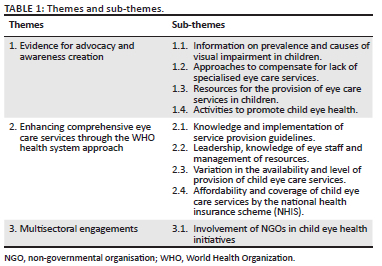
1. Evidence for advocacy and awareness creation, which sought information on sources of data, plans for epidemiological surveys on childhood visual impairment (VI) and blindness, advocacy for child eye health care, identification of underserved communities and activities intended to advance public and government awareness on child health care.
2. Enhancing comprehensive eye care services through the WHO health system approach that sought information on the level of eye care services currently provided and the number and distribution of eye care professionals in the district. Furthermore, information regarding access to eye care services was also probed.
3. Multisectoral engagement and partnerships where information on non-governmental organisations that were actively engaged in eye health and the prevention of VI for children.
All interviews were conducted in English by the principal researcher and audio-recorded after obtaining verbal permission from the participants. The interviews, conducted using Zoom or via telephone, were scheduled at a date and time that was convenient for the participant based on their availability. The choice of using Zoom and telephone for the meeting was because of geographical distance and inability to agree on meeting time as a result of busy schedules. On average, the interviews lasted for 20 min. Participants were assigned unique identification numbers to aid in the process of data analysis and for anonymity. During the analysis of the interview data, the principal researcher reviewed the transcripts to identify the emerging codes and themes. Initially, the interview recordings were transcribed and the data were cleaned. The data were coded manually, and the codes were organised under themes. The themes were then interpreted. The interview data were analysed concurrently during data collection to create an audit trail and better document the point of data saturation (if applicable).
Quality assurance
The validity of the interview findings was ensured through careful and purposive selection of key municipal and district health directors. Furthermore, dependability was ensured by piloting the interview guide on 10 municipal and district health directors that were not part of the final study sample. The study also used member checking to review interview transcripts and verify interpretations during data analysis. Furthermore, the study used a validated standardised tool (ECSAT) that has been used previously in Bangladesh17
Ethical considerations
Approval for the study was obtained from the Humanities and Social Sciences Research Ethics Committee (HSSREC), University of KwaZulu-Natal (reference no.: HSSREC/00004574/2022) and the Committee on Human Research and Publication Ethics (CHRPE), KNUST (reference no.: CHRPE/AP/771/22). Gatekeeper permission was also sought from the regional health directorate and the heads of the selected health facilities. Participation in the study was voluntary at every level, and there were no monetary or other inducements.
Analysis and interpretation of interview data
The semi-structured interviews were transcribed, coded and analysed using thematic content analysis. The themes and sub-themes that emerged from the interviews are presented in Table 1.
Results
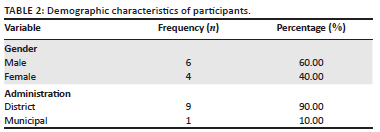
Interviews were conducted with 10 participants, of whom four were females and six were males. Nine participants were district health directors, while the remaining one was a municipal health director. This is represented in Table 2.
Theme 1: Evidence for advocacy and awareness creation
Information on prevalence and causes of visual impairment in children
Overall, participants provided varying responses when asked about information on the prevalence and causes of VI in children. Some participants (n = 4) stated that they received such information on monthly basis, and it is reported on a platform called DHIMS (district health management system). For example, 'You know because of DHIMS, every month on the DHIMS we have a format that reports on eye care (services)' (Participant 2, district health director, male). Other sources of information mentioned by participants were school health reports and consulting room registers. For instance, 'The monthly school visits report or school health report when such a visit is conducted' (Participant 3, district health director, male). Another participant also indicated, 'The source document is the consulting room register' (Participant 1, district health director, male). Two participants mentioned that their directorate only received such information quarterly as this coincides with their facility performance review. However, four participants indicated that they do not receive any information on eye care in children and attributed this to lack of personnel and eye care services for the general population in their district. For instance, he stated, 'No, we have not gotten that report, as the situation in the district is that we do not provide eye services' (Participant 1, district health director, male). When asked about what these data are used for, some participants (n = 4) explained that it is used to strengthen child eye care services through community sensitisation and health education programmes. For example, 'We realize that we have a lot of children reporting, then it would mean that you would have to strengthen eye care (for children) within the district' (Participant 1, district health director, male). Three participants indicated that such data would be used to inform policy and planning. This was narrated, 'We use it (information on prevalence and causes of VI in children) to plan for training and capacity building for staff' (Participant 5, district health director, male). Other participants also mentioned that the data were used for follow-up of complex eye conditions. For instance, 'Usually, when we get such reports, we follow (to ensure) that continuity of care is provided' (Participant 3, district health director, male). Two participants mentioned that there were no plans in place for the use of the information received because attention had not been paid to eye care in children. This was explained by one of the participants, 'No, I have not utilized that information with regards to children (as) no attention has been paid to the information in the report' (Participant 7, district health director, male).
Approaches to compensate for lack of specialised eye care services
When asked how communities with underserved eye care services are identified and assisted, participants mentioned that strategies such as organisation of community outreach activities (n = 3), treatment of basic eye conditions by other (non-eye care) staff (n = 3), referral of complex conditions (n = 5) and school screening programmes (n = 5) are currently being done. For instance, 'The community nurses are able to pick the basic ones (eye conditions) and refer as quickly as possible' (Participant 2, district health director, male). In addition, one of the participants revealed that to help upgrade the knowledge of the community nurses specifically in eye care, they received training by ORBIS (a non-governmental organisation [NGO]) to treat basic eye conditions. He narrated:
'ORBIS trained 50 community nurses in eye care and these community nurses [were] trained in two different batches. When we were selecting these nurses, we made sure we selected [nurses] from each zone so that during outreach services they have the knowledge and skills.' (Participant 2, district health director, male)
Another participant also stated, 'So we do the health screening and then there is school health (programs)' (Participant 10, municipal health director, female). Further, it was explained by one of the participants that an eye care professional had been engaged on a part-time basis to provide eye care services regularly in the district. He explained, 'So there is the locum (visiting professional), because we were not providing the services and we decided to get the locum' (Participant 1, district health director, male). A noteworthy observation was that of poor road infrastructure being a major challenge that prevented plans to reach out and provide eye health programmes to communities that are underserved. For example:
'So, most of our road networks are very bad. So, in fact it is very difficult for them (nurses) to reach them (community members) in terms of these eye care and health program.' (Participant 3, district health director, male)
Resources for the provision of eye care services in children
When asked about the resources allocated for eye care services in children, half of the participants (n = 5) indicated that there were no available resources for eye care services in their districts. This was explained, 'Currently we do not have resources available' (Participant 3, district health director, male). To compensate for unavailable resources in the directorate, two participants mentioned that sponsors had been engaged to help provide free eye care services for the communities. This was expressed by one participant, 'However, partners that we come across we engage with them, and when we are lucky, we partner with them' (Participant 5, district health director, male). During such sponsored programmes, free services and items such as spectacles and medications were provided to the community members. For instance, 'As I speak with you, we have some lenses (that) some people have donated and these will be given to community members including children that need them' (Participant 3, district health director, male). Further, three participants explained that they do not allocate specific resources for eye care services in children alone because their budget is prepared considering all health services for the entire population. For example, 'The budget is the composite one, including everything so sometimes you cannot tell exactly the amount (for eye care services)' (Participant 3, district health director, male). Contrarily, two participants mentioned that they allocated about 1% of the general budget for eye care services. This was expressed by one of the participants, 'Actually, I cannot get that figure for you off head. Percentage wise, I think it will be about 1%' (Participant 4, district health director, female). Lack of eye care professionals (n = 3), lack of logistics (n = 4), lack of accessible eye services (n = 2) and unavailability of eye medications (n = 3) were recognised needs that the participants identified for the provision of child eye care services. For instance:
'We have looked at the needs of eye care to the general public which includes, the children. The first one [factor] is the medication and then second, the equipment [needed for provision of these services].' (Participant 9, district health director, male)
Additionally, a district health director indicated, 'Yeah, it has to do with putting lack of eye care professionals' (Participant 1, district health director, male). Furthermore, poor perceptions about eye health among the community members were also mentioned. For example, 'What I would say is that most of the parents when they have the newborns and they have eye problems, they lose hope, so, I think our mindset should change' (Participant 4, district health director, female). One of the participants further explained how these services were limited as they were only being provided at a specific level of care, making them sometimes inaccessible, 'It is only the government hospital that is providing the services. If the services are extended to at least the health centers at the various communities, accessibility becomes more' (Participant 10, municipal health director, female).
Activities to promote child eye health
Participants stated that different activities were currently being used to promote eye health in children like eye health education programmes, community outreach programmes, school health programmes and training of community health nurses (CHNs). Most of the participants (n = 6) stated that health education and community sensitisation programmes are organised to create awareness about eye care in children. For instance:
'We advise them, educate them [and provide] some kind of sensitization on how to report any defects [like] if your child comes home and complains that I cannot see, then it means that particular child needs support.' (Participant 3, district health director, male)
Four participants also indicated that the major focus during school health programmes was to educate school children on the need for early detection and treatment of eye problems. He explained:
'Just recently we told them to screen schools because some of them [school children] they have some defects which can be corrected.' (Participant 3, district health director, male)
Participants (n = 2) further stated that children with eye conditions detected during community outreaches are referred to the nearest facility for proper management. For instance, 'The community health nurses examining the children (if they) suspect or detect any problems, they refer such clients for further care' (Participant 5, district health director, male). In addition, one participant indicated that eye health for children in his district was promoted by developing and empowering staff to gain further education and training related to eye and by procuring specific eye medication and equipment. For example, 'Alright, one is the sponsorship of nurses to pursue ophthalmology (training). Then is procurement of equipment for ophthalmic care and medications' (Participant 9, district health director, male).
Theme 2: Enhancing comprehensive eye care services through the World Health Organization health system approach
Knowledge and implementation of service provision guidelines
Most of the participants (n = 8) had limited knowledge on the diagnostic and treatment procedures specifically for children. For instance, 'I do not have much insight on the list (for diagnostic and treatment) that you are talking about' (Participant 5, district health director, male). However, it was encouraging to note that two participants mentioned that the 2023 standard treatment guideline was currently being used as management protocols for children in primary care establishments. For example, 'Yes, the 2023 standard treatment guidelines with all those procedures and guidelines have been clearly stated in it' (Participant 10, district health director, female). The application of antibiotics (n = 5) and eye screening at birth (n = 2) were government-endorsed policies that were listed by participants as being implemented for infants at birth. This was expressed by one of the participants, 'So, when a new child is born, I think they give chloramphenicol (an antibiotic eyedrop)' (Participant 10, district health director, female). Another participant also stated that, 'We also check the eye to see if there are any other defects or any infections that could be treated immediately after birth' (Participant 3, district health director, male). In contrast, three participants had no knowledge on the policies for eye care for newborns or children. For example, one of the participants stated 'Personally, no. That is not to say there is none, there is but personally, I do not know' (Participant 6, district health director, male). For school health programmes, most participants (n = 8) were aware of the governing policy, and some participants mentioned the attachment of nurses to school clinics (n = 1) and referral of children when eye conditions were detected (n = 3). Additionally, one participant mentioned that all first-year students were screened for eye conditions as part of the policy. He indicated:
'Yes, I am aware that with this free school health screening we have a policy. For the new students that come to school you do a comprehensive screening for them that includes eye care services.' (Participant 4, district health director, female)
Participants also mentioned that school visits for screening were organised at different intervals like weekly (n = 2), monthly (n = 1), quarterly (n = 2) and yearly (n = 2). For instance, 'Okay, so they have their scheduled dates and they do it (the school screenings) weekly' (Participant 1, district health director, male). In contrast, three participants indicated that the school health programme was not regularised in their districts, but rather done when the need arises. This was expressed by one of the participants:
'What we have done is that we have integrated it [eye screening] into other programs. For example, when we are celebrating World TB Day, then ophthalmic nurses will set up a stand and will be doing screening.' (Participant 9, district health director, male)
Leadership, knowledge of eye staff and management of resources
Four participants confirmed that someone at their directorate was responsible for coordination of eye care services in the districts. For example, 'Yes, in our district the person (that coordinates eye care activities) is at the directorate' (Participant 2, district health director, male). Other participants (n = 3) stated that the focal person responsible for these services is based in the hospital. He expressed, 'In my directorate, we have an ophthalmologist. So, the last time we had a health screening, we contacted him and he organized a team for the activities' (Participant 10, municipal health director, female). The remaining three participants indicated that there was no focal person responsible for overseeing eye health services. For instance, 'No, we do not have (anyone), that is why the information in this area is scanty because we do not have anybody coordinating' (Participant 7, district health director, male). Most of the participants (n = 8) displayed good knowledge about eye care professionals accredited to provide eye care services for children in Ghana. Some even tried to mention the names of the various eye care professionals. For instance, 'I know of ophthalmic nurses, ophthalmologists, optometrists, these are the three categories I know' (Participant 9, district health director, male). However, two participants indicated that they are unaware of eye care issues and therefore do not know the types of professionals involved. Most participants (n = 8) complained about inadequate human resources in their directorate and how this limited the distribution of staff evenly across the various communities in their districts and municipals. For instance, 'We do not have them (staff) available. The few that are around, if you spread them you will disorganize the system' (Participant 5, district health director, male). When asked about plans to recruit and retain more eye care professionals, some participants (n = 4) mentioned specific staff training, while others (n = 2) indicated how requests were made at the regional directorate. Additionally, participants indicated that providing good conditions of service (n = 3) and logistics (n = 2) were ways adopted to retain the few eye care professionals in their districts and municipal. For example, 'For the hospitals, I know that sometimes they give incentives (like accommodation) to some of the staff so they can retain them' (Participant 2, district health director, male).
Variation in the availability and level of provision of child eye care services
Most of the participants (n = 8) reported that eye care services are available in their districts and municipal as trained nurses are providing basic eye care services and referring complex eye conditions. For example:
'It is available because of the existence of the trained community health nurses at the peripheral facilities, so for suspecting, detecting, counselling, directing them and referring them to where they can get the services.' (Participant 5, district health director, male)
On the contrary, two participants mentioned that such services were not available because of lack of eye care professionals. This was explained by one of the participants:
'I would not say it [eye care services] is available. We do not have a team that is working on eye care that goes to the communities we do not have that.' (Participant 10, municipal health director, female)
When asked about the level of eye care services provided in the various districts and municipals, most of the participants (n = 8) indicated that they provide basic (primary) eye care services. For example, 'The basic (primary) level is provided by ophthalmic nurses, it is the basic level' (Participant 9, district health director, male). Furthermore, some participants (n = 3) mentioned that eye care personnel at the primary level refer complex cases for further management to secondary and tertiary facilities when needed. This was narrated by one of the participants, 'If it is beyond them, it is referred to either the Bekwai or Dominase hospital (district hospital) or even Komfo Anokye (teaching hospital)' (Participant 3, district health director, male). One of the participants added that a team regularly visits the sites to provide surgical (tertiary level) services. This was expressed:
'It [the eye services] is at primary facility level and they [the nurses] do without surgical intervention. However, they book for a team coming from outside the hospital to do surgeries.' (Participant 5, district health director, male)
Only one participant stated that all levels of eye care services are available in his district, and this makes it possible for all eye conditions to be effectively and timely managed. He explained:
'My district hospital, they [eye care professionals] provide almost every service that an eye care unit needs to provide and they do all kinds of surgeries.' (Participant 4, district health director, female)
Affordability and coverage of child eye care services by the national health insurance scheme
All participants (n = 10) reported that basic eye care services for children in their districts and municipal are affordable because of its coverage by the national health insurance scheme (NHIS). For instance, 'In terms of affordability, let me say that if you have NHIS that is valid, it is very much affordable' (Participant 5, district health director, male). One of the participants further explained that the NHIS only covers basic eye conditions as patients with complex conditions are required to make cash payments. In this regard, he stated, 'It is virtually free. It is when maybe you have to go the highest level and if the NHIS does not take care of it then you have pay for it' (Participant 5, district health director, male). Participants mentioned that the following services were covered by the NHIS: primary eye examinations (n = 4), consultations (n = 2), eye medications (n = 1) and minor eye surgeries (n = 1). For example, 'Yes, they do cover (ocular) medications and consultation' (Participant 1, district health director, male). On the contrary, five participants had inadequate knowledge on the categories of services currently covered by the NHIS, and they attributed this lack of knowledge to them not being eye care professionals. For instance, 'NHIS for eye, I do not know the details (categories of services) (because) I have not worked in any eye unit before' (Participant 6, district health director, male). Another participant considered lack of finances to pay for eye care services as a barrier that worsened uptake of these services for children in her district. She mentioned: 'Accessibility is a problem geographical and financial inability. When they (community members) cannot pay for eye services' (Participant 8, district health director, female).
Theme 3: Multisectoral engagements
Involvement of non-governmental organisations in child eye health initiatives
There were some NGOs such as ORBIS, Vision Spring, Sight savers and National cataract foundation that participants mentioned were sponsors of eye care services in their districts. For example, one participant stated, 'Last year we were privileged to have ORBIS International supporting our district' (Participant 9, district health director, male). However, four of the participants indicated that they have not received any communication or assistance from any NGOs for eye care services. One of the participants stated, 'No, the one (NGO) we have in the district is doing other things (except eye care)' (Participant 10, municipal health director, female). Additionally, participants (n = 2) indicated that efforts to seek sponsorships for eye care services for children usually prove futile. For instance:
'I have written several proposals for this and other things but the eye [and the associated eye care services] is one of the areas that we have not got any support.' (Participant 3, district health director, male)
Some participants (n = 2) also mentioned that in the absence NGO involvement, they requested assistance from the district assembly and members of parliaments and social welfare. For instance:
'We can appeal to the district assembly for help and then the MP [members of parliament] too' (Participant 2, district health director, male).
Discussion
The findings of this study provide new insights into the provision of PEC services for children in Ashanti region by interviewing district and municipal health directors, an area where limited research has been conducted. The study reveals variations and gaps in accessibility, availability, affordability, delivery and sustainability of services for children. Findings highlight the compensatory strategies being employed to promote child eye services and key barriers to providing comprehensive eye care services for children. Additionally, findings suggest the involvement of NGOs in eye care provision, but sustainability remains an issue.
Sources, accessibility and utilisation of information on visual impairment among children
The accessibility and utilisation of health data on eye care in children is crucial for improving visual health outcomes. Research highlights the need for integrated data systems to record vision screening and follow-up outcomes in preschool-aged children, which can enhance eye health at individual, provider and epidemiological levels.18192021,22232425
Approaches to promote child eye services
Childhood blindness and VI are significant public health challenges that require innovative strategies.202627
Resources for the provision of child eye services
Providing resources for child's vision care is important to address the high prevalence of undiagnosed and untreated vision problems.282930,31323334
Knowledge and implementation of service provision guidelines
Government guidelines and policies play a critical role in determining the delivery and usage of clinical care and impact medical.3536373839,40
Leadership, knowledge of eye staff and management of resources
Good leadership and management skills are critical for the effective and sustainable delivery of health services.4142434445
Variability in availability and affordability of child eye care services
The main barriers to accessing child eye care services in Africa are affordability, accessibility and availability.23464748495051
Involvement of non-governmental organisations in child eye health initiatives
Non-governmental organisations can play an important role in supporting and integrating community-based health services, including those for child health.52
Limitations
The study was limited by focusing only on district health directors' perspectives, missing insights from other healthcare personnel including frontline eye care professionals. The limited number of districts represented and the possible regional bias towards areas where NGOs have higher visibility are notable limitations of this study. Another key limitation is the sampling approach, which might have resulted in unbalanced representation of districts with diverse settings. Future research could focus on identifying barriers NGOs face in extending support to more districts and explore how sustainable partnerships could be developed to ensure equitable access to child eye health services across regions. Additionally, a stratified sampling approach be considered to ensure more balanced representation and an enhanced understanding of child eye care services in the different districts in the region.
Recommendation
There was inconsistency in the frequency and accessibility of data regarding VI in children, which is vital for decision-making and policy planning. Compensatory strategies such as community outreaches and school screening programmes were employed to increase child eye services in all communities; yet challenges such as lack of resources and poor infrastructure persisted. Further, the study highlights the need to make policies that are sustainable to govern eye care services in children. Primary-level eye care services were readily available with more complex cases relying on referral systems. This calls for upscaling the services in the communities by allocating advanced resources and strengthening the referral pathway to manage complex eye conditions among children. The NHIS has also been found to improve service affordability, by covering basic eye care making those with complex conditions pay out of their pockets. Finally, the lack of regular multi-sectoral engagements, particularly with NGOs, has limited the potential for resource mobilisation, public awareness and coordinated policy implementation in child eye health. Establishing more accessible and sustainable eye care services is essential for addressing preventable blindness and vision impairments among children, with long-term benefits for their health, education and quality of life.
Conclusion
In conclusion, this study highlights critical gaps and challenges in the provision of PEC services among children in districts in the Ashanti region of Ghana. Therefore, to establish accessible, sustainable and well-integrated eye care services for children, there is a need to address gaps in data availability, strengthen infrastructure, enhance multi-sectoral collaborations and improve equity and affordability as such efforts can significantly reduce avoidable VI among children.
Competing interests
The authors declare that they have no financial or personal relationships that may have inappropriately influenced them in writing this article. The author, A.J.M., serves as an editorial board member of this journal. The peer-review process for this submission was handled independently, and the author had no involvement in the editorial decision-making process for this manuscript. The authors have no other competing interests to declare.
Authors' contributions
E.M.A. contributed to the conceptualisation, methodology, data collection, formal analysis and manuscript writing. A.J.M. contributed towards the supervision, project administration, review and editing, conceptualisation and methodology. N.R. contributed to the supervision, project administration, review and editing, conceptualisation and methodology.
Funding information
This research received no specific grant from any funding agency in the public, commercial or not-for-profit sectors.
Data availability
The data that support the findings of this study are not openly available because of confidentiality and are available from the corresponding author, E.M.A., upon reasonable request.
Disclaimer
The views and opinions expressed in this article are those of the authors and are the product of professional research. The article does not necessarily reflect the official policy or position of any affiliated institution, funder, agency or that of the publisher. The authors are responsible for this article's results, findings and content.
Acknowledgements
The corresponding author, E.M.A., would like to express her appreciation to the University of KwaZulu-Natal for allowing her to conduct this study. A sincere thank you to supervisors A.J.M. and N.R. for their guidance and continuous support that led to the success of this study. The authors are grateful to the district and municipal directors for their time, knowledge and experiences that helped in the completion of this study. This article is partially based on E.M.A.'s thesis titled 'Primary eye care services among children in the Ashanti region of Ghana towards the development of a model of care' towards the degree of Doctor of Philosophy in Optometry at the College of Health Sciences, University of KwaZulu-Natal, with supervisors Prof. A.J. Munsamy and Dr N Rampersad.
References
- 1. Malla OK. Vision 2020: The right to sight. Kathmandu Univ Med J. 2004;2:2.
-
2. Nathaniel GI, Eze UA, Adio AO. Vision 2020 - The right to sight : How much has been achieved in Nigeria? source>And what next? Niger J Med. 2022;31(3):366-370. https://doi.org/10.4103/NJM.NJM_187_21
» https://doi.org/10.4103/NJM.NJM_187_21 -
3. Amiebenomo OM, Achugwo DC, Abah I. Parental knowledge and attitude to children's eye care services. Niger J Paediatr. 2016;43:215. https://doi.org/10.4314/njp.v43i3.11
» https://doi.org/10.4314/njp.v43i3.11 -
4. Blanchet K, James P. Can international health programmes be sustained after the end of international funding: The case of eye care interventions in Ghana. BMC Health Serv Res. 2014;14:1-11. https://doi.org/10.1186/1472-6963-14-77
» https://doi.org/10.1186/1472-6963-14-77 -
5. Aghaji A, Burchett HED, Hameed S, et al. Assessing the capacity of primary health care facilities in Nigeria to deliver eye health promotion: Results of a mixed-methods feasibility study. PLoS Global Public Health. 2022;2:1-18. https://doi.org/10.1371/journal.pgph.0000645
» https://doi.org/10.1371/journal.pgph.0000645 -
6. Aghaji A, Burchett H, Hameed S, et al. The technical feasibility of integrating primary eye care into primary health care systems in Nigeria: Protocol for a mixed methods cross-sectional study. JMIR Res Protocols. 2020;9(10):e17263. https://doi.org/10.2196/17263
» https://doi.org/10.2196/17263 -
7. Aghaji A, Burchett HED, Oguego N, et al. Primary health care facility readiness to implement primary eye care in Nigeria: Equipment, infrastructure, service delivery and health management information systems. BMC Health Services Res. 2021;21:1-11. https://doi.org/10.1186/s12913-021-07359-3
» https://doi.org/10.1186/s12913-021-07359-3 -
8. Malik ANJ, Mafwiri M, Gilbert C. Integrating primary eye care into global child health policies. Archiv Dis Childhood. 2018;103:176-180. https://doi.org/10.1136/archdischild-2017-313536
» https://doi.org/10.1136/archdischild-2017-313536 -
9. Kumar S, Preetha GS. Health promotion: An effective tool for global health. Indian J Community Med. 2012;37:5-12. https://doi.org/10.4103/0970-0218.94009
» https://doi.org/10.4103/0970-0218.94009 -
10. Ramke J, Palagyi A, Naduvilath T, et al. Prevalence and causes of blindness and low vision in Timor-Leste. Br J Ophthalmol. 2007;91:1117-1121. https://doi.org/10.1136/bjo.2006.106559
» https://doi.org/10.1136/bjo.2006.106559 - 11. Potter A, Debrah O, Ashun J, et al. Eye Health Systems Assessment (EHSA): Ghana Country Report. Ghana Health Service. Accra: International Centre for Eye Health, Sightsavers, 2013; p. 1-81.
-
12. Ofosu A, Osei I, Hagan M, et al. Eye health knowledge and health-seeking behaviours in Ghana. Afr Vis Eye Health. 2018;77:1-10. https://doi.org/10.4102/aveh.v77i1.426
» https://doi.org/10.4102/aveh.v77i1.426 -
13. Elsey H, Abboah-Offei M, Vidyasagaran AL, et al. Implementation of the Community-based Health Planning and Services (CHPS) in rural and urban Ghana: A history and systematic review of what works, for whom and why. Front Public Health. 2023;11:1105495. https://doi.org/10.3389/fpubh.2023.1105495
» https://doi.org/10.3389/fpubh.2023.1105495 -
14. Ormsby GM, Arnold A-L, Busija L, et al. The impact of knowledge and attitudes on access to eye-care services in Cambodia. Asia Pac J Ophthalmol. 2012;1:331-335. https://doi.org/10.1097/apo.0b013e31826d9e06
» https://doi.org/10.1097/apo.0b013e31826d9e06 - 15. Tongco MDC. Purposive sampling as a tool for informant selection. Honolulu: University of Hawaii in Manoa, 2007.
- 16. World Health Organization. Eye care service assessment tool. Geneva: World Health Organization, 2015; p. 48-48.
-
17. Hussain AHME, Husain L, Roy A, et al. Assessment of eye health care services of Bangladesh using eye care service assessment tools. Int J Res Med Sci. 2022;10:322-322. https://doi.org/10.18203/2320-6012.ijrms20220275
» https://doi.org/10.18203/2320-6012.ijrms20220275 -
18. Hartmann EE, Block SS, Wallace DK, et al. Vision and eye health in children 36 to <72 months: Proposed data system. Optom Vis Sci. 2015;92:24-30. https://doi.org/10.1097/OPX.0000000000000445
» https://doi.org/10.1097/OPX.0000000000000445 -
19. Kayode GA, Amoakoh-Coleman M, Brown-Davies C, et al. Quantifying the validity of routine neonatal healthcare data in the Greater Accra Region, Ghana. PLoS One. 2014;9:e0104053. https://doi.org/10.1371/journal.pone.0104053
» https://doi.org/10.1371/journal.pone.0104053 -
20. Sharma IP, Lepcha NT, Lhamo T, et al. Visual impairment and refractive error in school children in Bhutan: The findings from the Bhutan school sight survey (BSSS 2019). PLoS One. 2020;15:1-12. https://doi.org/10.1371/journal.pone.0239117
» https://doi.org/10.1371/journal.pone.0239117 -
21. Palmer JJ, Chinanayi F, Gilbert A, et al. Mapping human resources for eye health in 21 countries of sub-Saharan Africa: Current progress towards VISION 2020. Hum Resour Health. 2014;12:1-16. https://doi.org/10.1186/1478-4491-12-44
» https://doi.org/10.1186/1478-4491-12-44 -
22. Naidoo KS, Naidoo K, Maharaj Y, et al. Scaling up the delivery of refractive error services within a district health system: The KwaZulu-Natal, South Africa experience. BMC Health Serv Res. 2013;13:1-8. https://doi.org/10.1186/1472-6963-13-361
» https://doi.org/10.1186/1472-6963-13-361 -
23. Alrasheed SH, Mohamed ZD, Alluwimi MS. Childhood visual impairment causes and barriers to accessing eye care: A suggested approach for Africa. Afr J Prim Health Care Fam Med. 2024;16:1-7. https://doi.org/10.4102/PHCFM.V16I1.4556
» https://doi.org/10.4102/PHCFM.V16I1.4556 -
24. Rodiah S, Budiono A, Komariah N. Dissemination of Health Information through Community Empowerment. J Sustain Dev. 2019;12:13. https://doi.org/10.5539/jsd.v12n2p13
» https://doi.org/10.5539/jsd.v12n2p13 -
25. Liu C, Wu Y, Chi X. Relationship preferences and experience of primary care patients in continuity of care: A case study in Beijing, China. BMC Health Serv Res. 2017;17(1):585. https://doi.org/10.1186/s12913-017-2536-1
» https://doi.org/10.1186/s12913-017-2536-1 - 26. Raman U, Balasundaram S, Antony SJ, et al. Community Eye Health Community participation in addressing the challenges of childhood blindness. Community Eye Health J. 2005;18:69-72.
- 27. Bajpai N, Dholakia R, Vynatheya J. Increasing the availability of specialist services in rural India. Mumbai: Columbia Global Centre; 2013.
-
28. Wilson S, Ctori I, Shah R, et al. An investigation of barriers and enablers to community eye care for children in England: A qualitative descriptive study. Ophthalmic Physiol Optics. 2023;43:710-724. https://doi.org/10.1111/opo.13109
» https://doi.org/10.1111/opo.13109 -
29. Bourne RRA, Flaxman SR, Braithwaite T, et al. Magnitude, temporal trends, and projections of the global prevalence of blindness and distance and near vision impairment: A systematic review and meta-analysis. Lancet Glob Health. 2017;5:e888-e897. https://doi.org/10.1016/S2214-109X(17)30293-0
» https://doi.org/10.1016/S2214-109X(17)30293-0 -
30. Masemola HC, Baloyi O, Xulu-Kasaba ZN. Evaluating eye care services in South Africa's Limpopo Province using donabedians framework: Insights into structures, processes, and outcomes. Clin Optom. 2025;17:115-126. https://doi.org/10.2147/OPTO.S509445
» https://doi.org/10.2147/OPTO.S509445 -
31. Maake ME, Moodley VR. An evaluation of the public sector optometric service provided within the health districts in KwaZulu-Natal, South Africa. Afr Vis Eye Health. 2018;77:1-9. https://doi.org/10.4102/aveh.v77i1.407
» https://doi.org/10.4102/aveh.v77i1.407 -
32. Yusri Y, Rizwan Nur M, Haris Setiawan A, et al. The role of budgeting as fund visualization in the planning concept of health organizational services. International Conference on Research and Development (Icorad). 2022;1:38-44. https://doi.org/10.47841/icorad.v1i1.7
» https://doi.org/10.47841/icorad.v1i1.7 -
33. Sherief ST, Tesfaye S, Eshetu Z, et al. Exploring the knowledge, attitudes, and practice towards child eye health: A qualitative analysis of parent experience focus groups. PLoS One. 2023;18:1-14. https://doi.org/10.1371/journal.pone.0293595
» https://doi.org/10.1371/journal.pone.0293595 - 34. Shin P, Finnegan B. Assessing the need for on-site eye care professionals in community health centers. Policy brief (George Washington University Center for Health Services Research and Policy). Washington D.C: Himmelfarb Health Sciences Library, The George Washington University, 2009; p. 1-23.
-
35. Havers SM, Martin EK, Wilson A, et al. A systematic review and meta-synthesis of policy intervention characteristics that influence the implementation of government-directed policy in the hospital setting: Implications for infection prevention and control. J Infect Prev. 2020;21(3):84-96. https://doi.org/10.1177/1757177420907696
» https://doi.org/10.1177/1757177420907696 -
36. Mickan S, Burls A, Glasziou P. Patterns of 'leakage' in the utilisation of clinical guidelines: A systematic review. Postgrad Med J. 2011;87:670-679. https://doi.org/10.1136/pgmj.2010.116012
» https://doi.org/10.1136/pgmj.2010.116012 -
37. Liu X-L, Wang T, Tan J-Y, et al. Sustainability of healthcare professionals' adherence to clinical practice guidelines in primary care. BMC Prim Care. 2022;23:36. https://doi.org/10.1186/s12875-022-01641-x
» https://doi.org/10.1186/s12875-022-01641-x -
38. Wojcieszek AM, Bonet M, Portela A, et al. WHO recommendations on maternal and newborn care for a positive postnatal experience: Strengthening the maternal and newborn care continuum. BMJ Glob Health. 2023;8:e010992. https://doi.org/10.1136/bmjgh-2022-010992
» https://doi.org/10.1136/bmjgh-2022-010992 -
39. Opare A, Abdullahi LH, Minnies D, et al. School vision screening programmes in reducing uncorrected refractive error among children in Low and Middle-Income countries-LMIC (systematic review). Adv Ophthalmol Vis System. 2020;10:91-105. https://doi.org/10.15406/aovs.2020.10.00392
» https://doi.org/10.15406/aovs.2020.10.00392 - 40. World Health Organization. Vision and eye screening implementation handbook. Geneva: World Health Organization; 2024.
-
41. Alharbi JHD, Alharbi FAM, Alharbi SLK, et al. Healthcare Leadership and management: Examining the role of effective leadership and management practices in ensuring efficient and effective healthcare administration. J Surv Fish Sci. 2022;9:33-35. https://doi.org/10.53555/sfs.v9i4.2503
» https://doi.org/10.53555/sfs.v9i4.2503 -
42. Hutchinson AK, Morse CL, Hercinovic A, et al. Pediatric eye evaluations preferred practice pattern. Ophthalmology. 2023;130:P222-P270. https://doi.org/10.1016/j.ophtha.2022.10.030
» https://doi.org/10.1016/j.ophtha.2022.10.030 -
43. Xulu-Kasaba Z, Mashige K, Naidoo K. Knowledge, attitudes and practices of eye health among public sector eye health workers in South Africa. Int J Environ Res Public Health. 2021;18(23):12513. https://doi.org/10.3390/ijerph182312513
» https://doi.org/10.3390/ijerph182312513 -
44. Sukati VN, Moodley VR, Mashige KP. A situational analysis of eye care services in swaziland. J Public Health Africa. 2018;9:167-173. https://doi.org/10.4081/jphia.2018.892
» https://doi.org/10.4081/jphia.2018.892 -
45. Naz S, Li C, Nisar QA, et al. A study in the relationship between supportive work environment and employee retention: Role of organizational commitment and person-organization fit as mediators. SAGE Open 2020;10. https://doi.org/10.1177/2158244020924694
» https://doi.org/10.1177/2158244020924694 - 46. Gupta N, Manna S, Senjam SS, et al. Integrating primary eye care with primary health care: Tracing the journey. Community Eye Health J. 2021;34:S5-S6.
- 47. Abdul-Kabir M, Munsamy AJ, Abdul-Sadik A. An assessment of ophthalmic services in the Ashanti Region, Ghana. J Sci Technol (Ghana). 2023;41:82-100.
-
48. Strasser R, Kam SM, Regalado SM. Rural health care access and policy in developing countries. Annu Rev Public Health. 2016;37:395-412. https://doi.org/10.1146/annurev-publhealth-032315-021507
» https://doi.org/10.1146/annurev-publhealth-032315-021507 - 49. Chiang PPC, Keeffe JE. Improving access to low vision services. Community Eye Health J. 2012;25:15.
- 50. Owusu TM. Evaluation of social inequalities in health on different health indicators across several social dimensions in Ghana [Master's thesis]. Oslo: Oslo Metropolitan University, 2023; p. 1-101.
-
51. Brian Odhiambo O, Purity K. Financial and geographic barriers to health care access in Kenya: The quest towards universal health coverage. J Healthc. 2022;5:129-140. https://doi.org/10.36959/569/474
» https://doi.org/10.36959/569/474 - 52. Choy R, Duke T. The role of non-government organizations in supporting and integrating interventions to improve child health. Papua New Guinea Med J. 2000;43:76-81.

Accepted: 25 May 2025
Published: 22 Aug. 2025