Ready-made readers vs CR-39: A study of refractive index, clarity, and scratch resistance
Abstract
BACKGROUND: Columbia Resin 39 (CR-39) is a plastic polymer widely recognised in the ophthalmic industry for the production of spectacle lenses. This material is known for its superior optical qualities and higher scratch resistance compared to other materials. Ready-made reading spectacles (RMRS) offer a cost-effective and readily accessible option for vision correction AIM: This study aimed to compare lenses used in RMRS to CR-39 lenses, specifically in terms of refractive index, image quality and scratch resistance SETTING: This study was conducted at the University of the Free State, Bloemfontein, South Africa METHODS: In this comparative study, 12 RMRS lenses were evaluated against three CR-39 lenses. A spectrometer was used to determine the refractive index by quantifying the percentage of light transmission. Image quality was assessed using an optical tract that projected images of line pairs through the 15 lenses, utilising a monochromatic light filter. The scratch resistance was measured by counting the number of scratches on the lenses produced by an anti-scratch coating device RESULTS: A statistically significant difference in the refractive indices was found. No statistically significant correlation was found in image quality. However, practically, CR-39 demonstrated superior image quality and exhibited less susceptibility to scratching CONCLUSION: When prioritising practical implications of image quality and scratch resistance, CR-39 lenses exhibit superior performance compared to RMRS lenses CONTRIBUTION: This study offers the public community and the ophthalmic industry insights into the differences in optical and physical quality between RMRS and CR-39 materials
CR-39; ready-made spectacles; refractive index; image quality; scratch-resistance
Introduction
In South Africa, the problem of inequality and limited healthcare access remains a significant concern, with affordability being the primary contributing factor preventing individuals from receiving adequate healthcare.12234
It was also found that in 2015, the number of people with presbyopia, who had near vision impairment as a result of 'inadequate' or no refractive correction, was estimated to be 826 million.22
This underscores the importance of affordable refractive correction options, such as ready-made reading spectacles (RMRS), in addressing visual impairment in developing countries. Ready-made reading spectacles are often more cost-effective than custom-made spectacles and are therefore being explored as a viable alternative.56
Therefore, it is imperative to ensure that these RMRS are manufactured using lens material of acceptable quality, irrespective of affordability. To guarantee that RMRS meet acceptable quality standards, these lenses must be compared to established ophthalmic lens standards. The American National Standards Institute (ANSI) has outlined lens tolerances for optometrists, laboratories and manufacturers, specifically referencing the International Organization for Standardization (ISO) standards listed in ISO 16034-2002 for social lenses.787
In terms of optical quality, the ISO has established standards for lens transmittance.910
By investigating the interaction between the optical qualities, lens specifications and frame durability of RMRS, it is essential to integrate various factors that will influence the overall performance of RMRS. Image quality is one of the technical standards governing optical quality, specifically focusing on the ISO standard for lens transmittance and the unique requirements outlined by the HPCSA for RMRS. These standards are critical for ensuring that the lenses provide adequate visual clarity. Image resolution and lens durability are key factors that influence the optical performance of RMRS.
By linking the above-mentioned factors, it becomes evident how the optical quality and physical characteristics of lenses and frames combined influence the effectiveness of RMRS, thereby underscoring the importance of adhering to both international standards and Pacific regional requirements.
The quality of an image is characterised primarily by its resolution, which is determined by the number of pixels composing the image.111111
The durability of a lens can be significantly influenced by the choice of a spectacle frame. Frames are typically constructed from metal, plastic or a combination of both materials. They are available in various designs, including full frames, rimless and nylon-supra frames. For nylon-supra frames, the lens must be grooved to create an area for the cord to rest. This increases the risk of the lens chipping in that specific area.1213
When selecting a lens material for RMRS, it is crucial to consider not only transmittance, prism tolerances, and heat resistance of the material but also other factors, such as the Abbé value. A higher Abbé value corresponds to fewer chromatic aberrations, whereas a lower Abbé value results in noticeable colour fringes in the periphery of the lens, potentially decreasing visual acuity.1415161617
It is therefore essential to use a lens material that provides an acceptable proportion between refractive index and weight, like CR-39 lens material, which is a recognised and well-established ophthalmic lens material in the optical industry, known for its stable and consistent refractive index, power consistency and image quality.1714,171717
CR-39 provides an optimal balance between these characteristics, ensuring that lenses are both lightweight and efficient in correcting vision, which is entail for comfort and usability, particularly in RMRS.
Image perception, too, is affected by many aspects, one of which is the point through which the user sees through the lens. When the eyes are not perfectly aligned with the centre of a lens, known as the optical centre, several negative effects may arise, such as prismatic and chromatic aberrations. The visual consequences of these misalignments are more severe in high-index and aspheric lenses, which are common in higher prescriptions.1818
The standards established by the ANSI for RMRS fall under the category of dress lenses. These standards align with those set by the ISO, as specified in ISO 16034:2002.8
Adherence to both international standards and regional requirements is critical to ensuring that RMRS provide optimal visual clarity and performance. This study investigated the properties of lenses used in RMRS, specifically focusing on their refractive index, image quality and scratch resistance compared to that of CR-39. It was hypothesised that CR-39 lenses would exhibit a more consistent refractive index and superior image quality and scratch resistance compared to RMRS lenses. The study aimed to compare the refractive index, image quality and scratch resistance of RMRS lenses to CR-39 lenses.
Research methods and design
Study design
This study employed a quantitative, comparative, descriptive design to examine the relative merits of various brands of lenses compared to CR-39 lenses.
Setting
This study was performed at the University of the Free State, Bloemfontein, South Africa.
Data collection
The data collection for the study was carried out at designated sites at the University of the Free State, Bloemfontein, South Africa. These sites included: the Clinical Skills Unit (CSU) of the School of Health and Rehabilitation Sciences, the Physics Department and the Centre for Universal Access and Disability Support's (CUADS).
Five retail stores within the Loch Logan Waterfront Mall were identified as sources for the RMRS used in the study. Convenience sampling was employed to acquire the necessary samples for both RMRS and CR-39. Within the mall, six distinct brands were identified. For each brand, two pairs of spectacles were obtained. One pair was designated for use in the study, while the second pair was retained as a backup resource in case of any damage to the primary pair. Consequently, the sample comprised six pairs of spectacles, resulting in a total of 12 RMRS lenses used in the study.
Additionally, three CR-39 lenses were also conveniently selected as these lenses were provided to the researchers at no cost by an undisclosed private optometry practice owner. Therefore, the final sample size comprised 15 lenses, of which 12 were RMRS lenses and three were CR-39 lenses.
Despite CR-39 being widely used in the optical industry, the impact resistance of the lens material is lower than Trivex and polycarbonate.17
The spectacle lenses used in this study were de-identified. Each lens was assigned a label, such as 'A1-R' or 'A1-L', this was to ensure the brand or manufacturer was not identifiable. The letter on the label represents the lens pair of the spectacles. The letters 'L' and 'R' represent the left and right lens of the spectacles respectively. As the optic centre is a standardised point for optical measurements and the study population was single vision lenses without a complex design, the refractive index, image quality and power of the lenses were determined at this point. By using this standardised point, the results of this study will be consistent and comparable to other such studies. The lens power was verified by researchers using a vertometer. Each researcher independently assessed the dioptric power of every lens, and the findings were subsequently compared among the researchers. This preliminary test indicated that there were no discrepancies in the dioptric power of the lenses.
Measurements on the RMRS and CR-39 lenses were taken using the tests listed in the order of execution below.
Refractive index
To determine the refractive index, the Perkin Elmer Lambda 950 UV-Vis Spectrometer was used to measure the percentage of light transmitted through the lenses. By converting the transmittance (T) into fractions, as per Equation 1 developed by Swanepoel in 1983, the researchers derived the refractive index (n):19

For this study, the average percentage of light transmission across the wavelength range of 450 nm to 750 nm was used, as the spectrometer was able to accurately determine the percentages within this range of wavelengths of visible light.1619
Image quality
The image quality was determined in a dark room using a monochromatic light source placed at the end of an optical tract. The light was projected through a filter to manage the amount of light moving through the grate. This created an image through the lens that was captured on a camera. The optical tract projected images of varying numbers of line pairs through all 15 lenses. Alternating dark and light regions were created by the grid; the wider the transition between the dark and light regions, the greater the image blur (in terms of pixels), which indicated lower image quality.20
The width of the wavelengths from each lens was compared. The lens that provided the wavelength with the greatest width was the lens with the best image quality.11
Scratch resistance test
The lenses were then examined at the study cubicles at CUADS, which were windowless and maintained consistent LED lighting conditions throughout the examination to prevent any influence on the findings. Before intentionally scratching the lenses, the Max Closed-Circuit Television (MaxCCTV), a high-magnification device, was used to count the pre-existing scratches on the lenses in triplicate. The researchers used a HOYA marketing device that is used to test the anti-scratch coatings on the lenses. This device comprises two slots for uncut lenses and movable metal fibres designed to physically scratch the lenses. Each lens underwent 10 scratch cycles, with each cycle consisting of one pullover and one pushback, constituting two counts. Subsequently, the number of visible scratches was recounted three times using the MaxCCTV.
Data analysis
The data from each test were recorded on separate data sheets, followed by the creation of a composite sheet for comprehensive data analysis. Descriptive statistical measures, including frequency and percentage for categorical data, and median and percentile for numerical data, were calculated. The Wilcoxon Rank sum test was used to compare the RMRS lenses with the CR-39 lens. Given that the results were non-parametric, Spearman correlation coefficients were used to interpret and derive the data. These were used to analyse the results, particularly for non-parametric data, to determine the rank-based statistical dependence between two variables. Spearman correlation assesses the strength of a monotonic relationship between paired data points. This study specifically examined the correlation between the refractive index and image quality in CR-39 in relation to RMRS lenses. Spearman's correlation coefficient ranges from −1 to +1, where values closer to −1 and +1 indicate a stronger relationship between two variables. A P-value of < 0.05 was considered statistically significant.
Ethical considerations
Ethical approval to conduct the study was received from the Health Sciences Research Ethics Committee at the University of the Free State (reference number: UFS-HSD2023/0066/2802). Additional permissions were obtained from the Biostatistics and Physics departments, CUADS facility and Optometry department of the University of the Free State. To ensure confidentiality, the names of the brands and stores were de-identified and not disclosed. The study was conducted solely for research purposes, with no intent for marketing or advertising. Digital and hard copies are stored safely and will be destroyed after 5 years.
Results
This study was conducted on the RMS lenses labelled: A1-R, A1-L, B1-R, B1-L, C1-R, C1-L, D1-R, D1-L, E1-R, E1-L, F1-R, F1-L and compared to three CR-39 lenses labelled CR39-1, CR39-2 and CR39-3.
Three CR-39 lenses were conveniently chosen for this study. The results showed the refractive index of the CR-39 lenses in the study ranged from 1.44 to 1.58, which is similar to the reported refractive index of CR-39 (1.498). The CR-39 lenses also showed similar scratch resistance to each other, and none seemed to have outlying results. The results of these two variables showed the three lenses to be representative of the CR-39 lens material. However, image quality was determined using an optical tract, line pairs and pixel width of resultant wavelengths. As much as this method is scientifically sound, studies using this exact method to determine the image quality of CR-39 were not found; therefore, the image quality of the CR-39 lenses could not be verified against others.
The following results were obtained.
Refractive index
Spearman rank correlation analysis was conducted to investigate the relationship between the refractive indices (N = 301) of three CR-39 lenses (CR39-1, CR39-2, and CR39-3) and 12 RMRS lenses.
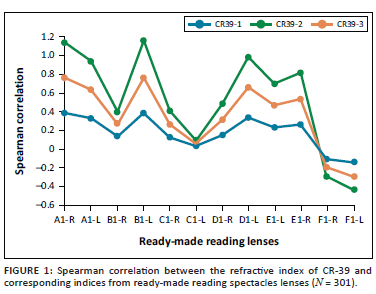
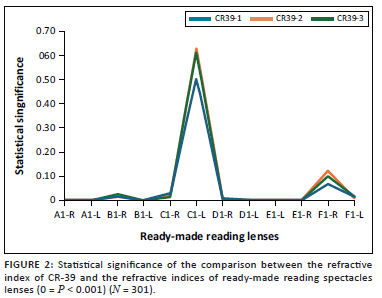
The P-values indicating the statistical significance and correlation coefficients (ρ) corresponding to each lens are presented in Figure 1 and Figure 2, respectively. All refractive index values for RMRS showed weak correlations to all CR-39 lenses, with all being positive correlations except for F1-R and F1-L, which demonstrated negative correlations to all CR-39 lenses. Statistically significant correlations (P < 0.05) were found for all comparisons besides C1-L and F1-R (P > 0.05), and the majority of the refractive index correlations were statistically significantly weak.
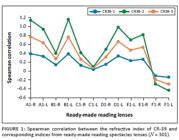
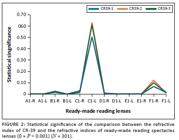
A1-R and A1-L exhibited weak correlation coefficients ranging from ρ = 0.306 to 0.390, with statistically significant P-values (P < 0.001) across all comparisons with the CR-39 lenses. Similarly, B1-L showed correlation coefficients in the range of ρ ≈ 0.384 to 0.391, also with statistical significance (P < 0.001). Lenses C1-R and C1-L showed weak correlations, with C1-L exhibiting correlation coefficients ranging from ρ = 0.028 to 0.038 and non-significant P-values (P > 0.05).
Other lenses demonstrated weaker but still statistically significant correlations. For example, B1-R showed weak correlation values (ρ ≈ 0.129 to 0.140), with corresponding P-values ranging from 0.015 to 0.025. D1-R exhibited significantly weak correlations ranging from ρ = 0.152 to 0.174 and P-values ranging from 0.003 to 0.008. D1-L exhibited significantly weak correlations ranging from ρ = 0.0341 to 0.326, but with all significant correlations (P < 0.001). E1-R and E1-L showed weak but statistically significant correlations, ranging from ρ = 0.235 to 0.274 (P < 0.001). Of particular interest were F1-R and F1-L, both of which recorded negative weak correlations ranging from −0.095 to −0.150, with only lens F1-L exhibiting statistically significant results (P < 0.05).
Image quality
The image quality of the lenses was determined using the width of 4 wavelengths for each lens. Table 1 shows the calculated width of the four wavelengths for each lens, with the RMRS width ranging from 2.00 to 3.00 pixels and that of CR-39 ranging from 2.20 to 3.38 pixels.
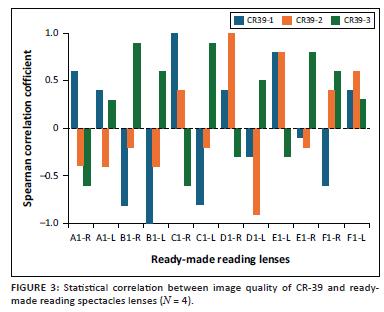
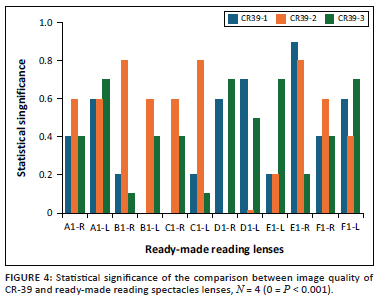
The correlation coefficients (ρ) (Figure 3) provide insight into the strength and direction of the relationship between the image quality of CR-39 lenses and RMRS lenses, with corresponding P-values indicating statistical significance (Figure 4). A1-R showed varying correlations with the CR-39 lenses; an average positive correlation with CR39-1 (ρ = 0.6) existed, a weak negative correlation with CR39-2 (ρ = −0.4), and an average negative correlation with CR39-3 (ρ = −0.6), while A1-L displayed weak correlations ranging from 0.3 to −0.4. None of these correlations were statistically significant (P > 0.05). B1-R exhibited a strong negative correlation with CR39-1 (ρ = −0.8), a weak negative correlation with CR39-2 (ρ = −0.2), and a strong positive correlation with CR39-3 (ρ = 0.9). B1-L demonstrated a completely negative correlation with CR39-1 (ρ = −1), a weak negative correlation with CR39-2 (ρ = −0.4), and an average positive correlation with CR39-3 (ρ = 0.6) The P-value for B1-L with CR39-1 (P = 0) indicates a statistically significant relationship in contrast, B1-R showed a P-value of 0.2 for CR39-1.
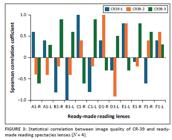
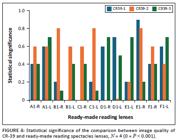
Similarly, C1-R showed a significant complete positive correlation with CR39-1 (ρ = 1, P = 0), but weak and insignificant correlations with CR39-2 and CR39-3. C1-L displayed strong negative and positive correlations with CR39-1 and CR39-3, respectively, though all were statistically insignificant. D1-R had a significant, complete positive correlation with CR39-2 (ρ = 1, P < 0.05) and weaker, insignificant correlations with CR39-1 and CR39-3. D1-L showed a strong negative correlation with CR39-2 (ρ = −0.9) that was statistically significant, while other correlations were weaker and not significant.
E1-R demonstrated strong positive correlations with CR39-1 and CR39-2 (ρ = 0.8 for both), and a weak negative correlation with CR39-3 (ρ = −0.3), all statistically insignificant. E1-L exhibited weak negative correlations with CR39-1 and CR39-2 and a strong positive correlation with CR39-3 (ρ = 0.8), also without statistical significance. F1-R had average negative and positive correlations with CR39-1 (ρ = −0.6) and CR39-3 (ρ = 0.6), respectively, and a weak positive one with CR39-2 (ρ = 0.4), non-significant. Similarly, F1-L showed weak positive correlations with all CR-39 lenses, ranging from ρ = 0.3 to 0.6, with all corresponding P-values greater than 0.05.
Scratch resistance
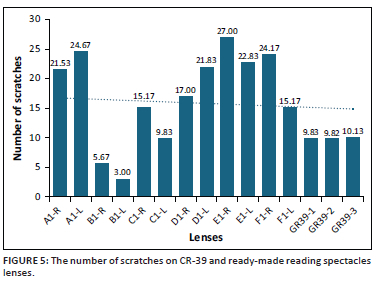
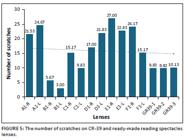
Figure 5 shows a notable variation in scratch resistance among the lenses tested. Overall, the CR-39 lenses exhibited superior scratch resistance, with consistently low scratch counts ranging between 9.82 and 10.13. In contrast, the RMRS lenses displayed a broader range of surface scratches, ranging from 3.0 to 27.0, with E1-R, A1-L and F1-R, recording high scratch counts, peaking at 27 and B1-L and B1-R, exhibiting minimal surface scratches, indicating variability in scratch resistance across the RMRS series.
Discussion
In this study, researchers systematically investigated the refractive index, image quality and scratch resistance of ready-made reading spectacles lenses compared to CR-39 lenses, addressing the research gap in the ophthalmic industry in the understanding of affordable optical corrections in the context of near visual impairment in South Africa. Given the significant demographic shift towards an ageing population and the rising prevalence of presbyopia, it is essential to ensure that cost-effective solutions like RMRS maintain acceptable standards of quality to meet the increasing need for visual correction.
This study specifically compared the refractive index, image quality and scratch resistance of RMRS lenses to CR-39 lenses. The refractive index of the study lenses was significantly different. Resultant wavelength widths of CR-39 practically showed a higher range, implying better image quality; however, correlations were statistically insignificant. CR-39 also showed superior scratch resistance to most RMRS.
Refractive index
It was determined that overall, a statistically significant weak positive monotonic correlation exists between the refractive index of RMRS and CR-39. A1-R, A1-L, and B1-L demonstrated the highest and most consistent correlation coefficients, which were statistically significant (P < 0.001). These results suggest strong and reliable refractive index properties with CR-39, therefore having the potential for these lenses to provide an individual with comparable refractive performance. E1-R and E1-L showed lower, but still statistically significant, correlations.
Notably, B1-R, D1-R, and D1-L exhibited the weakest yet still significant correlations. The lower coefficients for B1-R suggest limited correlation in refractive index, whereas D1-L, with stronger values than D1-R, may reflect manufacturing or material differences even within the same lens series.
The possibility of manufacturing differences is further supported by the results of C1-R and C1-L which showed despite lenses being from the same manufacturer, one lens (C1-R) yielded significant correlations (P-values: 0.013 to 0.028) with CR-39, while the second lens (C1-L) from the same manufacturer yielded insignificant correlations (P-values: 0.508 to 0.619).
The differences shown with RMRS lenses from the same manufacturer may point to inconsistencies in material composition, production methods and labelling, highlighting potential quality control issues.
A particularly intriguing observation was the behaviour of the F1 series. While both F1-R and F1-L showed negative correlation coefficients, only F1-L yielded statistically significant results (P < 0.05), suggesting a true but inverse relationship with the CR-39 lenses. The weak and non-significant correlations for F1-R (P > 0.05) contrast with the consistent significance seen in F1-L, warranting further investigation. This asymmetry raises questions about manufacturing precision or batch-specific variations in the refractive index, especially because negative correlations are unusual and may indicate underlying incompatibilities in optical performance.
The refractive indices of RMRS and CR-39 ranged from 1.39 to 1.69 and 1.44 to 1.58, respectively. The range of refractive indices for RMRS was wider than CR-39 and showed values lower and higher than those of CR-39. Because the refractive index of lens material affects light transmission, it is apparent from the results that the transmittance of white light through RMRS lenses differs notably compared to CR-39. Furthermore, the refractive index of a lens influences the Abbé value, which describes the degree of chromatic aberrations in a lens.16
This study demonstrated a wide range of refractive indices present in RMRS, and a low correlation was found between the refractive indices of RMRS and CR-39. Ready-made reading spectacles could produce more chromatic aberrations, while some may present with less. It is, therefore, important for future studies to include a larger sample of RMRS with multiple manufacturers to ascertain the overall occurrence of chromatic aberrations in RMRS.
Collectively, these results underscore the importance of standardising the refractive properties of RMRS to ensure reliable visual outcomes. While most lenses show encouraging alignment with CR-39 standards, discrepancies, such as those found in the C1 and F1 series, highlight the need for rigorous quality control and further exploration into material behaviour and production variability.
Image quality
The image quality determined by the wavelength width showed RMRS had a lower range of widths compared to that of CR39 (2.00 to 3.00 pixels and 2.20 to 3.38 pixels, respectively), implying that CR-39 has better image quality than RMRS; however, image quality correlations were insignificant for most lenses. The analysis of Spearman rank correlations reveals a substantial degree of variability in the relationships between the image quality of the CR-39 lenses and RMRS. Most correlations were insignificant; only three RMRS showed statistically significant values with CR-39. Statistically significant values were shown by B1-L and C1-R with CR39-1 and D1-R with CR39-2.
B1-L and C1-R showed statistically significant complete correlations with CR39-1; however, D1-R showed the same with CR39-2, suggesting that their image formation properties are well-aligned with those of the CR-39 reference lenses. These findings are particularly noteworthy as they indicate that these spectacles may exhibit comparable optical performance to the CR-39 lenses.
Conversely, A1-R, A1-L, F1-R and F1-L exhibited weak to average correlations with the CR-39 lenses, with P-values indicating that these relationships are not statistically significant. This suggests that the image formation properties of these RMRS may not align closely with the CR-39 reference lenses, highlighting potential variability in the performance of commercially available RMRS and CR-39 lenses.
As shown by the results of the inconsistent refractive index of RMRS, the image quality of RMRS, too, was inconsistent across the brands and with each brand, as no pair of lenses from the same brand exhibited the same direction of correlation for all CR-39 lenses. Again, questioning the possible manufacturing process imperfections.
The current study showed the presence of variability of image quality in RMRS. The variability in image quality may be the reason for studies like that of Ebeigbe and Uwagboe21222122
The results underscore the importance of validating the optical properties of RMRS to ensure consistent visual performance across different lenses. The variability observed in this study suggests that further research and quality control measures are necessary to ensure that commercially available RMRS meet the required optical standards.
Scratch resistance
All the CR-39 lenses exhibited fewer scratches compared to most of the RMRS lenses. The results indicate that CR-39 lenses are possibly more scratch-resistant than RMRS lenses. Notably, there is a variation in scratch-resistance between the two lenses of the same RMRS pair for all brands of RMRS used, potentially because of a manufacturing fault. Furthermore, the reduced scratch resistance of some RMRS may be a consequence of the materials used to achieve higher refractive indices.172324
Several lenses demonstrated statistically significant, but weak correlations. Although a relationship exists, this may not clinically translate into a perceivable difference in the visual performance for the user of the lenses. Weak correlations, even if significant, may have limited practical or clinical impact
The results are equally important for both manufacturers and consumers. For manufacturers in the ophthalmic industry, this study highlights the need to enhance the quality of RMRS lenses to ensure they meet acceptable ophthalmic standards. For consumers, especially those in developing countries with limited access to custom-made spectacles, the study suggests that RMRS provides a necessary refractive near correction. CR-39 lenses are still a preferable option where affordability is less of a constraint.
Study limitations and future recommendations
While the CR-39 lenses utilised in this study exhibited refractive indices within the expected range (1.44-1.58), closely aligning with the nominal value for CR-39 material (n ≈ 1.498),17
Future investigations should aim to incorporate a larger and more diverse sample of CR-39 lenses, sourced from multiple manufacturers, to enhance the robustness and external validity of the findings. Additionally, further research should be directed toward improving the manufacturing quality of RMRS lenses. It is recommended that future studies evaluate the impact resistance of RMRS lenses in rimless and nylon-supra frames, with direct comparisons to high-durability lens materials such as Trivex and polycarbonate.
Conclusion
This study has revealed a statistically significant difference in the refractive indices when comparing the optical characteristics of lenses used in RMRS to those of CR-39. There was no statistically significant difference between the image quality for RMRS and CR-39; however, optically, the CR-39 lens produced a clearer image. Finally, CR-39 exhibited higher scratch resistance than RMRS. These findings contribute to the understanding and evaluation of lens material quality. They provide valuable insights for potential manufacturers and spectacle users, suggesting that CR-39 should be considered the preferred choice because of its higher scratch resistance and optically superior image quality compared to RMRS lenses.
Competing interests
The authors declare that they have no financial or personal relationships that may have inappropriately influenced them in writing this article.
Authors' contributions
M.V. conceived the initial idea for the study, led the research group, formatted the manuscript, collected data on scratch resistance, interpreted the data, wrote the article and continued to provide revisions during the editing process. G.R.A. contributed to the initial idea, formatted and edited the manuscript, collected data on refractive index and image quality testing and continued to provide revisions during the editing process. J.-A.O. contributed to the initial idea, formatted and edited the manuscript, collected data on refractive index and image quality testing and continued to provide revisions during the editing process. S.J. supervised the research, provided ongoing support and guidance and contributed to the writing and continued editing of the article.
Funding information
This research study did not receive any financial support or funding from any private or public entities, commercial enterprises or non-profit organisations. The funding for this study was reliant and provided solely by the authors themselves.
Data availability
Raw data were generated at the University of the Free State's Biostatistics Department. Derived data supporting the findings of this study are available from the corresponding author, M.V., upon reasonable request.
Disclaimer
The views and opinions expressed in this article are those of the authors and are the product of professional research. They do not necessarily reflect the official policy or position of any affiliated institution, funder, agency or the publisher. The authors are responsible for this article's results, findings and content.
Acknowledgements
The authors of this study would like to express their sincere gratitude and acknowledge the individuals who have made valuable contributions throughout the course of this study. Mr Sphesihle Cele for his aid with data collection for this study. Dr O. Aluko, a biostatistician from the University of the Free State's Biostatistics Department, for his assistance with analysing the raw data collected for this study. Additionally, Dr L.J.B. Erasmus from the Department of Physics provided valuable guidance and expertise in the methodology related to image quality and refractive index. The authors would like to thank Miss S.T. Pala for accommodating and providing the necessary resources, such as the MaxCCTV to conduct the scratch resistance testing at CUADS. Furthermore, Mr F. Mohammed of Faizal Mohammed Optometrist, Newcastle, also receives our gratitude for allowing the use of the Hoya anti-scratch coating marketing device.
References
-
1. Gordon T, Booysen F, Mbonigaba J. Socio-economic inequalities in the multiple dimensions of access to healthcare: The case of South Africa. BMC Public Health. 2020;20(1):1-13. https://doi.org/10.1186/s12889-020-8368-7
» https://doi.org/10.1186/s12889-020-8368-7 - 2. Bourne RRA, Steinmetz JD, Flaxman S, et al. Trends in prevalence of blindness and distance and near vision impairment over 30 years: An analysis for the Global Burden of Disease Study. Lancet Glob Health. 2021;9(2):e130-e143.
-
3. Baitch L. Presbyopia treatment: Current and future options. In: Review of cornea and contact lenses [homepage on the Internet]. 2020 [cited 2025 Aug 03]; p. 28-32. Available from: https://www.reviewofcontactlenses.com/CMSDocuments/2020/03/RCCLMarch2020.pdf
» https://www.reviewofcontactlenses.com/CMSDocuments/2020/03/RCCLMarch2020.pdf -
4. National Eye Institute. Presbyopia: What is presbyopia? [Internet]. Bethesda, MD: National Eye Institute; 2024 [cited 2025 Aug 06]. Available from: https://www.nei.nih.gov/learn-about-eye-health/eye-conditions-and-diseases/presbyopia
» https://www.nei.nih.gov/learn-about-eye-health/eye-conditions-and-diseases/presbyopia -
5. Asare FA, Morjaria P. Eligibility for the use of ready-made spectacles among children in a school-based programme in Ghana. PLoS Glob Public Health. 2022;2(1):e0000079. https://doi.org/10.1371/journal.pgph.0000079
» https://doi.org/10.1371/journal.pgph.0000079 -
6. Butler MA, Jowell ME, Clarke-Farr PC. Analysis of readymade readers and near-inter-pupillary distance for presbyopic patients in optometric practice in Cape Town, South Africa. Afr Vis Eye Health. 2016;75(1):316. https://doi.org/10.4102/aveh.v75i1.316
» https://doi.org/10.4102/aveh.v75i1.316 -
7. The Vision Council announces publication of ANSI Z80.1-2020 prescription ophthalmic lenses - Recommendations [homepage on the Internet]. [cited 2024 Oct 30]. Available from: https://thevisioncouncil.org/members/interest/vision-council-announces-publication-ansi-z801-2020-prescription-ophthalmic-lenses
» https://thevisioncouncil.org/members/interest/vision-council-announces-publication-ansi-z801-2020-prescription-ophthalmic-lenses - 8. International Organization for Standardization. ISO 16034 Ophthalmic optics - Specifications for single-vision ready-to-wear near-vision spectacles. Vols. 10406-1:20. Geneva: International Organization for Standardization; 2002.
- 9. International Organization for Standardization. ISO 14889:2013 Ophthalmic optics - Spectacle lenses - Fundamental requirements for uncut finished lenses. Geneva: International Organization for Standardization; 2013.
-
10. South Africa. Department of Health. Health Professions Act, 1974 (Act No. 56 of 1974). Regulations defining the scope of the profession of Optometry and Dispensing Opticians [Internet]. Pretoria: Government Printer; 2007 [cited 2025 Aug 21]. Government Gazette No 29748:7-9. Available from: https://www.gov.za/sites/default/files/gcis_document/201409/29748b.pdf
» https://www.gov.za/sites/default/files/gcis_document/201409/29748b.pdf - 11. Prudyus I, Tkachenko V, Kondratov P, Fabirovskyy S, Lazko L, Hryvachevskyi A. Factors affecting the quality of formation and resolution of images in remote sensing systems. J Comput Eng. 2015;5:41-46.
- 12. Brooks C, Borish I. Lens materials, safety and sports eyewear. In: Falk K, editor. Systems of ophthalmic dispensing. 3rd ed. St. Louis, MO: Butterworth-Heinemann Elsevier, 2007; p. 581.
- 13. Brooks C, Borish I. Standard alignment. In: Falk K, editor. Systems of ophthalmic dispensing. 3rd ed. St. Louis, MO: Butterworth-Heinemann Elsevier, 2007; p. 164.
- 14. Brooks C, Borish I. Lens design. In: Falk K, editor. Systems of ophthalmic dispensing. 3rd ed. St. Louis, MO: Butterworth-Heinemann Elsevier, 2007; p. 404.
- 15. Brooks C, Borish I. Characteristics of ophthalmic lenses. In: Falk K, editor. Systems of ophthalmic dispensing. 3rd ed. St. Louis, MO: Butterworth-Heinemann Elsevier, 2007; p. 276.
- 16. Brooks C, Borish I. Lens design. In: Falk K, editor. Systems of ophthalmic dispensing. 3rd ed. St. Louis, MO: Butterworth-Heinemann Elsevier, 2007; p. 403.
- 17. Brooks C, Borish I. Lens materials, safety and sports eyewear. In: Falk K, editor. Systems of ophthalmic dispensing. 3rd ed. St. Louis, MO: Butterworth-Heinemann Elsevier, 2007; p. 569.
- 18. Brooks C, Borish I. Measuring the interpupillary distance. In: Falk K, editor. Systems of ophthalmic dispensing. 3rd ed. St. Louis, MO: Butterworth-Heinemann Elsevier, 2007; p. 27-30.
-
19. Patel R, Patel N, Bazzanella N, Miotello A. Fabricating multilayer antireflective coating for near complete transmittance in broadband visible light spectrum. Opt Mater (Amst). 2020;108:110415. https://doi.org/10.1016/j.optmat.2020.110415
» https://doi.org/10.1016/j.optmat.2020.110415 - 20. Smith WJ. Optical materials and interference coatings. In: Smith WJ, editor. Modern optical engineering. 3rd ed. New York, NY: McGraw-Hill, 2000; p. 173-216.
-
21. Ebeigbe JA, Uwagboe PN. The use of ready-made glasses among presbyopes in selected local government areas of Edo State, Nigeria. Niger J Life Sci. 2021;11(1):1-5. https://doi.org/10.52417/njls.v11i1.26
» https://doi.org/10.52417/njls.v11i1.26 - 22. Ekpenyong BN, Naidoo K, Ndep AO, Ahaiwe K, Ndukwe O, Nwandu D, et al. Comparative analysis of satisfaction with the use of ready-made spectacles and custom-made spectacles among school children in Nigeria: A randomised controlled trial. J Health Med Nur. 2017;35:15-21.
-
23. Eyecare Plus Optometrists. The little guide to looking after your spectacles [Internet]. 2018 [cited 2024 Oct 31]. Available from: https://www.ecplus.com.au/guidebook/The-Little-GuidetoLooking-After-Your-Spectacles.pdf
» https://www.ecplus.com.au/guidebook/The-Little-GuidetoLooking-After-Your-Spectacles.pdf - 24. Department of Health. National guideline on prevention of falls of older persons. Pretoria: Government Communication and Information System, 2000; p. 1-19.
Accepted: 09 July 2025
Published: 23 Oct. 2025