Impact of infrastructure and housing conditions on health outcomes in Zambia: a scoping review and thematic analysis
Abstract
Infrastructure and housing conditions are increasingly recognised as key determinants of public health, yet evidence from Zambia remains limited and fragmented. This scoping review maps research on how WASH infrastructure, service provision, and housing quality influence health outcomes. Following the Arksey and O'Malley framework, strengthened by Joanna Briggs Institute (JBI) guidance and reported in line with the PRISMA-ScR checklist, searches across Scopus, Web of Science, PubMed, Google Scholar, and organisational sources identified studies published between 2012 and October 2025. From 4,525 records and 141 full texts, 32 studies met inclusion criteria and were synthesised thematically. Four themes emerged: water and sanitation services, where inadequate or poorly maintained systems drive contamination and disease; WASH access, highlighting persistent inequalities linked to socio-economic status, settlement type, and rapid urbanisation; WASH and health outcomes, showing consistent associations between poor sanitation, limited drainage, water scarcity, and communicable diseases such as cholera and diarrhoea; and housing and malaria, demonstrating how structural features like wall and roof materials, ventilation, and openings affect vector exposure. Across studies, weak sanitation, inadequate drainage, overcrowding, and poor housing quality heightened vulnerability to cholera, diarrhoeal diseases, respiratory conditions, and malaria. Evidence gaps include measuring housing quality, integrating infrastructure factors into health research, and representing peri-urban areas. Findings underscore the need for improved, context-appropriate WASH systems, housing interventions, and standardised assessment approaches, while embedding public health considerations into housing and urban development policies to reduce preventable disease burdens in Zambia.
Infrastructure; housing conditions; health outcomes; PRISMA-ScR; water supply; sanitation; communicable diseases; environmental health
Abstract
Hierdie omvangsoorsig ondersoek hoe infrastruktuur en behuisingsomstandighede openbare gesondheid in Zambië beïnvloed. Hoewel hierdie faktore toenemend as sleuteldrywers erken word, bly bewyse beperk en gefragmenteerd. Die studie volg die Arksey en O'Malley-raamwerk, versterk deur die Joanna Briggs Instituut se riglyne, en rapporteer volgens die PRISMA-ScR-kontrolelys. Soektogte in Scopus, Web of Science, PubMed en Google Scholar, aangevul deur organisatoriese bronne, het studies tussen 2012 en Oktober 2025 geïdentifiseer. Uit 4 525 rekords en 141 volledige tekste is 32 studies ingesluit en tematies ontleed. Vier hooftemas het na vore gekom: Eerstens, water- en sanitasiedienste, waar onvoldoende en swak beplande stelsels tot besoedeling en siektes lei. Tweedens, WASH-toegang, wat ongelykhede volgens sosio-ekonomiese status, nedersettingstipe en verstedeliking beklemtoon. Derdens, WASH en gesondheid, wat sterk assosiasies toon tussen swak sanitasie, beperkte dreinering, waterskaarste en siektes soos cholera en diarree. Vierdens, behuisingskwaliteit, waar boumateriaal, ventilasie en strukturele eienskappe malariarisiko beïnvloed. Oor studies heen is bevind dat swak sanitasie, onvoldoende dreinering, oorbevolking en lae behuisingsgehalte kwesbaarheid vir cholera, diarree, respiratoriese toestande en malaria verhoog. Bewysgapings sluit in die meting van behuisingsgehalte, die integrasie van infrastruktuurfaktore in gesondheidsnavorsing en die voorstelling van peri-stedelike gebiede. Die bevindinge beklemtoon die noodsaak van verbeterde, konteks-gepaste WASH-stelsels en behuisingsintervensies, sowel as gestandaardiseerde assesseringsmetodes. Die versterking van infrastruktuurbeplanning en die inbedding van gesondheidsoorwegings in stedelike beleid kan voorkombare siektelaste in Zambië verminder.
1. INTRODUCTION
Infrastructure and housing shape the physical, social, and economic environments in which people live (Rolfe et al., 2020). Physical infrastructure systems such as buildings, roads, sewerage networks, and water treatment plants are fundamental to the effective daily functioning of society and are essential for the social and health well-being of people. In this study, the term 'health outcomes' refers to the specific physical diseases, morbidities, and mortality risks that arise directly from exposure to inadequate physical and social environments, particularly deficiencies in housing and water, sanitation, and hygiene (WASH) infrastructure. These factors, alongside socio-economic conditions, have been widely recognised as key determinants of health outcomes (WHO, 2025).
Globally, 1.5 billion people still lack access to basic sanitation, and over 760 million of these reside in sub-Saharan Africa. This gap contributes to a major public health crisis, facilitating the spread of infectious diseases such as cholera, dysentery, and typhoid (World Bank, 2019). Inequities in access to improved WASH infrastructure are strongly associated with poorer health outcomes, particularly among low-income and marginalised populations (Dickin & Gabrielsson, 2023). Addressing these gaps requires the provision of high-quality sanitation facilities and services that safely manage human waste, combined with practices that prevent disease transmission and protect environmental health (Tidwell & Terris-Prestholt et al., 2019).
Substandard housing conditions, limited access to essential services, and inadequate waste management systems present significant challenges to improving health outcomes, especially for vulnerable, low-income households. Research has consistently demonstrated that inequalities in housing quality are linked to disparities in access to health-supporting infrastructure, positioning housing as a critical social determinant of health (Tu et al., 2025; Rolfe et al., 2020; Anand & Roy, 2016). Poor integration of waste, water, and sanitation systems within housing systems perpetuates inequalities across both health and social dimensions. Evidence shows that poorly designed housing environments directly affect health outcomes, contributing to respiratory conditions such as asthma and other chronic illnesses (Fox et al., 2022; Nawa et al., 2019; Tusting et al., 2017). Inadequate ventilation, in particular, undermines comfort and safety by compromising indoor air quality. Without effective removal of pollutants and toxins, harmful substances accumulate, creating environments that exacerbate health risks and reduce overall quality of life.
Access to water, sanitation, and hygiene (WASH) in Zambia remains a critical systemic challenge, marked by significant disparities between urban and rural areas (Libanda et al., 2024; Mulenga et al., 2017). Rural communities are particularly affected, due to their reliance on unimproved water sources, inadequate faecal sludge management, and the prevalence of water-related diseases (Smiley, Subulwa & Herald, 2025). The consequences are severe: poor WASH services are estimated to cost Zambia USD194 million annually in health-related impacts (UNICEF, 2025a). Inadequate WASH provision has been directly linked to recurring cholera outbreaks and is responsible for 11.4% of all deaths nationwide (Nyambe et al., 2020).
In response, the Zambian government has prioritised the construction of boreholes, the improvement of sanitation facilities, and the pursuit of universal access to safe water and sanitation by 2030 (GRZ-MWDSEP, 2019). Progress is assessed using the WHO/UNICEF Joint Monitoring Programme (JMP) sanitation ladder, which categorises sanitation into Ave service levels, namely safely managed, basic, limited, unimproved, and open defecation, the latter representing the lowest rung, where human waste is disposed of in open spaces (WHO UNICEF-JMP, 2025).
Despite these efforts, JMP estimates for 2024 reveal that 64% of households in Zambia's urban areas still lack basic sanitation services (WHO UNICEF-JMP, 2025). Approximately 46.9% of the urban population does not have access to a handwashing facility (UNICEF, 2025a). These deficits, when viewed through the sanitation ladder ranking framework, highlight the severe consequences for household health outcomes, public health systems, economic productivity, environmental sustainability, and social well-being (Meili et al., 2022).
The situation is particularly acute in densely populated, unplanned peri-urban settlements, where households often rely on pit latrines, frequently shared among multiple families (Tidwell & Chipungu et al., 2019; Klug et al., 2017). This reliance places a significant proportion of the urban population at the "limited" or "unimproved" levels of JMP WASH parameters (WHO, 2023). Addressing these challenges requires accelerated government action to meet the national targets of 90% access to proper sanitation and 100% access to safe water by 2030 (GRZ-MFNP, 2022).
Research increasingly recognises that health outcomes are determined not only by genetics and individual behaviours, but also by the physical and social environments in which people live (WHO, 2024; Short & Mollborn, 2015; National Research Council & Institute of Medicine, 2013). Examining these broader determinants is essential for understanding how housing interacts with foundational infrastructure and for identifying modifiable risk factors directly linked to specific health problems (Thomson et al., 2013). Such an approach allows for a more comprehensive analysis of how housing systems intersect with other critical infrastructures, including waste management and transport, to influence both community and household health.
Despite the importance of these relationships, there is limited research in Zambia that explicitly connects sanitation infrastructure, housing design, construction quality, and health outcomes. The literature lacks standardised metrics for assessing housing quality as a determinant of health, and few studies evaluate the effectiveness of specific housing structures or design interventions. Peri-urban areas, where a large proportion of Zambia's urban population resides, remain significantly underrepresented in research, despite their heightened vulnerability to disease, due to the rapid expansion of informal settlements.
This scoping review, therefore, seeks to systematically map existing evidence, identify gaps in the literature, and clarify key concepts, by analysing how WASH infrastructure and housing conditions affect health outcomes in Zambia. By synthesising fragmented research, the review makes a substantial contribution to the body of knowledge on the intersection of the built environment and public health. While previous studies have largely focused on cholera prevention and WASH inequalities, this review highlights that housing itself remains a critical yet underexplored structural determinant of health.
2. METHODS AND REVIEW PROTOCOL
A protocol was compiled by two reviewers in compliance with the JBI key elements for a scoping review protocol, which states that at least two reviewers should be identified before the start of the review process, with the inclusion of multiple reviewers increasing reliability (Peters et al., 2020). This scoping review adopts an exploratory research design to map existing evidence on the impact of infrastructure and housing on health outcomes in Zambia (Meinert et al., 2019; Arksey & O'Malley, 2005). A scoping review is particularly appropriate and justified, as it provides a rigorous framework for examining emerging or heterogeneous bodies of literature, identifying research gaps, clarifying key concepts, and informing the feasibility of future systematic reviews (Munn et al., 2018; Davis, Drey & Gould, 2009). The reporting of this review was guided by the Preferred Reporting Items for Systematic Reviews and Meta-Analyses extension for Scoping Reviews (PRISMA-ScR) checklist (Tricco et al., 2018), while the methodological conduct followed the Arksey and O'Malley (2005) framework. To maintain methodological rigour and transparency, the review follows the stages outlined by Arksey and O'Malley (2005), namely determining eligibility criteria; identifying relevant studies; study selection and review; charting the data (Munn et al., 2018); collating, summarising, and reporting results (Arksey & O'Malley, 2005).
These scoping review stages (the process/conceptual/methodological steps), alongside the PRISMA-ScR checklist (the documentation of results/ reporting standards), jointly guided how the review protocol was planned, structured, and documented. This means that the protocol was designed to be both methodologically rigorous and transparent, meeting expectations for high-quality scoping reviews in the built-environment research domain.
2.1 Eligibility criteria
Studies were included if they met the following criteria, namely published in English; examined the impact of infrastructure or housing on health outcomes in Zambia, and published between 2012 and October 2025.
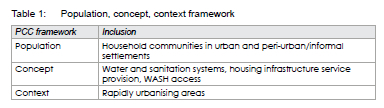
This year range was chosen to capture contemporary evidence and ensure adequate coverage of recent scholarship necessary for comprehensiveness, rigour, and transparency (Peters et al., 2020). The Population, Concept, and Context (PCC) framework recommended by the JBI was used to structure the inclusion criteria, as shown in Table 1 (Munn et al., 2018; Peters et al., 2020).
2.2 Types of sources
A range of literature sources was consulted to ensure comprehensive coverage of evidence for this scoping review.
• Electronic databases: Peer-reviewed studies were identified through systematic searches of Scopus, Web of Science, and PubMed (Levac, Colquhoun & O'Brien, 2010).
• Search engines: Google Scholar was used to further expand the search. Owing to its broader disciplinary coverage, Google Scholar indexes a wide range of journals, reports, and grey literature, often identifying sources not included in conventional academic databases (Martín-Martín et al., 2018).
• Reference lists: The reference lists of relevant journal articles were examined to identify additional sources. Bibliographies of key publications were screened to identify studies not retrieved through the database searches.
• Organisations websites: Organisations websites were searched for reports and policy documents as a critical component of grey literature in this scoping review to ensure a comprehensive mapping of all available evidence that provide unique and detailed information on the topic under study (Brown, 2025; Gottlieb et al., 2021).
2.3 Search strategy
A systematic search process was conducted, using four electronic databases, namely Scopus, Web of Science, PubMed, and Google Scholar, selected for their comprehensive and multidisciplinary citation coverage, their ability to track research impact, and their detailed citation analysis capacity (MartínMartín et al., 2018; Mongeon & Paul-Hus 2016). Searches were carried out both individually and in combination, using keywords related to infrastructure, housing, buildings, water and sanitation, drainage systems, roads, health, diseases, and Zambia. Boolean operators ("AND/OR") were used to refine and expand the search scope. To enhance transparency and reproducibility, the following example keyword combinations were used as part of the search strategy: (infrastructure OR "built environment" OR "infrastructure services") AND (health OR "health outcomes" OR disease* OR morbidity OR mortality) AND (Zambia); (housing OR "housing quality" OR "housing conditions" OR "informal settlements") AND (health OR "public health" OR disease* OR "health risks") AND (Zambia); (WaSH OR "water and sanitation" OR "sanitation systems" OR "water supply" OR "drainage systems") AND (health OR "communicable diseases" OR diarrhoea OR cholera) AND (Zambia);("urban growth" OR "rapid urbanisation" OR "urban development") AND (infrastructure OR housing OR "service provision") AND (health OR disease* OR "environmental health") AND (Zambia);("environmental infrastructure" OR drainage OR "waste management") AND (malaria OR "vector-borne disease*" OR mosquito*) AND (Zambia); (infrastructure OR housing OR "urban settlements" OR "informal settlements" OR WaSH OR "water and sanitation" OR "service delivery") AND (health OR disease* OR "health outcomes" OR "public health") AND (Zambia). These search combinations were iteratively adapted to each database to ensure comprehensive retrieval of relevant studies.
2.4 Study selection
Study selection followed a structured two-stage process to ensure transparent and systematic identification of eligible studies. All search results were imported into Rayyan, an AI-powered tool for organising, screening, and deduplicating studies during systematic reviews (rayyan, 2025), which automatically detected and flagged duplicates. Reviewers then manually verified and removed these duplicates to create a clean dataset, in line with the methodological expectations of scoping reviews (Ouzzani et al., 2016; Peters et al., 2020).
During title and abstract screening, rayyan's blinded screening feature was activated, allowing reviewers to independently classify studies as 'include', 'exclude', or 'maybe'. Tools such as customised labels, keyword highlighting, and decision-tracking supported consistent application of eligibility criteria. Conflicts were automatically flagged and resolved through discussion, with rayyan maintaining a transparent audit trail (Peters et al., 2020).
Studies marked as potentially relevant proceeded to the full-text screening stage. Rayyan enabled reviewers to upload full-text PDFs, annotate documents, and record specific exclusion reasons within the system. Its Altering options supported efficient organisation of studies by decision status and reviewer agreement. After full-text assessments, rayyan generated exportable lists of included and excluded studies, with reasons, ensuring transparent reporting consistent with scoping review best practice (Peters et al., 2020).
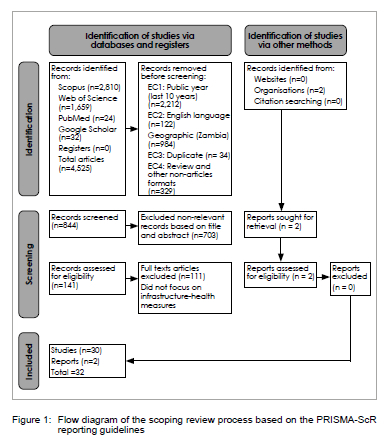
The results of the search are presented in a PRISMA-ScR flow diagram (Tricco et al., 2018) (Figure 1).
2.5 Data extraction 'charting'
Data extraction followed an iterative charting process, in which the researchers engaged closely with the content of included studies to ensure alignment with the review objective of how infrastructure and housing affect health outcomes in Zambia (Levac et al., 2010). A charting form adapted from Arksey and O'Malley (2005) was used to record variables such as author, year, themes, and description of the included studies. Extracted data also included study characteristics relevant to infrastructure and health or housing and health outcomes (Peters et al., 2020). Preliminary frequency-based coding involved categorising data into these broad domains to guide the depth and scope of data extraction, using a spreadsheet that aligns with the predefined review themes, consistent with scoping review guidance (Arksey & O'Malley, 2005).
2.6 Data presentation and synthesis
A thematic analysis was conducted to identify patterns and meaning across the included studies, enabling the development of analytical themes without adherence to a specific epistemological framework (Maguire & Delahunt, 2017). The analysis followed Braun and Clarke's (2024) six-phase framework, namely data familiarisation; generating initial codes; searching for themes; reviewing themes; defining and naming themes, and reporting. Thirty-two studies published between 2015 and October 2025 were included. Coding was conducted using an Excel spreadsheet to organise and group data, which facilitated interpretive insights (Peters et al., 2020). Extracted items were then collated, refined, and organised into themes illustrating how infrastructure and housing affect health outcomes in Zambia (Braun & Clarke, 2024).
3. RESULTS
3.1 Screening results
The search strategy identified 4,525 studies from Scopus (n = 2,810), Web of Science (n = 1,659), PubMed (n = 24), and Google Scholar (n = 32). A comprehensive search was conducted from 22 September to 9 October 2025. After removing 34 duplicates, an initial screening of titles and abstracts was conducted, which resulted in the exclusion of 703 articles. This left 141 documents, which were assessed for full screening; 30 articles were retained. Two (2) documents were retrieved from the organisations' websites. Following a full-text assessment and quality evaluation, using the PRISMA-ScR checklist, 32 studies met the inclusion criteria and were included in the analysis (Figure 1).
3.2 Description of reviewed studies
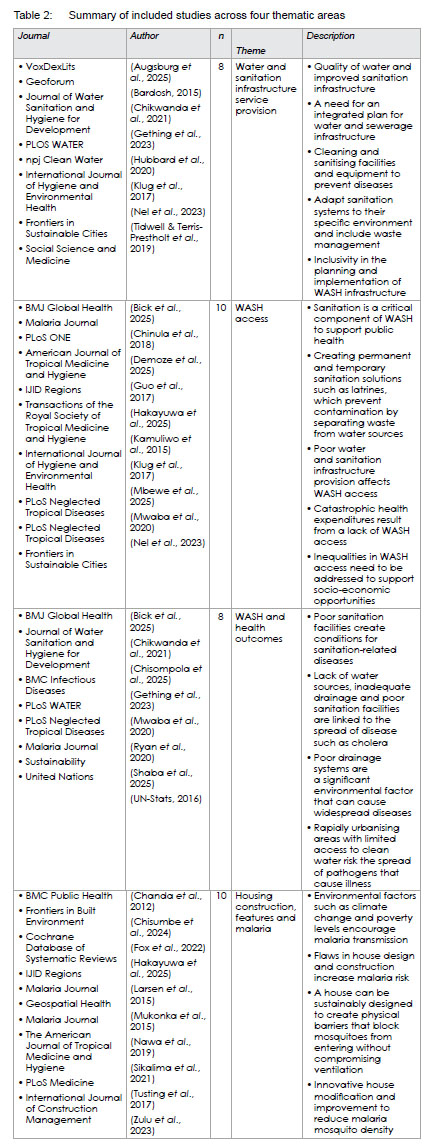
The results from the scoping review and content analysis were compared and discussed by this study's two authors. A total of 32 studies were included in the scoping review and subjected to thematic analysis. Four overarching themes were identified, namely water and sanitation infrastructure service provision; WASH access; WASH and health outcomes, as well as housing construction, features, and malaria.
Eight of the included studies (25.0%) addressed the provision of water and sanitation infrastructure services. WASH access was examined in 31.3% (n = 10) of the studies. A quarter of the included studies (n = 8; 25.0%) reported on WASH and health outcomes, demonstrating associations between inadequate water supply, poor sanitation, and ineffective drainage systems, with increased incidence of communicable diseases, including cholera. The theme of housing construction, features, and malaria was reported in 31.3% (n = 10) of the studies.
The studies in Table 2 span publications from 2012 to 2025, with only a few early foundational works appearing between 2012 and 2015. Research output increased from 2016 to 2020, particularly on WASH access, sanitation, drainage, and environmental health. The largest concentration of studies appears between 2021 and 2023, reflecting growing attention to cholera prevention, WASH inequalities, and housing-related health risks. The most recent studies (2024-2025) show expanding interest in Zambia-specific WASH and infrastructure challenges. Overall, the distribution indicates a steadily growing and contemporary evidence base linking infrastructure, housing quality, and health outcomes.
4. DISCUSSION
4.1 Identification of research gap
This scoping review mapped evidence on the impact of infrastructure and housing conditions on health outcomes in Zambia, synthesising 32 studies across four themes, namely water and sanitation infrastructure service provision; WASH access; WASH and health outcomes, as well as housing construction, features, and malaria. The findings show that WASH access and housing-related factors were the most prominent themes (31.3%, n = 10 each), while water and sanitation infrastructure provision and WASH-health linkages were each reported in 25.0% (n = 8) of the studies. Overall, the evidence demonstrates that inadequate infrastructure, inequitable access to WASH services, and poor housing conditions are interconnected determinants of adverse health outcomes, particularly in rapidly urbanising and low-income settings.
The temporal distribution of studies further indicates a growing and increasingly policy-relevant evidence base, with more recent research (2021-2025) focusing on cholera prevention, WASH inequalities, and housing-related health risks. Despite this growth, comparatively fewer studies examined housing as a structural determinant of health, suggesting an important gap in the literature.
4.2 Water and sanitation infrastructure services provision
The findings indicate that water and sanitation infrastructure provision is a foundational determinant of WASH outcomes and broader public health. Infrastructure quality, maintenance, and context-specific design directly influence disease prevention, economic productivity, and social well-being. However, access to sanitation infrastructure remains highly unequal, shaped by socio-economic status, geographic disparities, and the growth of informal settlements (Gething et al., 2023; Hakayuwa et al., 2025). These inequalities contribute to variations in the quality and safety of services, disproportionately affecting marginalised populations.
The economic burden of inadequate sanitation is substantial, costing Zambia an estimated 1.3% of GDP annually (Smiley et al. 2025; International Water and Sanitation Centre-IRC WASH 2012). Conversely, investment in climate-resilient WASH infrastructure yields high returns, estimated at USD 7 for every USD 1 invested (Economist Impact, 2023). However, rapid urbanisation and the expansion of informal settlements continue to strain existing systems, limiting service coverage and slowing progress (Kuddus, Tynan & McBryde, 2020). The impact of inadequate infrastructure is further compounded by climate change and rapid population growth. Climate-driven water scarcity and projected increases in heavy rainfall events will place excessive strain on already vulnerable WASH systems, heightening the risk across highly populated areas such as the Copperbelt and Lusaka (Chanda et al., 2012).
Consistent with the reviewed evidence, sustained and high-quality investment in sanitation infrastructure is associated with improved health outcomes through reduced exposure to environmental contamination and pathogens (Bose et al., 2024; Augsburg et al., 2025; Okesanya et al., 2024; George-Williams, Hunt & Rogers 2024; Andrés, Joseph & Rana, 2021). Despite these benefits, financing remains a critical constraint. The sector is largely publicly funded (Machete & Marques, 2021), with limited private sector participation, due to low financial returns and the public good nature of sanitation services (Bishoge, 2021; Bose et al., 2024; Andres, Biller & Dappe, 2016). This has resulted in a persistent funding gap (UNICEF 2025b), highlighting the need for innovative financing mechanisms, including public-private partnerships (PPPs), private finance initiatives (PFIs), and blended finance approaches (Pienaar et al., 2024; Andres et al., 2016; World Bank, 2025; UNICEF, 2025b; OECD, 2019).
Importantly, the effectiveness and sustainability of infrastructure interventions depend on governance and community engagement.
Evidence from Bardosh (2015) shows that top-down implementation approaches without local participation can lead to institutional failure, underscoring the importance of inclusive and context-sensitive planning.
4.3 WASH access
Access to water, sanitation and hygiene (WASH) services emerged as a central theme across the reviewed studies, highlighting that infrastructure provision alone is insufficient without equitable, reliable, and sustained access. Sanitation consistently appears as a critical component of WASH systems because the safe management and disposal of human waste is essential for preventing contamination and interrupting disease transmission cycles (Bick et al., 2025). However, effective access is shaped not only by physical infrastructure, but also by behavioural, institutional, and policy environments that enable its use and long-term sustainability (Tseole et al., 2022; John & Ajibade 2024).
Persistent challenges, including poor infrastructure provision, funding gaps, and structural socio-economic inequalities, continue to constrain equitable access to WaSH services (Bardosh, 2015; Gladstone et al., 2019; Guo et al., 2017; Mutale et al., 2018; Klug et al., 2017). Pressures such as climate change, rapid urbanisation, weak governance systems, and insufficient private-sector engagement further compound access limitations, often overwhelming existing service delivery mechanisms (Tidwell & Terris-Prestholt et al., 2019; Mutale et al., 2018). These constraints are particularly relevant to the construction industry, where gaps in infrastructure planning, financing, and maintenance affect both the viability and the resiliency of built-environment projects.
The impact of inequitable WASH access extends beyond immediate illness. It derails national disease elimination efforts and perpetuates cycles of poverty. Lack of access to clean water and sanitation in unplanned urban settlements and rural areas forces vulnerable households into catastrophic health expenditures to manage recurrent waterborne disease, reinforcing entrenched socio-economic inequalities (Gething et al., 2023; Chikwanda et al., 2021; Nawa et al., 2019). Conversely, inadequate access leads to substantial social and economic costs. High expenses associated with WASH-related illnesses often push households into catastrophic health expenditures, defined as costs exceeding 40% of a family's capacity to pay, which, in turn, increases the risk of impoverishment (Mbewe et al., 2025; Nel et al., 2023; Mackinnon et al., 2019; WHO, 2025). These financial burdens reinforce entrenched inequalities, as lower income households and underserved communities continue to experience disproportionately constrained access (Nel et al., 2023; Bick et al., 2025; Tidwell & TerrisPrestholt et al., 2019).
Inequitable WASH access is also linked with negative health outcomes, including increased disease transmission (Hakayuwa, et al., 2025; Mbewe et al., 2025; Mapingure et al., 2024) and impaired cognitive development (Gladstone et al., 2019; Piper et al., 2017). These impacts have wider implications for human capital formation and long-term social development, both of which are critical for sustainable construction and infrastructure delivery.
Addressing persistent disparities in WaSH access aligns with global development priorities under SDG 6, which emphasises universal and equitable access to safe and affordable water and sanitation (UN-Sustainable Development, 2025; UNECE, 2025).
4.4 WASH access and health outcomes
The review confirms a strong link between WASH conditions and health outcomes. Inadequate access to safe water, sanitation, and hygiene contributes to the transmission of infectious diseases such as cholera and trachoma (Demoze et al. 2025; Tidwell & Chipungu, et al., 2019; Tidwell & Terris-Prestholt, et al., 2019; Chikwanda et al., 2021). Evidence from Zambia indicates that limited access to sanitation and hygiene facilities significantly increases disease prevalence, particularly in densely populated and rapidly urbanising areas (Chisompola et al., 2025).
Cholera outbreaks are commonly driven by a combination of insufficient infrastructural investment, inadequate drainage, and broader environmental determinants (Gething et al., 2023; Mbewe et al., 2025; Mwaba et al., 2020; Nel et al., 2023). Ageing sewerage systems and poor drainage exacerbate these risks, creating conditions in which cholera can spread rapidly (Libanda et al., 2024; Hubbard et al., 2020; Bardosh, 2015). The health impact of poor WASH infrastructure is clearly visible in the increasing frequency and severity of communicable diseases. For instance, recent severe cholera outbreaks in Zambia, exacerbated by inadequate sanitation, a lack of handwashing facilities, and poor drainage in unplanned residential areas, have been linked not only to high mortality, but also to the alarming emergence of multidrug-resistant bacterial strains (Chikwanda et al., 2021; Gething et al., 2023). This underscores that the impact of deficient infrastructure encompasses acute disease transmission and the compounding, long-term public health crisis of antimicrobial resistance (Chisompola et al., 2025; Mbewe et al., 2025).
While improvements in WASH infrastructure can significantly reduce disease risk, they are insufficient in isolation, highlighting the need for integrated interventions that address environmental, social, and behavioural determinants (Chisompola et al., 2025).
The review highlights the role of WASH inequalities in perpetuating broader health and socio-economic disparities (Mustapha et al., 2024). Persistent data gaps and challenges in measuring inequalities (Dickin & Gabrielsson, 2023; Okesanya et al., 2024) further limit targeted intervention efforts, underscoring the need for improved monitoring systems.
The Zambian context exemplifies the cumulative impact of inadequate water and sanitation infrastructure on cholera outbreak vulnerability. In such environments, coordinated WASH interventions, including improved drainage systems and expanded access to clean and reliable water sources, are essential to breaking cycles of transmission and reducing population-level risk (Gething et al., 2023; Mbewe et al., 2025; Mwaba et al., 2020; Nel et al., 2023; Chisompola et al., 2025).
4.5 Housing construction, features and malaria
Housing quality is an increasingly recognised yet underexplored determinant of malaria transmission, carrying important implications for planning, settlement design, and public health. In Zambia, a substantial body of evidence demonstrates that poorly constructed houses, particularly those characterised by structural openings, inadequate ventilation, earth floors, and poor-quality building materials, significantly heighten exposure to indoor-feeding malaria vectors (Jatta et al., 2018; Chisumbe et al., 2024; Nawa et al., 2019). These deficiencies not only facilitate mosquito entry, but are also associated with broader communicable and respiratory health risks (Bentley et al., 2025). As a result, housing conditions form a critical but often overlooked dimension of environmental health in rapidly urbanising contexts.
Improved housing design is increasingly recognised as a sustainable, long-term malaria control strategy that complements conventional vector-control interventions such as indoor residual spraying (IRS) (Fox et al., 2022; Sikalima et al., 2021; Chanda et al., 2008). Research consistently shows that structural improvements reduce malaria risk; for instance, poorly constructed homes may increase risk by up to 80% (Jatta et al., 2018). Conversely, houses built with durable materials, screened openings, and adequate sanitation point to significantly lower vulnerability (Ormandy & Ezratty, 2016). This relationship is particularly salient in sub-Saharan Africa, where most malaria transmission occurs indoors (Sherrard-Smith et al., 2019).
In Zambia, malaria remains a major public health concern, with approximately 2,000 malaria-related deaths reported annually (Zambia National Malaria Elimination Centre, n.d.) and substantial impacts on infant and maternal mortality (Mtalimanja et al., 2022). Housing-related risks intersect with broader socio-economic and environmental conditions, including poverty, climate change, and rapid population growth that influence the spatial distribution of malaria transmission (Chanda et al., 2012). Peri-urban areas such as those surrounding Lusaka are particularly vulnerable, due to high population mobility, the expansion of informal settlements, and the circulation of imported malaria cases (Larsen et al., 2015).
Despite strong evidence linking poor housing quality with increased malaria exposure, relatively few studies have evaluated specific housing typologies or design interventions that effectively limit mosquito entry (Fox et al., 2022). Available research highlights the importance of features such as sealed eaves, improved ventilation systems, and high-quality roofing and wall materials in reducing mosquito infiltration (Chisumbe et al., 2024; Nawa et al., 2019; Mukonka et al., 2015). Nevertheless, broader structural barriers, including limited access to healthcare, inadequate road networks, and persistent poverty, continue to heighten vulnerability, especially in peri-urban and remote communities (Sikalima et al., 2021; Mukonka et al., 2015). The structural impact of housing on health is highly modifiable through targeted interventions. Evidence demonstrates that retrofitting poorly constructed houses with wash-resistant treated window screen and eave baffles can selectively target indoor-feeding malaria vectors, achieving mosquito mortality rates comparable or superior to conventional indoor residual spraying (Chinula et al., 2018; Fox et al., 2022). These structural improvements can remain insecticidal for years, significantly mitigating the health impacts of substandard housing and reducing reliance on repeated chemical spraying (Chinula et al., 2018; Chisompola et al., 2025)
5. CONCLUSION
This scoping review examined the impact of infrastructure and housing on health outcomes in Zambia. The study confirms that infrastructure and housing influence health outcomes with a strong link between access to WASH facilities and disease prevention. Equitable access to proper sanitation infrastructure enables greater access to hygiene, reduces exposure to pathogens and environmental contamination, and improves health at both household and community levels. However, persistent social inequalities significantly affect access to sanitation facilities. WASH access prevents the spread of disease, by safely containing and disposing of human waste, thereby breaking the cycle of contamination. Awareness of WASH practices was found to be a critical driver of behavioural change, encouraging health practices such as proper handwashing with soap and the appropriate use of sanitation facilities. Housing environmental factors, including design, material quality, and safety, are associated with a wide range of health outcomes. Poorly constructed houses increase the risk of contracting malaria, which is reported as the leading cause of death in Zambia.
The vast majority of studies in this scoping review focused on WASH access, including linking access to WASH facilities with reduced diseases associated with poor sanitation. The evidence presented in most of the studies on WASH access and health outcomes was conducted mostly in urban areas. The findings of this scoping review significantly impact urban policy and future health research in Zambia. For policymakers and urban planners, the strong association between inadequate WASH access, poor housing quality, and adverse health outcomes underscores the critical need to embed public health considerations directly into housing and urban development policies. For the research community, the identified literature gaps highlight the need to establish standardised assessment methods and metrics for measuring housing quality. Future empirical studies must prioritise highly populated, vulnerable peri-urban areas to clearly quantify the links between specific infrastructural deficits and health outcomes, which are important for guiding targeted public health investments. Hence, infrastructure development should be integrated into public health planning, as the built environment determines health outcomes.
REFERENCES
-
Anand, A. & Roy, N. 2016. Transitioning toward sustainable development goals: The role of household environment in influencing child health in sub-Saharan Africa and South Asia using recent demographic health surveys. Frontiers in Public Health, 4, article 87. https://doi.org/10.3389/fpubh.2016.00087
» https://doi.org/10.3389/fpubh.2016.00087 -
Andres, L., Biller, D. & Dappe, M.H. 2016. A methodological framework for prioritising infrastructure investment. Journal of Infrastructure Development, 8(2), pp. 111-127. https://doi.org/10.1177/0974930616667886
» https://doi.org/10.1177/0974930616667886 -
Andrés, L., Joseph, G. & Rana, S. 2021. The economic and health impacts of inadequate sanitation. In: Hank, S. (Ed.). Oxford Research Encyclopedia of Environmental Science. https://doi.org/10.1093/9780197851432.001.0001
» https://doi.org/10.1093/9780197851432.001.0001 -
Arksey, H. & O'Malley, L. 2005. Scoping studies: Towards a methodological framework. International Journal of Social Research Methodology, 8(1), pp. 19-32. https://doi.org/10.1080/1364557032000119616
» https://doi.org/10.1080/1364557032000119616 -
Augsburg, B., Foster, A., Lipscomb, M., Tompsett, A. et al. 2025. Sanitation infrastructure. VoxDevLit, 16(1). https://voxdev.org/voxdevlit/sanitation-infrastructure [Accessed 2 March 2026].
» https://voxdev.org/voxdevlit/sanitation-infrastructure -
Bardosh, K. 2015. Achieving "total sanitation" in rural African geographies: Poverty, participation and pit latrines in Eastern Zambia. Geoforum, 66, pp. 53-63. https://doi.org/10.1016/j.geoforum.2015.09.004
» https://doi.org/10.1016/j.geoforum.2015.09.004 -
Bentley, R., Mason, K., Jacobs, D., Blakely, T. et al. 2025. Housing as a social determinant of health: A contemporary framework. The Lancet Public Health, 10(10), e855-e864. https://doi.org/10.1016/S2468-2667(25)00142-2
» https://doi.org/10.1016/S2468-2667(25)00142-2 -
Bick, S., Davies, K., Mwenge, M., MacLeod, C. et al. 2025. WASH and learn: A scoping review of health, education and gender equity outcomes of school-based water, sanitation and hygiene in low- and middle-income countries. BMJ Global Health, 10(5), article e018059. https://doi.org/10.1136/bmjgh-2024-018059
» https://doi.org/10.1136/bmjgh-2024-018059 -
Bishoge, O.K. 2021. Challenges facing sustainable water supply, sanitation and hygiene achievement in urban areas in sub-Saharan Africa. Local Environment, 26(7), pp. 893-907. https://doi.org/10.1080/13549839.2021.1931074
» https://doi.org/10.1080/13549839.2021.1931074 -
Bose, D., Bhattacharya, R., Kaur, T., Banerjee, R. et al. 2024. Overcoming water, sanitation, and hygiene challenges in critical regions of the global community. Water-Energy Nexus, 7, pp. 277-296. https://doi.org/10.1016/j.wen.2024.11.003
» https://doi.org/10.1016/j.wen.2024.11.003 -
Braun, V. & Clarke, V. 2024. Supporting best practice in reflexive thematic analysis reporting in palliative medicine. Palliative Medicine, 38(6), pp. 608-616. https://doi.org/10.1177/02692163241234800
» https://doi.org/10.1177/02692163241234800 -
Brown, T. 2025. The importance of incorporating grey literature evidence in occupational therapy scoping review search protocols. Australian Occupational Therapy Journal, 72(6), article e70056. https://doi.org/10.1111/1440-1630.70056
» https://doi.org/10.1111/1440-1630.70056 -
Chanda, E., Masaninga, F., Coleman, M., Sikaala, C.H. et al. 2008. Integrated vector management: The Zambian experience. Malaria Journal, 7, article 164. https://doi.org/10.1186/1475-2875-7-164
» https://doi.org/10.1186/1475-2875-7-164 -
Chanda, E., Baboo, K.S. & Shinondo, C.J. 2012. Transmission attributes of peri-urban malaria in Lusaka, Zambia. Journal of Tropical Medicine, 2012, pp. 1-8. https://doi.org/10.1155/2012/873852
» https://doi.org/10.1155/2012/873852 -
Chikwanda, M., Munyinda, N., Mwale, C., Mbanefo, P., Banda, T.C. & Mubita, P. 2021. Association between WASH and prevalence of trachoma in Zambia. Journal of Water, Sanitation and Hygiene for Development, 11(3), pp. 453-460. https://doi.org/10.2166/washdev.2021.255
» https://doi.org/10.2166/washdev.2021.255 -
Chinula, D., Sikaala, C.H., Chanda-Kapata, P., Hamainza, B. et al. 2018. Wash-resistance of insecticide treatments for malaria vectors. Malaria Journal, 17(1), article 164. https://doi.org/10.1186/s12936-018-2309-2
» https://doi.org/10.1186/s12936-018-2309-2 -
Chisompola, D., Nzobokela, J., Moono, R., Chinyante, E. et al. 2025. Emerging antibiotic resistance in Vibrio cholerae in Zambia. BMC Infectious Diseases, 25(1), article 879. https://doi.org/10.1186/s12879-025-11259-w
» https://doi.org/10.1186/s12879-025-11259-w -
Chisumbe, S., Aigbavboa, C., Akinradewo, O. & Mukeya, G. 2024. Housing design features in malaria prevention. Frontiers in Built Environment, 10, article 1427836. https://doi.org/10.3389/fbuil.2024.1427836
» https://doi.org/10.3389/fbuil.2024.1427836 -
Davis, K., Drey, N. & Gould, D. 2009. What are scoping studies? International Journal of Nursing Studies, 46(10), pp. 1386-1400. https://doi.org/10.1016/j.ijnurstu.2009.02.010
» https://doi.org/10.1016/j.ijnurstu.2009.02.010 -
Demoze, L., Adane, K.C., Azanaw, J., Akalewold, E. et al. 2025. Spatial analysis of unimproved drinking water in East Africa. PLOS ONE, 20(3), article e0318189. https://doi.org/10.1371/journal.pone.0318189
» https://doi.org/10.1371/journal.pone.0318189 -
Dickin, S. & Gabrielsson, S. 2023. Inequalities in water, sanitation and hygiene. Water Security, 20, article 100143. https://doi.org/10.1016/j.wasec.2023.100143
» https://doi.org/10.1016/j.wasec.2023.100143 -
Economist Impact. 2023. Harnessing the economic benefits of investment in water, sanitation and hygiene in Africa. https://www.sanitationandwaterforall.org [Accessed 3 November 2025].
» https://www.sanitationandwaterforall.org -
Fox, T., Furnival-Adams, J., Chaplin, M., Napier, M. et al. 2022. House modifications for preventing malaria. Cochrane Database of Systematic Reviews, 10, article CD013398. https://doi.org/10.1002/14651858.CD013398.pub4
» https://doi.org/10.1002/14651858.CD013398.pub4 -
George-Williams, H.E.M., Hunt, D.V.L. & Rogers, C.D.F. 2024. Sustainable water infrastructure in sub-Saharan Africa. Sustainability, 16(4), article 1592. https://doi.org/10.3390/su16041592
» https://doi.org/10.3390/su16041592 -
Gething, P., Ayling, S., Mugabi, J., Muximpua, O., Kagulura, S. & Joseph, G. 2023. Cholera risk in Lusaka: A geospatial analysis. PLOS Water, 2(8), article 163. https://doi.org/10.1371/journal.pwat.0000163
» https://doi.org/10.1371/journal.pwat.0000163 -
Gladstone, M.J., Chandna, J., Kandawasvika, G., Ntozini, R. et al. 2019. Effects of WASH on early child development. PLOS Medicine, 16(3), article 1002766. https://doi.org/10.1371/journal.pmed.1002766
» https://doi.org/10.1371/journal.pmed.1002766 -
Gottlieb, M., Haas, M.R.C., Daniel, M. & Chan, T.M. 2021. The scoping review: A flexible, inclusive, and iterative approach to knowledge synthesis. AEM Education and Training, 5(3), article 10609. https://doi.org/10.1002/aet2.10609
» https://doi.org/10.1002/aet2.10609 -
GRZ-MFNP (GOVERNMENT OF THE REPUBLIC OF ZAMBIA-MINISTRY OF FINANCE AND NATIONAL PLANNING). 2022. Eighth national development plan 2022-2026. https://www.cabinet.gov.zm [Accessed 7 November 2025].
» https://www.cabinet.gov.zm -
GRZ-MWDSEP (Government of the Republic of Zambia - Ministry of Water Development, Sanitation and Environmental Protection). 2019. National rural water supply and sanitation programme 2019-2030. https://www.mwds.gov.zm [Accessed 7 November 2025].
» https://www.mwds.gov.zm -
Guo, A.Z., Bowling, J.M., Bartram, J.K. & Kayser, G. 2017. WASH in rural healthcare facilities. American Journal of Tropical Medicine and Hygiene, 97(4), pp. 1033-1042. https://doi.org/10.4269/ajtmh.17-0208
» https://doi.org/10.4269/ajtmh.17-0208 -
Hakayuwa, C.M., Sibomana, O. & Kalasa, C.S. 2025. Cholera resurges in Zambia: Challenges and future directions. IJID Regions, 15, article 100640. https://doi.org/10.1016/j.ijregi.2025.100640
» https://doi.org/10.1016/j.ijregi.2025.100640 -
Hubbard, S., Meltzer, M., Kim, S., Malambo, W. et al. 2020. Household illness and WASH factors in Zambia. NPJ Clean Water, 3(1), article 26. https://doi.org/10.1038/s41545-020-0076-4
» https://doi.org/10.1038/s41545-020-0076-4 -
IRC WASH (INTERNATIONAL WATER AND SANITATION CENTRE). 2012. Economic impacts of poor sanitation in Africa: Zambia. Nairobi: Water and Sanitation Program. https://www.ircwash.org [Accessed 5 November 2025].
» https://www.ircwash.org -
Jatta, E., Jawara, M., Bradley, J., Jeffries, D. et al. 2018. House design and malaria transmission. The Lancet Planetary Health, 2(11), pp. 498-508. https://doi.org/10.1016/S2542-5196(18)30234-1
» https://doi.org/10.1016/S2542-5196(18)30234-1 -
John, C.K. & Ajibade, F.O. 2024. Dynamics of WASH services. Discover Civil Engineering, 1(1), article 79. https://doi.org/10.1007/s44290-024-00085-9
» https://doi.org/10.1007/s44290-024-00085-9 -
Kamuliwo, M., Kirk, K.E., Chanda, E., ElBadry, M.A. et al. 2015. Malaria infection during pregnancy in Zambia. Transactions of the Royal Society of Tropical Medicine and Hygiene, 109(8), pp. 514-521. https://doi.org/10.1093/trstmh/trv049
» https://doi.org/10.1093/trstmh/trv049 -
Klug, T., Shields, K.F., Cronk, R., Kelly, E. et al. 2017. Water system rehabilitation in Africa. International Journal of Hygiene and Environmental Health, 220(3), pp. 531-538. https://doi.org/10.1016/j.ijheh.2017.02.009
» https://doi.org/10.1016/j.ijheh.2017.02.009 -
Kuddus, M.A., Tynan, E. & McBryde, E. 2020. Urbanization and public health. Public Health Reviews, 41(1), article 1. https://doi.org/10.1186/s40985-019-0116-0
» https://doi.org/10.1186/s40985-019-0116-0 -
Larsen, D.A., Chisha, Z., Winters, B., Mwanza, M. et al. 2015. Malaria surveillance in Zambia. Malaria Journal, 14(1), article 465. https://doi.org/10.1186/s12936-015-0895-9
» https://doi.org/10.1186/s12936-015-0895-9 -
Levac, D., Colquhoun, H. & O'Brien, K.K. 2010. Advancing scoping study methodology. Implementation Science, 5(1), article 69. https://doi.org/10.1186/1748-5908-5-69
» https://doi.org/10.1186/1748-5908-5-69 -
Libanda, B., Rand, E., Nyam-Gyang, G. & Sindano, C.T. 2024. Recent and future exposure of water, sanitation and hygiene systems to climate-related hazards in Zambia. Journal of Water and Climate Change, 15(3), pp. 958-977. https://doi.org/10.2166/wcc.2024.392
» https://doi.org/10.2166/wcc.2024.392 -
Machete, I. & Marques, R. 2021. Financing the water and sanitation sectors: A hybrid literature review. Infrastructures, 6(1), article 9. https://doi.org/10.3390/infrastructures6010009
» https://doi.org/10.3390/infrastructures6010009 -
Mackinnon, E., Ayah, R., Taylor, R., Owor, M. et al. 2019. Urban WASH research in Africa. International Journal of Environmental Health Research, 29(4), pp. 457-478. https://doi.org/10.1080/09603123.2018.1550193
» https://doi.org/10.1080/09603123.2018.1550193 -
Maguire, M. & Delahunt, B. 2017. Doing a thematic analysis. All Ireland Journal of Higher Education, 9(3), pp. 1-14. https://doi.org/10.62707/aishej.v9i3.335
» https://doi.org/10.62707/aishej.v9i3.335 -
Mapingure, M., Makota, R., Chingombe, I., Moyo, E. et al. 2024. WASH risk factors and diarrhoea. IJID Regions, 12, article 100417. https://doi.org/10.1016/j.ijregi.2024.100417
» https://doi.org/10.1016/j.ijregi.2024.100417 -
Martín-Martín, A., Orduna-Malea, E., Thelwall, M. & Delgado López-Cózar, E. 2018. Google Scholar, Web of Science, and Scopus: A systematic comparison of citations in 252 subject categories. Journal of Informetrics, 12(4), pp. 1160-1177. https://doi.org/10.1016/j.joi.2018.09.002
» https://doi.org/10.1016/j.joi.2018.09.002 -
Mbewe, N., Tembo, J., Kasonde, M., Mwangilwa, K. et al. 2025. Navigating the cholera elimination roadmap in Zambia - A scoping review (2013-2024). PLOS Neglected Tropical Diseases, 19(6), article 0012422. https://doi.org/10.1371/journal.pntd.0012422
» https://doi.org/10.1371/journal.pntd.0012422 -
Meili, D., Schelbert, V., Alam, M.-U., Antwi-Agyei, P. et al. 2022. Indicators for sanitation quality in low-income urban settlements: Evidence from Kenya, Ghana, and Bangladesh. Social Indicators Research, 162(2), pp. 683-720. https://doi.org/10.1007/s11205-021-02855-9
» https://doi.org/10.1007/s11205-021-02855-9 -
Meinert, E., Alturkistani, A., Foley, K.A. & Osama, T. 2019. Blockchain implementation in healthcare: Protocol for a systematic review. JMIR Research Protocols, 8(2), e10994. https://doi.org/10.2196/10994
» https://doi.org/10.2196/10994 -
Mongeon, P. & Paul-Hus, A. 2016. The journal coverage of Web of Science and Scopus: A comparative analysis. Scientometrics, 106(1), pp. 213-228. https://doi.org/10.1007/s11192-015-1765-5
» https://doi.org/10.1007/s11192-015-1765-5 -
Mtalimanja, M., Abasse, K.S., Mtalimanja, J.L., Zheng, X. et al. 2022. Economic evaluation of severe malaria in children under 14 years in Zambia. Cost Effectiveness and Resource Allocation, 20(1), article 4. https://doi.org/10.1186/s12962-022-00340-9
» https://doi.org/10.1186/s12962-022-00340-9 - Mulenga, J.N., Bwalya, B.B. & Chishimba, K.K. 2017. Determinants and inequalities in access to improved water sources and sanitation among Zambian households. International Journal of Development and Sustainability, 6, pp. 746-762.
-
Munn, Z., Peters, M.D.J., Stern, C., Tufanaru, C. et al. 2018. Systematic vs scoping reviews. BMC Medical Research Methodology, 18(1), pp. 143. https://doi.org/10.1186/s12874-018-0611-x
» https://doi.org/10.1186/s12874-018-0611-x -
Mustapha, A., Laniyan, T., Reigns, A., Birke, W. et al. 2024. Pathway to equity in water, sanitation, and hygiene (WASH) in Africa: Challenges and opportunities. Environmental Epidemiology, 8(4), article 315. https://doi.org/10.1097/EE9.0000000000000315
» https://doi.org/10.1097/EE9.0000000000000315 -
Mutale, W., Cleary, S., Olivier, J., Chilengi, R. et al. 2018. Health system strengthening in Zambia. BMC Health Services Research, 18. https://doi.org/10.1186/s12913-018-3619-3
» https://doi.org/10.1186/s12913-018-3619-3 -
Mwaba, J., Debes, A., Shea, P., Mukonka, V. et al. 2020. Cholera hotspots in Zambia. PLOS Neglected Tropical Diseases, 14(4), article 8227. https://doi.org/10.1371/journal.pntd.0008227
» https://doi.org/10.1371/journal.pntd.0008227 -
National Research Council and Institute of Medicine. 2013. US. health in international perspective: Shorter lives, poorer health. Washington, DC: National Academies Press. https://www.ncbi.nlm.nih.gov/books/NBK154491/ [Accessed 7 November 2025].
» https://www.ncbi.nlm.nih.gov/books/NBK154491/ -
Nawa, M., Hangoma, P., Morse, A.P. & Michelo, C. 2019. Malaria trends in Zambia. Malaria Journal, 18(1), article 61. https://doi.org/10.1186/s12936-019-2698-x
» https://doi.org/10.1186/s12936-019-2698-x -
Nel, M., Simuyaba, M., Muchelenje, J., Chirwa, T. et al. 2023. Broad brush surveys for WASH. Frontiers in Sustainable Cities, 5. https://doi.org/10.3389/frsc.2023.1185747
» https://doi.org/10.3389/frsc.2023.1185747 -
Nyambe, S., Agestika, L. & Yamauchi, T. 2020. The improved and the unimproved: Factors influencing sanitation and diarrhoea in a peri-urban settlement of Lusaka, Zambia. PLOS ONE, 15(5), article 0232763. https://doi.org/10.1371/journal.pone.0232763
» https://doi.org/10.1371/journal.pone.0232763 -
OECD. 2019. Making blended finance work for water and sanitation. https://www.oecd.org [Accessed 7 November 2025].
» https://www.oecd.org -
Okesanya, O.J., Eshun, G., Ukoaka, B.M., Manirambona, E. et al. 2024. WASH practices in Africa. Tropical Medicine and Health, 52(1), article 68. https://doi.org/10.1186/s41182-024-00614-3
» https://doi.org/10.1186/s41182-024-00614-3 -
Ormandy, D. & Ezratty, V. 2016. Health and housing: Lessons for the future. Journal of Public Health, 38(3), pp. 366-371. https://doi.org/10.1093/pubmed/fdv020
» https://doi.org/10.1093/pubmed/fdv020 -
Ouzzani, M., Hammady, H., Fedorowicz, Z. & Elmagarmid, A. 2016. Rayyan - A web and mobile app for systematic reviews. Systematic Reviews, 5(1), article 210. https://doi.org/10.1186/s13643-016-0384-4
» https://doi.org/10.1186/s13643-016-0384-4 -
Peters, M.D.J., Marnie, C., Tricco, A.C., Pollock, D. et al. 2020. Guidance for scoping reviews. JBI Evidence Synthesis, 18(10), pp. 2119-2126. https://doi.org/10.11124/JBIES-20-00167
» https://doi.org/10.11124/JBIES-20-00167 - Pienaar, L., van Oorschot, C., Abbaszadeh, B. & Convergence Blended Finance Team. 2024. State of Blended Finance 2024. Convergence, Toronto Centre, and NGFS Blended Finance Initiative.
- Piper, J.D., Chandna, J., Allen, E., Linkman, K. et al. 2017. WASH interventions and child development. Cochrane Database of Systematic Reviews, 3 article CD012613.
-
Rayyan. 2025. Rayyan: AI-powered systematic review management platform. https://www.rayyan.ai/ [Accessed 26 October 2025]. https://doi.org/10.5339/jist.2025.15
» https://doi.org/10.5339/jist.2025.15 -
Rolfe, S., Garnham, L., Godwin, J., Anderson, I. et al. 2020. Housing and health inequalities. BMC Public Health, 20(1), article 1138. https://doi.org/10.1186/s12889-020-09224-0
» https://doi.org/10.1186/s12889-020-09224-0 -
Ryan, S.J., Martin, A., Walia, B., Winters, A. & Larsen, D.A. 2020. IRS prioritization strategies, Malaria Journal, 19(1). https://doi.org/10.1186/s12936-020-03398-z
» https://doi.org/10.1186/s12936-020-03398-z -
Saba, C.S., Ndzignat Mouteyica, A.E. & Ngepah, N. 2025. Does knowledge empower climate action? The moderating role of governance in the education-carbon neutrality nexus. Sustainability, 17(5), article 564. https://doi.org/10.3390/su17050564
» https://doi.org/10.3390/su17050564 -
Sherrard-Smith, E., Skarp, J.E., Beale, A.D., Fornadel, C. et al. 2019. Mosquito feeding behavior in Africa. Proceedings of the National Academy of Sciences, 116(30), pp. 15086-15095. https://doi.org/10.1073/pnas.1820646116
» https://doi.org/10.1073/pnas.1820646116 -
Short, S.E. & Mollborn, S. 2015. Social determinants and health behaviors. Current Opinion in Psychology, 5, pp. 78-84. https://doi.org/10.1016/j.copsyc.2015.05.002
» https://doi.org/10.1016/j.copsyc.2015.05.002 -
Sikalima, C., Chanda, E., Kamuliwo, M. & Baboo, K.S. 2021. Long-term malaria control strategy that complements conventional vector-control interventions such as indoor residual spraying (1RS). Malaria Journal, 20(1), pp. 1-12. https://doi.org/10.1186/s12936-021-03712-5
» https://doi.org/10.1186/s12936-021-03712-5 -
Smiley, S.L., Subulwa, A.G. & Herald, S. 2025. Spatial barriers to WASH in Zambia. Water, 17(14), article 2132. https://doi.org/10.3390/w17142132
» https://doi.org/10.3390/w17142132 -
Thomson, H., Thomas, S., Sellström, E. & Petticrew, M. 2013. Housing improvements for health and associated socio-economic outcomes. Cochrane Database of Systematic Reviews, 2, article CD008657. https://doi.org/10.1002/14651858.CD008657.pub2
» https://doi.org/10.1002/14651858.CD008657.pub2 -
Tidwell, J.B., Terris-Prestholt, F., Quaife, M. & Aunger, R. 2019. Understanding demand for higher quality sanitation in peri-urban Lusaka, Zambia through stated and revealed preference analysis. Social Science and Medicine, 232, pp. 139-147. https://doi.org/10.1016/j.socscimed.2019.04.046
» https://doi.org/10.1016/j.socscimed.2019.04.046 -
Tidwell, J.B., Chipungu, J., Bosomprah, S., Aunger, R., Curtis, V. & Chilengi, R. 2019. Effect of a behaviour change intervention on the quality of peri-urban sanitation in Lusaka, Zambia: A randomised controlled trial. The Lancet Planetary Health, 3(4), pp. e187-e196. https://doi.org/10.1016/S2542-5196(19)30036-1
» https://doi.org/10.1016/S2542-5196(19)30036-1 -
Tricco, A.C., Lillie, E., Zarin, W., O'Brien, K.K. et al. 2018. PRISMA Extension for Scoping Reviews (PRISMA-ScR): Checklist and explanation. Annals of Internal Medicine, 169(7), pp. 467-473. https://doi.org/10.7326/M18-0850
» https://doi.org/10.7326/M18-0850 -
Tseole, N.P., Mindu, T., Kalinda, C. & Chimbari, M.J. 2022. Barriers and facilitators to Water, Sanitation and Hygiene (WaSH) practices in Southern Africa: A scoping review. PLOS ONE, 17(8), article 0271726. https://doi.org/10.1371/journal.pone.0271726
» https://doi.org/10.1371/journal.pone.0271726 -
Tu, Y., Chen, B., Liao, C., Wu, S. et al. 2025. Inequality in infrastructure access and its association with health disparities. Nature Human Behaviour. Advance online publication. https://doi.org/10.1038/s41562-025-01987-3
» https://doi.org/10.1038/s41562-025-01987-3 -
Tusting, L.S., Bottomley, C., Gibson, H., Kleinschmidt, I., Tatem, A.J. et al. 2017. Housing improvements and malaria risk. PLOS Medicine, 14(2), article 1002234. https://doi.org/10.1371/journal.pmed.1002234
» https://doi.org/10.1371/journal.pmed.1002234 -
UNECE (United Nations Economic Commission for Europe). 2025. Equitable access to water and sanitation: Translating the human rights to water and sanitation into practice. https://unece.org [Accessed 24 October 2025].
» https://unece.org -
UNICEF (UNITED NATIONS CHILDREN'S FUND). 2025a. Water, sanitation and hygiene in Zambia. https://www.unicef.org [Accessed 13 October 2025].
» https://www.unicef.org -
UNICEF (UNITED NATIONS CHILDREN'S FUND). 2025b. Sanitation financing facility. https://www.unicef.org [Accessed 6 November 2025].
» https://www.unicef.org -
UN-Stats (UNITED NATIONS STATISTICS DIVISION). 2016. Goal 6: Ensure availability and sustainable management of water and sanitation for all. https://unstats.un.org [Accessed 24 October 2025].
» https://unstats.un.org -
UN-Sustainable Development (UNITED NATIONS SUSTAINABLE DEVELOPMENT). 2025. Goal 6: Clean water and sanitation. https://www.un.org [Accessed 13 October 2025].
» https://www.un.org -
World Bank. 2019. Action at scale: How to accelerate access to adequate and equitable sanitation and hygiene in Africa. https://blogs.worldbank.org [Accessed 28 October 2025].
» https://blogs.worldbank.org -
WHO (WORLD HEALTH ORGANIZATION). 2023. WASH monitoring and evidence. https://www.who.int [Accessed 7 November 2025].
» https://www.who.int -
WHO (WORLD HEALTH ORGANIZATION). 2024. Determinants of health. https://www.who.int [Accessed 7 November 2025].
» https://www.who.int -
WHO (WORLD HEALTH ORGANIZATION). 2025. Billions will lack access to safe water, sanitation and hygiene by 2030 unless progress accelerates. https://www.who.int/news [Accessed 24 October 2025].
» https://www.who.int/news -
WHO UNICEF-JMP (WHO/UNICEF JOINT MONITORING PROGRAMME). 2025. Sanitation. https://washdata.org/topics/sanitation [Accessed 28 October 2025].
» https://washdata.org/topics/sanitation -
Zambia National Malaria Elimination Centre. n.d. Malaria: The disease. https://www.nmec.org.zm/malaria-overivew [Accessed 7 November 2025].
» https://www.nmec.org.zm/malaria-overivew -
Zulu, S.L., Zulu, E., Chabala, M. & Chunda, N. 2023. Sustainability in the Zambian construction industry. International Journal of Construction Management, 23(12), pp. 2116-2125. https://doi.org/10.1080/15623599.2022.2045425
» https://doi.org/10.1080/15623599.2022.2045425
Peer reviewed and revised: May 2026
Published: June 2026