A framework for the adoption of decentralised waste-water treatment systems for developing countries: a case study of Bulawayo, Zimbabwe
Abstract
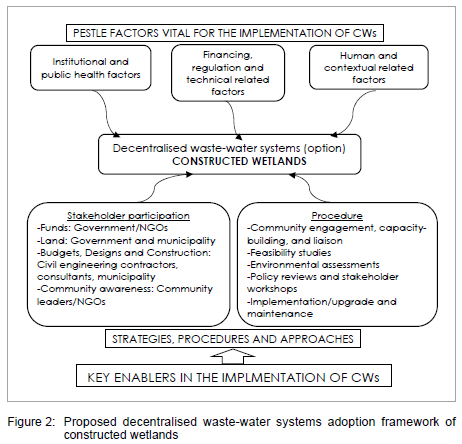
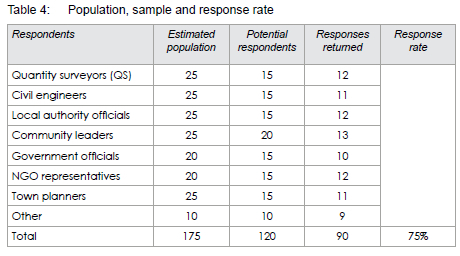
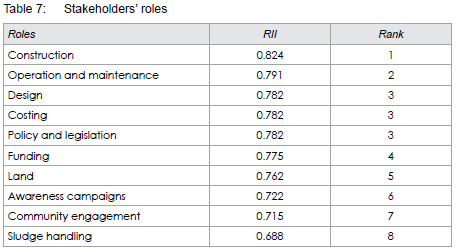
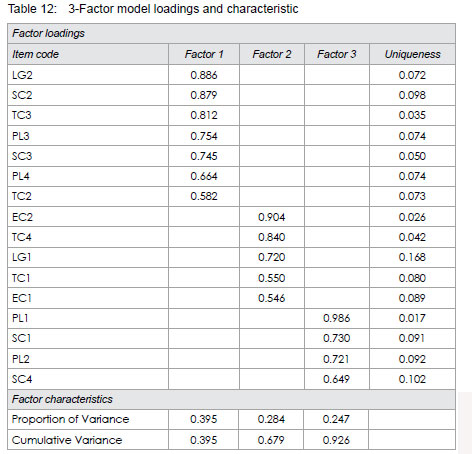
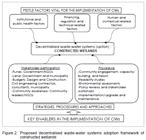
The adoption of decentralised waste-water treatment systems presents a viable solution to the growing sanitation and infrastructure challenges faced by developing countries. Among these systems, constructed wetlands (CWs) have gained attention as cost-effective, environmentally sustainable options for treating domestic waste water. This study aims to develop an adoption framework to guide the implementation of CWs as a decentralised waste-water treatment approach in Bulawayo, Zimbabwe. A quantitative research design is employed, using a structured, closed-ended questionnaire distributed to 120 professionals, including civil engineers, planners, local authority officials, government representatives, community leaders, and non-governmental organisations. To identify respondents, the study employs a snowball sampling technique, which is effective for accessing specialised or hard-to-reach populations through participant referrals. Ninety valid responses (75% response rate) were analysed using SPSS for descriptive statistics, reliability testing (Cronbach's alpha), Relative Importance Index (RII), One-way Anova, and Exploratory Factor Analysis (EFA). The EFA results reveal three principal dimensions influencing CW adoption, namely institutional and public health factors; financing, regulation, and technical capacity, as well as human and contextual conditions. The findings have significant theoretical, practical, and policy implications - advancing understanding of decentralised waste-water adoption and offering guidance for institutional reform, funding strategies, and community engagement to support sustainable sanitation infrastructure. The resulting framework, which integrates PESTLE factors, stakeholder roles, and procedural steps, provides a replicable tool to inform decisionmaking for decentralised waste-water management in developing urban contexts. Although limited to Bulawayo, the framework provides a replicable model for similar urban contexts in developing countries.
waste-water treatment; decentralised waste-water systems; constructed wetlands; sustainability; developing countries
 Thumbnail
 Thumbnail