Impact of artificial intelligence and digital technology-based diagnostic tools for communicable and non-communicable diseases in Africa
Abstract
BACKGROUND: Artificial intelligence (AI) and digital technology, as advanced human-created tools, are influencing the healthcare sector. AIM: This review provides a comprehensive and structured exploration of the opportunities presented by AI and digital technology to laboratory diagnostics and management of communicable and non-communicable diseases in Africa. METHODS: The study employed the Preferred Reporting Items for Systematic Reviews, Meta-Analyses guidelines and Bibliometric analysis as its methodological approach. Peer-reviewed publications from 2000 to 2024 were retrieved from PubMed®, Web of Science™ and Google Scholar databases. RESULTS: The study incorporated a total of 1563 peer-reviewed scientific documents and, after filtration, 37 were utilised for systematic review. The findings revealed that AI and digital technology play a key role in patient management, quality assurance and laboratory operations, including healthcare decision-making, disease monitoring and prognosis. Metadata reflected the disproportionate research outputs distribution across Africa. In relation to non-communicable diseases, Egypt, South Africa, and Morocco lead in cardiovascular, diabetes and cancer research. Representing communicable diseases research, Algeria, Egypt, and South Africa were prominent in HIV/AIDS research. South Africa, Nigeria, Ghana, and Egypt lead in malaria and tuberculosis research. CONCLUSION: Facilitation of widespread adoption of AI and digital technology in laboratory diagnostics across Africa is critical for maximising patient benefits. It is recommended that governments in Africa allocate more funding for infrastructure and research on AI to serve as a catalyst for innovation. WHAT THIS STUDY ADDS: This review provides a comprehensive and context-specific analysis of AI's application in African healthcare.
artificial intelligence; diagnostic laboratories; communicable diseases; non-communicable diseases; machine learning; deep learning; Internet of Things
Introduction
The Fourth Industrial Revolution epitomises the current state of emerging technologies, including how the Internet of Things, which includes devices that can communicate, sense, and exchange data with other devices and systems through the Internet, and artificial intelligence (AI) are influencing the ways we undertake different endeavours of life.1221
Artificial intelligence is an emerging area in science and technology that may soon change every aspect of human life.31345Machine Learning, which involves pattern discovery and evaluation from data sets, leading to machines' performance improvement as the machines learn; Deep Learning, a sub-field of ML, comprising neural networks to facilitate ML in order for machines to formulate their own decisions; Natural Language Processing, a way that computers unearth data on human language to formulate decisions; and Computer Vision, which enables computers to acquire information and understanding from images or videos.66
Even though AI is a rapidly growing field all over the world, the adoption rate varies between developed and developing countries.789109
In Africa, AI is currently infiltrating the African system through various technologies.3,6,763,61111121313
The application of meaningful medical AI has been shown to occur more in developed nations in comparison to what is found in Africa.8814
The use of information and communications technology through management systems employing mobile tools and technologies has become the most relevant emerging trend in the monitoring of non-communicable diseases in Africa due to their portability, low cost, continuous connectivity, personalised effects, and ease of use.815
Within the healthcare sector in Africa, the use of AI is growing, though at a lower speed when compared to other regions of the world.168,1617181920
One of the greatest challenges for most African countries is the current episode of brain drain, which is not limited to the health sector only. Most countries in Africa lose qualified healthcare personnel to wealthier countries, both within and outside the region. The use of AI in the African health sector may thus assist in filling these gaps by providing improved diagnosis, treatment, and disease monitoring programmes, especially in rural areas.21
However, there are several drawbacks in the adoption of AI in developing countries, which may include data availability, analysis, and infrastructure.2221,222323,242423,24252626
One of the key aspects of this review is to highlight the current state, potential and challenges of AI and digital technology in African laboratories and hospitals, especially in the diagnosis and treatment of communicable and non-communicable diseases in the past 24 years. An overview of the healthcare system is germane to the subject matter.
Significance of the review
The novelty of this review lies in its comprehensive and context-specific analysis of AI's application in African healthcare. It provides a holistic overview of current technological implementations and potential benefits, with a particular focus on the unique infrastructural and socio-economic conditions of African countries. Moreover, it also provides the current state of AI and digital technology, and their impact in healthcare and laboratory diagnostics of communicable and non-communicable diseases in Africa. By addressing ethical considerations such as equitable access, the review underscores the necessity of robust regulatory frameworks. Additionally, it offers practical, actionable recommendations for governments, educational institutions, and healthcare organisations, promoting targeted investments and initiatives to enhance AI adoption. The review also highlights significant gaps in research, setting an agenda for future efforts and encouraging collaborative research between African and international partners. This focus on reducing disparities and fostering digital inclusion aims to ensure sustainable health improvements and drive innovation in AI applications for healthcare across the continent.
Aim and objectives
The aim is to provide a comprehensive and structured exploration of the opportunities presented by AI and digital technology to laboratory diagnostics and the management of communicable and non-communicable diseases in Africa.
To achieve this aim, the study will systematically identify, narrate and analyse the various opportunities of AI and digital technology in healthcare and laboratory diagnostics in Africa. Additionally, it will evaluate the current state of AI and digital technology in healthcare and laboratory diagnostics in Africa, identify challenges, and make recommendations.
Methods
The Preferred Reporting Items for Systematic Reviews and Meta-Analyses standards and bibliometric analysis were employed in the study.27
Retrieval of evidence and data analysis
The researchers utilised databases of PubMed® (United States National Library of Medicine, Bethesda, Maryland, United States [https://pubmed.ncbi.nlm.nih.gov], Web of Science™ Core Collection Database (Clarivate Analysis, Boston, Massachusetts, United States [https://clarivate.com/products/scientific-and-academic-research/research-discovery-and-workflow-solutions/webofscience-platform/web-of-science-core-collection]) and Google Scholar (https://scholar.google.com) in July 2024, to find peer-reviewed articles that had been written about AI and digital technology in African healthcare. Different kinds of research articles and study designs were included in this search. However, the selection of the communicable and non-communicable diseases was based on prevalence in Africa. As mentioned in the foregoing section, the three most prevalent communicable diseases in Africa are HIV/AIDS, malaria and tuberculosis.23,2423,24
Extracted data were synthesised thematically to identify patterns, trends, and key insights related to the opportunities presented by AI and digital technology-based diagnostic tools for communicable and non-communicable diseases in Africa. Clusters that reflected commonalities and areas of focus were identified. Emerging trends and patterns within the selected literature were noted. Moreover, GraphPad Prism v. 10.2.3 (GraphPad, La Jolla, California, United States [https://www.graphpad.com/features]) was utilised for statistical analyses. The Pearson correlation was calculated to identify disproportionate national scientific and socio-economic characteristics, association between publication output and gross domestic expenditures for research and development (GERD), number of research funding agents, and gross domestic product (GDP). Variables were expressed as percentage and mean ± standard deviation.
Results
Current state and opportunities of artificial intelligence and digital technology
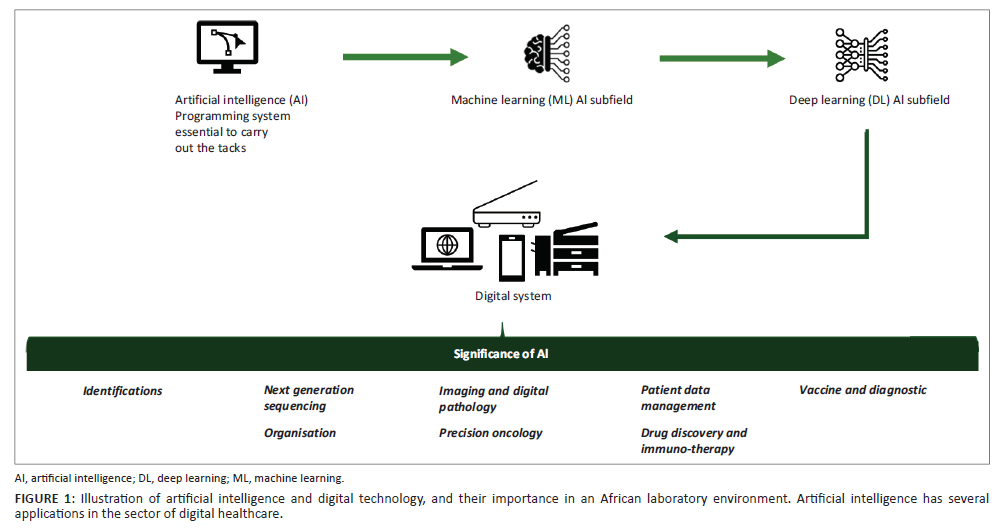
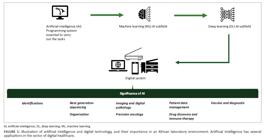
Comprehending the present status of AI and digital technology research in the African healthcare sector is crucial for creating AI solutions that are customised to the unique circumstances found on the continent, such as the high incidence of infectious diseases and resource scarcity. With the integration of AI and digital technologies, the evidence from the perused PubMed®, Web of Science™ and Google Scholar databases suggests that the African healthcare landscape is undergoing an early-stage revolutionary shift. These improvements are most noticeable in laboratory settings, where AI is helping to improve tailored treatment, surveillance for communicable and non-communicable diseases, and diagnostic competencies. Figure 1 displays the medical uses of AI domains and subdomains in Africa.
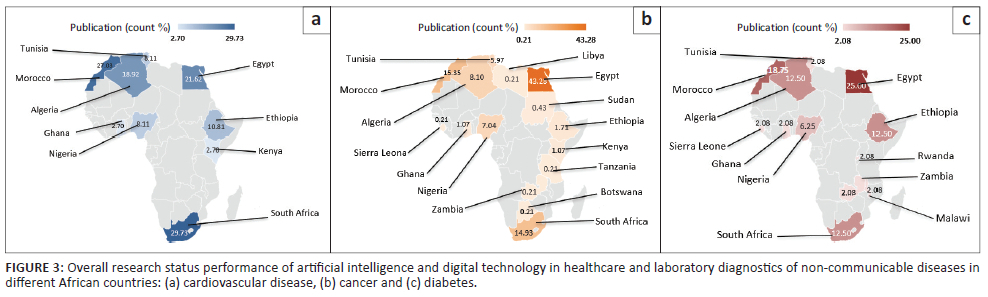
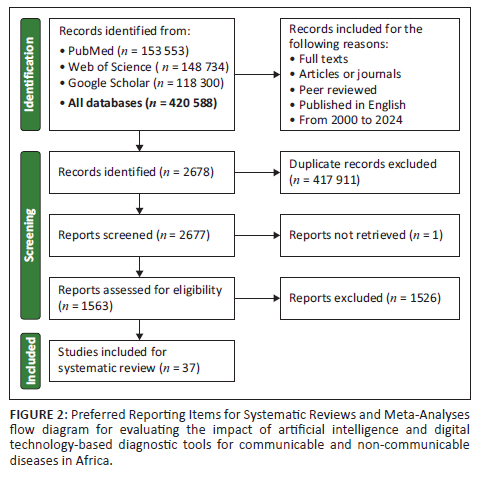
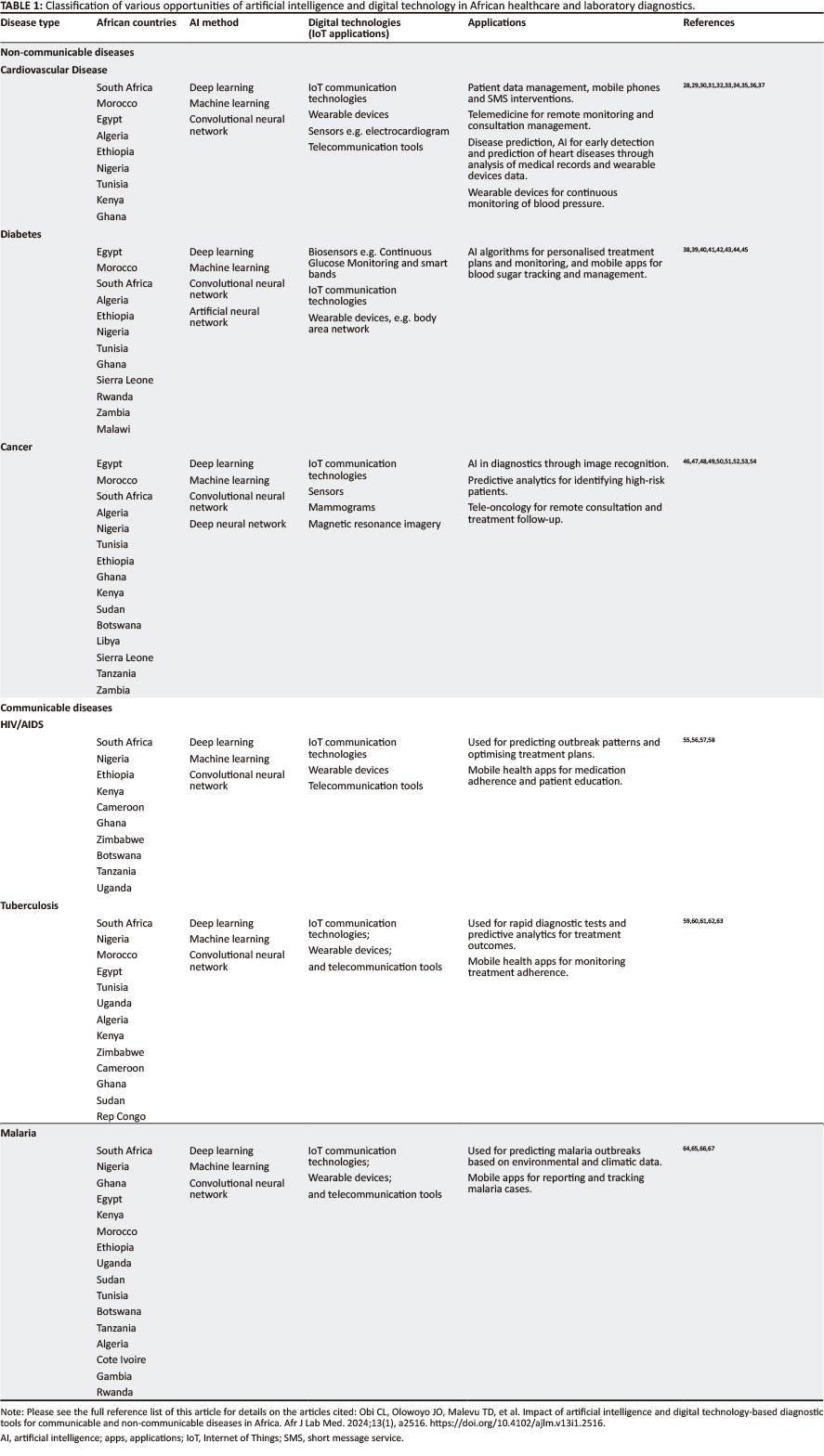
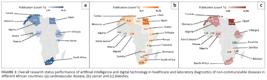
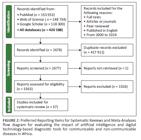
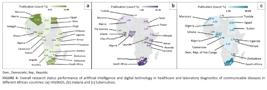
The study incorporated a total of 1563 peer-reviewed scientific documents focusing on research of AI and digital healthcare for communicable and non-communicable diseases that are most prevalent in Africa; after filtration, only 37 were utilised for systematic review (Figure 2). Table 1 depicts various opportunities of AI and digital technology in healthcare and laboratory diagnostics in Africa. In reference to non-communicable diseases (Figure 3), the three most dominant African countries with high AI and digital technology related to cardiovascular disease research productivity are South Africa (29.73%), Morocco (27.02%), and Egypt (21.62%). In the case of the research field of AI and digital technology related to diabetes and cancer diseases, the same three countries remained dominant. Egypt (25.00% for diabetes; 43.28% for cancer), was ranked as a high-producing African country in these research fields of AI and digital technology related to diabetes and cancer diseases. Morocco (18.75% for diabetes; 15.35% for cancer) ranked second, and South Africa (12.50% for diabetes; 14.92% for cancer) ranked third.
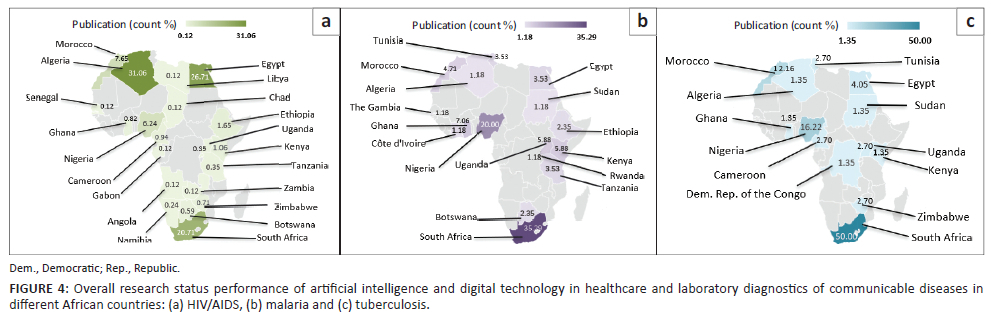
Regarding communicable diseases (Figure 4), the countries that dominate in the research field of AI and digital technology related to HIV/AIDS diseases are Algeria (31.06%, ranked first), Egypt (26.71%, ranked second), and South Africa (20.71%, ranked third). However, South Africa was ranked as the highest-producing African country in the research field of AI and digital technology related to tuberculosis (50.00%) and malaria (35.29%), and Nigeria ranked second (tuberculosis, 16.21%, and malaria, 20%). Morocco ranked third in the fields of AI and digital technology related to tuberculosis (12.16%), and Ghana ranked third in the fields related to malaria (7.05%).
Artificial intelligence and digital technology for non-communicable diseases in Africa
Cardiovascular disease
One of the digital technologies that is common in sub-Saharan countries is the mobile phone, which is used by almost 45% of the population.2828
According to a study by Stokes et al. in 2022, the strategy of using mobile communications technology in sub-Saharan countries and Africa as a whole has been shown to have a positive impact on the control of hypertension that is related to cardiovascular diseases through adherence to treatment and health knowledge.293030
The SMS system, together with voice mail reminder messages, was found to be more applicable to health education, adherence to taking medication, healthy diets, and promotion of physical exercises than to early prognosis, diagnosis, and detection.311515
However, the use of techniques such as ML and AI have been considered to offer superior and innovative ways for providing efficient and low-cost ways of diagnosing, monitoring and managing non-communicable diseases related to hypertension and cardiovascular diseases.28,3228,32,33,34
One of the mHealth tools that has been used in Africa for intervention to monitor blood pressure in Ghana, included the use of a Bluetooth-enabled blood pressure device together with a smartphone application to monitor the readings of blood pressure and the intake of medications under the guidance of a nurse.3128353636,37
Diabetes
In Rwanda, screening that was supported by AI increased the opportunity for the provision of immediate counselling and health education on eye care for diabetic patients who required referral.3838,3940,41,42,434444
The AI model using deep learning showed comparable outcomes with humans in the detection of prevalence of referable diabetic retinopathy and associated risk factors in the screening programme of a population in Zambia.4545
Cancer
The application of AI in the development of reliable tools for cancer outcome predictions in Africa is a fairly new attempt.4647,48,49,50,51,52,5345
The third most common cancer contributing to death is colorectal cancer in sub-Saharan Africa, with South Africa having the highest incidence.5353
In 2022, a study by Joseph et al. showed that the use of a handcrafted approach for the use of algorithms, such as deep neural network classifiers and feature extractors, enhanced performance in multi-classification of breast cancer in Nigeria, and that data augmentation played the main role in improving the accuracy of the classification of breast cancer using histopathological images.54
Artificial intelligence and digital technology for communicable diseases in Africa
HIV/AIDS
In 2010, Singh and Mars investigated ML application for the prediction of future CD4 cell count change in South Africa, since CD4 cell count is a preferred surrogate marker and assists clinicians and other health practitioners with the management of the infection as well as with the allocation of the resources needed.555556,57,58
Tuberculosis
Machine learning is often used together with signal processing methods to automate communicable disease diagnoses. Most interventions for diagnoses with the use of AI in low- and middle-income countries reported high specificity, sensitivity and accuracy to comparator diagnostic tools. Machine learning assists medical practitioners in diagnosing tuberculosis and malaria with expert systems.59606061,62,63
Malaria
In 2023, Silka et al. presented a novel convolutional neural network architecture for the detection of malaria from blood samples with a 99.68% accuracy.6416,17,6465,66,67
Identification of national scientific and socio-economic characteristics challenges
Non-communicable diseases in Africa
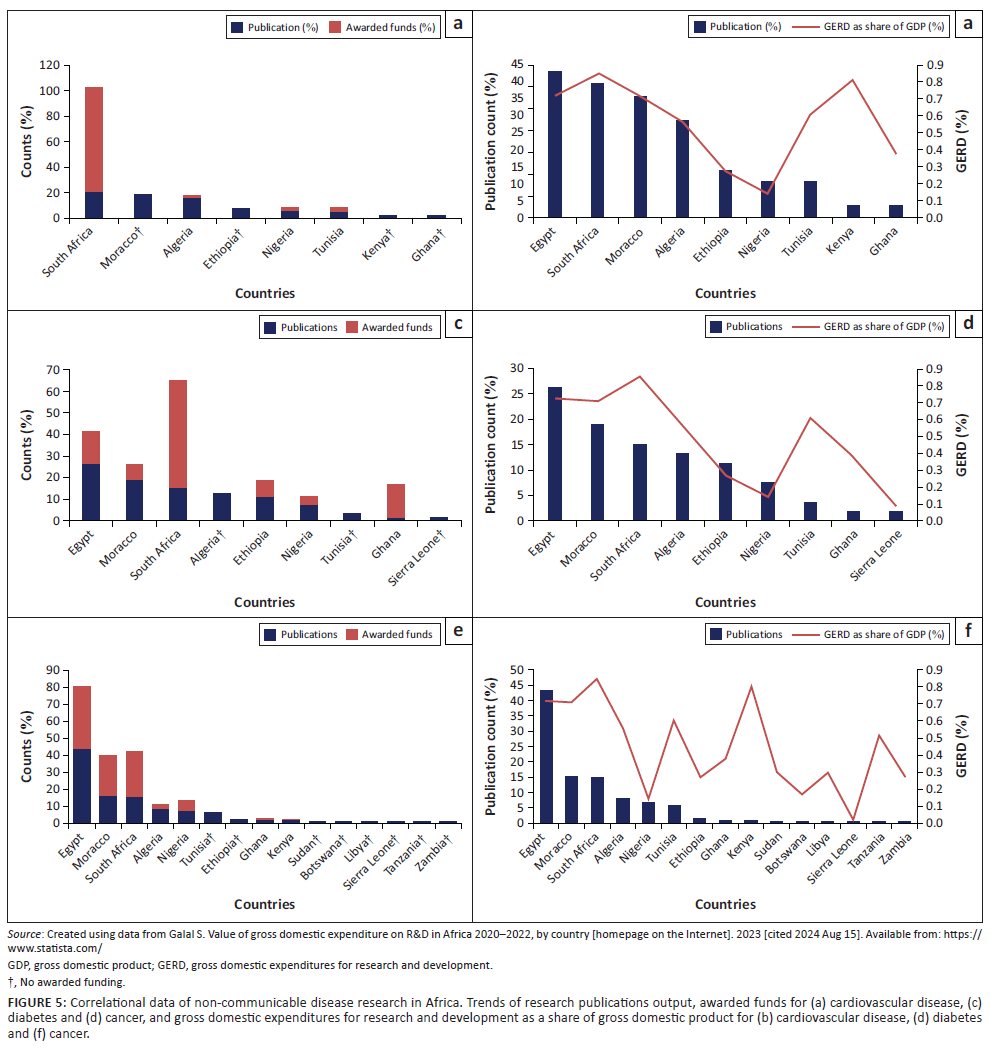
A Pearson correlation was performed to determine if there is a correlation between variable of publication outputs and variable of awarded funding or with GERD as a share of GDP (Figure 5). Cardiovascular disease research metric data exhibited a positive, but not significant, correlation (r = 0.5, p = 0.17) between variables of publication outputs (11.11 ± 8.25) and awarded funds (11.11 ± 26.26) even with the GERD as a share of GDP variable (0.56 ± 0.25; r = 0.5, p = 0.158). Egypt and South Africa are among the countries that are awarded more funding. Morocco, Ethiopia, Kenya, and Ghana did not declare their awarded funding (Figure 5a, b).
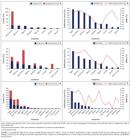
However, there was no significant positive correlation when metric data of diabetic disease research were utilised (r = 0.32, p = 0.394), between variables of publication outputs (11.11 ± 8.3) and awarded funds (11.11 ± 15.79). Similar findings were achieved, where variables of GERD as a share of GDP (0.56 ± 0.25) exhibited association with publication outputs (r = 0.35, p = 0.359). Although South Africa was awarded more funding (50%) compared to other African countries, the country had fewer publication outputs compared to Egypt and Morocco which were awarded less funding of 15.38% (Egypt) and 7.69% (Morocco). Algeria, Tunisia, and Sierra Leone did not declare their awarded funding (Figure 5c, d).r = 0.92, p = 0.001) between publication outputs (6.67 ± 11.41) and awarded funds (6.67 ± 12.22). There was also a significant positive association (r = 0.53, p = 0.044) between publication and GERD as a share of GDP (0.44 ± 0.26). Egypt, Morocco, and South Africa are among the top three countries with high research output productivity and more awarded funding. Tunisia, Ethiopia, Sudan, Botswana, Libya, Sierra Leone, Tanzania, and Zambia did not declare their awarded funding (Figure 5e, f).
Cancer disease research metric data exhibited a significant correlation (Communicable diseases in Africa
Pearson correlation showed that there was a significant correlation (r = 0.79, p = 0.001) between publication outputs (4.55 ± 9.14) and awarded funds (4.55 ± 10.36), when metric data of HIV/AIDS research was utilised. Moreover, there was a significant positive association (r = 0.63, p = 0.002) between variables of publication outputs and GERD as a share of GDP (0.29 ± 0.28). Egypt (30.49%) and South Africa (40.32%) were awarded a greater amount of funding compared to other African countries. However, these countries had fewer publication outputs compared to Algeria, which was awarded less funding of 7.54%. Namibia did not declare its awarded funding (Figure 6a, b).
Metric data for tuberculosis research also exhibited a significant correlation (r = 0.69, p = 0.001) between publication outputs (3.70 ± 7.20) and awarded funds (3.70 ± 10.89). Moreover, there is no significant positive association (r = 0.365, p = 0.258) between publication and GERD as a share of GDP (0.27 ± 0.27). Even though South Africa received more funding, of approximately 54.25% compared to other African countries, it had fewer publication outputs compared to Algeria and Egypt which were granted less funding of 4.91% (Algeria) and 19.85% (Egypt). Ghana managed to publish research outputs despite the non-declared awarded funding (Figure 6c, d).
Metric data for malaria research also exhibited a significant positive correlation (r = 0.86, p = 0.001) between variables of publication outputs (4.55 ± 8.85) and awarded funds (4.55 ± 14.16). However, there was no positive association (r = 0.35, p = 0.359) between variables of publication outputs and GERD as a share of GDP variable (0.32 ± 0.28). South Africa had more publication outputs and greater funding compared to other African countries. Chad, Côte d'Ivoire and Democratic Republic of the Congo did not declare any awarded funding (Figure 6e, f).
Discussion
The application of AI is changing the complex nature of healthcare due to its role in revolutionising healthcare systems, thereby enhancing healthcare delivery and patient satisfaction.6869,7068,71,7273,74,757273,76,77,78
There are, however, some risks associated with the use of AI.79,80,81,82,8384,858687
There is a notion that only rich people will be able to afford new technologies for healthcare, while the poor may trail behind, eventually creating social unrest. As a matter of fact, the overall success of the use of AI to foster healthcare, including laboratory diagnostics, should be viewed in terms of the impact on people at various socio-economic levels, and their intercultural perspectives.848787,88
Accordingly, the mapping of AI and digital health research in Africa can play an important role in providing strategic guidance to governments. This can assist the governments to prioritise investments in digital health technology according to the particularities of each country in establishing sustainable economic development and health returns.84,85
Recommendations
Based on the results of this review, the following recommendations are made to guide future AI implementation in laboratory diagnostics in Africa. To facilitate the widespread adoption of AI and digital technology in laboratory diagnostics across Africa, a multifaceted approach is recommended. Firstly, streamlining of the curriculum of universities in Africa, especially in medical schools, to align with the era of AI, digital technology, and the changing landscape of innovations and rapidly emerging technologies. This educational reform will empower future healthcare professionals with the requisite skills to effectively utilise these technologies in diagnostics. Healthcare practitioners should be taught the need to adapt readily to emerging situations by learning, unlearning and re-learning in order to catch up with the momentum of developments in the field. Secondly, concerted public awareness campaigns are essential to educate communities about the benefits and applications of AI in laboratory diagnostics, dispelling misconceptions and fostering trust. Policy formulators and decision-makers, including executive and legislative arms of governments in Africa, should make substantial improvements in healthcare delivery systems and infrastructural facilities to support AI laboratory diagnostics. Thirdly, substantial investments in infrastructure are imperative to support AI implementation, addressing challenges such as power outages and inadequate Internet connectivity. Additionally, comprehensive capacity-building programmes should be established to enhance the proficiency of healthcare professionals in utilising AI and digital tools for diagnostics, potentially through collaborations with international organisations and technology firms. Fourthly, African academic and research institutes and academics must develop self-governing sources of funding for federal and philanthropic gestures. This will enable Africans to introduce their special research agenda which will permit less reliance on international research funding agents. Fifthly, African countries must utilise a full 1% of GDP for GERD. Lastly, fostering collaborative research endeavours among researchers, healthcare practitioners, and technology experts is crucial for evaluating the effectiveness and feasibility of AI applications within the African context, thus informing evidence-based policies and strategies for scaling up AI adoption in healthcare. By implementing these recommendations, Africa can overcome existing barriers and realise the full potential of AI in improving laboratory diagnostics and enhancing healthcare delivery across the continent.
Conclusion
It is concluded that while AI and digital technology are useful in the laboratory diagnosis of communicable and non-communicable diseases in Africa, the paucity of data and practices on such use shows that the method of diagnosis may not be widespread, most likely as a result of inadequate resources in several countries on the continent, especially in rural and peri-urban areas. Machine learning, alongside signal processing methods and mobile communication strategies, is often used to automate the diagnosis of communicable diseases. Screening involving the use of AI has been demonstrated to be beneficial in enhancing adherence to the management of non-communicable diseases such as diabetic retinopathy.
It is also concluded that Algeria, Egypt, South Africa, and Morocco were the leading African countries in terms of published data, where the use of AI in the diagnosis of non-communicable and non-communicable diseases, such as cardiovascular, diabetes and cancer, as well as HIV/AIDS, have been extensively researched. In relation to malaria and tuberculosis, data revealed that South Africa, Nigeria, Ghana, and Morocco were the dominant countries in the integration of AI to the diagnosis, management, and adherence to medication of the designated diseases. However, there is still room for improvement for acquiring enough funding. as it is flagged as a major research outputs drawback among African countries.
Competing interests
The authors declare that they have no financial or personal relationships that may have inappropriately influenced them in writing this article.
Authors' contributions
C.L.O. conceived the idea. C.L.O, J.O.O., T.D.M., L.L.M., T.H., M.O.O., and N.M.M. collected and analysed the data, drafted the article, reviewed, revised and agreed to the published version of the article.
Ethical considerations
This article does not contain any studies involving human participants performed by any of the authors.
Sources of support
This research received no specific grant from any funding agency in the public, commercial, or not-for-profit sectors.
Data availability
In this study, the data sources used are available in Google Scholar, Web of Science, and PubMed databases. Further inquiries can be directed to the corresponding author, N.M.M.
Disclaimer
The views and opinions expressed in this article are those of the authors and are the product of professional research. They do not necessarily reflect the official policy or position of any affiliated institution, funder, agency, or that of the publisher. The authors are responsible for this article's results, findings, and content.
Acknowledgements
References
- 1.Kayembe C, Nel D. Challenges and opportunities for education in the fourth industrial revolution. Afr J Public Aff. 2019;11(3):79-94.
- 2.Taylor-Sakyi K. Big data: Understanding big data. arXiv preprint arXiv:1601.04602; 2016.
-
3.Pedro F, Subosa M, Rivas A, Valverde P. Artificial intelligence in education: Challenges and opportunities for sustainable development. UNESCO Bull. 2019 [cited 2024 May 30]. Available from: https://unesdoc.unesco.org/ark:/48223/pf0000366994?posInSet=22&queryId=9d8ca6cf-6a26-4f09-9b10-5e339c0e75da
» https://unesdoc.unesco.org/ark:/48223/pf0000366994?posInSet=22&queryId=9d8ca6cf-6a26-4f09-9b10-5e339c0e75da - 4.OECD. Learning framework 2030. In: Bast G, Carayannis EG, Campbell DFJ, editors. The future of education and labor. Arts, research, innovation and society. Cham: Springer, 2019; p. 9-19.
-
5.Ross A, Doshi-Velez F. Improving the adversarial robustness and interpretability of deep neural networks by regularizing their input gradients [homepage on the Internet]. AAAI; 2018 [cited 2024 May 10]; 32(1). Available from: https://ojs.aaai.org/index.php/AAAI/article/view/11504
» https://ojs.aaai.org/index.php/AAAI/article/view/11504 -
6.Kaul V, Enslin S, Gross SA. History of artificial intelligence in medicine. Gastrointest Endosc. 2020;92(4):807-812. https://doi.org/10.1016/j.gie.2020.06.040
» https://doi.org/10.1016/j.gie.2020.06.040 - 7.Ade-Ibijola A, Okonkwo C. Artificial Intelligence in Africa: Emerging challenges. In: Eke DO, Wakunuma K, Akintoye S, editors. Responsible AI in Africa. Social and cultural studies of robots and AI. Cham: Palgrave Macmillan, 2023; p. 101-117.
-
8.Owoyemi A, Owoyemi J, Osiyemi A, Boyd A. Artificial intelligence for healthcare in Africa. Front Digit Health. 2020;7(2):6. https://doi.org/10.3389/fdgth.2020.00006
» https://doi.org/10.3389/fdgth.2020.00006 -
9.Murphy K, Di Ruggiero E, Upshur R, et al. Artificial intelligence for good health: A scoping review of the ethics literature. BMC Med Ethics. 2021;22(1):14. https://doi.org/10.1186/s12910-021-00577-8
» https://doi.org/10.1186/s12910-021-00577-8 -
10.Sahni NR, Carrus B. Artificial intelligence in U.S. health care delivery. N Engl J Med. 2023;389(4):348-358. https://doi.org/10.1056/NEJMra2204673
» https://doi.org/10.1056/NEJMra2204673 -
11.Moodley K. Research imperialism resurfaces in South Africa in the midst of the COVID-19 pandemic - this time, via a digital portal. S Afr Med J. 2020;110(11): 1068-1069. https://doi.org/10.7196/SAMJ.2020.v110i11.15285
» https://doi.org/10.7196/SAMJ.2020.v110i11.15285 -
12.Okolo CT. AI in the 'real world': Examining the impact of AI deployment in low-resource contexts. arXiv preprint arXiv:2012.01165. 2020;28. https://doi.org/10.48550/arXiv.2012.01165
» https://doi.org/10.48550/arXiv.2012.01165 -
13.Manson EN, Hasford F, Trauernicht C, et al. Africa's readiness for artificial intelligence in clinical radiotherapy delivery: Medical physicists to lead the way. Phys Med. 2023;1(113):102653. https://doi.org/10.1016/j.ejmp.2023.102653
» https://doi.org/10.1016/j.ejmp.2023.102653 -
14.Okeibunor JC, Jaca A, Iwu-Jaja CJ, et al. The use of artificial intelligence for delivery of essential health services across WHO regions: A scoping review. Front Public Health. 2023;4(11):1102185. https://doi.org/10.3389/fpubh.2023.1102185
» https://doi.org/10.3389/fpubh.2023.1102185 -
15.Toniolo J, Ngoungou EB, Preux PM, Beloni P. Role and knowledge of nurses in the management of non-communicable diseases in Africa: A scoping review. PLoS One. 2024;19(4):e0297165. https://doi.org/10.1371/journal.pone.0297165
» https://doi.org/10.1371/journal.pone.0297165 -
16.Mbunge E, Batani J. Application of deep learning and machine learning models to improve healthcare in sub-Saharan Africa: Emerging opportunities, trends and implications. Tel Info Rep. 2023;1:100097. https://doi.org/10.1016/j.teler.2023.100097
» https://doi.org/10.1016/j.teler.2023.100097 -
17.Otaigbe I. Scaling up artificial intelligence to curb infectious diseases in Africa. Front Digit Health. 2022;4:1030427. https://doi.org/10.3389/fdgth.2022.1030427
» https://doi.org/10.3389/fdgth.2022.1030427 -
18.Nkiruka O, Prasad R, Clement O. Prediction of malaria incidence using climate variability and machine learning. Inform Med Unlocked. 2021;22:100508. https://doi.org/10.1016/j.imu.2020.100508
» https://doi.org/10.1016/j.imu.2020.100508 -
19.Yadav AN. Beneficial plant-microbe interactions for agricultural sustainability. J Appl Biol Biotechnol. 2021;9(1):i-iv. https://doi.org/10.7324/JABB.2021.91ed
» https://doi.org/10.7324/JABB.2021.91ed -
20.Onu CE, Igbokwe PK, Nwabanne JT, Nwajinka CO, Ohale PE. Evaluation of optimization techniques in predicting optimum moisture content reduction in drying potato slices. Art Intel Agri. 2020;1(4):39-47. https://doi.org/10.1016/j.aiia.2020.04.001
» https://doi.org/10.1016/j.aiia.2020.04.001 - 21.Etori N, Temesgen E, Gini M. What we know so far: Artificial intelligence in African healthcare. 2023. [cited 2024 May 10]. Available from: arXiv preprint arXiv:2305.18302
-
22.Zuhair V, Babar A, Ali R, et al. Exploring the impact of artificial intelligence on global health and enhancing healthcare in developing nations. J Prim Care Community Health. 2024;15:21501319241245847. https://doi.org/10.1177/21501319241245847
» https://doi.org/10.1177/21501319241245847 - 23.Niohuru I. Disease burden and mortality. In: Klimowich L, editor. Healthcare and disease burden in Africa. Briefs in economics. Cham: Springer, 2023; p. 35-58.
-
24.World Health Organization (WHO). Communicable and non-communicable diseases in Africa, 2021/22 [homepage on the Internet]. [cited 2024 Jul 26]. Available from: https://www.afro.who.int/publications/communicable-and-non-communicable-diseases-africa-202122
» https://www.afro.who.int/publications/communicable-and-non-communicable-diseases-africa-202122 -
25.Oronti IB, Iadanza E, Pecchia L. Hypertension diagnosis and management in Africa using mobile phones: A scoping review. IEEE Rev Biomed Eng. 2024;7:197-211. https://doi.org/10.1109/RBME.2022.3186828
» https://doi.org/10.1109/RBME.2022.3186828 -
26.IIbeneme S, Ongom M, Ukor N, Okeibunor J. Realigning health systems strategies and approaches; what should African countries do to strengthen health systems for the sustainable development goals? Front Public Health. 2020;8:372. https://doi.org/10.3389/fpubh.2020.00372
» https://doi.org/10.3389/fpubh.2020.00372 -
27.Page MJ, McKenzie JE, Bossuyt PM, et al. The PRISMA 2020 statement: An updated guideline for reporting systematic reviews. BMJ. 2021;372:n71. https://doi.org/10.1136/bmj.n71
» https://doi.org/10.1136/bmj.n71 - 28.Michalakeas C, Katsi V, Soulaidopoulos S, et al. Mobile phones and applications in the management of patients with arterial hypertension. Am J Cardiovasc Dis. 2020;10(4):419-431.
-
29.Stokes K, Oronti B, Cappuccio FP, et al. Use of technology to prevent, detect, manage and control hypertension in sub-Saharan Africa: A systematic review. BMJ Open. 2022;12(4):e058840. https://doi.org/10.1136/bmjopen-2021-058840
» https://doi.org/10.1136/bmjopen-2021-058840 -
30.Bobrow K, Brennan T, Springer D, et al. Efficacy of a text messaging (SMS) based intervention for adults with hypertension: Protocol for the StAR (SMS text-message adherence support trial) randomised controlled trial. BMC Public Health. 2014;14:28. https://doi.org/10.1186/1471-2458-14-28
» https://doi.org/10.1186/1471-2458-14-28 -
31.Sarfo FS, Treiber F, Gebregziabher M, et al. Phone-based intervention for blood pressure control among Ghanaian stroke survivors: A pilot randomized controlled trial. Int J Stroke. 2019;4(6):630-638. https://doi.org/10.1177/1747493018816423
» https://doi.org/10.1177/1747493018816423 -
32.Ezzat A, Omer O, Mohamed U, Mubarak A. Blood pressure estimation from photoplethysmogram using hybrid bidirectional long short-term memory and convolutional neural network architecture. Trait Signal. 2023;40:2443-2453. https://doi.org/10.18280/ts.400610
» https://doi.org/10.18280/ts.400610 -
33.Hesse R, Raal FJ, Blom DJ, George JA. Familial hypercholesterolemia identification by machine learning using lipid profile data performs as well as clinical diagnostic criteria. Circ Genom Precis Med. 2022;15(5):e003324. https://doi.org/10.1161/CIRCGEN.121.003324
» https://doi.org/10.1161/CIRCGEN.121.003324 -
34.Abdelgaber KM, Salah M, Omer OA, Farghal AEA, Mubarak AS. Subject-independent per beat PPG to single-lead ECG mapping. Information. 2023;14(7):377. https://doi.org/10.3390/info14070377
» https://doi.org/10.3390/info14070377 -
35.Opoku D, Stephani V, Quentin W. A realist review of mobile phone-based health interventions for non-communicable disease management in sub-Saharan Africa. BMC Med. 2017;15(1):24. https://doi.org/10.1186/s12916-017-0782-z
» https://doi.org/10.1186/s12916-017-0782-z -
36.Stephani V, Opoku D, Quentin WA. Systematic review of randomized controlled trials of mHealth interventions against non-communicable diseases in developing countries. BMC Public Health. 2016;16:572. https://doi.org/10.1186/s12889-016-3226-3
» https://doi.org/10.1186/s12889-016-3226-3 -
37.Mpanya D, Celik T, Klug E, Ntsinjana H. Predicting in-hospital all-cause mortality in heart failure using machine learning. Front Cardiovasc Med. 2023;9:1032524. https://doi.org/10.3389/fcvm.2022.1032524
» https://doi.org/10.3389/fcvm.2022.1032524 -
38.Mathenge W, Whitestone N, Nkurikiye J, et al. Impact of artificial intelligence assessment of diabetic retinopathy on referral service uptake in a low-resource setting: The RAIDERS randomized trial. Ophthalmol Sci. 2022;2(4):100168. https://doi.org/10.1016/j.xops.2022.100168
» https://doi.org/10.1016/j.xops.2022.100168 -
39.Hansen MB, Abràmoff MD, Folk JC, Mathenge W, Bastawrous A, Peto T. Results of automated retinal image analysis for detection of diabetic retinopathy from the Nakuru study, Kenya. PLoS One. 2015;10(10):e0139148. https://doi.org/10.1371/journal.pone.0139148
» https://doi.org/10.1371/journal.pone.0139148 -
40.Walle AD, Ferede TA, Shibabaw AA, et al. Willingness of diabetes mellitus patients to use mHealth applications and its associated factors for self-care management in a low-income country: An input for digital health implementation. BMJ Health Care Inform. 2023;30(1):e100761. https://doi.org/10.1136/bmjhci-2023-100761
» https://doi.org/10.1136/bmjhci-2023-100761 -
41.Abdelsalam M, Zahran M. A novel approach of diabetic retinopathy early detection based on multifractal geometry analysis for OCTA macular images using support vector machine. IEEE Access. 2021;9:22844-22858. https://doi.org/10.1109/ACCESS.2021.3054743
» https://doi.org/10.1109/ACCESS.2021.3054743 -
42.Sbai A, Oukhouya L, Touil A. Classification of ocular diseases related to diabetes using transfer learning. iJOE. 2023;19(11):112-128. https://doi.org/10.3991/ijoe.v19i11.40997
» https://doi.org/10.3991/ijoe.v19i11.40997 -
43.Bensmail I, Messadi M, Feroui A, Lazouni A, Bessaid A. New methodology based on images processing for the diabetic retinopathy disease classification. iJOE. 2022;39:170-187. https://doi.org/10.1504/IJBET.2022.124017
» https://doi.org/10.1504/IJBET.2022.124017 -
44.Soliz P, Nemeth SC, Barriga ES, et al. Comparison of the effectiveness of three retinal camera technologies for malarial retinopathy detection in Malawi. Proc SPIE Int Soc Opt Eng. 2016;9693:96930B. https://doi.org/10.1117/12.2213282
» https://doi.org/10.1117/12.2213282 -
45.Bellemo V, Lim ZW, Lim G, et al. Artificial intelligence using deep learning to screen for referable and vision-threatening diabetic retinopathy in Africa: A clinical validation study. Lancet Digital Health. 2019;1(1):e35-e44. https://doi.org/10.1016/S2589-7500(19)30004-4
» https://doi.org/10.1016/S2589-7500(19)30004-4 -
46.Adeoye J, Akinshipo A, Thomson P, Su YX. Artificial intelligence-based prediction for cancer-related outcomes in Africa: Status and potential refinements. J Glob Health. 2022;12:03017. https://doi.org/10.7189/jogh.12.03017
» https://doi.org/10.7189/jogh.12.03017 -
47.Abdelghaffar M, Gamal Y, El-Khoribi R, et al. Highly sensitive V-shaped SPR PCF biosensor for cancer detection. Opt Quantum Electron. 2023;55:472. https://doi.org/10.1007/s11082-023-04740-w
» https://doi.org/10.1007/s11082-023-04740-w -
48.Aniq E, Chakraoui M, Mouhni N. Artificial intelligence in pathological anatomy: Digitization of the calculation of the proliferation index (Ki-67) in breast carcinoma. Artif Life Robot. 2024;29:177-186. https://doi.org/10.1007/s10015-023-00923-6
» https://doi.org/10.1007/s10015-023-00923-6 -
49.Abdelrahman A, Viriri S. FPN-SE-ResNet model for accurate diagnosis of kidney tumors using CT images. Appl Sci. 2023;13(17):9802. https://doi.org/10.3390/app13179802
» https://doi.org/10.3390/app13179802 -
50.Bouarara H. A computer-assisted diagnostic (CAD) of screening mammography to detect breast cancer without a surgical biopsy. IJSSCI. 2019;4(11):31-49. https://doi.org/10.4018/IJSSCI.2019100103
» https://doi.org/10.4018/IJSSCI.2019100103 -
51.Adedigba AP, Adeshina SA, Aibinu AM. Performance evaluation of deep learning models on mammogram classification using small dataset. Bioengineering (Basel). 2022;9(4):161. https://doi.org/10.3390/bioengineering9040161
» https://doi.org/10.3390/bioengineering9040161 -
52.Barbouchi K, El Hamdi D, Elouedi I, Aïcha T, Echi A, Slim I. A transformer-based deep neural network for detection and classification of lung cancer via PET/CT images. IJSSCI. 2023;4(33):1383-1395. https://doi.org/10.1002/ima.22858
» https://doi.org/10.1002/ima.22858 -
53.Achilonu OJ, Fabian J, Bebington B, et al. Predicting colorectal cancer recurrence and patient survival using supervised machine learning approach: A South African population-based study. Front Public Health. 2021;9:694306. https://doi.org/10.3389/fpubh.2021.694306
» https://doi.org/10.3389/fpubh.2021.694306 -
54.Joseph AA, Abdullahi M, Junaidu SB, Ibrahim HH, Chiroma H. Improved multi-classification of breast cancer histopathological images using handcrafted features and deep neural network (dense layer). Intell Syst Appl. 2022;14:200066. https://doi.org/10.1016/j.iswa.2022.200066
» https://doi.org/10.1016/j.iswa.2022.200066 - 55.Singh S, Mars M. Support vector machines to forecast changes in CD4 count of HIV-1 positive patients. Sci Res Essays. 2010;5(17):2384-2390.
-
56.Dzansi G, Chipps J, Lartey M. Use of mobile phone among patients with HIV/AIDS in a low-middle income setting: A descriptive exploratory study. Behav Inform Technol. 2020;41(2):796-804. https://doi.org/10.1080/0144929X.2020.1836257
» https://doi.org/10.1080/0144929X.2020.1836257 -
57.Phanguphangu M, Ross AJ. Clinical utility of smartphone-based audiometry for early hearing loss detection in HIV-positive children: A feasibility study. Afr J Prim Health Care Fam Med. 2021;13(1):e1-e4. https://doi.org/10.4102/phcfm.v13i1.3077
» https://doi.org/10.4102/phcfm.v13i1.3077 -
58.Kasande M, Taremwa M, Tusimiirwe H, et al. Experiences and perceptions on community client-led ART delivery (CCLADS) model of antiretroviral (ART) delivery: Patients' and providers' perspectives in South Western Uganda. HIV AIDS (Auckl). 2022;14:539-551. https://doi.org/10.2147/HIV.S387190
» https://doi.org/10.2147/HIV.S387190 -
59.Schwalbe N, Wahl B. Artificial intelligence and the future of global health. Lancet. 2020;395(10236):1579-1586. https://doi.org/10.1016/S0140-6736(20)30226-9
» https://doi.org/10.1016/S0140-6736(20)30226-9 -
60.Georgiou P, Lescure FX, Birgand G, Holmes AH. Machine learning for clinical decision support in infectious diseases: A narrative review of current applications. Clin Microbiol Infect. 2020;26(5):584-595. https://doi.org/10.1016/j.cmi.2019.09.009
» https://doi.org/10.1016/j.cmi.2019.09.009 -
61.Dilebo K, Gumede N, Nxumalo W, et al. Synthesis, in vitro cytotoxic, anti-Mycobacterium tuberculosis and molecular docking studies of 4-pyridylamino- and 4-(ethynylpyridine)quinazolines. J Mol Struct. 2021;1243:130824. https://doi.org/10.1016/j.molstruc.2021.130824
» https://doi.org/10.1016/j.molstruc.2021.130824 -
62.Akinpelu O, Lawal M, Kumalo H, Mhlongo N. Drug repurposing: Fusidic acid as a potential inhibitor of M. tuberculosis FTSZ polymerization - Insight from DFT calculations, molecular docking and molecular dynamics simulations. Tuberculosis (Edinb). 2020;121:101920. https://doi.org/10.1016/j.tube.2020.101920
» https://doi.org/10.1016/j.tube.2020.101920 -
63.Cloete R, Kapp E, Joubert J, Christoffels A, Malan S. Molecular modelling and simulation studies of the Mycobacterium tuberculosis multidrug efflux pump protein Rv1258c. PLoS One. 2018;13(11):e0207605. https://doi.org/10.1371/journal.pone.0207605
» https://doi.org/10.1371/journal.pone.0207605 -
64.Silka W, Wieczorek M, Siłka J, Woźniak M. Malaria detection using advanced deep learning architecture. Sensors (Basel). 2023;23(3):1501. https://doi.org/10.3390/s23031501
» https://doi.org/10.3390/s23031501 -
65.Adigun RA, Malan FP, Balogun MO, et al. Design, synthesis, and in silico-in vitro antimalarial evaluation of 1,2,3-triazole-linked dihydropyrimidinone quinoline hybrids. Struct Chem. 2023;34:2065-2082. https://doi.org/10.1007/s11224-023-02142-y
» https://doi.org/10.1007/s11224-023-02142-y -
66.Amod L, Mohunlal R, Teixeira N, Egan TJ, Wicht KJ. Identifying inhibitors of β-haematin formation with activity against chloroquine-resistant Plasmodium falciparum malaria parasites via virtual screening approaches. Sci Rep. 2023;13(1):2648. https://doi.org/10.1038/s41598-023-29273-w
» https://doi.org/10.1038/s41598-023-29273-w -
67.Benjamin I, Udoikono AD, Louis H, et al. Antimalarial potential of naphthalene-sulfonic acid derivatives: Molecular electronic properties, vibrational assignments, and in-silico molecular docking studies. J Mol Struct. 2022;1264:133298. https://doi.org/10.1016/j.molstruc.2022.133298
» https://doi.org/10.1016/j.molstruc.2022.133298 -
68.Higuchi A, Shiraishi J, Kurita Y, Shibata T. Effects of gait inducing assist for patients with Parkinson's disease on double support phase during gait. J Robot Mechatron. 2020;32(4):798-811. https://doi.org/10.20965/jrm.2020.p0798
» https://doi.org/10.20965/jrm.2020.p0798 -
69.Goirand M, Austin E, Clay-Williams R. Implementing ethics in healthcare AI-based applications: A scoping review. Sci Eng Ethics. 2021;27(5):61. https://doi.org/10.1007/s11948-021-00336-3
» https://doi.org/10.1007/s11948-021-00336-3 -
70.Qoseem IO, Okesanya OJ, Olaleke NO, et al. Digital health and health equity: How digital health can address healthcare disparities and improve access to quality care in Africa. Health Promot Perspect. 2024;14(1):3-8. https://doi.org/10.34172/hpp.42822
» https://doi.org/10.34172/hpp.42822 -
71.Khavandi S, Zaghloul F, Higham A, Lim E, De Pennington N, Celi LA. Investigating the impact of automation on the health care workforce through autonomous telemedicine in the cataract pathway: Protocol for a multicenter study. JMIR Res Protoc. 2023;12:e49374. https://doi.org/10.2196/49374
» https://doi.org/10.2196/49374 -
72.Mei X, Lee HC, Diao KY, et al. Artificial intelligence-enabled rapid diagnosis of patients with COVID-19. Nat Med. 2020;26(8):1224-1228. https://doi.org/10.1038/s41591-020-0931-3
» https://doi.org/10.1038/s41591-020-0931-3 -
73.Khullar D, Casalino LP, Qian Y, Lu Y, Krumholz HM, Aneja S. Perspectives of patients about artificial intelligence in health care. JAMA Network Open. 2022;5(5):e2210309. https://doi.org/10.1001/jamanetworkopen.2022.10309
» https://doi.org/10.1001/jamanetworkopen.2022.10309 -
74.Peyroteo M, Ferreira IA, Elvas LB, Ferreira JC, Lapão LV. Remote monitoring systems for patients with chronic diseases in primary health care: Systematic review. JMIR mHealth uHealth. 2021;9(12):e28285. https://doi.org/10.2196/28285
» https://doi.org/10.2196/28285 -
75.Pelly M, Fatehi F, Liew D, Verdejo-Garcia A. Artificial intelligence for secondary prevention of myocardial infarction: A qualitative study of patient and health professional perspectives. Int J Med Inform. 2023;173:105041. https://doi.org/10.1016/j.ijmedinf.2023.105041
» https://doi.org/10.1016/j.ijmedinf.2023.105041 - 76.Gray K, Yam KC, Zhean AE, Wibank D, Waytz A. The psychology of robots and artificial intelligence. In: Gilbert D, editor. The handbook of social psychology. 6th ed. Cambridge, MA: Situationist Press, 2023; p. 1-91.
-
77.Guerrisi A, Falcone I, Valenti F, et al. Artificial intelligence and advanced melanoma: Treatment management implications. Cells. 2022;11(24):3965. https://doi.org/10.3390/cells11243965
» https://doi.org/10.3390/cells11243965 -
78.Nwachuya CA, Umeh AU, Ogwurumba JC, Chinedu-Eze IN, Azubuike CC, Isah A. Effectiveness of telepharmacy in rural communities in Africa: A scoping review. J Pharm Technol. 2023;39(5):241-246. https://doi.org/10.1177/87551225231190567
» https://doi.org/10.1177/87551225231190567 -
79.Reed C. How should we regulate artificial intelligence? Philos Trans A Math Phys Eng Sci. 2018;376(2128):20170360. https://doi.org/10.1098/rsta.2017.0360
» https://doi.org/10.1098/rsta.2017.0360 -
80.Jabbar MA, Iqbal H, Chawla U. Patient satisfaction: The role of artificial intelligence in healthcare. J Health Manag. 2024;0(0):1-11. https://doi.org/10.1177/09720634241246331
» https://doi.org/10.1177/09720634241246331 -
81.Khan AN, Jabeen F, Mehmood K, Soomro MA, Bresciani S. Paving the way for technological innovation through adoption of artificial intelligence in conservative industries. J Bus Res. 2023;165:114019. https://doi.org/10.1016/j.jbusres.2023.114019
» https://doi.org/10.1016/j.jbusres.2023.114019 -
82.Gama F, Tyskbo D, Nygren J, Barlow J, Reed J, Svedberg P. Implementation frameworks for artificial intelligence translation into health care practice: Scoping review. J Med Internet Res. 2022;24(1):e32215. https://doi.org/10.2196/32215
» https://doi.org/10.2196/32215 -
83.Kang SK, Lee CI, Pandharipande PV, Sanelli PC, Recht MP. Residents' introduction to comparative effectiveness research and big data analytics. J Am Coll Radiol. 2017;14(4):534-536. https://doi.org/10.1016/j.jacr.2016.10.032
» https://doi.org/10.1016/j.jacr.2016.10.032 -
84.Manyazewal T, Woldeamanuel Y, Blumberg HM, Fekadu A, Marconi VC. The potential use of digital health technologies in the African context: A systematic review of evidence from Ethiopia. NPJ Digit Med. 2021;4(1):125. https://doi.org/10.1038/s41746-021-00487-4
» https://doi.org/10.1038/s41746-021-00487-4 - 85.Penprase BE. The fourth industrial revolution and higher education. In: Gleason NW, editor. Higher education in the era of the fourth industrial revolution. Singapore: Palgrave Macmillan, 2018; p. 207-229.
-
86.Galal S. Value of gross domestic expenditure on R&D in Africa 2020-2022, by country [homepage on the Internet]. 2023 [cited 2024 Aug 15]. Available from: https://www.statista.com/
» https://www.statista.com/ -
87.DST. Department of Science and Innovation on South Africa's expenditure on research and development [homepage on the Internet]. 2009 [cited 2024 Aug 15]. Available from: http://www.gov.za/
» http://www.gov.za/ -
88.United Nations (UN). Economic Commission for Africa towards achieving the African Union's recommendation of expenditure of 1% of GDP on research and development [homepage on the Internet]. Addis Ababa; 2018 [cited 2024 Aug 15]. Available from: https://hdl.handle.net/10855/24306
» https://hdl.handle.net/10855/24306

Accepted: 18 Sept. 2024
Published: 21 Nov. 2024