Effect of COVID-19 lockdown on glycated haemoglobin testing and utilisation in KwaZulu-Natal, South Africa
Abstract
BACKGROUND: Diabetic monitoring and treatment guidelines are easily accessible, but compliance is poor in KwaZulu-Natal. The coronavirus disease 2019 (COVID-19) pandemic had a devastating impact on diabetic healthcare, both directly and through public health interventions. OBJECTIVE: This study aimed to close the gaps in knowledge concerning glycated haemoglobin (HbA1c) test utilisation and how this was affected by the COVID-19 lockdown in KwaZulu-Natal. METHODS: We reviewed HbA1c test volumes and results from public health facilities in the 11 health districts in KwaZulu-Natal, South Africa. We compared testing trends and glycaemic control between two 10-month study periods before (March 2019 - December 2019) and during (March 2020 - December 2020) the COVID-19 pandemic. RESULTS: The number of HbA1c tests performed decreased 6.1% during the pandemic period, with 173 760 HbA1c tests performed in 2019 and 163 236 HbA1c tests performed in 2020. There was a statistically significant increase in the average HbA1c level during the pandemic (mean HbA1c level in the pre-pandemic period: 70.5 mmol/mol [8.6%] versus mean HbA1c level in the pandemic period: 72.7 mmol/mol [8.8%]; p-value < 0.001). Of patients with suboptimal HbA1c results (83 421 in 2019, 83 259 in 2020), 11 656 (14.0%) in 2019 and 10 086 (12.1%) in 2020 had more than one HbA1c test performed during the study period. CONCLUSION: The COVID-19 pandemic impacted glycaemic monitoring in KwaZulu-Natal with lower HbA1c test volumes and worse glycaemic control seen during the pandemic. HbA1c testing practices are not in keeping with recommended guidelines. WHAT THIS STUDY ADDS: The study demonstrates that the COVID-19 pandemic impacted HbA1c utilisation in KwaZulu-Natal. Importantly, HbA1c testing practices in KwaZulu-Natal are not in keeping with Society for Endocrinology, Metabolism and Diabetes of South Africa guidelines regarding the monitoring of diabetic patients, and this requires more attention for future diabetic healthcare interventions.
diabetes; glycated haemoglobin; HbA1c; glycaemic control; COVID-19; South Africa
Introduction
Diabetes mellitus poses a major public health concern worldwide, especially in developing countries where diabetes prevalence is increasing at an alarming rate.123
KwaZulu-Natal is South Africa's second most populous province, with an estimated population of 11.5 million (19% of the South African population) people.45,637,8
HbA1c testing is the standard of care for the monitoring of treatment and glycaemic control in diabetic patients, both globally and within South Africa.3,9103
Compliance with diabetic monitoring and treatment guidelines in public health institutions in KwaZulu-Natal is generally poor, as demonstrated by a study performed in a regional hospital in 2010 which found that monitoring and treatment guidelines were not followed in up to 80% of patients with poor glycaemic control,111213
The coronavirus disease 2019 (COVID-19) pandemic had a devastating effect on healthcare globally, both directly and indirectly. In addition to causing severe illness and resulting in the deaths of millions of people throughout the world, responses to the pandemic have had far-reaching consequences on the health and well-being of patients. These indirect effects occurred due to government responses to the pandemic, including lockdowns and the lifestyle changes associated with this, changed priorities of medical and surgical procedures, cessation of screening programmes, altering medical facilities to COVID-19 centres, public fear of seeking healthcare, and reduced referrals.1415,16
In South Africa, lockdown measures were implemented based on 'alert' levels, with the most restrictive measures seen in March 2020 - August 2020. These measures directly affected ambulatory clinic visitations and the management of many chronic diseases. Health services relating to reproductive health, maternal and child health, HIV and tuberculosis, and diabetes and hypertension were the hardest hit because of decreased outpatient visits during this period.17,18
Several studies have investigated the effects of the COVID-19 lockdown on HbA1c testing and glycaemic control, with highly variable results. Studies performed in India and Turkey reported up to 70% reduction in HbA1c testing volumes for outpatients during the lockdown, with an associated increase in HbA1c levels.19,20,2122,2324,2526,27
Only a few studies have investigated HbA1c utilisation in diabetic patients managed at public health facilities in KwaZulu-Natal and how this relates to glycaemic control and established practice guidelines. Most of the published studies were performed at an institutional level, with little information at the provincial or district levels. In addition, no local studies have investigated the effect of the COVID-19 lockdown on HbA1c testing and glycaemic control. This information is essential for public health planning and policy development, especially in light of increased demands on smaller healthcare budgets. This study thus attempts to close the gaps in knowledge concerning HbA1c testing and glycaemic control, and how these parameters have been affected by the COVID-19 lockdown in KwaZulu-Natal.
Methods
Ethical considerations
Ethics approval for this study was obtained from the University of KwaZulu-Natal, Biomedical Research Ethics Committee (BREC/00004109/2022). Approval to conduct research was also obtained from the KwaZulu-Natal Department of Health (KZ_202206_024). The requirement for patient consent was waived by the ethics committee. Data were collected on a password-protected computer accessible by only the primary investigator. Patients were identified by unique patient identification numbers which did not contain identifiable patient data and their identities were not revealed.
Data collection
HbA1c data from all National Health Laboratory Service laboratories in the province of KwaZulu Natal were extracted from the National Health Laboratory Service Central Data Warehouse. The 11 health districts included were Amajuba, eThekwini, Harry Gwala, Ilembe, King Cetshayo, Ugu, uMgungundlovu, Umkhanyakude, Umzinyathi, Uthukela and Zululand. Data from two 10-month study periods were included. Period 1 (01 March 2019 to 31 December 2019) was the pre-pandemic period, and Period 2 (01 March 2020 to 31 December 2020) was during the pandemic. Two methods were used to analyse HbA1c across all laboratories: ion exchange high performance liquid chromatography and immunoassay. All methods were National Glycohemoglobin Standardization Program traceable, and there was harmonisation between methods allowing for comparison of results from different laboratories. Variables extracted included demographic information, specifically the age and sex of the patient, district and facility name, clinical diagnosis, date reviewed, HbA1c result (percentage) and HbA1c text which provided information regarding less than (<) or greater than (>) HbA1c results and HbA1c variants. All patients with at least one HbA1c result within the study periods were included. Results with a lower than detectable value, unfeasible results, and HbA1c tests where a result was not provided, such as in the case of interfering haemoglobin variants, were excluded. Based on their infrastructure and development, the eThekwini, Ilembe, uMgungundlovu and Ugu districts were classified as urban, and the other districts were classified as rural. 'Strict' lockdown levels were defined as all alert levels greater than alert level 1.
Data analysis
Data analysis was carried out using Microsoft Excel 2016 (Microsoft Corporation, Redmond, Washington, United States). We determined the cumulative total number of HbA1c tests conducted during each study period, both as an overall aggregate and separately for each of the 11 health districts in KwaZulu-Natal. We determined the impact of the pandemic by comparing the testing volumes, average HbA1c levels, and the percentage of abnormal HbA1c results (defined as HbA1c levels > 53 mmol/mol [> 7.0%]) in both period 1 and period 2. We also plotted the number of HbA1c test results that fell within different HbA1c ranges, and compared pre-pandemic results with results from during the pandemic. Statistical significance was determined with the use of a Student t-test for the average HbA1c level, and a Chi squared test for the percentage of abnormal HbA1c results. A p-value of < 0.05 was considered significant.
To gauge whether HbA1c utilisation was in keeping with local guidelines, we looked at the total number of patients who had repeat HbA1c tests performed within the study periods. We also looked at the number of patients who had a single HbA1c test that was performed within the first 4 months (March - June) of a study period. These data were extracted using unique patient identification numbers. We also looked particularly at the number of patients with suboptimal HbA1c levels, which we defined as an HbA1c > 58.5 mmol/mol (> 7.5%), who had repeat HbA1c tests performed within the study periods.
Results
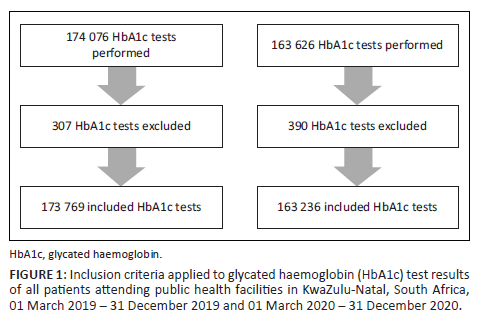
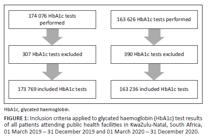
A total of 174 076 HbA1c tests were performed between March 2019 and December 2019 compared to 163 626 tests performed during the same period in 2020 (Figure 1). Of these, 307 tests conducted in 2019 and 390 conducted in 2020 were excluded. Excluded results included 109 lower than detectable results in 2019 and 209 in 2020, 198 interfering HbA1c variants in 2019 and 176 in 2020, and 5 unfeasible results in 2019 and 9 in 2020. Unfeasible HbA1c results included results of 0.0% and 1065.0%. In total, 173 769 HbA1c test results for 2019 and 163 236 results for 2020 were included in this study.
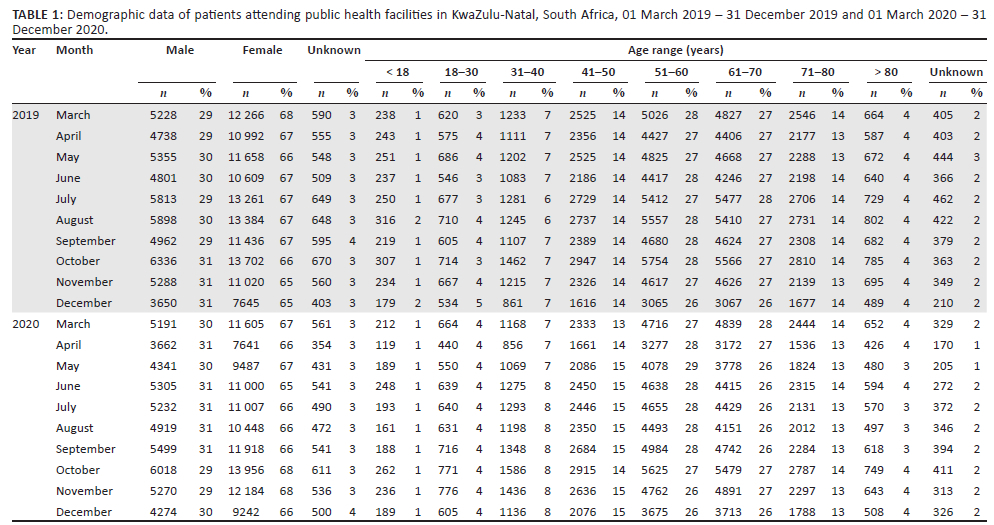
Approximately two-thirds (67%) of the results were from female patients, and over half of the results (55%) were from patients aged between 50 years and 70 years (Table 1). Notably, the demographic distribution was similar in the pre-pandemic and pandemic periods.
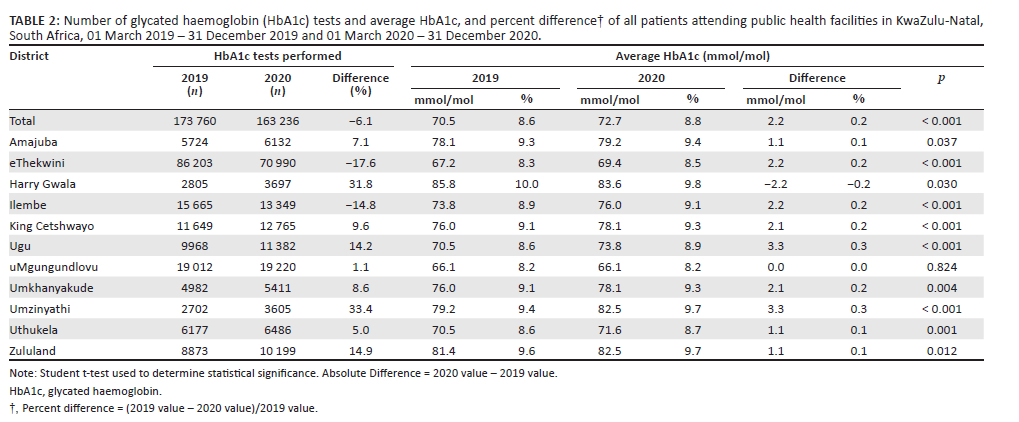
A reduction in HbA1c tests performed (6.1%) was seen in the pandemic period compared to the pre-pandemic period (Table 2). Most of the HbA1c tests (50% in 2019 and 43% in 2020) came from the major metropolitan area of Ethekwini, followed by uMgungundlovu and Ilembe. These three health districts were also the only ones to have had fewer HbA1c tests performed during the pandemic compared to the pre-pandemic period. The other eight health districts had more HbA1c tests in 2020. A significant increase in average HbA1c of 2.2 mmol/mol (0.2%) was seen during the pandemic. Nine of the 11 health districts demonstrated a higher average HbA1c in 2020 compared to 2019. Harry Gwala district showed a decrease in average HbA1c, but this was minimal (0.2%).
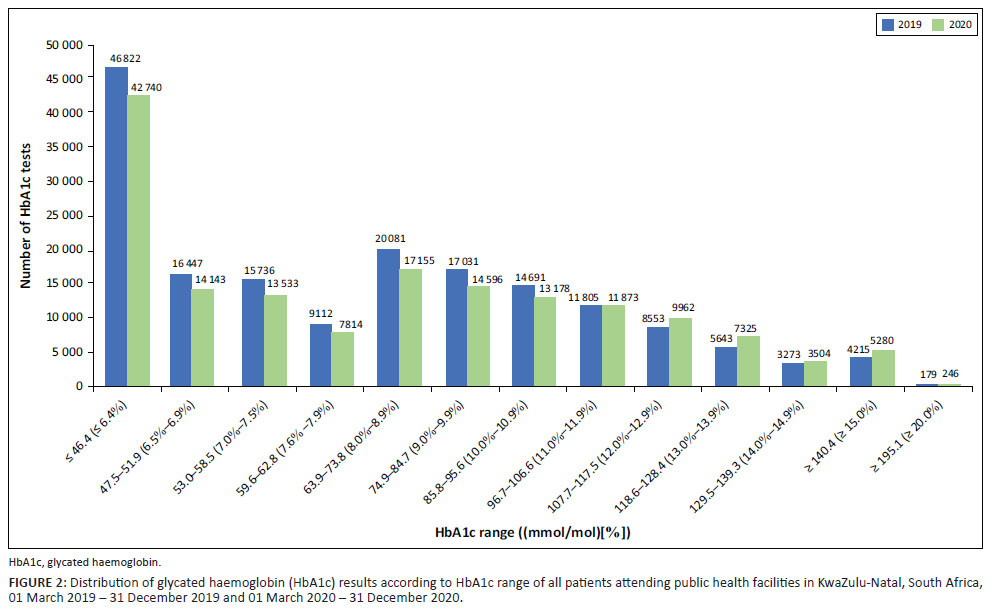
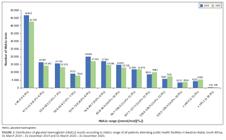
The distribution of HbA1c results by HbA1c value range demonstrated fewer HbA1c results in the low ranges (below 85.8 mmol/mol; 10%) in 2020 compared to the same period in 2019 (Figure 2). Conversely, there were more HbA1c results in the high ranges (especially above 96.7 mmol/mol; 11%) in 2020 compared to 2019.
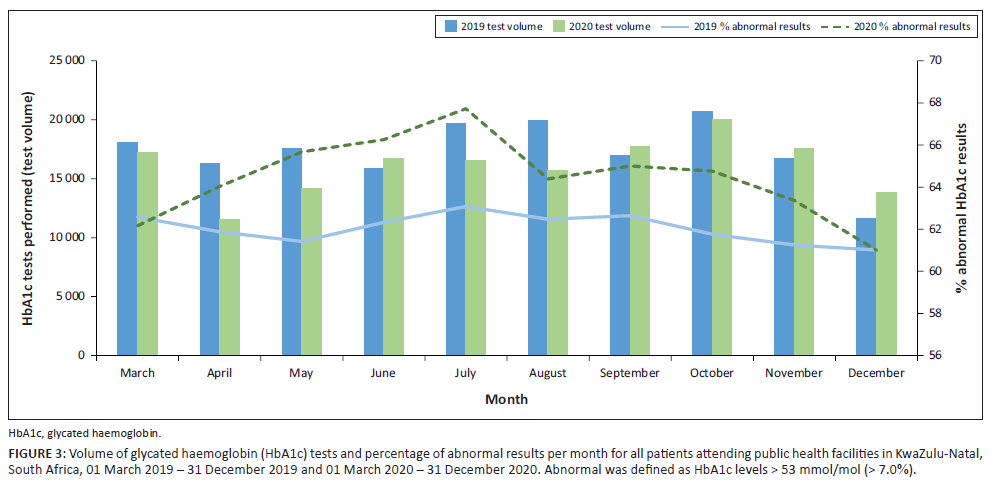
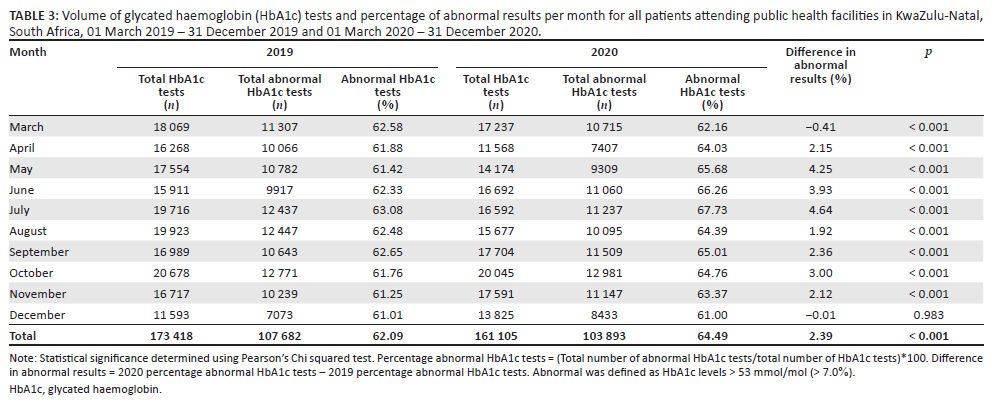
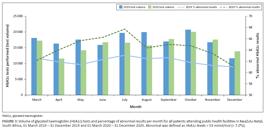
There were much lower test volumes in the first few months of the pandemic (March, April, May, July and August 2020) compared to the same period in 2019 (Figure 3). This trend was reversed during the pandemic, with higher test volumes recorded in September 2020, November 2020, and December 2020 compared to the same months in 2019. The HbA1c test volume per month for each district followed a similar pattern as described for the total volumes (Online Supplementary Figure 1). A significant increase in the percentage of abnormal HbA1c results is seen during the pandemic for the months April 2020 - November 2020 (Table 3). The highest difference in the percentage of abnormal HbA1c results were seen in May 2020 - July 2020, the period following the strictest lockdown levels, alert levels 5 and 4. The percentage of abnormal results recorded per month in each district did not show much variation between the pre-pandemic and pandemic periods, (Online Supplementary Table 1). Five of the health districts had more abnormal results in 2020 than 2019 (Online Supplementary Figure 2).
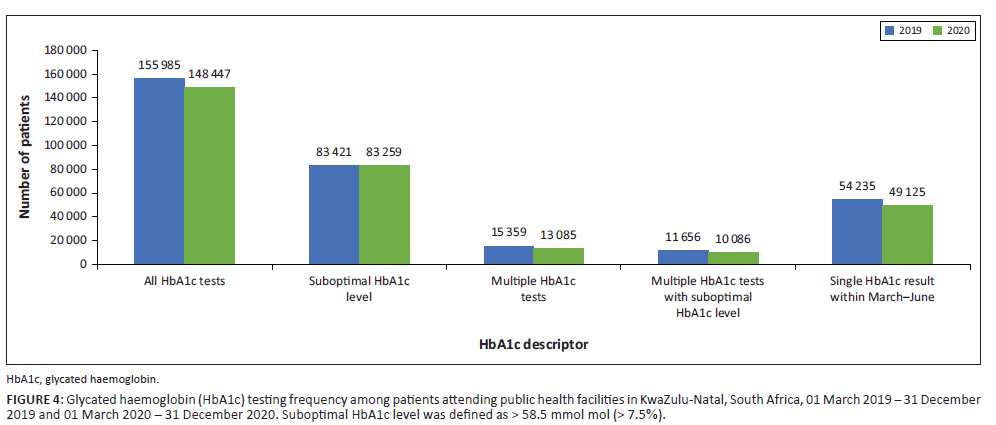
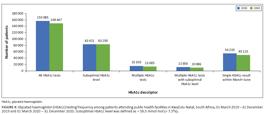
HbA1c tests were conducted for 155 985 patients in 2019 and 148 447 patients in 2020 (Figure 4). Of these, only 15 359 (9.8%) patients in 2019 and 13 085 (8.8%) in 2020 had more than one HbA1c test performed within the 10-month study period. Suboptimal HbA1c levels were reported for 83 421 (53.5%) patients in 2019 and 83 259 (56.0%) patients in 2020. Of those patients, only 11 656 (14.0%) in 2019 and 10 086 (12.1%) in 2020 had more than one HbA1c test performed. There were 54 235 patients in 2019 and 49 125 patients in 2020 who only had a single HbA1c test performed within the study period and this test was within the first 4 months of the study period. Two HbA1c tests per patient (13 358/15 359 patients in 2019 and 11 582/13 085 patients in 2020) was the most common test frequency for patients who had multiple HbA1c tests conducted (Online Supplementary Table 2).
Discussion
This study demonstrated that the COVID-19 pandemic did impact HbA1c utilisation in patients attending public health facilities. Lower HbA1c test volumes were recorded during the pandemic in 2020 than during the same period pre-pandemic in 2019. A significant increase in the average HbA1c level was seen during the pandemic as well as significantly higher abnormal HbA1c results, particularly during periods of strict lockdown, when HbA1c test volumes were at their lowest. It was also demonstrated that pre-pandemic and pandemic HbA1c testing practices were not in keeping with established International and National guidelines regarding the monitoring of glycaemic control in diabetic patients. Fewer HbA1c tests are being performed on sub-optimally controlled diabetic patients than should be as per the guidelines.
Several studies have been conducted globally, particularly in high-income countries, to investigate the impact of the COVID-19 pandemic on diabetes care. Studies performed in the United Kingdom in 2021 and Canada in 2020, found that monthly HbA1c requests during the pandemic dropped to 7.9% - 18.1% of pre-pandemic volumes and patients had a 28% lower probability of undergoing an HbA1c test during the pandemic.28,29303128,29,30,31
The most notable decline in HbA1c test volume was recorded between April 2020 and August 2020, during which the strictest levels of lockdown were in place in South Africa. HbA1c test volumes recovered in September 2020, and exceeded 2019 volumes in November 2020 and December 2020. This finding concurs with studies conducted in the United States, Canada and Spain between 2020 and 2021.19,31,32
Despite the consistent evidence of decreased HbA1c testing during the pandemic, studies have demonstrated variable effects of this on glycaemic control. Studies conducted in China in 2022 and Taiwan in 2021 found no significant difference in HbA1c results between the pandemic and pre-pandemic periods.33,3435,36,3728
Considerably fewer studies have investigated the effect of the pandemic on glycaemic control in diabetic patients in low- and middle-income settings. Most of those performed were concerned with poor health outcomes in diabetic patients with COVID-19 and had small sample sizes and cohorts of admitted patients during the pandemic.38,39,40,41424041
Our study also demonstrated that significantly more abnormal HbA1c results were recorded from April 2020 to August 2020, during the stricter lockdown periods, compared to pre-pandemic values from the same period in 2019. This relates to the same period where the most notable decreases in HbA1c testing are seen. This increase in abnormal HbA1c results during these 'hard' lockdown periods may be related to both the indirect effects of the pandemic, such as the reduced access to healthcare, and reduced glycaemic monitoring. It is also possibly a consequence of the direct effects of COVID-19 on patients living with diabetes; however, without access to comorbidity data, we were unable to test this hypothesis.
The latest guidelines published in the Journal of Endocrinology, Metabolism and Diabetes of South Africa in 2017 recommend 6-monthly HbA1c testing in patients with stable control and 3-monthly testing in those with suboptimal glycaemic control.3
The strength of our study lies in its uniqueness, as studies of this magnitude investigating HbA1c utilisation in low- and middle-income settings are very few. No such study has also included results from two 10-month periods. The 10-month pandemic period chosen for this study included the period when South Africa implemented strict lockdown measures as well as some months after the lockdown was lifted, thus allowing us to review the effect of the lockdown on HbA1c testing practices. Additionally, the study included both paediatric and adult populations in whom HbA1c testing is equally important. This study also analysed the data per health district in the province, thus providing insights into HbA1c utilisation in each province during the pandemic and allowing us to discriminate between urban and rural populations.
Limitations
One limitation of this study is that we considered a single indicator of glycaemic control, HbA1c. HbA1c is accepted as the preferred test for the monitoring of glycaemic control in diabetic patients and because we were looking at a large number of results over 20 months, we chose to analyse a single and robust indicator. Another limitation of the study is the lack of clinical information available to us due to the method of data collection used. As such we were unable to differentiate HbA1c tests performed for diagnosis or monitoring.
Conclusion
HbA1c utilisation in KwaZulu-Natal health districts decreased during the COVID-19 pandemic when public health interventions restricted access to routine medical care. This decrease, however, was much lower than seen in higher-income settings, where remote healthcare services such as telemedicine are accessible. The decreased HbA1c testing during the pandemic was a possible contributor to significant changes in glycaemic control seen. Most concerning, HbA1c utilisation in general is not in keeping with established diabetic monitoring guidelines.
Competing interests
The authors declare that they have no financial or personal relationships that may have inappropriately influenced them in writing this article.
Authors' contributions
V.G. conceived the study. R.S. and V.G. researched the literature. R.S. was involved in gaining ethical approval. R.S. and V.G. were involved in protocol development and data analysis. R.S. wrote the first draft of the manuscript. R.S. and V.G. reviewed and edited the manuscript and approved the final version of the manuscript.
Sources of support
The authors received no financial support for the research, authorship, or publication of this article.
Data availability
Raw data were extracted from the National Health Laboratory Service Central Data Warehouse. Testing data may be made available on request from the corresponding author, R.S.
Disclaimer
The views and opinions expressed in this article are those of the authors and are the product of professional research. It does not necessarily reflect the official policy or position of any affiliated institution, funder, agency, or that of the publisher. The authors are responsible for this article's results, findings, and content.
Acknowledgements
The authors would like to acknowledge the National Health Laboratory Services laboratory information system (Trak Care) Central Data Warehouse for the data retrieval.
References
-
1.Sifunda S, Mbewu AD, Mabaso M, et al. Prevalence and psychosocial correlates of diabetes mellitus in South Africa: Results from the South African National Health and Nutrition Examination Survey (SANHANES-1). Int J Environ Res Public Health. 2023;20:5798. https://doi.org/10.3390/ijerph20105798
» https://doi.org/10.3390/ijerph20105798 -
2.International Diabetes Federation. International Diabetes Federation: Diabetes in South Africa (2021). 2021 [cited 2023 Dec 02]. Available from: https://idf.org/our-network/regions-and-members/africa/members/south-africa/
» https://idf.org/our-network/regions-and-members/africa/members/south-africa/ - 3.Amod A, Dave J, Mohammed N, et al. SEMDSA 2017 guidelines for the management of type 2 diabetes mellitus SEMDSA type 2 diabetes guidelines expert committee. JEMDSA. 2017;22(1)(Supplement 1):S1-S196.
- 4.Africa SS. Mid year population estimates. Pretoria: Statistics South Africa; 2022.
-
5.Chetty L, Govender N, Govender GM, et al. Demographic stratification of Type 2 diabetes and comorbidities in district healthcare in KwaZulu-Natal. S Afr Fam Pract (2004). 2021;63:e1-e9. https://doi.org/10.4102/safp.v63i1.5218
» https://doi.org/10.4102/safp.v63i1.5218 -
6.Pillay S, Lutge E, Aldous C. The burden of diabetes mellitus in KwaZulu-Natal's public sector: A 5-year perspective. S Afr Med J. 2016;106:384-388. https://doi.org/10.7196/SAMJ.2016.v106i4.9920
» https://doi.org/10.7196/SAMJ.2016.v106i4.9920 -
7.Govender R, Gathiram P, Panajatovic M. Poor control and management of type 2 diabetes mellitus at an under-resourced South African Hospital: Is it a case of clinical inertia? S Afr Fam Pract. 2017;59(5):1-6. https://doi.org/10.1080/20786190.2017.1307909
» https://doi.org/10.1080/20786190.2017.1307909 -
8.Hoosen M, Paruk I, Pirie F, et al. Trends in glycaemic control and morbidity over 10 years in patients with type 1 diabetes mellitus at Inkosi Albert Luthuli Central Hospital. J Endocrinol Metab Diabetes S Afr. 2020;25(2):1-8. https://doi.org/10.1080/16089677.2020.1748321
» https://doi.org/10.1080/16089677.2020.1748321 -
9.2. Classification and diagnosis of diabetes: Standards of medical care in diabetes-2021. Diabetes Care. 2021;44: S15-S33. https://doi.org/10.2337/dc21-S002
» https://doi.org/10.2337/dc21-S002 - 10.WHO Guidelines Approved by the Guidelines Review Committee. Use of Glycated Haemoglobin (HbA1c) in the diagnosis of diabetes mellitus: Abbreviated report of a WHO consultation. Geneva: World Health Organization; 2011.
-
11.Rampersad K, Rangiah S, Kendon M-A. Compliance with local diabetic guidelines at a district hospital in KwaZulu-Natal, South Africa. S Afr Fam Pract. 2019;61:50. https://doi.org/10.4102/safp.v61i2.4982
» https://doi.org/10.4102/safp.v61i2.4982 -
12.Driskell O, Holland D, Waldron J, et al. Reduced testing frequency for glycated hemoglobin, HbA(1c), is associated with deteriorating diabetes control. Diabetes Care. 2014;37(10):2731-2737. https://doi.org/10.2337/dc14-0297
» https://doi.org/10.2337/dc14-0297 -
13.Gill J, Ross A, Pirie F, et al. The effect of the introduction of a standard monitoring protocol on the investigations performed on the metabolic control of type 2 diabetes at Addington Hospital Medical Outpatients Department, Durban, South Africa. S Afr Fam Pract. 2014;54(2):151-155. https://doi.org/10.1080/20786204.2012.10874195
» https://doi.org/10.1080/20786204.2012.10874195 -
14.Sabetkish N, Rahmani A. The overall impact of COVID-19 on healthcare during the pandemic: A multidisciplinary point of view. Health Sci Rep. 2021;4(4):e386. https://doi.org/10.1002/hsr2.386
» https://doi.org/10.1002/hsr2.386 - 15.World Health Organization. WHO pulse surveys on essential health service disruptions. Geneva: World Health Organization; 2023.
-
16.Formenti B, Gregori N, Crosato V, et al. The impact of COVID-19 on communicable and non-communicable diseases in Africa: A narrative review. Infez Med. 2022;30(1):30-40. https://doi.org/10.53854/liim-3001-4
» https://doi.org/10.53854/liim-3001-4 -
17.Dorward J, Khubone T, Gate K, et al. The impact of the COVID-19 lockdown on HIV care in 65 South African primary care clinics: An interrupted time series analysis. Lancet HIV. 2021;8:e158-e165. https://doi.org/10.1016/s2352-3018(20)30359-3
» https://doi.org/10.1016/s2352-3018(20)30359-3 -
18.Burger R, Nkonki L, Rensburg R, et al. Examining the unintended health consequences of the COVID-19 pandemic in South Africa. Wave. 2020. https://doi.org/10.13140/RG.2.2.27337.98403.
» https://doi.org/10.13140/RG.2.2.27337.98403 -
19.Sharma A, Greene DN, Chambliss AB, et al. The effect of the Covid-19 shutdown on glycemic testing and control. Clin Chim Acta. 2021;519:148-152. https://doi.org/10.1016/j.cca.2021.04.018
» https://doi.org/10.1016/j.cca.2021.04.018 -
20.Tewari A, Tewari V, Tewari J. Effect of COVID 19 lockdown on glycemic parameters in people with type 2 diabetes. J Fam Med Prim Care. 2021;10(7):2529-2532. https://doi.org/10.4103/jfmpc.jfmpc_1896_20
» https://doi.org/10.4103/jfmpc.jfmpc_1896_20 -
21.Önmez A, Gamsızkan Z, Özdemir Ş, et al. The effect of COVID-19 lockdown on glycemic control in patients with type 2 diabetes mellitus in Turkey. Diabetes Metab Syndr. 2020;14(6):1963-1966. https://doi.org/10.1016/j.dsx.2020.10.007
» https://doi.org/10.1016/j.dsx.2020.10.007 -
22.Kofoed P-E, Timm S. The impact of COVID-19 lockdown on glycaemic control and use of health services among children followed at a Danish diabetes clinic. Acta Paediatr. 111(2):368-375. https://doi.org/10.1111/apa.16128
» https://doi.org/10.1111/apa.16128 -
23.D'Onofrio L, Pieralice S, Maddaloni E, et al. Effects of the COVID-19 lockdown on glycaemic control in subjects with type 2 diabetes: The glycalock study. Diabetes Obes Metab. 2021;23(7):1624-1630. https://doi.org/10.1111/dom.14380
» https://doi.org/10.1111/dom.14380 -
24.Avari P, Unsworth R, Rilstone S, et al. Improved glycaemia during the Covid-19 pandemic lockdown is sustained post-lockdown and during the 'Eat Out to Help Out' Government Scheme, in adults with Type 1 diabetes in the United Kingdom. PLoS One. 2021;16:e0254951. https://doi.org/10.1371/journal.pone.0254951
» https://doi.org/10.1371/journal.pone.0254951 -
25.Pla B, Arranz A, Knott C, et al. Impact of COVID-19 lockdown on glycemic control in adults with type 1 diabetes mellitus. J Endocrine Soc. 2020 Oct 13;4(12). https://doi.org/10.1210/jendso/bvaa149
» ). https://doi.org/10.1210/jendso/bvaa149 -
26.Shaver J. The state of telehealth before and after the COVID-19 pandemic. Prim Care. 2022;49(4):517-530. https://doi.org/10.1016/j.pop.2022.04.002
» https://doi.org/10.1016/j.pop.2022.04.002 -
27.Bouabida K, Lebouché B, Pomey M-P. Telehealth and COVID-19 pandemic: An overview of the telehealth use, advantages, challenges, and opportunities during COVID-19 pandemic. Healthcare. 2022;10:2293. https://doi.org/10.3390/healthcare10112293
» https://doi.org/10.3390/healthcare10112293 -
28.Holland D, Heald AH, Hanna FFW, et al. The effect of the COVID-19 pandemic on HbA1c testing: Prioritization of high-risk cases and impact of social deprivation. Diabetes Ther. 2023;14:691-707. https://doi.org/10.1007/s13300-023-01380-x
» https://doi.org/10.1007/s13300-023-01380-x -
29.Moin JS, Troke N, Plumptre L, et al. Impact of the COVID-19 pandemic on diabetes care for adults with type 2 diabetes in Ontario, Canada. Can J Diabetes. 2022;46(7):715-721. https://doi.org/10.1016/j.jcjd.2022.04.009
» https://doi.org/10.1016/j.jcjd.2022.04.009 -
30.Fragala MS, Kaufman HW, Meigs JB, et al. Consequences of the COVID-19 pandemic: Reduced hemoglobin A1c diabetes monitoring. Popul Health Manag. 2021;24(1):8-9. https://doi.org/10.1089/pop.2020.0134
» https://doi.org/10.1089/pop.2020.0134 -
31.Bancks MP, Lin MY, Bertoni A, et al. Impact of the COVID-19 pandemic on diabetes care among a North Carolina patient population. Clin Diabetes. 2022;40(4):467-476. https://doi.org/10.2337/cd21-0136
» https://doi.org/10.2337/cd21-0136 -
32.Enguix DM, Cambronero MS, Rodríguez JCA, et al. Impact of COVID-19 on glycaemic control in a Spanish cohort of patients with type 2 diabetes. Pract Diabetes. 2022;39(1):7-11. https://doi.org/10.1002/pdi.2373
» https://doi.org/10.1002/pdi.2373 -
33.Han Y, Chen Y, Sun C, et al. The impact of COVID lockdown on glycaemic control in paediatric patients with type 1 diabetes: A systematic review and meta-analysis of 22 observational studies. Front Endocrinol (Lausanne). 2022;13:1069559. https://doi.org/10.3389/fendo.2022.1069559
» https://doi.org/10.3389/fendo.2022.1069559 -
34.Cheng Y-C, Li Y-H, Liu H-C, et al. The impact of a lockdown for the COVID-19 pandemic on seasonal HbA1c variation in patients with type 2 diabetes. Life. 2023;13:763. https://doi.org/10.3390/life13030763
» https://doi.org/10.3390/life13030763 -
35.Oliver P, Pellicer M, Prieto D, et al. Impact of COVID-19 pandemic on HbA1c management and results in pediatric and adult outpatients with diabetes. Adv Lab Med. 2023;4:105-111. https://doi.org/10.1515/almed-2022-0098
» https://doi.org/10.1515/almed-2022-0098 -
36.Eberle C and Stichling S. Impact of COVID-19 lockdown on glycemic control in patients with type 1 and type 2 diabetes mellitus: A systematic review. Diabetol Metabolic Syndr. 2021;13(1):95. https://doi.org/10.1186/s13098-021-00705-9
» https://doi.org/10.1186/s13098-021-00705-9 -
37.O'Mahoney LL, Highton PJ, Kudlek L, et al. The impact of the COVID-19 pandemic on glycaemic control in people with diabetes: A systematic review and meta-analysis. Diabetes Obes Metab. 2022;24(9):1850-1860. https://doi.org/10.1111/dom.14771
» https://doi.org/10.1111/dom.14771 -
38.Mohamed F, Raal FJ, Mbelle M, et al. Glycaemic characteristics and outcomes of COVID-19 patients admitted to a tertiary hospital in Johannesburg. Wits J Clin Med. 2020;2:175-188. https://doi.org/10.18772/26180197.2020.v2n3a1
» https://doi.org/10.18772/26180197.2020.v2n3a1 -
39.Ikram A and Pillay S. Hyperglycaemia, diabetes mellitus and COVID-19 in a tertiary hospital in KwaZulu-Natal. J Endocrinol Metabolism Diabetes South Africa. 2022;27(1):32-41. https://doi.org/10.1080/16089677.2021.1997427
» https://doi.org/10.1080/16089677.2021.1997427 -
40.Mujuru TN, Mahlangu NP, Ngwetjana SJ, et al. The impact of lockdown measures during the SARS-CoV-2 pandemic on the management of diabetes in a Northern Gauteng Region of South Africa. Pan Afr Med J. 2023;45:129. 20230718. https://doi.org/10.11604/pamj.2023.45.129.39255
» https://doi.org/10.11604/pamj.2023.45.129.39255 -
41.Delobelle PA, Abbas M, Datay I, et al. Non-communicable disease care and management in two sites of the Cape Town Metro during the first wave of COVID-19: A rapid appraisal. Afr J Prim Health Care Fam Med. 2022;14(1):e1-e7. https://doi.org/10.4102/phcfm.v14i1.3215
» https://doi.org/10.4102/phcfm.v14i1.3215 - 42.Dissanayake H, Soysa P, Samarathunga T, et al. Impact of COVID-19 lockdown on people living with diabetes: Experience from a low-middle income country in South Asia. Prim Care Diabetes. 2022;16(1):127-134. https://doi.org/10.1016/j.pcd.2021.12.003

Accepted: 27 Feb. 2024
Published: 13 May 2024