Lecithin-cholesterol acyltransferase and paraoxonase-1 levels in atherosclerotic cardiovascular disease patients in Nigeria
Abstract
BACKGROUND: Recent evidence has linked changes in plasma lecithin-cholesterol acyltransferase (LCAT) and paraoxonase-1 (PON-1) levels with increased risk for development of premature atherosclerotic cardiovascular disease (ASCVD) in different populations. However, studies on this in Nigeria and sub-Saharan Africa are scarce. OBJECTIVE: This study assessed the association between reduced plasma LCAT and PON-1 levels and an increased risk of ASCVD, and their potential as biomarkers for ASCVD. METHODS: Atherosclerotic cardiovascular disease patients and healthy controls were randomly selected for this cross-sectional case-control study from the Lagos State University Teaching Hospital, Ikeja, Lagos, Nigeria, between March 2022 and March 2023. Plasma LCAT and PON-1 were determined by sandwich enzyme-linked immunosorbent assay, while the lipid profile was measured by spectrophotometry. RESULTS: A total of 153 ASCVD patients (mean age: 52.92 ± 10.24 years) and 50 healthy controls (mean age: 46.96 ± 11.05 years) were included in the analyses. Stastistically significant increases were observed in the mean body weight, hip circumference, waist circumference, waist-to-hip ratio, body mass index, diastolic and systolic blood pressure (all p ≤ 0.001), and pulse rate (p = 0.003) compared to the control values. Statistically significant increases were also observed in the mean plasma total cholesterol, triglycerides, low-density lipoprotein cholesterol, and non-high-density lipoprotein cholesterol (all p ≤ 0.001). In contrast, the mean plasma high-density lipoprotein cholesterol, LCAT, and PON-1 (p ≤ 0.001) were notably reduced compared to the control values. CONCLUSION: The present study provides supportive evidence that changes in plasma LCAT and PON-1 could predispose individuals to risk of premature ASCVD. What this study adds: Plasma LCAT and PON-1 may serve as independent markers or complement other established cardiovascular disease markers to discriminate the risk of ASCVD when it is unclear..
atherosclerotic cardiovascular disease; lecithin-cholesterol acyltransferase; paraoxonase-1; lipid profile; anthropometric variables
Introduction
Atherosclerotic cardiovascular disease (ASCVD) is characterised by plaque buildup in the arteries, leading to reduced blood flow and an increased risk of heart attacks and strokes.12
Despite advances in treating ASCVD, identifying novel risk factors for ASCVD remains crucial for improving patient outcomes. In recent years, studies in Europe3,45,6
Paraoxonase-1 is an enzyme primarily synthesised in the liver and has been shown to have a protective effect against atherosclerosis,76,8
Reduced PON-1 concentrations in ASCVD patients suggest that PON-1 may play a protective role against the development of ASCVD. Low PON-1 concentrations have also been shown to be a predictor of ASCVD risk.79
It is also important to note that the relationship between PON-1 activity and ASCVD is complex and multifactorial. Genetic variation, environmental factors, and lifestyle habits can also influence the regulation of PON-1 concentrations and, subsequently, ASCVD risks.10,111211
On the other hand, LCAT has long been recognised as a key regulator of high-density lipoprotein metabolism; however, the role of this enzyme in human atherogenesis and ASCVD has remained controversial.1314,153,515,16
Furthermore, research has suggested that there may be a correlation between PON-1 and LCAT concentrations, as both enzymes are involved in lipid metabolism and may be regulated by similar factors. Earlier studies have also linked LCAT and PON-1 to several chronic diseases beyond ASCVD, including diabetes, chronic kidney disease, and Alzheimer's disease.17,18,19
This study assessed the association between reduced plasma LCAT and PON-1 levels and an increased risk of ASCVD, and their significance as potential biomarkers for ASCVD in Nigeria and beyond. This study examined plasma LCAT, PON-1, lipid profile, and anthropometric indices in ASCVD patients.
Methods
Ethical considerations
Ethical approval for this study was obtained from the University's Health Research and Ethics Committee of the Lagos State University Teaching Hospital, Ikeja, Lagos, Nigeria (Reference Number: LREC/06/10/1706). Written informed consent was obtained from each enrollee to participate in the study; all participants were residents of Lagos State, Nigeria. Participants' anonymity was maintained using a barcode system, and the generated data were treated with the utmost confidentiality. The generated data were used only for this research.
Study design
The study was a cross-sectional case-control study. The sample size of 138 was determined using the prevalence of a previous study in the region,2021
A standard, structured questionnaire was administered via paper to all participants by the researchers (Online Supplementary Figure 1). The questionnaire was used alongside patients' medical records to address the general characteristics of all participants and to exclude participants on hormonal therapy, lipid-lowering medications, and those with chronic and degenerative diseases, such as diabetes, cancer, and chronic kidney and liver diseases, as these diseases and medications may alter the outcome of the results in the participants.
Anthropometry
Anthropometric measurements (weight, height, waist, and hip circumference) were measured using standard procedures. Heights were measured to the nearest centimetre with participants in standing positions, without footwear, using a non-stretchable measuring tape. Each participant's body weight was measured with light clothing and without shoes on a digital scale (OMRON H BF-514C, Kyoto, Japan). Body mass index (BMI) was then deduced from the participants' weight (kg) and their height (m); BMI = kg/m2
Blood sample collection
About 7 mL of venous blood were collected by the researchers from patients and controls after an overnight fast of 8 h - 12 h and dispensed into a potassium-ethylene-diamine tetra-acetic acid sample container (1 mg/mL of blood). Each sample was immediately placed in a cold chain until centrifuged at 3000 rpm for 5 min. The plasma was carefully separated from the cells into labelled screw-capped bottles and stored at -20 °C until assayed.
Biochemical analysis
Lipid profile parameters were assayed using commercially available kits (Randox cholesterol, high-density lipoprotein cholesterol [HDLC], and triglycerides [TG]) from Randox Laboratories Ltd., Crumlin, United Kingdom. The method of Allain et al.222324

Non-HDLC (NHDLC) is the sum of all the cholesterol present in each lipoprotein except HDLC, and it is derived by deducting HDLC from the TC of the conventional lipid panel.25

Plasma human PON-1 and LCAT concentrations were determined using the sandwich Enzyme-Linked Immunosorbent Assay method26
Data analysis
All results were analysed using Statistical Package for Social Science software version 21 for Windows 10 by IBM Corporation (Chicago, Illinois, United States). The results were expressed as the mean and standard deviation (mean ± s.d.). A Student's t-test was used to compare the statistical difference between the two means, and the differences were regarded as significant at p < 0.05. An analysis of variance was used to determine differences within groups, and the differences were regarded as significant at p < 0.01. The relationships between LCAT, PON-1, and conventional lipid parameters were assessed using Pearson's bivariate correlation and were regarded as significant at p < 0.01 and p < 0.05 (two-tailed).
Results
General characteristics of study population
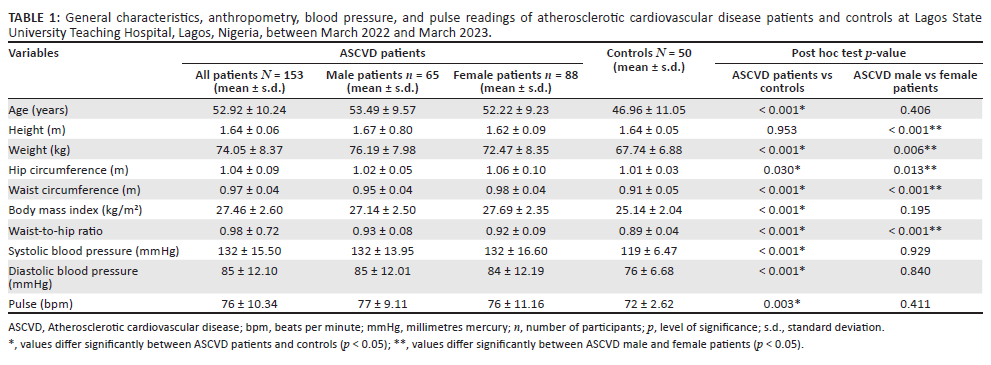
A total of 153 confirmed ASCVD patients (65 men and 88 women) aged between 22 years and 64 years were enrolled in the study. This comprised patients suffering from IHD (n = 35), stroke (n = 20), hypertensive heart disease (n = 43), myocardial infarction (n = 15), and congestive heart failure (n = 40). A total of 112 patients attended the Cardio Clinic and 41 were patients admitted into the State University Teaching Hospital Emergency Medical Wards. Controls comprised 50 healthy volunteers (22 men and 28 women) aged between 22 years and 64 years. There were statistically significant differences between ASCVD patients compared to controls, with ASCVD patients generally having higher values for mean age, weight, waist circumference, waist-hip ratio, BMI, systolic blood pressure, diastolic blood pressure (all p < 0.001), as well as hip circumference (p = 0.030) and pulse (p = 0.003) (Table 1). When ASCVD male patients were compared to female patients, statistically significant variations were only observed for mean height, waist circumference, waist-hip ratio (all p < 0.001), as well as weight (p = 0.006) and hip circumference (p = 0.013). No significant difference was observed in the mean height of ASCVD patients compared to the controls.
Lipid profile, lecithin-cholesterol acyltransferase, and paraoxonase-1 in all participants
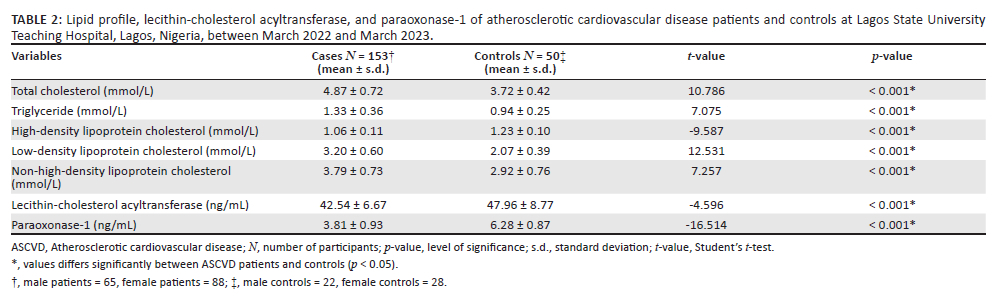
Atherosclerotic cardiovascular disease patients had statistically significant differences compared to controls with higher values for mean plasma TC, triglycerides, LDLC, and NHDLC (all p < 0.001) (Table 2). Conversely, statistically significant differences were observed for mean plasma HDLC, PON-1, and LCAT (all p < 0.001) with lower values for ASCVD patients compared to control values.
Lipid profile, lecithin-cholesterol acyltransferase, and paraoxonase-1 in atherosclerotic cardiovascular disease subclasses
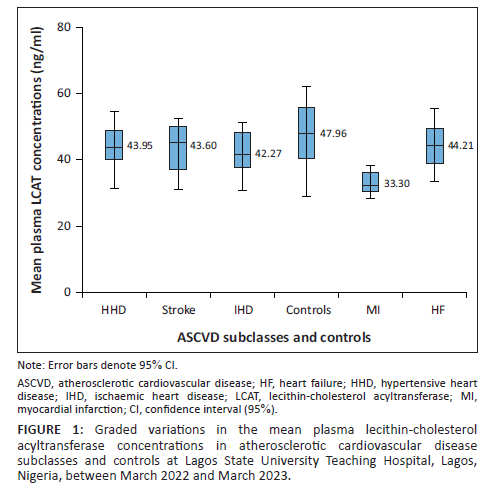
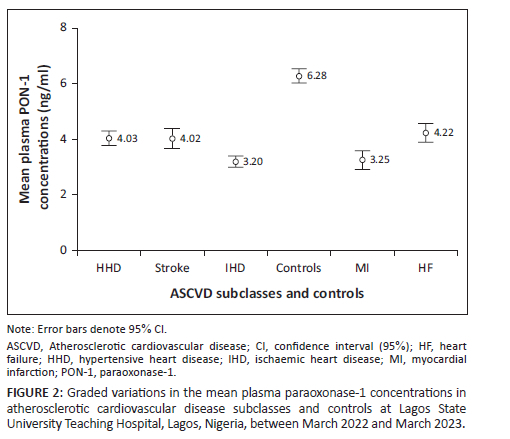
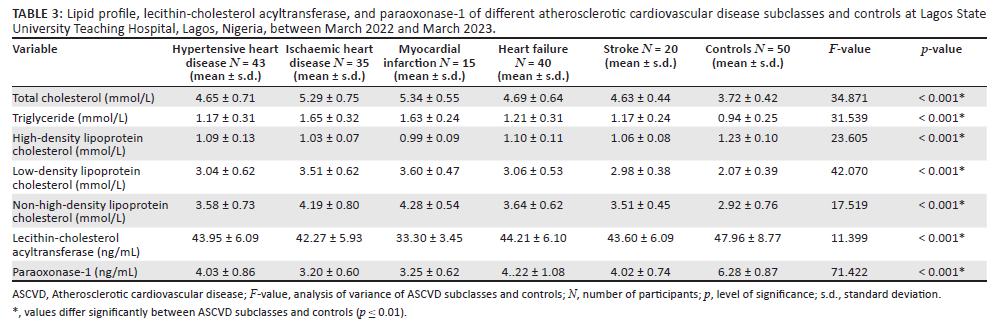
Statistically significant differences were observed in mean values of plasma TC, triglycerides, LDLC, and NHDLC (all p ≤ 0.001) with higher values for subclasses of ASCVD compared with controls (Table 3). On the other hand, statistically significant differences were noted in mean values for plasma HDLC, PON-1, and LCAT (all p ≤ 0.001) with lower values for subclasses of ASCVD compared with controls. The largest differences in atherogenic lipids (TC and triglycerides) and lipoproteins (LDLC and NHDLC) were observed among patients with myocardial infarction and IHD. Conversely, these same two ASCVD subclasses also recorded the lowest concentrations of plasma HDLC (anti-atherogenic lipoprotein). A similar trend was observed in the non-conventional lipid-related ASCVD biomarkers (PON-1 and LCAT), where myocardial infarction and IHD patients were noted to have the lowest concentrations of plasma PON-1 and LCAT.
Association between lecithin-cholesterol acyltransferase, paraoxonase-1, and conventional lipid profiles
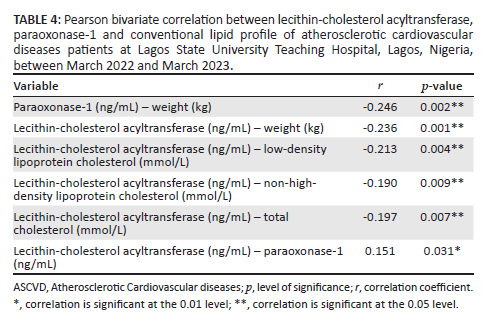
A statistically significant, negative correlation was observed between mean body weight and both PON-1 (r = -0.246, p = 0.002) and LCAT (r = -0.236, p = 0.001) (Table 4). A strong negative correlation was noted between LCAT and atherogenic LDLC (r = -0.213, p = 0.004), TC (r = -0.197, p = 0.007), and NHDLC (r = -0.190, p = 0.009) among all ASCVD patients. On the other hand, LCAT correlated positively with PON-1 (r = 0.151, p = 0.031) among ASCVD patients.
Variations in lecithin-cholesterol acyltransferase and paraoxonase-1 concentrations in atherosclerotic cardiovascular disease subclasses
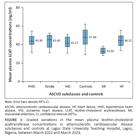
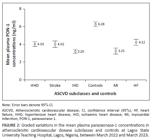
Graded variations were observed in the mean plasma LCAT concentrations in the various subclasses of ASCVD studied (Figure 1). Myocardial infarction patients had the lowest mean plasma LCAT level. Similarly, graded reductions were also observed in the mean plasma PON-1 concentration in ASCVD subclasses (Figure 2). The lowest mean plasma PON-1 concentration was noted in IHD patients, followed by patients suffering from myocardial infarction.
Gender and lecithin-cholesterol acyltransferase concentrations
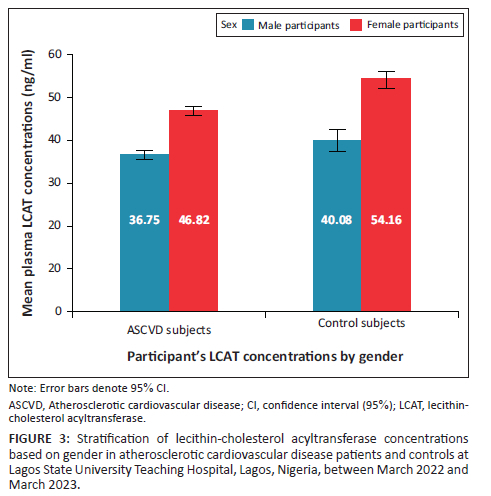
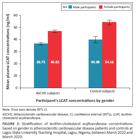
Plasma LCAT concentrations were significantly elevated in female participants compared to their male counterparts (Online Supplementary Table 1). A marked gender discrepancy in LCAT concentrations was also observed among ASCVD patients and controls (Figure 3).
Discussion
The present study showed that the mean weight, waist circumference, hip circumference, waist-to-hip ratio, BMI, and systolic blood pressure and diastolic blood pressure were significantly higher in ASCVD patients compared to the mean control values. These findings were consistent with previous studies conducted in Europe that reported significant increases in the BMI, waist circumference, waist-to-hip ratio, and blood pressure in ASCVD patients.27228
The present study also reported severe alterations in atherogenic lipids and lipoproteins in ASCVD patients. There were significant increases in plasma TC, triglycerides, LDLC, and NHDLC, while HDLC (anti-atherogenic lipoprotein) was remarkably reduced compared to the control values. In addition, it is worth noting that the lipid profiles of the different subclasses of ASCVD showed significant variations among the different groups assayed.
Notably, the highest increase in atherogenic lipids and lipoproteins (TC, triglycerides, LDLC, and NHDLC) concentrations was observed in myocardial infarction and IHD patients. Conversely, these classes of ASCVD also demonstrated the lowest reduction in the levels of the anti-atherogenic HDLC compared to other groups. These findings were similar to an earlier report by Ebesunun et al.2029
In addition, this study showed a remarkably significant reduction in the mean plasma PON-1 concentration in all the established cases of ASCVD patients compared to the mean control values. This result is consistent with previous studies in other populations worldwide that associated low PON-1 concentration and activity with an increased risk of major cardiovascular events.6,830
It is also important to note that the lowest reduction in plasma PON-1 concentrations occurred in patients suffering from IHD as well as myocardial infarction. The mean plasma PON-1 concentration in both cases was approximately 50% less than the mean control values. Thus, it suggests the crucial role PON-1 plays in the presentation of IHD and myocardial infarction.
Furthermore, worthy of note is the significant reduction in the mean plasma LCAT concentrations observed in the ASCVD patients compared to the control values. This finding was at variance with some earlier studies that showed no association between LCAT and cardiovascular disease,14,3132,33
The reduction in the mean plasma LCAT concentrations observed in ASCVD patients may reflect impaired cholesterol esterification and HDL metabolism. This can lead to reduced HDL functionality and impaired reverse cholesterol transport, a process in which excess cholesterol is transported from peripheral tissues back to the liver for excretion.1313
It is noteworthy that the mean plasma LCAT concentrations of the different subclasses of ASCVD showed significant variations among different groups, with the lowest value observed in myocardial infarction patients. This observation also agreed with earlier studies32,33
Another important and striking finding in this present study is the marked gender discrepancy in the mean plasma LCAT concentration of the participants studied. Plasma LCAT concentrations were remarkably elevated in the female participants compared to their male counterparts, both in the ASCVD patients and the controls. This finding is consistent with that of earlier studies14,30
In addition, a significant negative correlation was observed between plasma PON-1, LCAT, and the mean body weight (an established risk factor for ASCVD). A strong inverse correlation observed between LCAT and the atherogenic lipid and lipoproteins (TC, LDLC, and NHDLC) probably emphasised the important role played by LCAT in part in countering the effect of atherogenic lipids and lipoproteins in ASCVD patients.
Furthermore, the present study demonstrated a significant positive correlation between plasma LCAT and PON-1, suggesting that the two lipoprotein-associated enzymes may play synergistic roles on HDL particles to counter the effects of atherosclerosis and ASCVD progression.
Limitations
One notable limitation of this study is the absence of recent prevalence data on ASCVD in Nigeria that could inform sample size calculations. This limitation was addressed using the available data, and the sample size was adjusted upward. We suggest that future studies may benefit from updated prevalence data on ASCVD.
Conclusion
The present study demonstrated significant decreases in plasma PON-1 and LCAT levels with severe alterations in atherogenic lipids and lipoproteins in ASCVD patients, especially the subtypes of myocardial infarction and IHD. These observations provide valuable supportive evidence for the interplay of PON-1, LCAT, and lipid metabolism in the pathogenesis of this disease. These findings could potentially lead patients, in part, to develop therapeutic strategies for ASCVD prevention and treatment in future research.
Competing interests
The authors declare that they have no financial or personal relationships that may have inappropriately influenced them in writing this article.
Authors' contributions
P.C.N. developed the concept and performed the laboratory procedures, statistical analysis and interpretation of the data. P.C.N. also drafted and edited the manuscript. M.O.E. was involved in the conception, supervised the project, provided intellectual input, and engaged in reviewing and editing the manuscript. O.M.O. contributed to the selection of patients, the acquisition and interpretation of data, the reviewing and editing of the manuscript, and the approval of the final version to be published.
Sources of support
The authors received no financial support for the research, authorship, and/or publication of this article.
Data availability
The authors confirm that the data supporting the findings of this study is available within the article.
Disclaimer
The views and opinions expressed in this article are those of the authors and are the product of professional research. It does not necessarily reflect the official policy or position of any affiliated institution, funder, agency, or that of the publisher. The authors are responsible for this article's results, findings, and content.
Acknowledgements
The authors would like to acknowledge Dr Olanrewaju Abdulazeez and his team at the Lagos State University Teaching Hospital, Nigeria, for their assistance in recruiting atherosclerotic cardiovascular disease patients for this study. We are also extremely grateful to Mrs Okereke Doreen, Deputy Director of the Medical Laboratory Unit at the National Orthopaedic Hospital, Igbobi, Nigeria, for her assistance in granting us permission to make use of their facility for some of our analysis. This article is partially based on the author's thesis entitled 'Assessment of lipid profile, phospholipids, apolipoproteins, lecithin-cholesterol-acyltransferase and paraoxonase-1 among Lagos residents with cardiovascular diseases' towards the degree of PhD in the Department of Chemical Pathology & Immunology, Olabisi Onabanjo University, Nigeria, March, 2024, with supervisors, Dr M.O. Ebesunun and Dr A.A. Amballi. It is available at Olabisi Onabanjo University Central Library, Ogun State, Nigeria.
References
-
1.Makover ME, Shapiro MD, Toth PP. There is urgent need to treat atherosclerotic cardiovascular disease risk earlier, more intensively, and with greater precision: A review of current practice and recommendations for improved effectiveness. Am J Prevent Cardiol. 2022;12:100371. https://doi.org/10.1016/j.ajpc.2022.100371
» https://doi.org/10.1016/j.ajpc.2022.100371 -
2.Mahmood T, Shapiro MD. The questions on everyone's mind: What is and why do we need preventive cardiology? Methodist Debakey Cardiovasc J. 2021 Sep 24;17(4):8-14. https://doi.org/10.14797/mdcvj.698
» https://doi.org/10.14797/mdcvj.698 -
3.Ossoli A, Simonelli S, Vitali C, Franceschini G, Calabresi L. Role of LCAT in atherosclerosis. J Atheroscler Thromb. 2016;23(2):119-127. https://doi.org/10.5551/jat.32854
» https://doi.org/10.5551/jat.32854 -
4.Chistiakov DA, Melnichenko AA, Orekhov AN, Bobryshev YV. Paraoxonase and atherosclerosis-related cardiovascular diseases. Biochimie. 2017 Jan;132:19-27. https://doi.org/10.1016/j.biochi.2016.10.010
» https://doi.org/10.1016/j.biochi.2016.10.010 -
5.Yokoyama K, Tani S, Matsuo R, Matsumoto N. Association of lecithin-cholesterol acyltransferase activity and low-density lipoprotein heterogeneity with atherosclerotic cardiovascular disease risk: A longitudinal pilot study. BMC Cardiovasc Disord. 2018 Dec 5;18(1):224. https://doi.org/10.1186/s12872-018-0967-1
» https://doi.org/10.1186/s12872-018-0967-1 -
6.Shunmoogam N, Naidoo P, Chilton R. Paraoxonase (PON)-1: A brief overview on genetics, structure, polymorphisms and clinical relevance. Vasc Health Risk Manag. 2018 Jun 18;14:137-143. https://doi.org/10.2147/VHRM.S165173
» https://doi.org/10.2147/VHRM.S165173 -
7.Mackness M, Mackness B. Human paraoxonase-1 (PON1): Gene structure and expression, promiscuous activities and multiple physiological roles. Gene. 2015 Aug 1;567(1):12-21. https://doi.org/10.1016/j.gene.2015.04.088
» https://doi.org/10.1016/j.gene.2015.04.088 -
8.Kunutsor SK, Bakker SJ, James RW, Dullaart RP. Serum paraoxonase-1 activity and risk of incident cardiovascular disease: The PREVEND study and meta-analysis of prospective population studies. Atherosclerosis. 2016 Feb;245:143-154. https://doi.org/10.1016/j.atherosclerosis.2015.12.021
» https://doi.org/10.1016/j.atherosclerosis.2015.12.021 -
9.Mackness B, Durrington PN, Mackness MI. Human serum paraoxonase. Gen Pharmacol. 1998 Sep;31(3):329-336. https://doi.org/10.1016/s0306-3623(98)00028-7
» https://doi.org/10.1016/s0306-3623(98)00028-7 -
10.Roest M, Van Himbergen TM, Barendrecht AB, Peeters PH, Van Der Schouw YT, Voorbij HA. Genetic and environmental determinants of the PON-1 phenotype. Eur J Clin Invest. 2007 Mar;37(3):187-196. https://doi.org/10.1111/j.1365-2362.2007.01769.x
» https://doi.org/10.1111/j.1365-2362.2007.01769.x -
11.Longo A, Veiga GB, Cousen MIS, et al. Factors associated with serum paraoxonase 1 activity in patients with cardiovascular disease. Arch Endocrinol Metab. 2021 Nov 24;65(6):676-683. https://doi.org/10.20945/2359-3997000000354
» https://doi.org/10.20945/2359-3997000000354 -
12.Haj Mouhamed D, Ezzaher A, Mechri A, et al. Effect of cigarette smoking on paraoxonase 1 activity according to PON1 L55M and PON1 Q192R gene polymorphisms. Environ Health Prev Med. 2012 Jul;17(4):316-321. https://doi.org/10.1007/s12199-011-0256-4
» https://doi.org/10.1007/s12199-011-0256-4 -
13.Ossoli A, Pavanello C, Calabresi L. High-density lipoprotein, lecithin: Cholesterol acyltransferase, and atherosclerosis. Endocrinol Metab (Seoul). 2016 Jun;31(2):223-229. https://doi.org/10.3803/EnM.2016.31.2.223
» https://doi.org/10.3803/EnM.2016.31.2.223 -
14.Calabresi L, Baldassarre D, Simonelli S, et al. Plasma lecithin: Cholesterol acyltransferase and carotid intima-media thickness in European individuals at high cardiovascular risk. J Lipid Res. 2011 Aug;52(8):1569-1574. https://doi.org/10.1194/jlr.P014977
» https://doi.org/10.1194/jlr.P014977 -
15.Kunnen S, Van Eck M. Lecithin: Cholesterol acyltransferase: Old friend or foe in atherosclerosis? J Lipid Res. 2012 Sep;53(9):1783-1799. https://doi.org/10.1194/jlr.R024513
» https://doi.org/10.1194/jlr.R024513 -
16.Wang F, Liu Y, Cong Y, et al. Shift of the interconnection from the reaction system of paraoxonase 1 to the peroxidation reaction system of myeloperoxidase with HDL-C levels: A marker of atherosclerosis in patients with normal cholesterol levels. Clin Chim Acta. 2015 Jan 1;438:370-375. https://doi.org/10.1016/j.cca.2014.09.020
» https://doi.org/10.1016/j.cca.2014.09.020 -
17.Shokri Y, Variji A, Nosrati M, et al. Importance of paraoxonase 1 (PON1) as an antioxidant and antiatherogenic enzyme in the cardiovascular complications of type 2 diabetes: Genotypic and phenotypic evaluation. Diabetes Res Clin Pract. 2020 Mar;161:108067. https://doi.org/10.1016/j.diabres.2020.108067
» https://doi.org/10.1016/j.diabres.2020.108067 -
18.Cervellati C, Valacchi G, Tisato V, Zuliani G, Marsillach J. Evaluating the link between paraoxonase-1 levels and Alzheimer's disease development. Minerva Med. 2019 Jun;110(3):238-250. https://doi.org/10.23736/S0026-4806.18.05875-5
» https://doi.org/10.23736/S0026-4806.18.05875-5 -
19.Pavanello C, Ossoli A, Arca M, et al. Progression of chronic kidney disease in familial LCAT deficiency: A follow-up of the Italian cohort. J Lipid Res. 2020 Dec;61(12):1784-1788. https://doi.org/10.1194/jlr.P120000976
» https://doi.org/10.1194/jlr.P120000976 - 20.Ebesunun MO, Agbedana EO, Taylor GO, Oladapo OO. Variations in plasma lipids and lipoproteins among cardiovascular disease patients in southwestern Nigerians. Biokemistri. 2013;25(2):45-51.
-
21.Ebesunun MO, Agbedana EO, Taylor GO, Oladapo OO. Plasma lipoprotein (a), homocysteine, and other cardiovascular disease (CVD) risk factors in Nigerians with CVD. Appl Physiol Nutr Metab. 2008;33(2):282-289. https://doi.org/10.1139/H07-186
» https://doi.org/10.1139/H07-186 -
22.Allain CC, Poon LS, Chan CS, Richmond W, Fu PC. Enzymatic determination of total serum cholesterol. Clin Chem. 1974;20(4):470-475. https://doi.org/10.1093/clinchem/20.4.470
» https://doi.org/10.1093/clinchem/20.4.470 -
23.Bucolo G, David H. Quantitative determination of serum triglycerides by the use of enzymes. Clin Chem. 1973;19(5):476-482. https://doi.org/10.1093/clinchem/19.5.476
» https://doi.org/10.1093/clinchem/19.5.476 -
24.Friedewald WT, Levy RI, Fredrickson DS. Estimation of the concentration of low-density lipoprotein cholesterol in plasma, without the use of the preparative ultracentrifuge. Clin Chem. 1972;18:499-502. https://doi.org/10.1093/clinchem/18.6.499
» https://doi.org/10.1093/clinchem/18.6.499 -
25.Sun CJ, McCudden C, Brisson D, Shaw J, Gaudet D, Ooi TC. Calculated non-HDL cholesterol includes cholesterol in larger triglyceride-rich lipoproteins in hypertriglyceridemia. J Endocr Soc. 2019 Nov 3;4(1):bvz010. https://doi.org/10.1210/jendso/bvz010
» https://doi.org/10.1210/jendso/bvz010 -
26.Engvall E, Perlmann P. Enzyme-linked immunosorbent assay (ELISA). Quantitative assay of immunoglobulin G. Immunochemistry. 1971 Sep;8(9):871-874. https://doi.org/10.1016/0019-2791(71)90454-x
» https://doi.org/10.1016/0019-2791(71)90454-x -
27.Flint A, Conell C, Ren X. Effect of systolic and diastolic blood pressure on cardiovascular outcome. N Engl J Med. 2019;381:243. https://doi.org/10.1056/NEJMoa1803180
» https://doi.org/10.1056/NEJMoa1803180 -
28.Jayawardena R, Ranasinghe P, Ranathunga T, Mathangasinghe Y, Wasalathanththri S, Hills AP. Novel anthropometric parameters to define obesity and obesity-related disease in adults: A systematic review. Nutr Rev. 2020;78(6):498-513. https://doi.org/10.1093/nutrit/nuz078
» https://doi.org/10.1093/nutrit/nuz078 -
29.Hedayatnia M, Asadi Z, Zare-Feyzabadi R, et al. Dyslipidemia and cardiovascular disease risk among the MASHAD study population. Lipids Health Dis. 2020;19(1):42. https://doi.org/10.1186/s12944-020-01204-y
» https://doi.org/10.1186/s12944-020-01204-y - 30.Katarzyna K, Ewelina S, Halina M. The role of paraoxonase in cardiovascular diseases. Ann Clin Lab Sci. 2015;45:226-233.
-
31.Holleboom A, Kuivenhoven J, Vergeer M, et al. Plasma levels of LCAT and risk of future coronary artery diseases in apparently healthy men and women; a prospective case-control analysis nested in the EPIC-Norfolk population study. J Lipid Res. 2010;51:416-421. https://doi.org/10.1194/P900038-JLR200
» https://doi.org/10.1194/P900038-JLR200 -
32.Dullaart RP, Tietge UJ, Kwakernaak AJ, Dikkeschei BD, Perton F, Tio RA. Alterations in plasma lecithin: Cholesterol acyltransferase and myeloperoxidase in acute myocardial infarction: Implications for the cardiac outcome. Atherosclerosis. 2014;234(1):185-192. https://doi.org/10.1016/j.atherosclerosis.2014.02.026
» https://doi.org/10.1016/j.atherosclerosis.2014.02.026 -
33.Sethia A, Sampson M, Warnick R, et al. High pre-beta1 HDL concentrations and low LCAT transferase activities are strong positive risk markers for ischemic heart disease and independent of HDL-cholesterol. ClinChem. 2010;56:1128-1137. https://doi.org/10.1373/clinchem.2009.139931
» https://doi.org/10.1373/clinchem.2009.139931
Accepted: 02 May 2024
Published: 17 July 2024