Drug resistant tuberculosis in Africa: Current status, gaps and opportunities
Abstract
BACKGROUND: The World Health Organization End TB Strategy targets for 2035 are ambitious and drug resistant tuberculosis is an important barrier, particularly in Africa, home to over a billion people. OBJECTIVE: We sought to review the current status of drug resistant tuberculosis in Africa and highlight key areas requiring improvement. METHODS: Available data from 2016 World Health Organization global tuberculosis database were extracted and analysed using descriptive statistics. RESULTS: The true burden of drug resistant tuberculosis on the continent is poorly described with only 51% of countries having a formal survey completed. In the absence of this data, modelled estimates were used and reported 92 629 drug resistant tuberculosis cases with 42% of these occurring in just two countries: Nigeria and South Africa. Of the cases estimated, the majority of patients (70%) were not notified, representing 'missed cases'. Mortality among patients with multi-drug resistant tuberculosis was 21%, and was 43% among those with extensively drug resistant tuberculosis. Policies on the adoption of new diagnostic tools was poor and implementation was lacking. A rifampicin result was available for less than 10% of tuberculosis cases in 23 of 47 countries. Second-line drug resistance testing was available in only 60% of countries. The introduction of the short multi-drug resistant tuberculosis regimen was a welcome development, with 40% of countries having implemented it in 2016. Bedaquiline has also been introduced in several countries. CONCLUSION: Drug resistant tuberculosis is largely missed in Africa and this threatens prospects to achieve the 2035 targets. Urgent efforts are required to confirm the true burden of drug resistant tuberculosis in Africa. Adoption of new tools and drugs is essential if the 2035 targets are to be met.
Introduction
Global declines in tuberculosis incidence12
Africa is home to over 1 billion people and is disproportionately affected by tuberculosis with 2.6 million of the 10.4 million global tuberculosis cases,34,56,7,8
Several factors threaten the potential to realise these targets, and key among these is drug resistant tuberculosis.93
We present a review of the current status of drug resistant tuberculosis in Africa using data from 2016 WHO global tuberculosis database,10
Situation analysis of drug resistant tuberculosis in Africa
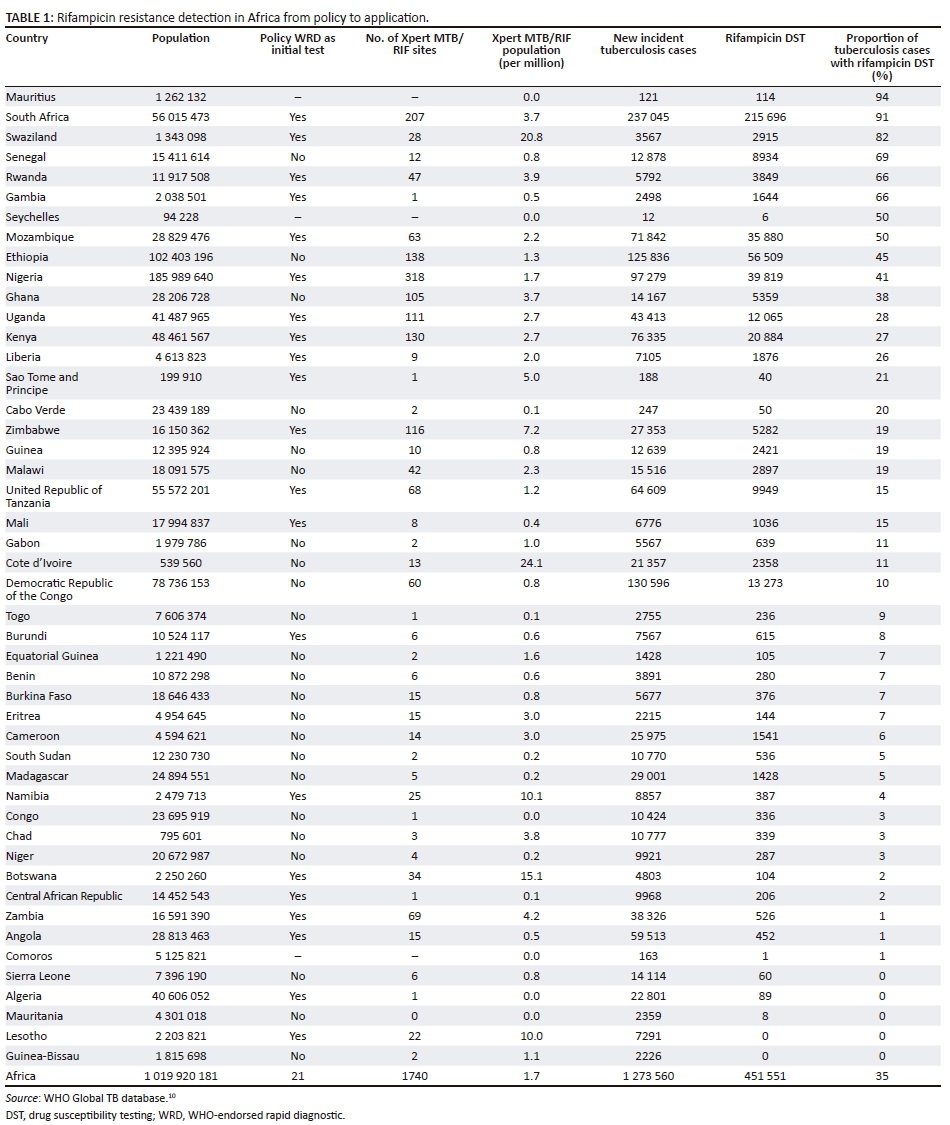
The best estimate of the burden of drug resistant tuberculosis in Africa requires population-based survey findings, as testing for all tuberculosis cases for rifampicin drug resistance is not done routinely in most countries. Only three countries - Mauritius, South Africa and Swaziland - had over 80% of cases tested for rifampicin (Table 1). Drug resistance surveys are thus the main source of data and are applied based on robust methodologies.11Table 2). When restricted to the last five years, the figure is even lower at 23% (11/47). For 21 countries, no data are available, making planning a response much more challenging and potentially less effective. No country in Africa had a repeat survey in the five-year window recommended, and assessing trends was thus largely not possible based on survey data alone.
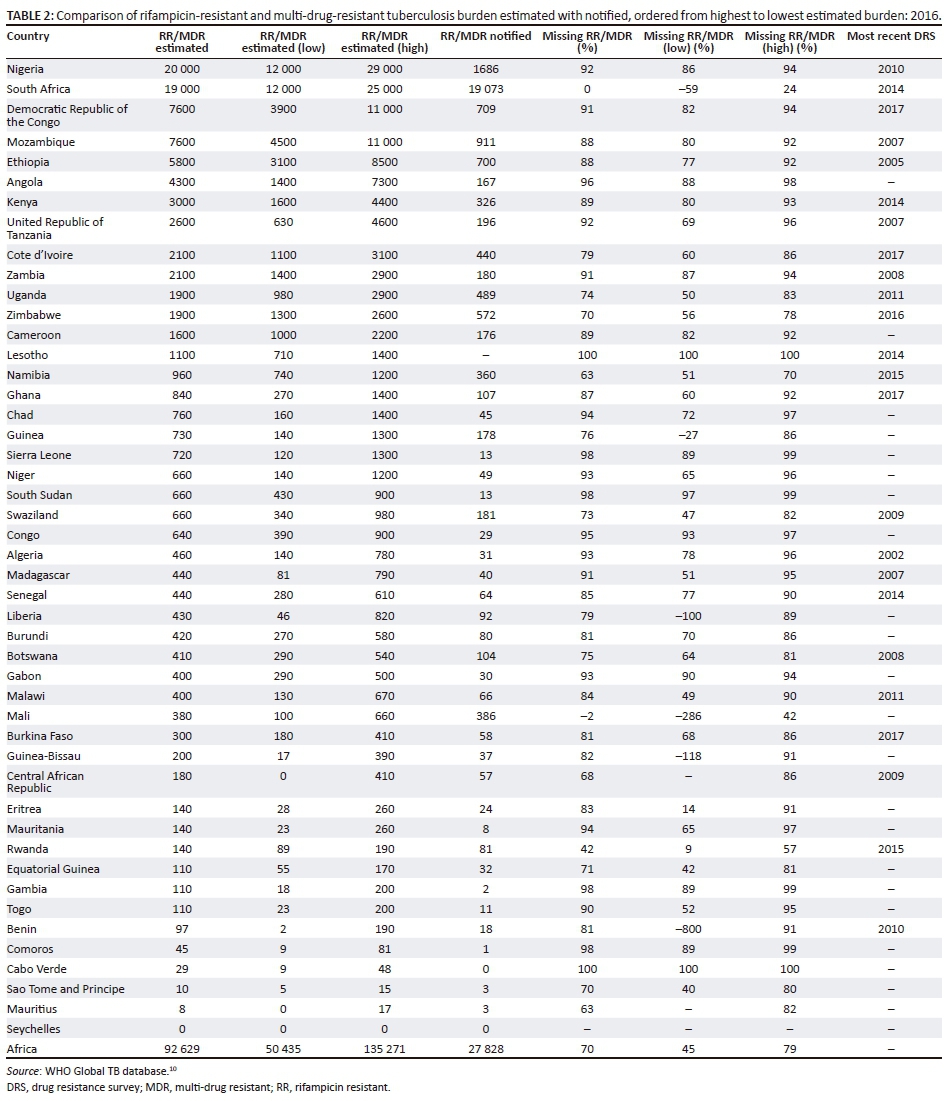
In light of the above limitations, WHO applies modelling using available data sources, including surveys.12Table 2, and countries are ranked from highest to lowest. Nigeria (20 000) together with South Africa (19 000) account for 42% (39 000/92 629) of the total estimated burden, and thus their achievements or failures regarding drug resistant tuberculosis control will have a great impact on the overall picture for Africa. When the next three highest burden countries - Democratic Republic of Congo (7600), Mozambique (7600) and Ethiopia (5800) - are added, the cumulative figure accounts for 65% (60 000/92 629) of the estimated burden of cases. This highlights the obvious heterogeneity of disease burden among African countries and the need for a targeted response rather than a generalised one.
An interesting modelling study was undertaken by Musa et al.13
Another modelling study by Sharma et al.,14
The most recent survey in South Africa (2012-2014), compared to the previous one conducted just over 10 years earlier, showed an almost doubling of the rate in rifampicin resistance (1.8% to 3.4%)1516® MTB/RIF [Cepheid, Sunnyvale, California, United States] and line probe assays), which still continues to persist. Of importance as well is the higher rate of isoniazid mono-resistance (6.1%) compared to any rifampicin resistance (4.6%) in the 2012-2014 South Africa survey, with the former also associated with poorer treatment outcomes.
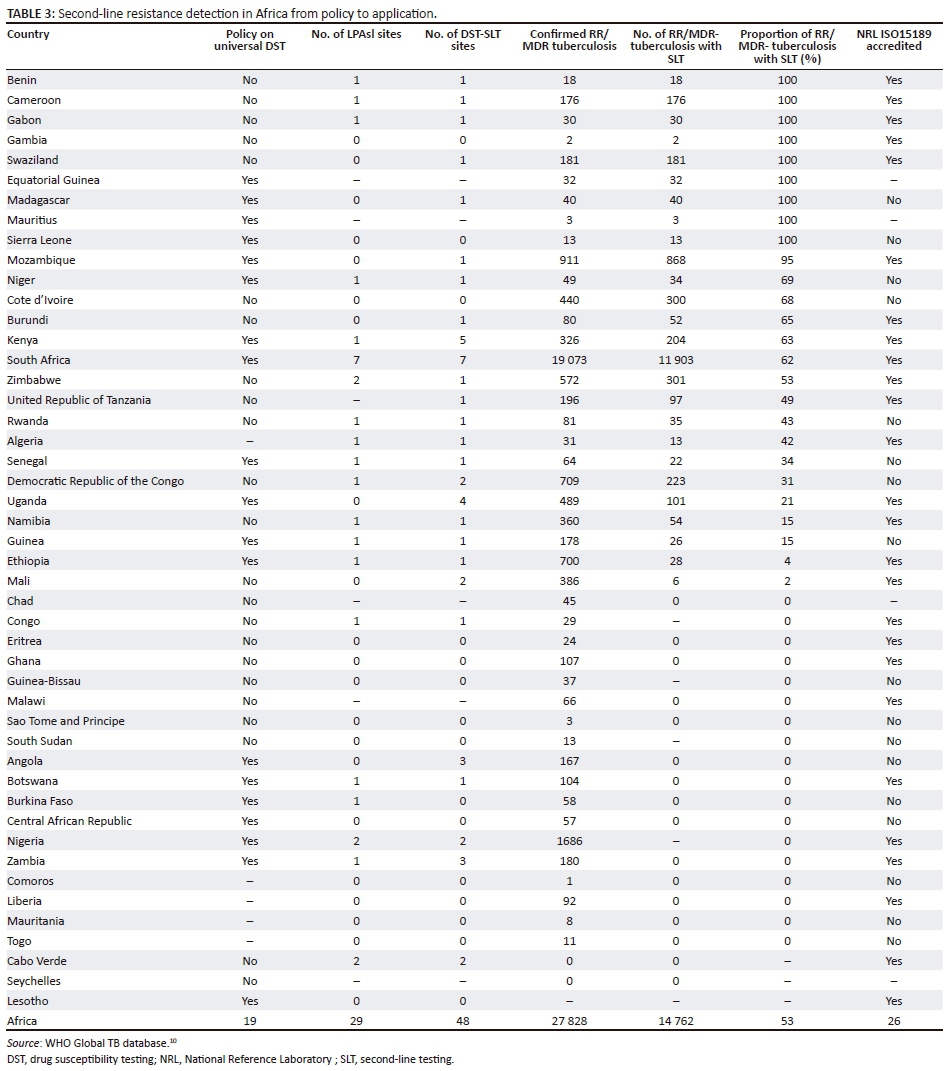
Comparing the estimated burden of drug resistant tuberculosis to cases notified, there is an alarming notification gap, as only 27 828 of the 92 629 estimated cases were notified. This suggests that 70% of cases in Africa are being missed. In addition, the proportion of missed RR and MDR tuberculosis cases are estimated to be above 50% for 43 of the 47 African countries (Table 1). It should be noted that the confidence intervals are relatively wide, yet using the lower estimate the gap is 45%. The extremely drug resistant tuberculosis estimates are not available for comparison; however, a total of 1092 extremely drug resistant tuberculosis cases were notified, of which South Africa reported 89% (967) of all extremely drug resistant tuberculosis cases on the continent.17Table 3).
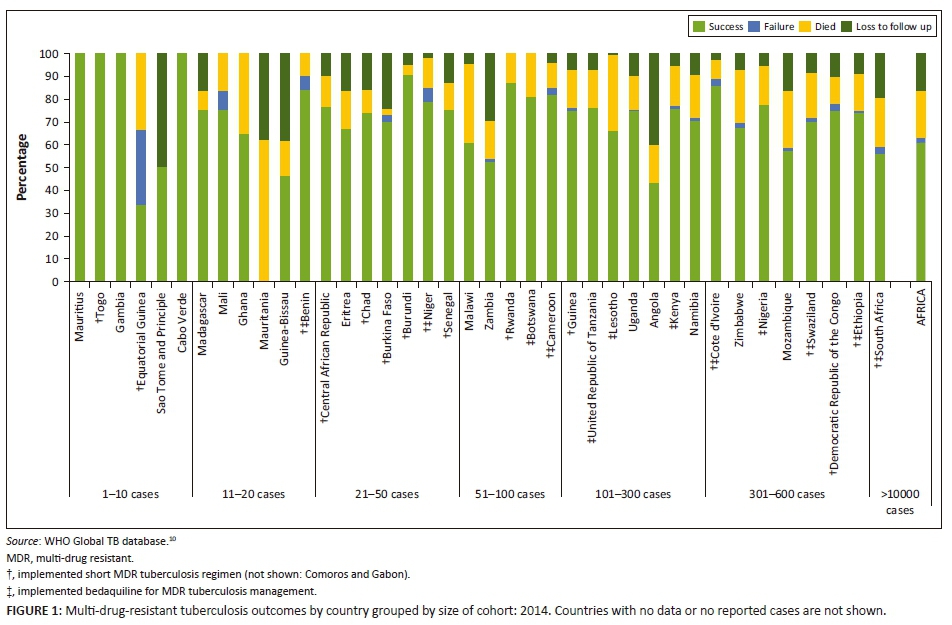
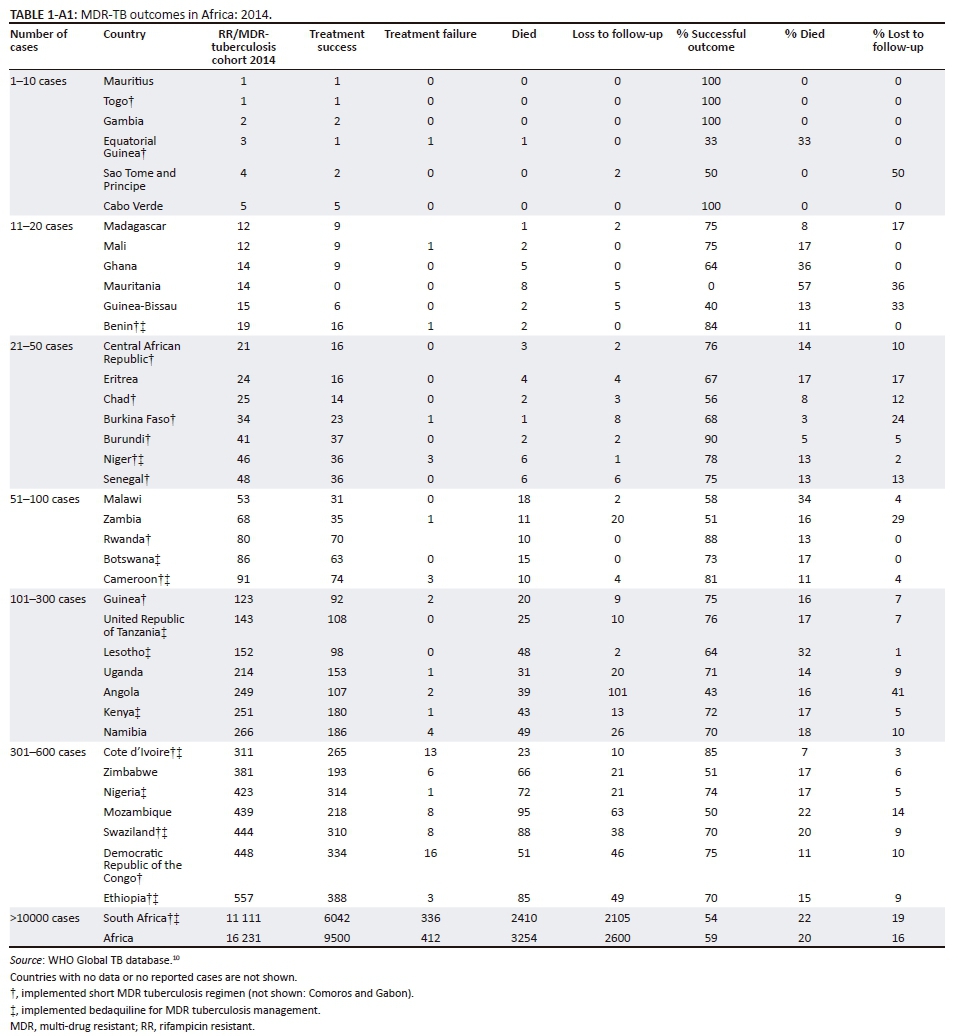
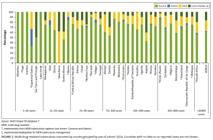
Mortality reduction is another important target of WHO's 2035 End TB Strategy. Missed cases contribute to mortality directly when cases are not detected through current programmes, or indirectly due to late presentation or testing for resistance being unavailable. The overall MDR tuberculosis mortality for the 2014 Africa cohort (N = 16 231) was 20%, while treatment success was only 58% (Figure 1). The situation was far worse for the extremely drug resistant tuberculosis cohort in 2014 (N = 623) with mortality at 42% and treatment success at only 27%. Outcomes for the 2014 cohort of MDR tuberculosis by country are shown in Figure 1.
Reviewing the diagnostic landscape for drug resistant tuberculosis in Africa, encouraging signs are noted with 45% (21/47) of countries having progressive policies, which include the use of the Xpert MTB/RIF assay as the initial WHO-endorsed rapid diagnostic test (Table 1). Comparing policy to practice, clear gaps emerge. Across the continent only 35% of newly diagnosed tuberculosis cases had a rifampicin drug susceptibility test performed (Table 1), implying that primary drug resistant tuberculosis cases are largely being missed. Rifampicin drug susceptibility testing was available for less than 10% of new cases in 23 countries. In contrast, Mauritius (94%), South Africa (91%), Swaziland (82%), Senegal (69%) and Rwanda (66%) were ranked as the top five countries with high coverage for rifampicin drug susceptibility testing among notified cases. On the continent, the Xpert MTB/RIF is available in 43/47 (91%) countries, comprising 1740 testing sites (Table 1). Adjusted for population size, there is large variability ranging from less than 1 to 24 sites per million people. Albeit a crude measurement, it does highlight important gaps in coverage for many countries. However, coverage of drug susceptibility testing does not directly imply utilisation, which is likely to be even poorer.
Policies on universal drug susceptibility testing are also lacking with 19 (40%) of the 47 countries having a policy in place (Table 3). The GenoType MTBDRsl (Hain Life Sciences, Nehren, Germany) for second-line drug susceptibility testing is available in 20 of 47 (43%) countries at 29 sites (Table 3). This proportion is unsurprisingly low as the GenoType MTBDRsl has only been recently endorsed to address gaps in second-line drug susceptibility testing. Overall, 28 (60%) countries have second-line drug susceptibility testing available, using either line probe assay or phenotypic drug susceptibility testing (Table 3). Availability of second-line drug susceptibility testing has, however, not translated into practice with only 43% (12/28) of these countries testing more than half their notified rifampicin-resistant tuberculosis cases. However, these percentages are not truly reflective, as they are based on the number of detected rather than estimated cases.
Another important issue with respect to laboratories is quality assurance. Among all African countries, 26 (55%) national reference laboratories (NRLs) reported having an ISO 15189 accreditation status. Although this does seem encouraging, this reporting may not be a true reflection of the situation, as the reference laboratories that are formally recognised by SLMTA18
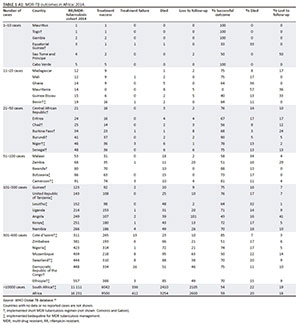
Apart from diagnostics, treatment is an essential component of tuberculosis control as well and affects a country's ability to reach the WHO End TB Strategy targets. Drug resistant tuberculosis treatment is often prolonged and uses less effective regimens with more adverse events compared to first-line treatment. The number of cases reported on treatment per country varies (Figure 1), with all but one treating less than 600 cases in a year (South Africa: > 10 000). The treatment success overall in Africa was 59%, 20% died and 16% were lost to follow-up (Appendix 1). The introduction of the short-course regimen is a major improvement and, in 2016, 36% (17/47) of countries used this patient friendly regimen (Figure 1). Countries leading the implementation of this regimen were Democratic Republic of Congo (555), Cote d'Ivoire (349) and Cameroon (135) with 31%, 68% and 100% of RR and MDR tuberculosis patients in these countries, respectively also having second-line drug susceptibility testing performed. Thus, adoption of the short-course regimen is not strictly linked to second-line drug susceptibility testing; however, in light of the recent rapid WHO guidance, the need for early identification of fluoroquinolone resistance is important. The top three countries with at least 50 cases or more and having the highest treatment success were countries implementing the short-course regimen: Burundi (90%), Rwanda (88%) and Cote d'Ivoire (85%). Bedaquiline is a new and welcome addition to drug resistant tuberculosis management and is reported to be highly effective.19,20Figure 1). This new agent also offers a potential for scale-up in addressing poor treatment outcomes for drug resistant tuberculosis.
Towards ending drug resistant tuberculosis in Africa
Drug resistant tuberculosis poses a major hurdle to achieving the WHO End TB Strategy targets. Acting early and decisively will be a determining factor in either future success or failure. Encouragingly, the past 5 years have seen new diagnostic technologies and treatment options become available, as well as strong global political commitment to end tuberculosis. Despite the obstacles threatening the realisation of the WHO End TB Strategy targets in Africa, there are equally effective tools available for achieving success.
Primary among the urgent needs is a clear understanding of the burden of tuberculosis and drug resistant tuberculosis, which will greatly impact planning and efficient resource allocation, a key issue in resource-constrained environments. Progress has been made with just over half of the countries ever having completed a survey. However, there are still large gaps in the data available and these need to be urgently addressed. Furthermore, in order to assess progress and respond appropriately, trend data is essential. The use of routine data reported to the WHO has added benefits, but concerns about accuracy and completeness result in this information being treated with circumspection. Modelled estimates using this routine data would also be impacted as a consequence.
An alternative approach to address gaps is the use of sentinel surveillance for tracking annual trends in strategically selected sites. This is a potential hybrid solution, which is being considered by the HIV programme.21sl. A few countries have shown high uptake of rapid diagnostic tools for early rifampicin and second-line resistance detection. These efforts should be standardised to ensure data comparisons between countries and regions of Africa.
Another key concern is missing cases, which are estimated to be equal to or greater than the notified burden. Although the numbers are staggering, modifying current diagnostic algorithms to adopt new technologies could dramatically reduce this gap in a short period of time and can be seen in some countries already. The utilisation of the Xpert MTB/RIF has been lacklustre on the continent, with many countries limiting its use to selected cases and thus diminishing the impact of this critical molecular diagnostic platform. This not only reduces the detection of tuberculosis by approximately 10% - 20%,223
Aggressive scale-up of the use of rapid molecular diagnostic tools (e.g. Xpert) as the primary test will be key to finding missing drug resistant tuberculosis cases and is all the more urgent as primary transmission is a major contributor to the propagation of the disease.15,22
A second issue relates to second-line testing. While this is being achieved in several African countries with good overall coverage among notified RR tuberculosis cases (Table 3), it is often a challenge in most settings across Africa with 43% (20/47) of member states having no coverage. As the overall reported burden of drug resistant tuberculosis is not particularly high in many countries, the need and operational feasibility to set up such systems may be better served through regional collaboration. There are three WHO-certified supranational reference laboratories in Africa24
The three supranational reference laboratories are limited by capacity to provide for the large needs of the continent. Expanding the number of supranational reference laboratories is required and NRLs with potential should be supported to achieve this status. The number of NRLs complying with ISO 15189 is still unacceptably low, considering that NRLs are expected to be the standard against which sub-national laboratories are compared. The introduction of the Strengthening Laboratory Management Toward Accreditation programme has seen 54 laboratories achieve accreditation by the end of 2017 over a 5-year period;25
The continuum of care requires not only good diagnostics but also effective early treatment. Successful outcomes among MDR tuberculosis patients are exceptionally low with death and loss to follow-up being common endpoints. These are complex issues underpinned by late presentation, poor access to services and overburdened health services. Treatment options are another important determinant of patient outcomes. Therapy is often prolonged; however, a short-course regimen has shown promise in reducing the loss of patients to follow-up. The highest success rates observed in Africa were among those applying this approach and, importantly, a large evidence base for this policy came from Africa and confirms its value.25
More positive news out of Africa is the use of bedaquiline, with significant reductions observed in mortality for both MDR and XDR tuberculosis cases using this agent.26
As highlighted, South-South collaborations are important, and findings reported by Cain et al.272829
Ending tuberculosis and specifically drug resistant tuberculosis cannot be fully realised without dealing with HIV infection and disease. HIV/AIDS is a major contributor to the burden of both tuberculosis and drug resistant tuberculosis, and current efforts at also ending HIV are encouraging. Achieving viral suppression at a population level is an important tuberculosis prevention strategy and will likely lead to continued declines in HIV-associated tuberculosis and drug resistant tuberculosis. This would, however, result in a relatively higher proportion of HIV-negative tuberculosis and drug resistant tuberculosis. This group is less likely to die and, consequently, can transmit for longer periods. Thus, missing such cases will have long-term consequences, and messages to ensure this group is also investigated will be increasingly important. Another issue that should be appreciated is that the burden of tuberculosis and drug resistant tuberculosis has for many years exceeded the existing medical care capacity, leading to failures in health delivery. In spite of this, the declines seen offer a window of hope where the developed capacity and burden may align once again. Thus, the need to maintain funding and capacity during this period is needed if we are to end tuberculosis by 2035.
Limitations
It is important to contextualise the limitations of this analysis. The data used were taken from the WHO global tuberculosis database, which derived data from countries through unverified self-reporting. Countries are usually given time to verify their data before submission and, in addition, anomalies identified by WHO result in queries sent back to countries for checking before the data are accepted. Additionally, the estimates included are based on established mathematical models adopted for use by WHO and are inherently influenced by the assumptions applied to the model. The wide confidence intervals account for the uncertainty in deriving these estimates.
Conclusion
Drug resistant tuberculosis is difficult to manage even in the best of environments and is likely to pose a major challenge for Africa as it works toward achieving the WHO End TB Strategy targets. Any delays in addressing drug resistant tuberculosis will mean lost ground, which will make the challenge even greater. Our ability to end tuberculosis and, specifically, drug resistant tuberculosis, by 2035 will require a major uphill effort, but it is achievable given the right strategic focus complemented by strong leadership and adequate resources. The adage 'know your epidemic, and know your response' serves as a guiding principle leading up to 2035 and we have provided detailed data clearly highlighting areas of success and failure. It is clear that the burden is highly heterogeneous, and focusing on key countries will be greatly rewarding, if available resources are used wisely. Gaps in data are also large and certainty needs to be achieved on the true burden of tuberculosis and drug resistant tuberculosis throughout the continent. Experience gained in addressing the deficiencies identified here could influence prioritisation within the tuberculosis control programme in the future. The advent of new and improved diagnostics constitutes a major advancement, although adoption has not been aggressive enough in many parts of Africa, and this needs greater impetus. Despite shortcomings as a continent, African countries have played a leading role for both the evaluation of drug resistant tuberculosis diagnostic tools and treatment options, which include the short regimen and bedaquiline. These findings need to move to scale rapidly for us to accelerate progress in dealing with drug resistant tuberculosis and ultimately end the disease.
Competing interests
The authors declare that they have no financial or personal relationships that may have inappropriately influenced them in writing this article.
Sources of support
None.
Authors' contributions
N.I., F.I. and P.C.O. were involved in the conception and design. N.I. and L.B. did the data analysis. N.I., F.I., S.V.O., L.B., H.K., Y.G. and P.C.O. wrote the first draft. N.I., F.I., S.V.O., L.B., H.K., Y.G. and P.C.O. provided important intellectual input.
Acknowledgements
We would like to thank all the national tuberculosis control programmes that contributed important public health data to the WHO global tuberculosis database. We also thank the WHO headquarters and regional offices for ensuring the data collected were standardised and reviewed before making the information publicly available.
References
- 1. WHO. Global TB report. 2016 [cited 2018 January 22].
- Available from: http://www.who.int/tb/publications/global_report/gtbr2016_executive_summary.pdf
-
Available from: http://www.who.int/tb/End_TB_brochure.pdf?ua=1
» https://doi.org/10.1016/S0140-6736(09)60916-8 - 3. WHO. Global TB report. 2017 [cited 2018 August 27].
-
Available from: http://www.who.int/tb/publications/global_report/gtbr2016_executive_summary.pdf
» https://doi.org/10.5588/pha.16.0029 -
5. Harries AD, Hargreaves NJ, Kemp J, et al. Deaths from tuberculosis in sub-Saharan African countries with a high prevalence of HIV-1. Lancet. 2001;357(9267):1519-1523. https://doi.org/10.1016/S0140-6736(00)04639-0
» https://doi.org/10.1016/S0140-6736(00)04639-0 -
7. Haumba S, Dlamini T, Calnan M, et al. Declining tuberculosis notification trend associated with strengthened TB and expanded HIV care in Swaziland. Public Health Action. 2015;5(2):103-105. https://doi.org/10.5588/pha.15.0008
» https://doi.org/10.5588/pha.15.0008 -
8. Nanoo A, Izu A, Ismail NA, et al. Nationwide and regional incidence of microbiologically confirmed pulmonary tuberculosis in South Africa, 2004-2012: A time series analysis. Lancet Infect Dis. 2015;15(9):1066-1076. https://doi.org/10.1016/S1473-3099(15)00147-4
» https://doi.org/10.1016/S1473-3099(15)00147-4 -
9. Mariandyshev A, Eliseev P. Drug-resistant tuberculosis threatens WHO's End-TB strategy. Lancet Infect Dis. 17(7):674-675. https://doi.org/10.1016/S1473-3099(17)30246-3
» https://doi.org/10.1016/S1473-3099(17)30246-3 - 10. WHO. WHO's Global TB Database. Geneva, Switzerland: WHO; 2016.
- 11. WHO. Guidelines for surveillance of drug resistant tuberculosis. 5th ed. Geneva, Switzerland: WHO; 2015.
- 12. WHO. Methods used by WHO to estimate the global burden of TB disease. 2016 [cited 2017 December 16].
- Available from: http://www.who.int/tb/publications/global_report/gtbr2016_online_technical_ appendix_global_disease_burden_estimation.pdf
-
13. Musa BM, Adamu AL, Galadanci NA, Zubayr B, Odoh CN, Aliyu MH. Trends in prevalence of multi drug resistant tuberculosis in sub-Saharan Africa: A systematic review and meta-analysis. PLoS One 2017;12(9):e0185105. https://doi.org/10.1371/journal.pone.0185105
» https://doi.org/10.1371/journal.pone.0185105 -
14. Sharma A, Hill A, Kurbatova E, et al. Estimating the future burden of multidrug-resistant and extensively drug-resistant tuberculosis in India, the Philippines, Russia, and South Africa: A mathematical modelling study. Lancet Infect Dis. 2017;17(7):707-715. https://doi.org/10.1016/S1473-3099(17)30247-5
» https://doi.org/10.1016/S1473-3099(17)30247-5 - 15. NICD. South African TB drug resistance survey. 2015 [cited 2017 December 01].
- Available from: http://www.nicd.ac.za/assets/files/K-12750%20NICD%20National%20Survey%20Report_Dev_V11-LR.pdf
-
16. Menzies HJ, Moalosi G, Anisimova V, et al. Increase in anti-tuberculosis drug resistance in Botswana: Results from the fourth National Drug Resistance Survey. Int J Tuberc Lung Dis. 2014;18(9):1026-1033. https://doi.org/10.5588/ijtld.13.0749
» https://doi.org/10.5588/ijtld.13.0749 - 17. WHO. Global TB Report. 2017 [cited 2018 August 25].
-
Available from: http://www.who.int/tb/publications/global_report/gtbr2016_executive_summary.pdf
» https://doi.org/10.5588/ijtld.17.0498 -
Available from: https://slmta.org/accredited-labs/
» https://doi.org/10.1371/journal.pmed.1001791 -
19. Diacon AH, Pym A, Grobusch MP, et al. Multidrug-resistant tuberculosis and culture conversion with bedaquiline. N Engl J Med. 2014;371(8):723-732. https://doi.org/10.1056/NEJMoa1313865
» https://doi.org/10.1056/NEJMoa1313865 - 20. WHO. The use of bedaquiline in the treatment of multidrug-resistant tuberculosis. 2013.
- [cited 2016 October 04]. Available from: http://apps.who.int/iris/bitstream/10665/84879/1/9789241505482_eng.pdf
- 21. Raizes E, Hader S, Birx D. The US President's emergency plan for AIDS relief (PEPFAR) and HIV drug resistance: Mitigating risk, monitoring impact. J Infect Dis. 2017;216(suppl_9):S805-S807.
-
23. Shah NS, Auld SC, Brust JC, et al. Transmission of extensively drug-resistant tuberculosis in South Africa. N Engl J Med. 2017;376(3):243-253. https://doi.org/10.1056/NEJMoa1604544
» https://doi.org/10.1056/NEJMoa1604544 - 24. WHO. WHO announces new TB Supranational Reference Laboratory in the African Region. 2017 [cited 2018 January 22].
- Available from: http://www.who.int/tb/features_archive/TB_supranational_reference_laboratory_AFRO/en/
-
26. Schnippel K, Ndjeka N, Maartens G, et al. Effect of bedaquiline on mortality in South African patients with drug-resistant tuberculosis: A retrospective cohort study. Lancet Respir Med. 2018;6:699-706. https://doi.org/10.1016/S2213-2600(18)30235-2
» https://doi.org/10.1016/S2213-2600(18)30235-2 -
28. Rees D, Murray J, Nelson G, Sonnenberg P. Oscillating migration and the epidemics of silicosis, tuberculosis, and HIV infection in South African gold miners. Am J Ind Med. 2010;53(4):398-404. https://doi.org/10.1002/ajim.20716
» https://doi.org/10.1002/ajim.20716 - 29. iLEAD. Innovation: Laboratory engineered accelerated diagnostics. 2017.

Accepted: 12 Sept. 2018
Published: 06 Dec. 2018