Success and failure of ICT for economic development (ICT4EcD) projects in the Global South: Scoping review of underlying factors
Abstract
Information and communication technology for economic development (ICT4EcD) initiatives in Global Southern contexts encounter numerous challenges that can hinder the achievement of stated project objectives. Available evidence suggests that these projects tend to end in failure more often than success. This scoping review identified the factors from the existing literature that can contribute to the success or failure of such initiatives. The study employed the Joanna Briggs Institute (JBI) scoping review methodology to identify and analyse 20 articles. The following seven interconnected factors were identified as contributing to project success: collaboration and partnerships; careful policy and planning; contextual understanding; capacity-building and sustainability measures; a community-centric approach; appropriate design and alignment; and incremental implementation. The seven factors contributing to project failure were identified as: a lack of contextual understanding; policy and planning deficiencies; inadequate capacity-building and sustainability measures; resource and dependency challenges; a lack of user participation; harmful power dynamics; and a limited socio-cultural understanding. The findings reveal the multiple complexities at play in ICT4EcD initiatives in the Global South, with success factors and failure factors often interconnecting and thus potentially counteracting each other. Also revealed is the critical significance of contextual understanding in determining whether a project succeeds or fails. While the presence of contextual understanding is not a guarantee of project success, its absence tends to exacerbate multiple negative factors, increasing the likelihood of project failure.
information and communication technology (ICT); ICT for development (ICT4D); ICT for economic development (ICT4EcD); Global South; success factors; failure factors
1. Introduction
Information and communication technology for development (ICT4D) projects in general have faced numerous challenges and limitations, leading to their failure or underperformance (Rahaman, 2020). Research evidence indicates that ICT4D projects tend to fail more often than they succeed, with little change in the rate of failure over time (Smith & Lie, 2023). There is complexity in the broader context within which ICT4D projects in the Global South are implemented, arising from the interactions and competition among actors, agencies, and agendas of political, public, private, civil society, and foreign and global players. The context of each country matters because it presents a unique and complex configuration of historical, political, socio-economic, and external influences that shape the evolution and impact of ICT4D initiatives in ways that are often different from the dynamics observed in developed nations (Andoh-Baidoo, 2017; Njihia & Merali, 2013). The notion of the importance of context is not new. More than two decades ago, Heeks (2002) argued that the failure of ICT4D projects was linked to a "design-actuality gap" where there is a mismatch between the ICTs and the local user context. To this day, ICT4D projects continue to struggle with adequately taking context into account (Pyram, 2024).
It is also important to recognise that what defines success or failure in ICT4D projects depends on the stakeholders' priorities. What may be considered successful in one project may not apply to another, due to differences in project objectives (Montequin et al., 2014; Uys & Pather, 2020). In this article, success in ICT4D projects is characterised by achieving the project's specified goals. Conversely, failure occurs when the intended goals are not achieved. ICT4D is a dynamic and multifaceted social process that involves interactions between individuals, organisations, communities, and digital technologies (Zhang et al., 2021). Therefore, the adoption of digital technologies alone is insufficient to achieve sustainable development outcomes (Marais, 2011). That said, ICT4D is founded on the belief that ICTs can enhance various aspects of life, from reducing poverty and boosting economic development to promoting democratic governance (Avgerou, 2010). In this respect, ICT4D initiatives could catalyse social transformation that advances the economic and social progress of underserved communities by creating new business opportunities and promoting innovation and entrepreneurship (Abubakre & Mnkansi, 2022).
However, it is important to note that while some researchers view ICTs as the path to rapid growth through technological improvement, others believe that ICTs may harm developing countries, potentially hindering their progress (Gholami et al., 2010; Masiero, 2022; Rothe, 2010). Researchers have therefore expressed interest in understanding how ICTs can contribute to development, rather than solely examining their prevalence or adoption rates (Masiero, 2022; Zhang et al., 2021).
The focus of this article is on success and failure within ICT4D projects focused on economic development-a project category that we have chosen to call ICT4EcD-in the Global South. ICT4EcD projects aim to transform an economy by integrating digital technologies to enhance labour productivity, employment, income, market access, and the population's standard of living (Ding et al., 2021; Panth, 2020). The focal point of this scoping review is ICT4EcD initiatives in the "Global South" which refers to regions in Latin America, the Caribbean, Asia, Africa, and Oceania, characterised by disparities in access to digital technologies and information (Dados & Connell, 2012; Odeh, 2010).
This article identifies the elements that influence success and failure in ICT4EcD initiatives, and pinpoints crucial factors that underpin the success and failure of these projects in the Global South. Key factors can serve as a basis for understanding what influences project success or failure. This can lead to the identification of best practices for those working in developing nations, contributing to the overall advancement of ICT4EcD and ICT4D projects in the future. The following two research questions were posed:
• RQ1: What factors contribute to the success of ICT4EcD projects in the Global South?
• RQ2: What factors contribute to the failure of ICT4EcD projects in the Global South?
2. Methodology
The study followed the JBI scoping review methodology. Scoping reviews are generally understood as a form of evidence synthesis that systematically surveys and outlines the range of research available on a specific topic, field, concept, or issue. They can also be used to explain important terms found in the literature and to highlight the main features or influencing factors associated with a given concept (Pollock et al., 2024). Scoping reviews can therefore be used to identify and clarify characteristics or factors related to a field of study (Munn et al., 2018; Pollock et al., 2024), to provide future guidance (Pollock et al., 2024), and to inform both policy and practice (Munn et al., 2018). In this article, we aim to inform future practice in ICT4EcD projects by learning from past initiatives.
First, the eligibility criteria (keywords) were determined, after which a three-step search strategy was followed.
Eligibility criteria
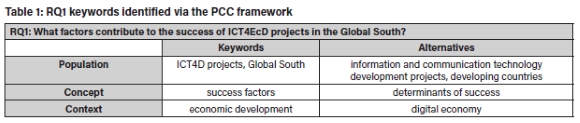
Tables 1 and 2 present the keywords identified-using the population, concept, and context (PCC) framework-for each research question.

Three-step search strategy
Database search
The first step involved searching online databases, namely Wiley, EBSCOhost, ScienceDirect, and Google Scholar. These databases were selected based on their extensive collection of published articles in the domain of ICT4D. Where possible, the same search string was used across all four databases. A search string was compiled for each research question (Tables 3 and 4).

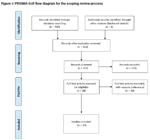
For RQ1, the initial search string in EBSCOhost yielded 17,985 results. Several limiters were applied to narrow the result set, including source types (academic journals) and subjects (developing countries, digital technologies, and economic conditions in developing countries), resulting in 175 relevant results. For RQ2, the initial search string in EBSCOhost yielded 191 relevant results.
Refinement of search results
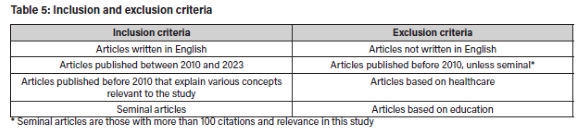
The second search step used filters to refine the search results. Table 5 details the inclusion and exclusion criteria employed. Articles based on healthcare and education were excluded from the scope of research because these factors do not directly influence economic activities enabled by digital technologies.
Backward reference-searching
The third search step comprised searching the reference lists of identified articles for additional sources.
Process overview
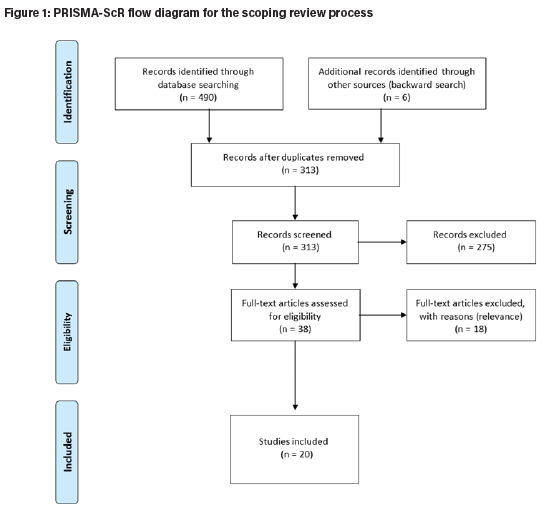
Figure 1 provides a PRISMA-ScR overview of the process used to select the sources of evidence. The figure outlines the process followed, from sourcing articles from databases to refining and reducing the corpus to the final 20 articles included in the scoping review.
The identification of the articles was subject to limitations and was not an exhaustive process. Only four databases were used, and article-accessibility restrictions at the university where the review was conducted may have resulted in additional aspects related to the study not being included in the findings. Furthermore, not all ICT4EcD initiatives are documented in academic publications. However, it is still possible to learn valuable lessons regarding the factors that contribute to success and failure in ICT4EcD initiatives from the articles accessed through this scoping review.
Data mapping
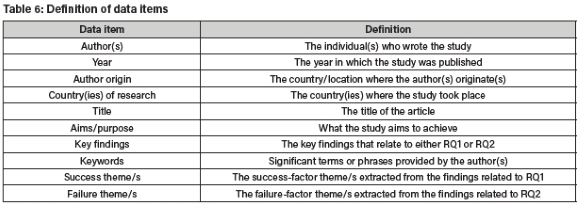
After compiling the PRISMA-ScR diagram, the final 20 articles were analysed. Table 6 sets out the data items used to classify and summarise the findings from the included articles.
Data analysis
The data analysis employed thematic analysis to organise and analyse patterns (themes) in the data (Clarke & Braun, 2017). The core purpose of thematic research is pattern recognition, which involves finding recurring ideas, concepts, and experiences that may appear across readings. The coding stage of the analysis involved identifying extracts of significance in relation to the two research questions and generating initial codes. As more data were analysed, the codes were further refined for improved meaning. Once all the data had been coded, related codes were grouped into themes describing the success and failure factors of ICT4EcD projects in the Global South.
3. Findings
Factors contributing to the success of ICT4EcD projects in the Global South
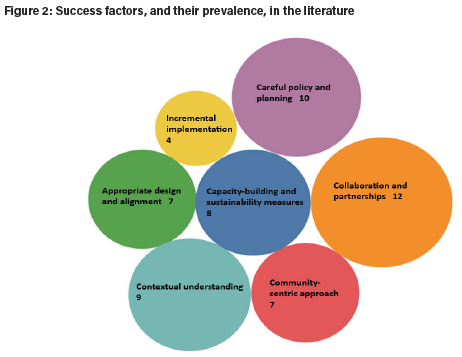
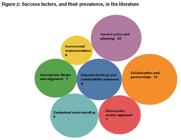
Figure 2 provides a graphical representation of the success factors and their prevalence in the literature, as determined through thematic analysis of the 20 items in the corpus.
Collaboration and partnerships
This success factor refers to the collaboration of various stakeholders to leverage collective resources for ICT4EcD initiatives (Abila et al., 2013). This includes the involvement of multiple stakeholders, such as the government, NGOs, foreign investors, and private-public partnerships (Abila et al., 2013; Hosman & Fife, 2008; Khumalo, 2019; Manara, 2015; Marais, 2011; Pade-Khene et al., 2011; Ting & Yi, 2013). This is a hybrid governance approach that rests upon communication, transparent and accountable partnerships, and considering communities as project stakeholders (Blake & Garzon, 2012; Heeks, 2010; Hosman & Fife, 2008; Kuhl, 2018; Mamba & Isabirye, 2015; Reijswoud, 2009).
Careful policy and planning
This success factor involves creating strategic plans and policies to guide the implementation of ICT4EcD interventions in a manner that complies with legal requirements and broader development objectives (Mamba & Isabirye, 2015). This includes carefully planned projects (Ting & Yi, 2013), measurable targets and timeframes (Hosman & Fife, 2008), and clearly defined and communicated ICT4EcD policy, strategy, and project objectives and goals (Hosman & Fife, 2008; Mamba & Isabirye, 2015; Pade-Khene et al., 2011; Ting & Yi, 2013).
Contextual understanding
This success factor involves being aware of the technological, social, cultural, and economic environment in which ICT4EcD initiatives are deployed, allowing solutions to be tailored to the unique realities faced by different regions (Manara, 2015; Nuseibeh et al., 2019; Reijswoud, 2009). This involves a customised development model within the local ICT4EcD context (Diga, 2013; Heeks, 2010; Pade-Khene et al., 2011). This is achieved through an understanding of contextual SWOT (strengths, weaknesses, opportunities, and threats) profiles (Nuseibeh et al., 2019). Contextual understanding depends on understanding the needs of communities (Kuhl, 2018; Kyem, 2012; Marais, 2011; Reijswoud, 2009), an awareness of the local political context, and national development programmes (Pade-Khene et al., 2011). In addition, contextual understanding is informed by an understanding of various cultural and social considerations, such as historical conditions that shape the behaviour and attitudes of communities, as well as understanding the environment for feasibility (Kyem, 2012; Manara, 2015).
Capacity-building and sustainability measures
This success factor refers to ensuring that communities are equipped to use ICTs effectively over the long term (Abila et al., 2013; Kuhl, 2018; Mamba & Isabirye, 2015; Nuseibeh et al., 2019). This includes creating a sustainable and enabling environment, meaning building complementary infrastructure, such as telecommunications and transportation facilities, as well as making additional investments in roads and market outlets (Abila et al., 2013; Kuhl, 2018; Mamba & Isabirye, 2015; Nuseibeh et al., 2019). This factor is ensured through appropriate training for the target community, enabling them to acquire the necessary skills to repair technical faults without relying on external personnel (Pade-Khene et al., 2011). Additionally, skills development should be provided for income generation and technology maintenance (Manara, 2015). An important aspect of capacity-building and sustainability is that projects are integrated with national development programmes for long-term viability and support (Marais, 2011; Pade-Khene et al., 2011). Capacity-building and sustainability are also ensured through projects that have economic self-sustainability via the creation of services that demonstrate utility in everyday life to encourage adoption as well as integration of ICT into economic activities (Heeks, 2010; Hosman & Fife, 2008; Kuhl, 2018; Kyem, 2012; Mamba & Isabirye, 2015; Pade-Khene et al., 2011).
Community-centric approach
This success factor emphasises active engagement with the local community. It recognises the agency of communities and considers them active partners in the implementation and development of technology (Kyem, 2012). The fundamental aspects of a community-centric approach include, but are not limited to, understanding and meeting the needs of communities by addressing specific and genuine requirements (Diga, 2013; Heeks, 2010; Khumalo, 2019; Marais, 2011; Pade-Khene et al., 2011). This is achieved by creating and implementing designs that are sufficiently aligned with local realities and focus on local, demand-driven needs (Diga, 2013; Heeks, 2010; Khumalo, 2019; Marais, 2011; Pade-Khene et al., 2011). A community-centric approach involves using a bottom-up approach, which emphasises the knowledge and insights of communities, instead of a techno-centric approach that relies on external or top-down directives (Hosman & Fife, 2008). A community-centric approach also entails using suitable technology for the community and promoting the development of local content (Hosman & Fife, 2008; Mamba & Isabirye, 2015; Pade-Khene et al., 2011; Reijswoud, 2009). Another sub-theme relating to a community-centric approach is user participation, which is the inclusion of users in the design and implementation of ICT solutions (Diga, 2013). This inclusion is dependent upon relating to communities as active agents of change, encouraging active participation in the adoption of technologies to shape how technology is used, as well as the participation of community target groups in the project and design process, community buy-in, and active local participation (Diga, 2013; Kyem, 2012; Manara, 2015; Pade-Khene et al., 2011).
Appropriate design and alignment
This success factor relates to the creation of ICT solutions tailored to the local context and user needs, particularly in terms of usability and technical viability, to address specific challenges (Diga, 2013; Heeks, 2010; Mamba & Isabirye, 2015; Marais, 2011). This is achieved through the local alignment of project designs with community needs and realities (Heeks, 2010), understanding user needs to inform design (Mamba & Isabirye, 2015), designing maintainable infrastructure (Khumalo, 2019), and designs that find a middle ground between technical and social systems (Atinaf et al., 2020).
Incremental implementation
This success factor involves the gradual and iterative implementation of ICT solutions, enabling learning, adaptation, and improvement over time in response to feedback and evolving user needs (Kyem, 2012; Mamba & Isabirye, 2015). This is done through the use of pilot projects to determine scalability (Hosman & Fife, 2008), incremental implementation of ICT equipment, familiarisation of community members with ICTs (Mamba & Isabirye, 2015), and gradual evolution of technological-adoption expectations to fit the needs and challenges that occur at different stages of development (Kyem, 2012).
Factors contributing to the failure of ICT4EcD projects in the Global South
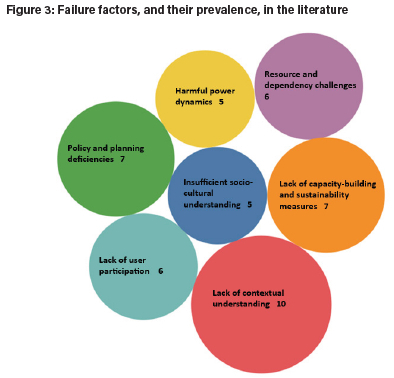
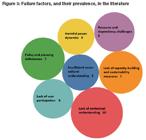
Figure 3 provides a graphical representation of the failure factors and their prevalence in the literature, as determined through thematic analysis of the 20 items in the corpus.
Lack of contextual understanding
This factor is a failure to grasp the environment in which ICTs are being deployed, such as projects being undertaken with no understanding and consideration of local realities (Blake & Garzon, 2012; Boateng, 2012; Chipidza & Leidner, 2019), design-reality gaps due to techno-centric approaches that overlook human aspects, leading to poor design and implementation (Atinaf et al., 2020; Heeks, 2010; Khumalo, 2019; Marais, 2011; Ting & Yi, 2013), and neglect of socio-cultural developments in pursuit of economic growth, resulting in a misunderstanding of user perceptions, faith, and relations that determine communities' use of technologies (Abila et al., 2013). A lack of contextual understanding is due to "multiple ontological complexities" at play, such as human, technical, and physical elements in diverse interrelationships across social, economic, political, infrastructural, and ecological dimensions (Blake & Garzon, 2012, p. 2).
Policy and planning deficiencies
This failure factor refers to policies or plans that are implemented in a manner that leads to misdirected efforts and a failure to meet development goals. Policy and planning deficiencies are characterised by an absence of comprehensive plans for ICT4EcD adoption (Kyem, 2012; Nuseibeh et al., 2019), poorly formulated policies and unclear project objectives (Khumalo, 2019), ambiguity in project requirements and objectives (Abila et al., 2013), and a lack of policy continuity (Ting & Yi, 2013). This theme is also characterised by a lack of law enforcement and legislation, as well as poor legal frameworks (Diga, 2013; Nuseibeh et al., 2019).
Lack of capacity-building and sustainability measures
This failure factor arises from the initial adoption of ICTs as the sole focus in projects, without sufficient resources allocated to developing local capability beyond the initial stages (Manara, 2015). This would include creating a sustainable and enabling environment, building complementary infrastructure, and making additional investments such as roads and market outlets (Abila et al., 2013; Kuhl, 2018; Mamba & Isabirye, 2015; Nuseibeh et al., 2019). Another aspect that affects capability and sustainability is a lack of skills and training. Community members often lack the necessary skills and expertise to operate or maintain technology, which can lead to misuse and/or underuse, hindering the intended progress of ICT initiatives (Thapa & Sœbo, 2016). This theme stems from communities having a lack of skilled and competent ICT personnel and human resources (Chipidza & Leidner, 2019; Manara, 2015; Reijswoud, 2009; Thapa & Sœbo, 2016), limited capacities and capabilities of the rural population (Abila et al., 2013), limited funding for training (Ting & Yi, 2013), a high level of illiteracy (Boateng, 2012), and failure to provide training opportunities (Hosman & Fife, 2008).
Resource and dependency challenges
This failure factor refers to the fact that ICT4EcD projects can be hindered by a lack of infrastructure, including electricity, equipment, and Internet access, resulting from limited telecommunication/connectivity and grid electricity infrastructure, as well as challenges related to affordability (Abila et al., 2013; Boateng, 2012). Resource and dependency challenges also relate to inadequate funding and support, characterised by a dependency on external sources of funding for financial and technical resources, as well as weak infrastructural bases (Chipidza & Leidner, 2019; Khumalo, 2019; Reijswoud, 2009; Ting & Yi, 2013). A lack of partnerships and collaboration also contributes to this theme. Limited collaboration between different stakeholders, including governments, NGOs, and local communities, can lead to misdirected efforts and inefficient use of resources. This is characterised by the inability to share costs of investments and risk due to a lack of partnerships with local organisations (Hosman & Fife, 2008; Kyem, 2012), a failure to build relationships with local government (Marais, 2011), and a lack of consensus between stakeholders in relation to their roles and responsibilities (Khumalo, 2019).
Lack of user participation
This failure factor occurs when users are not involved in the design and implementation processes, which often results in low adoption rates and resistance to ICT tools. This is characterised by a lack of user participation (Abila et al., 2013; Boateng, 2012; Mamba & Isabirye, 2015; Thapa & Sœbo, 2016), limited community buy-in-thus services or tools are not fully used despite being freely available and functional (Abila et al., 2013; Boateng, 2012; Khumalo, 2019; Manara, 2015), and a lack of public interest in participation (Thapa & Sœbo, 2016).
Harmful power dynamics
This failure factor stems from power imbalances and poor governance, which make it challenging to distribute technology fairly and employ it effectively, leading to unfair access, misuse, and project failure. This is characterised by practitioners adopting a foreign development rationality not suited to the context of developing countries (Kyem, 2012), a lack of effective governance and collaboration structures (Khumalo, 2019), inefficient and wasteful spending (Ting & Yi, 2013), and abuse of power, including project champions with too much influence (Thapa & Sœbo, 2016).
Insufficient socio-cultural understanding
This failure factor refers to a lack of understanding of social structures, cultural norms, or values, which results in resistance to, or rejection of, technology (Kyem, 2012). For example, there can be insufficient understanding of local perspectives and beliefs, which includes practitioners adopting a rationality for development that is alien to African belief systems, not sufficiently understanding local perspectives, and failing to recognise the disruption of social practices and established traditions due to the introduction of new technology (Kyem, 2012). Other cultural and social considerations that are often overlooked include language barriers (Boateng, 2012; Chipidza & Leidner, 2019), cultural clashes (Chipidza & Leidner, 2019), and a lack of knowledge and skills due to factors such as race, gender, and class (Abila et al., 2013).
4. Analysis
Factors contributing to project success
The success of ICT4EcD projects depends on several potential factors that can affect project outcomes. Collaboration and partnerships among various stakeholders are a cornerstone of successful initiatives, as they maximise the expertise and resources available by pooling partner resources, ensuring stable funding, and contributing to successful projects (Abila et al., 2013; Khumalo, 2019; Nuseibeh et al., 2019). When multiple partners collaborate, a comprehensive approach can be adopted that effectively addresses social, economic, and infrastructural issues concurrently. The combined efforts of partners result in the integration of diverse perspectives and resources, enabling collective efforts to address issues.
Additional themes that influence the success of ICT4EcD projects include policy and planning, contextual understanding, capacity-building, and sustainability. Policies and proper planning ensure that projects have clear objectives and timeframes, which is crucial in keeping projects within scope and budget. Contextual understanding is important because "technologies only have a chance to be effective if they are well suited and appropriate to the needs, expectations and limitations of the environments in which they will be applied" (Reijswoud, 2009, p. 3). Capacity-building and sustainability are crucial factors for the success of ICT4EcD initiatives, as they ensure the continued success of projects and the functionality of ICTs even after the initial implementation phases have lapsed (Kuhl, 2018; Mamba & Isabirye, 2015).
Furthermore, a community-centric approach to ICT4EcD design and alignment, as well as incremental implementation, are also important themes that influence success. A community-centric approach in ICT4EcD is crucial because aligning with a community's priorities yields ICT4EcD initiatives that are relevant, effective, and inclusive. A community-centric approach is deeply connected to contextual understanding, as understanding the context in which a particular community exists, as well as the community's cultural and social aspects, is an important way to tailor solutions that resonate with their realities. A community-centric approach also relies on user participation, which is a crucial factor influencing the success of ICT4EcD projects. ICT4EcD initiatives require participation from all groups within a specific target community, allowing them to provide technological innovations that benefit all groups, are relevant to their needs, and are tailored to their contexts (Marais, 2011). Design and alignment are important as they ensure that ICT solutions are tailored to fit cultural, social, and local contexts effectively, and incremental implementation is an important factor influencing success as it allows for adaptation and learning, and for reducing risk and cost through testing and refining ICT solutions from the initial stages (Hosman & Fife, 2008).
Factors contributing to project failure
The failure of ICT4EcD projects in the Global South is attributed to a multitude of factors. The findings indicate that a lack of contextual understanding is the most prevalent theme that influences the failure of ICT4EcD projects. A lack of contextual understanding leads to solutions that fail to meet user needs, exhibit low adoption rates, and foster resistance to technology. ICTs that are mismatched with the realities of communities lead to misalignment, reduced effectiveness, and lower acceptance of technologies (Diga, 2013; Hosman & Fife, 2008).
Additional themes contributing to the failure of ICT4EcD initiatives are policy and planning deficiencies, a lack of capacity-building and sustainability, and resource and dependency challenges. Policy and planning deficiencies lead to ambiguity in project requirements, resulting in poorly formulated policies and unclear objectives. Ambiguity in project requirements stems from a lack of contextual understanding of the intricacies of the environment in which the ICT4EcD takes place. Ambiguity in project requirements can lead to poorly formulated policies due to a lack of clarity, resulting in policies that are misaligned with the goals of the development initiatives. A lack of capacity-building and sustainability measures results in projects that cannot sustain themselves in the long term, often leading to project failure (Manara, 2015; Marais, 2011). This theme is also heavily influenced by a lack of skills and training, which hinders the effective deployment of ICT solutions.
Resource and dependency challenges hinder the progress of ICT4EcD projects due to funding shortages and a lack of necessary infrastructure. For example, the Abila et al. (2013) research on fish marketing in Kenya highlighted how challenges with telecommunications networks and electricity impacted the project's implementation. This challenge can also be a result of a lack of partnerships and collaboration, which is a factor that positively impacts projects when present. Collaboration among stakeholders is essential for the successful implementation of ICT4EcD initiatives; projects that do not prioritise this tend to find that their efforts are redundant and inefficient (Abila et al., 2013).
Lack of user participation, harmful power dynamics, and insufficient socio-cultural understanding can also influence the outcome of ICT4EcD projects. A lack of user participation leads to design-reality gaps, poorly formulated policies, and unclear project objectives. When community members are not involved in ICT4EcD initiatives, a contextual understanding of the community cannot be formed, resulting in a mismatch between the technologies and the community's realities. Furthermore, harmful power dynamics lead to the disruption of collaborative efforts, which in turn impedes efficient resource allocation, ultimately resulting in project stagnation (Blake & Garzon, 2012). Another factor heavily influenced by a lack of contextual understanding is insufficient socio-cultural understanding. When cultural and social considerations are not adequately taken into account, social structures, cultural norms, and values tend to be overlooked, which can result in users' and communities' resistance to or rejection of technology (Kyem, 2012).
Interconnections between factors
The factors influencing the success and failure of ICT4EcD interconnect with and influence one another. A single factor in isolation does not determine the success or failure of an ICT4EcD initiative. Instead, factors either work together in harmony or in discord to influence the outcome. This can have a cascading effect, which is characterised by a change in one factor that has an impact on other factors. When multiple factors influencing success align positively, the likelihood of project success is amplified. For example, when a project successfully involves the community through user participation, this, in turn, fosters a better contextual understanding, which positively impacts the design and alignment of technology to the context, resulting in technological solutions that are appropriate for the context.
In contrast, a negative alignment of factors compounds the potential for project failure. For example, a lack of contextual understanding can lead to policy and planning deficiencies, which in turn can affect user participation due to technologies that are misaligned with local realities. Another example is a lack of user participation, which can result in a limited understanding of context and an impact on cultural and social considerations. This occurs when the different dynamics within communities are not taken into account, resulting in the rejection of ICTs and ultimately leading to project failure.
The above examples illustrate the interconnectedness of factors influencing success and failure in ICT4cED initiatives, as well as the existence of feedback loops whereby positive factors can reinforce other factors that contribute to success, and negative factors can perpetuate factors that contribute to failure. The analysis of these themes and the multiple complexities at play reveals the presence of a seemingly key factor underpinning the success and failure of ICT4EcD projects in the Global South: contextual understanding.
The key factor: Contextual understanding
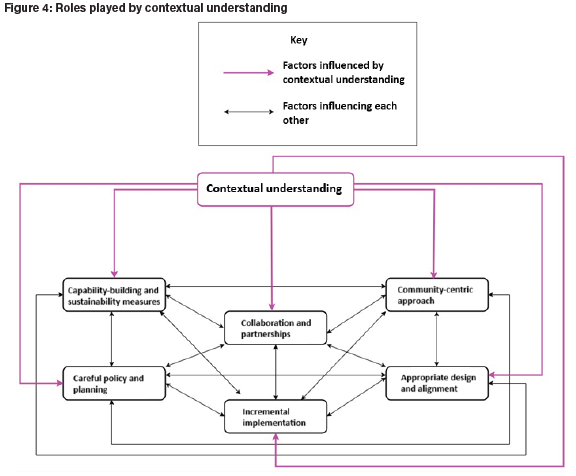
Contextual understanding refers to an awareness of the technological, social, cultural, and economic environment in which ICT4EcD initiatives are deployed, allowing solutions to be tailored to the unique realities and challenges faced by different regions (Manara, 2015; Nuseibeh et al., 2019; Reijswoud, 2009). Figure 4 highlights the importance of contextual understanding, informed by the analysis of factors influencing success and failure. The factors presented are contextual understanding, collaboration and partnerships, community-centric approach, capacity-building and sustainability, policy and planning, incremental implementation, and design and alignment. These factors are interconnected, illustrating how all aspects of ICT4EcD projects are interdependent and cannot be viewed as silos. This is especially evident in the revelation of multiple complexities, which reveal how factors influencing success and failure reinforce and build upon each other to positively or negatively impact the outcome of ICT4EcD initiatives. This highlights the need to consider comprehensively the factors influencing success and failure. However, particular attention should be given to contextual understanding, as reflected in Figure 4 and highlighted in pink.
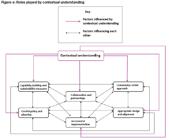
Contextual understanding emerges as the key factor that influences success and failure. The themes, shaped by an understanding of the context, exist in relationships where they both affect and are affected by one another. Not only is contextual understanding the factor that underpins the factors influencing success and failure, but it is also the factor upon which the cascading effect begins. For example, a community-centric approach revolves around meeting the needs of communities, creating designs aligned with local realities, emphasising the knowledge and insights of communities, and relating to communities as active agents of change. A community-centric approach involves acknowledging the uniqueness of each community and working within its specific context to create positive developmental change. However, without a contextual understanding, the aspects that underpin a community-centric approach cannot be achieved. When there is a lack of contextual understanding, the unique needs, values, and dynamics of communities are overlooked, leading to misguided interventions and designs that are misaligned with local realities. This also highlights the need for contextual understanding in the design of appropriate technologies that align with the needs and lived experiences of communities. Without a contextual understanding, it is impossible to determine what defines appropriate technological solutions for local realities, resulting in misaligned designs and unclear project plans and objectives.
Contextual understanding also informs capacity-building and sustainability. The skills and training that communities need, as well as the complementary technological infrastructure necessary to ensure sustainability, can only be informed through an understanding of the local context. This contextual understanding helps to identify the necessary skills, resources, suitable programmes, and support systems required to sustain ICT initiatives beyond the implementation phase. This is especially true for projects that are purposed to have economic sustainability. A contextual understanding is necessary to determine how ICTs can generate income for specific communities and to identify existing economic activities that can be enhanced by the introduction of ICTs, which in turn positively influence capacity-building and sustainability. Contextual understanding is also important when incrementally implementing ICTs, as it provides project managers with insight into which ICTs to implement during pilot phases, the specific challenges in particular contexts that could impede ICT4EcD initiatives, and how to account for them in project design.
Contextual understanding informs which partnerships are necessary for pooling expertise and helps to identify the resources required to support ICT4EcD initiatives. For example, strategic partnerships cannot be formed if ICT4EcD teams have not taken the time to understand which agencies, such as government organisations, NGOs, and private companies, exist in that context and how to approach forming partnerships with them. In addition to this, understanding a community's context helps to identify the human, financial, and infrastructural resources available to inform strategies for managing scarce resources and countermeasures for addressing problems such as inadequate funding.
Figure 4 does not explicitly depict contextual understanding as a factor that contributes solely to project success or failure. This is because contextual understanding is a multifaceted factor that can be viewed as two sides of a coin. On the one side, it is an important aspect influencing the success of ICT4EcD projects; on the other side, a lack of contextual understanding compounds the factors that contribute to the failure of ICT4EcD projects. Contextual understanding was the third-most prevalent factor, as identified in the literature, contributing to project success (Figure 2). In contrast, a lack of contextual understanding was the most prevalent factor identified in the literature as contributing to project failure (Figure 3). Based on this order of prevalence, it can be argued that while contextual understanding will not guarantee project success, the absence of such understanding will generate a strong predisposition to project failure, to some extent by compounding other negative factors.
5. Conclusion
The project success factors identified across the 20 studies included in this scoping review can serve as guidelines for developing best practices to be followed in future ICT4EcD projects, aiming to achieve the desired project outcomes. In addition, the factors identified as contributing to failure allow ICT4EcD project teams to learn from past mistakes and avoid unfavourable results. Of particular note is the cascading effect among the various success and failure factors in ICT4EcD projects, where different factors work simultaneously to either compound success or exacerbate failure. Therefore, multiple factors should always be taken into consideration before ICT4EcD projects begin. These complexities, along with a contextual understanding being a critical factor influencing success and failure, reveal the need for transdisciplinary approaches when designing and analysing ICT4EcD projects.
We acknowledge that the literature items included in a scoping review cannot be considered exhaustive. However, scoping reviews remain helpful in identifying relevant factors that influence research and guide future implementation (Pollock et al., 2024). This study has highlighted the finding that contextual understanding is a key factor underpinning the success or failure of ICT4EcD projects. While this may seem an obvious requirement, especially given that the importance of contextual knowledge and the match between technology and user context was highlighted as far back as 2002 by Heeks, the evidence presented in the literature examined suggests that such understanding is not always sufficiently present in ICT4EcD initiatives. The one generalisation that can safely be made about ICT4EcD initiatives is that the context of each project is unique and matters. Imposing solutions from the outside should be avoided; instead, learning from the wisdom and experience of the communities into which technology is being introduced is encouraged (Masiero, 2022). This is a crucial learning point for those involved in ICT4EcD project initiatives, emphasising the need for a contextual understanding to be the cornerstone upon which all future ICT4EcD (and in fact all ICT4D) projects should be built.
Data availability statement
This research is based on a scoping review. The scoping review process is described in the article to facilitate replicability. All articles included in the review are cited in the article's References section and mapped in the Appendix.
AI declaration
Grammarly was used in the production of this article to improve both grammar and spelling.
Author contributions declaration
N.Z.: investigation, formal analysis, data curation, visualisation, writing - original draft.
I.S.: conceptualisation, project administration, supervision, writing, review and editing.
Acknowledgements
This article is based on unpublished BCom Honours research by the first-listed author.
References
- Abila, R., Ojwang, W., Othina, A., Lwenya, C., Oketch, R., & Okeyo, R. (2013). Using ICT for fish marketing: The EFMIS model in Kenya. Food Chain, 3(1-2), 48-63. https://doi.org/10.3362/2046-1887.2013.005
- Abubakre, M., & Mnkansi, M. (2022). How do technologists do "ICT for development"? A contextualised perspective on ICT4D in South Africa. European Journal of Information Systems, 37(1), 7-24. https://doi.org/10.1080/0960085X.2021.1978343
- Andoh-Baidoo, F. K. (2017). Context-specific theorising in ICT4D research. Information Technology for Development, 23(2), 195-211. https://doi.org/10.1080/02681102.2017.1356036
- Atinaf, M., Molla, A., Karanasios, S., & Anteneh, S. (2020). Digitalizing agriculture extension service in Ethiopia: A design-reality gap analysis. In Pacific Asia Conference on Information Systems (PACIS) 2020 proceedings. https://aisel.aisnet.org/pacis2020/96
- Blake, A., & Garzon, M. (2012). Boundary objects to guide sustainable technology-supported participatory development for poverty alleviation in the context of digital divides. The Electronic Journal of Information Systems in Developing Countries, 57(1), 1-25. https://doi.org/10.1002/j.1681-4835.2012.tb00358.x
- Boateng, M. (2012). The role of information and communication technologies in Ghana's rural development. Library Philosophy & Practice, 1-22.
- Chepken, C., Mugwanya, R., Blake, E., & Marsden, G. (2012). ICTD interventions: Trends over the last decade. ACM International Conference Proceeding Series. https://doi.org/10.1145/2160673.2160704
- Chipidza, W., & Leidner, D. (2019). A review of the ICT-enabled development literature: Towards a power parity theory of ICT4D. The Journal of Strategic Information Systems, 28(2), 145-174. https://doi.org/10.1016/jjsis.2019.01.002
- Clarke, V., & Braun, V. (2017). Thematic analysis. The Journal of Positive Psychology, 72(3), 297-298. https://doi.org/10.1080/17439760.2016.1262613
- Diga, K. (2013). Local economic opportunities and ICTs: How ICTs affect livelihoods (part II). International Development Research Centre (IDRC). https://www.researchgate.net/publication/287074580_Local_economicopportunities_and_ICTs_How_ICTs_affect_livelihoods_part_II
- Ding, C., Liu, C., Zheng, C., & Li, F. (2021). Digital economy, technological innovation and high-quality economic development: Based on spatial effect and mediation effect. Sustainability, 74(1), 216. https://doi.org/10.3390/su14010216
- Escobar, A. (2011). Encountering development: The making and unmaking of the Third World. Princeton University Press. https://doi.org/10.1515/9781400839926
- Gholami, R., Higon, D., Hanafizadeh, P., & Emrouznejad, A. (2010). Is ICT the key to development? Journal of Global Information Management, 78(1), 66-83. https://doi.org/10.4018/jgim.2010091104
- Heeks, R. (2002). Information systems and developing countries: Failure, success, and local improvisations. The Information Society, 78(2), 101-112. https://doi.org/10.1080/01972240290075039
- Heeks, R. (2010). Do information and communication technologies (ICTs) contribute to development? Journal of International Development, 22(5), 625-640. https://doi.org/10.1002/jid.1716
- Khumalo, S. (2019). Mapping the landscape of sustainability in ICT4D: A systematic literature review [Master's dissertation, University of Pretoria]. https://repository.up.ac.za/server/api/core/bitstreams/7f89a5d0-82d6-4c50-a8b4-79a2a828db40/content
- Kuhl, A. (2018). Developing and applying a smart city for development model: The case of COR in Rio de Janeiro [Universidade Católica Portuguesa]. https://repositorio.ucp.pt/bitstream/10400.14/26249/1/152116154%20Alexander%20Kuhl%20W.pdf
- Mamba, M., & Isabirye, N. (2015). A framework to guide development through ICTs in rural areas in South Africa. Information Technology for Development, 21(1), 135-159. https://doi.org/10.1080/02681102.2013.874321
- Manara, H. T. (2015). Factors affecting sustainability of ICT4D projects: A case study of mobile cinemas in rural South Africa [Master's dissertation, University of Pretoria]. https://repository.up.ac.za/items/2456a011-7f66-441a-bf2b-c54070cd9584
- Marais, M. (2011). Analysis of the factors affecting the sustainability of ICT4D initiatives. Centre for Scientific and Industrial Research (CSIR). https://researchspace.csir.co.za/dspace/handle/10204/5374
- Masiero, S. (2022). Should we still be doing ICT4D research? The Electronic Journal of Information Systems in Developing Countries, 88(5), e12215. https://doi.org/10.1002/isd2.12215
- Montequin, V., Cousillas, S., Ortega, F., & Villanueva, J. (2014). Analysis of the success factors and failure causes in information & communication technology (ICT) projects in Spain. Procedia Technology, 16, 992-999. https://doi.org/10.1016/j.protcy.2014.10.053
- Munn, Z., Peters, M. D. J., Stern, C., Tufanaru, C., McArthur, A., & Aromataris, E. (2018). Systematic review or scoping review? Guidance for authors when choosing between a systematic or scoping review approach. BMC Medical Research Methodology, 18(1), 143. https://doi.org/10.1186/s12874-018-0611-x
- Nuseibeh, H., Henver, A., & Collins, R. (2019). What can be controlled: Actionable ICT4D in the case of Palestine. Information Technology for Development, 25(3), 390-423. https://doi.org/10.1080/02681102.2017.1357526
- Odeh, L. (2010). A comparative analysis of Global North and Global South economies. Journal of Sustainable Development in Africa, 12(3), 338-348.
- Pade-Khene, C., Mallinson, B., & Sewry, D. (2011). Sustainable rural ICT project management practice for developing countries: Investigating the Dwesa and RUMEP projects. Information Technology for Development, 27(3), 187-212. https://doi.org/10.1080/02681102.2011.568222
- Panth, P. (2020). Economic development: Definition, scope, and measurement. Springer International. https://doi.org/10.1007/978-3-319-69625-6_38-1
- Pollock, D., Evans, C., Menghao Jia, R., Alexander, L., Pieper, D., Brandão de Moraes, É., Peters, M. D. J., Tricco, A. C., Khalil, H., Godfrey, C. M., Saran, A., Campbell, F., & Munn, Z. (2024). "How-to": Scoping review? Journal of Clinical Epidemiology, 176, 111572. https://doi.org/10.1016/j.jclinepi.2024.111572
- Pyram, S. (2024). Future directions for context in ICT4D: A systematic literature review. Information Development. https://doi.org/10.1177/02666669241248149
- Qiang, C., Pitt, A., & Ayers, S. (2003). Contribution of information and communication technologies to growth (Vol. 4). World Bank. https://doi.org/10.1596/0-8213-5722-0
- Rahaman, M. (2020). Challenges in ICT4D projects. https://wpmu.mah.se/nmict201group1/2020/02/20/challenges-in-ict4d-projects
- Ratheeswari, K. (2018). Information communication technology in education. Journal of Applied and Advanced Research, 3(1), 45-47. https://doi.org/10.21839/jaar.2018.v3iS1.169
- Reijswoud, V. (2009). Appropriate ICT as a tool to increase the effectiveness in ICT4D: Theoretical considerations and illustrating cases. The Electronic Journal of Information Systems in Developing Countries, 38(1), 1-18. https://doi.org/10.1002/j.1681-4835.2009.tb00272.x
- Rothe, F. (2010). Rethinking positive and negative impacts of "ICT for development" through the holistic lens of the sustainable development goals. Information Technology for Development, 26(4), 652-669. https://doi.org/10.1080/02681102.2020.1756728
- Sanner, T. (2017). ICT4D sustainability as generativity. Information and Communication Technologies for Development, 74, 498-509. https://doi.org/10.1007/978-3-319-59111-741
- Smith, S., & Lie, R. (2023). Designing ICTs for development. A Delphi study on problem framing, approach, and team composition. Information Technology for Development, 29(4), 525-557. https://doi.org/10.1080/02681102.2022.2128286
- Steyn, J., & Johanson, G. (2010). ICTs and sustainable solutions for the digital divide: Theory and perspectives. IGI Global. https://doi.org/10.4018/978-1-61520-799-2
- Thapa, D., & Sœbø, Ø. (2016). Participation in ICT development interventions: Who and how? The Electronic Journal of Information Systems in Developing Countries, 75(1), 1-10. https://doi.org/10.1002/j.1681-4835.2016.tb00545.x
- Ting, C., & Yi, F. (2013). ICT policy for the "socialist new countryside"-A case study of rural informatization in Guangdong, China. Telecommunications Policy, 37(8), 626-638. https://doi.org/10.1016/j.telpol.2012.03.007
- Zhang, W., Zhao, S., Wan, X., & Yao, Y. (2021). Study on the effect of digital economy on high-quality economic development in China. PLOS One, 76(9), 1-27. https://doi.org/10.1371/journal.pone.0257365