Knowledge, attitudes and practices of final-year health sciences students regarding interprofessional education at a tertiary institution in South Africa
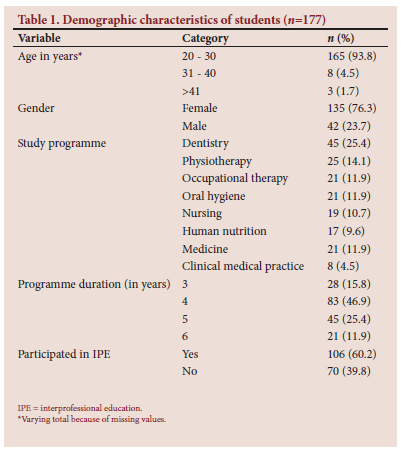
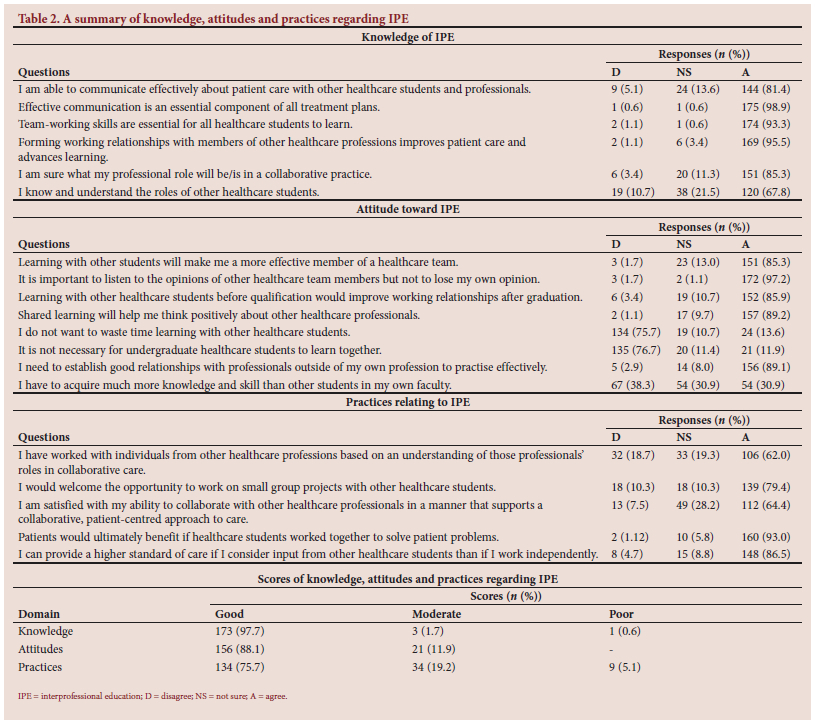
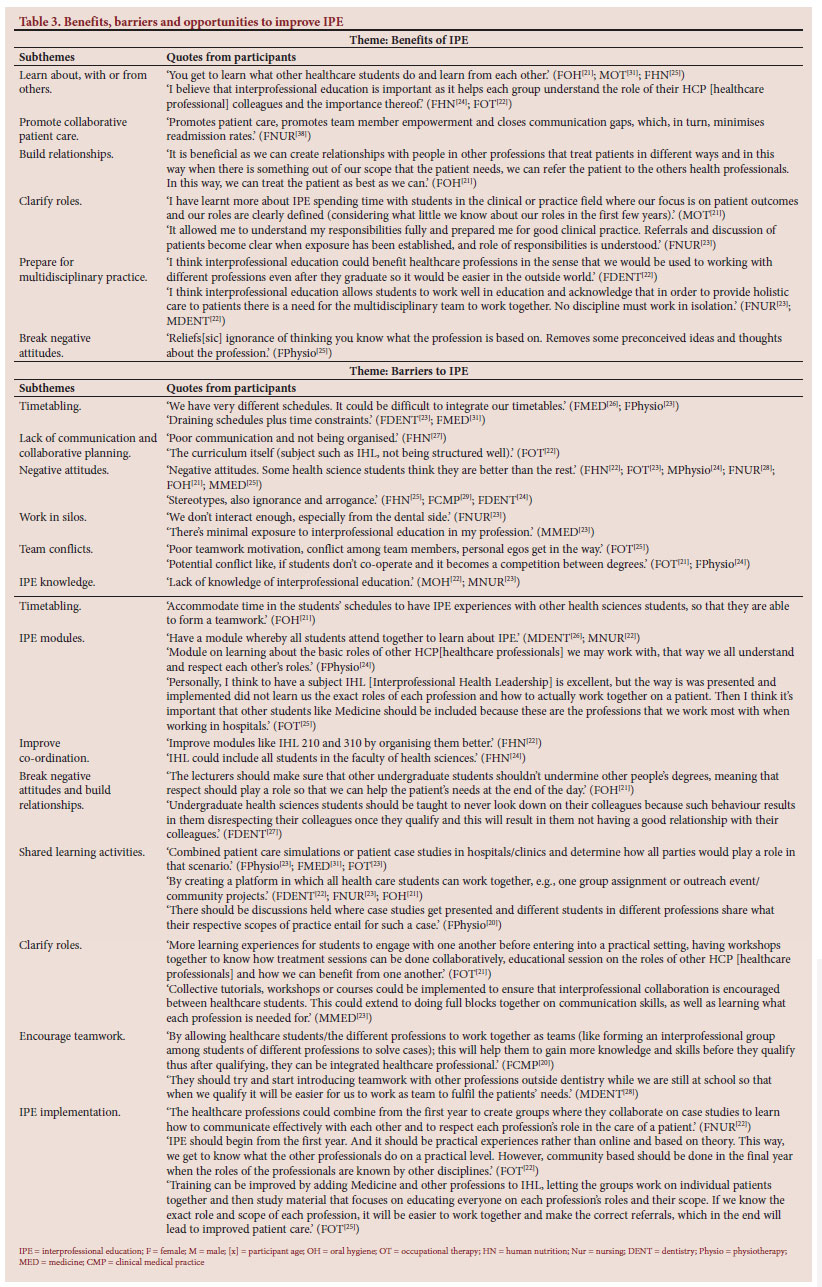
BACKGROUND: Interprofessional education (IPE) has been identified as a means of improving the readiness of health sciences students for interprofessional collaborative practice and promoting effective, patient-centred care. To prepare future healthcare professionals for interprofessional collaboration, academic leaders at health professions institutions recommend integrating IPE into the training of health sciences students. OBJECTIVES: To assess the knowledge, attitudes and practices of final-year undergraduate health sciences students regarding IPE at a single institution in Gauteng, South Africa. METHOD: A descriptive quantitative study was conducted among final-year health sciences students during the 2022 and 2023 academic years. A validated, self-administered Likert-scale questionnaire was used to collect data online and included three open-ended questions to provide additional context. There was an estimated total of 327 final-year students, and a minimum sample size of 177 was required. Purposive sampling was used to select students from eight health science programmes. RESULT: Of the 327 distributed questionnaires, 177 were returned, giving a response rate of 54%. The overall mean (standard deviation) age was 24 (4.1) years. More than half of the participants (60%) indicated that they have prior experience of IPE. The Likert-scale questions showed that the majority had good knowledge (97.7%), attitudes (88.1%) and practices (75.7%) regarding IPE. The themes arising from the narrative responses to the open-ended questions revealed self-perceived benefits of IPE (e.g. understanding other students' roles), barriers (e.g. timetable clashes) and opportunities to improve IPE (e.g. a need for planned and co-ordinated IPE activities). CONCLUSION: The findings revealed that participants had good knowledge, attitudes and practices regarding IPE. However, challenges such as limited exposure to other healthcare programmes, timetabling constraints and a lack of co-ordinated IPE activities should be addressed to inform future IPE practice.
Research Articles • Afr. J. Health Prof. Educ. (Online) 18
(2)
• • https://doi.org/10.7196/AJHPE.2026.v18i2.2679 copy