Characterising the need for anatomy teaching videos in a South African university: Lecturer perspective
Abstract
BACKGROUND. Human anatomy is central to health professions education. However, recently anatomical education has faced increased challenges in the form of enlarged class sizes, reduced lecturer-to-student ratios, limited training time and variable practical exposure. Technological advances, particularly tailor-made video-based content, may enhance the anatomy teaching experience by providing an interactive and engaging visual experience, without compromising the quality of optimal education. OBJECTIVE. The aim of this study was to define the ability and affinity of lecturing staff at the Faculty of Medicine and Health Sciences, at a large South African university, and their need for the use of anatomy teaching videos as educational material. METHODS. To achieve this, an observational, survey-based design tool incorporating both quantitative and qualitative research elements was administered. RESULTS. Twelve responses were used for final analysis. Results revealed an increased use of online and video-based content by lecturing staff to structure and create teaching material; however, videos for anatomy-specific teaching purposes are underutilised. This can possibly be attributed to a lack of available, reliable and relevant anatomy teaching videos. There is a great need for such a resource with results showing an enthusiastic response from participants at the prospect of creating and integrating tailor-made, subject-specific videos for anatomy learning in current curricula. CONCLUSION. This initiative will help address the challenges currently faced in medical and health professions education and lead the way for future transformative learning, bridging the gap between traditional teaching methods and interactive technology-assisted education.
anatomy education; video-based learning; health professions education; technology integration
Background information of participants
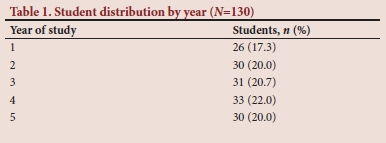
Educators reported teaching in both undergraduate and postgraduate programmes across the FMHS. As shown in Table 1, the majority of participants reported teaching in the undergraduate medical programme (n=7/12, 58.3%) or at a postgraduate level (n=7/12, 58.3%). More respondents taught students at first- (n=6/12, 50.0%), second- (n=6/12, 50.0%), and third-year levels (n=5/12, 41.7%).
Teaching environment and characteristics
An overview of the available and preferred tools for producing educational content is summarised in Table 2. Most participants reported using a laptop for teaching purposes (n=11/12, 91.7%), more than a smartphone, desktop computer or tablet. Many reported having access to the device at all times (n=9/12, 75.0%). Regarding internet connectivity, half the participants reported having a 'mostly reliable' internet connection (n=6/12, 50.0%), closely followed by a 'very good' internet connection (n=5/12, 41.7%). Half used fibre for internet connection (n=6/12; 50%), or a wireless connection (WiFi, n=5/12, 41.7%).
Regarding computer literacy, participants mostly described their abilities at the higher end of the scale; as proficient (n=5/12, 41.7%) or advanced (n=4/12, 33.3%). All participants reported an increase in using online resources to structure lectures, more so since the start of the pandemic, even if only in the case of certain modules. With reference to preferred learning modalities, participants indicated a partiality for hybrid working conditions (n=8/12, 66.7%), where teaching can take place online or face-to-face. The most productive working hours reported were between 7h00 and 12h00 (n=7/12, 58.3%). Table 3 provides a summary of participants' teaching profiles in relation to technological resources.
Resources used and needed for teaching
Regarding the use of video-based learning materials as a resource in anatomy education, 5 participants (41.7%) reported not using them, while 4 participants (33.3%) made use of these materials and the remaining 3 participants (25.0%) indicated that they used them selectively for certain modules. When participants were asked to rate the use of particular teaching resources (least to most used), they indicated using textbooks often; however previous lecture slides and online resources and videos were the most frequently utilised resources. Regarding institutionally funded software (Primal Pictures), participants reported using this the least. A schematic representation of this can be seen in Fig. 1.
When looking at specific resources used to prepare lectures, the majority of respondents reported using YouTube videos or websites (both n=8/12, 66.7%), most preferring content in the form of videos (n=10/12, 83.3%) over written material (n=8/12, 66.7%) and 3D models (n=3/12; 25.0%). When asked about whether they thought that tailor-made teaching and learning videos in the teaching of anatomy could be a valuable educational tool, the majority of participants responded positively and either agreed or strongly agreed that they could be (n=8/12, 66.7%), while the rest remained neutral. Considering the ideal video length, participants either preferred videos of 5 - 10 minutes (n=4/12, 33.3%) or 15 - 20 minutes (n=4/12, 33.3%) long.
Respondents listed the following subjects and content topics within anatomy that they would like to use video learning material for:
Neuroanatomy and neurophysiology, specifically, the base of skull, circle of Willis, spinal cord, spinal cord blood supply, epidural space, lumbar plexus
Cardiovascular system
Respiratory system with focus on airway - larynx-trachea-bronchial tree
Gastrointestinal system
Musculoskeletal system
Brachial plexus
Embryology, infants, children
Anatomy and physiology of the auditory system
Reproductive health.
The survey allowed for additional comments by respondents:
Creating videos aligned with the outcomes to cover the content is crucial for standardisation of clinical training for the first two years of MB ChB.
Tailored-made videos on difficult concepts such as embryology would be beneficial.
Discussion
This article forms part of a multistep research design that aims to diversify teaching and learning delivery of anatomy across the FMHS, at our local university by incorporating a hybrid approach that combines traditional teaching methods with the use of technology as a supplement. This specific study aimed to profile and outline the characteristics of teaching staff in the FMHS, examining their skills, preferences, and necessity for using technology-driven methods and videos as educational tools. Furthermore, it emphasised the need for the creation and integration of tailor-made, subject-specific videos for anatomy learning.
When exploring the profile and teaching characteristics of lecturing staff at our faculty, respondents to the survey represented lecturers from all undergraduate programmes and included some postgraduate programmes. It was important for us to include lecturing staff representing all degree programmes offered at FMHS. This was done as all students in medical and allied health sciences undertake anatomy courses at different times throughout their training. We believed these lecturers could provide valuable insight on the relevancy of anatomy teaching videos for students in their respective degree programmes and future clinical practice.
The results strongly emphasised that there is an increased inclination to utilise online resources, more so since the pandemic. This is not surprising as there has been a vast amount of research conducted on the impact of the pandemic on the anatomical pedagogy, which supports this paradigm shift.[14-17] In the first report to detail the academic vision of anatomical teaching in a postpandemic world, it was emphasised that academic staff supports the teaching of theoretical anatomy-related content in an online format, yet acknowledges the limitations of pure online education when it comes to practical sessions. However, the same study also underscores the usefulness of online resources like videos to aid in but not necessarily replace practical sessions.[17 Another study by Khan et al.[16] exploring students' perspectives on online anatomical education, suggested that it can serve as a valuable tool in postpandemic settings, particularly when complemented by other parallel approaches that offer practical, hands-on experience. The recent pandemic led to a digital alteration where accelerated integration of technology into anatomy education was expedited.[14,15] The COVID‑19 learning era might have provided the stimulus for change out of necessity; however, by forcing the condensation of technological applications into a very limited time period in challenging circumstances, the enactment of this was sometimes less than ideal. However, the post-COVID‑19 learning era creates the opportunity to capitalise on a blended educational model comprising traditional classroom models and refined video-based education that together propose advancements and cultivate a metamorphosis in anatomical education.[15] Providing further motivation for the employment of alternative online resources to aid in anatomical education, participants in this study also displayed a preference for an educational model consisting of hybrid learning, which encompasses both online and traditional face-to-face learning. The idea of formulating a blended medical educational model has once again gathered support in previous research, both from a staff and student perspective.[18] It enables productive variation in teaching and evaluation methods, and can motivate students to participate in learner-centred education where they can draw from their own experiences and backgrounds, while providing comprehensiveness, flexibility, and the opportunity to exploit modern and novel virtual methods.[18]
The bulk of lecturers who participated in this study also made use of their primary device, namely a laptop, to prepare teaching material and they mostly felt that they were either proficient or advanced in their ability to use it (technological literacy). Access to devices and a reliable internet connection were also readily available to most participants. Based on these results, it is evident that access to technological devices and proficiency in technology should not be seen as a prominent barrier to the scalability of video-based content and learning on a large scale for lecturers. Staff exhibited a clear and defined ability and affinity for technological integration. However, the video editing, recording, and scripting skills may require additional expertise that lecturers do not uniformly possess. This also highlights an important point when utilising and implementing digital anatomical platforms, for both staff and students. In a study conducted by Foiret and Volschenk,[19] it was found that use of platforms like Primal Pictures was severely limited by students because of their lack of understanding on how to use it. Interestingly enough, Primal Pictures was also not a platform frequently utilised by teaching staff in this study, and this might indicate that staff members experienced the same difficulties as students when it comes to this platform. Therefore, students and staff both need easy access and a supportive approach when first implementing a new method or platform, especially in developing countries like our local context.19
Upon further enquiry regarding resources utilised to structure and compile lectures, only a third of participants reported that they currently employ video learning material as an anatomy teaching resource for students. However, online videos and other online resources, such as YouTube and websites, are used frequently by lecturing staff to help set up and structure lectures in other areas of study. This can possibly be a reflection on the lack of reliable and relevant anatomy teaching videos currently available, whereas in other learning areas the need is more fulfilled. Alternatively, appropriate anatomy videos may be behind paywalls that educators are unable to subscribe to (e.g. Osmosis). The internet is a major platform of resources, with a recent study showcasing that 97.4% of medical students use it as a source of information for academic purposes, with 35.7% of students being described as frequent users.[20] The challenge for both educators and students in utilising and relying on the internet as a teaching tool is the continued exposure to a surplus of unfiltered and what could be seen as unreliable content.[21]
The internet provides a wide variety of resources for students to learn anatomy. Some resources, such as videos, are more suitable for the individualised need of today's technocratic students than traditional study aids constituting of textbooks and lecture notes. However, the lack of credible and verified content remains an invariable impediment to student learning. In an attempt to attain online resources to aid their studying, students will often make use of intuitive search strategies, which may yield numerous results; however, many will be of questionable relevance and inconsistent quality. Students still lack the skills to critically evaluate information and manage the risk of information overload or 'filter failure'.[22] Digital tools like those of artificial intelligence (AI) technologies also present a lot of promise for personalisation of learning; however, like web-based sources they also lack the ability to produce content which accounts for the unique contextual and resource-specific factors faced in SA and the global south.[23] Tailor-made videos produced by faculty members, customised to institutional learning outcomes and the clinical landscape, can therefore address the gap that generic web-based resources and AI in its current capacity create, while simultaneously providing students educational tools that suit their preferred learning styles. This hypothesis is supported by the majority of respondents in this study, who indicated that they agree or strongly agree that the use of tailor-made teaching and learning videos in the teaching of anatomy within the FMHS curricula can be valuable as an educational tool.
The progression and continued advancement of medicine and healthcare are reliant upon innovative and breakthrough technologies.[24] Technological transformation drives the progression of healthcare and has been emphasised in recent years as we observed the rise of digital health platforms[25] and how they are being utilised to make health systems more efficient and sustainable. For that reason, it comes as no surprise that HPE should also remain in fluid evolution, and strategic changes are required to improve teaching delivery with the integration of technology.[5] Anatomy has often been referred to as the fundamental crux of medical education, making it essential for anatomy educators to be agile in the design and provision of learning material to students.[1] The supplementation of technology-based learning material to traditional teaching techniques in anatomy will help facilitate the next generation of health professionals to embrace digital health technologies when studying, while acting as a transformational tool that can promulgate research and insights into healthcare advancements for the future.[24]
Limitations
While this study provides novel knowledge of educator perspectives of video-based education in an SA setting, it acknowledges the following limitations. The sample size was limited and, combined with the fact that this was a single centre study, caution is advised when generalising results. Furthermore, the experience levels of the lecturers were not covered in the survey, and thus it was not possible to discern if some traditional teaching methods are more preferred by senior staff members, as opposed to technological integration being more readily embraced by a younger demographic of lecturing staff. Exploring this dynamic can be the focus of future research. Additionally, this study also only addressed the lecturer's perspective regarding the need for the implementation of customised tailor-made teaching and learning videos. In order to obtain a holistic view on its necessity and current effectiveness of its implementation, future research should include a student's perspective in addition to that of staff.
Conclusion
Medicine and the scope of health sciences is a dynamic and ever-evolving field. Technocratic students and future healthcare professionals prefer to access and consume knowledge in a different way from their predecessors. Medical schools and other health-related programmes are pressurised to increase the annual intake of students on a structured basis to help satisfy the growing need for healthcare practitioners globally. Educators need to adopt new and innovative solutions that can be administered at large and align the learning preferences of current students, while simultaneously addressing the educational outcomes defined by the curricula followed. Tailor-made video-based content can address these educational challenges and lead the way for future transformative learning, bridging the gap between traditional teaching methods and interactive-based technology-assisted education.
Declaration. This study was performed in line with the principles of the Declaration of Helsinki. Ethical clearance was obtained from the Health Research Ethics Committee at Stellenbosch University (ref. no. HREC N21/07/063) with permission to survey the participants. Institutional permission was also obtained from the Division of Information Governance (IG-4857). Participation was completely voluntary and by completing the survey-questionnaire, participants consented to participate and have results published.
Acknowledgements. The Fund for Innovation and Research into Teaching and Learning (FINLO) at Stellenbosch University is hereby acknowledged for supporting this study. Stephanie Lathe and Jaudon Foiret are acknowledged for their role in conceptualisation and planning of the study.
Author contributions. All authors contributed to the study conception and design. Material preparation, data collection and analysis were performed as a collaborative effort by all authors. The first draft of the manuscript was written by everyone involved and all authors commented on previous versions of the manuscript. All authors read and approved the final manuscript.
Funding and conflicts of interest. This work was supported by the Fund for Innovation and Research into Teaching and Learning (FINLO) at Stellenbosch University. The authors have no further competing interests to declare that are relevant to the content of this article.
References
-
1. Schaefer AF, Wilson AB, Barger JB, Azim HM, Brokaw JJ, Brooks WS. What does a modern anatomist look like? Current trends in the training of anatomy educators. Anatl Sci Educ 2019;12(3):225-235. https://doi.org/10.1002/ase.1806
» https://doi.org/10.1002/ase.1806 -
2. Saxena V, Natarajan P, O'Sullivan PS, Jain S. Effect of the use of instructional anatomy videos on student performance. Anat Sci Educ 2008;1(4):159-165. https://doi.org/10.1002/ase.38.
» https://doi.org/10.1002/ase.38 -
3. Onigbinde OA, Chia T, Oyeniran OI, Ajagbe AO. The place of cadaveric dissection in post-COVID‑19 anatomy education. Morphologie 2021;105(351):259-266. https://doi.org/10.1016/j.morpho.2020.12.004
» https://doi.org/10.1016/j.morpho.2020.12.004 -
4. Hulme A, Strkalj G. Videos in anatomy education: History, present usage and future prospects. Int J Morp 2017;35(4):1540-1546. https://doi.org/10.4067/S0717-95022017000401540
» https://doi.org/10.4067/S0717-95022017000401540 -
5. Patra A, Asghar A, Chaudhary P, Ravi KS. Integration of innovative educational technologies in anatomy teaching: New normal in anatomy education. Surg Radiol Anat 2022;44(1):25-32. https://doi.org/10.1007/s00276-021-02868-6
» https://doi.org/10.1007/s00276-021-02868-6 -
6. Ahmet A, Gamze K, Rustem M, Karaborklu Argut S. Is video-based education an effective method in surgical education? A systematic review. J Surg Educ 2018;75(5):1150-1158. https://doi.org/10.1016/j.jsurg.2018.01.014
» https://doi.org/10.1016/j.jsurg.2018.01.014 -
7. Beheshti M, Taspolat A, Kaya SO, Sapanca FH. Characteristics of instructional videos. WJET 2018;10(1):61-69. https://doi.org/10.18844/wjet.v10i2.3418
» https://doi.org/10.18844/wjet.v10i2.3418 -
8. Nielsen A. Concept-based learning in clinical experiences: Bringing theory to clinical education for deep learning. J Nurs Educ 2016;55(7):365-371. https://doi.org/10.3928/01484834-20160615-02
» https://doi.org/10.3928/01484834-20160615-02 -
9. Chang Chan AYC, van Leeuwen M, Custers E, Bleys R, ten Cate O. Anatomy education in low-resourced countries: What are challenges and effective and affordable educational strategies? A qualitative study. Med Teach 2024;47(5):883-893. https://doi.org/10.1080/0142159X.2024.2383373
» https://doi.org/10.1080/0142159X.2024.2383373 -
10. Messerer DAC, Behr JL, Kraft SF, et al. The gross anatomy course: SARS-CoV-2 pandemic-related effects on students' learning, interest in peer-teaching, and students' perception of its importance. Anat Sci Educ 2023;16(4):629-643. https://doi.org/10.1002/ase.224.
» https://doi.org/10.1002/ase.224 -
11. Cornwall J, Callahan D, Wee R. Ethical issues surrounding the use of images from donated cadavers in the anatomical sciences. Clin Anat 2016;29(1):30-36. https://doi.org/10.1002/ca.22644
» https://doi.org/10.1002/ca.22644 -
12. Braun V, Clarke V. Using thematic analysis in psychology. Qual Res Psychol 2006;3(2):77-101. https://doi.org/10.1191/1478088706qp063oa
» https://doi.org/10.1191/1478088706qp063oa -
13. Tsang S, Royse CF, Terkawi AS. Guidelines for developing, translating, and validating a questionnaire in perioperative and pain medicine. Saudi J Anaesth 2017;11(1):S80-S89. https://doi.org/10.4103/sja.SJA_203_17
» https://doi.org/10.4103/sja.SJA_203_17 -
14. Ortadeveci A, Ozden H. Social media as a learning tool in anatomy education from the perspective of medical and dental students. Clin Anat 2023;36(5):809-817. https://doi.org/10.1002/ca.24046
» https://doi.org/10.1002/ca.24046 -
15. Singal A, Bansal A, Chaudhary P, Singh H, Patra A. Anatomy education of medical and dental students during COVID‑19 pandemic: A reality check. Surg Radiol Anat 2021;43(4):515-521. https://doi.org/10.1007/s00276-020-02615-3
» https://doi.org/10.1007/s00276-020-02615-3 -
16. Khan J, Baatjes KJ, Layman-Lemphane JI, Correia J. Online anatomy education during the Covid-19 pandemic: Opinions of medical, speech therapy, and BSc Anatomy students. Anat Sci Educ 2023;16(5):892-906. https://doi.org/10.1002/ase.2271
» https://doi.org/10.1002/ase.2271 -
17. Bond A, Kelsey A, Aitken G. The future of anatomy teaching post-pandemic: An academic viewpoint. Anat Sci Educ 2023;16(6):1121-1133. https://doi.org/10.1002/ase.2308
» https://doi.org/10.1002/ase.2308 -
18. Jebraeily M, Pirnejad H, Feizi A, Niazkhani Z. Evaluation of blended medical education from lecturers' and students' viewpoint: A qualitative study in a developing country. BMC Med Educ 2020;20(482). https://doi.org/10.1186/s12909-020-02388-8.
» https://doi.org/10.1186/s12909-020-02388-8 -
19. Foiret JR, Volschenk M. Exploring the use of a digital anatomy learning platform in a second-year medical student cohort. Anat Sci Educ 2024;17(3):591-604. https://doi.org/10.1002/ase.2384
» https://doi.org/10.1002/ase.2384 -
20. Venkatesh S, Chandrasekaran V, Dhandapany G, Palanisamy S, Sadagopan S. A survey on internet usage and online learning behaviour among medical undergraduates. Postgrad Med J 2016;93(1099):275-279. https://doi.org/10.1136/postgradmedj-2016-134164
» https://doi.org/10.1136/postgradmedj-2016-134164 -
21. Leung BC, Williams M, Horton C, Cosker TDA. Modernising anatomy teaching: Which resources do students rely on? J Med Educ Curric Dev 2020;7: 238212052095515. https://doi.org/10.1177/2382120520955156
» https://doi.org/10.1177/2382120520955156 -
22. Mathew R, Ramakrishnan N, Boland F, Pawlikowska T, Holland JC. Learning cardiac embryology on YouTube: What videos are there to view? Anat Sci Educ 2024; 7(7):1495-1508. https://doi.org/10.1002/ase.2467
» https://doi.org/10.1002/ase.2467 -
23. Lazarus MD, Truong M, Douglas P, Selwyn N. Artificial intelligence and clinical anatomical education: Promises and perils. Anat Sci Educ 2024;17(2):249-262. https://doi.org/10.1002/ase.2221
» https://doi.org/10.1002/ase.2221 -
24. Wickramasinghe N, Thompson B, Xiao J. The opportunities and challenges of digital anatomy for medical sciences: A narrative review. JMIR Med Educ 2022;36(3):471-491. https://doi.org/10.2196/preprints.34687
» https://doi.org/10.2196/preprints.34687 -
25. Thimbleby H. Technology and the future of healthcare. J Public Health Res 2013;2:e28(3):160-167. https://doi.org/10.4081/jphr.2013.e28
» https://doi.org/10.4081/jphr.2013.e28

Accepted 15 September 2025