
 Intersectionality of Gender, Culture, and Identity in Migrant Women's Integration in Africa
Abstract
Migration in Africa is a complex, multifaceted issue shaped by diverse factors such as conflict, economic challenges, environmental change, and political instability. The International Organization for Migration and African Union's World Migration Report indicates that the latest available data shows that approximately 21 million Africans were living in another African country, and about 47.1% of these migrants were female. The intensity of migration flows in African countries has given rise to anti-immigrant populism, increased anti-migrant hostility manifesting through anti-migrant attitudes, violent xenophobic attacks, migrant discrimination and marginalization as witnessed in various countries around the world. All these, in one way or another, are indications of a lack of or hindrances to migrant integration in host communities. This study explored how the integration of women in host communities is shaped by complex interacting influences of gender, cultural norms, and identity. Issues of gender, migration status, ethnicity, and socio-economic factors intersect to influence migrant women's experiences of inclusion and exclusion in host communities. Drawing on intersectionality theory and existing academic research and policy documents, this study explored how identity influences public perceptions, legal rights, and social belonging among migrant women. It also analyses the role of cultural norms in either facilitating or hindering integration, particularly in relation to gender roles, community expectations, and institutional barriers. Findings show that intersecting challenges of gender roles and expectations, cultural norms, and identity increase the vulnerability of migrant women, complicating their integration pathways. However, despite these vulnerabilities, migrant women actively exercise agency, creating opportunities for their integration in the host communities through community-led initiatives. These insights call for a gender perspective in developing and improving migrant integration frameworks, policies and strategies to address specific realities of migrant women across the African continent.
Migrant women; intersectionality; gender; culture; identity
INTRODUCTION
Migration in Africa is a complex and multifaceted issue shaped by diverse factors including conflict, economic challenges, environmental change, and political instability. The International Organization for Migration (IOM) and African Union (AU) 2023 World Migration Report records that the latest available data of the year 2020 shows that around 21 million Africans were living in another African country, and about 47.1% of these migrants were female (IOM and AU, 2023). Cultural norms, gender norms and identity significantly impact many aspects of daily life; likewise, they influence migration experiences, making migration a gendered phenomenon (Piper cited in IOM, 2024). Gender norms and gendered expectations, along with cultural norms of the country of origin and the destination, influence both the opportunities and risks of migration. Gender norms influence various issues of migration, such as motivation for the move, legal status granted in the destination country, and sector of employment. Despite this, there remains a limited understanding of how gender norms, cultural expectations, and identity simultaneously shape migrant women's ability to integrate into African host societies, which constitutes the central research problem of this article.
Given the gender-related challenges associated with migration, women often face more challenges in integrating into their host communities. Therefore, against this background, this study sought to explore the intersection of identity, gender and cultural norms in the integration of migrant women by investigating how identity, gender and cultural norms shape public perceptions, legal rights, and social belonging for migrant women. The article seeks to identify the challenges and opportunities for women's integration tied to gender roles, community expectations, and institutional barriers. To guide this inquiry, the article addresses the following research question: How do gender norms, cultural expectations, and identity intersect to influence the integration experiences of migrant women in Africa?
The article begins by outlining the theoretical and methodological approach, which is followed by a contextual background on women's migration in Africa, highlighting the gendered nature of migration. This is followed by a review of literature on issues such as identity and migrant integration, cultural norms and gendered expectations, intersectional challenges and opportunities, and women's acts of agency. Lastly, the article presents implications for policy and practice. In doing so, the article provides a structured analysis that moves from context to literature to intersectional analysis and finally to policy implications, thereby offering a coherent understanding of migrant women's integration in Africa.
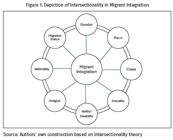
THEORETICAL FRAMEWORKThe analysis draws on intersectionality theory. Intersectionality theory is a framework that examines how various forms of social identity, such as gender, race, class, sexuality, ability, religion, nationality, and migration status, interact to create unique and compounded experiences of discrimination, privilege, and marginalization. "Intersectionality" was coined by Crenshaw (1989) to elucidate the shortcomings of legal frameworks in addressing inequality and discrimination arising from the combined impact of race and gender on the employment experiences of Black women. The intersectionality theory explains how the multiplicity of identities, relationality, contextual dynamics, power, and structures shape and perpetuate social inequalities (Collins and Bilge, 2020). This intersectionality theory is crucial to unpacking how gender, cultural norms, and identity intersect with migration status to shape lived experiences of inclusion or exclusion.
METHODOLOGY
In terms of methodology, this study relied on secondary data sources in the form of reports, policy documents, books, journal articles and other sources. Key considerations were made to ensure that the utilized secondary data sources and materials were credible, including the use of peer-reviewed academic literature, official policy documents, and reports produced by recognized organizations with expertise in migration, gender, migrant integration, and migration governance.
The criteria for selecting literature and policy documents were specific: sources needed to be relevant to the experiences of migrant women in Africa, focusing on gender-related migration issues, integration challenges or policies, and published within the last decade to maintain contemporary relevance. Identifying these sources was conducted through systematic searches in academic databases, including Scopus, Web of Science, and Google Scholar, as well as institutional repositories such as IOM, United Nations Department of Economic and Social Affairs (UNDESA), and African Union (AU). Gray literature, specifically policy reports, was included if they were produced by trustworthy international or regional organizations.
The approach to analysis was thematic synthesis. Key themes identified from the selected materials, including gender norms, identity, cultural expectations, and integration policies, were compared and integrated across the sources. The study was intentionally designed to encompass the entire continent of Africa, rather than focusing on specific subregions. This comprehensive scope offers an overview of migration trends, integration policies, and gendered experiences across Africa. It enables the identification of both commonalities and disparities in the experiences of migrant women, and it highlights gaps in policy and research that affect several African contexts.
WOMEN'S MIGRATION IN AFRICA: CONTEXT AND TRENDS
Historical patterns
International migration in Africa is shaped by diverse factors such as colonial history, political conflicts, economic disparities, globalization and climate change. Historically, international migration was dominated by men, with women being "tied movers" migrating for family reunification as spouses and daughters (Mincer, 1978). Although the mere figures indicating more male migrants than female migrants do not necessarily point to the "tied movers" concept, reasons including family reunion, for migrant women, support the tied movers concept.
Current trends
However, the context and trends have changed over the past decades; more women are migrating independently or as lead movers (Anthias and Lazaridis, 2020). The presence of women as lead movers in migration led to the introduction of the concept of feminization of migration (Donato and Gabaccia, 2015). In recent years, the number of women migrating to European countries, independently or as lead movers, has increased due to care work (Shahd, 2024; WHO, 2024). Even though the number of women migrating independently or as lead movers is increasing, a reasonable number of females are still migrating as associational migrants, and this has an adverse effect on their legal status in the host community, inclusion in the labor market and eventually their inclusion and belonging in the host communities (Krieger, 2020; Zinatsa and Saurombe, 2022).
Regional and continental patterns
In Africa, the IOM in collaboration with the AU (IOM and AU, 2023) reports that female migrants constitute about 47.1% of the total population of African migrants within Africa. An overview of statistics from the IOM data shows that female migrants constitute a significant portion of the migrant population, depending on the region. In the East and Horn of Africa, the IOM reports that in 2022 (Itzigsohn, 2023), women and girls constituted 50.4% of the total migrant population. According to the report, this was a unique phenomenon, as in other regions, male migrants always formed the majority population. Statistics from UNDESA show that the proportion of female migrants in sub-Saharan Africa had risen from 46.4% in 2005 to 47.5% in 2019 (UNDESA, 2019). South Africa, as the migration hub of Southern Africa, hosts about 2,4 million migrants, with just over one million (42.2%) female migrants (Stats SA, 2023). In West and Central Africa, the IOM, through its program of assisting voluntary returns, found out that about 20% of returning migrants were female. Although the challenge of documenting migrants in Africa exists due to the nature of migration, which is characterized by irregular migration, the available statistics indicate that female migrants constitute a significant proportion and have been increasing over the past decades.
While these statistics demonstrate the numerical significance of women in migration, they reveal little about the qualitative nature of women's experiences, leaving gaps in understanding how gender, culture, and identity shape their agency and integration. Existing studies remain largely descriptive, focusing on migration flows rather than interrogating the deeper structural dynamics that shape migrant women's lived realities. This underscores the need for a more critical, intersectional reading of these trends, which this article seeks to address.
MIGRANT INTEGRATION IN AFRICA: A GENERAL OVERVIEW AND A GENDERED LENS
In migration, gender becomes an influential aspect. Migration is gendered, implying that gender shapes every part of the migration process (Morokvašić, 2014). This gendered nature of migration implies that in the process of migration, motivations, opportunities, risks, and experiences differ for men and women. Migrant integration is one of the processes of the migration journey. Migrant integration involves the inclusion of migrants into the economic, political and social fabric of the destination country. However, in the face of such a gendered migration, women experience the integration process differently, as the gender norms and expectations, identity, and cultural norms also shape their integration trajectory. Some of the gendered realities of women's migration are that women migrate under more vulnerable conditions, and they lack access to formal employment, thus most of them are in invisible sectors (Kofman, 2019; Gilodi et al., 2024). Consequently, these gendered realities and vulnerabilities compromise their integration experiences.
In general, migrant integration involves migrants engaging in the host community's economic, political, and social life. For economic integration, migrants should have fair access to jobs, entrepreneurship opportunities, equal pay and protection, and recognition of their skills and qualifications (Portes and Zhou, 1993; Heath and Schneider, 2021). With social integration, migrants should have a sense of belonging in the host community's social life and culture, be able to build friendships and social networks, and have access to healthcare, education, housing and social services (Heckmann, 2005; Bosswick and Heckmann, 2007; Bauloz et al., 2019; IOM, 2024). Migrants are politically integrated when they have opportunities to participate in the political processes and in decision making, which implies that they have access to permanent residency or citizenship, the right to vote or stand in an election and the right to participate in community organizations and advocacy groups (Penninx, 2005). The gendered nature of migration implies that female and male migrants experience this integration process differently.
However, these dominant integration frameworks often adopt a gender-neutral or Eurocentric lens, overlooking the relational, cultural, and identity-based dynamics that shape integration in African contexts. African feminist scholars argue that women's integration cannot be understood without acknowledging patriarchal norms, kinship structures, and socio-cultural expectations that regulate women's mobility and belonging (Mama, 2019; Hussein, 2024). Similarly, decolonial migration scholarship critiques the focus on Western integration models that ignore colonial legacies, informal economies and indigenous social relations that significantly influence migrant experiences on the continent (Kihato, 2007; Schinkel, 2018; Fiddian-Qasmiyeh et al., 2024). Positioning this article within these debates highlights the need for context-specific, gender-conscious analyses of integration in Africa.
Most African countries follow laissez-faire integration policies, leaving the integration of migrants to the market, the migrants themselves or the private organizations and institutions (Shpaizman, 2018). However, in Africa, there are some migration policy frameworks that touch issues of migrant integration, although not specifically as one of the main mandates. The AU adopted the Migration Policy Framework for Africa (MPFA) in 2006, updated to the Migration Policy Framework for Africa and Plan of Action (2018-2030), which covers critical issues in migration, such as labor migration, border management, irregular migration, forced displacement, internal migration, migration data, migration and development, and inter-state and inter-regional cooperation on migration issues (AU, 2006). Although the MPFA does not list migrant integration as one of its key issues, it points out that "successful integration of migrants in host communities and re-integration in home communities contribute to social stability and cohesion, mutual respect, and cultural acceptance" (AU, 2018: 63). It also recommends strategies to member states for their consideration of policy formulation and implementation for successful integration of migrants. The suggested strategies include ensuring equal treatment between migrants and nationals, providing education, training and economic opportunities to children of long-term migrants to encourage their integration, facilitating naturalization and encouraging mutual cultural and social acceptance.
The African Common Position on Migration and Development also touches on the issue of migrant social integration by listing migrants' human rights as one of its policy priorities, where member states should "ensure effective protection of economic, social and cultural rights of migrants" (AU, 2006: 6). With regard to migrant women, Principle 10 of the African Guiding Principles on the Human Rights of All Migrants, Refugees and Asylum Seekers (ACHPR, 2023) obliges states to promote the development and advancement of women migrants on an equal basis with men, without discrimination, and with due consideration for their migrant status through a gender-sensitive approach. Part IV, article 16 and 17 of the Protocol to the Treaty Establishing the African Economic Community Relating to Free Movement of Persons, Right of Residence and Right of Establishment (AU, 2018), obliges member states to grant nationals of other member states the right to residency and the right to establishment in accordance with the laws and policies of the member states.
It is evident that migrant integration is not treated as a central policy objective on the continent. Instead, most African countries adopt a laissez-faire approach, often leaving the responsibility for integration to markets, civil society, or migrants themselves. Furthermore, although some provisions highlight the importance of human rights and social inclusion, these are typically broad and lack detailed implementation mechanisms. Critically, very few of these frameworks incorporate a gendered perspective on migration in a substantive way. Gender considerations, when present, are often peripheral rather than mainstreamed, suggesting that the specific integration needs and vulnerabilities of migrant women remain under-addressed in African migration governance.
Even when it comes to refugee policy, some African countries such as Kenya, Tanzania, and Zimbabwe pursue refugee encampment policy, where refugees are confined in refugee camps, which limits the movement of refugees across the country. Through the refugee encampment policy, refugees are denied the right to work or pursue businesses for their livelihoods, and this indirectly hinders their social integration (Chikanda and Crush, 2016). Recently, Ethiopia and Kenya have started exploring the possibility of easing their encampment policies. Both nations have committed to implementing the Comprehensive Refugee Response Framework (CRRF) (Muhumad and Jaji, 2023). However, in terms of implementation, no significant achievements have been met; for instance, refugees in Kenya are yet to be granted work permits (Binkert et al., 2021).
Other countries such as South Africa, Botswana, and Uganda follow a non-camp refugee policy where migrants can move freely and are given the right to work, education and establish businesses for their livelihoods. However, these African countries still follow a self-settlement refugee regime where refugees are left to incorporate themselves into the labor market and the social system of the host nation (Masuku and Rama, 2020). Although Uganda follows a self-settlement approach, its approach has been regarded as generous and progressive in hosting refugees. On top of giving refugees the right to access work, education, healthcare, social services and freedom of movement, through its Self-reliance Strategy, refugees are also given farmland so that they can earn a living rather than rely on humanitarian aid (Bohnet and Schmitz- Pranghe, 2019; Wamara et al., 2021).
Like other African countries, "South Africa has not adopted a clear and coherent integration policy for integrating foreign nationals into the country's value system and population". (DHA, 2017: 65). Even though immigration in South Africa is characterized by unskilled, low-skilled asylum seekers as well as undocumented migrants, the policy of integration is only applicable to holders of permanent residence visas, refugees and naturalized citizens. The Immigration Act No. 13 of 2002 (RSA, 2002) specifies, under sections 25 to 27, the conditions under which a person can get permanent residency and citizenship in South Africa. The sections specify that for foreigners to get citizenship in South Africa, they have to be holders of work permits for five years and have a permanent employment offer, be a spouse of a citizen or resident, be a child of a citizen or resident under 21 years, intend to establish businesses, be refugees, be retired with a prescribed minimum payment for the rest of their life, or have a minimum prescribed net worth (RSA, 2002).
For those considered applicable to integration, the burden is left on their shoulders, and the state only takes care of the legal aspect of integration by granting residence permits. For instance, the Refugees Act provides that a refugee "is entitled to seek employment and have access to the same basic health services and basic education which the inhabitants of the Republic receive from time to time" (RSA, 1998). The Refugees Act and Article 22 of the UN Refugee Convention (to which South Africa is a signatory) provide that "The Contracting States shall accord to refugees the same treatment as is accorded to nationals concerning elementary education." However, it is still challenging for refugees to access employment and education in South Africa, mainly because there is no clear and coherent migrant integration policy with programs in place to facilitate integration and also because of the challenge of xenophobia in South Africa.
With this apparent lack of integration framework in Africa, both at the continental and national levels, women often face more challenges in integrating into the host communities due to gender-specific barriers, which include issues of gender norms and expectations, cultural norms, and identity, thus intersectionality in migrant women's integration.
Despite these policy frameworks, the literature reveals three key gaps that this article seeks to address: first, there is a lack of gender-sensitive migration and integration policies across African states; second, scholarship remains limited in its engagement with migrant women's agency, resilience strategies, and everyday acts of negotiation within host societies; and third, existing studies insufficiently incorporate African feminist and decolonial perspectives in analyzing how identity and cultural norms shape migrant women's sense of belonging. By identifying and addressing these gaps, this article contributes to a more contextually grounded and gender-responsive understanding of migrant women's integration in Africa.
INTERSECTIONAL CHALLENGES IN MIGRANT WOMEN'S INTEGRATION: IDENTITY , CULTURAL NORMS, AND GENDERED EXPECTATIONS
Gender
In most African societies, patriarchal attitudes within the societies create gendered expectations, assigning women to more private, domestic roles while positioning men in public, societal roles. The gendered nature of migration implies that the migration experiences of women are influenced first by being a migrant and second by being a woman. The vulnerability of women migrants in the migration trajectory, including integration, is exacerbated by the fact that most migrant policies and frameworks are gender-neutral, ignoring the specific needs of vulnerable migrant women.
Culture
In addition, deep-rooted patriarchal norms of both the country of origin and the destination continue to shape local attitudes toward women, thus influencing their integration experiences. Cultural norms, that is, the shared beliefs, values, and practices that govern behavior in a society, are influential in shaping gender roles, community expectations, and institutional responses (Neculaesei, 2015; Zia, 2023). Migrant women face cultural norms that confine them at home, limiting their interaction with the broader society and often creating feelings of alienation (Oucho and Williams, 2019). These cultural norms intersect with gendered expectations to compound barriers for migrant women, highlighting the multi-level effects of intersectionality on integration outcomes.
Identity
Patriarchal gender hierarchies force women to navigate culturally defined roles by adhering to expected behaviors in exchange for security or social acceptance, termed by Kandiyoti (1988) as "patriarchal bargain". Cultural norms also shape how communities perceive appropriate behavior for women, and women are also seen as "bearers of culture" (Dove, 1998). Therefore, these cultural norms shape gendered roles, community expectations and, in some cases, institutional responses. In the face of these cultural norms, migrant women negotiate their belonging and inclusion in host communities, navigating through gendered roles and expectations.
These examples illustrate how the intersection of gender, culture, and identity produces layered vulnerabilities that shape migrant women's integration experiences across social, economic, and civic spheres. Zinatsa and Saurombe's (2022) study on sub-Saharan tied female migrants in South Africa exposes how the intersection of gender identity and legal status in South Africa influences labor market integration of female tied migrants. Due to immigration laws and regulations, spouses accompanying migrants to South Africa under family reunification are legally classified as dependents, prohibiting them from working, studying, or engaging in business activities (DHA, 2017). Zinatsa and Saurombe's (2022) study explains intersectionality and migrant women, and labor market integration, detailing how issues of ethnicized ascriptions, migrant status, gendered ascriptions, and racialized ascriptions intersect to influence migrant women's experiences integrating into the South African labor market. In the same argument, Mbiyozo (2018) found that most migrant women in South Africa have increased vulnerability to exploitation and exclusion from the labor market due to the intersection of factors such as gender norms and labor rights.
The gendered labor opportunities also influence where migrant men and women work. The gender segregation of labor results in men being employed in mining, industry, transport, trade and construction sectors, whereas most migrant women are found in domestic work, care work and other less-visible jobs (O'Neil et al., 2016). Consequently, this has a negative impact on migrant women's integration in destination societies, because most domestic and care work takes place in private homes, and these women are deprived of the opportunity to interact and form networks with members of the broader community.
The challenge of migrant women's integration due to gender norms is not only an African problem. Fortin (2015) examines how gender-role attitudes influence women's labor market outcomes across OECD (Organization for Economic Co-operation and Development) countries, revealing that traditional gender norms are significantly and negatively linked to female employment rates. Since beliefs and attitudes are often formed early in life and passed down through generations, the cultural background of female migrants becomes a key factor in shaping their labor market participation in host countries. Among other reasons such as low level of education and experience, lack of language skills and information, experiences of trauma and physical abuse before and during refugee flight, Albrecht et al. (2021) found that men's perceptions of working women also significantly influenced women's participation in the labor market as the decision to be active in the labor market does not sorely depend on the women but also their husbands if married. This clearly shows how gendered expectations disadvantage the integration of women in the labor market of the host country.
Issues of gender norms and gendered expectations also compromise migrant women's participation in programs aimed at socially integrating migrants into local communities. Uganda is globally recognized for its progressive open-door integration policy toward refugees (Agaba, 2024). However, girls and women often face intersectional barriers to participating in inclusion programs and activities. Kagan and Nakatudde's (2024) study, which explored the intersectional barriers faced by urban Somali refugee girls in Uganda, found that Somali girls were deprived of the opportunity for integration due to factors such as time constraints related to gender-role expectations-girls are expected to help much more with domestic responsibilities, and they thus have diminished time for education and social involvement beyond the home. In addition to time constraints, the same study also found that Somali girls experienced mobility restrictions that confined their access to specific learning, socializing, and recreation spaces. Although refugee families tend to restrict children's movements in general, cultural norms and societal expectations impose even stricter limitations on Somali girls. Their movements are closely monitored, with an expectation that they remain within their home compounds. As a result, many girls are excluded from public schooling and instead receive education through home-based tutors or attend religious schools.
Sport is among the activities done in an effort to integrate migrants. Sport is often described as an open and inclusive activity where youths can develop a network of friends with similar interests. According to Bourdieu's (1986) concept of social capital, social capital is built from social connections and interactions with others and group memberships. Thus, sports clubs offer people opportunities to interact and participate in community associations to build social capital. Community soccer participation offers migrants the opportunity to build social bonds with other migrants and to bridge capital with the local members (Spaaij, 2012; Verhagen and Boonstra, 2014). However, when it comes to integrating migrant women in Africa, issues of gender roles and gendered expectations are a hindrance. Women and girls often have limited time for leisure as they are expected to be in their homes carrying out domestic responsibilities such as cooking, cleaning, and childcare. As community sporting activities are done during free time, girls and women are denied this opportunity due to their gender roles (Ekholm et al., 2022). In addition, in most African societies, sports such as soccer are perceived as not suitable for women (Mayeza, 2017; Burnett, 2018). Therefore, in the face of such cultural norms, opportunities for migrant women's social integration are compromised. Women are challenged to negotiate the intersections of gender, culture, and sometimes religion to participate in sporting activities such as soccer that are aimed at promoting social integration into local communities (Mohammadi, 2022; Truskewycz et al., 2023).
In sum, the integration of migrant women in African contexts is deeply influenced by intersecting structures of identity, cultural expectations, and gender norms. These intersections create multiple and compounding forms of disadvantage that hinder women's access to social, economic, and civic opportunities in host societies. While community-based mechanisms such as sport and education have the potential to facilitate social integration, gendered expectations around domestic roles, mobility, and appropriateness of activities continue to marginalize women and girls from these spaces. Despite the growing recognition of migration's gendered dimensions, most African migration policies remain gender neutral and fail to explicitly address the unique integration barriers faced by women. Migrant integration is not currently a core policy objective across the continent, and when it does appear within broader migration frameworks, it rarely incorporates a gender-sensitive lens. As a result, migrant women are often left to navigate integration processes within systems that do not adequately recognize or respond to their specific vulnerabilities and needs. Addressing these gaps requires a deliberate shift toward gender-responsive migration governance that challenges entrenched patriarchal norms and promotes inclusive integration pathways.
OPPORTUNITIES AND ACTS OF AGENCYDespite their vulnerability due to the intersection of gender, culture, and identity in their integration experiences, migrant women, through networks, resilience, activism, community-based initiatives and assistance from non-governmental organizations (NGOs), navigate these vulnerabilities to create opportunities for integration into local communities.
Social networks play a crucial role in the entire migration process, from decision making to the journey to and integration in the destination country. It is through these social networks that migrants acquire social capital. Social capital emerged from the concept of human social capital, and it explains how social capital facilitates migration (Massey, 1985). The central proposition of the social capital theory is that valuable resources are embedded in social relations. Therefore, access to and use of those resources lead to positive outcomes (Lin, 2002). In migration, social capital refers to the tangible or intangible benefits acquired by international migrants through having contacts at the place of origin or the place of destination. Social networks are established through social ties that migrants form with both members of the receiving country and members of their group, either in the receiving country or back home in the country of origin. In the face of restrictions that women experience, depriving them of opportunities to interact with local communities through work or participating in leisure activities, women use their networks with friends and family to assist in taking responsibilities such as childcare, which allows them to go to work. Looking at how women, including migrant women in the gig economy (short-term, flexible, and often freelance or contract-based employment where workers are typically hired for specific tasks or "gigs" rather than for long-term or permanent jobs) in South Africa and Kenya manage paid work, care and other domestic responsibilities, Hunt et al. (2019) found that these women used strategies such as getting childcare services from friends and family, church or community groups. Through these social networks, migrant women can assign their expected gender roles to others, allowing them to engage in economic activities that provide both a means for survival and opportunities to interact with the broader local community.
Refugee and migrant women are also establishing groups or organizations aimed at empowering migrant women and girls, advocating for equal rights and recognition, and also creating opportunities for integration. For instance, in countries such as Uganda, Kenya and Ethiopia, which host a large number of refugees, there are various community groups and NGOs specifically focusing on refugee women and groups (for example, Association of Refugee Women Uganda (AORW-U) and RefuSHE, Kenya). Some integration initiatives by these groups and organizations include community kitchens where migrant women meet with local women, share recipes and food, and establish friendships and bonds.
In Kenya, Thrive for Change is a sisterhood group that runs a Women's Well-being and Empowerment for Leadership and Community Development program among Somali refugee women in Eastleigh, Nairobi. Thrive for Change advocates comprehensive social well-being among migrant women by cultivating communal care systems where group members serve as social safety nets, providing support during instances of abuse, crisis, or financial difficulties, thus enhancing trust and social capital. By emphasizing economic agency, the program empowers women to create collective income-generating ventures, such as tie-dye businesses, backed by group savings strategies that promote financial independence and resilience. Cultural identity is strengthened through the incorporation of Somali oral traditions, including poetry circles, alongside community events such as Refugee Day and Women's Day celebrations that foster a sense of belonging and cultural continuity. The program also promotes digital inclusion by providing women with mobile-based digital literacy skills, allowing them to utilize phones and social media to sustain social support networks, reconnect with family members, and access market opportunities (Thrive for Change, n.d.). Overall, Thrive for Change exemplifies how migrant women use internal community networks to capitalize on economic opportunities, share caregiving responsibilities, develop leadership skills, and negotiate their sense of belonging in urban host environments. This highlights the intersectional dynamics of gender and migrant identity.
Refugee and internally displaced women in Ethiopia have revitalized traditional saving and mutual-aid systems that are culturally ingrained, such as Iddir and Equb, as methods for enhancing resilience and promoting integration into host communities. Iddir, which has historically served as a mutual-aid organization aimed at assisting families during times of loss, has been modified by migrant women to offer a wider range of social protection, including support during weddings, funerals, and various life events, while also providing essential financial and emotional assistance. Simultaneously, Equb operates as an informal rotating savings-and-credit scheme where women contribute their savings and take turns receiving lump-sum distributions, relying solely on trust instead of formal collateral (Abadi, 2020). These organizations are led entirely by women, enabling refugee and internally displaced women to collaboratively mobilize resources, bolster social cohesion, enhance self-sufficiency, and establish significant connections with local host structures. Importantly, these associations have persisted even during periods when the presence of NGOs has decreased, such as during the COVID-19 pandemic. This highlights their sustainability and deep-rootedness within migrant communities. In summary, these traditional systems illustrate how migrant women utilize enduring cultural practices to create social capital that alleviates economic and social vulnerability while facilitating their integration into local communities.
Ncube et al. (2019) investigated the ways in which sub-Saharan African migrant women in South Africa navigated socio-economic difficulties following migration. They employed the Sustainable Livelihood Framework (SLF) to assess the different types of capital-social, human, cultural, financial, and political-that these women utilize to endure, adapt, and assimilate into their new surroundings. Their research revealed that social capital is pivotal in influencing the resilience of these women, as numerous participants depended significantly on family networks, church organizations, compatriot groups, and ethnic community frameworks for emotional, material, and informational support. Furthermore, the study emphasized the agency of migrant women, demonstrating that they do not solely depend on external aid but proactively pursue job opportunities, create micro-enterprises, and strategically leverage their networks to achieve long-term stability. In summary, the research illustrates how the intersecting factors of gender, migration status, and socio-economic marginalization are navigated through the women's utilization of social and cultural resources, highlighting the critical role of social capital in their coping mechanisms and integration efforts.
Although migrant women put effort into navigating their marginalization in host communities, their efforts are limited due to lack of funding to support NGOs, community initiatives and activism work.
In sum, the convergence of gender, culture, and identity both limits and influences the integration experiences of migrant women throughout Africa. Although structural obstacles, such as gender norms, cultural expectations, and institutional policies, create complex disadvantages, migrant women demonstrate agency through social networks, community initiatives, and advocacy, revealing both the challenges and opportunities present in integration processes. This summary emphasizes the necessity for gender-responsive, intersectional strategies in policy and practice, which is discussed in greater detail in the subsequent section.
POLICY AND PRACTICE IMPLICATIONSDespite Africa having a broad range of continental, regional, and national level commitments to women's rights, gender equality, and empowerment, such as the Maputo Protocol (2003), AU Gender Policy (2009, revised 2022), Agenda 2063: The Africa We Want (2015), AU Strategy for Gender Equality and Women's Empowerment (GEWE) (2018-2028), ECOWAS Gender Policy (2005, revised 2020), EAC Gender Equality and Development Bill (drafted 2017), and the SADC Protocol on Gender and Development (2008, revised 2015), most migrant policies are gender-neutral, and the gender-based considerations are yet to be adequately integrated into migration legislation (Farley, 2019). For instance, South Africa has various gender-based national commitments such as the Constitution of the Republic of South Africa 1996, the Employment Equity Act 1995, Promotion of Equality and Prevention of Unfair Discrimination Act 2000, and South Africa's National Policy Framework for Women's Empowerment and Gender Equality 2002. However, the 2017 White Paper on International Migration to South Africa makes no reference to the intersection between gender and migration (Farley, 2019).
Although the trends of women migration in Africa indicate that the number of women migrating independently or as lead movers has been increasing, there are still a great number of women who migrate as tied movers. In sub-Saharan Africa, specifically South Africa, migration laws and regulations impose limitations on tied movers in terms of the right to employment in South Africa. For instance, the South African Immigration Act 13 of 2002 (RSA, 2002), under section 18, issues a relative permit to a spouse of a permanent resident or a foreigner on a general work visa, but this does not give them the right to work in South Africa (RSA, 2002). With such immigration laws and regulations, female tied movers are denied the opportunity to economic integration through employment, and also social integration through networks and connections that might be established through work. In some cases, women are left with the option of working in less-regulated and less-visible sectors such as domestic and care work, hair braiding, or craftwork (O'Neil et al., 2016).
The above insights on women's vulnerabilities in integrating into host societies call for a gendered approach to migration policies and practices and warn against restrictive policies and practices that increase vulnerability for migrant women. It is therefore essential that AU member states and regional bodies move beyond gender-neutral migration policies and explicitly integrate gender-sensitive provisions into migration legislation and policy frameworks. Existing gender commitments and national gender policies should be operationalized within migration governance by embedding intersectional gender analyses into policy formulation, implementation, and evaluation. Specifically, migration policies should acknowledge and address the unique vulnerabilities and experiences of migrant women, including those related to legal status, labor market participation, healthcare access, and social integration. Furthermore, capacity-building programs for policymakers, border officials, and service providers should be established to foster gender-responsive approaches to migration. Aligning migration policy with existing gender equality commitments will not only advance the rights of migrant women but also contribute to broader goals of social inclusion and sustainable development across the continent.
To enhance the social integration of migrant women, particularly in culturally diverse and gender-sensitive contexts, NGOs and community organizations designing integration activities should incorporate intercultural and gender-responsive perspectives in their programs. Community-based sporting initiatives, such as soccer, should be intentionally adapted to include intercultural provisions that acknowledge and respect the diverse cultural backgrounds, religious practices, and gender norms of migrant participants. This includes creating women-only sports spaces, offering flexible scheduling to accommodate domestic responsibilities, and engaging cultural and religious leaders to promote broader acceptance of women's participation in recreational activities. Additionally, integration programs should incorporate intercultural dialogue components within sporting activities to foster mutual understanding between migrants and host communities. By embedding intercultural sensitivity and inclusivity into integration strategies, such programs can become powerful tools for building social capital, challenging exclusionary norms, and promoting meaningful inclusion of migrant women in community life.
Grassroots initiatives for migrant integration are effective if recognized and financially and structurally supported. Initiatives such as community kitchens play a pivotal role in cultural exchange, empowerment and social inclusion. To enhance the impact of these self-organized groups, such as community kitchens, governments and NGOs should provide targeted funding and offer capacity-building programs to support these community-driven initiatives. In addition, when designing integration programs, NGOs should consult women, both migrant and local, to ensure the development and implementation of more sustainable and context-sensitive programs.
CONCLUSION
This research has demonstrated that the integration of migrant women in Africa is influenced by the convergence of gender, culture, and identity, resulting in various and compounding obstacles that restrict access to economic, social, and civic opportunities. Patriarchal norms, culturally defined roles, and gender-neutral legal frameworks exacerbate vulnerabilities; however, migrant women assert their agency through social networks, community initiatives, and advocacy, maneuvering through these limitations to forge opportunities for inclusion. Theoretically, the study contributes to intersectionality and migration scholarship by demonstrating how gender, culture, and identity intersect to shape integration experiences in African contexts, which highlights the importance of multi-level analyses in understanding the vulnerabilities and strategies of migrant women. The distinctive contribution of this article lies in its intersectional analysis across Africa, addressing deficiencies in the current literature that frequently neglect women's experiences, agency, and the interplay of structural and cultural elements. These results underscore the need for gender-responsive, culturally attuned policies that recognize women's unique vulnerabilities and strengths, foster inclusive integration pathways and enhance social cohesion, economic participation, and migrant well-being across the continent. Future studies should investigate the experiences of migrant women in less-represented areas, analyze the long-term effects of integration strategies, and evaluate the efficacy of gender-sensitive migration policies in promoting social, economic, and civic inclusion.
Abadi, D. 2020. IDP-led women's assistance: New roles for traditional groups. Rethinking Refuge. Refugee Studies Centre, University of Oxford, May 7. Available at: https://www.rsc.ox.ac.uk/rethinking-refuge-blog/idp-led-women2019s-assistance-new-roles-for-traditional-groups. Accessed on 18 November 2025.
African Commission on Human and Peoples' Rights (ACHPR). 2023. African Guiding Principles on the Human Rights of All Migrants, Refugees and Asylum Seekers. Available at: https://achpr.au.int/en/soft-law/african-guiding-principles-human-rights-all-migrants-refugees Accessed on 04 June 2025.
African Union (AU). 2006. African common position on migration and development. Addis Ababa.
African Union (AU). 2018. Migration policy framework for Africa and plan of action (2018-2030). Addis Ababa: African Union Commission. Available at: https://au.int/en/documents/20181206/migration-policy-framework-africa-mpfa Accessed on 20 May 2025.
African Union (AU). 2018. Protocol to the Treaty Establishing the African Economic Community Relating to Free Movement of Persons, Right of Residence and Right of Establishment. Addis Ababa: African Union.
REFERENCES
- Agaba, D.K. 2024. Analysing the implementation of refugee laws and policies in relation to women and girls: A case of Kampala, Uganda. African Human Rights Law Journal, 24(2): 684-719.
- Albrecht, C., Pérez, M.H. and Stitteneder, T. 2021. The integration challenges of female refugees and migrants: Where do we stand? In CESifo Forum, 22(02): 39-46.
- Anthias, F. and Lazaridis, G. (eds.). 2020. Gender and migration in Southern Europe: Women on the move. Routledge.
- Bauloz, C., Vathi, Z. and Acosta, D. 2019. Migration, inclusion and social cohesion: Challenges, recent developments and opportunities. World Migration Report 2020: 186-206.
- Binkert, E., Flaig, M, Frucht, L., Grävingholt, J. König, J., et al. 2021. Local governments and the sustainable integration of refugees in Ethiopia (No. 21/2021). Discussion Paper 21/2021. Available at: https://www.idos-research.de/uploads/media/DP_21.2021.pdf.
- Bohnet, H. and Schmitz-Pranghe, C. 2019. Uganda: A role model for refugee integration? Bonn International Center for Conversion (BICC). Working paper. Available at: https://nbn-resolving.org/urn:nbn:de:0168-ssoar-62871-2.
- Bosswick, W. and Heckmann, F. 2007. Integration of migrants: Contribution of local and regional authorities. ResearchGate. Available at: https://www.researchgate.net/publication/297802930_Integration_of_Migrants_Contribution_of_Local_and_Regional_Authorities.
- Bourdieu P. 1986. The forms of capital. In: Richardson JG (ed.), Handbook of Theory and Research for the Sociology of Education. New York: Greenwordpress, pp. 241-259.
- Burnett, C. 2018. Politics of gender (in) equality relating to sport and development within a sub-Saharan context of poverty. Frontiers in Sociology, 3: 27.
- Chikanda, A. and Crush, J. 2016. The geography of refugee flows to Zimbabwe. African Geographical Review, 35(1): 18-34.
- Collins, P.H. and Bilge, S. 2020. Intersectionality. John Wiley & Sons.
- Crenshaw, K. 1989. Demarginalizing the intersection of race and sex: A black feminist critique of antidiscrimination doctrine, feminist theory and antiracist politics. University of Chicago Legal Forum, 1989 Article 8, 139-167.
- Department of Home Affairs (DHA). 2017. White paper on international migration for South Africa. Available at: http://www.dha.gov.za/WhitePaperonInternationalMigration-20170602.pdf. Accessed on 14 April 2025.
- Dove, N. 1998. Afrikan mothers: Bearers of culture, makers of social change. SUNY Press.
- Ekholm, D., Dahlstedt, M., and Rönnbäck, J. 2022. Problematizing the absent girl: Sport as a means of emancipation and social inclusion. In The potential of community sport for social inclusion. Routledge, pp.164-182.
- Farley, A. 2019. South African migration policy: A gendered analysis. South African Institute of International Affairs.
- Fiddian-Qasmiyeh, E., Crawley, H. and Teye, J.K. 2024. Recentring the south in studies of migration. The Palgrave Handbook of South-South Migration and Inequality, pp.47-73.
- Heckmann, F. 2005. Integration and integration policies: IMISCOE network feasibility study. SSOAR. Available at: https://www.ssoar.info/ssoar/bitstream/handle/document/19295/ssoar-2005-heckmann_integration_and_integration_policies.pdf.
- Hunt, A., Samman, E., Tapfuma, S. and Mwaura, G. 2019. Women in the gig economy: Paid work, care and flexibility in Kenya and South Africa. ResearchGate. Available at: https://www.researchgate.net/publication/338446846_Women_in_the_gig_economy_Paid_work_care_and_flexibility_in_Kenya_and_South_Africa.
- International Organization for Migration (IOM). 2020. West and Central Africa: More women search for equality through migration.
- International Organization for Migration (IOM). 2022. Women and girls account for the majority of migrants in East and Horn of Africa: IOM Report.
- International Organization for Migration and African Union (IOM and AU). 2023. Africa Migration Report 2. Geneva / Addis Ababa: International Organization for Migration & African Union.
- Kagan, M. and Nakatudde, W. 2024. Intersectional barriers faced by urban Somali refugee girls in Uganda. Girlhood Studies, 17(1): 88-104.
- Kandiyoti, D. 1988. Bargaining with patriarchy. Gender & society, 2(3): 274-290.
- Kihato, C.W. 2007. Invisible lives, inaudible voices? The social conditions of migrant women in Johannesburg. African identities, 5(1): 89-110.
- Kofman, E. 2019. Gendered mobilities and vulnerabilities: Refugee journeys to and in Europe. Journal of Ethnic and Migration Studies, 45(12): 2185-2199.
- Lin, N. 2002. Social capital: A theory of social structure and action . Cambridge University Press.
- Mama, A. 2019. African feminist thought. In Oxford research encyclopedia of African history. Oxford University Press.
- Mayeza, E. 2017. "Girls don't play soccer": Children policing gender on the playground in a township primary school in South Africa. Gender and Education, 29(4): 476-494.
- Mbiyozo, A.N. 2018. Gender and migration in South Africa: Talking to women migrants. ISS Southern Africa Report, 16: 1-36.
- Mohammadi, S. 2022. Social inclusion of newly arrived female asylum seekers and refugees through a community sport initiative: The case of Bike Bridge. In The Potential of Community Sport for Social Inclusion. Routledge, pp. 205-222.
- Morokvašić, M. 2014. Gendering migration. Migracijske i etnicke teme, (3): 355-378.
- O'Neil, T., Fleury, A. and Foresti, M. 2016. Women on the move: Migration, gender equality and the 2030 Agenda for Sustainable Development. ODI Briefing. Overseas Development Institute. Available at: https://www.odi.org/sites/odi.org.uk/files/resource-documents/10731.pdf. Accessed on 17 April 2025.
- Oucho, L.A. and Williams, M.D.A. 2019. Challenges and solutions to migrant integration, diversity and social cohesion in Africa. UNU-WIDER. Available at: https://www.wider.unu.edu/sites/default/files/OUCHO,%_20Linda%20Adhiambo_paper.Pdf.
- Penninx, R. 2005. Integration of migrants: Economic, social, cultural and political dimensions. The new demographic regime: Population challenges and policy responses, 5: 137-152.
- Portes, A. and Zhou, M. 1993. The new second generation: Segmented assimilation and its variants. The Annals of the American Academy of Political and Social Science, 530(1): 74-96.
- Republic of South Africa (RSA). 1998. Refugees Act 130 of 1998, Government gazette no. 19544, Notice No. 1558. Pretoria. Available at: http://www.saflii.org/za/legis/consol_act/ra199899/. Accessed on 12 May 2025.
- Republic of South Africa (RSA). 2002. Immigration Act: No. 13 of 2002, Government Gazette. The Presidency.
- Schinkel, W. 2018. Against "immigrant integration": For an end to neocolonial knowledge production. Comparative Migration Studies, 6(1): 31.
- Shahd, A. 2024. The global care chain: Analyzing the increasing feminization of care work across borders. Social Sciences, 13(3): 74-80.
- Shpaizman, I. 2018. Privatization in Israeli integration policy: When Zionism meets neoliberalism. In The privatization of Israel: The withdrawal of state responsibility: Palgrave Macmillan, pp. 201-221.
- Spaaij, R. 2012. Beyond the playing field: Experiences of sport, social capital, and integration among Somalis in Australia. Ethnic and Racial Studies, 35(9): 1519-1538.
- Statistics South Africa (StatsSA). 2023. Statistical Release P0301.4: Census 2022. 10 October 2023. Available at: https://census.statssa.gov.za/assets/documents/2022/P03014_Census_2022_Statistical_Release.pdf#:~:text=STATISTICAL%20RELEASE%20P0301.4%20Census%202022%20Embargoed%20until:%2010%20October%202023. Accessed on 07 March 2025.
- Thrive for Change. n.d. Refugee projects: Women's wellbeing and empowerment for leadership and community development. Available at: https://www.thriveforchange.org/refugee-projects. Accessed on 18 November 2025.
- Truskewycz, H., Drummond, M. and Jeanes, R. 2023. Negotiating participation: African refugee and migrant women's experiences of football. In Forced Migration and Sport. Routledge, pp. 186-205.
- United Nations Department of Economic and Social Affairs (UNDESA). 2019. International migrant stock graphs: 2019 UNDESA population division. Available at: https://www.un.org/en/development/desa/population/migration/data/estimates2/estimatesgraphs.asp?4g4. Accessed on 23 April 2025.
- Verhagen, S. and Boonstra, N. 2014. Bridging social capital through sports: An explorative study on (improving) inter-ethnic contact at two soccer clubs in the Netherlands. Journal of Social Intervention: Theory and Practice, 23(4): 23-38.
- Wamara, C.K., Muchacha, M., Ogwok, B. and Dudzai, C. 2021. Refugee integration and globalization: Ugandan and Zimbabwean perspectives. Journal of Human Rights and Social Work: 1-10.
- World Health Organization (WHO). 2024. Women on the move: Migration, care work and health. Geneva: WHO.
Accepted 20 November 2025
Published 22 December 2025
