Evaluation of entomopathogenic fungi and nematodes for the biological control of Macchiademus diplopterus
Abstract
Macchiademus diplopterus (Distant) (Hemiptera: Blissidae), commonly known as the grain chinch bug (GCB), is a pest of grasses and grains in South Africa, with aestivating adults posing a phytosanitary concern on export deciduous fruit. Effective pre-harvest management measures for nymphs and aestivating adults are needed to reduce export rejections. Laboratory bioassays evaluated four entomopathogenic nematodes (EPNs) and fungi (EPF) isolates as potential biological control agents against nymph and aestivating adult GCBs. EPNs caused high infection-induced mortality in both life stages, with the local Steinernema yirgalemense (157-C) achieving consistently high infection in nymphs and adults. The commercial Heterorhabditis bacteriophora (Field bugs) also showed potential against nymphs. In contrast, EPF isolates were largely ineffective against adults, causing less than 12% mortality. For nymphs, high mortality but low infection in control treatments prevented conclusions regarding EPF pathogenicity. However, Metarhizium robertsii and M. anisopliae showed the highest colonization in cadavers. No significant differences were observed between in vitro and in vivo produced S. yirgalemense and H. bacteriophora for adults, while efficacy varied depending on isolate and production method for nymphs. Lethal concentration (LC) and effective concentration (EC) estimates confirmed the superior performance of S. yirgalemense in adults, with infection positively correlated with nematode concentration. This study is the first to report entomopathogen pathogenicity against nymph and aestivating adult GCBs of this species. Given the economic benefits of managing GCB in orchards rather than in grain crops, field evaluation of S. yirgalemense is recommended on deciduous fruit, where it could provide the first pre-harvest biological control option for this pest.
Beauveria; grain chinch bug; Heterorhabditis bacteriophora; integrated pest management; Metarhizium; Steinernema yirgalemense
INTRODUCTION
The grain chinch bug (GCB), Macchiademus diplopterus (Distant) (Hemiptera: Blissidae) is a pest of grasses and grains such as wheat and is endemic to the Western Cape province of South Africa (Giliomee 1959; Slater & Wilcox 1973). In winter GCB reproduces on its host plant, however, early in summer adults enter a state of dormancy termed aestivation. The onset of aestivation results in GCBs seeking shelter in the areas surrounding wheat fields in search of aestivation sites. In the Western Cape, this period coincides with the harvesting of wheat and the ripening and harvesting of deciduous fruit, such as pears. Hence, the harvesting of wheat fields near orchards is a source for the dispersal of GCB, which may take shelter in the cavities of the calyx and stalk ends of fruit (Giliomee 1959; Annecke & Moran 1982; Sweet 2000; Johnson & Addison 2008). The GCB does not cause any damage to fruit, but sheltering aestivating GCBs on export fruit can be a phytosanitary concern in international trade.
A holistic approach incorporating integrated pest management (IPM) should be adopted to manage GCB to reduce potential phytosanitary risk. Until now, research efforts have been focussed on post-harvest mitigation treatments. However, the post-harvest management of GCB has proven to be difficult. The application of low or high temperature treatments for phytosanitary control of GCB has proven unfeasible due to the high thermo-tolerance of GCB during aestivation, which is attributed to the upregulation of heat shock proteins (Johnson & Neven 2011; Okosun 2012; Smit 2019; Smit et al. 2023). Although the use of post-harvest ethyl formate fumigation has proved to be effective against GCB (Grout & Stoltz 2016; Smit et al. 2020), commercial application for post-harvest control using ethyl formate is still under development in South Africa.
Pre-harvest management of the GCB is challenging as wheat farmers do not prioritize GCB management of reproducing adults and nymphs, as the insect is not seen as a major economic concern in grain production. Consequently, the burden of managing GCB infestations rests primarily on fruit producers to avoid export rejections. To the best of our knowledge, no published research has been conducted on the use of pesticides for the pre-harvest management of aestivating GCBs on fruit. However, the use of insecticides during the harvest period is generally not feasible due to withholding periods. In addition, systemic insecticides are likely ineffective, as aestivating GCBs do not feed on the fruit. Contact insecticides may also be ineffective, as they may not adequately reach insects hidden within the calyx cavity of the pears. Research has been conducted on using pheromone-based lures and different coloured traps for mass trapping in pre-harvest management (Okosun 2012; Ngadze 2016). These studies found that such traps did not provide adequate pre-harvest control as the traps contained very low numbers of GCB compared to the actual infestation in fields. Currently there are no pre-harvest management options available for the GCB. This highlights the need for research on pre-harvest management options of GCBs in orchards.
Biological control is a valuable addition to the IPM of insect pests as it is seen as a safe alternative to pesticide use (Ayilara et al. 2023). Entomopathogens are advantageous because they complete their entire life cycle within a single host, which supports their proliferation and persistence in the environment (Steinhaus 1949).
The degree of host specificity varies among entomopathogens. Many entomopathogenic fungi (EPF) in the order Entomophthorales exhibit relatively narrow host ranges, whereas species such as Beauveria bassiana are associated with a broad range of insect hosts (Jensen et al. 2006; Rohrlich et al. 2018). Similarly, some entomopathogenic nematodes (EPNs), including Steinernema carpocapsae, are capable of infecting numerous insect species (Serra et al. 2019). Despite this, studies have generally shown that EPF and EPNs have limited adverse effects on non-target arthropods when compared with conventional insecticides (Babendreier et al. 2015). These characteristics make EPF and EPNs well suited for inclusion in IPM programmes, and is already used on a commercial scale against various insect pests (Campos-Herrera 2015; Hatting et al. 2019). The ability of EPNs to seek out and kill insects in cryptic habitats, such as the inside of a fruit calyx (Stokwe & Malan 2016), makes it a promising solution for the pre-harvest management of aestivating adult GCBs in fruit orchards.
The primary aim of this study was to evaluate the pathogenicity of commercial and locally sourced South African EPF and EPN isolates against GCBs under laboratory conditions, with a specific focus on aestivating adults, to determine their potential as biological control agents for pre-harvest management to help prevent export rejections of deciduous fruit. The pathogenicity of local EPN isolates produced through in vitro and in vivo culturing was also compared to establish whether culturing method influences efficacy. This study provides the first report of entomopathogens tested against M. diplopterus.
MATERIALS AND METHODS
Insect sample collection
Nymphal GCBs were collected during 2024 and 2025 from June/July (post-emergence) until October/November (onset of aestivation) at a farm in the Malmesbury area (33°16'52.1" S, 18°42'34.3" E). Specimens were collected from the foliage of wheat plants using an aspirator. During November 2024 to June 2025, aestivating GCBs were collected from underneath the bark of blue gum trees (Eucalyptus sp.) located adjacent to wheat fields from a different farm close to Malmesbury, South Africa (33°43'25.2" S, 18°45'37.9" E). Identification in the field was based on characteristic morphology and comparison with previously collected reference specimens. No other morphologically similar hemipteran species were present at the sampling sites, allowing reliable visual identification. Collected specimens were placed in ventilated plastic containers with pieces of wheat plant foliage for nymphs or blue gum bark for aestivating adults to maintain habitat conditions. The GCBs were then transported to the laboratory, where each batch was used in experiments within one week of collection.
Nematode cultures
The two local South African isolates Heterorhabditis bacteriophora Poinar (SGI_170) (GenBank: OR347849) (Hatting et al. 2009) associated with an unknown Photorhabdus sp. (Claasen, Dunn & Malan 2025) and Steinernema yirgalemense Nguyen et al. (157-C) (GenBank: EU625295) (Malan et al. 2011) associated with Xenorhabdus indica Ferreira et al. (Ferreira et al. 2014) were obtained from the nematode culture collection at the Department of Conservation Ecology and Entomology, Stellenbosch University. The commercial isolates for H. bacteriophora and Steinernema feltiae Filipjev were obtained from the companies Field bugs (Cape Town, South Africa) and e-nema (Schwentinental, Germany), respectively. In vivo cultures of all four nematode species were produced by recycling infective juveniles (IJs) using last instar larvae of Tenebrio molitor (Coleoptera: Tenebrionidae) and Galleria mellonella L. (Lepidoptera: Pyralidae) as hosts. Modified white traps were used to harvest the IJs, following the method described by Kaya and Stock (1997). The two in vitro cultured local nematodes H. bacteriophora and S. yirgalemense were produced at the Department of Conservation Ecology and Entomology, Stellenbosch University. The H. bacteriophora was produced using a similar method described by Claasen et al. (2025) and S. yirgalemense was produced with the method utilized by Dunn et al. (2022).
IJs of the in vivo and in vitro produced nematodes were stored in culture flasks containing distilled water that was placed horizontally at 15 ± 2 °C. The IJs were used in experiments within four weeks after storage. The concentration of IJs were determined using the method developed by Glazer and Lewis (2000). The IJ suspensions were diluted or concentrated in sterile distilled water to obtain the appropriate nematode concentrations for each experiment.
Fungal cultures
Two local South African fungal isolates from the order Hypocreales and family Clavicipitaceae, Metarhizium pinghaense Chen and Guo (5HEID) (GenBank: MT367414) and M. robertsii (Metchnikoff) Sorokin (6EIKEN) (GenBank: MT378171) (Mathulwe et al. 2022) were obtained from the fungal culture collection at the Department of Conservation Ecology and Entomology, Stellenbosch University. Two commercial isolates, Beauveria bassiana (Bals. -Criv.) Vuill. and M. anisopliae (Metsch.) Sorokin, were obtained from BASF (Cape town, South Africa) and Real IPM (Grabouw, South Africa), respectively. All fungal isolates were cultured on 90 mm Sabouraud dextrose agar (SDA) plates and incubated in the dark at approximately 25 °C for two to three weeks (Hare 2008).
Conidia were harvested from each fungal isolate after the incubation period by gently scraping the surface of the culture with a sterile scalpel. The conidia were suspended in 20 ml of sterile distilled water containing 0.05% Tween 20 in sterile 28 ml McCartney bottles. The suspension was filtered through a cheesecloth into a clean McCartney bottle to remove mycelial fragments. Conidial concentration was determined using a haemocytometer, and appropriate dilutions were made to obtain the required concentrations for each experiment.
Spore viability was assessed by plating a suspension of 107 conidia ml−1 onto three SDA plates under sterile conditions. After 24 h of incubation at approximately 25 °C, 100 conidia were examined per plate, and the percentage of germinated conidia was recorded (Ekesi et al. 2002; Inglis et al. 2012). The average germination percentage across the three plates was calculated, and only suspensions with ≥70% germination was used in subsequent experiments.
Screening bioassays
The same 24-well bioassay plate screening method was used for both EPF and EPNs (in vitro and in vivo cultures) for nymphs (mixture of 1st to 5th instars) and aestivating adults. The EPF spore and EPN IJ suspensions were prepared as previously described. EPF were tested using a concentration of 107 conidia ml−1 and EPNs were tested with a concentration of 200 IJs/50 µl.
Five 24-well bioassay plates were used for each isolate. Each plate contained 12 insects that were placed in alternative wells. Each well with an insect contained filter paper discs (16 mm diam.), inoculated with 50 µl of the corresponding EPF or EPN suspension, which was constantly agitated during application. In the nymph bioassays, each well also contained fresh wheat cuttings as a food source.
Control treatments consisted of 50 µl of sterile distilled water for EPNs and 50 µl of sterile distilled water containing 0.05% (v/v) Tween 20 for EPF. Bioassay plates were sealed with glass covers to prevent insect escape and placed according to isolates into 2 L moisture chambers, consisting of plastic containers lined with moistened paper towels. Containers were incubated at 25°C ± 2°C.
A total of 60 GCBs were used per isolate to assess pathogenicity. For EPN treatments, insect mortality and infection were assessed at 48 h, 72 h, and 96 h post-inoculation on the same cohort of insects in bioassay plates. At each time point, cadavers were dissected under a stereomicroscope to confirm infection. For EPF treatments, mortality was recorded seven days post-inoculation. Dead insects were rinsed with sterile distilled water, surface-sterilized in 75% ethanol, rinsed again with sterile distilled water, and plated onto water agar. Plates were incubated at 25°C ± 2°C, and after five days, overt mycosis was assessed with the aid of a dissecting microscope.
Bioassays using in vivo cultured EPNs were conducted in three independent replicates on different days, each with freshly prepared batches of IJ suspensions. Bioassays using in vitro cultured EPNs were tested in two independent replicates on different days using freshly prepared IJ batches. The efficacy of the in vitro and in vivo produced local EPN isolates were compared. EPF bioassays were performed in two independent replicates on different days with freshly prepared spore suspensions, except for B. bassiana, which was tested with three replicates.
EPN concentration dose-response bioassays
The dose response bioassays were conducted exclusively on aestivating adults. Based on the initial screening bioassays, two EPN isolates, S. yirgalemense (157-C) and H. bacteriophora (SGI_170), were selected for testing. EPF were excluded from this experiment due to their low efficacy in the screening bioassays. IJ suspensions of the in vivo produced EPNs were prepared as previously described.
Six concentrations (25, 50, 100, 200, and 400 IJs/50 µl) including a control treatment (50 µl sterile distilled water) were tested for each species. For each concentration, the same bioassay procedure and number of GCB adults described in the screening bioassays were used. Insect mortality and infection were assessed 48 h post inoculation following the same dissection and evaluation methods previously mentioned.
Each concentration dose-response experiment was conducted twice using freshly prepared IJ suspensions from different batches. Lethal concentration (LC50 and LC90) and effective concentration (EC50 and EC90) values were subsequently calculated.
Data analysis
Data were analysed using R version 4.4.1 (RStudio Team 2024) and associated packages, including car, dplyr, ggplot2, afex, emmeans, lme4, showtext, and ggtext. For the EPF bioassay on nymphs and aestivating adults, overt mycosis percentages were analysed using a two-way ANOVA to evaluate the effects of fungal isolate (treatment), experimental run (batch), and their interaction, with both treated as fixed factors. For the EPN in vivo and in vitro assays on nymphs and aestivating adults, infection percentages were analysed using a factorial repeated measures ANOVA with Greenhouse-Geisser correction to test the effects of batch, treatment, time after inoculation, and their interaction.
To compare in vivo and in vitro produced nematodes of aestivating adults, linear mixed-effects models were fitted using the lmer function to examine the fixed effects of production method (in vivo vs in vitro), treatment, time after inoculation, and their interactions, with batch included as a random effect. Type III tests of fixed effects with Kenward-Roger approximation for degrees of freedom were performed using the anova() function.
The in vivo and in vitro production comparison for nymphs was conducted in STATISTICA (version 14.0.1.25; StatSoft, Tulsa, OK, USA), where infection data were analysed using a quasibinomial generalized linear model including batch, production method, treatment, and time after inoculation, with all interactions. Effects were assessed using Type III analysis of deviance, and estimated marginal means (EMMs) were used for post hoc comparisons.
In all analyses, control groups were excluded due to zero infection-related mortality and the resulting lack of variance, except for the EPF bioassay on nymphs, where Abbott's correction was applied. Confidence intervals were capped at 0-100% for graphical presentation. Assumptions of normality and homoscedasticity were assessed using diagnostic residual plots and Levene's test (for ANOVA models). Post hoc comparisons were conducted on EMMs using Šidák or Tukey correction for the EPF and EPN bioassays, or without p-value adjustment for comparisons between in vivo and in vitro produced nematodes.
Probit regression was used to calculate LC50 and LC90 values with NCSS 2007 (Hintze 2007). The EC50 and EC90 values were calculated using STATISTICA (version 14.3.0; StatSoft, Tulsa, OK, USA). Statistical significance was set at α = 0.05.
RESULTS
EPF screening bioassays
Nymphs
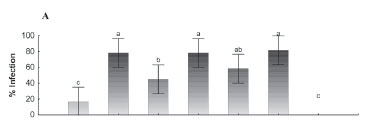
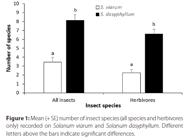
The natural mortality of nymphs in the controls was high (78.96%), although only 2.50% of nymphs in the control showed EPF infection. The commercial isolates B. bassiana (BASF) and M. anisopliae (Real IPM), as well as two local species, M. pinghaense (5HEID) and M. robertsii (6EIKEN), caused infection ranging from 26.03% to 79.49% (Figure 1). A significant interaction was observed between EPF batch and treatment (F3,32 = 5.759, p = 0.00288). Metarhizium robertsii was the only isolate showing a significant difference between batches, with batch one causing 41.72 ± 19.41% infection and batch two causing 72.80 ± 19.41%. The highest infection levels were observed in M. anisopliae (batch one: 63.33 ± 19.41%; batch two: 79.48 ± 19.41%) and M. robertsii batch two, which did not differ significantly from each other. The lowest infection was observed in B. bassiana (batch one: 32.25 ± 19.41%; batch two: 26.96 ± 19.41%), M. robertsii batch one, and M. pinghaense (batch one: 45.92 ± 19.41%; batch two: 26.03 ± 19.41%), which also did not significantly differ from each other.
Aestivating adults
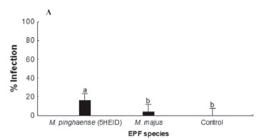
The two commercial and two local EPF isolates caused infection ranging from 8.33% to 11.00%. There were no significant differences in infection between the fungal batches (F2,36 = 0.335, p = 0.717) or among the different EPF species tested (F3,36 = 0.257, p = 0.856) (results not shown).
In vivo and in vitro EPN screening bioassays
Nymphs
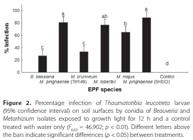
The in vivo cultured EPNs caused infection ranging from 12.50% to 98.33%. The factorial repeated measures analysis of variance revealed no significant interaction between treatment, batch and time after inoculation (F3.33,35.56 = 0.78, p = 0.525). However, a significant interaction was detected between isolate and time after inoculation (F3.33,35.56 = 2.99, p = 0.039) (Figure 2). Steinernema yirgalemense (97.50-98.33%) and H. bacteriophora (field bugs) (74.54-82.88%) produced the highest infection levels and did not differ significantly from one another. Heterorhabditis bacteriophora (field bugs) also did not differ significantly from the intermediate performing H. bacteriophora (SGI_170) at each respective time point. Steinernema feltiae consistently produced the lowest infection (12.50-18.33%). Heterorhabditis bacteriophora (SGI_170) was the only isolate that showed significant differences among time points, with three times differing from one another (48 h: 55.23 ± 9.56%; 72 h: 65.53 ± 9.45%; 96 h: 70.68 ± 9.10%).
A significant interaction was also present between treatment and batch (F3,32 = 3.77, p = 0.02). Pairwise comparisons showed no significant differences between batch one and batch two within any treatment. Batch one (98.33 ± 12.53%) and two (97.78 ± 12.53%) of S. yirgalemense had the highest infection and was not significantly different from H. bacteriophora (Field bugs) batch one (70.80 ± 12.53%) and two (90.56 ± 12.53%) and H. bacteriophora (SGI_170) batch two (69.85 ± 12.53%). However, H. bacteriophora (SGI_170) batch one (57.78 ± 12.53%) was significantly different from S. yirgalemense batch one and two and H. bacteriophora (Field bugs) batch two. Steinernema feltiae batch one (25.56 ± 12.53%) and two (6.67 ± 12.53%) had significantly lower infection compared to all other batches of each isolate.
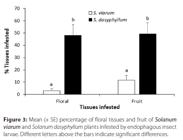
For the in vitro produced nematodes, the three-way factorial repeated measures analysis of variance revealed that there was no interaction between isolates, batch and time after inoculation (F1.69,27.05 = 0.27, p = 0.731). There was, however, a significant interaction for isolate and time after inoculation (F1.69,27.05 = 5.97, p = 0.01) (Figure 3). The only time point at which the two isolates differed significantly was at 96 h, where H. bacteriophora (84.85 ± 6.56%) exhibited higher infection than S. yirgalemense (66.94 ± 6.56%). Steinernema yirgalemense exhibited significantly lower infection at 48 h (51.67 ± 10.38%) compared to 96 h, while infection at 72 h (62.50 ± 7.44%) did not differ significantly from either 48 h or 96 h. Heterorhabditis bacteriophora significantly differed at each time point tested.
A treatment and batch interaction was also revealed in the data (F1,16 = 10.92, p = 0.004). Steinernema yirgalemense batch one (40.19 ± 10.44%) exhibited significantly lower infection than S. yirgalemense batch two (80.56 ± 10.44%) and H. bacteriophora batches one (67.17 ± 10.44%) and two (75.00 ± 10.44%), which did not significantly differ from each other.
A significant interaction was observed for production method and isolate (χ21 = 38.12, p < 0.001) when comparing the infection capabilities of the in vitro and in vivo produced nematodes (Figure 4). Steinernema yirgalemense had significantly lower infection for in vitro produced nematodes (62.83%, 95% CI: 56.22-69.00%) compared to in vivo produced nematodes (98.13%, 95% CI: 96.34-99.05%). In contrast, H. bacteriophora had significantly lower infection for in vivo produced nematodes (64.29%, 95% CI: 58.53-69.66%) compared to in vitro produced nematodes (73.00%, 95% CI: 68.67-76.94%).
Aestivating adults
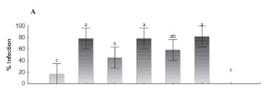
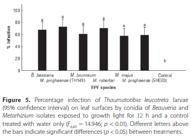
The in vivo produced EPNs caused infection ranging from 6.67-85.00% (Figure 5). A significant interaction was observed between batch, nematode isolate, and time after inoculation (F8.90,71.20 = 2.31, p = 0.025). In batch one, EPN isolates caused mortality ranging from 11.67% to 48.33%, with no significant difference observed among isolates. However, in batch two, S. yirgalemense performed significantly better at 72 h (80.00 ± 24.38%) and 96 h (85.00 ± 26.77%) post inoculation compared to all other isolates, prompting the testing of a third batch. In batch three, S. yirgalemense again performed best, causing 70.00% to 80.00% mortality. Although this isolate outperformed the others, its efficacy was not significantly greater than that of the local H. bacteriophora (SGI_170) isolate (51.67-63.33%) or the commercial H. bacteriophora (field bugs) isolate (25-41.67%). The S. feltiae isolate consistently caused the lowest mortality by infection across all tested batches (6.67-18.33%). However, its performance was not significantly different from that of the commercial or local H. bacteriophora isolates. The only instance of significant differences in mortality by infection over time for a single isolate was observed in batch two, where S. yirgalemense caused significantly higher mortality by infection at 96 h than at 48 h (65 ± 21.30%) post inoculation.
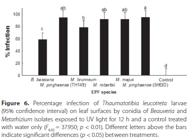
Infection for the in vitro produced EPNs ranged from 35.00% to 81.67% (Figure 6). Significant three-way interaction was observed between tested nematode batch, isolate and time after inoculation (F1.78,52 = 4.83, p = 0.019). Steinernema yirgalemense generally resulted in higher mortality in both batch one (35.00-81.67%) and batch two (46.00-70.00%) compared to H. bacteriophora (batch one: 40.00-51.67%; batch two: 38.33- 53.33%), however, mortality did not differ significantly between isolates at corresponding post-inoculation times within either batch. Significant differences in mortality by infection over time were observed for Steinernema yirgalemense. In batch one, mortality at 96 h (81.67 ± 13.40%), 72 h (68.33 ± 14.99%) and 48 h (35.00 ± 14.70%) differed significantly from each other. Similarly, in batch two, mortality at 96 h (70.00 ± 13.40%) was significantly higher than at 48 h (46.00 ± 14.70%).
Analysis of variance revealed no significant difference between in vivo (47.69 ± 22.32%) and in vitro (53.42 ± 18.22%) produced nematodes of S. yirgalemense and H. bacteriophora (F1,6 = 0.24, p = 0.64). However, mortality by infection was significantly affected by time post inoculation. At 48 h (41.60 ± 14.52%), mortality was significantly lower than at 72 h (51.67 ± 14.52%) and 96 h (56.67 ± 14.52%) (F2,132 = 12.08, p < 0.0001).
Concentration dose-response
The probit regression lines for S. yirgalemense (157-C) and H. bacteriophora (SGI_170) were y = 1.475x + 2.102 and y = 0.809x + 2.861, respectively, where Y represents the probit-transformed infection-based mortality and x is the log10-transformed concentration of IJs/50 µl. A positive relationship between nematode concentration and mortality by infection was observed for both species (Figure 7). The estimated lethal (LC50 and LC90) and effective (EC50 and EC90) concentration values are presented in Table 1.
DISCUSSION
As there are currently no pre-harvest management options available for GCBs, there is a gap in the IPM of this pest. This study investigated the effects of EPF and EPNs on nymphs and aestivating GCB adults as potential pre-harvest biological control options for M. diplopterus. The biological control of nymphs is relevant for the management of GCB on grain crops whilst the biological control of aestivating adults is relevant for management on deciduous fruit. Integrating effective pre-harvest biological control with post-harvest management could reduce the risk of export rejections of deciduous fruit.
The high mortality observed among nymphs in the EPF screening bioassay controls suggests that a substantial proportion of individuals were not killed directly by fungal infection, but instead died from natural causes and were subsequently colonized by EPF. This is consistent with the hemibiotrophic nature of the tested EPF isolates, which are able to switch to a saprophytic phase in the haemocoel and colonize the host after death (Roy & Cottrell 2008). Low EPF infection in controls likely reflected background or naturally occurring infections. Additionally, fungal growth was observed on the wheat cuttings provided as a food source after four days, which may have negatively affected nymph viability and contributed to the elevated control mortality.
These factors limit the ability to conclusively attribute nymph mortality to EPF pathogenicity in this assay. Therefore, it is strongly recommended that the experiment be repeated to assess the reliability of the observed mortality patterns and to distinguish between mortality caused by initial infection or post-mortem colonization. In this context, the current data should be interpreted primarily as evidence of the colonization potential of the EPF isolates rather than their virulence. If the bioassay is repeated, replacing wheat cuttings every two to three days or using an artificial diet may reduce secondary fungal growth and improve nymph survival in control treatments, as post inoculation diet quality and handling are known to influence control mortality in EPF bioassays (Portilla et al. 2014). Should subsequent assays confirm that the best-performing isolates, M. robertsii and M. anisopliae, consistently cause high mortality through confirmed infection, these isolates would represent promising candidates for further evaluation to manage GCB nymphs on wheat plants.
The EPN screening bioassays conducted on GCB nymphs indicated that the in vivo produced nematodes H. bacteriophora originally obtained from Field bugs and S. yirgalemense were the best performing isolates. High infection was already observed by 48 h for these isolates, with no clear improvement at later assessment times. However, H. bacteriophora (SGI_170) showed a significant increase in infection over time. This suggests that nematode-induced mortality occurred rapidly. This is consistent with previous findings that indicate IJs kill the host within 24 to 48 h (Grewal et al. 2005; Gaugler & Kaya 2018). The results indicate that a 48-h exposure period is sufficient for effective control of GCB under laboratory conditions. This suggests that applications could potentially be made up to two days prior to harvest.
Although S. yirgalemense did not differ significantly from H. bacteriophora (Field bugs), it consistently resulted in higher mortality, indicating that it may equal or exceed the performance of the commercially available isolate. Consequently, if management of GCB on grain becomes an industry priority in South Africa, further evaluation of both isolates on wheat plants is warranted. This will determine whether the observed laboratory efficacy translates to field-level control, as external confounding factors can influence the response under field conditions (Cremonez et al. 2023).
The in vitro produced local EPN isolates showed no significant differences in efficacy among treatments for the nymphs, except after 96 h of exposure, where H. bacteriophora (SGI_170) resulted in the highest mortality. This suggests that optimal efficacy may be achieved when GCB are exposed to H. bacteriophora (SGI_170) for approximately four days under laboratory conditions. From an applied perspective, these findings indicate that grain crops should potentially be exposed to H. bacteriophora (SGI_170) for up to four days to achieve maximum nematode efficacy. This underscores the importance of exposure time as a critical factor influencing the performance of EPNs, as was similarly found for Pieris brassicae (L.) (Lepidoptera: Pieridae) where an increased exposure time resulted in higher efficacy (Kasi et al. 2021).
Considerable variation was observed in the performance of S. yirgalemense between batches one and two, which influenced how the efficacy of this isolate was represented in the results. This variability is likely attributable to differences in in vitro production conditions, which are known to have a substantial impact on the infectivity and overall performance of EPNs (Shapiro-Ilan et al. 2012; Dunn et al. 2021).
When comparing in vivo and in vitro produced nematodes for GCB nymphs, the lower efficacy observed for in vitro produced S. yirgalemense was likely influenced by the reduced performance of batch one. In contrast, H. bacteriophora (SGI_170) showed higher efficacy when produced in vitro compared to in vivo production. Together, these results indicate that the optimal production method for managing GCB nymphs on wheat may be isolate-dependent. This interpretation is supported by Dunn et al. (2021), who highlight that in vitro production parameters often require species or isolate specific optimisation. Given the low industry priority for controlling GCB nymphs on grain crops, subsequent research efforts were directed toward aestivating adults with the aim of identifying practical solutions for pre-harvest orchard management.
The EPF screening bioassays for aestivating adults indicated that none of the tested isolates were effective, with all causing <12% mortality by infection with no significant difference between isolates. Similarly, low efficacy of EPF was reported for the chinch bug Blissus pulchellus Montandon (Hemiptera: Blissidae) following spray application at a concentration of 4 × 10⁷ viable conidia ml−1 on insects present on Brachiaria humidicola (Rendle) Schweick plants under laboratory conditions, where overt mycosis was observed in fewer than 8.5% of adult individuals (Oliveira et al. 2025).
The limited efficacy observed in the current study may be partially attributed to the experimental method, which relied on insects contacting spores on treated filter paper. This setup primarily exposed the insects' tarsi to the conidia, which could reduce the likelihood of successful infection, particularly when combined with grooming behaviour that can remove adhered conidia. Ashbrook et al. (2022) found that German cockroaches were resistant to B. bassiana, with the degree of resilience varying according to the fungal application method. The authors suggested that this may be due to physiological or behavioural adaptations that inhibit infection. Certain hemipterans are also known to produce defensive secretions with antimicrobial properties. Oliveira et al. (2025) proposed that aldehydes were the primary compounds contributing to the low efficacy of EPF against B. pulchellus.
Success of infection against adult GCBs in the laboratory may potentially be favoured by employing alternative application methods, such as dipping, which would ensure more uniform contact between the spores and the insect's body. However, even dipping bioassays required high concentrations of conidia (108 conidia ml−1) to achieve satisfactory mortality (90%) in related species, such as Blissus leucopterus hirtus Montandon (Hemiptera: Blissidae). When the same concentration used in the present study (107 conidia ml−1) was applied in the dipping assay, mortality reached 45%, which is still considered low for laboratory conditions (Boyle & Cutler 2012).
The overall higher efficacy of EPNs compared to EPF in aestivating GCBs can be attributed to the ability of EPNs to actively seek out hosts and initiate infection, even in cryptic, hard-to-reach habitats (Gumus et al. 2015). Variation in infection of the in vivo produced nematodes is likely a result of differences in environmental conditions during re-cycling, storage time and production, which can affect virulence. This highlights the importance of implementing quality control measures when EPNs are produced for commercial application.
The in vivo aestivating adult EPN screening bioassay demonstrated the high efficacy of S. yirgalemense, which was the only isolate to consistently achieve mortality by infection of >70%. A similar trend was observed in the in vitro EPN screening assay. The superior performance of S. yirgalemense compared to S. feltiae may be due to differences in IJ size. Steinernema yirgalemense is smaller (width: 24-33 µm; length: 548-692 µm) than S. feltiae (length: 750-950 µm; width: 22-27 µm) (Wouts 1980; Nguyen et al. 2004; Stokwe & Malan 2016), which may facilitate more efficient host penetration and higher levels of mortality in GCBs.
Steinernema yirgalemense was the only isolate to show an increase in efficacy with longer exposure time to aestivating GCBs, with the highest mortality observed after 96 h for both in vivo and in vitro produced nematodes. In some cases, however, efficacy at 96 h did not differ significantly from that observed at 72 h, suggesting that maximum mortality may be reached before the 96-h mark under certain conditions. No significant differences were observed between the in vivo and in vitro assays, although S. yirgalemense caused significantly higher infection at 72 h and 96 h compared to 48 h post inoculation. These findings suggest that, under field conditions, maximum efficacy could be achieved if fruit are treated at least 72 h, and ideally 96 h, before harvest. Applications 48 h before harvest may still provide acceptable levels of control. However, the viability of EPNs in the field, particularly in and around the calyx of the fruit, would need to be confirmed to fully assess efficacy, although this microhabitat could potentially provide a highly suitable environment for nematode activity.
Based on the aestivating adult in vivo screening results, S. yirgalemense and the local H. bacteriophora (SGI_170) isolate were selected for further experimentation. Steinernema yirgalemense was chosen for its consistent high performance in batches two and three. The local H. bacteriophora isolate was selected as the second-best performer in both batches. Although infection was not significantly different from that of the commercial H. bacteriophora (Field bugs) or S. feltiae in batch two, nor from any other isolate in batch three, it showed promise. Notably, at 96 h post inoculation in batch three, the local H. bacteriophora isolate achieved 21.66% higher mortality than the commercial isolate. While not significantly different, such a difference could be meaningful under field conditions. This observation is consistent with previous reports indicating that native entomopathogenic nematode isolates can show comparable or improved performance relative to exotic strains under specific conditions (Shaurub et al. 2021).
The use of either in vivo or in vitro produced nematodes appears to be equally efficient for the management of aestivating adult GCBs, as no significant difference in mortality by infection was observed between the two production methods. This finding is important, as in vitro production is more suitable for commercial applications due to the large quantities of nematodes required and the lower associated costs (Shapiro-Ilan & Gaugler 2002). Similar results have been reported for other pests, such as Lobesia vanillana (Lepidoptera: Tortricidae) and Thaumatotibia leucotreta (Lepidoptera: Tortricidae), where no significant differences in efficacy were observed between in vivo and in vitro produced nematodes (Steyn 2019; Du Preez et al. 2021).
In the current study, only the time post-inoculation had a significant effect on infection for aestivating adult GCBs, further supporting the importance of application timing under field conditions. These findings suggest that extending the interval between nematode application and fruit harvest can enhance efficacy.
The lethal and effective concentration results for aestivating adult GCBs further support the efficacy of S. yirgalemense, which exhibited lower LC50 and LC90 values compared to H. bacteriophora (SGI_170). Notably, S. yirgalemense had a lower LC50 than EC50, and since all mortality was confirmed to result from infection, the EC values represent the concentrations required to achieve 50% and 90% of the isolate's maximum infection-induced mortality. This indicates that S. yirgalemense may be capable of killing 50% of the test population at a concentration lower than what is needed to reach 50% of its full killing potential. In contrast, H. bacteriophora had a much higher LC50 than its EC90, suggesting that even at concentrations sufficient to reach 90% of its maximum infection potential, it may still not achieve 50% mortality in the test population. This highlights the comparatively lower efficacy of H. bacteriophora.
Based on these findings, S. yirgalemense shows strong potential as a biological control agent for the pre-harvest management of aestivating GCBs in orchards. Previous studies have identified adjuvants that can enhance the efficacy of S. yirgalemense when applied as a spray under field conditions (Van Niekerk & Malan 2015; Platt et al. 2018a,b). Spray application is particularly promising in orchards, as EPNs have been shown to infect insects in cryptic habitats such as the calyx of apples (Stokwe & Malan 2016). This is especially relevant for GCB management, as one of the major challenges in reducing export rejections is controlling insects concealed within the calyx of the fruit.
In commercial practice, the highest nematode concentration typically used is 200 IJs/50 µl. However, GCBs only need to be targeted in specific hotspot areas of orchards, particularly in the first two to three rows closest to adjacent grain fields (Johnson & Addison 2008). These areas can be identified through targeted monitoring. As such, the application of double or triple concentrations of IJs to these limited hotspot areas may be financially feasible and could ensure sufficient efficacy. Therefore, field trials using high concentrations of S. yirgalemense are recommended to evaluate its ability to infect aestivating GCBs within and around the calyx. Such trials will be essential to determine the isolate's potential contribution to integrated pest management strategies aimed at reducing export rejections caused by this phytosanitary pest.
CONCLUSION
Results from this study indicated that the EPF isolates tested were not effective against aestivating adult GCBs, although they were able to colonize nymph cadavers. In contrast, EPNs caused high levels of mortality in both adults and nymphs, with the local S. yirgalemense showing particularly promising results under laboratory conditions for both life stages, and the commercial H. bacteriophora (Field bugs) demonstrating potential against nymphs. Should the management of GCB nymphs on grains become necessary in the grain industry, both isolates could be evaluated under field conditions in future research. The performance of the local nematode isolates varied according to species and production method when tested against nymphs. No differences in efficacy were observed between in vitro and in vivo produced S. yirgalemense for aestivating adults, with the highest mortality occurring three to four days post-inoculation. Based on these findings, it is recommended that formulated S. yirgalemense be tested under orchard conditions with aestivating adults at concentrations exceeding 400 IJs/50 µl, with mortality assessed at least three days post-application. These trials will determine whether this isolate can be integrated into an IPM program for GCBs and, if successful, would represent the first biological control pre-harvest management option for M. diplopterus in orchards.
AUTHOR CONTRIBUTIONSLambert K. Engelbrecht: conceptualization; data curation; formal analysis; investigation; methodology; software; visualization; writing - original draft. Pia Addison: conceptualization; funding acquisition; project administration; resources; methodology; investigation; supervision; validation; writing - review and editing. Shelley A. Johnson: conceptualization; methodology; supervision; validation; writing - review and editing. Gerard F. H. V. G. Bekker: Supervision; methodology; validation; writing - review and editing. Antoinette P. Malan: Methodology; validation; writing - review and editing. Julia Meitz-Hopkins: Supervision; writing - review and editing.
ORCID IDs
L.K. Engelbrecht: https://orcid.org/0000-0002-7059-6714
S.A. Johnson: https://orcid.org/0009-0003-1291-4264
G.F.H.V.G. Bekker: https://orcid.org/0000-0001-6930-1483
A.P. Malan: https://orcid.org/0000-0002-9257-0312
J.C. Meitz-Hopkins: https://orcid.org/0000-0002-8127-6978
P. Addison: https://orcid.org/0000-0002-8227-339X
ACKNOWLEDGEMENTS
The authors would like to thank Prof. Kidd and Prof. Nell (Centre for Statistical Consultation, Stellenbosch University) for their assistance with statistical analyses. The authors also thank the landowners from whom the grain chinch bugs were obtained.
REFERENCES
- Annecke DP, Moran VG. 1982. Insects and mites of cultivated plants in South Africa. Durban: Butterworths.
- Ashbrook AR, Mikaelyan A, Schal C. 2022. Comparative efficacy of a fungal entomopathogen with a broad host range against two human-associated pests. Insects. 13:774. https://doi.org/10.3390/insects13090774
- Ayilara MS, Adeleke BS, Akinola SA, Fayose CA, Adeyemi UT, Gbadegesin LA, Omole RK, Johnson RM, Uthman Q, Babalola OO. 2023. Biopesticides as a promising alternative to synthetic pesticides: A case for microbial pesticides, phytopesticides, and nanobiopesticides. Frontiers in Microbiology. 14:1040901. https://doi.org/10.3389/fmicb.2023.1040901
- Babendreier D, Jeanneret P, Pilz C, Toepfer S. 2015. Non-target effects of insecticides, entomopathogenic fungi and nematodes applied against western corn rootworm larvae in maize. Journal of Applied Entomology. 139:457-467. https://doi.org/10.1111/jen.12229
- Boyle D, Cutler GC. 2012. Effects of insect activity, soil, and cuticular factors on virulence of Beauveria bassiana toward Blissus leucopterus hirtus. Journal of Pest Science. 85:505-512. https://doi.org/10.1007/s10340-012-0453-y
- Campos-Herrera R. 2015. Nematode pathogenesis of insects and other pests: Ecology and applied technologies for sustainable plant and crop protection. Cham: Springer International Publishing. https://doi.org/10.1007/978-3-319-18266-7
- Claasen N, Dunn MD, Malan AP. 2025. Mass-culture technique of a South African Heterorhabditis bacteriophora isolate, using in vitro liquid culture. African Entomology. 33:1-6. https://doi.org/10.17159/2254-8854/2025/a20609
- Cremonez PSG, Perier JD, Nagaoka MM, Simmons AM, Riley DG. 2023. Precision and accuracy of field versus laboratory bioassay insecticide efficacy for the control of immature Bemisia tabaci. Insects. 14:645. https://doi.org/10.3390/insects14070645
- Dunn MD, Belur PD, Malan AP. 2021. A review of the in vitro liquid mass culture of entomopathogenic nematodes. Biocontrol Science and Technology. 31:1-21. https://doi.org/10.1080/09583157.2020.1837072
- Dunn MD, Belur PD, Malan AP. 2022. Development of cost-effective media for the in vitro liquid culture of entomopathogenic nematodes. Nematology. 24:763-775. https://doi.org/10.1163/15685411-bja10166
- Du Preez F, Malan AP, Addison P. 2021. Potential of in vivo- and in vitro-cultured entomopathogenic nematodes to infect Lobesia vanillana (Lepidoptera: Tortricidae) under laboratory conditions. PLoS ONE. 16:e0242645. https://doi.org/10.1371/journal.pone.0242645
- Ekesi S, Maniania NK, Lux SA. 2002. Mortality in three African Tephritid fruit fly puparia and adults caused by the entomopathogenic fungi, Metarhizium anisopliae and Beauveria bassiana. Biocontrol Science and Technology. 12:7-17. https://doi.org/10.1080/09583150120093077
- Ferreira T, Van Reenen CA, Tailliez P, Pagès S, Malan AP, Dicks LMT. 2014. First report of the symbiotic bacterium Xenorhabdus indica associated with the entomopathogenic nematode Steinernema yirgalemense. Journal of Helminthology. 90:108-112. https://doi.org/10.1017/S0022149X14000583
- Gaugler R, Kaya HK. 2018. Entomopathogenic Nematodes in Biological Control. Boca Raton: CRC Press. https://doi.org/10.1201/9781351071741
- Giliomee J. 1959. Grain stink-bug can be controlled effectively. Farming in South Africa. 35:47-48.
- Glazer I, Lewis EE. 2000. Bioassays for Entomopathogenic Nematodes. In: Navon A, Ascher KRS (editors), Bioassays of Entomopathogenic Microbes and Nematodes. CABI Books. pp. 229-247. https://doi.org/10.1079/9780851994222.0229
- Grewal PS, Ehlers RU, Shapiro-Ilan DI. 2005. Nematodes as Biocontrol Agents. CABI Books. https://doi.org/10.1079/9780851990170.0000
- Grout TG, Stoltz KC. 2016. Eliminating Macchiademus diplopterus (Hemiptera: Lygaeidae) and Siculobata sicula (Acari: Oribatulidae) from export fruit using ethyl formate. Journal of Economic Entomology. 109:2329-2333. https://doi.org/10.1093/jee/tow199
- Gumus A, Karagoz M, Shapiro-Ilan D, Hazir S. 2015. A novel approach to biocontrol: Release of live insect hosts pre-infected with entomopathogenic nematodes. Journal of Invertebrate Pathology. 130:56-60. https://doi.org/10.1016/j.jip.2015.07.002
- Hare J. 2008. Sabouraud agar for fungal growth protocols. Available from the MicrobeLibrary website: http://www.microbelibrary.org/library/laboratorytest/3156-sabouraud-agar-for-fungal-growth-protocols. pp. 1-5.
- Hintze J. 2007. NCSS 2007. Kaysville: NCSS, LLC. www.ncss.com.
- Inglis GD, Enkerli J, Goettel MS. 2012. Laboratory techniques used for entomopathogenic fungi: Hypocreales. In: Lacey LA (editor), Manual of Techniques in Invertebrate Pathology, Vol. 2. Amsterdam and New York: Academic Press. pp. 189-253.
- Johnson SA. Addison P. 2008. A survey of the grain chinch bug, Macchiademus diplopterus (Distant) (Hemiptera: Lygaeidae), in deciduous fruit orchards in the Western Cape, South Africa. African Entomology. 16:76-85. https://doi.org/10.4001/1021-3589-16.1.76
- Johnson SA, Neven LG. 2011. Heated-Controlled Atmosphere Postharvest Treatments for Macchiademus diplopterus (Hemiptera: Lygaeidae) and Phlyctinus callosus (Coleoptera: Curculionidae). Journal of Economic Entomology. 104:398-404. https://doi.org/10.1603/ec10316
- Kasi IK, Singh M, Waiba KM, Monika S, Waseem MA, Archie D, Gilhotra H. 2021. Bio-efficacy of entomopathogenic nematodes, Steinernema feltiae and Heterorhabditis bacteriophora against the Cabbage butterfly (Pieris brassicae [L.]) under laboratory conditions. Egyptian Journal of Biological Control. 31:125. https://doi.org/10.1186/s41938-021-00469-4
- Kaya HK, Stock SP. 1997. Chapter VI - Techniques in insect nematology. In: Lacey LA (ed.), Manual of Techniques in Insect Pathology. London: Academic Press. pp. 281-324. https://doi.org/10.1016/b978-012432555-5/50016-6
- Malan AP, Knoetze R, Moore SD. 2011. Isolation and identification of entomopathogenic nematodes from citrus orchards in South Africa and their biocontrol potential against false codling moth. Journal of Invertebrate Pathology. 108:115-125. https://doi.org/10.1016/j.jip.2011.07.006
- Mathulwe LL, Malan AP, Stokwe NF. 2022. Laboratory screening of entomopathogenic fungi and nematodes for pathogenicity against the obscure mealybug, Pseudococcus viburni (Hemiptera: Pseudococcidae). Biocontrol Science and Technology. 32:397-417. https://doi.org/10.1080/09583157.2021.2010653
- Ngadze M. 2016. Assessing the chemical ecology and shelterseeking behaviour of the grain chinch bug, Macchiademus diplopterus (Hemiptera: Lygaeidae) for optimisation of trapping during aestivation. Master thesis, Stellenbosch University, South Africa.
- Nguyen KB, Tesfamariam M, Gozel U, Gaugler R, Adams BJ. 2004. Steinernema yirgalemense n. sp. (Rhabditida: Steinernematidae) from Ethiopia. Nematology. 6:839-856. https://doi.org/10.1163/1568541044038605
- Okosun OO. 2012. Chemical ecology and eco-physiology of the grain chinch bug, Macchiademus diplopterus (Distant)(Hemiptera: Lygaeidae: Blissidae), a phytosanitary pest of South African export fruit. Master thesis, Stellenbosch University, South Africa.
- Oliveira IC, Blassioli-Moraes MC, Torres CA, Catafesta G, Fidelis EG, Laumann RA, Borges M, Lopes RB. 2025. Defensive compounds of Blissus pulchellus (Hemiptera: Blissidae) as a barrier against infection by entomopathogenic fungi. Physiological Entomology. 50:354-362. https://doi.org/10.1111/phen.12494
- Platt T, Stokwe NF, Malan AP. 2018a. Foliar Application of Steinernema yirgalemense to Control Planococcus ficus: Assessing Adjuvants to Improve Efficacy. South African Journal of Enology and Viticulture. 40(1). https://doi.org/10.21548/40-1-2920
- Platt T, Stokwe NF, Malan AP. 2018b. Grapevine Leaf Application of Steinernema yirgalemense to Control Planococcus ficus in Semi-field Conditions. South African Journal of Enology and Viticulture. 40(1). https://doi.org/10.21548/40-1-3141
- Portilla M, Snodgrass G, Luttrell R, Jaronski S. 2014. A novel bioassay to evaluate the potential of Beauveria bassiana strain NI8 and the insect growth regulator novaluron against Lygus lineolaris on a non-autoclaved solid artificial diet. Journal of Insect Science. 14:115. https://doi.org/10.1093/jis/14.1.115
- Rohrlich C, Merle I, Hassani IM, Verger M, Zuin M, Besse S, Robène I, Nibouche S, Costet L. 2018. Variation in physiological host range in three strains of two species of the entomopathogenic fungus Beauveria. PLoS ONE. 13:e0199199. https://doi.org/10.1371/journal.pone.0199199
- Roy HE, Cottrell TE. 2008. Forgotten natural enemies: Interactions between coccinellids and insect-parasitic fungi. European Journal of Entomology. 105:391-398. https://doi.org/10.14411/eje.2008.049
- Serra L, Macchietto M, Macias-Muñoz A, McGill CJ, Rodriguez IM, Rodriguez B, Murad R, Mortazavi A. 2019. Hybrid assembly of the genome of the entomopathogenic nematode Steinernema carpocapsae identifies the x-chromosome. G3 Genes|Genomes|Genetics. 9:2687- 2697. https://doi.org/10.1534/g3.119.400180
- Shapiro-Ilan DI, Gaugler R. 2002. Production technology for entomopathogenic nematodes and their bacterial symbionts. Journal of Industrial Microbiology and Biotechnology. 28:137-146. https://doi.org/10.1038/sj/jim/7000230
- Shapiro-Ilan DI, Han R, Dolinksi C. 2012. Entomopathogenic Nematode Production and Application Technology. Journal of Nematology. 44:206-217. https://doi.org/10.1007/978-3-319-18266-7_9
- Shaurub E-SH, Soliman NA, Sabbour MM. 2021. Development of the soil-inhabiting stages of Ceratitis capitata infected with entomopathogenic nematodes: insights on survival. Invertebrate Reproduction & Development. 65:155-162. https://doi.org/10.1080/07924259.2021.1920482
- Slater JA, Wilcox DB. 1973. The Chinch Bugs or Blissinae of South Africa (Hemiptera: Lygaaeidae). Memoirs of the Entomological Society South Africa. 12:1-135.
- Smit R. 2019. Postharvest phytosanitary disinfestation strategies using thermal and atmospheric stress: commodity and insect tolerances. Doctoral dissertation, Stellenbosch University, South Africa.
- Smit R, Jooste MM, Addison MF, Johnson SA. 2020. Ethyl formate fumigation: Its effect on stone and pome fruit quality, and grain chinch bug (Macchiademus diplopterus) mortality. Scientia Horticulturae. 261:108845. https://doi.org/10.1016/j.scienta.2019.108845
- Smit R, Neven LG, Johnson SA. 2023. Stages of aestivation as a physiological state and the related biochemical composition in the grain chinch bug (Macchiademus diplopterus). Physiological Entomology. 49:1-13. https://doi.org/10.1111/phen.12420
- Steinhaus EA. 1949. Principles of Insect Pathology. New York: McGraw-Hill Book Company, Inc.
- Steyn VM. 2019. Integrated management of false codling moth, Thaumatotibia leucotreta, on stone fruit and table grapes. Doctoral dissertation, Stellenbosch University, South Africa.
- Stokwe NF, Malan AP. 2016. Susceptibility of the obscure mealybug, Pseudococcus viburni (Signoret) (Pseudococcidae), to South African isolates of entomopathogenic nematodes. International Journal of Pest Management. 62:119-128. https://doi.org/10.1080/09670874.2015.1122250
- Sweet M. 2000. Seed and chinch bugs (Lygaeoidea). In: Schaefer CW, Panizzi AR (editors), Heteroptera of Economic Importance. Boca Raton: CRC Press. pp. 143-264. https://doi.org/10.1201/9781420041859
- Van Niekerk S, Malan AP. 2015. Adjuvants to improve aerial control of the citrus mealybug Planococcus citri (Hemiptera: Pseudococcidae) using entomopathogenic nematodes. Journal of Helminthology. 89:189-195. https://doi.org/10.1017/s0022149x13000771.
- Wouts WM. 1980. Biology, life cycle and redescription of, Neoaplectana bibionis Bovien, 1937 (Nematoda: Steinernematidae). Journal of Nematology. 12:62-72.

Accepted: 7 August 2026