Bram Fischer's briefcase
Premesh Lalu
Centre for Humanities Research, University of the Western Cope. Cope Town, South Africa. E-mail:
Public lecture delivered on the occasion of the third annual Bram Fischer Memorial Lecture, 14 November 2024, University of the Free State, Bloemfontein.
A: Briefcase] Preparing for the theatrical staging of Ubu and the Truth Commission in 1997, master puppet builders Adrian Kohler and Basil Jones of the Handspring Puppet Company recounted a tale that bears repeating. In the process of building the cast of puppets for Jane Taylor and William Kentridge's play, it soon became clear that two ominous-looking puppets in the production, the Dogs of War and Niles the Crocodile, needed torsos to complete their images. Kholer had carved the head and legs and built the tail, but the torso was proving elusive. As he recalls:
One evening when William Kentridge was at our studio to discuss things, he glanced over at the wall and said, 'that bag's perfect'. Hanging there was a large canvas-and-leather, second World War army bag with two leather-covered handles, part of the army kit of Basil Jones's late father. The name, Luit. H.L. Jones was inscribed on the canvass. William Kentridge was certain that the bag was big enough to be the body of the crocodile. With much excitement, he noted: "we attach the head and neck at one end and the tail at the other and we don't need legs".2
Kholer was not convinced that Jones would agree to the repurposing of the bag for use in a puppet. It was after all a treasured memento from his father. Much to Kholer's surprise, William Kentridge made Basil Jones a bargain. When William's father, Sydney Kentridge, had been a young advocate, he had worked alongside Bram Fischer during the Rivonia Trial. As a token of thanks at the trial's conclusion, Fischer had given William's father a leather briefcase embossed with the initials SK - Sydney Kentridge - in the centre of the top panel. In the reciprocal exchange that ensued, Kentridge would volunteer Bram Fischer's briefcase if Basil Jones agreed to part with his father's army bag.
Both would contribute bags in their possession for the benefit of a theatrical exploration of whether an exchange of truth about apartheid's violence might end in a redemptive national narrative of reconciliation.
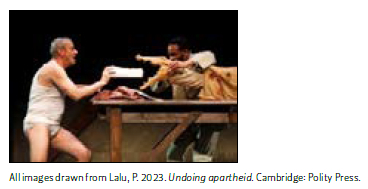
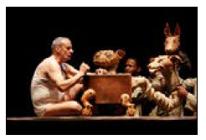
Kholer attached his sculpted heads and tails to the army bag and lawyer's briefcase to create menacing accomplices to a sickening plot involving characters of ill-repute. The two central characters, Pa and Ma Ubu, who we shall meet later, would have their lives complicated by the baggage of the past borne by two scandalous puppets. Niles the Crocodile slid effortlessly around on the army bag's stuffed belly, hiding incriminating documents telling of Pa Ubu's dirty tricks, macabre violence, and the dark secrets of his past as a security policeman. These were the same documents that Ma Ubu would recover from the belly of Niles the Crocodile as she accidentally stumbles upon her husband's sordid past, which, as it turns out, extends beyond suspicions of marital infidelity.
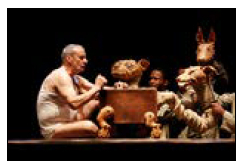
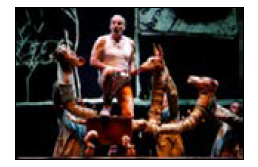
As for Bram Fischer's briefcase, the necks of three dogs fitted neatly to one end of the case, and a lever, hidden under the handle, operated its wagging tail at the other, to make up Pa Ubu's dogs of war, a three-headed hydra depicting a politician, a soldier and a general - Brutus, Brutus and Brutus. Three devious state functionaries that form a pact of dogs animated through a single puppet. With echoes of Marcel Mauss (2002), the exchange of bags summons a memorable if ominous sounding injunction: "There are no free gifts."
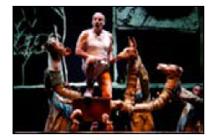
The conceit of my argument resides in this puppet, The Dogs of War, a chain of command involved in all manner of dirty tricks bound to a briefcase - Bram Fischer's briefcase. The intrigue of the paper lies in the closing minutes of the performance when Pa Ubu places a file in the briefcase in an act of betrayal in which he implicates his co-conspirators to save his skin. By sacrificing his henchmen, Pa Ubu believes he will be spared punishment for his underhand activities by feigning ignorance and beguiling the commission. Beyond merely implicating his foot soldiers, Ubu and the Truth Commission compel the spectator to ask whether a deeper darker secret about apartheid, more damning than the accusations of torture and murder, might have been lodged in the belly of the beast.
Might the transmogrification of Bram Fischer's briefcase into the Dogs of War hold a key to the story of a seemingly unending tragedy of apartheid, about which Fischer may have been cautioning his younger charge, Sydney Kentridge?3
B: Law] The production that premiered in 1997 at the Market Theatre in Johannesburg challenged the hegemony of law in narrating the end of apartheid. While the play bore the unmistakable textures of William Kentridge and the Handspring Puppet Company, it was clearly the literary worldliness of Jane Taylor that gave the play its foreboding mythic hold over a society struggling to emerge from the suffocating grip of apartheid. Pitting the perpetrators' violence against the victim's gift of forgiveness, Taylor doubts whether the jurisprudence that framed the Truth and Reconciliation Commission could ever be sufficient to deal with the psychic detritus of apartheid. Thus begins a play that effectively toys with law.
In her provocation that art may have been better suited to deal with the afterlife of apartheid, Taylor engages in a wakening of the senses by invoking techniques of slapstick. She sets out to find antidotes to feelings generated by racial humiliation in anecdotes of hurt and pain. Considering this rich intuitive reckoning with which to end the narrative of apartheid, why would the TRC settle for such a paltry, worn-out and tired narrative of romance that, as Doris Sommer (1993) points out in the case of Latin America, transformed the pursuit of nationalism into militarised fantasies. Why should we settle on unimaginative melodrama as the only way to narrate the ends of apartheid?
To counter the slide into the dead ends of nationalist narration, Taylor invites the audience to join her in rummaging through baggage in search of an aesthetically enticing and ethically meaningful post-apartheid imaginary. Bags conceal truths, but once opened, the enigmas abound. Although a juridical model of truth may prove useful for settling scores and reaffirming the mechanisms of veridiction established in the name of the law, it is unlikely to provide an exit from the impasse of apartheid. The pursuit of prosecutable truths is both necessary and limited. They lead to what Adam Sitze calls The Impossible Machine (2013) in his study of the South African Truth and Reconciliation Commission. These truths are encrusted in the endlessly deferred disappointments of transitional justice. Like Sitze, Taylor also implicitly worries about the paradigm of transitional justice, which invariably tends to surrender the story of violence to the perpetrator.
The recovery of information about human rights abuses does not guarantee a passage from truth to reconciliation, especially given the repressed and incommunicable psychic consequences of racial, gender, and class experiences of violence. By prioritising aesthetic form over legal determination, Ubu and the Truth Commission approached apartheid as a structure of feeling rather than only a structure of violence. To this end, the subtle but ever-present motif of the spiral that complicates the passage out of apartheid, marks a distinct shift in the image of apartheid. Rather than the straight line preferred by transcendental claims of transitional justice, we are left with an image of apartheid as a technology of power in the shape of a spiral.
C: Theatre] Ubu and the Truth Commission encourages a double take on apartheid to come to terms with uncertainty about whether its political rationality ought to be granted the status of tragedy or farce. Apartheid leaves behind a phantom presence long after the final nail is hammered into its coffin. On this side of the grave, deceptive plots resulting from the twisted logic of racism persisted in undermining the pursuit of truth to the ends of reconciliation. As the TRC's stifled efforts to mediate between victims and perpetrators hover over the whole of society as an unresolved question, the language of reconciliation has been allowed to wane at our peril. The obituary for the sordid scene of violence seems incomplete, as the memory of apartheid is increasingly being removed from the drama of life in which it once partook. For Taylor, the search for a redemptive end to apartheid would prove futile, especially when the secrecy and lies of apartheid exceed the mechanisms of veridiction established in law (Taylor 1998). Ubu and the Truth Commission asks for a different story of both the memory of apartheid and its end.
What is needed to exit apartheid is less a commission than a theatrical staging of its tragedy. For Taylor, the turn to theatre is required because apartheid was not merely a variation in the theme of tragedy, but a very specific performance of tragedy. This tragedy does not end with redemption but with the endless repetition of a deceptive plot. Apartheid thereby consigns us to its tragedy in perpetuity.
It may be necessary to privilege the performative language of tragic theatre over the constative language of law, if Karin van Marle permits me paraphrasing, to draw out the connection between apartheid and tragedy (Van Marle 2019: 11). Tragedy leads us through a trapdoor where we can observe intentional deception enabled by an empty signifier of race. The argument of Ubu and the
Truth Commission similarly leads to a reckoning with this remainder of race after the fact of apartheid. This is what we gather from an incidental lovers' quarrel early in the play that signals the onset of a tempestuous gambit: neither war nor the paradigm of law might adequately address the deceptive plot that is the poisoned chalice of apartheid to the future. The redemptive end of the tragedy does not reside in the truth extracted from the jaws of a devious crocodile. What anyway is the value of such truth that leaves little to the imagination for exiting apartheid? Instead, an alternative to the overly legal discourse may lie in a twist to the tale, where the medium of theatricality lays out an argument about the need to undo apartheid before it can be transcended properly.
Taylor's turn to the performative echoes a crucial qualification about tragedy in Joshua Billings's book, The Philosophical Stage (Billings 2021: 92). Billings invokes the word apate from ancient Greek theatre to describe the totality of a deceptive act conveyed by an intensely proximate relationship between agent and victim in ancient tragic theatre. I want to insist that the resonance of apate with apartheid not be lost to us.
In the case of Ubu and the Truth Commission, apate is a device in tragic theatre deployed to persuade the spectator to look beyond the immediate effects of violence and rather towards to what is unspoken in the relation between victim and agent. In the scene of apate, the distinction between cause and effect is blurred if not completely obliterated. And between words and things, a gap opens, leaving the agent in command and the victim with few resources to create a full and accurate picture of a situation. The best examples of apate come to us via Sophoclean tragedies in the 5th century, which introduce the theme of intentional deception, much like what in common parlance today is called "gaslighting". For Billings, this relational quality between agent and victim is pivotal - and distinguishes apate not just from pseudos (which characterises a statement of a wilful lie), but also from dolos, which can refer simply to a trap without an intended victim. Pseudos and Dolos belong to the jurisdiction of law. Apate, Billings suggests, implies a close proximity of agent and victim, and, very often, a kind of false trust or intimacy, which gives the term its forceful ethical charge. Missing this deceptive quality undergirding apartheid would mean losing sight of it as a specific form of tragedy.
A parody of deception told through a story of feuding lovers invites us to ask how best to narrate the ends of apartheid. How, in other words, might we script the end of this tragedy when it is flagrantly defined by a deceptive plot? Rather than seeking redemption, Ubu and the Truth Commission combines the tragic with the absurdity of apartheid to answer.
The play is tailor-made to meet the competing sentiments of tragicomedy and digs deep into the history of theatre for the caricature of an apartheid bureaucrat. Theatrical provenances are important to understand. The figure of Ubu in the 1997 South African production is inspired by French playwright Alfred Jarry's play Ubu Roi that was first performed in 1896 - connecting the 19th century revolution in technology and the 20th century revolution in communication. In its original performance in Paris in 1896, the first word on stage, Merdre - which sounded like the French word for shit! Merde - offended Parisian bourgeois sensibilities, and following the first performance, the play was banned from the stage. Taylor feasts on this irony - of the banning of a play ridiculing the European bourgeoisie and an equally absurd act of censorship, not too dissimilar to the bureaucratic overreach of apartheid. In her rescripting of Ubu, she grasps the tenor of repression and the prohibition with which apartheid's violence was inaugurated. Jarry gives her more to work with in crafting an image of apartheid. He provides her with a made-up science of imaginary solutions - what he called pataphysics - to lampoon the absurd habits of a class blinded by the instrumentalities of capitalism. One way to read Ubu and the Truth Commission is as a version of pataphysics applied to ideas of truth and reconciliation that orbit in a spiral of impossibility.
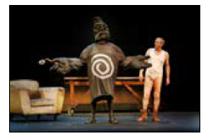
Pataphysics is playfully opposed to metaphysics, particularly the order given to cause and effect in law. Taylor wants us to believe that the fraught relationship between truth and reconciliation is best dealt with by the resources of the imagination rather than only the determinations of law. How else, other than through the science of imaginary solutions, might one find a redemptive end to a tragedy such as apartheid when it was conceived of as apate, that is as the totality of deception?
Although some have seen a playful reference to Ubuntu in the reference to Ubu, Taylor's interests may lie elsewhere. Her script may very well be in conversation with the Ubu myth elsewhere in African theatre, where Jarry has long served as a touchstone for the satire of imperious posturing. The Nigerian playwright and Nobel laureate Wole Soyinka, for example, had a field day casting dictator Sani Abacha as a ridiculous incarnation of Ubu in his play King Babu. Hassan el Geretly's al Warsha theatre similarly staged an adaptation of Ubu Roi to mock elitest Egyptian cultural practices. In contrast to Soyinka and el Geretly, absurdism in Ubu and the Truth Commission is less about ridiculing power than laying bare informational strategies undergirding deceptive plots. Taylor places us at the other extreme of Jarry's spiral, in a biopolitics of the future haunted by the spectre of apartheid. We are reminded of the subject of modernity trapped in a spiral, unable to escape, as if to reverse Hegel's notion of Kreislauf (circulation) with a particular postcolonial tendency of recoil.
D: Baggage] The result is a play more about the comedic collapse of authority than about deception woven through a story of unrequited and tempestuous love between Pa and Ma Ubu. The stage is set for Pa Ubu and Ma Ubu to perform a dance of death, he in a tank top and briefs she in a pink nightgown, in a blissful embrace of their union - until the past seeps into their holy matrimony. A portal of communication and information is opened between the two, and a window between two figures once hermetically sealed from each other by the whim of history. Rather than a love story that might yield a foundational fiction of the new postapartheid nation state, the descent of adversaries into meaningless chaos and disorder confirms our deepest fear.
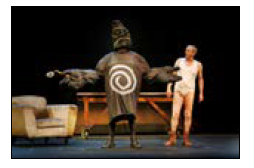
Taylor peels away the layers of wilful lies and traps. She exposes a deceptive plot akin to Apate in apartheid. The proximate relationship between the agent and victim threatens to prolong the tragedy of an oppressive past, as mistrust leads to uncontrollable proliferation of sensory information. To this end, she draws extensively on the motif of baggage so common to South African aesthetic works - briefcases, suitcases, army bags, and uMaskhenkethe -where a deeply troubled political unconscious is stored. Only this time, we were asked to be doubly cautious about puppets bearing baggage.
Excess baggage, lost luggage, unresolved cases, dirty laundry, haunting trauma, bags inherited from fathers by sons; bags that reveal undeciphered coded messages from the past to the present - all trapped like an archetypal cat waiting to pounce out of the proverbial bag. South African literature has been peppered with symbolic reference to bags. Bags hide as much as they do. How will we ever forget the fate that befalls the figure of Timi in Ezkia Mphahlele's short story, The Suitcase. Remember how in Mphahlele's narrative, an unsuspecting Timi lays claim to a suitcase left on a bus. When confronted with opening the case to prove ownership, he is shocked and shaken by the discovery of the lifeless body of a white child. Apartheid's repressed meaning was frequently delivered in a bag - of migrant workers, indentured labourers, exiles, lawyers, soldiers - and each stuffed with traces of a repressed political unconscious. Might Fischer's briefcase contain a political unconscious that forewarns of apartheid's deceptive plot, particularly the plot that uncannily outwits the authority of the law that appears before it?
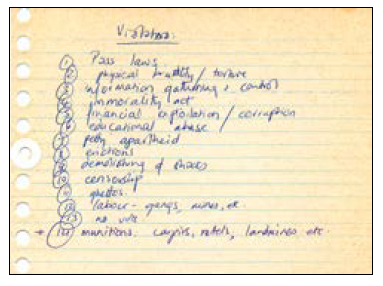
If the bag is first and foremost the point of a "not seeing" of apartheid, its symbolism is perhaps the most potently revealed once its content is laid bare. A study of the research notes for Ubu and the Truth Commission tells a story of Taylor's efforts to locate the most intractable of apartheid's deceptive plots hidden in the baggage of the past, where the political unconscious of apartheid seeks refuge, secure from the litany of abuse carried out in its name.
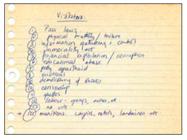
Passlaws, physical brutality/torture, information gathering and control, immorality act, financial exploitation/corruption, educational abuse, petty apartheid, evictions, demolition of shacks, censorship, ghettos, labour - mines, gangs, etc., no vote, munitions - caspirs, ratels, landmines. Under one of these headings, the transmogrified baggage that formed the torsos of Niles the Crocodile and the Dogs of War opened the portal for the secret of apartheid to pass from the scene of war to the scene of the law to the scene of the theatre of the absurd, communicated through a brief lodged in Bram Fischer's briefcase.
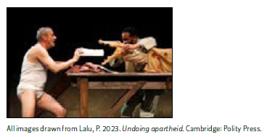
E: Play] Taking its cue from intimate engagements in tragedy, Ubu and the Truth Commission peers into the private lives of Ma and Pa Ubu - respectively performed by Dawid Minnaar and Busi Zokufa. Their interracial union soon reveals the collisions spawned by past attitudes toward politics that persisted as hangovers after apartheid. Behind the outrageous spectacle of a lover's quarrel spurred by Ma Ubu's accusations of infidelity to her husband, Pa Ubu appears to hide more than is assumed.
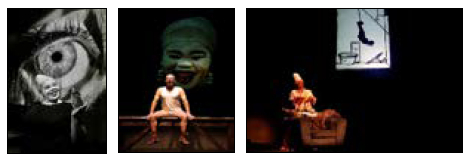
He not only carries the stench of infidelity on his briefs and tank top as Ma Ubu intimates, but also secretly consorts with a cast of unsavoury beastly puppets, Niles the pet Crocodile, and the functionaries in his chain of command known as the Dogs of War. This motley crew together bear the baggage of untold secrecy and complicity for his part in acts of violence. Pa Ubu's effort to hide this past was motivated by self-preservation rather than sincere remorse for his atrocities. Sited in the crosshairs of tragedy and comedy, the play sets out how a fantasy of an interracial love affair proves to be inadequate as a foundational fiction for forging an imagined political future in the wake of apartheid. Ubu and the Truth Commission stages a conflict of forms: between the pathos of tragedy and the comedy of slapstick, between the kinesis of the puppet and moving images, and between perpetrator submissions and pained victim testimony - each distinguished by a scramble to hold onto the shards of a broken world. Beneath the fantasy of making the world whole again, the play's investments in the repressed aspects of the national political unconscious are laid out in two related scenes. Ma Ubu takes Niles the Crocodile aside to determine the reason for his bulging belly. Shoving her hand down his gullet, she digs out a scrap of paper from the belly of the beast, thinking that she has uncovered evidence of Pa Ubu's sexual indiscretion. What she finds is infinitely more damaging. The unravelling of the scrap of paper depicts an apparatus of torture at work, set against the backdrop of the metallic grinding of humans and machines. Interspersed with images of bodies falling through space and subjects writhing in pain, instruments of torture combine with instruments of communication to convey how violence is directed. Kentridge presents a labyrinth of loudhailers, telephones, and other instruments of communication that facilitate relays of 'truths' to justify state violence. Ultimately, this version of the truth is violently extracted from the victim by an agent.
The crumpled script that Ma Ubu retrieves, for example, describes a technique of torture called tubing, in which a rubber tube suffocates the detainee, with a small slit from which the tongue is allowed to protrude.
The idea, Pa Ubu later discloses, was to force the victim to admit to the truth. The longer the tongue is, the closer the detainee is to telling the truth - or dying. If the detainee wetted his or her pants, the torturer would know that the detainee was before the Pearly Gates. And if 'truth' could not be extracted after all, the detainee was to be beaten to death with iron pipes. Ma Ubu is visibly disturbed by the discovery of her husband's dark secret, which sheds light on his involvement in the dirty tricks of security forces. Pa Ubu's plans to dispense with responsibility by discarding evidence of his complicity in acts of torture are fortuitously intercepted by Ma Ubu. Appearing a larger-than-life apparition on a screen, she confronts a cowering Pa Ubu, but to the ends of making common cause with his deceptive past.
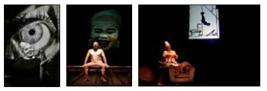
Ma Ubu is the arbiter in the unfolding drama of marital strain. She takes to taunt her husband, threatening to sell his secrets as an investment towards her retirement.
The pathetic response of Pa Ubu, skimpily clad in well-worn briefs, is to trot around the stage, dodging the larger-than-life projections of Ma Ubu and her threats to reveal his role in acts of torture. As a final resort, he threatens Ma Ubu with the consequences of her betrayal, stating that her disclosure of official secrets would be as much to her detriment as to him. So, begins his plot of deception as he summons his co-conspirators, Niles the Crocodile and the Dogs of War. Their relationship spirals out of control as they seek to take advantage of the spoils of a deceptive plot, the dance of the two lovers symbolically betrays the failing and faltering promises of the national narrative of reconciliation, as if to prophesise a bad omen.
Pa Ubu is cast as incredulous and ridiculous, someone torn between a need for love and an insatiable appetite for violence. In the unfolding drama, he is made to confront the moral, political, and ethical limits of his actions, for which he stubbornly refuses responsibility, but which equally lie beyond his control. As Pa Ubu spirals out of control, taunted by screen apparitions, enigmatic objects, and cinematic recalls of the instruments and techniques of torture, a subterranean sensory order of deception that draws on race and technology becomes evident beneath expressions of love.
Fischer's gift to Sydney Kentridge has its own enigma. The innocent exchange of a briefcase that would become well-worn over the years, purportedly given at the end of a lost case, bears an ominous caution of history calling twice. Perhaps the briefcase was an exchange between the two legal minds resigning themselves to the fate that apartheid would have to be endured as interminable. This second-order effect of interminability contained elements of what was known as petty apartheid that sustained the order of grand apartheid. As a supplement to grand apartheid, petty apartheid is given to us in Ubu and Truth Commission in the slide from tragedy to baroque theatre or Trauerspiel. The bungling bureaucracy and endless collision with a technology of power indicate the manufacture of countless solutions and plans with no end in sight and no solution to speak of. It conveys an image of a Trauerspiel -baroque bourgeois theatre which is the common denominator of apartheid and, unfortunately, the inheritance of the post-apartheid.
Fortunately, the apate of apartheid has the potential to tilt towards the victim, without the burden of explaining experience in terms of cause and effect. The victim has free reign to narrate the end of what oppresses. The perpetrator forfeits the right to authorship of a political system by conveniently assuming a diminished standing in a chain of command. Those who claim to be acting on the instruction of a chain of command give up their intellectual stakes in the narrative of the ends of a violent ideological script. With echoes of Hannah Arendt's banality of evil to describe those unthinking bureaucrats who made fascism possible, Brutus, Brutus and Brutus are presented as minions in their comedic attempts at subterfuge. The aim is to unsettle the claims made by Niles the Crocodile and the Dogs of War, who would have you believe were merely functionaries in an extended chain of command.
Nile's is reduced to information gathering, retrieval, and exchange - a rogue accomplice whose function has since been normalised by Google. Similarly, the Dogs of War appear either as over-zealous or ineffective bureaucrats following orders from high above. Claiming that they were merely following order and executing administrative tasks, they effectively forfeit and abdicate their place in the narrative of "apartheid". For these bureaucrats, apartheid was presumably not a primary motive for their actions.
With the withdrawal of bungling bureaucrats from any association with apartheid, the responsibility for narrating apartheid and its ends shifted squarely toward the victim. This narrative, which is aesthetically charged, must exceed the deceptive plot to which it responds. The possibility of this narrative is perhaps what the discourse of the TRC foreclosed. The apate of apartheid ironically confers the obligation to narrate apartheid and imagine its ends on the victim, beyond the terms of victimology.
As we peer and pry into the secrecy and lies that mediate the passage from truth to reconciliation, we discover that there is no straight line out of apartheid, only a spiral of deception in which we are perpetually trapped by bureaucrats scurrying for cover. The truths established based on informatics only give rise to newer deceptive plots. The only option for the victim is to reimagine the story of apartheid at the level of a reschooling and retooling of the senses - or what we might call an aesthetic education.
Let me round off as follows. In keeping with the conceit of my lecture, the victim must contend with the secret of apartheid lodged in the belly of the Dogs of War. The drooling and panting bunch of misfits unwittingly reanimates a strain of apartheid that persists long after they shed responsibility for apartheid. Why? Because they effectively administered the part of apartheid that seemingly plays no part in its most enduring sensorial effects.
The name of this part of apartheid is petty apartheid. If petty apartheid is the glaring omission of the TRC, it is because the banality of the everyday falls outside the remit of the law.
To craft a picture of apartheid, the victim is free to take hold of the narration of apartheid so that a new symbolic language is enabled to name apartheid afresh. Perhaps an opportunity for a victim narrative of apartheid that is not reducible to the experience lurks in the gift of Bram Fischer's briefcase. In response to their amnesty applications, Brutus, Brutus and Brutus were each given different sentences based on their apparent indifference to apartheid. Their respective punishments provided cold comfort to the victims of apartheid. This is not because the brutes deserve more severe sanction, but because the TRC leaves the political unconscious of the victim untended and thus uncertain about making sense of apartheid. Precisely for this reason, the opening of the briefcase unfurls a political unconscious with which the victim narrates the ends of apartheid.
Nomen est Omen - your destiny is in your name. This warning sounded amid the euphoria of the birth of the post-apartheid. What remains of apartheid is the discourse of petty apartheid with its origins in the disciplinary fields of psychophysics and psychotechnics in the early 1900s and its culmination in cybernetics as the science of communication and control in 1948. Petty apartheid, as I have indicated in my book Undoing Apartheid, is a pernicious, banal, and seemingly intractable form of biopolitics that took its cue from a 20th-century failed science linking the human and technology in which Verwoerd was educated at Stellenbosch University under the watchful eye of RW Wilcocks. This discourse of apartheid in a minor key was the foundation laid for a biopolitics of the future, not only in South Africa, but also as racism's last word, as Derrida put it. It is this banal form of apartheid, deceptively named as petty apartheid, that undercuts efforts to link the sensory experience of apartheid with its a priori perceptual account. Perhaps in handing a briefcase to the younger Sydney Kentridge at the end of a trial that prosecuted a generation for their courageous challenge directed at the legal edifice of grand apartheid, Bram Fischer may have signalled that the worst was yet to follow in the deceptive plots of petty apartheid administered by minor bureaucrats. In foreclosing the message borne by the briefcase, the TRC may have inadvertently missed Fischer's note on the future conveyed through the offer of a gift to Kentridge. Perhaps, that note may have asked the victims to seek out apartheid not solely or even primarily in the orders of the law but in the incommunicable experiences of race lodged in the belly of the proverbial beast.
Acknowledgements
This work was supported by the NRF and British Academy SA-UK Bilateral Chair in Culture and Technics (grant number RCDH240611226399).
References
-
Billings J. 2021. The philosophical stage: drama and dialectic In classical Athens. New Jersey: Princeton University Press. https://doi.org/10.23943/princeton/9780691205182.001.0001
» https://doi.org/10.23943/princeton/9780691205182.001.0001 - Lalu, P. 2023. Undoing apartheid. Cambridge: Polity Press.
- Mauss M. 2002. The gift: the form and reason for exchange in archaic societies. London: Routledge.
-
Sitze A. 2013. The impossible machine: a genealogy of South Africa's Truth and Reconciliation Commission. Ann Arbor: University of Michigan Press. https://doi.org/10.3998/mpub.243251
» https://doi.org/10.3998/mpub.243251 - Sommer D. 1993. Foundational fictions: the national romances of Latin America. Oakland: University of California Press.
- Taylor J. 1998. Ubu and the Truth Commission. Cape Town: University of Cape Town Press.
-
Van Marle K. 2019. Hold onto Critical Jurisprudence. Law, Democracy and Development 23: 211. https://doi.org/10.17159/2077-4907/2019/ldd.v23b8
» https://doi.org/10.17159/2077-4907/2019/ldd.v23b8
Acceptance: 20 October 2025
Published: 12 December 2025
2 Interview with Basil Jones and Adrian Kholer, 27 August 2024, Cape Town.
3 https://www.youtube.com/watch?v=lVgT_x53z14 [accessed on 22 July 2025]