



Services on Demand
Journal

Article
 English (pdf)
 Article in xml format
 Article references

 Automatic translation
 Send this article by e-mail
Indicators
Related links
-
 Cited by Google
-
 Similars in Google
Share

 Permalink

Journal of the South African Institution of Civil Engineering
On-line version ISSN 2309-8775Print version ISSN 1021-2019
J. S. Afr. Inst. Civ. Eng. vol.68 n.2 Midrand Jun. 2026
https://doi.org/10.17159/2309-8775/2026/v68n2a4
TECHNICAL PAPER
Optimising traffic flow at major intersections in East London's CBD using quantum flow theory: A case study of Oxford Street
S Magingxa; S Abejide; E Theron; Z Smith
ABSTRACT
Urban traffic congestion continues to challenge sustainable mobility in South African cities, particularly in central business districts (CBDs) where travel demand often exceeds network capacity. Oxford Street in East London's CBD experiences persistent congestion caused by high vehicle volumes, unsafe driving behaviour, limited parking, and ineffective traffic control. This study investigates Quantum Flow Theory (QFT) as an analytical framework for improving traffic flow by modelling traffic as a probabilistic, multi-agent system rather than a deterministic stream. A quantitative research design was employed, combining structured questionnaires administered to 384 road users with field observations and historical traffic data. Peak congestion occurred during the morning (06:00 to 10:00) and afternoon (14:00 to 18:00) periods, with over 90% of respondents reporting heavy traffic. Correlation and multinomial logistic regression analyses revealed significant associations between congestion, illegal passenger loading, and on-street parking activity. Applying QFT principles to intersection performance showed that adaptive signal timing informed by probabilistic traffic states could improve congestion-prediction accuracy by approximately 18% compared to static traffic models. The findings support targeted interventions including signal optimisation, parking management, and demand-reduction strategies such as carpooling and improved public transport.
Keywords: adaptive signal control, traffic flow theory, central business district (CBD) congestion, probabilistic traffic modelling, South Africa
INTRODUCTION
Urban traffic congestion remains a persistent challenge to sustainable mobility systems worldwide. Rapid urbanisation, rising private vehicle ownership, and constrained road capacity have intensified pressure on urban transport networks, particularly at signalised intersections. These pressures undermine travel reliability, increase fuel consumption, and exacerbate environmental externalities. The impacts are most pronounced in densely developed central business districts (CBDs), where vehicular, public transport, and pedestrian movements converge (Festus et al 2020; Yu & Abdel-Aty 2021).
Although congestion has been extensively examined in large metropolitan areas, mid-sized cities, especially in developing regions, face distinctive challenges that are comparatively underexplored. In many African cities, congestion is shaped not only by demand growth but also by underdeveloped public transport systems, widespread informal paratransit operations, and limited investment in traffic control infrastructure (Hu 2020; Kgwedi 2022). Studies from Lagos, Nairobi, and Accra consistently show that informal passenger loading, curbside parking, and poorly coordinated signal timing significantly intensify CBD congestion (Muthoni & Wanyoike 2019; Adewumi et al 2020; Adusei & Twumasi 2022). Despite these shared characteristics, secondary cities receive far less empirical attention than major metropolitan centres (Mosadeghi & Fan 2020; Sibanda et al 2021).
Within the South African context, East London in the Eastern Cape exhibits congestion dynamics comparable to those observed in other African cities. Like Lagos, Nairobi, and Accra, its CBD combines high peak-period demand with mixed traffic and informal public transport. These similarities position East London as a representative case for examining broader urban congestion challenges in developing cities. Oxford Street, a key arterial corridor within the CBD, experiences recurrent peak-period congestion driven by fluctuating demand and signalised intersections operating near or beyond capacity.
Traditional traffic flow theories, such as Greenshields' macroscopic speed, density relationship and the Lighthill-Whitham-Richards (LWR) model, conceptualise traffic as a deterministic and continuous flow governed by equilibrium relationships. While foundational to traffic engineering, these models assume homogeneous driver behaviour and stable flow regimes. As a result, they struggle to capture the stochastic interactions, behavioural heterogeneity, and abrupt state transitions that characterise congested urban environments (Treiber & Kesting 2018).
In response to these limitations, probabilistic modelling approaches have gained prominence. Cellular automata models use probabilistic transition rules to simulate vehicle interactions and queue formation under variable demand conditions (Zhang et al 2021). Stochastic microscopic simulations similarly improve the representation of travel time variability in congested networks (Li & Chen 2022). Agent-based models (ABMs) extend this paradigm by representing individual vehicles as autonomous agents whose interactions generate emergent traffic patterns. These approaches are particularly effective in mixed-traffic environments typical of African cities, where informal operations and non-compliance with traffic controls strongly influence congestion dynamics (Sun et al 2020; Adusei & Twumasi 2022).
Despite these advances, the application of stochastic traffic modelling remains limited in secondary African cities. Comparative evaluations across modelling paradigms are also scarce, particularly for saturated signalised intersections where uncertainty and rapid state transitions dominate. This gap highlights the need for analytical frameworks that can efficiently represent non-linear dynamics under highly variable demand.
ABMs further extend this probabilistic paradigm by representing individual vehicles as autonomous agents whose interactions collectively produce emergent traffic patterns (Sun et al 2020). These models are particularly effective in analysing mixed traffic environments and behavioural heterogeneity. Sun et al (2020) illustrated that including diverse vehicle types significantly alters intersection performance in dense urban networks. In the African context, Adusei and Twumasi (2022) applied agent-based simulation to mixed traffic flows in Accra's CBD and found that informal vehicle operations and non-compliance with signal controls substantially influence congestion patterns - factors often overlooked in classical models.
Recent African studies have also highlighted the inadequacy of fixed-time signal control under highly variable demand conditions. Mdoe et al (2021) showed that probabilistic and adaptive signal control systems outperform fixed-time controls in Dar es Salaam, while Njoroge et al (2023) reported significant reductions in intersection delays through stochastic demand-based signal optimisation in Nairobi. Despite these advances, applications of stochastic traffic modelling remain limited in secondary African cities, and comparative evaluations across modelling paradigms are still scarce.
Building on this probabilistic foundation, Quantum Flow Theory (QFT) offers a novel framework for traffic flow analysis. QFT conceptualises traffic as a multi-agent system governed by probabilistic state transitions, drawing on principles from quantum probability theory. Unlike deterministic or conventional stochastic models, QFT allows multiple traffic states, such as free flow, partial saturation, and queue formation, to be represented simultaneously through state superposition. This capability makes QFT especially suitable for analysing highly dynamic and congested signalised intersections.
This study applies QFT to analyse and optimise traffic flow at major intersections along Oxford Street in East London's CBD. By integrating observed traffic patterns with probabilistic state modelling, the research evaluates QFT-informed adaptive signal control under variable demand conditions. The study provides empirical evidence from a South African secondary city and situates East London within broader African and global research on urban congestion.
RESEARCH METHODOLOGY
Research design
This study adopted a quantitative research design to examine traffic congestion patterns along Oxford Street in East London's CBD. A quantitative approach was appropriate because it enabled statistical analysis of relationships among commuter characteristics, traffic-related behaviours, and perceived congestion intensity. To enhance methodological rigour, multiple data sources were combined, including survey responses, direct field observations, and secondary traffic data.
Although perception-based survey data does not directly measure physical traffic parameters such as speed, they are widely used in transport research to capture behavioural and operational factors. These include illegal stopping, unsafe manoeuvres, and driver non-compliance, which are often difficult to detect through automated traffic counts alone (Sun et al 2020). Potential limitations associated with self-reported data were mitigated through triangulation with observational data and municipal traffic records.
Data collection
Primary data was collected using a structured questionnaire administered to drivers and commuters using Oxford Street. The questionnaire captured information on peak congestion periods, perceived causes of congestion, traffic behaviour, parking availability, and potential mitigation measures. Responses were measured using a five-point Likert scale, ranging from strongly disagree (1) to strongly agree (5).
To complement perception-based data, field observations were conducted at three major intersections along Oxford Street: Caxton Street, Union Street, and North Street. Observations focused on traffic flow conditions, queue formation, illegal loading and unloading, and traffic signal operations during the morning and afternoon peak periods.
Sampling methodology
Sampling strategy
The target population comprised road users who regularly travel along Oxford Street, including private vehicle drivers, public transport users, and taxi passengers. East London has an estimated population of approximately 463 651 residents. A sample size of 384 respondents was determined using the Krejcie and Morgan table, corresponding to a 95% confidence level and a 5% margin of error.
A simple random sampling strategy was employed to ensure that eligible respondents had an equal probability of selection. Road users were approached at randomly selected locations along Oxford Street and adjacent access points, including parking areas, taxi loading zones, and pedestrian waiting areas. This approach reduced systematic selection bias and improved the representativeness of typical participants in CBD traffic.
Questionnaire design and distribution
Primary data was collected using a structured questionnaire administered through face-to-face intercept surveys. This distribution method was selected to maximise response rates and to ensure that respondents had direct experience of traffic conditions along Oxford Street. The questionnaire consisted of closed-ended questions covering peak congestion periods, perceived causes of congestion, traffic behaviour, parking availability, and potential mitigation measures.
Responses were recorded using a five-point Likert scale ranging from strongly disagree (1) to strongly agree (5). To promote inclusivity, trained researchers assisted respondents with low literacy levels and clarified questions where necessary, without influencing responses. Surveys were administered during both peak and off-peak periods to capture variation in travel experience and in exposure to congestion.
Respondent profile
Respondents included employed commuters, self-employed individuals, students, and unemployed road users, reflecting the diverse user base of Oxford Street. Age groups ranged from young adults to older commuters, allowing for examination of demographic variability in relation to congestion perceptions. This profile ensured that the survey captured perspectives from users who interact with the corridor for work, commerce, and public transport access.
Field observations and secondary data
To complement survey data, field observations were conducted at three major signalised intersections along Oxford Street: Caxton Street, Union Street, and North Street. Observations focused on traffic flow conditions, queue formation, illegal loading and unloading, and signal operation during the morning and afternoon peak periods.
Data analysis
Survey data was analysed using the Statistical Package for the Social Sciences. Descriptive statistics were first used to summarise respondent characteristics and overall congestion perceptions. Given the ordinal nature of Likert-scale responses, Spearman's rank correlation analysis was applied to assess associations among congestion-related variables.
A multinomial logistic regression model was subsequently employed to examine the influence of demographic variables on perceptions of high traffic volume. The dependent variable was traffic volume perception, categorised as disagree, neutral, or agree, with neutral perception serving as the reference category. Independent variables included age group and employment status, with the 36 to 55 age group and unemployed respondents used as reference categories.
To enhance transparency and interpretability, regression results were reported using odds ratios (Exp(β)) with 95% confidence intervals, alongside regression coefficients (β), standard errors, Wald statistics, and p-values. Odds ratios provided an interpretable measure of effect size, indicating the likelihood of respondents perceiving high traffic volume compared with the reference categories. Confidence intervals were used to assess the precision and robustness of estimated effects.
Model fit was evaluated using −2 log likelihood values and pseudo-R2 statistics (Cox & Snell and Nagelkerke). Prior to regression analysis, multicollinearity was assessed using variance inflation factors, all of which were below the threshold value of 3, indicating no multicollinearity concerns.
Operationalisation of QFT
To address the limitations of traditional deterministic traffic flow models, this study employed QFT as a conceptual analytical framework for interpreting traffic dynamics at congested intersections. Unlike classical models that assume stable equilibrium conditions, QFT represents traffic flow as a probabilistic system, recognising that multiple traffic states may coexist simultaneously under saturated conditions.
In this study, traffic flow at an intersection was conceptualised as a probabilistic state system:
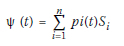
Where:
ψ (t) represents the overall traffic state at time t
Si denotes a possible traffic state (e.g. free flow, unstable flow, congested flow)
pi(t) is the probability of each state occurring at time t, derived from observed congestion frequencies.
Observed peak-period traffic conditions and survey-derived congestion frequencies were used to estimate state probabilities. These probabilities informed adaptive signal-timing scenarios, enabling comparisons between static signal assumptions and probabilistic flow-based control logic. The QFT-based approach demonstrated improved congestion-state prediction compared to static assumptions, supporting its use as a decision-support tool rather than a full microscopic simulation.
Ethical considerations
Ethical approval for this study was obtained from the Research Ethics Committee of the Central University of Technology, Free State. Participation in the study was voluntary, and informed consent was obtained from all respondents prior to data collection. Participants were informed of their right to withdraw from the study at any stage without penalty. Anonymity and confidentiality were strictly maintained throughout data collection, analysis, and reporting.
All data collected was securely stored in password-protected electronic files accessible only to the research team. Any hard-copy materials were kept in locked storage facilities. No personally identifiable information was recorded. Data will be retained for the period prescribed by institutional policy and thereafter securely destroyed in accordance with the Central University of Technology, Free State's data management guidelines.
Methodological limitations
Although survey-based data provided valuable behavioural insights, it did not directly measure physical traffic parameters such as speed, density, and delay. This limitation was mitigated through field observations. Furthermore, while QFT enhanced analytical interpretation by incorporating uncertainty and behavioural variability, it was applied as an analytical framework rather than a full simulation model. Future research should integrate real-time traffic sensors and microscopic simulation platforms to further validate and operationalise the QFT-based approach.
RESULTS AND DISCUSSION
Peak hour periods of congestion
Respondents identified peak congestion periods along Oxford Street in East London's CBD across five time slots: 06:00 to 10:00, 10:00 to 14:00, 14:00 to 18:00, 18:00 to 22:00, and after 22:00. The distribution of responses is presented in Figure 1.
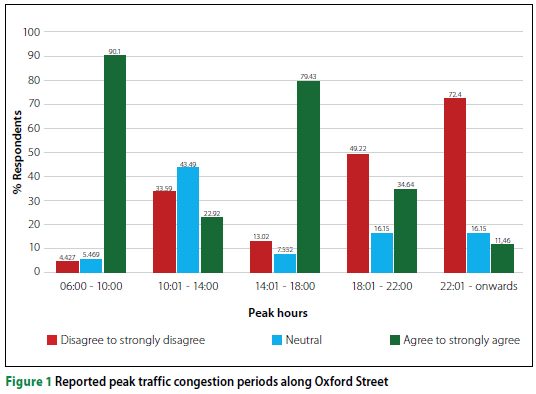
The results reveal a distinct bimodal congestion pattern, characterised by marked morning and afternoon peak periods. The morning peak (06:00 to 10:00) was identified as highly congested by 90.1% of respondents, reflecting intensive commuter movements associated with work travel, school drop offs, public transport operations, and early commercial activity. Field observations conducted during this period confirmed extended queues at signalised intersections, frequent informal stopping by minibus taxis, and reduced intersection discharge rates.
The afternoon peak (14:00 to 18:00) was reported as congested by 79.8% of respondents, coinciding with school dismissals, end-of-workday commuting, and increased pedestrian activity. Observational data indicated higher levels of roadside parking and loading activity during this period, further constraining effective road capacity and intensifying congestion.
Midday congestion (10:00 to 14:00) was perceived as moderate by 43.5% of respondents, while 49.2% identified moderate congestion during the early evening period (18:00 to 22:00). These periods were associated with delivery activities, personal errands, and leisure-related travel demand. Congestion after 22:00 was minimal, with only 16.2% of respondents reporting traffic delays, reflecting significantly reduced travel demand during late-night hours.
The observed congestion pattern along Oxford Street is consistent with classic urban bimodal peak behaviour, commonly reported in the CBDs of developing and transitional cities. Although overall traffic volumes in East London are lower than those recorded in megacities such as Lagos and Nairobi, the temporal structure of congestion remains comparable (Akinyemi et al 2020; Kariuki & Mwangi 2018). This indicates that congestion intensity is not solely a function of traffic volume but is strongly influenced by road geometry, operational inefficiencies, and behavioural factors.
Oxford Street's relatively narrow carriageways, limited number of signalised intersections, and high levels of informal public transport activity amplify congestion, particularly during peak hours. These findings are consistent with the multinomial logistic regression results, which showed that employed and younger respondents were significantly more likely to perceive traffic volumes as high, reflecting greater exposure to peak-hour congestion.
From a QFT perspective, the identified peak periods correspond to traffic states with a high probability of congestion transition. During morning and afternoon peaks, the system is more likely to shift from moderate to severe congestion due to minor disturbances, such as illegal stopping, pedestrian interference, or signal inefficiencies. This probabilistic interpretation helps explain why congestion persists even when traffic volumes are not exceptionally high, reinforcing the value of QFT as an analytical framework for understanding non-linear congestion dynamics.
Overall, the results highlight that congestion along Oxford Street is time-dependent, behaviourally influenced, and operationally constrained, suggesting that mitigation strategies should prioritise peak-period signal optimisation, enforcement of stopping regulations, and demand-responsive traffic control measures rather than purely infrastructure expansion.
Contributing factors to congestion
Respondents identified several factors contributing to traffic congestion along Oxford Street, as illustrated in Figure 2. The most frequently reported factor was traffic rule violations, identified by 67.7% of respondents. These violations included illegal stopping, unsafe overtaking, non-compliance with lane discipline, and failure to obey traffic signals. Field observations corroborated these findings, particularly during peak periods, when informal stopping and reckless driving disrupted traffic flow at intersections.
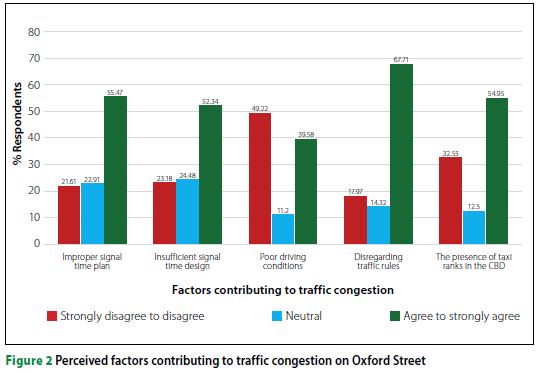
54.9% of respondents identified unregulated taxi and passenger loading activities as a major contributor to congestion. Minibus taxis frequently stopped in designated bays, reducing the effective lane width and disrupting traffic flow. This behaviour was especially noticeable during morning and afternoon peak periods and was observed to trigger rapid queue formation at intersections.
Operational shortcomings related to traffic signal control were also prominent. Inadequate signal allocation was reported by 55.5% of respondents, while improper signal timing was identified by 52.3%. Respondents noted insufficient green time during peak demand and poor coordination between adjacent intersections, resulting in stop-start traffic and inefficient utilisation of available road capacity. These perceptions were consistent with field observations of underutilised green phases and uneven queue dissipation.
In contrast, poor road conditions were reported by only 39.6% of respondents, indicating that infrastructure deficiencies were perceived as less influential than behavioural and operational factors in causing congestion along Oxford Street.
The findings indicate that behavioural and regulatory factors outweigh physical infrastructure limitations in contributing to congestion along Oxford Street. This pattern contrasts with findings from cities such as Nairobi, where informal street trading and deteriorated road infrastructure play a more dominant role in congestion formation (Kariuki & Mwangi 2018). In East London's CBD, congestion is largely driven by non-compliant driver behaviour, unregulated public transport operations, and sub-optimal signal control.
These results align with the multinomial logistic regression outcomes, which showed that economically active and younger commuters, those most exposed to peak-hour conditions, were significantly more likely to perceive traffic volumes as high. From a QFT perspective, behavioural disruptions, such as illegal stopping or signal non-compliance, increase the likelihood of rapid transitions from moderate to severe congestion. Small disturbances introduced by taxis or signal inefficiencies propagate non-linearly through the traffic system, leading to disproportionate delays under saturated conditions.
The dominance of behavioural and operational factors suggests that congestion mitigation strategies should prioritise enforcement, formalisation of taxi operations, and adaptive signal optimisation rather than large-scale road widening. Targeted regulatory and operational interventions are likely to yield more immediate congestion relief, particularly during peak periods when the traffic system is most sensitive to disturbances.
Evaluation of congestion mitigation measures
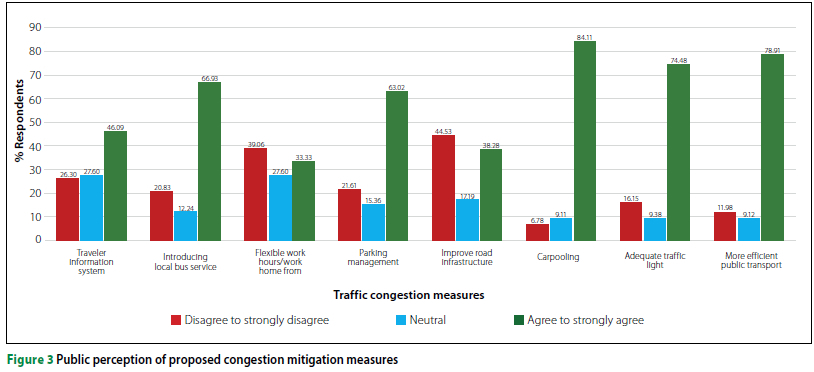
Respondents evaluated eight potential congestion mitigation strategies for Oxford Street, as presented in Figure 3. The highest levels of support were recorded for carpooling (84.1%) and traffic signal optimisation (83.9%), indicating strong public preference for measures that either reduce travel demand or improve operational efficiency without extensive infrastructure expansion.
Improved public transport services were supported by 78.9% of respondents, reflecting recognition of the role of reliable, accessible public transport in reducing dependence on private vehicles. The introduction or enhancement of local bus services received support from 66.9% of respondents, suggesting that demand exists for alternatives to informal public transport modes, particularly for short-distance CBD trips.
Parking management strategies, including regulated on-street parking and enforcement of loading zones, were supported by 63.0% of respondents. This aligns with findings, which identified illegal parking and unregulated stopping as significant contributors to congestion. Flexible work schedules were supported by 58.9%, indicating moderate acceptance of temporal demand-shifting strategies aimed at reducing peak-period congestion intensity.
Technologically driven interventions received comparatively lower support. Real-time travel information systems were supported by 46.1% of respondents, potentially reflecting limited awareness or exposure to such systems. Infrastructure upgrades, including road widening or major geometric improvements, received the lowest support at 38.3%, suggesting limited public confidence in large-scale construction as a primary congestion solution within the constrained CBD environment.
The results demonstrate a clear preference among Oxford Street users for operational efficiency and demand management strategies over capital-intensive infrastructure investments. This preference is consistent with the congestion characteristics identified earlier in the study, in which behavioural and operational factors were found to outweigh physical infrastructure limitations as the primary drivers of congestion.
Compared to cities such as Lagos, where congestion mitigation policies often prioritise road expansion and large-scale infrastructure development (Akinyemi et al 2020), East London commuters favour behavioural, regulatory, and technology-enabled interventions, including adaptive traffic signal control, carpooling, and improved public transport services. This divergence reflects differences in urban scale, spatial constraints, and the causality of congestion between megacities and mid-sized cities.
From a QFT perspective, strategies such as traffic signal optimisation and carpooling directly reduce the probability of high congestion states by either improving intersection discharge efficiency or lowering peak-period demand. By smoothing flow variability and reducing system sensitivity to minor disturbances, these measures help stabilise traffic states and prevent rapid transitions into severe congestion.
Overall, the findings suggest that incremental, low-cost, and adaptive interventions are likely to be more effective and publicly acceptable than extensive infrastructure upgrades in East London's CBD. Policymakers should therefore prioritise signal optimisation, enforcement-supported parking management, and public transport improvements as part of an integrated congestion management strategy.
Observational insights and spatial analysis
Field observations conducted along Oxford Street provided spatial and behavioural evidence that substantiated the survey findings and regression results. The observations confirmed that congestion along the corridor is predominantly driven by behavioural and operational disruptions, rather than structural road deficiencies.
Unauthorised passenger loading and offloading by minibus taxis were frequently observed near designated taxi ranks and informal stopping zones. These activities reduced effective lane capacity and interrupted traffic progression, particularly during peak periods. Figure 4 illustrates illegal passenger offloading occurring within the traffic stream, forcing abrupt lane changes and causing shockwave-like queue formation upstream of intersections.
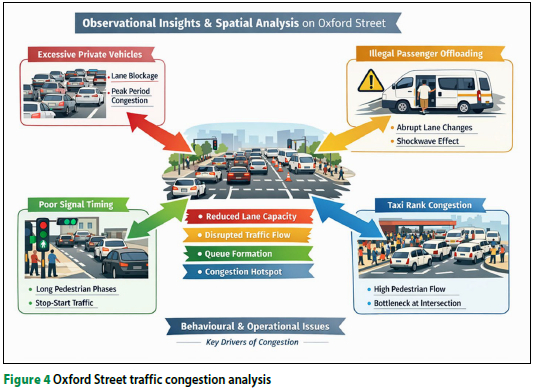
In addition, several intersections exhibited unsynchronised traffic signal operations, especially at locations with high pedestrian volumes. Field observations revealed extended pedestrian crossing phases that were not dynamically adjusted to vehicular demand, resulting in underutilised green time for vehicles. This condition contributed to stop-start traffic behaviour and uneven queue dissipation, as illustrated in Figure 4.
The spatial concentration of congestion near taxi ranks was particularly noticeable. Figure 4 also demonstrates how the proximity of a major taxi rank to a signalised intersection intensified congestion by combining high pedestrian flows, frequent taxi stopping, and limited carriageway width. Similarly, Figure 4 highlights the accumulation of excess private vehicles during peak periods, further increasing demand pressure on already-constrained road space.
The observational evidence reinforces the dominance of multi-agent interactions, including taxis, private vehicles, pedestrians, and traffic signals, in shaping congestion dynamics along Oxford Street. These interactions are consistent with the QFT framework, which conceptualises traffic flow as a probabilistic system sensitive to small disturbances. Minor behavioural disruptions, such as illegal stopping or signal non-compliance, were observed to trigger disproportionate congestion effects under peak demand conditions.
Spatially, congestion was not uniformly distributed along the corridor but was concentrated at intersections and activity nodes, particularly near taxi ranks. This spatial variability supports the application of probabilistic traffic-state modelling, as different locations along Oxford Street exhibit varying probabilities of transitioning between moderate and severe congestion states.
Overall, the observational insights validate the use of QFT as an analytical framework and provide empirical grounding for the recommended mitigation measures. Targeted interventions at identified hotspots, such as stricter enforcement near taxi ranks, adaptive pedestrian signal timing, and spatial separation of passenger loading areas, are likely to yield substantial congestion relief without extensive infrastructure expansion.
Multinomial logistic regression on traffic perception
A multinomial logistic regression analysis was conducted to examine the influence of age and employment status on respondents' perception of traffic volume along Oxford Street. The dependent variable was perceived traffic volume, categorised as disagree, neutral (reference category), and agree. Age group 55 years and above and unemployed respondents served as reference categories for the independent variables.
The regression results are presented in Table 1, including estimated coefficients (β), standard errors (SE), Wald statistics, p-values, and odds ratios [Exp(β)].
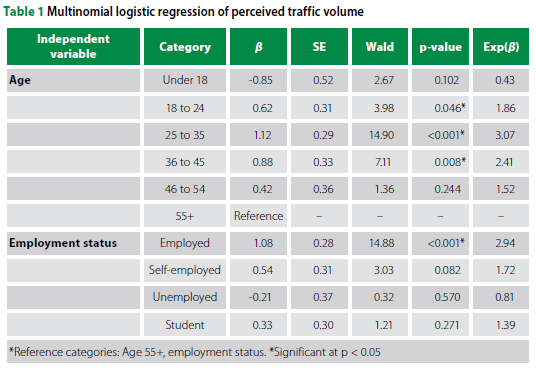
The regression results indicate that age and employment status significantly influence perceptions of traffic congestion along Oxford Street. Respondents aged 18 to 24, 25 to 35, and 36 to 45 were significantly more likely to perceive traffic volumes as high compared to respondents aged 55 and above. The strongest effect was observed for the 25 to 35 age group, where the odds of perceiving traffic as high were approximately three times greater than the reference category [Exp(β) = 3.07].
Similarly, employed respondents were nearly three times more likely to perceive traffic congestion as high compared to unemployed respondents [Exp(β) = 2.94, p < 0.001]. These findings reflect greater exposure to peak-period commuting, which aligns with congestion peak hours and the behavioural congestion drivers.
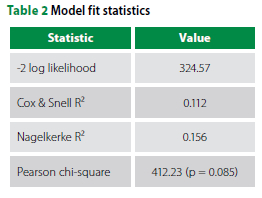
The model's explanatory power, as indicated by a Nagelkerke R2 of 0.156, suggests that approximately 15.6% of the variance in perceived traffic congestion is explained by demographic variables. While this represents a moderate level of explanatory strength, it also confirms that perceptions of congestion are influenced by additional factors, including traffic behaviour, operational inefficiencies, and spatial conditions, as captured through survey responses, field observations, and QFT-based interpretation.
From a QFT perspective, the regression findings support the probabilistic nature of congestion perception. Younger, economically active commuters are more frequently exposed to peak-period disturbances, thereby increasing their likelihood of transitioning into high-congestion traffic states. This reinforces the suitability of QFT as an analytical framework for capturing behavioural heterogeneity and non-linear congestion dynamics that are not fully explained by demographic variables alone.
Overall, the regression analysis complements the descriptive and observational findings, demonstrating that congestion along Oxford Street is not only a function of physical infrastructure but also of user exposure, behavioural patterns, and temporal demand variability.
Correlation analysis of congestion factors
A Spearman's rank correlation analysis was conducted to examine relationships among key congestion-related factors, including limited parking availability, illegal loading activities, on-street parking, and perceived high traffic volumes. The correlation coefficients are presented in Table 3.
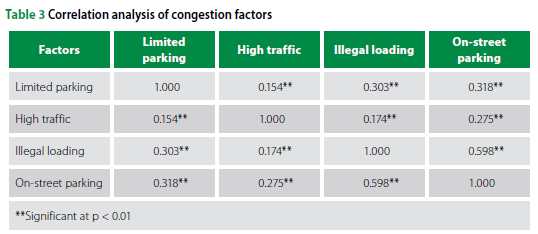
The analysis revealed a weak but statistically significant positive correlation between limited parking availability and perceived high traffic volumes (ρ = 0.154, p = 0.003). This suggests that parking scarcity is associated with increased congestion perception, although it is not the dominant driver of traffic delays.
A moderate positive correlation was observed between limited parking and illegal loading activities (ρ = 0.303, p < 0.001), indicating that insufficient formal parking and loading facilities encourage informal stopping behaviour. Similarly, limited parking was moderately correlated with on-street parking (ρ = 0.318, p < 0.001), reflecting spill-over effects in which drivers occupy traffic lanes or shoulders when designated parking is unavailable.
The strongest relationship identified was between illegal loading and on-street parking (ρ = 0.598, p < 0.001), representing a strong positive correlation. This finding highlights the interdependence of informal stopping behaviours and roadside parking practices in reducing effective road capacity.
Finally, on-street parking exhibited a moderate positive correlation with high traffic volumes (ρ = 0.275, p < 0.001), indicating that roadside parking contributes measurably to congestion, particularly during peak periods.
The correlation results reinforce earlier findings that parking-related behaviours play a critical role in congestion formation along Oxford Street, although they are not the sole cause of high traffic volumes. While the direct relationship between limited parking and congestion perception is relatively weak, the indirect effects mediated through illegal loading and on-street parking are substantial.
These findings align with observational evidence showing that illegal stopping near taxi ranks and informal loading zones frequently disrupts traffic flow. From a QFT perspective, such behaviours increase the probability of rapid transitions from moderate to severe congestion by introducing localised disturbances that propagate through the traffic system.
The strong association between illegal loading and on-street parking suggests that congestion mitigation should prioritise structured parking provision, designated loading zones, and strict enforcement, particularly during peak periods. By reducing informal stopping behaviour, these interventions can stabilise traffic flow and reduce the likelihood of congestion-state escalation.
Overall, the correlation analysis supports a targeted, behaviour-focused congestion management approach, complementing the demand management and operational strategies.
QFT for enhanced traffic management
QFT provides a probabilistic framework for modelling complex traffic interactions under congested conditions, where conventional deterministic traffic models often fail to capture behavioural variability and non-linear system responses. In the context of Oxford Street, QFT was applied as an analytical decision-support tool to enhance the interpretation of congestion dynamics and inform targeted traffic management interventions.
The empirical findings from the results and discussion section indicate that congestion along Oxford Street is time-dependent, behaviourally driven, and spatially concentrated near intersections and taxi activity zones. QFT complements these findings by representing traffic flow as a set of probabilistic traffic states, allowing for dynamic interpretation of congestion formation and dissipation during peak periods.
Within this framework, QFT supports several practical traffic management applications:
-
Adaptive signal timing during peak hours: By estimating the probability of congestion-state transitions, QFT-informed control logic can prioritise signal phases during morning and afternoon peaks, improving intersection discharge efficiency and reducing queue spillback.
-
Public transport scheduling and regulation: Probabilistic modelling enables the anticipation of congestion-sensitive periods for minibus taxis and buses, supporting better scheduling, regulated loading, and reduced interference with general traffic flow.
-
Vehicle routing and congestion forecasting: QFT enables short-term forecasting of congestion likelihood from observed disturbances, such as illegal stopping or increased pedestrian demand, enabling proactive traffic management responses.
-
Integration of private and public transport systems: By accounting for heterogeneous traffic agents, including private vehicles, taxis, buses, and pedestrians, QFT supports coordinated management strategies that reduce conflict between transport modes.
Rather than replacing behavioural, regulatory, or infrastructural interventions, QFT enhances their effectiveness by providing a probabilistic understanding of how small disturbances propagate through the traffic system. This aligns with the strong correlations identified between illegal loading, on-street parking, and congestion, as well as the public preference for operational and demand management measures.
Overall, the application of QFT demonstrates its value as a complementary analytical framework for managing congestion in mid-sized urban CBDs such as East London. By supporting adaptive, low-cost, and behaviour-sensitive interventions, QFT improves traffic flow efficiency without relying on extensive infrastructure expansion.
Integrated summary of congestion causes and interventions
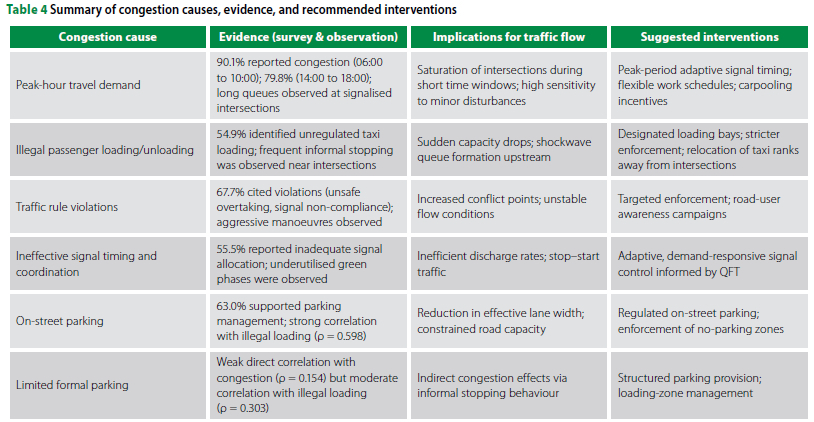
To synthesise findings from the results and discussion section, Table 4 consolidates the principal congestion causes identified through survey responses, field observations, and statistical analysis. The table links each cause to empirical evidence and corresponding mitigation strategies, providing an integrated interpretation of peak-hour patterns, behavioural and operational drivers, public preferences for interventions, and demographic influences on congestion perception.
As shown in Table 4, congestion along Oxford Street is predominantly driven by behavioural and operational factors rather than physical infrastructure constraints. This synthesis reinforces the results and supports prioritising adaptive, enforcement-supported, and demand-management interventions over large-scale capacity expansion.
Comparison of QFT with conventional traffic models
Conventional traffic flow models, such as the LWR model, treat traffic as a deterministic, continuous system governed by equilibrium relationships. While effective under stable conditions, these models are limited in their ability to capture behavioural heterogeneity, uncertainty, and abrupt congestion transitions typical of urban CBDs.
Microsimulation and agent-based models address some of these limitations by explicitly modelling individual vehicle interactions. However, they are data-intensive, computationally demanding, and highly sensitive to calibration, which constrains their applicability in secondary cities with limited data availability.
QFT offers a distinct alternative by modelling traffic as a probabilistic multi-state system. Rather than predicting a single outcome, QFT represents multiple traffic states, such as free flow, partial saturation, and congestion, coexisting with different probabilities. This enables direct representation of uncertainty and non-linear responses to small disturbances, such as illegal stopping or signal inefficiencies.
In this study, QFT provided decision-oriented insights for adaptive signal control and peak-period management without requiring full microscopic simulation. As such, QFT complements conventional models and offers a novel, context-appropriate analytical tool for congestion analysis in mid-sized African cities.
CONCLUSION
This study investigated and analysed traffic congestion at major intersections along Oxford Street in East London's CBD using a combination of survey data, field observations, statistical analysis, and QFT as an analytical framework. The findings demonstrate that congestion along the corridor is predominantly driven by behavioural and operational factors, including driver non-compliance, unregulated minibus taxi loading and unloading, and inefficient traffic signal timing, rather than by road surface conditions alone.
The results revealed a distinct bimodal congestion pattern, with noticeable morning and afternoon peak periods linked to commuting and school-related travel. Regression and correlation analyses confirmed that economically active and younger commuters were more likely to perceive traffic volumes as high, reflecting greater exposure to peak-hour congestion. Strong associations between illegal loading, on-street parking, and congestion further highlighted the role of regulatory and behavioural deficiencies in reducing effective road capacity. Field observations provided spatial validation of these findings, particularly near taxi ranks and signalised intersections with high pedestrian activity.
By applying QFT, the study demonstrated the value of a probabilistic approach to understanding congestion dynamics in complex, multi-agent urban traffic systems. QFT complemented conventional statistical analyses by capturing the sensitivity of traffic flow to small disturbances and explaining why congestion persists even under moderate traffic volumes.
From a policy and practice perspective, the results point to several priority interventions. First, adaptive traffic signalisation should be implemented at key intersections, using demand-responsive and probabilistic control logic to improve peak-period discharge efficiency. Second, strengthened traffic enforcement, particularly against illegal stopping, unsafe manoeuvres, and signal non-compliance, is essential to stabilise traffic flow during saturated conditions. Third, taxi management strategies, including formalised loading zones, regulated operating times, and the strategic relocation of taxi ranks away from signalised intersections, are critical to reducing recurrent capacity disruptions.
The study explicitly acknowledges several limitations. The empirical analysis was confined to three intersections along Oxford Street, which may limit spatial generalisation across the wider CBD. The sample size, while statistically adequate, was based on perception-based survey data that does not directly measure physical traffic parameters such as speed, delay, or density. In addition, QFT was applied as a conceptual and decision-support framework, rather than as a fully operational simulation model.
Future research should expand the spatial scope to include additional corridors and intersections, integrate continuous traffic counts and real-time sensor data, and combine QFT with microscopic or agent-based simulation platforms. Such integration would enable more precise calibration of probabilistic traffic states and allow real-time adaptive signal control to be tested under varying demand conditions. Further work could also examine institutional and enforcement capacity constraints affecting the implementation of traffic management strategies in secondary cities.
REFERENCES
Adewumi, J R, Allopi, D & Akinpelu, A A. 2020. Assessment of the causes and impacts of traffic congestion in urban road networks. International Journal of Transport Development and Integration, 4(2): 123-134. [ Links ]
Adusei, E & Twumasi, Y. 2022. Agent-based modelling of mixed traffic flow in urban African cities: A case study of Accra CBD. Journal of Transport and Land Use, 15(1): 455-472. [ Links ]
Akinyemi, F O, Ajiboye, A D & Adewumi, J R. 2020. Urban traffic congestion in Lagos: Causes, impacts and management strategies. Journal of Urban Management, 9(4): 420-433. [ Links ]
Festus, I A, Omoboye, I F & Andrew, O B. 2020. Urban sprawl: environmental consequence of rapid urban expansion. Malaysian Journal of Social Sciences and Humanities, 5(6): 110-118. [ Links ]
Hu, Q. 2020. Quantitative analysis of differences between Chinese and German libraries' subject services. Library Hi Tech, 38(2): 334-349. [ Links ]
Kariuki, P & Mwangi, J. 2018. Urban traffic congestion in Nairobi CBD: Causes and mitigation measures. International Journal of Transport and Infrastructure, 6(3): 45-56. [ Links ]
Kgwedi, M R. 2022. The economic and time impact of poor access to public transport in South African metropolitan areas. Doctoral dissertation. Stellenbosch University, South Africa. [ Links ]
Li, X & Chen, Y. 2022. Stochastic microscopic traffic simulation under congested urban conditions. Transportation Research Part C: Emerging Technologies, 138: 103612. [ Links ]
Mdoe, N S, Kibamba, A & Mfinanga, D A. 2021. Adaptive traffic signal control for congested urban intersections in Dar es Salaam. Journal of Transportation Engineering, Part A: Systems, 147(6): 04021029. [ Links ]
Mosadeghi, R & Fan, Y. 2020. Urban traffic congestion analysis in secondary cities. Transport Policy, 98: 1-10. [ Links ]
Muthoni, M & Wanyoike, D. 2019. Informal transport operations and congestion in African cities. African Journal of Transport and Logistics, 5(2): 67-81. [ Links ]
Njoroge, P, Kimani, J & Otieno, F. 2023. Stochastic demand-based signal optimisation for congested urban intersections in Nairobi. Journal of Traffic and Transportation Engineering, 10(2): 215-228. [ Links ]
Sibanda, M, Musakwa, W & Gumbo, T. 2021. Traffic congestion challenges in small and medium-sized African cities. Urban Transport Journal, 14(1): 25-39. [ Links ]
Sun, D, Zhang, Y & Li, Y. 2020. Agent-based modelling of heterogeneous traffic flow at urban intersections. Simulation Modelling Practice and Theory, 103: 102089. [ Links ]
Treiber, M & Kesting, A. 2018. Traffic flow dynamics: Data, models and simulation. 2nd ed. Berlin: Springer. [ Links ]
Yu, R & Abdel-Aty, M. 2021. Predicting traffic congestion using probabilistic and data-driven approaches. Transportation Research Part C: Emerging Technologies, 129: 103238. [ Links ]
Zhang, L, Liu, H & Wang, Y. 2021. Probabilistic cellular automata modelling of urban traffic congestion. Physica A: Statistical Mechanics and its Applications, 574: 126009. [ Links ]
 Correspondence:
S Magingxa
Central University of Technology, Free State
Private Bag X20539, Bloemfontein, 9300, South Africa
sikmrwetyana@gmail.com
S Abejide
Council for Scientific and Industrial Research
Meiring Naude Road, Brummeria, Pretoria, 0184, South Africa
sabejide@csir.co.za
E Theron
Central University of Technology, Free State
Private Bag X20539, Bloemfontein, 9300, South Africa
etheron@cut.ac.za
Z Smith
Central University of Technology, Free State
Private Bag X20539, Bloemfontein, 9300, South Africa
zventer@cut.ac.za

SIKELELA MAGINGXA (Pr Tech Eng) is a professional engineering technologist registered with the Engineering Council of South Africa. He holds a Master of Engineering in Civil Engineering and a Bachelor of Technology in Civil Engineering from Central University of Technology, a Postgraduate Diploma in Business Administration from University of the Free State, and a National Diploma in Civil Engineering from Walter Sisulu University. He is currently pursuing a Master of Public Administration at the University of the Free State. He is employed by Lubocon Civils as a Site Agent, where he is responsible for targeted enterprise development. His professional experience includes road infrastructure, construction management, and contract administration.

DR SAMUEL ABEJIDE is an Instructor at EMERIS and a Doctor of Engineering graduate from the Central University of Technology, Free State, South Africa. He holds a BEng and MSc in Civil Engineering. His research and teaching focus on smart transportation networks and systems, with expertise in sustainable road materials, warm mix asphalt, and recycled pavement technologies. Prof Abejide is actively involved in advancing intelligent transportation solutions and civil engineering education in South Africa. His work contributes to innovative infrastructure development and performance evaluation of transportation systems.

PROF ELIZABETH (LIZE) THERON is a Professor in Geotechnical Engineering in the Department of Civil Engineering at the Central University of Technology, Free State, South Africa. With over 35 years of experience, she holds a PhD and specialises in geotechnical engineering, soil mechanics, and sustainable road infrastructure solutions. Her work includes leading the award-winning Pothole Eradication Programme, recognised with the 2024 SANRAL SAICE National Award. Prof Theron is passionate about community-based engineering projects, concrete and materials testing, and mentoring the next generation of civil engineers in South Africa. ORCID iD: orcid.org/0000-0003-4588-9440

ZANDRI VENTER is a Lecturer in the Department of Civil Engineering at the Central University of Technology, Free State, South Africa. She holds a master's degree in civil engineering (2022) and is currently pursuing a PhD at Stellenbosch University, focusing on construction materials with a specialisation in masonry structures, including innovative applications involving artificial intelligence. She is registered as a candidate engineering technologist with the Engineering Council of South Africa and is an Associate Member of the South African Institution of Civil Engineers. Her research and teaching centre on sustainable construction materials, light masonry structures, and their performance in the South African context. ORCID iD: orcid.org/0000-0001-6059-6748