



Services on Demand
Journal

Article
 English (pdf)
 Article in xml format
 Article references

 Automatic translation
 Send this article by e-mail
Indicators
Related links
-
 Cited by Google
-
 Similars in Google
Share

 Permalink

Journal of the South African Institution of Civil Engineering
On-line version ISSN 2309-8775Print version ISSN 1021-2019
J. S. Afr. Inst. Civ. Eng. vol.68 n.1 Midrand Mar. 2026
https://doi.org/10.17159/2309-8775/2026/v68n1a4
TECHNICAL PAPER
Project management processes to enhance the delivery of Reconstruction and Development Programme (RDP) housing projects in Tshwane
K Cholo; JN Agumba; OJ Adebowale
ABSTRACT
The implementation of effective project management processes (PMPs) is critical to enhancing the delivery of construction projects. Despite its critical role in socio-economic development, Reconstruction and Development Programme (RDP) housing delivery in South Africa suffers from challenges, contributing to an increase in the housing backlog each year. This study aims to examine the current PMPs used in RDP housing projects and develop an effective strategy for improving the delivery of RDP housing projects. Data for this study was collected through semi-structured interviews with purposively sampled project managers in South Africa. Thematic analysis was used to analyse the research data. The study established that key PMPs, including project integration management, scope management, schedule management, cost management, and quality management, are implemented during RDP housing projects. While these essential PMPs are in place, the current challenges facing RDP housing delivery in South Africa suggest that certain issues undermine the effectiveness of these PMPs. The study obtained data from stakeholders to develop a framework for improved utilisation of PMPs to engender enhanced delivery of RDP housing projects. This framework integrates the Tshwane Department of Human Settlements, Water and Sanitation, institutional design, and project managers with PMPs to improve the outcome of RPD housing projects.
Keywords: Construction projects, housing, project management process, RDP houses, social infrastructure projects
INTRODUCTION
The Constitution of the Republic of South Africa affirms adequate housing as a basic human right (Oladeji et al 2023). Yet, despite this constitutional guarantee, the provision of housing remains a persistent global challenge (Hartono et al 2022). South Africa is no exception - as in many countries, households with limited or no income continue to face significant barriers to home ownership (Nicholas & Patrick 2015). These difficulties are rooted in the structural inequalities of the colonial period, which produced a housing deficit that endures to the present.
In response to this ongoing challenge, the democratic government in 1994 adopted a negotiated housing policy under the Reconstruction and Development Programme (RDP), with the clear aim of ensuring universal access to adequate housing (Cheruiyot & Ramantswana 2023). However, the implementation of the RDP has been constrained by systemic inefficiencies. Allocation processes have frequently been flawed, undermining the programme's intended impact. At the same time, rapid internal migration, particularly to the province of Gauteng, has placed additional pressure on housing provision. It is estimated that 300 000 people relocate to Gauteng annually in pursuit of improved economic opportunities, thereby increasing the demand on the City of Tshwane's Department of Human Settlements, Water and Sanitation (DHSWS), which is already tasked with addressing the housing needs of more than 1.2 million people (Oladeji et al 2023).
Beyond these demographic pressures, the housing backlog is exacerbated by relocation disputes, land transgressions, abandoned projects, and inadequate oversight of project operations. Scholars have also emphasised that, beyond the housing demand itself, inefficiency in project delivery constitutes a persistent obstacle in the implementation of RDP housing. Poor contractor performance, weak monitoring mechanisms, corruption, and limited project management capacity have resulted in abandoned projects, cost overruns, and substandard housing quality (Arrey 2016; Mbande 2010; Milford 2010). These project delivery deficiencies have compounded the housing backlog and underscore the urgent need to strengthen project management approaches in RDP housing projects.
The severity of the problem is evident in the City of Tshwane, where a backlog of 220 000 RDP houses, dating as far back as 1998, has resulted in the emergence of 183 informal settlements (Cheruiyot & Ramantswana 2023). Current projections further indicate a pressing demand for between 18 000 and 30 000 new residential units, inclusive of both affordable and social housing. This situation highlights the need for more effective mechanisms of delivery. One avenue for addressing these deficiencies lies in the systematic application of project management processes (PMPs). PMPs are designed to support the structured planning, coordination, and implementation of projects. However, their adoption in practice has often proved challenging, largely because project managers must simultaneously navigate human, financial, and technical complexities (Oladeji et al 2023). Successful application depends on the establishment of a clear project plan that provides direction and coherence throughout the life cycle of the project. Nevertheless, variations frequently occur as projects advance, particularly when the strategic objectives of senior management diverge from the operational goals set by lower-level managers (Gray & Larson 2003).
Empirical evidence suggests that PMPs can enhance the efficiency and effectiveness of project delivery (Shrivastava 2015; Kenneth 2014). They have been applied successfully across diverse infrastructure projects, including transport systems (Safapour et al 2020) and public buildings (Fageha & Aibinu 2014). Despite these successes, there is a noticeable absence of research examining their application in the context of RDP housing. Consequently, this study seeks to develop a framework that could enhance the delivery of RDP housing projects in South Africa through empirical investigation. Its central aim is to critically examine the PMPs currently employed in RDP housing initiatives and to formulate a context-specific framework for their more effective application. To achieve this aim, the study pursues two objectives: (1) to identify and analyse the existing PMPs in RDP housing projects, and (2) to propose a contextually appropriate framework that strengthens their implementation while addressing identified shortcomings. The subsequent section reviews relevant literature, beginning with an overview of the South African construction industry as a key stakeholder in RDP housing provision, followed by an examination of PMPs reported in previous studies. The methodology section then outlines the research approach, while the findings and conclusions are presented in the later sections.
LITERATURE REVIEW
Overview of the South African construction industry
The construction sector plays a central role in national development by providing essential infrastructure and housing. It brings together diverse firms in temporary, multifunctional collaborations to deliver projects such as roads, buildings, and, specifically, RDP housing (Kamara et al 2002; Rasebotsa et al 2024). In South Africa, the industry is highly diversified, with building construction and civil engineering forming its dominant branches (Windapo & Cattell 2013). As in other contexts, the sector contributes significantly to socio-economic development by enabling infrastructure provision, generating employment, and advancing social transformation (Cheruiyot & Ramantswana 2023). Institutional mechanisms have also been established to regulate and strengthen the industry. The Construction Industry Development Board, created in 2000, plays a pivotal role in ensuring the involvement of qualified contractors in RDP housing projects. It offers an integrated development framework for the sector, monitors industry performance, and grades contractors based on their capacity to execute specific categories of work, thereby safeguarding competence and quality in service delivery (CIDB 2014; Oladeji et al 2023).
The economic importance of the construction industry is widely acknowledged. As Wibowo (2019) observes, it contributes to national growth by creating jobs, supporting other productive sectors through infrastructure provision, increasing gross domestic product, and meeting basic social needs such as housing. Nevertheless, recent statistics indicate job losses in South Africa's construction sector (Stats SA 2022), underscoring the need for sustainable projects such as RDP housing to stabilise employment and stimulate economic activity. Despite these challenges, the government has identified construction as a strategic sector with the potential to drive economic development and improve living standards (Didiza 2018). RDP housing in particular represents a major opportunity for job creation, skills development, and broader socio-economic transformation.
The industry, however, has also been subject to criticism. Scholars point to recurring weaknesses such as poor contractor performance, inadequate project oversight, and inefficiencies in delivery (Chen et al 2022; Desalegn & Gangadhar 2021; Nguyen et al 2021; Makhene & Twala 2019; Rameezdeen et al 2017; Chan & Connolly 2006). Nevertheless, its participation in RDP housing can serve as a catalyst for positive change, provided that qualified contractors are engaged, local labour is prioritised, and best practices are consistently applied. Through these measures, the industry can help ensure the effective delivery of housing projects that meet social needs while advancing national development objectives.
Despite the acknowledged contribution of the construction sector to housing delivery, numerous studies have documented recurring challenges undermining project outcomes in South Africa. These include cost overruns, delays, substandard quality of delivered houses, and frequent project abandonment (Windapo & Cattell 2013; Loosemore & Bridgeman 2017; Chen et al 2022). Similar challenges are evident in other developing contexts. For example, studies in Kenya (Othman & Abdellatif 2011), India (Hartono et al 2022), and Brazil (Baptista et al 2016) reveal recurring problems such as weak governance, poor contractor performance, and cost overruns in public housing programmes. Extending this comparison, Nhat and Hoang (2025) provide a comprehensive global analysis of affordable housing strategies across diverse settings, underscoring how varying regulatory and financial frameworks shape outcomes in both developed and developing nations, including South Africa. Comparative studies focusing on reconstruction efforts, such as those in post-disaster regions of India (Tiwari & Shukla 2022), emphasise that success hinges on robust institutional mechanisms and effective project management implementation, particularly for stakeholder management. Research contrasting housing provision in Central and Eastern European second-tier cities also highlights complexities arising from multi-scalar processes and market dynamics, creating persistent affordability gaps (Kajdanek et al 2025). These parallels strengthen the argument that the South African RDP experience reflects a broader global pattern, underscoring the importance of adapting PMPs to context-specific realities. Specific to RDP housing, problems such as weak governance structures, insufficient oversight, and poor integration of project management methodologies have been identified as major barriers to effective delivery (Arrey 2016; Mbande 2010). These shortcomings therefore constitute a critical constraint to the success of RDP housing projects and demonstrate the urgent necessity for contextually tailored project management strategies capable of overcoming these systemic deficiencies.
Project management processes
A stakeholder is defined by the Project Management Institute (PMI 2017) as "people, groups, or organisations that may have an impact on or be impacted by the project." Project stakeholders include clients, project team members, senior managers, and employees from various divisions of the performing and financing organisations (Bourne & Walker 2006). Stakeholder management is a vital aspect of project management, as emphasised in the Tasmanian Government Project Management Guidelines (Department of Premier and Cabinet 2011). Its goal is to reconcile differing perspectives, foster engagement, and align expectations to ensure that project objectives are achieved. Several studies in the construction industry have explored this area. Karlsen (2002) identified six steps in stakeholder management, including planning, identification, analysis, communication, action, and follow up, while Olander (2006) underscored the importance of gathering information, determining stakeholder missions, and managing strategies. Young (2006) highlighted the value of understanding stakeholder influence, whereas Bourne and Walker (2006) emphasised prioritisation and the development of engagement plans. Jepsen and Eskerod (2009) further stressed that trust building and expectation management are central to ensuring stakeholder contributions to project success. Effective stakeholder management thus provides the foundation upon which scope definition can be negotiated and controlled.
Project scope management builds directly on this foundation, as the clarity of scope is heavily dependent on the extent to which stakeholders reach consensus. Scope management involves defining and controlling a project's objectives and deliverables by setting boundaries and mapping activities (PMI 2017; Hartono et al 2022). Weak or contested scope definitions often lead to scope creep, a recurrent challenge in construction that results in both cost and time overruns (Shirazi & Keivani 2017). Avantika (2017) outlines six processes central to scope management, including scope planning, requirements collection, definition, work breakdown structuring, validation, and control. Proper scope management reduces risks of unplanned changes (Loh 2009), yet when inadequately handled, it destabilises subsequent processes such as scheduling, which depends on the certainty of deliverables and activity sequencing.
Closely tied to scope, schedule management is critical to coordinating project tasks, managing resources, and sequencing activities to minimise delays and overruns (Bowen et al 2012). Hyvari (2016) emphasised that schedule planning requires accurate determination of task durations and sequencing, while Mubarak (2010) stressed its role in balancing timelines with cost and resource requirements. Tools such as Gantt charts are frequently used to represent project schedules and critical stages (Beleiu et al 2015). However, unrealistic scheduling or changes triggered by unstable scopes can lead to persistent delays, which in turn have direct financial consequences. Cost management is therefore inseparable from schedule management. It focuses on estimating, budgeting, and controlling costs to ensure that projects are delivered within approved financial limits (PMI 2017). Accurate estimation techniques, ranging from preliminary to final cost forecasts are crucial (Schwabe 2015), while cost control during implementation ensures expenditures remain aligned with budgets (Adjei 2017). Schedule slippages, however, often escalate costs, revealing how weaknesses in scope and scheduling inevitably strain cost management systems.
Equally important are quality and communication management, which cut across all phases of project execution. Quality management ensures that project deliverables satisfy stakeholder needs and conform to established standards. It encompasses quality planning, control, and assurance, supported by activities such as documenting requirements, monitoring processes, and conducting audits (Zafarani 2011). Sustained attention to quality has been shown to improve project outcomes and adherence to standards (Chauhan et al 2023). Communication management complements this by ensuring effective exchange of information among project participants. It entails planning, managing, and controlling communication processes to guarantee that information is transmitted clearly, accurately, and in a timely manner (PMI 2017). Effective communication systems establish procedures for data flow and strategies for corporate communication (Hala 2018), enabling stakeholders to remain engaged and informed throughout the project life cycle (Mnkandla 2013). Failures in communication frequently undermine quality delivery, demonstrating the interdependence of these two management areas.
Resource and risk management further reinforce project success. Resource management ensures that human, financial, and material inputs are allocated and utilised efficiently to support timely and cost-effective delivery (Ameh & Daniel 2017; Raja & Murali 2020). This includes managing personnel, equipment, and technical capacities to keep projects on track (Maruthi et al 2015). Risk management, by contrast, addresses the uncertainties inherent in projects, involving systematic processes of identification, analysis, and response (PMI 2017). Fone and Young (2005) outline key processes such as risk appraisal, governance, financing, and strategy development, while Hillson and Simon (2007) argue that effective risk management not only mitigates threats but also leverages opportunities. Continuous evaluation and control are therefore necessary throughout the project life cycle to limit disruptions (Van Well-Stam 2004).
From the reviewed literature, it is evident that while the Project Management Institute (PMI) processes - covering integration, scope, schedule, cost, quality, communication, resource, and risk management - are well established in the construction industry, their application within RDP housing projects has not been adequately contextualised. The challenges identified in housing delivery, such as delays, cost overruns, and abandoned projects, point to shortcomings in the effective implementation of these processes in the South African context. This gap underscores the importance of developing strategies and a framework that adapt PMPs to the unique institutional and socio-economic conditions of RDP housing delivery. Accordingly, this study is motivated by the need to bridge this gap by examining current practices and proposing a contextually relevant framework to enhance project delivery.
RESEARCH METHODOLOGY
Research philosophy
Research philosophy concerns the assumptions that guide how knowledge is generated in different fields of study (Saunders et al 2019). The main philosophical traditions include positivism, critical realism, inter-pretivism, pragmatism, and postmodernism. These are shaped by three underlying assumptions: ontology, epistemology, and axiology (Saunders et al 2019). Ontology refers to assumptions about the nature of reality (Scotland 2012); epistemology addresses how knowledge is acquired and understood (Kivunja & Kuyini 2017); while axiology considers the role of values and ethics in research (Finnis 2011).
This study adopted an interpretivist stance, which emphasises understanding participants' lived experiences and their meanings within specific cultural and institutional contexts (Ryan 2018). Interpretivism values engagement with research participants as a means of generating knowledge (Chowdhury 2014). To support this philosophical position, an inductive approach was used, as it allows theory to emerge from patterns observed in empirical data (Saunders et al 2019).
Research justification and gap
Extant literature highlights that public housing projects in South Africa often experience delays, cost overruns, and quality deficiencies due to inadequate implementation of PMPs (Oladeji et al 2023; Love & Ika 2022; Windapo & Goulding 2013). Commonly cited causes include inconsistent integration management, insufficient stakeholder engagement, and limited adherence to schedule and cost control mechanisms. The findings from this study corroborate these issues, as interviews with Tshwane DHSWS project managers revealed similar challenges in applying PMI processes, particularly in integration, stakeholder, and communication management. This convergence of literature and empirical data underscores the critical need for structured project management interventions, justifying the development of a tailored framework that formalises institutional design, governance structures, process manuals, and capacity development to improve RDP housing project performance. In addition, the studies by Oladeji et al (2023), Love and Ika (2022), and Windapo and Goulding (2013) indicate that while standard PMPs exist, they are inconsistently applied in practice, leading to poor integration, inadequate stakeholder engagement, and limited adherence to schedule and cost control mechanisms. The convergence of these literature findings with empirical data from interviews underscores the urgent need for structured interventions that formalise institutional design, establish governance frameworks, provide process manuals, and enhance project management capacity. This synthesis provides a clear justification for investigating how PMI-defined processes are opera-tionalised within RDP housing projects and for developing a context-specific framework to improve project performance.
Research design and data collection
A qualitative research design was adopted to capture the perspectives of project managers directly involved in RDP housing delivery. Semi-structured interviews were employed, as they allow researchers to follow a structured guide while probing for additional insights (Yin 2003). All interviews were conducted in English and held virtually via Microsoft Teams. Audio recordings and automatic transcripts generated by the platform ensured accuracy in capturing participants' responses. The target population comprised project managers within the DHSWS in Tshwane. A purposive non-probability sampling strategy was employed, which is appropriate for qualitative research and enables the selection of participants with direct expertise relevant to the study (Ryan & Bernard 2003; Fugard & Potts 2014).
The inclusion criteria required that participants had direct experience in managing RDP housing projects within the DHSWS in Tshwane and held either a managerial or technical supervisory role in such projects. This ensured that only individuals with relevant and practical insights were engaged. Data saturation was monitored during the interview process by reviewing recurring responses and thematic repetition across interviews. After the 12th interview, no new themes emerged, confirming that saturation had been reached, consistent with Braun and Clarke (2016). The semi-structured interview questions focused on: (i) the PMPs currently employed in RDP housing projects, (ii) challenges encountered in their application, and (iii) strategies for improving the use of PMPs. This structure guided the analysis and provided the basis for developing the themes presented in Table 3. In total, 12 project managers were interviewed, which aligns with the minimum recommended sample size for qualitative research to achieve saturation (Braun & Clarke 2016).
Data analysis
The recorded interviews were transcribed and analysed using thematic analysis to identify key patterns and themes. Thematic analysis allowed the researcher to code and categorise data in a systematic manner, ensuring alignment between the research objectives and participants' responses (Braun & Clarke 2016). Transcripts were reviewed against the recordings to confirm accuracy and avoid omission of important details. To enhance the trustworthiness and reliability of the qualitative analysis, the data coding process was validated. This involved conducting inter-coder reliability checks on a sample of three transcribed interviews. The high level of consistency achieved ensured the stability and objectivity of the thematic analysis. Triangulation was achieved by cross-referencing findings from the interview data with insights from the existing studies on RDP project failures, strengthening the internal validity of the study.
Ethical clearance and informed consent
Ethical considerations were fully observed in accordance with the institution's guidelines. Formal ethical clearance was obtained from the Tshwane University of Technology Research Ethics Committee (reference number FCRE2021/11/005-EBE) before the commencement of data collection. Participants were informed of the purpose of the study, assured of confidentiality, and provided informed consent before the interviews. All recordings and transcripts were de-identified immediately after analysis to ensure no finding could be traced back to an individual or specific RDP project.
DISCUSSION OF THE RESEARCH FINDINGS
Demographic profile of respondents
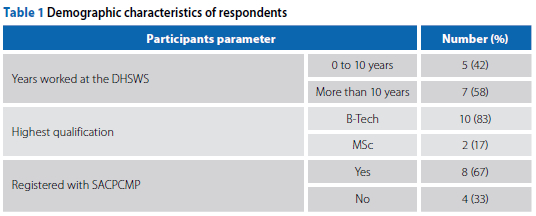
Table 1 shows the demographic profile of the respondents. Seven respondents, representing 58% of the total participants, reported that they had worked in the Department for more than 10 years, compared to five participants who represented 42% of the respondents. Ten respondents, or 83% of the total participants, stated that their highest qualification was a B-Tech degree, six of which were in construction management and four in project management. Only two participants (17%) mentioned that their highest qualification was a master's degree. Four participants (33%) said they had not registered with the South African Council for Project and Construction Management Professions (SACPCMP), whereas eight participants (67%) indicated they were registered with SACPCMP.
Project management processes used in RDP housing projects
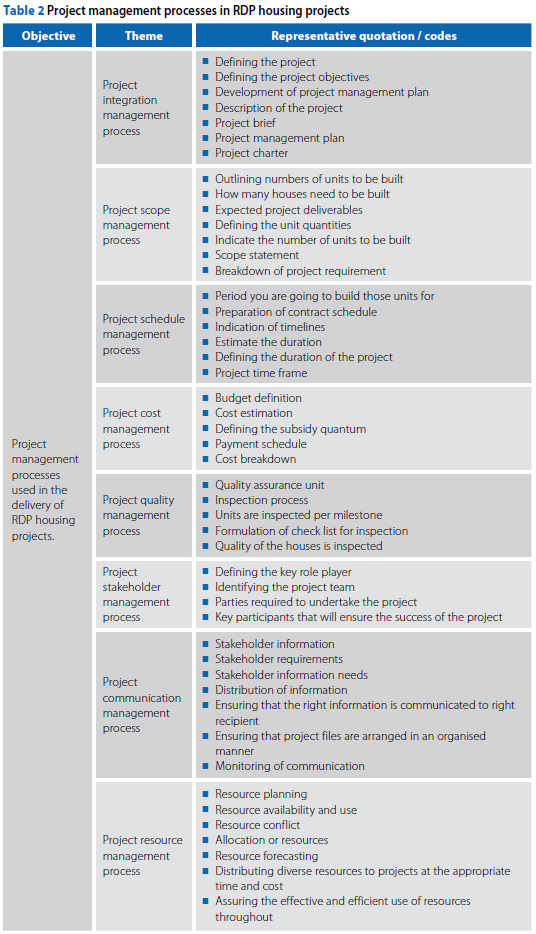
The analysis of interview data generated key themes concerning the application of PMPs in the delivery of RDP housing projects. These findings, summarised in Table 2, directly address the first research objective by identifying overarching themes and their subcategories. The structured presentation facilitates interpretation of how PMPs are applied within this context.
Participants identified the processes employed in RDP housing projects, which broadly align with the knowledge areas defined by the PMI (2017). Although these processes are consistent with the knowledge areas defined by the PMI (2017), the significance of the findings lies in how they are applied, adapted, or in some cases insufficiently implemented within the RDP housing context. Rather than introducing entirely new processes, this study highlights the extent to which standard PMPs are operationalised in RDP housing delivery and identifies contextual gaps undermining their effectiveness. This provides a basis for understanding the misalignment between established methodologies and the realities of public housing projects in South Africa. The analysis revealed that PMI processes are applied with varying consistency in RDP housing projects. Cost and quality management were generally well structured and formalised, indicating strong procedural adherence. In contrast, integration management, stakeholder engagement, and communication processes were inconsistently applied, often informal, and in some cases reactive rather than proactive. These gaps directly informed the development of the proposed institutional design framework, as they highlighted the need for standardised documentation, formal governance structures, and capacity development to ensure all PMI processes are systematically applied throughout project life cycles. Table 3 demonstrates how specific deficiencies in process application are linked to strategically designed improvement strategies, providing a clear rationale for the framework components.
Previous studies similarly show poor performance in public housing projects manifested in cost overruns, schedule delays, and compromised quality to weak application of PMPs (Love & Ika 2022; Loosemore & Bridgeman 2017; Oladeji et al 2023). While formal frameworks exist, their inconsistent or ad hoc use undermines project outcomes. The literature further highlights persistent challenges such as inadequate process integration, limited stakeholder engagement, and insufficient managerial capacity (Nguyen 2007; Baptista et al 2016; Oladeji et al 2023). This study's findings corroborate these observations: participants consistently reported weaknesses in integration management, scope definition, schedule adherence, and stakeholder engagement. Synthesising these perspectives confirms that the central limitation is not the absence of formal frameworks, but their inconsistent application and insufficient adaptation to the DHSWS context.
Semi-structured interviews provided some insights into these shortcomings. While cost and quality management demonstrated structured implementation, integration and stakeholder management were typically informal or inconsistently applied. Respondents also emphasised the absence of formalised manuals, inconsistent governance structures, and limited capacity within the department. These insights not only reinforced the literature but also informed the development of a tailored institutional design framework to optimise project management in RDP housing delivery.
Thematic analysis further clarified these findings. Coding was used to label recurring concepts in the transcripts (Braun & Clarke 2016). References to "manuals," "frameworks," and "capacity development" were coded and later clustered into broader themes such as governance and project management skills. Similarly, repeated mentions of "lack of training" and "inexperienced contractors" were initially coded as "capacity gaps" and subsequently grouped into the theme of project management skills. In this way, the coding process transformed descriptive accounts into structured themes, ensuring that the proposed solutions were grounded in participant testimony.
As a result, eight key themes emerged: integration management, scope management, schedule management, cost management, quality management, stakeholder engagement, communication management, and resource management. These themes capture both the strengths and deficiencies in PMP application and provide the empirical foundation for the improvement strategies detailed in Table 3.
Integration management
Project integration management, as defined by the PMI in the Guide to the Project Management Body of Knowledge (Sixth Edition) (PMBOK), is central to ensuring that project components function cohesively. Effective integration is indispensable for successful project delivery (Demirkesen & Ozorhon 2017). Interviews revealed that the DHSWS lacks formalised documentation and standardised procedures. While one respondent noted reliance on ad hoc practices, such as developing a business case and project charter, research demonstrates that structured integration enhances communication, reduces risks, and promotes consistency (Lalmi et al 2021). Nonetheless, studies by Nguyen (2007) and Baptista et al (2016) caution that rigid methodologies are often difficult to implement in developing contexts. Consequently, adapting existing approaches to the realities of RDP housing delivery may be more effective than direct adoption of standardised models. Integration management establishes the foundation for other processes, particularly scope management, as clearly defined project objectives depend upon coherent integration strategies.
Scope management
Scope management ensures that project activities remain aligned with defined objectives and prevents uncontrolled changes that may result in delays or cost overruns (Amhana & Thomas 2024). Interviews revealed that in RDP housing projects, scope definition typically begins during the initiation phase through internal memorandums specifying the intended number of units. While this provides a basic outline, formal scope management requires detailed documentation, including deliverables, limitations, and acceptance criteria (PMI 2017). Expanding scope definition beyond internal directives can strengthen outcomes. Research suggests that involving stakeholders, particularly beneficiary communities, during the early stages leads to housing designs that better meet user needs and reduces the risk of dissatisfaction or subsequent conflict (Othman & Abdellatif 2011). Clear scope definition builds on integration management, forming the basis for effective schedule planning and resource allocation.
Schedule management
Schedule management is critical to the timely and cost-effective delivery of housing projects. Delays often escalate costs and compromise project outcomes (Love & Ika 2022). The interviews indicated that scheduling in RDP housing projects commonly involves setting milestones such as foundations, wall plates, roofs, and final completion. While such milestones provide a useful framework, advanced techniques like the Critical Path Method or the Program Evaluation and Review Technique can more effectively identify activities that directly affect project timelines (PMI 2017). Project managers play a central role in ensuring adherence to schedules, which entails establishing a baseline plan, aligning it with contractors' schedules, and monitoring progress throughout the project life cycle (PMI 2017; Solis-Carcano et al 2015). Tools such as Earned Value Management facilitate early identification of potential delays, allowing timely corrective actions. A well-defined schedule ensures that scope objectives are achievable within the planned timeframe, providing a temporal structure that supports stakeholder management and resource coordination.
Stakeholders management
Stakeholder management is increasingly recognised as a decisive factor in the success of construction projects, including RDP housing initiatives (Windapo & Goulding 2013). Stakeholders encompass individuals and groups who influence or are affected by the project. Interviews identified key actors in RDP housing delivery, including beneficiaries, the City of Tshwane municipality, ward councillors, project steering committees, community liaison officers, contractors, the National Home Builders Registration Council, the Professional Resource Team, and the DHSWS itself. Current practice often limits engagement to councillors and liaison officers. However, research indicates that direct involvement of beneficiaries yields better outcomes (Oladeji et al 2023). Approaches such as workshops, surveys, and focus groups ensure that housing projects reflect community needs while reducing potential conflict. Although large bi-weekly meetings remain common, smaller working groups and tailored communication channels aligned to stakeholder roles and project phases can promote more effective collaboration. Effective stakeholder engagement builds on integration, scope, and schedule management, ensuring that all key actors are aligned and committed to achieving project objectives.
Cost management
Cost management is fundamental to the success of construction projects, including RDP housing initiatives, as cost overruns directly affect delivery outcomes and limit the number of units provided (Loosemore & Bridgeman 2017). Interviews indicated that cost control in RDP housing projects often relies on a fixed subsidy, disbursed according to milestones such as foundations, wall plates, roofs, and final completion. While this model provides a basic framework, studies highlight the limitations of fixed-price contracts, particularly their lack of flexibility to accommodate unforeseen challenges (Love & Ika 2022). Project managers may therefore adopt additional tools to strengthen financial oversight. Earned value management allows for continuous comparison of budget and progress, enabling early detection of variances and corrective intervention (PMI 2017). Cost management is reinforced by integration, scope, schedule, and stakeholder alignment, ensuring financial resources are appropriately allocated and monitored throughout the project life cycle.
Quality management
Quality management ensures that housing units meet technical standards while providing long-term value for beneficiaries. High-quality construction improves resident satisfaction, reduces maintenance costs, and extends the durability of housing stock (Loosemore & Bridgeman 2017). Interviews revealed that quality control in RDP projects is achieved through a collaborative framework. The DHSWS's Quality Assurance Unit conducts inspections at key stages to ensure compliance with material and workmanship standards. The Professional Resource Team provides technical expertise and certifies milestone completion, while the National Home Builders Registration Council performs final inspections to verify regulatory compliance. Project managers coordinate these diverse actors to maintain quality standards. Metrics such as defect rates and rework levels provide objective measures of performance (Barth & Formoso 2021). Quality management complements integration, scope, schedule, cost, and stakeholder processes, ensuring that project outputs meet defined standards and satisfy beneficiary needs.
Communication management
Communication management underpins collaboration across stakeholders and is essential for achieving project goals. Clear, consistent communication reduces misunderstandings and ensures alignment with project objectives (Muszynska et al 2015). Interviews showed that the DHSWS employs a layered communication structure. Internally, project managers participate in cluster and regional meetings to discuss contractual issues and project progress. Bi-weekly site meetings involve contractors, professional resource teams, and managers to review on-site progress and resolve emerging issues. Reporting practices, including weekly progress reports and monthly, quarterly, and completion reports, provide oversight for the directorate. Communication also extends externally, with community meetings and information flyers to keep beneficiaries informed (Ewing et al 2019). Clear contractual communication with contractors ensures timely delivery. Communication management integrates and reinforces all other processes, ensuring that information flows support coordinated decision making, stakeholder engagement, and effective project execution.
Resource management
Resource management encompasses the planning, acquisition, and utilisation of financial, human, material, and equipment resources throughout the project life cycle (Arrey 2016). Interviews indicated that RDP housing projects are funded primarily through provincial allocations, necessitating effective budgeting and expenditure monitoring. Human resources, including project managers, engineers, contractors, and skilled workers, provide technical and managerial capacity, supported by the Professional Resource Team. Timely procurement of construction materials and scheduling of machinery such as excavators and concrete mixers are critical to avoid delays (Love & Ika 2022). Managing both contractor personnel and beneficiary stakeholders further emphasises the dual human resource dimension in RDP projects. Effective resource management consolidates integration, scope, schedule, stakeholder, and cost processes, ensuring that all resources are optimally allocated to efficiently achieve project objectives.
Strategies to improve the use of project management processes
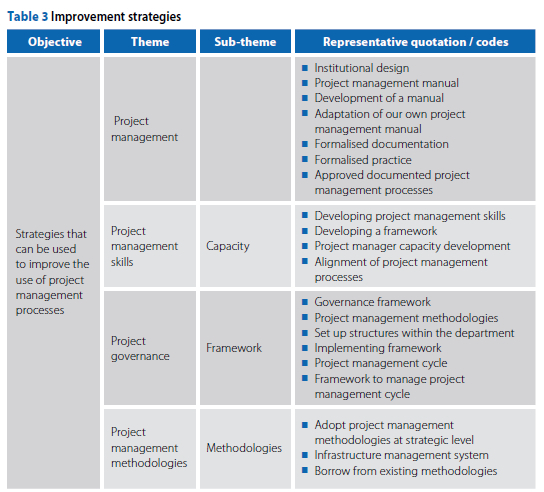
Effective PMPs constitute the foundation for successful project delivery by guiding planning, execution, and completion. Their optimal implementation is often hindered by challenges that generate inefficiencies, delays, and cost overruns. To overcome these barriers and maximise the benefits of project management practices, strategies must be formulated to strengthen their application within organisational settings. This section addresses the study's second objective by presenting strategies to enhance the DHSWS's use of PMPs in RDP housing projects. Four themes emerged from the interviews: project management, project management skills, project governance, and project management methodologies. A distinction is drawn between PMPs and methodologies. PMPs refer to the standardised knowledge areas and activities defined by the PMI (2017), including integration, scope, cost, and quality management, which are operationalised during project execution. In contrast, project management methodologies are structured frameworks adopted to guide the application of these processes, such as PMBOK, PRINCE2, or Agile-based systems. While processes define what is done, methodologies determine how it is done. This distinction is critical because, although many PMI processes are recognised, the absence of consistent or context-appropriate methodologies limits their effective application in RDP housing projects.
The interviews were guided by questions aligned with the research aim and objectives. Participants were asked to describe the PMPs applied in RDP housing projects, reflect on challenges or shortcomings in their application, and propose strategies for improving project outcomes. The thematically coded responses provided the evidence base for addressing Objective 1 (identifying current PMPs) and Objective 2 (developing strategies for improved delivery). Results indicated that while project managers were aware of PMI-defined processes such as integration, scope, schedule, cost, quality, stakeholder, communication, and resource management, their application varied considerably. Cost and quality management were generally structured and formalised, whereas integration, stakeholder, and communication management were inconsistently applied. The first theme, project management, highlighted the need for an overarching institutional design to embed project management as a core function of the DHSWS. By formalising processes and developing standardised manuals, the Department can ensure consistent application of PMI-defined processes across all RDP housing projects. These measures also support the establishment of governance structures that reinforce accountability and oversight, promoting the sustainable adoption of project management practices.
The second theme, project management skills, emphasised building staff capacity to implement processes effectively. Recurring observations, such as the lack of manuals and capacity gaps, revealed that technical competencies remain underdeveloped. Structured training and professional development are necessary to address performance weaknesses and ensure personnel can consistently and efficiently apply PMPs.
The third theme, governance, underscored the necessity of formal structures to guide decision making, coordination, and oversight. Respondents identified informal governance practices as a limiting factor in process implementation. Establishing clear governance mechanisms, including reporting lines, decision-making protocols, and standardised procedures, can mitigate these shortcomings and provide a stable institutional foundation for project activities.
Finally, the theme of project management methodologies indicated that while processes are recognised, their effective operationalisation requires structured frameworks that contextualise global standards for local application. By integrating methodologies such as PMBOK or PRINCE2, adapted to the RDP housing environment, the DHSWS can ensure that processes are both acknowledged and consistently applied across projects.
These four themes inform the development of a context-specific framework addressing both the structural and operational needs of the DHSWS. Table 3 illustrates the link between deficiencies in PMI process implementation and specific strategies, showing how institutional design, project management manuals, governance structures, and skills development collectively strengthen project management outcomes.
According to Table 3, the DHSWS must institutionalise project management as a core function and formalise it as a standard practice. The preceding analysis of PMI processes revealed inconsistencies in integration, stakeholder engagement, and resource management, highlighting the need for structured interventions. This necessitates the development and approval of documented PMPs that all project managers within the Department are obliged to follow. Developing institutional capacity is essential, encompassing not only the staffing of positions but also the cultivation of project management competencies specifically tailored to housing projects and human settlement initiatives. Project management in the public sector requires an understanding of sector-specific regulations, which distinguishes it from project management in other contexts.
A governance framework should guide the planning and execution of housing and human settlement projects. By connecting the earlier observations on gaps in process application, this framework ensures that project life cycles are consistently managed and that lessons from inconsistent PMI process use are addressed. Such a framework enables the department to develop project management methodologies, create manuals, and establish structures that ensure project life cycles are effectively managed. At the strategic level, the Department could implement an Infrastructure Delivery Management System analogous to those employed by provincial and national governments (Rasebotsa et al 2025). This system functions as a comprehensive project management methodology, cascading through all directorates to the project management sector, thereby standardising procedures for RDP housing projects. Drawing on established frameworks, such as the PRINCE2 methodology introduced by the Treasury, can further enhance the systematic application of PMPs within the Department.
As a public institution, the DHSWS should adopt a framework specifically tailored to housing projects and their regulatory environment. Such a framework builds on the insights from the PMI process analysis, providing a structured approach to planning, execution, and monitoring that addresses previously identified gaps. It facilitates the structured implementation of PMPs, supporting project managers in the effective planning, execution, and delivery of projects. To maintain efficacy, project managers must continuously evaluate and adapt project management strategies. Further research into approaches that may enhance project managers' effectiveness and the success of their initiatives is recommended, ensuring that PMPs are appropriately aligned with broader organisational strategy (Agyekum-Mensah & Knight 2017).
The interviews provided detailed insights into the current application of PMPs within the DHSWS. Participants highlighted areas where PMI processes were inconsistently applied, such as integration management, stakeholder engagement, and resource allocation. They also emphasised the need for formalised documentation, process manuals, and capacity development to strengthen project delivery. These findings directly informed the development of the proposed framework, addressing the research aim of enhancing the utilisation of PMPs in RDP housing projects. By synthesising participant experiences, the study identified both strengths, such as structured cost and quality management, and weaknesses, including informal governance and limited stakeholder engagement, thereby providing a practical basis for the framework components of institutional design, project management manuals, governance structures, and skills development.
Proposed framework for optimising PMPs in RDP housing projects
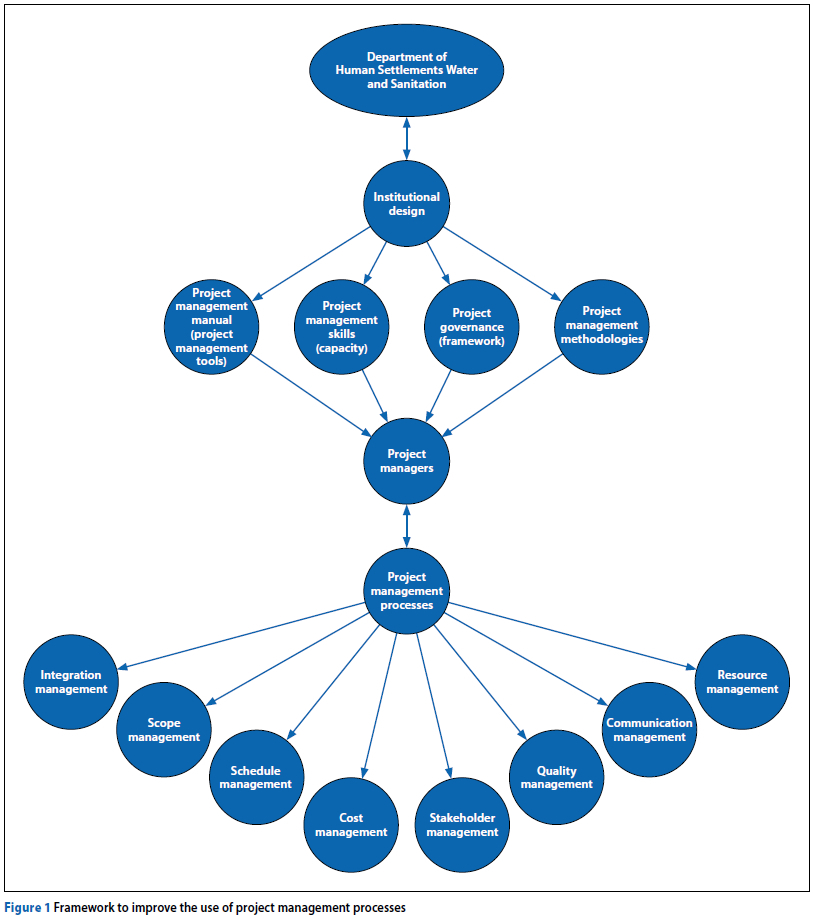
The proposed framework aligns with recognised international project management standards. While the framework is contextually developed for the institutional and socio-economic realities of RDP housing in Tshwane, its fundamental structure is anchored in the globally accepted principles defined by the PMI PMBOK. Specifically, the framework retains the eight core PMPs identified in the literature review (including scope, schedule, cost, and stakeholder management) but adapts their application, institutional integration, and governance mechanisms. This positioning confirms that the framework is not a completely novel creation, but rather an adaptive localisation of international best practices, designed to address the specific implementation gaps observed in South African public sector housing delivery.
Figure 1 presents the framework designed to enhance the utilisation of PMPs in the implementation of RDP housing projects by the DHSWS. The framework is justified on four interrelated components:
■ Institutional design ensures that the DHSWS embeds project management as a core organisational function.
■ The project management manual provides standardised tools and documentation tailored to housing projects.
■ The governance framework establishes oversight structures that strengthen accountability and monitoring.
■ Project management skills development enhances capacity through training and professionalisation.
These components operationalise PMI processes within a South African public sector setting, thereby addressing the unique challenges of RDP housing delivery.
To address the challenges encountered in RDP housing delivery, several critical considerations are required. First, the DHSWS must ensure that project managers consistently adhere to PMPs from project initiation through to completion, a goal facilitated by the institutional design component. Second, the Department should adopt a project management manual aligned with standardised tools and techniques while simultaneously enhancing the project management capacity of its personnel. Third, a governance framework tailored to the specific requirements of housing projects must be established to provide oversight and accountability. Finally, the Department should strengthen its project management methodologies to guide the systematic application of processes in practice.
Effective implementation of these processes necessitates focused attention on all knowledge areas defined by the PMI. These include project integration management, scope management, schedule management, cost management, quality management, stakeholder management, communication management, and resource management. By integrating these processes within the proposed framework, the DHSWS can systematically address the operational, structural, and human resource challenges inherent in the delivery of RDP housing projects.
LIMITATIONS AND SCOPE OF APPLICABILITY
This study, while providing valuable context-specific understandings, is subject to several limitations that define its scope and applicability. First, the research adopted a qualitative design, employing a purposive, non-probability sample consisting of 12 project managers from the DHSWS in Tshwane. This sampling method, while appropriate for gathering deep, specialised knowledge, means the findings are not statistically generalisable to the entire South African construction industry or the broader population of RDP project stakeholders.
Second, the study is geographically and contextually confined to RDP housing projects within the Tshwane metropolitan area. The project management challenges and the framework developed in the study reflect the unique institutional, political, and socio-economic realities of this specific region. Consequently, while the proposed project management framework offers a contextually relevant strategy for enhancing RDP housing delivery in Tshwane, its direct applicability elsewhere should be approached with caution. The framework may require adaptation and further empirical validation via quantitative studies before being implemented in other South African provinces or applied to dissimilar public infrastructure projects.
CONCLUSION
This study investigates the PMPs applied in the delivery of RDP housing projects in the Eastern Cape and proposes a framework to enhance their effectiveness. The findings indicate that the research aim was achieved through a systematic assessment of current practices, identification of weaknesses, and the development of a context-specific institutional framework that operationalises internationally-recognised PMPs within the realities of the South African housing sector. The literature review confirms that housing delivery projects, both globally and in South Africa, frequently encounter delays, cost overruns, and quality challenges. The empirical investigation further reveals that although PMPs are formally acknowledged, their application in RDP housing projects is inconsistent and often poorly coordinated. This gap emphasises the need for an institutional design that integrates these processes within the organisational, technical, and governance structures responsible for project delivery. Interviews and analysis provide insight into the practical application of processes such as scope management, stakeholder engagement, time and cost control, and risk management. The results demonstrate that while these processes exist, they are fragmented and insufficiently integrated. Table 3 illustrates current practices and highlighted deficiencies that undermine performance. Synthesising these findings, the study proposes an institutional framework that strengthens integration, enhances governance mechanisms, improves stakeholder involvement, and embeds PMPs into standardised manuals, training programmes, and oversight structures.
The proposed framework constitutes the principal contribution of this research. It provides a mechanism for translating globally-established PMPs into an actionable institutional design tailored to the South African housing delivery context. The framework is grounded in both empirical evidence and established theoretical foundations. It aligns with international models such as PMI and PRINCE2 while contextualising them for the unique requirements of South African RDP housing delivery. This dual orientation ensures that the framework is globally benchmarked yet locally relevant, offering both practical guidance and scholarly contribution to the discourse on project management in housing delivery. Unlike previous studies that focused narrowly on individual challenges, this research presents a comprehensive structure that integrates technical procedures, organisational responsibilities, and regulatory requirements. Consequently, the framework is both practical and adaptable for policymakers, project managers, and implementing agencies.
In fulfilling the study's objectives, three principal contributions emerge. First, the study provides empirical evidence regarding the extent and quality of project management process utilisation in RDP housing projects. Second, it identifies critical weaknesses that contribute to persistent under-performance. Third, it delivers a framework that directly addresses these shortcomings and has the potential to improve efficiency, accountability, and overall project outcomes. The research is not without limitations, however. Its scope was confined to RDP housing projects in the Eastern Cape, which may constrain the generalisability of findings to other provinces or housing schemes. Additionally, the reliance on qualitative interviews, although rich in detail, may have introduced subjectivity. Future research should test and refine the framework across different contexts and employ quantitative methods to evaluate its effectiveness in enhancing project performance.
In conclusion, this study demonstrates that the success of RDP housing projects depends not only on the availability of resources but also on the effective institutionalisation of PMPs. By addressing gaps in integration, governance, and stakeholder engagement, while remaining consistent with international standards and contextualising them for South Africa, the research provides a practical and contextually relevant framework for improving housing project delivery.
REFERENCES
Adjei, K A. 2017. Affordable housing provision in urban Ghana: The role of public-private partnerships. Journal of Building Performance, 8(1): 12-22. [ Links ]
Agyekum-Mensah, G & Knight, A D. 2017. The professionals' perspective on the causes of project delay in the construction industry. Engineering Construction and Architectural Management, 24(5): 828-841. [ Links ]
Ameh O J & Daniel, E I. 2017. Human Resource Management in the Nigerian Construction Firms: Practices and Challenges. Journal of Construction Business and Management, 2(1): 46-53. [ Links ]
Amhana, Z B R & Thomas, A B. 2024. Managing design-phase scope creep using project management strategies to solve architecture and civil engineering problems. Gospodarka i Innowacje, 47: 511-520. [ Links ]
Arrey, A N T R. 2016. Problems in the provision of RDP housing in extension 39 Mmabatho North West Province. Master's thesis, North-West University, South Africa. [ Links ]
Avantika. 2017. Affordable housing: Building sustainable futures for urban India. International Journal of Housing and Urban Studies, 5(2): 45-58. [ Links ]
Baptista, A, Santos, F, Páscoa, J & Sandig, N. 2016. Project management methodologies as main tool for current challenges in global economy driving historical changes. Journal of Advanced Management Science, 4(2): 146-151. [ Links ]
Barth, K B & Formoso, C T. 2021. Understanding the role of production systems in the delivery of low-income housing projects. Journal of Construction Engineering and Management, 147(6): 04021042. [ Links ]
Beleiu, I, Crisan, E & Nistor, R. 2015. Main factors influencing project success. Interdisciplinary Management Research, 11(2): 59-72. [ Links ]
Bourne, L & Walker, D H T. 2006. Visualizing stakeholder influence - Two Australian examples. Project Management Journal, 37(1): 5-22. [ Links ]
Bowen, P A, Cattel, K S, Hall, K A, Edwards, P J & Pearl, R G. 2012. Perceptions of Time, Cost and Quality Management on Building Projects. Australasian Journal of Construction Economics and Building, 2(2): 48-56. [ Links ]
Braun, V & Clarke, V. 2016. (Mis)conceptualising themes, thematic analysis, and other problems with Fugard and Potts' (2015) sample-size tool for thematic analysis. Internal Journal of Social Research Methodology, 19(6): 739-43. [ Links ]
Chan, P W & Connolly, M. 2006. The role of schools careers advisers in encouraging new entrants into construction. Proceedings, 22nd Annual ARCOM Conference, 4-6 September, Birmingham, United Kingdom, pp 811-820. [ Links ]
Chauhan, J, Subedi, S, Thakulla, A & Khanal, S. 2023. Project Quality Management. Conference: Survey Project Management, 2(5). [ Links ]
Chen, X, Chang-Richards, A Y, Pelosi, A, Jia, Y, Shen, X, Siddiqui, M K & Yang, N. 2022. Implementation of technologies in the construction industry: a systematic review. Engineering, Construction and Architectural Management, 29(8): 3181-3209. [ Links ]
Cheruiyot, K & Ramantswana, T. 2023. How does transfer duty relates to housing demand in the city of Johannesburg, South Africa? International Journal of Housing Markets and Analysis, 16(7): 42-57. [ Links ]
Chowdhury, M. 2014. Interpretivism in Aiding Our Understanding of the Contemporary Social World. Open Journal of Philosophy, 4(3): 432-438. [ Links ]
CIDB. 2014. SME business conditions survey: 4th quarter. Pretoria: Construction Industry Development Board. [ Links ]
Demirkesen, S & Ozorhon, B. 2017. Impact of integration management on construction project management performance. International Journal of Project Management, 35(8): 1639-1654. [ Links ]
Desalegn G. M & Gangadhar M. 2021. Challenges in developing the Ethiopian construction industry. African Journal of Science, Technology, Innovation and Development, 12(4): 40-43. [ Links ]
Didiza, T. 2018. Sustainable development through leadership building. South African Women in Construction Summit, Polokwane, 26 February 2008. Available: http://www.publicworks.gov.za/PDFs/Speeches/Minister/SAWIC_Summit.pdf. [ Links ]
Ewing, M, Men, L R. & O'Neil, J. 2019. Using social media to engage employees: Insights from internal communication managers. International Journal of Strategic Communication, 13(2): 110-132. [ Links ]
Fageha, M K & Aibinu, A A. 2014. Prioritising project scope definition elements in public building project. Australasian Journal of Construction Economics and Building, 14(3): 18-33. [ Links ]
Finnis, J. 2011. Natural Law and Natural Rights. 2nd edn. Oxford: Oxford University Press. [ Links ]
Fone, D L. & Young, T M. 2005. Health and deprivation: Inequality and the social determinants of health in Wales. Public Health, 119(6): 563-573. [ Links ]
Fugard, A J B & Potts, H W W. 2014. Supporting thinking on sample sizes for thematic analyses: A quantitative tool. International Journal of Social Research Methodology, 18(6): 669-684 [ Links ]
Gray, C F & Larson, E W. 2003. Project Management: The Managerial Process. United Kingdom: McGraw-Hill Education. [ Links ]
Hala, T A, Syuhaida, I, Hussaini, M W, Rani W M, Rohayah, C A. 2018. Architectural practices of project communication management in Iraq. Journal of the Malaysian Institute of Planners, 16(1): 1-14. [ Links ]
Hartono, D, Irawan, T, Khoirunurrofik, K, Partama, R, Mujahid, N W & Setiadestriati, D. 2022. Determinant factors of urban housing preferences among low-income people in Greater Jakarta. International Journal of Housing Markets and Analysis, 15(5): 1072-1087. [ Links ]
Hillson, D & Simon, P. 2007. Practical project risk management: The ATOM methodology, 3rd edn. Boston: Berrett-Koehler Publishers. [ Links ]
Hyvari, I. 2016. Project management effectiveness in project-oriented business organizations. International Journal of Project Management, 24(3): 216-225. [ Links ]
Jepsen A L & Eskerod, P. 2009. Stakeholder analysis in projects: Challenges in using current guidelines in the real world. International Journal of Project Management, 27(4): 335-343. [ Links ]
Kajdanek, K, Hübscher, M & Schroll, L. 2025. Provision of affordable housing in new large-scale housing projects in second-tier cities in Central and Eastern Europe. Comparing the cases of Lausanne (CH), Leipzig (GER), and Wroclaw (PL). Journal of Housing and the Built Environment, 40(3): 1-32. [ Links ]
Kamara, J M, Anumba, C J & Evbuomwan, N F O. 2002. Capturing client requirements in construction projects. London: Thomas Telford Publishing. [ Links ]
Karlsen, J T. 2002. Project stakeholder management. Engineering Management Journal, 14(4): 19-24. [ Links ]
Kenneth, R. 2014. Project Quality Management: Why, What and How, 2nd edn. Florida: J. Ross Publishing. [ Links ]
Kivunja, C & Kuyini, A. 2017. Understanding and Applying Research Paradigms in Educational Contexts. International Journal of Higher Education, 6(5): 26-41. [ Links ]
Lalmi, A, Fernandes, G & Souad, S B. 2021. A conceptual hybrid project management model for construction projects. Procedia Computer Science, 181: 921-930. [ Links ]
Loh, C. 2009. Housing, urban planning and development in Hong Kong: A critical review of sustainability and policy challenges. Hong Kong Institute of Planners Journal, 5(1): 34-45. [ Links ]
Love, P E & Ika, L A. 2022. Making sense of hospital project misperformance: Over budget, late, time and time again - why? And what can be done about it? Engineering, 12: 183-201. [ Links ]
Loosemore, M & Bridgeman, J. 2017. Corporate volunteering in the construction industry: motivations, costs and benefits. Construction Management and Economics, 35(10): 641-653. [ Links ]
Makhene, D & Twala, W D. 2019. Skilled labour shortages in construction contractors: A literature review. Proceedings, 6th cidb Postgraduate Conference on Construction Industry Development, 6-8 September, Johannesburg, pp 128-136. [ Links ]
Maruthi, S, Patil. J R. & Rohit S A. 2015. Optimization for fluctuation in resource demands in construction projects. International Research Journal of Engineering and Technology, 2: 1289-1296. [ Links ]
Mbande, C. 2010. Overcoming construction constraints through infrastructure deliver. Proceedings, The Association of Schools of Construction of Southern Africa, Fifth Built Environment Conference, 18-20 July, Durban. [ Links ]
Milford, R. 2010. Public capacity payment and procurement issues should be a challenge to the operations of contractors in South Africa. Proceedings, Fifth Built Environment Conference of the Association of Schools of Construction of Southern Africa, 18-20 July, Durban. [ Links ]
Mnkandla, E. 2013. A review of Communication Tools and Techniques for Successful ICT Projects. The African Journal of Information Systems: 6(1): 1-8. [ Links ]
Mubarak, S A. 2010. Construction Project Scheduling and Control, 3rd edn. New Jersey: John Wiley and Sons. [ Links ]
Muszynska, K, Dermol, K, Trunk, V, Dakovic, A & Smrkolj, G. 2015. Communication management in project teams-practices and patterns. Proceedings, MakeLearn and TIIM Joint International Conference, 27-29 May, Bari, pp 1359- 1366. [ Links ]
Nguyen, N M. 2007. The challenges of transferring modern project management principles and methodologies to developing countries. Proceedings, PMI Global Congress, Hong Kong, pp 1-7. [ Links ]
Nguyen, V T, Nguyen, Q T, Dinh, T H & Nguyen L D Q. 2021. Critical factors affecting construction labour productivity: A comparison between perceptions of project managers and contractors. Cogent Business and Management, 8(1). [ Links ]
Nhat, N M & Hoang, N K. 2025. Affordable housing for sustainable development: An in-depth comparative empirical analysis of emerging areas. Multidisciplinary Science Journal, 7(9): 2025394. [ Links ]
Nicholas, E O & Patrick, D. 2015. A review of governmental intervention on sustainable housing provision for urban poor in Nigeria. International journal of social science studies, 3(6): 40-48. [ Links ]
Oladeji, J D, Zulch, B & Yacim, J A. 2023. Implications of macroeconomic risks on NHFC'S incremental housing finance in South Africa. International Journal of Housing Markets and Analysis, 16(7): 80-102. [ Links ]
Olander, S. 2006. External stakeholder management. PhD thesis, Lund University, United Kingdom. [ Links ]
Othman, A & Abdellatif, M. 2011. Partnership for integrating the corporate social responsibility of project stakeholders towards affordable housing development: A South African perspective. Journal of Engineering, Design and Technology, 9(3): 273-295. [ Links ]
PMI. 2017. A guide to the project management body of knowledge (PMBOK Guide), 6th edn. Pennsylvania: Project Management Institute. [ Links ]
Raja K A & Murali, K. 2020. Resource management in construction project. International Journal of Scientific and Research Publications.10(5): 252-259. [ Links ]
Rameezdeen, R, Zuo, J & Zhou, Z. 2017. Readiness of the construction industry for climate change adaptation: A South Australian case study. Building and Environment, 118: 83-96. [ Links ]
Rasebotsa, A R, Agumba, J N & Adebowale, O J. 2024. The effects of poor delivery of social infrastructure projects in South Africa. In: Development and Infrastructure in Developing Countries: A 10-Year Reflection. CRC Press, pp 79-87. [ Links ]
Rasebotsa, A R, Agumba, J N, Adebowale, O J, Edwards, D J & Posillico, J. 2024. A Critical Success Factors Framework for the Improved Delivery of Social Infrastructure Projects in South Africa. Buildings, 15(1): 92. [ Links ]
Ryan, C. 2018. Understanding sustainable construction: The role of innovation and design in affordable housing. Building Research & Information, 46(8): 854-866. [ Links ]
Ryan, G & Bernard, H. 2003. Techniques to Identify Themes. Field Methods, 15(1): 85-109. [ Links ]
Safapour, E, Kermanshachi, S & Jafari, A. 2020. Effective project management principles and strategies in transportation infrastructure projects. Proceedings, Creative Construction e-Conference, 28 June - 1 July, pp 126-135. [ Links ]
Saunders, M, Lewis, P & Thornhill, A. 2019. Research methods for business students, 8th edn. Harlow: Pearson Education. [ Links ]
Schwabe, C A. 2015. Spatial inequalities in service delivery in South Africa: Housing, water, and sanitation perspectives. Pretoria: Human Sciences Research Council. [ Links ]
Scotland, J. 2012. Exploring the philosophical underpinnings of research: Relating ontology and epistemology to the methodology and methods of the scientific, interpretive and critical research paradigms. English Language Teaching, 5(9): 9-16. [ Links ]
Shirazi, M R & Keivani, R. 2017. The triad of sustainable development: Environmental, social, and economic sustainability in construction projects. Sustainable Cities and Society, 28: 50-58. [ Links ]
Shrivastava, A A. 2015. Deliverable Management in Projects. Journal of project management, 4(6): 12716-12718. [ Links ]
Solis-Carcano, R, Corona-Suarez, G A & GarciaIbarra, A J. 2015. The Use of Project Time Management Processes and the Schedule Performance of Construction Projects in Mexico. Journal of Construction Engineering: 2015, 1-9. [ Links ]
Statistics SA. 2022. Quarterly Labour Force Survey, Quarter 4 2022. Pretoria: Statistics South Africa. [ Links ]
Department of Premier and Cabinet. 2011. Tasmanian Government Project Management Guidelines. State of Tasmania. [ Links ]
Tiwari, P & Shukla, J. 2022. Post-disaster reconstruction, well-being and sustainable development goals: A conceptual framework. Environment and Urbanization ASIA, 13(2): 323-332. [ Links ]
Van Well-Stam, D, Lindenaar, F & Van Kinderen, S. 2004. Project risk management: An essential tool for managing and controlling projects. Kogan Page Publishers. [ Links ]
Wibowo, S F. 2019. Competing Extended TPB Models in Predicting. Academy of Entrepreneurship Journal, 25: 1-15. [ Links ]
Windapo, A O & Cattell, K. 2013. The South African construction industry: Perceptions of key challenges facing its performance, development and growth. Journal of Construction in Developing Countries, 18(2): 65-79. [ Links ]
Windapo, A O & Goulding, J. 2013. Value-based perspectives of stakeholders' building requirements in low cost and government subsidised housing projects in South Africa. Construction Innovation, 13(4): 424-444. [ Links ]
Yin, R K. 2003. Case Study Research: Design and Methods, 3rd edn. Thousand Oaks: Sage. [ Links ]
Young, T L. 2006. Successful Project Management, 2nd edn. United Kingdom: Kogan Page publishers. [ Links ]
Zafarani, E. 2011. Project quality management approaches: A comparative evaluation of international standards. Proceedings, 2nd International Conference on Construction and Project Management, 20-23 November, Sydney, pp 37-43. [ Links ]
 Correspondence:
K Cholo
Department of Building Sciences, Faculty of Engineering and the Built Environment, Tshwane University of Technology
Pretoria 0183, South Africa
kgabzacholo@gmail.com
JN Agumba
Department of Building Sciences, Faculty of Engineering and the Built Environment, Tshwane University of Technology
Pretoria 0183, South Africa
agumbajn@tut.ac.za
OJ Adebowale
Department of Building Sciences, Faculty of Engineering and the Built Environment, Tshwane University of Technology
Pretoria 0183, South Africa
adebowaleoluseyi@gmail.com

KGABO CHOLO is a young professional with a Master's in Building Science Construction Management from the Tshwane University of Technology. She currently serves as a public servant in the City of Johannesburg's Department of Human Settlements. Her research interests focus on construction management processes and infrastructure development. She is a registered Candidate Construction Project Manager with the South African Council for the Project and Construction Management Professions.

PROF JUSTUS NGALA AGUMBA (Pr CM) is an Associate Professor in the Department of Building Science at the Tshwane University of Technology, with over two decades of experience in academia and construction. He holds a PhD in Engineering Management, Master's in Construction Management, Bacheior's in Ouantity Surveying, and is NRF C2-rated. His research focuses on construction management and innovation, and construction education. He serves as Research Chair for the Construction Education Training Authority, has supervised numerous postgraduate students, and is professionally registered the South African Council for the Project and Construction Management Professions and Chartered Institute of Building.

DR OLUSEYI JULIUS ADEBOWALE is a Lecturer in the Department of Building Technology at Redeemer's University, Nigeria. He holds a PhD in Construction Management from Nelson Mandela University and previously served as a Research Fellow at Tshwane University of Technology. His research interests centre on construction project performance and sustainable construction materials. He is a corporate member of the Nigerian Institute of Building and a registered builder with the Council of Registered Builders of Nigeria.