



Services on Demand
Journal

Article
 English (pdf)
 Article in xml format
 Article references

 Automatic translation
 Send this article by e-mail
Indicators
Related links
-
 Cited by Google
-
 Similars in Google
Share

 Permalink

Journal of the South African Institution of Civil Engineering
On-line version ISSN 2309-8775Print version ISSN 1021-2019
J. S. Afr. Inst. Civ. Eng. vol.67 n.3 Midrand Dec. 2025
https://doi.org/10.17159/2309-8775/2025/v67n3a6
TECHNICAL PAPER
Developing a conceptual innovative lean construction management implementation strategic toolbox
M Aslam; Z Gao
ABSTRACT
Stagnant productivity and inefficiencies in construction projects often result in cost and time overruns. Lean construction (LC) offers a promising solution by reducing waste and enhancing efficiency. However, its adoption remains limited due to uncertainty and the lack of clarity regarding the use of innovative tools. Existing conceptual frameworks for LC are underutilised due to the absence of a clear implementation roadmap. This study addresses this gap by developing a strategic lean implementation toolbox for organisations new to lean principles, aiming to facilitate early success and long-term integration. A survey of 84 lean practitioners helped identify nine key threats to implementation, which were grouped into four categories: limited knowledge, incorrect selection, improper implementation of tools, and cultural or attitudinal barriers. Strategies to mitigate these threats were drawn from the literature, resulting in the identification of 64 effective practices. These practices were then used to develop a strategic tool, incorporating three complementary toolboxes designed to guide users in selecting lean tools, applying them effectively, and managing organisational and cultural transformation. This study contributes a practical, structured approach for adopting LC, offering the construction industry a strategic roadmap to overcome initial adoption hurdles and manage/sustain innovation more effectively.
Keywords: Lean construction, lean implementation toolbox, strategies, threats, tools and techniques
INTRODUCTION
Construction projects are widely recognised for their uncertainty and complexity. Uncertainty arises from the diverse environments to which projects are exposed. Complexity is due to the involvement of multiple specialised teams working together (Kermanshachi et al 2023). This uncertainty and complexity often leads to significant waste in both processes and outputs, which is frequently seen as unavoidable (Dosumu & Aigbavboa 2017). These inefficiencies have been directly linked to delays, cost overruns (Okonkwo et al 2023), and low productivity in the construction sector (Warcup 2015).
The construction industry has been striving to improve its productivity by adopting new management philosophies and strategically using innovative technologies. Lean construction (LC) has emerged as a promising approach, aiming to reduce waste caused by inefficiency (Bajjou & Chafi 2020). LC has shown clear benefits over the past two decades, such as cost savings, shorter project timelines, and productivity gains. However, its adoption remains limited, with few firms applying it consistently (Gao et al 2020, Bashir et al 2015).
Results from LC implementation vary widely. Some organisations report minor gains (1% to 20%) (Agbulos et al 2006, Andersen et al 2012), while others exceed 30% improvement (Locatelli et al 2013, Mao & Zhang 2008). These variations highlight a lack of standardised implementation. Many firms apply LC based on personal interpretation, leading to inconsistent outcomes (Bajjou & Chafi 2020). Those aligning closely with LC principles usually experience better results.
Several studies highlight barriers to effective LC implementation. Common issues include lack of training (Kawish 2017), weak communication and collaboration (Ballard & Kim 2007), non-standardisation (Shou et al 2016), and absence of continuous improvement systems (Ward 2015, Ayarkwa et al 2011). Additionally, some organisations only partially adopt lean tools or overlook key LC principles (Aslam et al 2022, Moradi & Sormunen 2023), leading to underwhelming outcomes.
Although prior research has identified critical factors for LC implementation (Aslam et al 2022, Ballard & Kim 2007, Cano et al 2015), applying these factors strategically within actual projects remains a challenge. This gap points to the need for a practical, technology-enabled, and strategy-driven lean implementation toolbox. The lack of such a toolbox is a key reason why many firms struggle to fully embrace LC.
Organisations starting their lean journey typically aim for early success to build trust in the process (Aslam et al 2020). They need a reliable implementation framework from the beginning because failed experiments can hurt competitiveness. Any initial failure could derail progress, making it crucial to use effective tools and methods from the start (Aslam et al 2020). Consistent results require a framework that is simple, flexible, and applicable across various construction activities.
Wider LC adoption in the construction sector depends on identifying and mitigating strategic threats early and using the right tools to reduce their impact (Sari 2019). This study develops a practical toolbox to help construction professionals choose and apply LC tools effectively, with a focus on longterm sustainability and innovation. Built on expert input and comprehensive literature, the toolbox includes three parts: (1) a tool for selecting appropriate LC methods, (2) a tool for effective implementation, and (3) a tool for managing cultural and behavioural change. This toolbox targets firms new to LC, offering a clear path to early results and long-term improvement.
The paper begins with a theoretical overview of LC and its relevance for construction efficiency. The methodology section explains the literature review and survey process using PRISMA, along with selection criteria. Threats are identified via questionnaire responses, ranked using the Relative Importance Index (RII), and validated through Wilcoxon testing and Cronbach's alpha. Based on these findings, grouped threats inform the creation of the Lean Implementation Toolbox. The conclusion outlines practical implications and future directions for strategic and technological research in construction management.
LITERATURE REVIEW
LC implementation strategies
Theories, no matter how logical, can only prove their value through practical success. LC is no different. Although LC concepts are well documented and widely recognised (Ballard 2008; Salem et al 2006), their success depends on real-world implementation.
Several researchers have explored how to implement LC effectively. For example, Alarcón et al (2008) emphasise aligning lean efforts with enterprise goals, technical readiness, and social acceptance. They argue that lean should be implemented at the organisational level, not just in individual projects. However, to gain stakeholder confidence, early project-level success is critical as it depend heavily on selecting and applying the right tools (Aslam et al 2020, Narayanamurthy & Gurumurthy 2014). Neto and Alves (2007) support this view and criticise the random use of lean tools without aligning them to business objectives. They found that without a clear strategy, firms struggle to sustain lean practices over time.
For rapid results, lean tools must be applied correctly at both the project and organisational levels. Researchers have developed some implementation guidelines based on past experiences. Kalsaas et al (2009) highlighted the importance of collaboration among contractors, owners, architects, and subcontractors. These relationships are key to successful LC implementation.
Wandahl (2014) noted that a poor understanding of lean tools often leads to misapplication, with tools either used partially or incorrectly. Neto and Alves (2007), referencing Womack and Jones (1998), recommended a gradual LC rollout. According to them, firms should start with easy, highimpact tools to build early momentum and team confidence. Over time, lean should integrate into broader business strategy, not just serve as a quick fix.
Barriers and enablers of LC implementation
Despite growing interest, LC adoption faces multiple obstacles at organisational, cultural, and technological levels. A major barrier is limited knowledge of lean tools and techniques, which leads to misconceptions, incorrect application, and resistance among teams (Ayarkwa et al 2011, Bahidrah & Korkmaz 2017, Bashir et al 2015, Olamilokun 2015, Simonsen et al 2014, Wandahl 2014). Similarly, cultural and behavioural resistance remains widespread, with studies highlighting the reluctance of staff, subcontractors, and suppliers to embrace new processes, often due to fear, lack of trust, or exclusion from planning (Abdullah et al 2009, Ward 2015, Kawish 2017, Kim & Park 2006, Nesensohn et al 2012, Sarhan et al 2018).
Another critical issue is lack of leadership commitment, where partial or symbolic efforts by management undermine long-term lean sustainability (AlSehaimi et al 2009, Bygballe & Sward 2014, Kalsaas et al 2009, Miller et al 2002, Sarhan & Fox 2013). Incorrect or inconsistent application of lean tools further erodes confidence in LC, causing productivity drops and sometimes complete abandonment of initiatives (Porwal et al 2010, Omran & Abdulrahim 2015, Wandahl 2014). Moreover, mismatches between lean tools and project requirements often lead to disappointing results and the loss of stakeholder trust (Ballard & Kim 2007, Alarcón et al 2008, Porwal et al 2010, Salem et al 2005).
Other practical barriers include insufficient resources for lean implementation (Ballard 2008, Cano et al 2015, Shou et al 2016), perceived inefficiency of tools (Aslam et al 2020), and the inherent complexity of lean methods (Bashir et al 2015, Enshassi et al 2021, Warcup 2015). On the enabling side, however, factors such as leadership support, structured training programmes, stronger collaboration, and integration with digital technologies (e.g. BIM, automation, dashboards) have been shown to improve outcomes significantly (Bajjou & Chafi 2020, Gao et al 2020, Albalkhy & Sweis 2022, Kermanshachi et al 2023). Yet, these enablers remain fragmented and are rarely consolidated into a coherent framework.
Toolbox approaches and technology integration
Several scholars have advocated the use of tool-based frameworks to make LC more practical and replicable. Early lean toolkits, such as those developed by Salem et al (2006), were valuable but limited, focusing mainly on basic practices like Last Planner and 5S without addressing long-term cultural integration or strategic alignment. Later research emphasised the importance of gradual rollout and careful tool selection to avoid overwhelming organisations (Neto & Alves 2007, Wandahl 2014).
More recently, researchers have pointed to the critical role of digital technologies in strengthening LC adoption. Integration with building information modelling (BIM), automation, IoT sensors, and data-driven dashboards can enhance transparency, standardisation, and control in lean practices (Xing et al 2021, Puram et al 2021, Enshassi et al 2021). Such technologies not only improve monitoring and communication, but also help overcome traditional barriers, including inconsistent application and resource constraints. However, despite these advances, technology-enabled lean approaches are still underutilised in practice, particularly in developing countries where lack of digital readiness and training persists (Albalkhy & Sweis 2022, Kermanshachi et al 2023).
A recurring issue is that most toolkits remain too abstract or context-specific, often derived from isolated case studies targeting limited project types (Sarhan 2011). The absence of structured selection criteria for tools further restricts their applicability across different construction environments. This results in inconsistent outcomes, especially in uncertain project conditions.
Need assessment, research gap, and novelty
Existing lean implementation models are often limited in scope and practicality. As Sarhan (2011) notes, many frameworks are based on isolated case studies and emphasise specific project tasks, making them difficult to generalise across diverse project environments. These models frequently rely on a narrow set of lean tools extrapolated to broader applications, yet they remain too abstract or high-level to guide real-world adoption. Earlier studies (e.g. Bashir et al 2015, Sarhan & Fox 2013) have recognised the importance of lean tools but fall short of explaining how firms can systematically select tools that align with their strategic objectives, organisational culture, or business environment. Moreover, little guidance is available on determining which construction activities are most suitable for lean interventions.
Despite growing global interest in sustainability, countries such as the UAE, Thailand, Singapore, and Australia continue to face difficulties in applying lean effectively. These challenges often stem from human and organisational barriers including limited awareness, inadequate training, the absence of tool-selection criteria, and cultural resistance to change (Puram et al 2021, Albalkhy & Sweis 2022, Xing et al 2021). In particular, the exclusion of subcontractors and suppliers from planning, weak collaboration, and lack of leadership commitment are consistently identified as cultural impediments that slow down lean adoption (Sarhan et al 2018, Abdullah et al 2009). Without addressing these cultural and behavioural barriers, achieving long-term sustainability through lean adoption becomes highly challenging.
The review highlights four critical gaps. First, while LC has been extensively studied, existing models and toolkits are either too generic or too context-specific, limiting their applicability across diverse project settings. Second, although scholars increasingly call for tool-based and technology-driven frameworks, current toolkits rarely include systematic selection criteria or integrate organisational and cultural enablers. Third, cultural and behavioural gaps - such as short-term commitment to lean, resistance to organisational change, and misconceptions surrounding lean principles - remain underexplored, despite their central role in implementation success. Fourth, despite rapid advances in digital technologies such as BIM, automation, and cloud-based dashboards, these innovations remain underutilised within comprehensive lean frameworks, resulting in missed opportunities for sustainable, innovation-driven adoption.
This study addresses these gaps by developing a Lean Implementation Toolbox that consolidates organisational, cultural, and technological enablers into a unified framework. Built on expert input and validated empirically, the toolbox provides:
1. A systematic mechanism for selecting LC tools aligned with firms' strategic goals and project contexts.
2. Practical guidance for effective implementation at both project and organisational levels.
3. Integrated support for managing cultural, behavioural, and digital transformation.
By targeting firms that are new to LC, the toolbox offers both a clear pathway for early adoption and a roadmap for long-term sustainability and innovation, thereby bridging the gap between theoretical models and practical industry application
METHODOLOGY
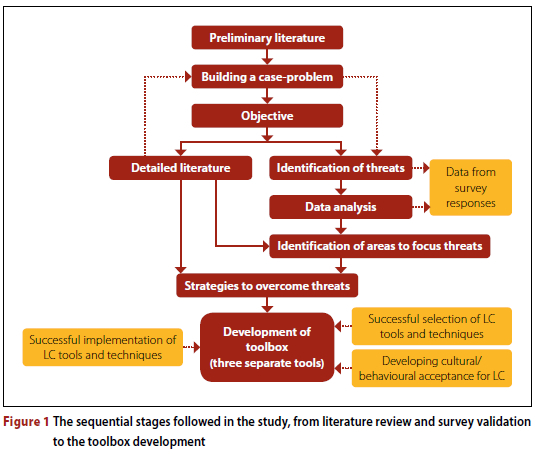
A preliminary literature review was conducted to obtain the latest research in implementing LC and to establish gaps and problems that need to be addressed (Tariq et al 2021). The objectives for this study are identified based upon these gaps and further reconnoitered using a detailed literature review and questionnaire survey. Likely threats to implementing lean tools and techniques are identified from the survey, in which responses were obtained from lean practitioners. Strategies to overcome threats are deduced from prevalent best practices identified in contemporary research. In the end, a complete toolbox is developed for selecting and implementing lean tools and techniques that would result in immediate initial successes. The schematic of the research methodology is shown in Figure 1. The approach integrates systematic literature reviews, survey-based empirical investigation, and analytical modeling.
Systematic literature review
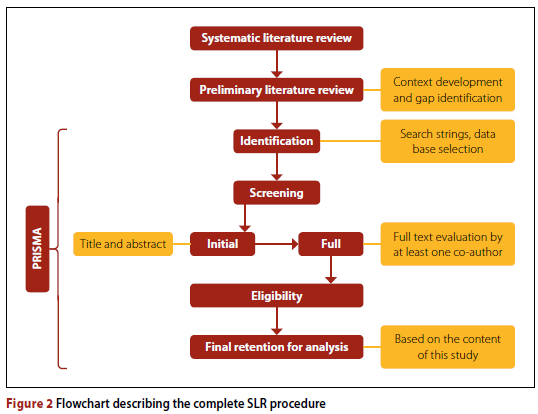
Systematic reviews are gaining increasing importance across various disciplines due to their ability to synthesise literature with rigor, transparency, and reduced bias, thereby enhancing replicability (Bhatnagar et al 2023). This study employs a systematic literature review (SLR) approach to identify both the threats hindering the implementation of lean tools in construction and the strategies available to mitigate them. The SLR was conducted following the PRISMA framework (Page et al 2021), which provides a structured and transparent process for identification, screening, eligibility, and inclusion of studies. This approach ensures rigor, minimises bias, and improves replicability in synthesising the existing evidence base. This method not only improves clarity but also helps reduce potential bias (Cavalieri et al 2019), making it especially useful for organising and classifying research articles in areas like construction (Nesarnobari et al 2025). The PRISMA framework structures the review into three key stages: identification, screening, and eligibility.
Identification
A well-defined search strategy was developed and executed across four prominent databases: ASCE, Emerald, ScienceDirect, and Taylor & Francis. Additionally, two key lean-specific sources were searched: the International Group for Lean Construction conference proceedings and the Lean Construction Journal. These sources were selected based on their relevance and credibility in LC research. The search covered publications from 1990 to 2024 and was limited to English-language records. Document types considered included peer-reviewed journal articles, conference papers, and empirical case studies. An example search string (adapted to each database interface) is: ("Lean Construction" OR "Lean") AND (barrier OR threat OR challenge OR enabler OR strategy OR tool OR implementation) AND (construction OR building). Search strings were adapted to each database's syntax (Boolean operators, field tags, and truncation). All identified records were exported to a reference manager for de-duplication and screening.
Screening
A two-step screening process was employed:
■ Abstract screening: Articles were assessed for thematic relevance to LC threats and mitigation strategies.
■ Full text review: Selected articles were reviewed in depth by at least one member of the research team. In case of uncertainty, a second review was conducted. The purpose of full-text review was to establish the relevance to meet the objectives of the study.
Eligibility
Literature published in English between 1990 and 2024 was reviewed, with a focus on the implementation of lean tools, the identification of threats and barriers, and strategies within the construction sector. Exclusion criteria included studies unrelated to the construction sector and those focusing on computer-based simulations, manufacturing-only domains, or general lean theory without practical implications. Duplicates were removed, and eligibility was verified based on pre-defined inclusion and exclusion criteria for final retention. The complete SLR process is illustrated in Figure 2.
Survey design and data collection
To validate and contextualise the threats identified through the literature within the American construction industry, a structured questionnaire survey was employed. Surveys are widely recognised in construction management research for their ability to collect empirical evidence from industry practitioners, validate theoretical models, and capture perceptions at scale (Aslam et al 2024a, Aslam et al 2024b).
In the American context, surveys have frequently been used to examine LC practices and barriers, as they provide access to geographically dispersed experts and enable systematic analysis of industry-wide trends (Ballard & Howell 2003, Salem et al 2006). Recent studies confirm that surveys remain a reliable method for exploring lean practices and their impact on project performance in multiple contexts, such as sustainability and safety (Simukonda & Emuze 2024, Bajjou et al 2023)
The questionnaire was designed based on threats identified through the SLR and refined for clarity and contextual fit. It was distributed via email to ensure a broader reach and convenience for respondents.
The sampling frame consisted of 232 registered firms listed on the Lean Construction Institute's website, all of which reported using LC practices to some extent. These firms were chosen because they represent the leading organisations engaged in lean adoption across the USA and therefore provide relevant, credible insights. Given the targeted nature of the population, purposive sampling was adopted. This method is particularly appropriate in exploratory studies where specialised knowledge is required, as it ensures that only respondents with relevant expertise contribute to the findings (Simukonda & Emuze 2024, Bajjou et al 2023). Similar approaches have been used in construction management research to study lean adoption and implementation challenges where the respondent pool is limited to experts (Aslam et al 2024a, Aslam et al 2024b, Bashir et al 2015).
From the 198 firms contacted, a total of 84 valid responses were received, representing a response rate of approximately 42%. According to Wu et al (2022), the average response rate from studies conducted between 2007 and 2014 is 44%. Considering the specific nature of the content of the study with limited practitioners, the response rate of 42% is found to be suitable for further analysis.
The sample size also aligns with comparable LC studies between 80 to 90 (Evans et al 2021, Noorzai 2023) and is sufficient for exploratory analysis, as respondents were carefully selected based on their direct involvement with LC.
The collected responses were then used to validate the identified threats, assess their significance, and inform the development of the Lean Implementation Toolbox.
Analysis of survey
Relative importance index (RII) was calculated using the following equation (Gudiene et al 2013):

Where: a represents the weight assigned to each response option, beginning with 1 for the lowest scale and increasing by one unit for each higher scale level; X denotes the number of respondents who selected a particular weight a; A is the maximum possible weight on the scale; and N is the total number of participants in the survey.
The internal consistency of the data was verified using Cronbach's Alpha (α=0.86), and the Wilcoxon Signed-Rank Test was used to assess the statistical significance of each threat level. The Wilcoxon test has been extensively used in contemporary research for evaluating the non-parametric procedures, as indicated by Kitani and Murakami (2022).
Toolbox development
Tool development in academic research typically involves a rigorous synthesis of empirical evidence, expert validation, and iterative refinement. In this study, toolbox construction was guided by two principles: relevance to practice and alignment with literature-backed strategies. Where relevance to practice and strategies is backed by conducting an extensive literature review, as explained above, each of the identified strategies was examined for applicability, clarity, and alignment with identified threats. Strategies were then grouped and structured into the three tools synthesised using constructs from change management literature, including Kotter's 8-Step Model and Lean Transformation Frameworks (Kotter 2012).
RESULTS
Systematic literature review
The PRISMA technique was employed as the main tool for conducting the SLR, separately for identifying the threats and their subsequent strategies to mitigate them. During the identification stage, 355 manuscripts, papers, and case studies were identified covering the subject area domain. During the screening stage, 290 articles were retained covering the key areas of this study. Finally, during the eligibility stage, 80 articles were retained for further analysis to identify the threats and strategies, respectively. Details for each are shown in Table 1.
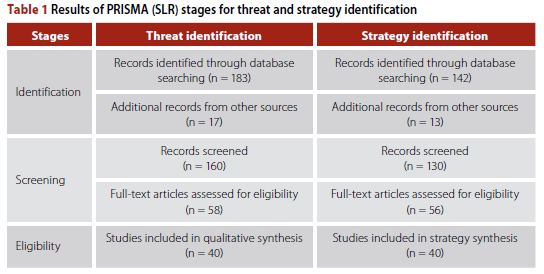
identified threats to the successful implementation of LC from SLR
Although researchers have developed state-of-the-art procedures for implementing LC, the construction industry still faces many challenges in implementing LC. Following a thorough literature search, a list of major challenges that hamper the implementation of LC was developed, as shown in Table 2.
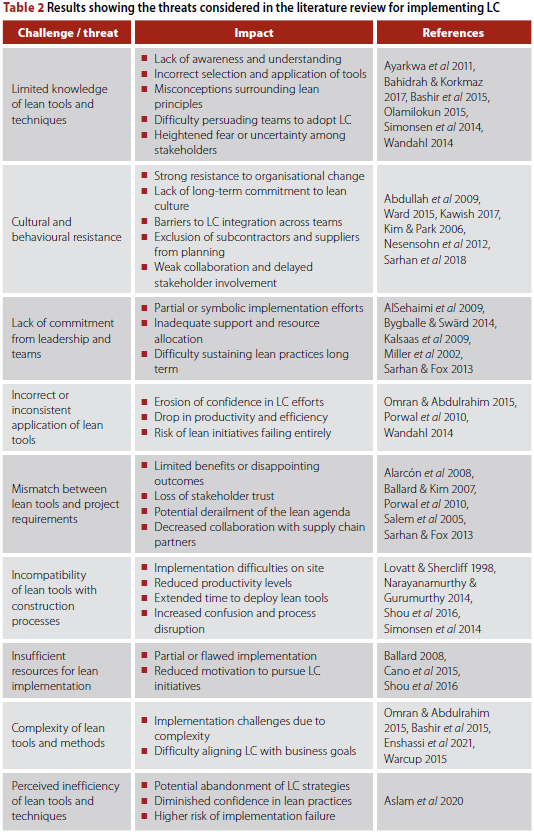
Micro-level strategies identified from SLR
An extensive literature review was conducted to identify practices that can efficiently manage the implementation process of lean tools and techniques. Moreover, lean practitioners were also consulted for identifying the most practical means to minimise the threat levels during their successful lean implementation, and presented in detail by Aslam et al 2020. These strategies will amalgamate the theoretical concepts with the most practical ones and will be very effective in developing a more practical solution to the problems. Various strategies to reduce the threats associated with the efficient application of LC methods and tools are shown in the supplementary material (Table I). Strategies are further classified into 10 broad categories of knowledge, training, continuous improvement, cultural awareness, gradual implementation, collaboration, trust and relationship, simplicity, selecting tools, and techniques. Moreover, a few strategies not listed above are classified into a general category in the supplementary Table I.
Survey results
To assess the relevance of these threats within the current construction industry, insights were gathered through a structured questionnaire survey. The survey outcomes captured the perspectives of experienced lean practitioners. From an operational standpoint, nine critical threats were identified as having the potential to negatively influence the effective application of lean practices. These threats, along with their corresponding RII values, are illustrated in Figure 3.
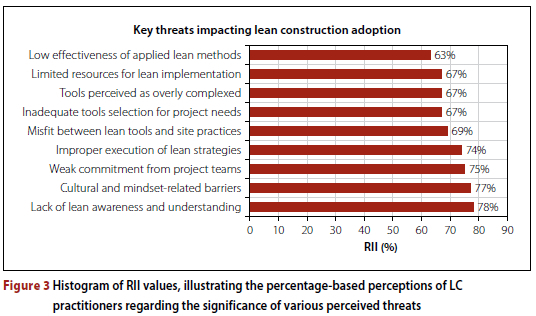
Results show that all threats identified are considered to be important, with varying degrees of importance associated with each threat. A lack of knowledge (78%) about lean tools and techniques would significantly affect the success of LC. An organisation should adopt measures that help them improve their knowledge about lean tools and techniques. Similarly, any cultural and attitudinal issues (77%) unfavourable to LC would also affect the successful implementation of lean tools and techniques.
Once the required knowledge is achieved and cultural issues are resolved, there is a dire need for commitment from top-level project participants regarding lean implementation. Lack of commitment (75%) would hamper the successful implementation. Considering an organisation possesses adequate knowledge and commitment for lean, undesirable results can be possible because of incorrect selection (67%) and implementation (74%) of lean tools. Efforts should be made to select the correct tools through better knowledge and understanding and then implement them as per the best processes and techniques available.
The incompatibility of lean tools and techniques (69%) with the construction process could affect the successful implementation of lean tools and techniques. During the selection of lean tools and techniques, compatibility issues should be given due importance. Other factors like the complexity of lean tools (67%) and insufficient resources (67%) to support lean operations should also be given due consideration while selecting a lean tool and technique. Comparatively lesser importance can be given to the threat of inefficiency of selected tools and techniques. Lean practitioners are of the opinion that unfavourable results are not because of inefficient tools but rather due to incorrect selection and implementation.
The data was internally consistent with Cronbach's alpha value of 0.86. A Wilcoxon test was performed to see the strength level of each threat on five scales (none, low, medium, high, very high). Based on the lesser number of responses in scale-none, both scale-none and low were combined for analysis. Each scale was tested with the respective threat and the results are shown in Table 3.
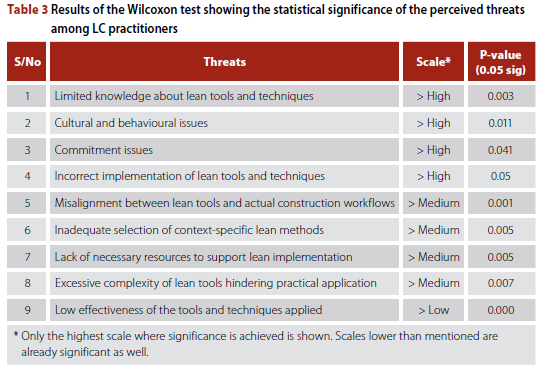
The results are similar to the RII test (Figure 3). At 0.05 significance, and P-values less than 0.05, there is enough evidence to conclude that the threat associated with limited knowledge, cultural and behavioural issues, commitment issues, and incorrect implementation is more than high (between high to very high), threat associated with incompatibility, incorrect selection, insufficient resources, and complexity of lean tools and techniques is greater than medium (between medium to high), and threat associated with inefficiency of selected tools is more than low (between low to medium). Therefore, the threat of low effectiveness of the tools and techniques applied was discarded for developing strategies, and the remaining eight threats were further assessed.
Framework of strategic focus areas for mitigating lean construction threats
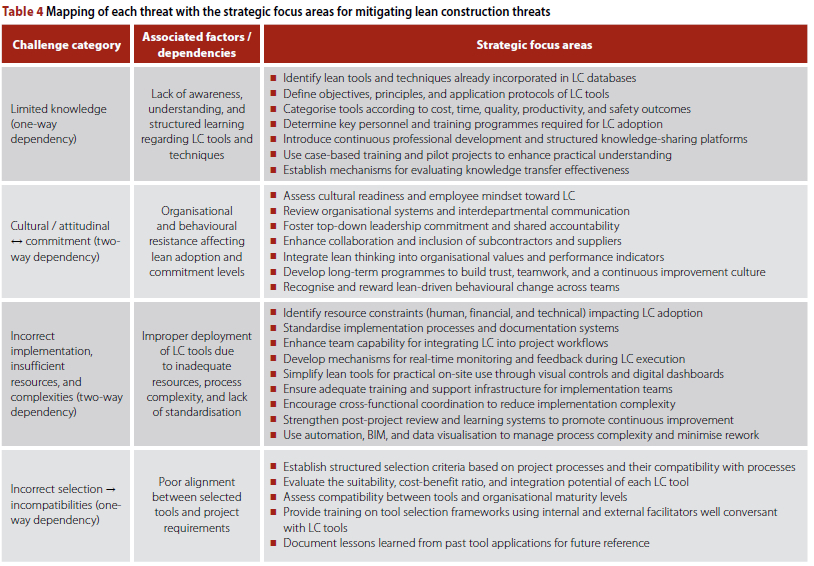
To formulate effective strategies, it is first necessary to identify the areas that must be addressed in order to overcome key threats. An in-depth analysis shows that many threats are interdependent. Therefore, threats with strong dependencies are grouped to identify the areas requiring attention when developing appropriate strategies. For example, limited knowledge of lean tools and techniques can increase complexities and the risk of selecting or implementing tools incorrectly. All areas that can increase knowledge about lean tools and techniques, along with their implementation techniques, have to be looked at to overcome this threat. As education about lean tools and techniques is increased, threats will decrease.
The inadequate selection of context-specific lean methods will give rise to many compatibility, complexity, and implementation issues later on. Organisations should be armed with a database of available tools and techniques, and each tool should be separately assessed for its efficiency and compatibility with the targeted construction process. The objectives and functionalities of lean tools and techniques will further align the lean tools with the construction processes, and have to be known before selecting a tool.
Cultural and attitudinal issues will have a huge impact on defining the commitment levels of the project participants. The commitment level for LC within the organisation must be known to develop strategies for increasing the commitment to LC. The long-term sustainability of LC will depend on its cultural/behavioural acceptance. The existing organisational culture must be thoroughly evaluated to develop strategies for effectively amalgamating it with lean culture.
Organisations should focus on several key areas, outlined in Table 4, for the effective application of LC methods and tools. These areas were developed with reference to established lean principles and objectives (Diekmann et al 2004), as well as the implementation strategies frequently cited in the literature (Aslam et al 2020, Bashir et al 2015, McGraw Hill Construction 2013, Kawish 2017, Shou et al 2016). Strategic focus areas were derived by closely examining the threats and strategies identified earlier and are presented in Table 4.
Development of a toolbox for efficient application of LC methods and tools
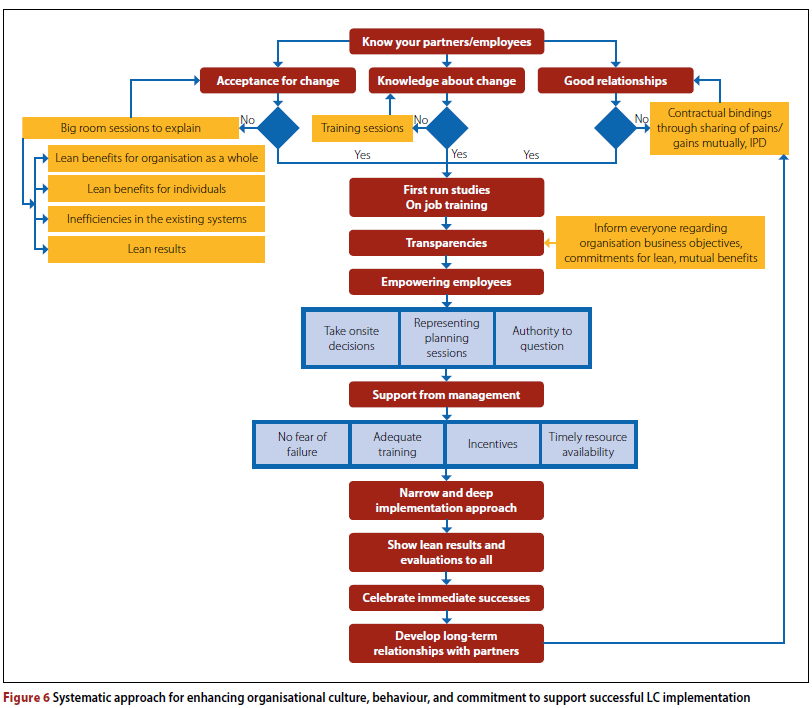
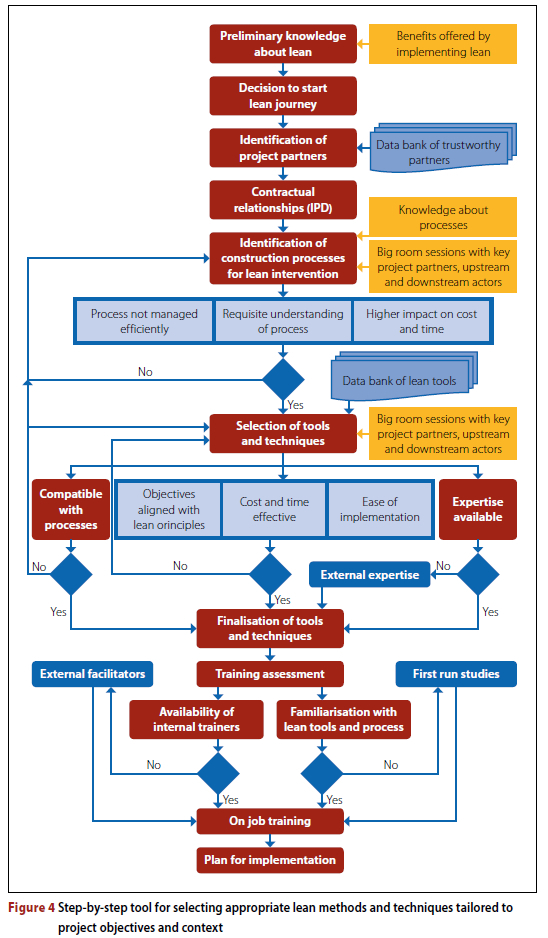
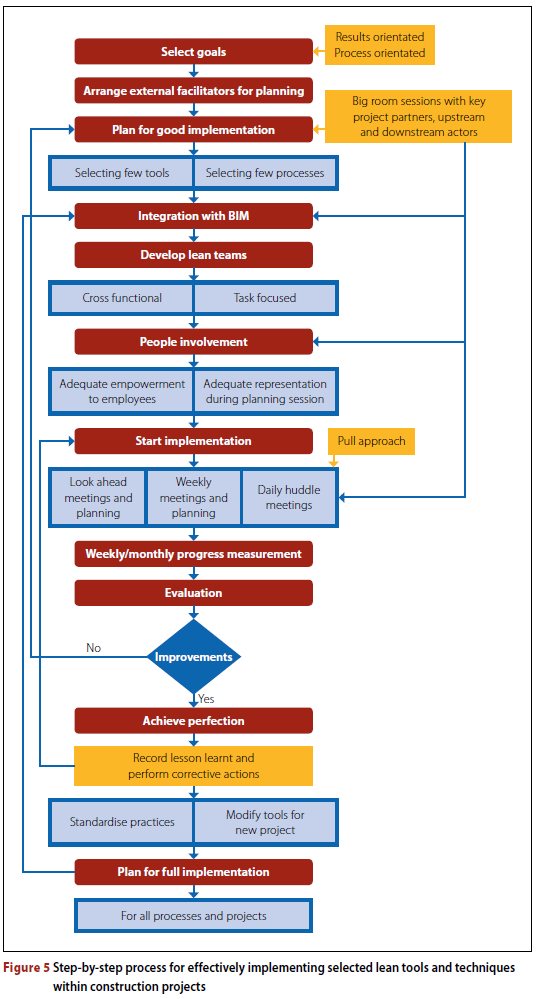
Based on the results and analysis from micro-level strategies, three tools for selecting, implementing, and inculcating lean culture are developed and shown in Figures 4, 5 and 6. The step-by-step guidelines as presented in these tools will help organisations understand the complete protocols for the selection and implementation of lean tools. Development of these tools is briefly discussed below.
Selection of lean tools and techniques
As referred to in the supplementary material Table I, organisations must be fully acquainted with the knowledge and understanding of lean tools and techniques. They should know the objectives and functionalities associated with each lean tool that would help them in analysing the benefits and implementation strategies duly aligned with their business objectives.
According to Bashir et al (2015), the decision to use lean tools and techniques should be fully acknowledged and everyone should be willingly committed to executing the lean tools. Once the organisation has decided to use lean tools, they should identify external partners that are trustworthy and fully dedicated to using lean tools and techniques in the best manner.
According to the results from the survey, an integrated project delivery system is the most suitable delivery system for implementing lean tools and techniques. The internal and external project participants should collaboratively select the construction processes and lean tools based on their compatibility, ease in management, and impact on the project outcomes.
Adequate training should be provided to the lean teams, including external players like subcontractors/suppliers, to ensure understanding and effective management of the lean tool. If the required expertise is not available, the organisation should seek help from external facilitators and trainers. Finally, on the job training should be provided to all lean team members to provide hand-on experience in using the selected tools.
The detailed actions for selecting lean tools and techniques are presented in Figure 4. Since every construction project is different, it should be noted that the successful use of lean tools on one project may not guarantee success on another project. The steps shown in Figure 4 should therefore be repeated for all the projects to select the most compatible lean tools and techniques.
Implementation of lean tools and techniques
New lean users should clearly identify their goals before implementing LC. For the efficient application of LC methods and tools, organisations should have both process and result-oriented goals, and should be looking for both immediate successes and continuous improvements to their implementation processes.
New lean users should begin implementing lean tools and techniques gradually, starting with a few construction processes and a limited set of tools. As their expertise grows and confidence in these tools increases, they can progressively adopt a broader range of lean practices. The use of advanced technologies such as BIM can further support this process by enhancing visualisation, improving the implementation process, and facilitating collaborative planning. Downstream players should be adequately empowered and fully represented during planning sessions (Ballard et al 2007).
The implementation process should be regularly monitored and refined through lookahead planning, weekly meetings, and daily huddles with all key project participants for collaborative decision making (Ballard et al 2007). The full implementation process and results should be regularly assessed against the organisation's goals and objectives. Organisations should continually evaluate both efficiency and the implementation process, maintaining a strong commitment to ongoing improvement. Any adjustments needed to enhance the effectiveness of lean implementation should be promptly identified and implemented. Lessons learned during implementation should be recorded and, after necessary modifications, the whole implementation procedure must be standardised. Finally, organisations should be ready to implement lean tools and techniques throughout the project. The detailed actions for implementing lean tools and techniques efficiently are presented in Figure 5.
Cultural/behavioural awareness for LC
As noted earlier, the long-term implementation and adoption of LC depends heavily on cultural acceptance and organisational commitment. A strong starting point is to select reliable partners who are both fully committed to change and possess the necessary expertise. Resistance to change can be reduced by holding regular big room sessions, where the benefits of lean - both for the organisation and for individuals/partners - are demonstrated using real outcomes. Inefficiencies in the current management system and the resulting losses to both organisations and individuals should also be explained.
The lean journey should begin only once the entire team has developed confidence in LC tools and techniques and is fully committed to applying them. Through on-the-job and first-run training, project teams can visualise and gain confidence in the benefits of lean. Empowering downstream stakeholders to make on-site decisions and plan their own activities further enhances confidence. Trust is also reinforced through transparency, ensuring that all project participants are informed about the organisation's business goals/objectives, commitment to lean, and the mutual benefits attained from the outcomes.
Top management should provide support to lean teams by offering confidence-building, training, incentives, and timely access to necessary resources. Gradual implementation of LC tools - where results are immediately available to all participants - strengthens commitment to continued LC applications. Early successes should be celebrated, and relationships cultivated to ensure the long-term sustainability of lean efforts. Detailed actions for improving culture/behaviour and commitment to LC are presented in Figure 6.
DISCUSSION
The successful adoption of lean construction practices depends on two critical factors: selecting the right tools and cultivating a supportive organisational culture. While lean tools guide implementation, lasting change stems from employees' willingness to embrace lean thinking. Construction companies accustomed to traditional methods often resist this shift, especially if early lean efforts fail to yield results. Initial setbacks can discourage continued adoption. Conversely, early successes foster motivation and embed lean principles into organisational culture. To increase the chance of early success, lean tools must be carefully selected and correctly applied. This study outlines strategies to assist companies in efficiently applying lean practices from the start.
Increasing knowledge about LC
Developing a solid understanding of lean tools and their applications is essential for successful implementation. When employees grasp the benefits of lean, resistance diminishes. A lack of knowledge can lead to poor tool selection and failed execution. Construction firms must educate their teams on the lean tools best suited to their specific environments. Managers should attend events hosted by established lean institutes to stay current with trends. Training programmes, including workshops and site visits, should prioritise field managers and workers who handle operational execution. Subcontractors and suppliers must also be included in this learning. Hiring external lean experts to guide stakeholders can be particularly effective.
Improving cultural/ behavioural readiness
Training and educational sessions have to be coupled with cultural awareness programmes to inculcate lean within the organisational culture. Fostering a cultural environment in favour of lean will help eradicate resistance and result in the long-term implementation of lean tools and techniques.
Organisations must promote a lean culture that focuses on people instead of profits or performance gains. Employees should be given confidence in implementing lean willingly without any fear of failure, and everyone should be considered equally important and responsible for fulfilling the assignments entrusted to them. Lean should not only be restricted to implementing lean tools and techniques, but rather made part of the organisational routine culture.
A culture should be developed that compels employees to use lean tools and techniques on their own rather than imposing it on to them. This would only be possible if everyone started owning the construction project and associating their fate with the project's fate. Other factors that can motivate the use lean tools and techniques at every aspect are regular celebration of initial successes, praising lean teams, providing adequate empowerment to field managers, workforce and external actors, and initiating incentive programmes.
Trustworthy and longterm relationships
A core principle of LC is the development of strong trust and relationships between project participants. High levels of trust should exist across all project teams and stakeholders. Because construction involves a sequence of interdependent activities, where the work of one team relies on the performance of another, these relationships are critical. Collaborative contracting models, such as integrated project delivery (IPD), can aid in this regard. Additionally, forming cross-functional teams that work with all parties can further enhance trust and cooperation. This approach fosters top-level commitment across all management tiers, the workforce, subcontractors, and suppliers in the adoption of lean tools and techniques.
Strong collaboration
Strong, trustworthy relationships between project participants create a solid collaborative environment within an organisation. Effective collaboration is essential for the efficient application of LC methods and tools, and the literature consistently emphasises its importance. The survey results also highlight the value of big room environments for collaboration. Engaging all stakeholders - including contractors, subcontractors, suppliers, clients, architects, and engineers - from the start of the project helps make lean efforts successful. Lean practitioners have also highlighted the importance of effective participation of subcontractors, suppliers, and the workforce during look-ahead and weekly meetings to improve coordination and cooperation.
Appropriate selection of lean tools and techniques
To ensure the effective implementation of LC, it is essential to select tools and techniques that are fully aligned with the core principles of lean. In many cases, sub-optimal outcomes have resulted from the inappropriate selection of lean tools, which fail to address the specific needs of the project. Organisations should maintain an up-to-date inventory of lean tools, clearly outlining their objectives and the contexts in which they are best applied. These objectives must reflect lean principles, and the associated application methods should be compatible with the processes typical of construction environments.
It is important to recognise that each construction activity may require a specific lean tool or a combination of tools for optimal management. For instance, a single tool like the Last Planner System can effectively oversee scheduling, planning, and execution, whereas multiple tools such as Just-in-Time and 5S may be needed to manage logistics and material storage. Selecting the most appropriate tool at the outset sets the foundation for successful lean implementation and defines the organisation's lean direction moving forward. Early-stage failures, particularly due to poor tool selection, can undermine confidence and hinder long-term adoption. As such, it is advisable to begin with tools that are simple, low in resource demands, compatible with current practices, and easy to manage, especially for organisations just beginning their lean journey.
Compatibility of construction processes with lean tools
Choosing the right construction processes for initial lean intervention is critical to the effective application of LC methods and tools. Experts in lean implementation often recommend starting with a limited number of targeted processes rather than attempting organisation-wide changes from the outset. Priority should be given to processes that have historically underper-formed under conventional management approaches, as these areas are more likely to show quick and measurable improvements. Additionally, it is important that organisations possess the necessary expertise to manage these selected processes using lean principles to ensure meaningful outcomes. It would be quite encouraging to select those processes initially which have a higher impact of cost and time over the project.
Efficient implementation of LC tools and techniques
Lean practitioners advocate for a gradual application of LC, ensuring that its implementation is simple and enjoyable. The initial selection of lean tools, techniques, and construction processes should be guided by criteria such as ease of management, availability of requisite expertise, and potential for greater impact on overall project performance. Once the necessary expertise, trust, and willingness are established, a broader range of lean tools and techniques can be implemented.
Arbulu and Zabelle (2006) suggest that a narrow and deep approach is most suited for implementing lean tools and techniques. They recommend introducing lean in specific projects first and then gradually extending these practices company-wide, fostering a sustainable lean culture. Survey results indicate that lean tools and techniques must be adapted from project to project, as minor adjustments are often necessary to align with specific project needs. To achieve optimal results, LC experts advocate continuous monitoring of lean performance, either weekly or monthly, with results analysis used to identify weaknesses affecting performance. Establishing a continuous improvement system helps address these issues and supports implementation of lean tools and techniques that would result in greater success.
Incorporating new technological developments
Organisations should continuously explore new technologies that support lean processes. BIM, coupled with the Last Planner System, has been widely adopted by lean firms. Researchers have also highlighted a strong synergy between BIM and LC (Khanzode et al 2006, Sacks et al 2010). BIM enhances future project visualisation and provides participants with multiple alternatives for executing tasks efficiently. Use of BIM technology during regular big room sessions can help eliminate decision errors that could negatively impact future project performance.
Although these three tools are discussed separately, in practice they should be applied together as a comprehensive toolbox to guide the selection of tools, techniques, and implementation approaches. Simply applying lean tools and techniques does not make an organisation lean; a true lean culture must be developed and embraced throughout the organisation.
Relevance and replicability in the African context
The proposed LC toolbox holds strong relevance for the South African and broader African construction industry, where similar cultural, managerial, and technological challenges persist. Studies across South Africa, Zimbabwe, and Ethiopia reveal barriers such as limited LC awareness, inadequate training, weak collaboration, and low cultural readiness - issues that this toolbox directly targets through its focus on knowledge enhancement, behavioural improvement, and structured tool implementation (Aigbavboa et al 2016, Maradzano et al 2019, Oke et al 2020, Moyo & Chigara 2023).
The toolbox's emphasis on collaboration and trust aligns with regional calls for more integrated project delivery and relationship-based contracting (Emuze & Mpembe 2021). Moreover, the right selection of lean tools is particularly critical in South Africa and other African countries, where contextual adaptability determines implementation success and sustainability (Maradzano et al 2019, Maru et al 2025).
Its structured approach to tool selection and implementation supports findings that context-specific adaptation of LC tools improves success in resource-limited settings. The toolbox's inclusion of technological adaptability further complements emerging trends of combining lean with digital innovations such as BIM to achieve sustainable outcomes in African projects (Watkins & Sunjka 2020, Van Wyk et al 2024). Overall, the proposed toolbox provides a replicable and practical framework suited to African construction environments striving for long-term efficiency, collaboration, and innovation.
CONCLUSION
This study addresses the persistent gap between LC theory and its practical application by developing a structured toolbox to support effective selection and implementation of lean tools and techniques. By identifying nine core threats - categorised into knowledge deficits, improper tool selection, resource inefficiencies, and cultural resistance - the research offers a grounded understanding of operational and behavioural barriers hindering lean adoption. The toolbox, derived from practitioner insights and literature, presents 64 mitigation strategies, including tools for fostering cultural and attitudinal change to support long-term lean transformation.
Importantly, the findings highlight that lean implementation is not merely technical but a systemic shift requiring strategic tool selection, behavioural alignment, and collaborative delivery models. Many LC failures stem from superficial tool use without organisational readiness or stakeholder engagement. This study emphasises a gradual, process-specific approach, where early wins build trust and cultural buy-in. Training, cross-functional collaboration, and digital technologies (e.g. BIM) are critical enablers of sustained success.
The study acknowledges methodological limitations, particularly in sample size and contextual scope, which may restrict generalisability. While the toolbox provides a strong foundation, its effectiveness depends on iterative testing, feedback, and adaptation to project-specific variables. Future research should validate this framework across diverse settings and integrate performance metrics to assess impact.
In conclusion, this study offers a vital step toward operationalising lean practices through an integrated, culturally sensitive, and practically applicable strategy. By bridging the gap between theory and field-level execution, it contributes meaningfully to both academia and industry, thereby providing a pragmatic roadmap for firms aiming to reduce waste, improve productivity, and embed lean thinking in operations. The developed LC toolbox is highly relevant to the South African and broader African construction context, where challenges such as limited awareness, weak collaboration, and low cultural readiness persist. By integrating technological adaptability and collaboration, the toolbox offers a practical and replicable framework for achieving long-term efficiency and innovation across African construction projects.
SUPPLEMENTARY MATERIAL
Supplementary Table I is not included here but can be obtained from the authors if required.
REFERENCES
Abdullah, S, Razak, A, Bakar, A, Hassan, A, & Sarrazin, I. 2009. Towards producing best practice in the Malaysian construction industry: the barriers in implementing the Lean Construction Approach. Proceedings, International Conference of Construction Industry 2009, Padang. Indonesia. [ Links ]
Agbulos, A, Mohamed, Y, Al-Hussein, M, AbouRizk, S & Roesch, J. 2006. Application of lean concepts and simulation analysis to improve efficiency of drainage operations maintenance crews. Journal of Construction Engineering and Management, 132(3): 291-299. [ Links ]
Aigbavboa, C, Oke, A & Momoti, T. 2016. Drivers and barriers of lean construction practice in South African construction industry. Proceedings, 2016 International Conference on Innovative Production and Construction, Perth, Australia. [ Links ]
Alarcón, L F, Diethelm, S, Rojo, O, & Calderón, R. 2008. Assessing the impacts of implementing lean construction. Revista Ingenieria de Construcion, 23(1): 26-33. [ Links ]
Albalkhy, W & Sweis, R. 2022. Assessing lean construction conformance amongst the second-grade Jordanian construction contractors. International Journal of Construction Management, 22(5): 900-12. [ Links ]
AlSehaimi, A O, Tzortzopoulos, P & Koskela, L. 2009. Last planner system: Experiences from pilot implementation in the Middle East. Proceedings, IGLC 17, Taipei, Taiwan, pp 53-66. [ Links ]
Andersen, B, Belay, AM & Seim, EA. 2012. Lean construction practices and its effects: A case study at St Olav's Integrated Hospital, Norway. Lean Construction Journal, 2012: 122-149. [ Links ]
Arbulu, R & Zabelle, T. 2006. Implementing Lean in Construction: How to succeed. Proceedings, 14th Annual Conference of the International Group for Lean Construction, pp 553-565. [ Links ]
Aslam, M, Baffoe-Twum, E & Malik, S. 2024b. Benchmarking lean construction conformance in Pakistan's construction industry. Engineering, Construction and Architectural Management, 31(5): 2077-2100. [ Links ]
Aslam, M, Baffoe-Twum, E, Ahmen, M & Ulhaq, A. 2024a. Unveiling effectiveness of Lean Construction Practices: A comprehensive study through surveys and case studies. Civil Engineering Journal, 10(4): 1145-1158. [ Links ]
Aslam, M, Gao, Z & Smith, G. 2020. Exploring factors for implementing lean construction for rapid initial successes in construction. Journal of Cleaner Production, 277: 123295. [ Links ]
Aslam, M, Gao, Z & Smith, G. 2022. Framework for selection of lean construction tools based on lean objectives and functionalities. International Journal of Construction Management, 22(8): 1559-1570. [ Links ]
Ayarkwa, J, Agyekum, K & Adinyira, E. 2011. Barriers to sustainable implementation of lean construction in the Ghanaian building industry. Proceedings, 6th Build Environment Conference, Johannesbug, South Africa. [ Links ]
Bahidrah, S & Korkmaz, KA. 2017. Barriers to the implementation of the 2030 Saudi Visions Sustainable Construction Objectives. Middle East Journal of Entrepreneurship, Leadership & Sustainable Development, 1(1): 33. [ Links ]
Bajjou, M S & Chafi, A. 2020. Identifying and managing critical waste factors for lean construction projects. Engineering Management Journal, 32(1): 2-13. [ Links ]
Bajjou, M S, Arabi, S & Chafi, A. 2023. The impact of lean construction tools on environmental sustainability in Morocco: a structured survey analysis. Proceedings, International Conference on Civil Engineering, Singapore, pp 775-785. [ Links ]
Ballard, G & Kim, Y. 2007. Implementing lean on capital projects. Proceedings, IGLC 15, Michigan, USA. [ Links ]
Ballard, G, Tommelein, I, Koskela, L & Howell, G. 2007. Lean construction tools and techniques. Design and Construction, 227-255. [ Links ]
Ballard, G. 2008. The lean project delivery system: An update. Lean Construction Journal, 2008: 1-19. [ Links ]
Bashir, A M, Suresh, S, Oloke, D A, Proverbs, D G & Gameson R. 2015. Overcoming the challenges facing lean construction practices in the UK, International Journal of Architecture, Engineering and Construction, 4(1): 10-18. [ Links ]
Bhatnagar, S, Jacob, G, Devkar, G, Rybkowski, Z K, Arefazar, Y & Obulam, R. 2023. A systematic review of lean simulation games in the construction industry. Architectural Engineering and Design Management, 19(6): 701-719. [ Links ]
Bygballe, L E & Sward, A. 2014. Implementing lean construction: A practice perspective. Proceedings, IGLC 22, Oslow, Norway, pp 3-14. [ Links ]
Cano, S, Delgado, J, Botero, L & Rubiano, O. 2015. Barriers and success factors in lean construction implementation-survey in pilot context. Proceedings, IGLC 23, Perth, Australia. [ Links ]
Cavalieri, M, Cristuado, R & Guccio, C. 2019. Tales on the dark side of the transport infrastructure provision: A systematic literature review of the determinants of cost overruns. Transport Reviews, 39(6): 774-794. [ Links ]
Diekmann, J E, Krewedl, M, Balonick, J, Stewart, T & Won, S. 2004. Application of lean manufacturing principles to construction. Lean Construction Journal, 2(2): 51-54. [ Links ]
Dosumu, O S & Aigbavboa, C O. 2017. Impact of design errors on variation cost of selected building project in Nigeria. Procedia Engineering, 196: 847-856. [ Links ]
Emuze F & Mpembe, W. 2021. A case-based study of lean culture among South African contractors. Proceedings, IGLC 29, Lima, Peru, pp 353-362. [ Links ]
Enhassi, A, Saleh, N & Mohammed, S. 2021. Barriers to the application of lean construction techniques concerning safety improvement in construction projects. International Journal of Construction Management, 21(10): 1044-1060. [ Links ]
Evans, M, Farrell, P, Zewein, W & Mashali, A. 2021. Analysis framework for the interactions between building information modelling (BIM) and lean construction on construction mega-projects. Journal of Engineering, Design and Technology, 19(6): 1451-1471. [ Links ]
Gao, Z, Aslam, M, Smith, G. 2020. Strategies to increase the adoption rate of lean construction. Proceedings, 56th Annual International Conference of Associated Schools of Construction-EPiC Series in Built Environment, pp 364-372. [ Links ]
Gudiené, N, Banaitis, A & Banaitiené, N. 2013. Evaluation of critical success factors for construction projects - an empirical study in Lithuania. International Journal of Strategic Property Management, 17(1): 21-31. [ Links ]
Kalsaas, B T, Skaar, J & Thorstensen, R T. 2009. Medium-sized construction site. Proceedings, 17th Annual Conference of the International Group for Lean Construction, Michigan, USA, pp 15-30. [ Links ]
Kawish, SE. 2017. Identifying and prioritizing barriers and overcoming strategies in implementing lean construction principles and methods within transportation projects. Thesis. Michigan State University. [ Links ]
Kermanshachi, S, Nipa, T J & Dao, B. 2023. Development of complexity management strategies for construction projects. Journal of Engineering, Design and Technology, 21(6): 1633-1657. [ Links ]
Khanzode, A, Fischer, M, Reed, D & Ballard, G. 2006. A guide to applying the principles of virtual design & construction (VDC) to the lean project delivery process. Working paper #093. CIFE, Stanford University, Palo Alto, CA. [ Links ]
Kim, D & Park, H S. 2006. Innovative construction management method: Assessment of lean construction implementation. KSCE Journal of Civil Engineering, 10(6): 381-388. [ Links ]
Kitani, M & Murakami, H. 2022. One-sample location test based on the sign and Wilcoxon signed-rank tests. Journal of Statistical Computation and Simulation, 92(3): 610-622. [ Links ]
Kotter, J P. 2012. Leading Change. Boston: Havard Business Review Press. [ Links ]
Locatelli, G, Mancini, M, Gastaldo, G & Mazza, F. 2013. Improving projects performance with lean construction: State of the art, applicability and impacts. Organization, Technology & Management in Construction: An International Journal, 5(3): 775-783. [ Links ]
Lovatt, A M & Shercliff, H R. 1998. Manufacturing process selection in engineering design. Part 1: The role of process selection. Materials & Design, 19(5-6): 205-215. [ Links ]
Mao, X & Zhang, X. 2008. Construction process reengineering by integrating lean principles and computer simulation techniques. Journal of Construction Engineering and Management, 134(5): 371-381. [ Links ]
Maradzano, I, Dondofema, R A & Matope, S. 2019. Application of lean principles in South African construction industry. South African Journal of Industrial Engineering, 30(3): 210-223. [ Links ]
McGraw Hill Construction. 2013. Lean construction: Leveraging collaboration and advanced practices to increase project efficiency. SmartMarket Report. [ Links ]
Miller, C J, Packham, G A & Thomas, B C. 2002. Harmonization between main contractors and subcontractors: a prerequisite for lean construction? Journal of Construction Research, 3(1):67-82. [ Links ]
Moradi, S & Sormunen, P. 2023. Implementing lean construction: A literature study of barriers, enablers and implications. Buildings, 13(2): 556. [ Links ]
Moyo, T & Chigara, B. 2023. Barriers to lean construction implementation in Zimbabwe. Journal of Engineering, Design and Technology, 21(3): 733-757. [ Links ]
Narayanamurthy, G & Gurumurthy, A. 2014. 7A model - A process selection guide for lean implementation. Proceedings, 25th Annual Conference Production and Operations Management Society, Atlanta, pp 9-12. [ Links ]
Nesarnobari, S, Shahzad, W M, Babaeian Jelodar, M & Sutrisna, M. 2025. Offsite construction supply chain management: A scientometric analysis and systematic literature review. Architectural Engineering and Design Management, 21(3): 467-490. [ Links ]
Nesensohn, C, Demir, S T, & Bryde, D J. 2012. Developing a 'true north' best practice lean company with navigational compass. Proceedings, IGLC 20, San Diego, USA. [ Links ]
Neto, J P B & Alves, T C L. 2007. Strategic issues in lean construction implementation. Lean construction: A new paradigm for managing capital projects. Proceedings, IGLC 15, East Lansing, USA. [ Links ]
Noorzai, E. 2023. Evaluating lean techniques to improve success factors in the construction phase. Construction Innovation, 23(3): 622-639. [ Links ]
Oke, A, Akinradewo, O, Aigbavboa, C & Ndalamba, M. 2020. Challenges to the implementation of lean construction practices in the South African construction industry. Proceedings, 11th International Conference on Construction in the 21st Century, London, UK, pp 133-137. [ Links ]
Okonkwo, C, Evans, U F & Ekung, S. 2023. Unearthing direct and indirect material waste-related factors underpinning cost overruns in construction projects. International Journal of Construction Management, 23(13): 2298-2304. [ Links ]
Olamilokun, O. 2015. Investigating facilitators and barriers for adopting lean construction principles in the Nigerian building consulting firms. International Journal of Innovative Research and Development, 4(12): 234-239. [ Links ]
Omran, A & Abdulrahim, A. 2015. Barriers to prioritizing lean construction in the Libyan construction industry. Acta Technica Corviniensis-Bulletin of Engineering, 8(1): 53. [ Links ]
Page, M J, McKenzie, J E, Bossuyt, P M, Boutron, I, Hoffmann, T C, Mulrow, C D, Shamseer, L, Tetzlaff, J M, Akl, E A, Brennan, S E, Chou, R, Glanville, J, Grimshaw, J, Hróbjartsson, A, Lalu, M, Li, T, Loder, E, Mayo-Wilson, E, Mcdonald, S & Moher, D. 2021. The PRISMA 2020 statement: An updated guideline for reporting systematic reviews. BMJ, 372(71). [ Links ]
Porwal, V, Fernández-Solís, J, Lavy, S, & Rybkowski, Z K. 2010. Last planner system implementation challenges. Challenging Lean Construction Thinking: What Do We Think and What Do We Know? Proceedings, IGCL 18, Chennai, pp 548-556. [ Links ]
Puram, P, Sony, M, Antony, J & Gurumurthy, A. 2021. A conceptual framework for a systemic understanding of barriers during lean implementation. The TQM Journal, 34: 1469-1484. [ Links ]
Sacks, R, Koskela, L, Dave, BA & Owen, R. 2010. Interaction of lean and building information modeling in construction. Journal of Construction Engineering and Management, 136(9): 968-980. [ Links ]
Salem, O, Solomon, J, Genaidy, A & Luegring, M. 2005. Site implementation and assessment of lean construction techniques. Lean Construction Journal, 2(2): 1-21. [ Links ]
Salem, O. Solomon, J, Genaidy, A & Minkarah, I. 2006. Lean construction: From theory to implementation. Journal of Management in Engineering, 22(4): 168-175. [ Links ]
Sarhan, J, Xia, B, Fawzia, S, Karim, A & Olanipekun, A. 2018. Barriers to implementing lean construction practices in the Kingdom of Saudi Arabia (KSA) construction industry. Construction Innovation, 18(2): 246-272. [ Links ]
Sarhan, S & Fox, A. 2013. Barriers to implementing lean construction in the UK construction industry. The Built & Human Environment Review, 6(1): 1-17. [ Links ]
Sarhan, S. 2011. A strategy for overcoming barriers to the successful implementation of lean construction in the UK. MSc thesis. University of Plymouth. [ Links ]
Sari, K. 2019. A framework for lean implementation in infrastructure construction in the UK. PhD thesis. University of Salford. [ Links ]
Shou, W, Wang, J, Wang, X & Chong, H Y. 2016. Examining the critical success factors in the adoption of value stream mapping. Proceedings, IGLC 24, Boston, USA, pp 93-102. [ Links ]
Simonsen, R, Thyssen, M H & Sander, D. 2014. Is lean construction another fading management concept? Proceedings, IGLC 22, Oslow, Normway, pp 85-96. [ Links ]
Simukonda, W & Emuze, F. 2024. A perception survey of lean management practices for safer off-site construction. Buildings, 14(9): 2860. [ Links ]
Tariq, S, Hu, Z & Zayed, T. 2021. Micro-electromechanical systems-based technologies for leak detection and localization in water supply networks: A bibliometric and systematic review. Journal of Cleaner Production, 289: 125751. [ Links ]
Van Wyk, L, Kajimo-Shakantu, K, & Opawole, A. 2024. Adoption of innovative technologies in the South African construction industry. International Journal of Building Pathology and Adaptation, 42(3): 410-429. [ Links ]
Wandahl, S. 2014. Lean construction with or without lean - challenges of implementing. Proceedings, IGLC 22, Oslow, Norway, pp 97-108. [ Links ]
Warcup, R D. 2015. Successful paths to becoming a lean organization in the construction industry. PhD thesis. Utah State University. [ Links ]
Ward, S A. 2015. Critical Success Factors for Lean Construction. PhD thesis. The University of Dundee. [ Links ]
Watkins, J & Sunjka, B P. 2020. Combining green building and lean construction to achieve more sustainable development in South Africa. South African Journal of Industrial Engineering, 31(3), 133-143. [ Links ]
Wu, M J, Zhao, K & Fils-Aime, F. 2022. Response rates of online surveys in published research: A meta-analysis. Computers in Human Behavior Reports, 7: 100206. [ Links ]
Xing, W, Hao, J L, Qian, L, Tam, V W & Sikora, K S. 2021. Implementing lean construction techniques and management methods in Chinese projects: A case study in Suzhou, China. Journal of Cleaner Production, 286: 1-13. [ Links ]
 Correspondence:
M Aslam
National University of Science and Technology, Balochistan Campus
Quetta, 87300, Pakistan
maslam@mce.nust.edu.pk
Z Gao
Department of Construction Management, College of Engineering and Technology, East Carolina University
Greenville, USA
gaoz24@ecu.edu

DR MUGHEES ASLAM earned his PhD in Civil Engineering from North Dakota State University, USA, in 2021. With over 15 years of professional experience, he has worked in construction management, highway construction, and infrastructure development. Since 2021, he has served as Head of the Construction Engineering and Management Department and currently as Dean and Director at the National University of Science and Technology, Baluchistan Campus. His research has been presented at international conferences, and he has authored and co-authored multiple peer-reviewed publications in both the USA and Pakistan.

DR ZHILI GAO is a Professor of Construction Management at East Carolina University. He earned his doctorate in Civil Engineering from Iowa State University. His research interests include green and lean construction, visualisation of the design and construction process, advanced concrete materials and construction, and artificial intelligence applications in construction. His main research goal is to create smart and sustainable construction systems. He integrates current technologies with traditional construction techniques and materials, and ultimately makes the construction operation faster, safer, and more accurate.