



Services on Demand
Journal

Article
 English (pdf)
 Article in xml format
 Article references

 Automatic translation
 Send this article by e-mail
Indicators
Related links
-
 Cited by Google
-
 Similars in Google
Share

 Permalink

Journal of the South African Institution of Civil Engineering
On-line version ISSN 2309-8775Print version ISSN 1021-2019
J. S. Afr. Inst. Civ. Eng. vol.66 n.4 Midrand Dec. 2024
https://doi.org/10.17159/2309-8775/2024/v66n4a2
TECHNICAL PAPER
Development of a Public Road Works Contract Management Framework for the Zambian construction industry
L Munga; B Mwiya
ABSTRACT
Road contracts are not always delivered within time, on budget and to the required quality. Consequently, the aim of this study was to develop a Public Road Contract Management Framework for the Zambian Construction Industry (ZCI) to facilitate timely completion of roadworks, which are executed to the desired quality, and at the budgeted cost. The study adopted a sequential exploratory research design to identify and determine the associated challenges and critical success factors (CSFs), respectively, in the ZCI. This was achieved by initially conducting an extensive literature review. Ranking the data obtained from 92 respondents via a survey questionnaire revealed the following as some of the major challenges: viability of strategic plans being affected by political regime changes, failure to allocate the contract with the required funds, lengthy payment processes, and lack of reviews to document lessons learnt and best practices. Some of the top CSFs were the following: preparation of comprehensive feasibility studies, allocating the contract with the required funds in the budget, adequate funding during implementation, and enhanced record keeping. The developed framework was validated by seven experts through a Delphi technique. The Spearman correlation coefficient showed that there was a strong positive relationship of 0.776 between contract implementation and monitoring and control.
Keywords: public road works, contract management, CSF, Zambian construction industry
INTRODUCTION
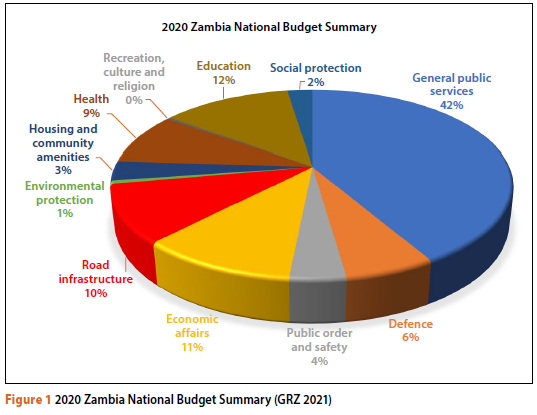
Large investments in road infrastructure continue to be high on the agenda of many African countries (Beuran et al 2015), Public road infrastructure has constituted an average of 9,62 percent of the Zambian annual budget over the past five years, albeit with a somewhat declining allocation, The budget allocations to public road infrastructure have predominantly exceeded those to other sectors such as Defence, Public Order and Safety, Environmental Protection, Housing and Community Amenities, Social Protection, and in some cases Health (GRZ 2017; 2018: 2020), Figure 1 shows a summary of the 2020 Zambia National Budget and associated allocations.
However, according to Mukuka et al (2014), public road works in Zambia implemented through contracts have not been spared from the challenges faced by other countries worldwide in terms of delivering projects on time as stipulated in the respective contracts.
The Auditor General's 2017 Report on Parastatals and other Statutory Institutions cited the National Road Fund Agency (NRFA) for failing to pay contractors engaged by the Road Development Agency (RDA) on time, This effectively led to wasteful expenditure due to prolonged contract implementation periods resulting in increased time-related obligations without securing funds for the associated increase to the contract sums, In addition, the delayed payments prompted penalty claims from contractors in accordance with the respective contract clauses (GRZ 2018), Further, Msisya (2020) concluded that financing modalities, and procurement methods, and not applying international best practice principles of contract management led to poor value for money on road construction contracts.
(Raballand et al 2013) state that the risks of inefficient investments in the road sector are significant, especially when considering the major amounts of resources being channelled into road infrastructure investments. Consequently, it is critical that the funds which are allocated to public road infrastructure contracts achieve value for money whilst achieving contract success. It is necessary to establish the underlying factors pertaining to contract management that contribute to the status quo.
During the project life cycle, contract management, as the core business of enterprises, is complex and has a profound influence on project schedule, cost, and risk control (Chen et al 2019). Further, according to Gunduz and Elsherbeny (2020), effective construction contract administration (CCA) is a core competency for the management of construction projects
Muya et al (2013) recommended that appropriate project management practices are required to curb the causes and effects of cost escalation and schedule delays in road construction projects.
Several documents, such as the Public Procurement Act No 8 of 2020 and the Public Finance Management Act No 1 of 2018, provide for the revision of "... the law relating to procurement so as to enhance transparency, efficiency, effectiveness, economy, value for money, competition and accountability in public procurement ..." and"... an institutional and regulatory framework for management of public funds ...", respectively. Notwithstanding, the contents of these documents, and others that may provide regulatory framework to an extent, are not exclusive to public road contract management and are as such not specifically drafted to address the associated shortcomings.
Consequently, the objectives of this research were to:
a. Identify the challenges encountered in road contract management in Zambia.
b. Determine critical success factors for successful road contract management in relation to the Zambian context.
c. Establish and validate a proposed Road Contract Management Framework for the Zambian Construction Industry.
LITERATURE REVIEW
Contracts can provide significant value, and yet ineffective contract management frequently leads to disputes. In practice, standard forms of contracts are hardly reviewed, and contract management is limited (Wang et al 2019).
The notion of project success criteria is one of the few topics that is so frequently discussed and yet so rarely agreed upon (Han et al 2012; Akal et al 2016). Depending on their roles, project participants have varying interests on any given construction contract, but they must agree, in principle, on objectives and certain key critical factors that can help to attain those objectives. As such, despite the lack of consensus in the overall critical success factor (CSF) rankings, Hwang and Lim (2013) found that some of the highest-rated CSFs, such as adequacy of plans and specifications, realistic and clear objectives, and scope and constructability are considered important internationally regardless of project objectives because they are central to a project's success.
In China, Wang et al (2019) proposed a construction contract management process framework - a 19-step benchmarking model for contract management, and a construction planning checklist were proposed. In Africa, and Uganda in particular, Oluka and Basheka (2014) postulated that significant predictors of determinants for effective contract management were the following: clear definition of processes and having in place contract management plans, appropriate methods of capturing key lessons from the contract management process, accurate definition of roles, and having a knowledgeable contract manager.
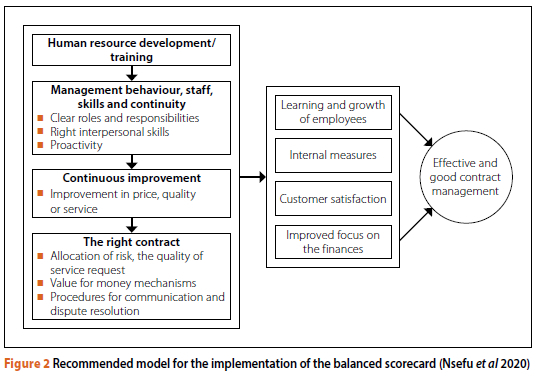
In Zambia, the model shown in Figure 2 was proposed to facilitate effective and good contract management in public administration. However, one specific to road contract management is required.
An extensive literature review provided input into the survey questionnaire variables for the challenges and CSFs.
The different stages of the contract life cycle cannot be considered in isolation. Every step of the cycle provides input into the next step. Problems that may occur in one step of the process can only be understood if what happened in the previous stages is understood (Van der Puil & Van Weele 2013; Bellec & Cottard 2016; Onalaja et al 2018). Each respective project should use a stage-gate approach to make certain that projects do not proceed to the next stage without key deliverables being satisfactorily completed. The use of predefined risk-register templates enables this to be implemented smoothly (Beckers et al 2013).
It was noted that there was a limited amount of literature pertaining to existing contract management frameworks. Further, considering that contracts are invariably necessitated to meet project objectives, a review of project management frameworks was also undertaken with a view to deriving a blend of concepts that could be utilised in developing the framework in this study.
In this vein, Project Management Body of Knowledge (PMBOK) is a fundamental resource for effective project management in any industry (PMI 2021) and is the most comprehensive standard (Ghosh et al 2012).
The Sixth Edition of the PMBOK published in 2017 contains the standard for managing projects across many types of industries through prescribed processes for the various phases of contract management. Further, the PMBOK guide and "The Standard for Project Management" are recommended references for tailoring, because these standard documents identify the subset of the project management body of knowledge that is generally recognised as good practice (PMI 2017).
The processes identified in the PMBOK framework (PMI 2017) are organised in process groups and knowledge areas. The process groups are the following: Initiating, Planning, Executing, Monitoring and Controlling, and Closing (Takagi & Varajão 2020). These process groups were adopted in this paper in the development of the Contract Management Framework.
METHODOLOGY
Sahin and Öztürk (2019) highlight that mixed-method research advances the utilisation of both quantitative and qualitative research methods in a blended manner and adopting a pragmatist perspective in the event that the research problem calls for this. The mixed method avers that in-depth and richer answers can be discovered pertaining to the research questions than when either the quantitative or qualitative research method is solely applied. This study accordingly adopted a mixed-method research approach.
The sequential exploratory design was selected in particular as it is more suited to explore a phenomenon and identify themes, and the relevant variables can be identified after the qualitative study. This was carried out through use of narrative/grounded theory qualitative methods followed by exploratory quantitative surveys.
The methods adopted in the course of this research were a blend of exploratory and document analysis during the desk-study extensive literature review, and cross-sectional survey research during the data-collection phase. Subsequent to this, a constructive and prescriptive approach was taken so as to develop and validate the framework through a Delphi technique, which comprised issuance of validation questionnaires and conducting semi-structured interviews.
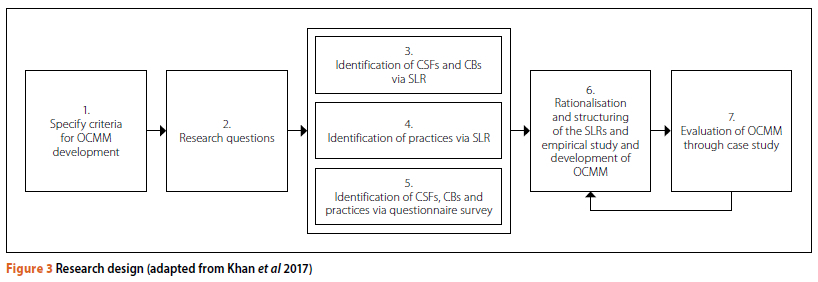
The research design utilised was adapted from similar studies on the problem, such as that by Khan et al (2017) shown in Figure 3. Steps 1 through 6, which involve specifying the criteria for the outsourcing contract management model (OCMM), identification of critical success factors (CSFs) and critical bottlenecks (CBs) via a structured literature review (SLR), among others, were carried out accordingly. However, step 7 (evaluation) was carried out through validation questionnaire and semi-structured interview in lieu of case study, to facilitate requisite input from relevant experts to validate the framework based on their experiences on various contracts which would arguably provide more contemporary findings.
Secondary data collection was carried out from sources such as books, journal articles, conference proceedings, government/institution publications, and selected websites.
Primary data collection was conducted by cross-sectional questionnaire surveys and semi-structured interviews.
The study area was the country of Zambia, but limited to the sectors involved in works contract implementation of public roads predominantly in Lusaka Province. The study targeted skilled technocrats who were involved in the day-to-day management of works contract implementation of public roads, particularly those in Lusaka Province. These were primarily employed by regulatory institutions, financiers, clients, consultants and contractors. For contractors and consultants, the number considered was for the principals of the organisations and their respective site representatives on ongoing projects. The population was estimated at 161.
According to Rugg and Petre (2004), a sample size of at least 50 is ideal for survey studies. However, similar studies by Nsefu et al (2020) for instance, adopted the Cochran Formula shown in Equation 1 for sample size calculation to arrive at the sample size. This was accordingly adopted in this study.
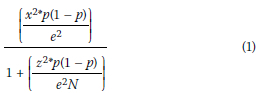
Where:
N = population size
e = margin of error (5% in decimal form)
z = z-score
p = the non-response rate at 10% from the sample population.
The sample population was estimated at 161. Therefore, with N = 161; e = 0.05; z = 1.96; p = 0.1, and utilising the Cochran formula, a minimum of 114 respondents were earmarked to participate in the study.
For the purposes of mitigating against bias in this study, the stratified random sampling was adopted to segregate the key strata involved in the subject area. Nevertheless, the stratification was disproportionate. In order to gain valuable and meaningful data that represented the views of road contract management practitioners who were the best-fit participants, purposive sampling of the sub-groups was carried out. Quantitative cross-sectional survey questionnaires were issued to respondents who were sampled, using disproportionate stratified random sampling to ensure representation of interest groups. The respondents forming the sample were skilled technocrats directly involved with the subject matter, and who accordingly provided first-hand insight and informed feedback on the study criteria.
The questionnaire was accordingly issued to 131 practitioners (sample) who are employed by contractors, consultants, client/client representatives, financiers, and a regulatory body. A total of 92 responses were received (78 complete responses and 14 partial responses), indicating a response rate of 70 percent. The response rate is based on total responses considering that the questionnaire took into consideration the fact that some respondents would not be conversant with all process groups. Further, the data collected would be subjected to a validation process. According to Johnson and Wislar (2012), there is no scientifically proven minimum acceptable response rate. Nevertheless, they assert that a response rate of 60% has generally been used as the threshold of acceptability. As such, the response rate of 70% in this study is considered acceptable.
The survey questionnaire was structured to yield a Likert rating scale of 1 to 5 for the factors being investigated, with 1 indicating strong disagreement and 5 representing strong agreement to the challenges and CSFs, respectively. The tools utilised for data analysis consisted of the SurveyMonkey analysis tool, Microsoft Excel, and the Statistical Package for Social Scientists (SPSS). These provided for the ranking of the factors to facilitate the prioritisation thereof in the respective knowledge areas and process groups. In addition, they were utilised to perform statistical analysis. Further, visual illustrations through charts and graphs were generated therefrom, as highlighted in the results section.
It is worth noting that, contemporaneously, the overall superintendence of the pertinent works contracts is carried out by personnel at head offices which are based in Lusaka. Therefore, the results obtained from these experts could be generalised to be representative of the study population.
Development of the framework was based on a combination of the existing theoretical body of knowledge, and empirical studies which provided input into the survey questionnaire and have been adapted to the context of this research through responses and validation. The developed research questions accordingly sought to identify the challenges, or critical bottlenecks, and critical success factors based on the set out criteria.
Considering the robust nature of the PMBOK Guide, this research accordingly endeavoured to establish a framework that would be best suited for public road works in the Zambian construction industry predominantly based on the PMBOK Guide. However, best practice recommendations from other research, standards, guides or methods were incorporated to enhance the appropriateness, adequacy and usability thereof.
Validation of the framework was carried out through a Delphi technique that involved the issuance of a validation questionnaire to respondents and conducting semi-structured interviews with the same respondents. According to Sourani and Sohail (2015), Delphi studies use varying sizes of panels, and literature does not specify the number of experts required for a Delphi study. Sourani and Sohail (2015), however, highlighted that a minimum appropriate size would comprise seven or eight experts, and noted that the specific number ought to be determined by the study characteristics, such as, inter alia, the desired representation.
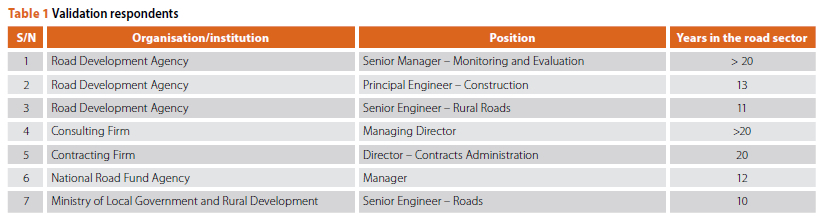
Seven practitioners, each with more than ten years' experience in the road sector, were selected to participate in the validation exercise. The practitioners were selected utilising the multi-phase sampling technique which involved recommendations of experts (sub-groups) from respondents that had participated in the initial questionnaire survey (group).
Renzi and Freitas (2015) highlight that it is critical that the experts selected to participate in the Delphi method represent diverse points of view regarding a central topic. There was accordingly representation from financier, client, consultant and contractor entities among the seven, as shown in Table 1, and the experts were therefore deemed to adequately represent the interest groups of this study. The experts were issued a validation questionnaire and a draft framework for their review and comments as the first round out of two rounds. The second round involved interviews with the experts, through which consensus was attained.
RESULTS / FINDINGS
For the questionnaire, 53.26 percent of the respondents had attained a Master's level of education, 45.65 percent had attained a Bachelor's level, whilst 1.09 percent had acquired a Doctorate in Philosophy. It is worth noting that no respondent possessed a qualification less than a Bachelor's degree.
Out of the 92 respondents, 81.52 percent had more than ten years' experience in the roads sector, of whom 31.52 percent had more than twenty years' experience.
Although the sample consisted of respondents from different strata, the analysis was carried out on the combined responses and did not discriminate.
The weighted average was obtained of each sub-criteria using the following formula:

Where:
x = response count for answer choice
w = weight of answer choice.
Contract initiation
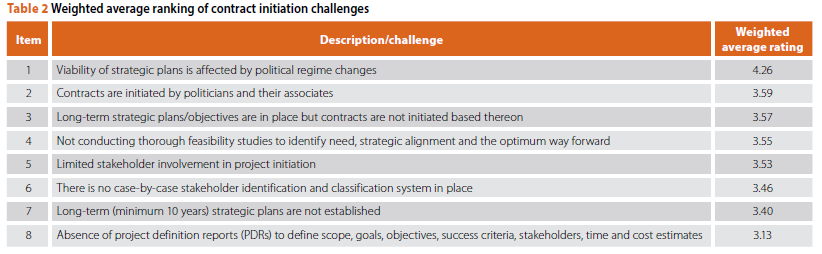
The challenges identified pertaining to contract initiation were ranked based on the average weightings of the respondent's views. The Likert scale utilised was: 1 = strongly disagree, 2 = disagree, 3 = not sure, 4 = agree, and 5 = strongly agree. The eight factors identified during the literature review were ranked as shown in Table 2.
Contract planning/procurement
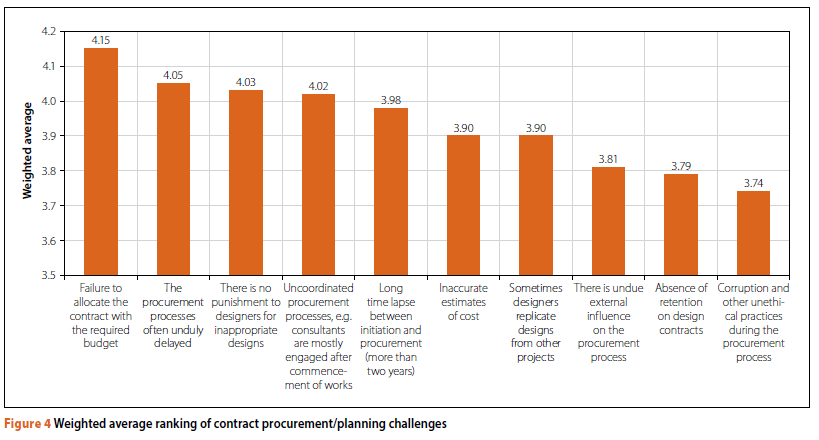
The challenges identified regarding contract planning/procurement were ranked based on the average weightings of the respondent's views. The Likert scale utilised was: 1 = strongly disagree, 2 = disagree, 3 = not sure, 4 = agree, and 5 = strongly agree. The challenges are shown in Figure 4.
Contract execution/implementation (administration)
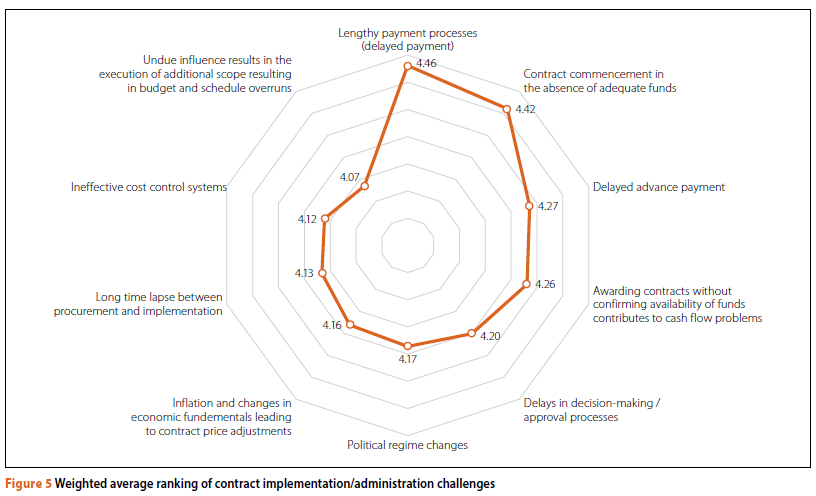
The challenges identified pertaining to contract administration were ranked based on the average weightings of the respondent's views. The Likert scale utilised was: 1 = strongly disagree, 2 = disagree, 3 = not sure, 4 = agree, and 5 = strongly agree. The challenges are shown in Figure 5.
Contract monitoring and control
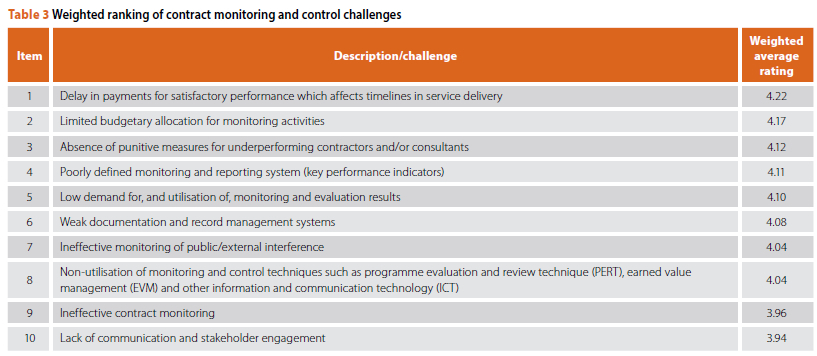
The challenges identified with respect to contract monitoring and control were ranked based on the average weightings of the responses. The Likert scale utilised was: 1 = strongly disagree, 2 = disagree, 3 = not sure, 4 = agree, and 5 = strongly agree. The challenges are shown in Table 3.
Contract closure
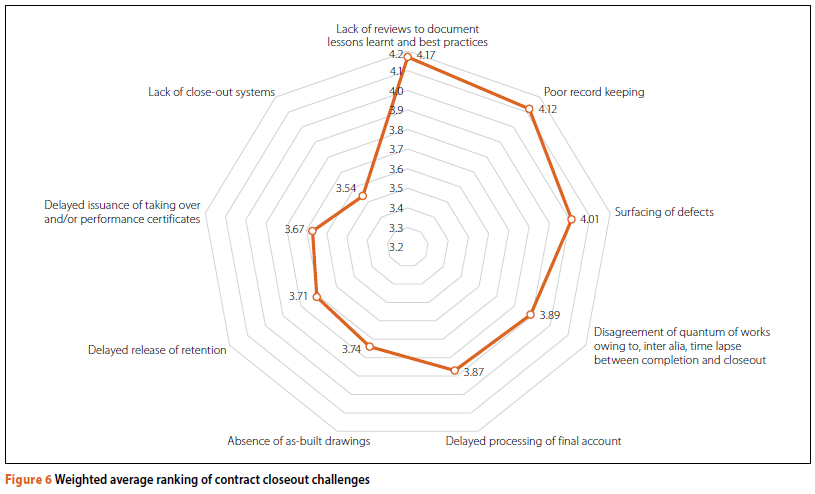
The challenges identified pertaining to contract closeout were ranked based on the average weightings of the respondent's views. The Likert scale utilised was: 1 = strongly disagree, 2 = disagree, 3 = not sure, 4 = agree, and 5 = strongly agree. The challenges are shown in Figure 6.
Critical success factors (CSFs)
Similar to the identified challenges, the CSFs were subjected to weighted ranking based on the respondents' views. The ranking formed the basis of the developed framework.
Statistical analysis
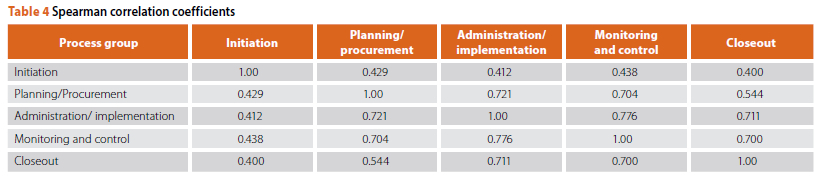
Table 4 shows the Spearman correlation coefficients. It is worth noting that the Spearman correlation coefficients, which range from -1 to +1, indicate the strength of the relationship of variables. According to Schober et al (2018), a Spearman rank correlation describes the monotonic relationship between two variables. The more positive the coefficient, the stronger the relationship, and vice versa. The calculation of the factors was carried out utilising a statistical package for social sciences (SPSS), which firstly involved ranking the respective data sets, and then carrying out the analysis within the software. In this paper it can be seen that the strongest positive correlation was between administration/implementation and monitoring and control which had a factor of 0.776. It can be inferred that it is imperative that effective monitoring and control of the activities during the contract implementation phase are carried out to facilitate successful administration of the contract. Further, the planning/procurement process is to be carried out diligently as a prerequisite to successful contract administration in view of the positive strength of the relationship.
FRAMEWORK DEVELOPMENT AND VALIDATION
The framework was developed based on the PMBOK Guide. It accordingly adopted the sequence of processes as outlined in the guide. It is worth noting that the monitoring and control process is deemed to be carried out throughout the contract management sequence of activities.
The validation was carried out by seven expert opinions on the proposed framework. The experts were selected based on recommendation from respondents who participated in the questionnaire survey during primary data collection.
The framework used was adjudged to be appropriate, adequate and usable in the Zambian construction industry subject to incorporation of the comments made by the experts. Some of the areas of improvement highlighted by the experts were the following:
■ Emphasis must be placed on ensuring that contracts or projects are not initiated if the criteria established in the framework are not complied with under contract initiation.
■ Politicians, civic and other traditional leaders should also be advised that they are key stakeholders and that contract initiation will be subject to fulfilment of the tenets prescribed in the framework.
■ The comprehensive feasibility studies are to incorporate establishment of baseline parameters against which targets will be set for measurement and appropriate action.
There was no success factor provided under monitoring and control to address the aspect of quality assurance control by the contractor. Considering that quality forms part of the triple constraint, there is need to put in place monitoring and control mechanisms that will facilitate quality workmanship and a finished product throughout the contract life cycle.
■ Risk management ought to be actively carried out from initiation all the way to closure.
■ The framework must provide for the execution of technical audits during the implementation phase in lieu of situations where the audits are conducted subsequent to completion when the consultant and contractor may have demobilised. This aspect must be discussed during monthly meetings as the project progresses.
■ To facilitate efficient monitoring and control of claims resolution during the implementation phase, there is need to ensure that timelines are established, such as in the FIDIC forms of contract.
■ The prompt and adequate resolution of claims assists the client in preparing for eventualities, such as the need for additional funding that may be required to resolve the claim.
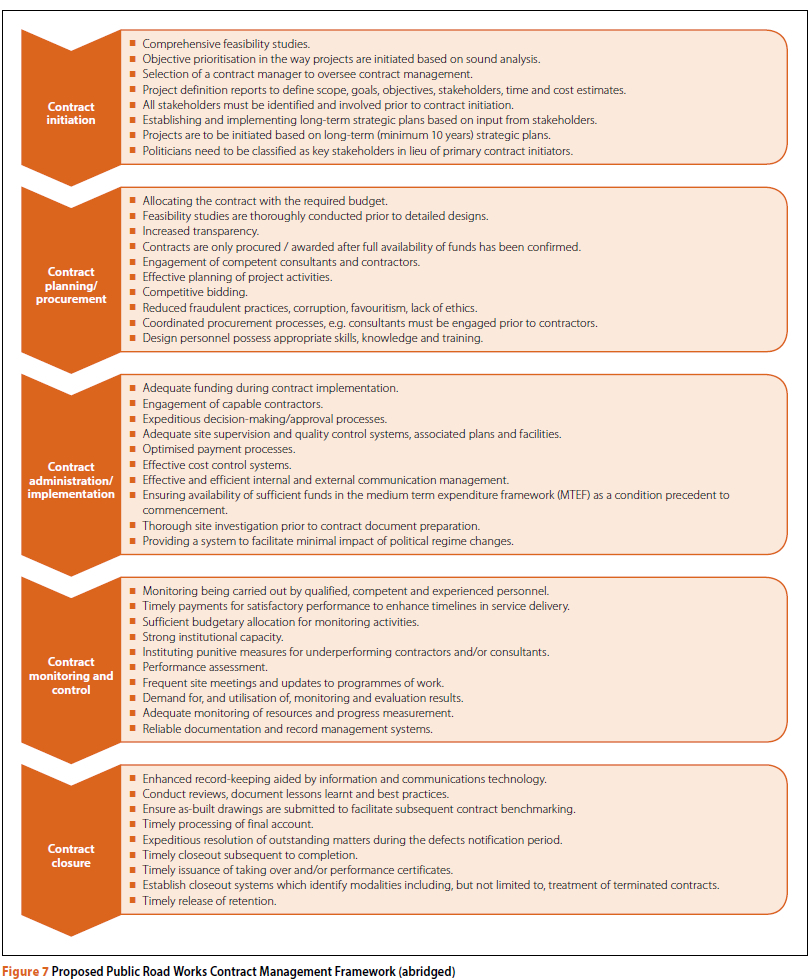
In cognisance of the findings, the top-ranked CSFs that are essential to facilitate successful public road contract management, as determined under the respective process groups, are shown in Figure 7. Contract monitoring and control have been included as part of the numbering sequence for illustrative purposes only.
CONCLUSIONS AND RECOMMENDATIONS
Conclusions
This paper presented challenges pertaining to public road works contract management. The major identified challenge, with the highest weighted average rating at 4.46, was lengthy payment processes during the contract execution stage. This was followed by the viability of strategic plans being affected by political regime changes during the contract initiation phase, which had a weighted average rating of 4.26. The top three challenges are concluded by the delay in payments for satisfactory performance affecting timelines in service delivery noted during the monitoring and control process, with a weighted average rating of 4.22.
As can been seen from the abridged framework in Figure 7, the top CSFs identified were the following:
■ Preparation of comprehensive feasibility studies that take into account, inter alia, population requirements, risk, environmental and social management
■ Allocating the contract with the required budget
■ Adequate funding during implementation
■ Monitoring being carried out by qualified, competent and experienced personnel
■ Enhanced record-keeping aided by information and communications technology respectively.
In view of the foregoing, a framework showing the CSFs which, if fulfilled, facilitate timely execution of quality roadworks at the budgeted cost, was developed and validated.
Recommendations
■ The framework should be adopted for implementation and be refined based on its performance.
■ The tenets of the framework should be incorporated in various legislature and enshrined in a statutory document that serves as a contract management manual so as to enhance its enforce-ability and consequently facilitate its optimum effectiveness.
■ The proposed framework should be digitalised so as to be available online for utilisation and enhancements.
REFERENCES
Akal, A, Abu El-Maaty, A & El-Hamrawy, S 2016. A circular framework for evaluating highway construction projects success: AHP approach. Civil Engineering Journal, 2(7): 324-333. [ Links ]
Beckers, F, Chiara, N, Flesch, A, Maly, J, Silva, E & Stegemann, U 2013. A risk-management approach to a successful infrastructure project. McKinsey Risk Working Paper No 52. [ Links ]
Bellec, M & Cottard, O 2016. Contract Manager: A new project team member? Paper presented at PMI Global Congress 2016-EMEA, Barcelona, Spain. [ Links ]
Beuran, M, Gachassin, M & Raballand, G 2015. Are there myths on road impact and transport in sub-Saharan Africa? Development Policy Review, 33(5): 673-700. [ Links ]
Chen, Y, Wang, M & Li, L 2019. A framework for the contract management system in cloud-based ERP for SMEs in the construction industry. Proceedings, ICCREM 2019: Innovative Construction Project Management and Construction Industrialization. Reston, VA: American Society of Civil Engineers, pp 1-11. [ Links ]
Ghosh, S, Forrest, D, DiNetta, T, Wolfe, B & Lambert, DC 2012. Enhance PMBOK' by comparing it with P2M, ICB, PRINCE2, APM and Scrum project management standards. PM World Today, 14(1): 1-77. [ Links ]
GRZ (Government of the Republic of Zambia) 2017. 2018 Budget Address by the Honourable Felix C Mutati, MP Minister of Finance, Delivered to the National Assembly on Friday, 29 September 2017. GRZ. [ Links ]
GRZ 2018. 2019 Budget Address by the Honourable Margaret D Mwanakatwe, MP, Minister of Finance, Delivered to the National Assembly on Friday 28 September 2018. GRZ. [ Links ]
GRZ 2020. 2021 Budget Address by the Honourable Dr Bwalya K E Ng'andu, MP, Minister of Finance, Delivered to the National Assembly on Friday, 25 September 2020. GRZ. [ Links ]
Gunduz, M & Elsherbeny, H A 2020. Operational framework for managing construction-contract administration practitioners' perspective through modified Delphi method. Journal of Construction Engineering and Management, 146(3): 04019110. [ Links ]
Han, W S, Yusof, A M, Ismail, S & Aun, N C 2012. Reviewing the notions of construction project success. International Journal of Business and Management, 7(1): 90. [ Links ]
Hwang, B G & Lim, E S J 2013. Critical success factors for key project players and objectives: Case study of Singapore. Journal of Construction Engineering and Management, 139(2): 204-215. [ Links ]
Johnson, T P & Swislar, J 2012. Response rates and nonresponse errors in surveys. JAMA, 307(17): 1805-1806. [ Links ]
Khan, A W, Khan, S U & Khan, F 2017. A case study protocol for the Outsourcing Contract Management Model (OCMM). Journal of Software, 12(5): 348-354. [ Links ]
Msisya, A 2020. Perceived unethical engineering in road construction in Zambia. In: Popkova, E (Ed). Supporting Inclusive Growth and Sustainable Development in Africa. Vol I. Cham, Switzerland: Palgrave Macmillan, 215-223. [ Links ]
Mukuka, M, Aigbavboa, C & Thwala, W 2014. Remedies to timely delivery of construction projects in Lusaka, Zambia: An exploratory study. Journal of Construction Project Management and Innovation, 4(Supplement 1): 906-911. [ Links ]
Muya, M, Kaliba, C, Sichombo, B & Shakantu, W 2013. Cost escalation, schedule overruns and quality shortfalls on construction projects: The case of Zambia. International Journal of Construction Management, 13(1): 53-68. [ Links ]
Nsefu, M K, Mwanaumo, E M, Mambwe, M, Daka, J & Mwanza, B G 2020. Effectiveness in the contract management performance within the Lusaka Provincial Administration: A balanced scorecard application. Proceedings, 2nd African International Conference on Industrial Engineering and Operations Management, 7-10 December, Harare, Zimbabwe. [ Links ]
Oluka, P N & Basheka, B C 2014. Determinants and constraints to effective procurement contract management in Uganda: A practitioner's perspective. International Journal of Logistics Systems and Management, 17(1): 104-124. [ Links ]
Onalaja, A, Cheung,W M & Samwinga, V 2018. Identifying infrastructure project uncertainties during project initiation using system thinking. Proceedings, Creative Construction Conference, Budapest University of Technology and Economics, pp 537-543. DOI: 10.3311/CCC2018-071. [ Links ]
PMI (Project Management Institute) 2017. A Guide to the Project Management Body of Knowledge (PMBOK- Guide), 6th ed. Newtown Square, PA: PMI. [ Links ]
PMI 2021. A Guide to the Project Management Body of Knowledge (PMBOK- Guide). Newtown Square: PMI. Available at: https://www.pmi.org/pmbok-guide-standards/foundational/pmbok. [ Links ]
Raballand, G, Bridges, K, Beuran, M & Sacks, A 2013. Does the semi-autonomous agency model function in a low-governance environment? The case of the Road Development Agency in Zambia. World Bank Policy Research Working Paper No 6585. [ Links ]
Renzi, A B & Freitas, S 2015. The Delphi method for future scenarios construction. Procedia Manufacturing, 3: 5785-5791. [ Links ]
Rugg, G & Petre, M 2004. The Unwritten Rules of PhD Research. London: McGraw-Hill Education. [ Links ]
Sahin, M D & Öztürk, G 2019. Mixed method research: Theoretical foundations, designs and its use in educational research. International Journal of Contemporary Educational Research, 6(2): 301-310. [ Links ]
Schober, P, Boer, C & Schwarte, L A 2018. Correlation coefficients: Appropriate use and interpretation. Anesthesia & Analgesia, 126(5): 1763-1768. [ Links ]
Sourani, A & Sohail, M 2015. The Delphi method: Review and use in construction management research. International Journal of Construction Education and Research, 11(1): 54-76. [ Links ]
Takagi, N & Varajao, J 2020. Success management and the Project Management Body of Knowledge (PMBOK- ): An integrated perspective - research-in-progress. International Research Workshop on Information Technology Project Management, 12: 12. [ Links ]
Van der Puil, J & Van Weele, A 2013. International Contracting: Contract Management in Complex Construction Projects. Singapore: World Scientific. doi.org/10.1142/p894. [ Links ]
Wang, C, Yap, J B H, Wood, L C & Abdul-Rahman, H 2019. Knowledge modelling for contract disputes and change control. Production Planning & Control, 30(8): 650-664. [ Links ]
 Correspondence:
L Munga
Road Development Agency
PO Box 50003, Lusaka, Zambia.
E: lutangumunga@gmail.com
B Mwiya
Department of Civil and Environmental Engineering, University of Zambia
PO Box 32379, Lusaka, Zambia
E: balimu.mwiya@unza.zm

ENGINEER LUTANGU MUNGA is a Professional Civil Engineer who possesses a Bachelor's Degree in Civil Engineering from the Copperbelt University in Zambia and a Master of Engineering in Construction Management from the University of Zambia. He is a practising civil engineer with nine years' experience on road, bridge and building engineering projects. He is passionate about infrastructure development and innovative contract management where various forms of contract are used. He furthermore has particular interest in claims evaluation and determination, adjudication, and dispute avoidance and resolution.

DR BALIMU PAULINE MWIYA holds a PhD in Construction Management. She obtained an MEng degree in Construction Management from the University of Zambia, and a BSc degree in Building from the Copperbelt University, also in Zambia. She furthermore has an Associate degree in Software Engineering from the University of Advancing Technology in Arizona, USA. She is a Registered Engineer and a Fellow of the Engineering Institution of Zambia. In addition, she is a Registered Quantity Surveyor, a member of the Surveyors Institute of Zambia, and also a member of the Association for the Advancement of Cost Engineering.