



Servicios Personalizados
Revista

Articulo
 Inglés (pdf)
 Articulo en XML
 Referencias del artículo

 Traducción automática
 Enviar articulo por email
Indicadores
Links relacionados
-
 Citado por Google
-
 Similares en Google
Compartir

 Permalink

South African Dental Journal
versión On-line ISSN 0375-1562versión impresa ISSN 0011-8516
S. Afr. dent. j. vol.81 no.3 Johannesburg abr. 2026
https://doi.org/10.17159/sadj.v81i03.22391
RESEARCH
Assessing the Knowledge, Attitudes and Practices of Gauteng Dentists Regarding Oral Health and Complications Associated with Cancer Treatment
S DuarteI; J FourieII; C BennIII; D RamkilawonIV
IQualification: BDS (Wits). Department of Periodontics and Oral Medicine, University of Pretoria, Faculty of Health Sciences, School of Dentistry. ORCID Number: 0009-0009-2845-1739
IISupervisor. Specialist in Oral Medicine and Periodontics Oral and Dental Hospital Room 4-62. Department of Periodontics and Oral Medicine, University of Pretoria, Faculty of Health Sciences, School of Dentistry. Email: jeanine.fourie@up.ac.za; Tel: 012 319 2312
IIICo-Supervisor: E-mail: drbenncarol@gmail.com
IVInternal Statistical Consultation Service, University of Pretoria
ABSTRACT
INTRODUCTION: Oral complications from cancer treatments often lead to treatment delays and decreased quality of life. Limited patient education, lack of specialised dental care, and poor interdisciplinary communication contribute to inadequate patient management.
AIMS AND OBJECTIVE: To assess the knowledge, attitudes and practices of Gauteng dentists regarding oral health and complications associated with cancer treatment.
DESIGN: A descriptive cross-sectional study was conducted using a previously validated anonymous online questionnaire.
METHODS: Convenience sampling was employed by sending general dentists in Gauteng an invitation to participate and a link to the questionnaire via LinkedIn.
RESULTS: A total of 61 general dentists were surveyed, most treat 5-10 cancer patients annually, with 60.7% managing most oral complications themselves. Only 55.7% follow treatment protocols, many unsure of which specific protocol. Communication with oncology teams is inconsistent and many dentists feel inadequately trained to treat oral complications. Key barriers include insufficient pre-treatment time (78.7%), lack of patient education (75.4%), and poor oncology-dental coordination.
CONCLUSIONS: This study highlights gaps in general dentists' training, inconsistencies of protocols followed, and a lack of interdisciplinary communication with oncology teams. Standardised protocols, enhanced training, and improved collaboration are essential to optimise oral healthcare for cancer patients.
Keywords: Dentists, Cancer patients, Oral complications, Knowledge, Protocols, Training
INTRODUCTION
Chemo and radiation therapy frequently cause oral mucositis, a serious oral complication with significant implications. Oral mucositis results primarily from chemotherapy-induced suppression of epithelial cell proliferation, which disrupts mucosal renewal and leads to ulceration. This process is compounded by complex inflammatory cascades involving oxidative stress, cytokine release, and tissue signalling, amplifying damage and delaying healing. Oral mucositis presents clinically with varying degrees of erythema, erosion and ulceration.
Cancer patients undergoing chemo and radiation treatments commonly experience oral complications that impair oral function, contribute to physical and psychological challenges, and ultimately reduce their quality of life.1-3 Oral mucositis often limits the effective administration of chemotherapy and radiation therapy due to its frequency and severity.2-5 Severe cases of oral mucositis can reduce chemotherapy doses, delay or interrupt treatments, or increase hospitalisations.5-8 In extreme cases, some patients even discontinue cancer therapy due to the severity of oral mucositis.3 These interruptions hinder optimal treatment outcomes and negatively affect patient survival rates.5,7
Insufficient assessment, diagnosis, treatment, and follow-up, along with under-reporting by patients, often contribute to oral complications in cancer patients. Educating patients about potential oral complications, emphasising the importance of addressing oral concerns before cancer treatment, and encouraging them to monitor and report emerging problems are critical measures needed to prevent and minimise the severity of oral complications experienced during cancer treatment.9,10 Lack of patient education is a large contributing factor to under-reporting of oral conditions and subsequent oral complications of cancer treatment. Other barriers to adequate oral care include insufficient time before cancer therapy, inadequate dental insurance, limited training, poor communication with oncology teams (including lack of dental referrals), and patients' undervaluation of dental concerns.8,10,11
Skilled dentists play a critical role in reducing the incidence of oral complications before cancer therapy. Dental prophylaxis reduces the oral bacterial load, effectively reducing the risk oral infections.12,13
Designated dental practitioners and specialists, such as Periodontists and Oral Medicine specialists, are essential in oncology teams to manage cancer treatment-related oral complications, ensuring safe and effective care from diagnosis to survivorship.9 These specialists should establish effective interdisciplinary communication with oncology teams.8,9 Without these oral care services, significant gaps emerge that can negatively affect cancer treatment outcomes and reduce patients' overall quality of life.8
Timely communication by a multidisciplinary healthcare team is essential to prevent and manage cancer-treatment induced oral complications.1,10 Advanced oncology centres often include dedicated dentists in their teams, as the National Cancer Institute (NCI) recommends.3,8 However, over half of United States cancer centres lack a dedicated dental department or experienced dental practitioners within their cancer care teams.9
Epstein et al., (2018) found that during cancer therapy, 74% of patients experienced oral complications, with the majority being managed by cancer centre medical staff (77%) and a small percentage (4%) treated by community dental providers. Although general dentists primarily perform pre-treatment evaluations, the treatment of oral complications is largely handled by designated dentists affiliated with a cancer centre and other providers such as speech and language pathologists.14
General dentists often lack sufficient training and experience to manage medically complex patients, including those undergoing cancer treatment.8,9,13 Dang et al., (2020) found that while most dentists counsel patients on oral complications of cancer therapy, only half feel adequately trained to provide comprehensive care for these patients.11 Similarly, Patel et al., (2012) revealed that many dentists feel unprepared to manage patients undergoing head and neck radiation, and highlight the need for enhanced continuing education, additional training opportunities, and improved undergraduate curricula.11,15 The Institute of Medicine of the National Academy of Sciences (IOM) calls for better preparation of future providers to treat medically complex patients, including oncology patients receiving chemo/radiation therapy.7
The objective of this study is to evaluate the Knowledge, Attitudes and Practices (KAP) of general dentists in Gauteng regarding the dental treatment of cancer patients and the management of oral complications associated with cancer therapies.
METHODS AND MATERIALS
A descriptive cross-sectional study was conducted through an anonymous questionnaire, distributed through Google Forms, to examine the KAP of Gauteng general dentists on treating cancer patients and managing cancer treatment-associated oral complications. The questionnaire explored the following themes: treatment of cancer patients, dental services rendered, communication with oncology units, barriers to dental care and a free response section.
The online questionnaire was modified from previously validated questionnaires.7,11
Convenience sampling was employed by sending general dentists in Gauteng an invitation to participate and a link to the questionnaire, which was provided through the LinkedIn social media platform. The questionnaire was self-administered and anonymous, and it was completed on Google Forms. Accordingly, POPIA requirements were met as no personally identifiable information was collected or used for the distribution of the questionnaire.
The purpose of the study was clarified, accompanied by the participant information and informed consent document.
Data was collected during September 2024 - December 2024, and automatically captured and stored in Google Forms from where it was exported to Google Sheets for analysis.
The data analysis primarily consisted of descriptive statistics such as means, medians, standard deviations, frequencies, and proportions to describe the results.
The sample size was calculated by a power analysis which showed that statistical tests like the Chi-square test with a medium effect size of 0.5, using G*Power 3.1.9.4, at an alpha level of 5% and a power of 85%, a sample size of 55 dentists was required.
This research was approved by the Human Research Ethics Committee (HREC) at the University of Pretoria (Ethics Reference Number: 528/2023).
RESULTS
A total of 61 general dentists responded to the survey. The total number of dentists reached through the LinkedIn social media platform could not be assessed and therefore a response rate cannot be calculated. Once the sample size was reached, distribution of the survey was halted and collection of responses discontinued.
Treatment of Cancer Patients
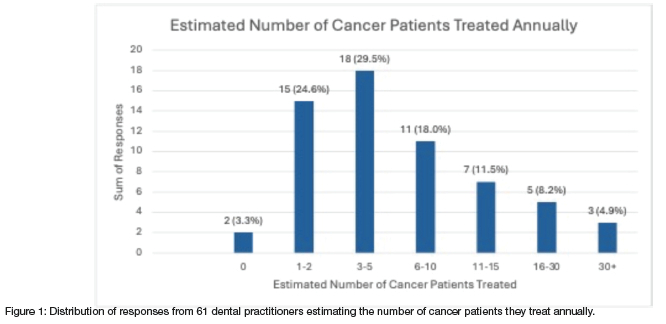
Overall, 29.5% (n = 18) of dentists reported treating 3 to 5 cancer patients per year, while 24.6% of dentists (n = 15) treated an average of 1 to 2 patients annually. The remaining 45.6% (n = 28) provided a range of responses, as detailed in Figure 1.
When oral or dental complications arise due to cancer treatment, 60.7% (n = 37) of general dentists reported confidence in managing these issues independently. Additionally, 49.2% (n = 30) referred patients to a Periodontist or Oral Medicine specialist, while 45.9% (n = 28) referred them to a Maxillofacial and Oral Surgeon. Other referrals included 13.1% (n = 8) to an oncologist and 21.3% (n = 13) who specifically refer to the patient's oncologist. Notably, one dentist reported referring patients to a dental professional specialising in oncological care or other specialists, depending on the complication and its complexity, particularly if the problem extended beyond the general dentist's scope. Multiple answers could be selected.
The majority of general dentists, 82% (n = 50), counsel their cancer patients on the oral complications associated with cancer therapy, including long-term oral care. Additionally, 55.7% (n = 34) of dentists follow specific protocols when treating oncology patients. However, 55.9% (n = 19) of the dentists who follow protocols are unsure of which specific protocols they are implementing.
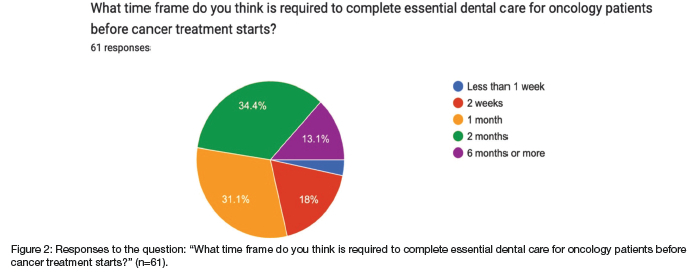
The pie chart (Figure 2) depicts dentists' opinions regarding the optimal time frame for completing necessary dental care prior to cancer treatment. The most common response was 2 months (34.4%, n = 21), followed by 1 month (31.1%, n = 19), 2 weeks (18%, n = 11), 6 months or more (13.1%, n = 8), and less than 1 week (3.3%, n = 2).
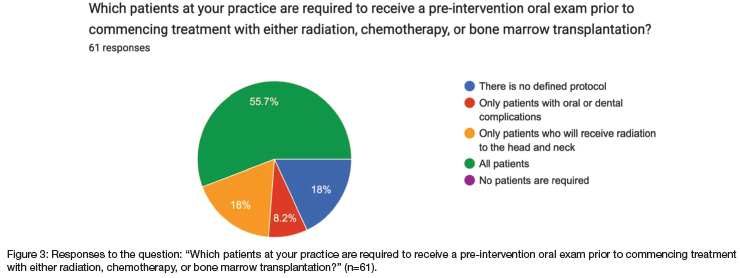
The pie chart (Figure 3) illustrates dentist's responses regarding the timeline required for treating cancer patients, and which patients require a pre-treatment dental examination. The majority, 55.7% (n = 34), indicated that all cancer patients undergo a pre-intervention oral exam. Other responses included limiting the examination to patients receiving radiation to the head and neck (18%, n = 11), patients with existing oral or dental complications (8.2%, n = 5), and practices where no defined protocol is in place (18%, n = 11).
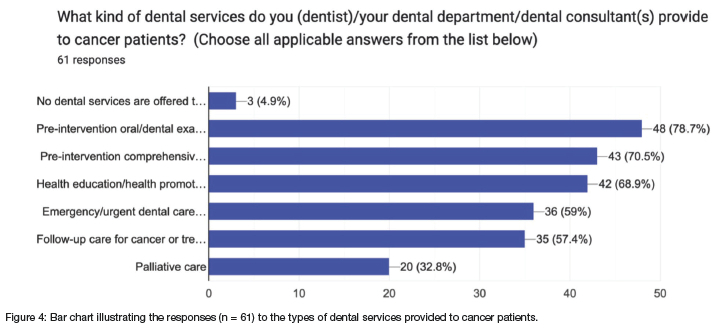
The type of dental services provided to cancer patients by dental practitioners are presented in Figure 4. The most commonly offered service was "Pre-intervention oral/dental examination", reported by 78.7% (n = 48) of respondents. This was followed by "Pre-intervention comprehensive dental treatment" (70.5%, n = 43) and "Health education/health promotion" (68.9%, n = 42). Other services included "Emergency/urgent dental care" (59%, n = 36), "Follow-up care for cancer or treatment-related complications" (57.4%, n = 35), and "Palliative care" (32.8%, n = 20). A small proportion, 4.9% (n = 3), indicated that no dental services are offered to cancer patients within their practice. Multiple answers could be selected by dentist participants.
Oncology Communication
When asked about correspondence from oncology teams during patient referrals - such as details regarding the patient's cancer diagnosis, start date of cancer therapy, medications - 9.8% (n = 12) of dentists reported always receiving this information. 34.4% (n = 21) stated they sometimes received it, 29.5% (n = 18) rarely did, and 26.2% (n = 16) never received feedback.
Regarding feedback from oncology teams, 19.7% (n = 12) of dentists reported always receiving feedback, 23% (n = 14) sometimes did, 26.2% (n = 16) rarely received feedback, and 31.1% (n = 19) never received feedback.
In terms of communication regarding planned dental treatment, 60.7% (n = 37) of dentists always shared their recommendations with oncology teams for extractions, restorations, periodontal health, and other urgent oral care. Conversely, 23% (n = 14) sometimes communicated such plans, 14.8% (n = 9) rarely communicated, and one dentist never communicated planned dental treatment with oncology teams.
A total 44.3% (n = 27) of general dentists believe they are responsible for providing oral care to patients undergoing cancer treatment. However, 31.1% (n = 19) attributed this role to a dental consultant affiliated with a cancer centre, 23% (n = 14) believed it should be managed by a specialist, and one dentist indicated that this responsibility should lie with a dental school.
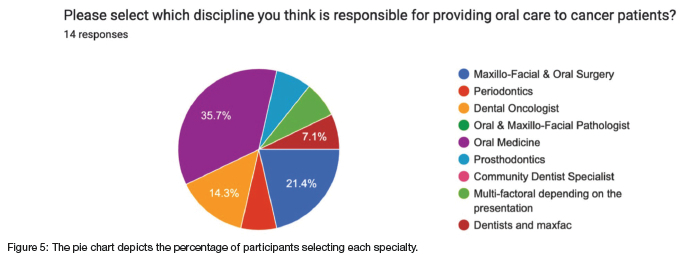
Among those who believed a specialist should be responsible for the oral care of cancer patients, responses varied by discipline. The most frequently cited specialities included Oral Medicine (35.7%, n = 5), Maxillo-Facial and Oral Surgery at (21.4%, n = 3), and Dental Oncology (14.3%, n = 2). Other responses, such as Prosthodontics and Periodontics, were less commonly selected. (Figure 5)
The majority of general dentists, 86.9% (n = 53), supported the involvement of a dental oncologist in the multidisciplinary management of oncology patients, citing benefits such as improved patient care and efficiency. In contrast, 13.1% (n = 8) believe that general dentists should handle the oral care needs of cancer patients, reserving specialist referrals for cases requiring specialised intervention. Some responses highlighted concerns about increased financial costs and the benefits of a collaborative, multidisciplinary approach.
When asked whether they felt adequately trained to manage oncology patients, 32.8% (n = 20) of dentists answered "No", 45.9% (n = 28) answered "Somewhat", and 21.3% (n = 13) answered "Yes." Among those who selected "Somewhat", the general consensus was that most dentists received limited or inadequate undergraduate training, resulting in a lack of practical skills required to manage cancer patients effectively.
When asked, "Do you feel confident/ comfortable to manage the oral health of oncology patients?", 67.2% (n = 41) of dentists answered "Yes", while 32.8% (n = 20) answered "No". Among those who did not feel confident, referrals for oncology-related dental consultation and dental care were split equally between Oral Medicine specialists (50%, n = 10) and Prosthodontists (50%, n = 10).
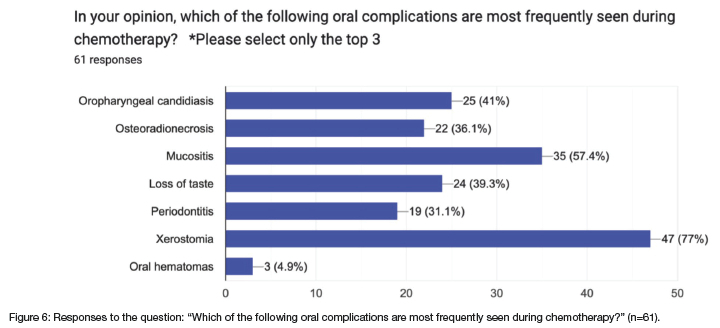
Figure 6 depicts the most commonly seen oral complications seen during chemotherapy, based on the dentists' top three reported complications. The most frequently reported complications were xerostomia (77%, n = 47), mucositis (57.4%, n = 35), and oropharyngeal candidiasis (41%, n = 25). Other reported complications included loss of taste (39.3%, n = 24), osteoradionecrosis (36.1%, n = 22), periodontitis (31.1%, n = 19), and oral hematomas (4.9%, n = 3).
Barriers to Dental Care
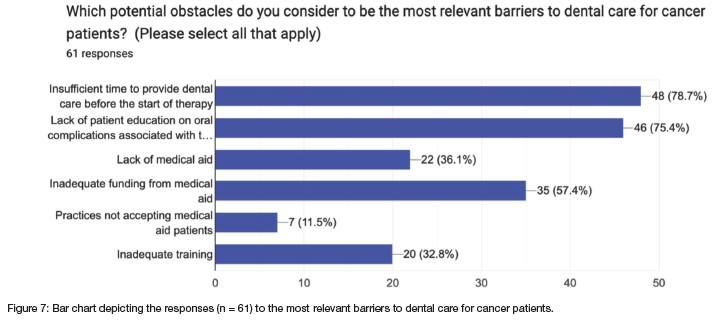
The most frequently cited obstacles to providing dental care to oncology patients (Figure 7) were "Insufficient time to provide dental care before the start of therapy" (78.7%, n = 48) and "Lack of patient education on oral complications associated with treatment" (75.4%, n = 46). Other notable barriers included "Inadequate funding from medical aid" (57.4%, n = 35), "Lack of medical aid" (36.1%, n = 22), "Inadequate training" (32.8%, n = 20), and "Practices not accepting medical aid patients" (11.5%, n = 7). Multiple answers could be selected.
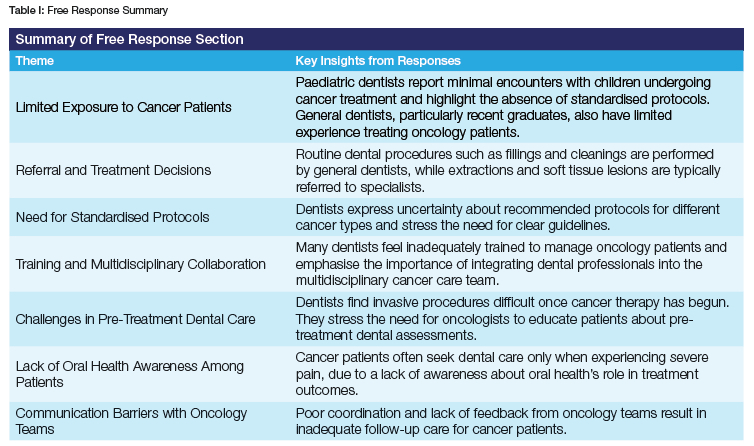
Other notable barriers include a lack of oncology input and team management. Many responses highlighted that oncologists do not provide communication or emphasise the need for pre-treatment dental screening, contributing to a lack of multi-disciplinary patient management.
DISCUSSION
This study aimed to assess Gauteng general dentists' KAP on the treatment of cancer patients and management of oral complications caused by cancer therapy.
Confidence and Responsibility of Managing Oral Complications
The findings of this study highlight a notable discrepancy between dentists' perceived competence and their sense of professional responsibility in managing oral complications associated with cancer treatment. While the majority of general dentists report confidence in addressing these complications and frequently manage such cases, less than half consider this aspect of care to fall within their professional remit. This suggests that confidence does not necessarily translate into ownership of responsibility, which may reflect ambiguity in role definition within multidisciplinary cancer care.
The tendency to refer complex cases to specialists underscores the recognition of the need for advanced expertise. However, the perception that cancer centre-affiliated dental consultants, specialists, and even dental schools should assume primary responsibility indicates a systemic gap in integrating general dentists into oncology care pathways. This could be attributed to limited formal training in oncology-related oral health, lack of structured collaboration with cancer centres, or uncertainty regarding medico-legal obligations.
An online survey conducted by Epstein et al., (2018) found that oral complications as a result of cancer therapy were generally treated by medical staff at the cancer centre (77.7%), followed by dentists affiliated with the cancer centre and other providers such as speech and language pathologists. Community dentists provided treatment to only 4.4% of these patients.14
Jawad et al., (2015) in a review of head and neck cancer patients, highlighted the crucial role of general dental practitioners in managing oral complications of cancer treatment. With a thorough understanding of oral care for cancer patients and by collaborating with oncology, general dentists should be well-equipped to provide essential guidance and treatment for these patients.16
Training and Education
Regarding training and education, 32.8% of dentists reported limited training to manage oncology patients. Another 45.9% state they feel "Somewhat" prepared, while only 21.3% feel fully prepared. Dentists who selected "Somewhat" often cite insufficient or limited undergraduate training as an important limitation. This is evident through the high referral rates to other specialities.
Epstein et al., (2014) similarly found that many dental care providers in community practice are unprepared to address oral complications in cancer patients due to inadequate undergraduate and graduate education, limited continuing education, and minimal experience with medically complex cases.9
Dentists lack practical skills for managing cancer patients, as training prioritises referrals over comprehensive care. Epstein et al., (2014) highlight the importance of general dentists and specialists collaborating to deliver safe and effective oral care, stressing the importance of sufficient training to meet this objective.9
Dang et al., (2020) reported that although most dentists counsel patients on oral complications of cancer treatment, only 50% felt adequately prepared to manage cancer patients holistically.11 Similarly, Patel et al., (2012) revealed that many dentists felt inadequately trained to treat patients undergoing head and neck radiation, underscoring the need for enhanced continuing education, additional training opportunities, and improved undergraduate programmes.15 The IOM reinforces this view, advocating for the preparation of future providers to effectively manage medically complex patients.7
Standardisation of Protocols
A total of 55.7% of dentists reported adhering to protocols when treating oncology patients, while 44.3% reported having no specific protocols in place. Among those who claimed to follow protocols, 55.9% (19 dentists) were unsure about the specific protocols they followed. This inconsistency highlights a significant gap in standardisation and may explain the frequent need for general dentists to refer cancer patients to specialists.
Epstein et al., (2007) identified similar challenges, noting significant gaps in dental care and the lack of clearly defined protocols for addressing dental needs at NCI designated cancer centres.8 Likewise, Barker et al., (2005) surveyed 212 members of the Multinational Association of Supportive Care in Cancer (MASCC) and the International Society for Oral Oncology, highlighting the urgent need for evidence-based, standardised protocols and guidelines to enhance dental care in oncology settings.17
The lack of standardised protocols creates inconsistencies in the time general dentists require to provide dental care to oncology patients before initiating cancer treatment. Only 55.7% of dentists routinely conduct pre-intervention oral examinations for all patients before starting cancer therapy. Similarly, Epstein et al., (2018) found that general dentists performed the majority of pre-cancer therapy evaluations (55.8%), while medical practitioners managed most oral supportive care during therapy (77.7%), with cancer centre dentists contributing minimally (8.9%).14 These findings highlight the need for a well-prepared oral care team to effectively manage oncology-related oral complications.
Standardised protocols could streamline practice patterns, unify management strategies, and clarify referral processes, fostering more consistent and coordinated care for oncology patients.
The lack of standardised treatment protocols to guide general dentists further contributes to inadequate undergraduate training. Carvalho et al., (2018) addressed this gap by reviewing 54 systematic and randomised control studies, offering one of the few evidence-based guidelines for preventing and managing oral complications before, during, and after cancer treatment.18 The absence of a standardised protocol for general dentists results in inconsistent care and leaves dentists without clear guidance on providing adequate oral care for cancer patients.
Epstein et al., (2018) reported that cancer patients are generally unsatisfied with the pre-treatment education that they received from dental practitioners and attribute it to a lack of consistency and standardised protocols.14
A national consensus statement that includes clear guidelines, should be developed to define essential oral and dental care before, during, and after cancer treatment. This should then be implemented into undergraduate dental training.
Multidisciplinary Management
Most general dentists (86.9%) believe that incorporating a dental oncologist into the multidisciplinary management of oncology patients, either through employment or outsourcing, would enhance efficiency and improve patient care. However, some dissenting dentists argue that general practitioners should possess the skills to manage cancer patients and their oral complications independently, thereby avoiding referrals and reducing associated costs.
Epstein et al., (2007) emphasised the critical role of general dentists within a multidisciplinary team (MDT), stating, "A MDT, with active participation of dentists in the care of oncology patients, can lead to highly effective preventive and therapeutic outcomes."8 The MASCC also endorses the involvement of dentists in oncology care, with most advanced cancer centres including dentists in their MDT's as standard practice.3 This approach aligns with recommendations from the NCI.8
Several governing bodies, including the European Society for Medical Oncology (ESMO), and the National Comprehensive Cancer Network (NCCN), advise establishing treatment plans through a MDT.19 However, achieving this proves difficult as only 9.8% of dentists routinely receive correspondence from their patients' oncology teams, while 26.2% never receive it, 34.4% sometimes, and 29.5% rarely. Despite this gap, 60.7% of dentists consistently communicate dental treatment plans-such as extractions, restorative needs, periodontal care, and urgent oral health concerns - to oncology teams. Yet, only 19.7% of dentists report always receiving feedback, 23% sometimes, 26.2% rarely, and 31.1% never receive any feedback. This significant communication disconnect between general dentists and oncology teams hinders effective multidisciplinary care for oncology patients. Similarly, Dang et al., (2020) found that most dentists rarely or never receive correspondence from oncology teams regarding cancer diagnosis, type or stage, therapy start dates, medications, or complete blood counts.11
Comprehensive dental care across all phases of cancer therapy (pre-treatment, during treatment, and post-treatment) forms an integral part of the multidisciplinary management of oncology patients.9,10,13
General dentists play a pivotal role in ensuring adequate oral care for cancer patients, which necessitates timely collaboration between dental and oncology teams. Clear and effective communication between these teams is critical to preventing and addressing oral complications arising from cancer treatment. The absence of multidisciplinary care can hinder patients' understanding of the oral implications of cancer therapy, delay necessary dental interventions, and elevate the risk of complications, potentially disrupting the continuity of oncologic treatment.
Barriers to Care
Key obstacles in providing dental care to oncology patients include limited time to deliver care before therapy (78.7%), inadequate patient education on oral complications (75.4%), insufficient or absent medical aid (36.1%), inadequate medical aid funding (57.4%), practices not accepting medical aid (11.5%), and insufficient training for dental practitioners (32.8%). Poor coordination and communication with oncology teams further exacerbate these challenges. Dentists highlighted a lack of input from oncologists and insufficient emphasis on pre-treatment dental screenings, revealing critical gaps in multidisciplinary patient management. Dang et al., (2020) identified similar barriers, the most frequently cited was insufficient time to complete dental treatment before cancer therapy commences and lack of patient education regarding oral complications.11
Epstein et al., (2018) emphasised that the obstacles to dental care of oncology patients should be identified and addressed to ensure optimal oral care. Specific targeted interventions included patients receiving and retaining oral care education, improved access to oral care professionals who are sufficiently trained in treating cancer patients, with the implementation of dedicated clinics.14
Collectively, these challenges highlight the urgent need for better coordination, enhanced communication, and comprehensive training between oncology and dental care teams to optimise patient care and outcomes.
Limitations
This study utilised an online survey and collected 61 responses, exceeding the target sample size of 55 general dentists. Notably, 60% (37 respondents) graduated between 2020 and 2024, likely reflecting greater engagement with digital platforms and online surveys among recent graduates. However, this demographic may have limited experience in treating cancer patients, which could impact the generalisability of the findings to the wider population of Gauteng dentists. Nevertheless, the results are consistent with findings in previous research studies conducted, revealing considerable variability in the oral and dental care offered to patients undergoing cancer therapy.
CONCLUSIONS
This study identifies significant gaps in the knowledge, training, and coordination of general dentists in Gauteng regarding the oral care of oncology patients. Many dentists feel confident to manage oral complications related to cancer treatment, however, fewer than half consider it their primary responsibility. Only 55.7% follow protocols, but many are unsure about which protocols they are implementing. This inconsistency contributes to delays in care and over-reliance on dental specialists.
The findings of this study highlight the need for standardised, evidence-based protocols, improved undergraduate and continuing education, and better communication between dental and oncology teams. Barriers such as limited time, inadequate funding and resources further hinder effective care. In conclusion, strengthening training, defining roles within MDT's, and enhancing collaboration between dental and oncology teams are critical steps toward more consistent, coordinated, and effective oral healthcare for oncology patients.
Future studies should explore the design and benefits of standardised cancer patient management protocols.
REFERENCES
1. Epstein J.B., Thariat J., Bensadoun R.J. Oral complications of cancer and cancer therapy: from cancer treatment to survivorship. CA Cancer J Clin. 2012;62(November-December (6)):400-422. [PubMed] [Google Scholar] [ Links ]
2. García-Chías, B., Figuero, E., Castelo-Fernández, B., Cebrián-Carretero, J.L. and Cerero-Lapiedra, R. (2019). Prevalence of oral side effects of chemotherapy and its relationship with periodontal risk: a cross sectional study. Supportive Care in Cancer, [online] 27(9), pp.3479-3490. doi:https://doi.org/10.1007/s00520-019-4650-6. [ Links ]
3. Biswal, B. (n.d.). CURRENT TRENDS IN THE MANAGEMENT OF ORAL MUCOSITIS RELATED TO CANCER TREATMENT. [online] Available at: https://www.ncbi.nlm.nih.gov/pmc/articles/PMC3341902/pdf/mjms-15-3-004.pdf [Accessed 6 Mar. 2023]. [ Links ]
4. Lalla, R.V., Bowen, J., Barasch, A., Elting, L., Epstein, J., Keefe, D.M., McGuire, D.B., Migliorati, C., Nicolatou-Galitis, O., Peterson, D.E., Raber-Durlacher, J.E., Sonis, S.T. and Elad, S. (2014). MASCC/ISOO clinical practice guidelines for the management of mucositis secondary to cancer therapy. Cancer, [online] 120(10), pp.1453-1461. doi:https://doi.org/10.1002/cncr.28592. [ Links ]
5. Sonis ST, Elting LS, Keefe D, Peterson DE, Schubert M, Hauer-Jensen M, Bekele BN, Raber-Durlacher J, Donnelly JP, Rubenstein EB; Mucositis Study Section of the Multinational Association of Supportive Care in Cancer; International Society for Oral Oncology. Perspectives on cancer therapy-induced mucosal injury: pathogenesis, measurement, epidemiology, and consequences for patients. Cancer. 2004 May 1;100(9 Suppl):1995-2025. doi: 10.1002/cncr.20162. PMID: 15108222. [ Links ]
6. Vera-Llonch, M., Oster, G., Hagiwara, M. and Sonis, S. (2006). Oral mucositis in patients undergoing radiation treatment for head and neck carcinoma. Cancer, [online] 106(2), pp.329-336. doi:https://doi.org/10.1002/cncr.21622. [ Links ]
7. Epstein, J.B., Parker, I.R., Epstein, M.S. and Stevenson-Moore, P. (2004). Cancer-related oral health care services and resources: a survey of oral and dental care in Canadian cancer centres. Journal (Canadian Dental Association), [online] 70(5), pp.302-304. Available at: https://pubmed.ncbi.nlm.nih.gov/15132812/. [ Links ]
8. Epstein, J.B., Parker, I.R., Epstein, M.S., Gupta, A., Kutis, S. and Witkowski, D.M. (2007). A survey of National Cancer Institute-designated comprehensive cancer centers' oral health supportive care practices and resources in the USA. Supportive Care in Cancer, 15(4), pp.357-362. doi:10.1007/s00520-006-0160-4. [ Links ]
9. Epstein, J.B., Güneri, P. & Barasch, A. Appropriate and necessary oral care for people with cancer: guidance to obtain the right oral and dental care at the right time. Support Care Cancer 22, 1981-1988 (2014). https://doi.org/10.1007/s00520-014-2228-x [ Links ]
10. Jones, J.A., Chavarri-Guerra, Y., Corrêa, L.B.C., Dean, D.R., Epstein, J.B., Fregnani, E.R., Lee, J., Matsuda, Y., Mercadante, V., Monsen, R.E., Rajimakers, N.J.H., Saunders, D., Soto-Perez-de-Celis, E., Sousa, M.S., Tonkaboni, A., Vissink, A., Yeoh, K.S. and Davies, A.N. (2022). MASCC/ISOO expert opinion on the management of oral problems in patients with advanced cancer. Supportive Care in Cancer, [online] 30(11), pp.8761-8773. [ Links ]
11. Dang, R.R., Brar, B., Pasco, J.M., Rebhun, C., Sohn, W. and Salama, A. (2020). Dental Practice Patterns for Oral Care in Medical Oncology Patients-a Survey-Based Assessment of Massachusetts Dentists. Journal of Cancer Education. doi:10.1007/s13187-020-01845-8. [ Links ]
12. Integrating oral health throughout cancer care. Hartnett E. Clin J Oncol Nurs. 2015 Oct;19(5):615-9. doi: 10.1188/15.CJON.615-619. PMID: 26414580 [ Links ]
13. Bertl, K., Savvidis, P., Kukla, E.B., Schneider, S., Zauza, K., Bruckmann, C. and Stavropoulos, A. (2021). Including dental professionals in the multidisciplinary treatment team of head and neck cancer patients improves long-term oral health status. Clinical Oral Investigations, 26(3), pp.2937-2948. [ Links ]
14. Epstein J.B., Smith, D.K., Vilines, D., Parker, I., Hameroff, J., Hill, B.R., & Murphy, B.A. (2018). Patterns of oral and dental care education and utilization in head and neck cancer patients. Supportive Care in Cancer, 26(1), 2591-2603. DOI: 10.1007/s00520-018-4099-z. [ Links ]
15. Patel Y, Bahlhorn H, Zafar S, Zwetchkenbaum S, Eisbruch A, Murdoch-Kinch CA (2012) Survey of Michigan dentists and radiation oncologists on oral care of patients undergoing head and neck radiation therapy. J Mich Dent Assoc 94(7):34-45 [ Links ]
16. Jawad, Huda. (2015). A review of dental treatment of head and neck cancer patients, before, during and after radiotherapy: part 2. British dental journal. 218. [ Links ]
17. Barker GJ, Epstein JB, Williams KB, Gorsky M, Raber-Durlache JE (2005) Current practice and knowledge of oral care for cancer patients: a survey of supportive health care providers. Support CareCancer 13(1):32-41 [ Links ]
18. Carvalho CG, Medeiros-Filho JB, Ferreira MC (2018) Guide for health professionals addressing oral care for individuals in oncological treatment based on scientific evidence. Support Care Cancer [ Links ]
19. Licitra, L., Keilholz, U., Tahara, M., Lin, J.-C., Chomette, P., Ceruse, P., Harrington, K. and Mesia, R. (2016). Evaluation of the benefit and use of multidisciplinary teams in the treatment of head and neck cancer. Oral Oncology, [online] 59, pp.73- 79. doi:10.1016/j.oraloncology.2016.06.002. [ Links ]
20. Sonis ST. Oral mucositis. Anticancer Drugs. 2011;22(7):607-12. [ Links ]
 Correspondence:
Dr Sarah Duarte
Address: 271 Hull Road Terraces, Rynfield, Benoni, 1514
Cell: 071 674 7945; E-mail: u17014485@tuks.ac.za