



Servicios Personalizados
Revista

Articulo
 Inglés (pdf)
 Articulo en XML
 Referencias del artículo

 Traducción automática
 Enviar articulo por email
Indicadores
Links relacionados
-
 Citado por Google
-
 Similares en Google
Compartir

 Permalink

South African Dental Journal
versión On-line ISSN 0375-1562versión impresa ISSN 0011-8516
S. Afr. dent. j. vol.81 no.3 Johannesburg abr. 2026
https://doi.org/10.17159/sadj.v81i03.22389
RESEARCH
Breast Cancer Patients' Knowledge, Attitudes and Practices of Oral Health and Treatment Related Complications
S DuarteI; J FourieII; C BennIII; D RamkilawonIV
IQualification: BDS (Wits). Department of Periodontics and Oral Medicine, University of Pretoria, Faculty of Health Sciences, School of Dentistry. ORCID Number: 0009-0009-2845-1739
IISupervisor. Specialist in Oral Medicine and Periodontics Oral and Dental Hospital Room 4-62. Department of Periodontics and Oral Medicine, University of Pretoria, Faculty of Health Sciences, School of Dentistry. Email: jeanine.fourie@up.ac.za. Tel: 012 319 2312
IIICo-Supervisor: E-mail: drbenncarol@gmail.com
IVInternal Statistical Consultation Service, University of Pretoria
ABSTRACT
INTRODUCTION: Oral complications from cancer treatment are common yet overlooked, affecting quality of life and treatment outcomes. Breast cancer patients, particularly those on human epidermal growth factor receptor 2 inhibitors (HER2i), face heightened oral health risks due to drug effects and hormonal changes.
AIMS AND OBJECTIVES: To assess the knowledge, attitudes and practices of pre-treatment breast cancer patients from the 'Breast Care Centre of Excellence' (BCCE), Johannesburg, related to oral healthcare and oral complications of cancer treatment.
DESIGN: A descriptive cross-sectional study was conducted using an anonymous online questionnaire, which had been previously validated.
METHODS: Convenience sampling was employed by emailing an invitation and link to the questionnaire to breast cancer patients from the BCCE.
RESULTS: Fifty-five breast cancer patients participated, with 72.2% planning surgery, chemotherapy (46.3%) and or radiation (37.4%). Despite recognizing oral care's importance, 90.7% lacked preventive education, 94.4% weren't advised to see a dentist, and 3.7% had pre-treatment dental exams. Most (74.1%) received no oral care education, and financial barriers limited dental treatment access.
CONCLUSIONS: Findings revealed a lack of oral health awareness and education. Referral systems and interdisciplinary collaboration between dental and oncology teams should be strengthened to enhance patient education and improve treatment outcomes.
Keywords: Breast cancer, Oral complications, Education, Oral Health, Awareness
INTRODUCTION
Patients undergoing cancer treatment often experience oral complications. However, these complications are frequently "underreported, underrecognized, and undertreated," despite their significant impact.1
The global incidence of cancer continues to increase, leading to more treatment options and related oral complications.2 Without prevention and proper management, these complications impair normal function and may cause severe physical and psychological harm, reducing the patient's overall quality of life.1,3,4 Biswal et al. (2008) highlighted this concern whilst reviewing the management of oral mucositis induced by cancer therapy; noting that severe cases led to loss of taste, decreased intake of food and water, increased bleeding, pain, malnutrition, loss of voice, and ultimately a lower quality of life.4
Oral mucositis ranks among the most severe and dose-limiting acute conditions associated with cancer treatment.3,5-7 Oral mucositis is often responsible for reductions in chemotherapy doses, delaying treatment, and increasing hospitalisation,6,7 with some patients even discontinuing treatment due to its severity.4 These disruptions can lead to suboptimal treatment outcomes, ultimately reducing patient survival rates.6,8
Oral complications during cancer treatment increase supportive care costs, including diagnosis, treatment, referrals, hospitalisation, and post-treatment evaluations. This creates a financial burden on patients, healthcare insurance, government facilities, and medical resources.9
Oral complications of cancer treatment should be prevented by educating patients on these potential complications, the importance of treating oral conditions before therapy, and how to identify and report new oral concerns. Comprehensive dental care at every stage of cancer treatment plays a crucial role in improving overall patient outcomes. Epstein et al., (2014) emphasized that preventive dental assessments, early recognition of oral complications, and treatment of pre-existing dental conditions improve treatment outcomes and reduce financial strain on patients and healthcare systems.9
Breast cancer constitutes nearly one-third of all new cancer diagnoses in women.10 Since the mid-2000s, breast cancer incidence has exhibited a consistent annual increase of 0.5%,2,10,11 surpassing lung and prostate cancers to become the most commonly diagnosed cancer worldwide.2,11 Oral complications are common among patients receiving cancer therapy. Approximately 40% of patients receiving chemotherapy, 80% of hematopoietic stem cell transplant patients and nearly all head and neck radiation patients experience oral complications.1,5 Among a cohort of 46,154 women with breast cancer, 13% reported experiencing oral mucositis.12
Oral complications may be worsened depending on the drug dose, frequency, form of administration, and combination.13 Human epidermal growth factor receptor 2 inhibitors (HER2i) such as trastuzumab, or pertuzumab are used to stop or slow the growth of HER2 positive breast cancer cells. HER2i therapy is associated with a significantly higher risk for stomatitis, dental caries, and tooth extraction in patients with breast cancer.14
The health of soft tissues in the oral cavity, alveolar bone density, and tooth loss are all influenced by a woman's oestrogen status.15 Consequently, conditions involving decreased hormonal activity, such as menopause or treatment with aromatase inhibitors, significantly increased the risk of gingivitis and tooth loss, due to their impact on bone mineral density and reduced salivary flow.15
This study will seek to determine the knowledge, attitudes and practices (KAP) of breast cancer patients concerning oral health and oral complications related to cancer treatment. The objective is to ascertain patients' awareness of the relationship between their cancer treatment and oral health, and to determine how effectively their oral health is being managed.
METHODS AND MATERIALS
A descriptive cross-sectional study was conducted through an anonymous questionnaire, distributed through Google Forms, to examine the KAP of breast cancer patients from the Breast Care Centre of Excellence (BCCE), Johannesburg, South Africa, regarding oral health and oral complications associated with cancer treatment. The questionnaire explored the following themes: demographics, cancer treatment and diagnosis, medical history, fluoride use, mouthwash use, dental and oral care before cancer treatment, and a free response section.
The online questionnaire was modified from previously validated questionnaires.16,17
Patients attend the BCCE for surgical treatment and have already received their diagnosis and are informed regarding their planned chemotherapy, radiation, immunotherapy, or targeted intervention.
Convenience sampling was used to select patient participants from the BCCE based on the following inclusion criteria: a new or first-time cancer diagnosis, planned chemotherapy and/or radiation therapy (excluding surgical treatment alone), willingness to participate, and being 18 years or older. Eligible patients were initially identified by reception staff, with final eligibility confirmed by the author. Selected participants were then invited to join the study.
Prospective participants were provided (via email) with a participant information and informed consent document, and an educational booklet that explains the relationship between oral disease and oncological care, as well as instructions on oral care, regardless of their decision to enrol in the study. The principal researcher discussed the research with prospective participants and was available to answer any questions.
Data was collected during April 2024 - September 2024, and automatically captured and stored in Google Forms from where it was exported to Google Sheets for analysis.
The data analysis primarily consisted of descriptive statistics such as means, medians, standard deviations, frequencies, proportions etc. to describe the results coupled with graphical representations to assist in visualizing aspects of the data.
BCCE receives approximately 50 cancer patients per month. Approximately 60% of these patients (30) are 'newly diagnosed cancer patients' (the study sample which met the inclusion criteria).
A power analysis showed that statistical tests like the Chi-square test with a medium effect size of 0.5, using G*Power 3.1.9.4, at an alpha level of 5% and a power of 85%, that a sample size of 55 breast cancer patients was required.
This research was approved by the Human Research Ethics Committee (HREC) at the University of Pretoria (Ethics Reference Number 528/2023).
RESULTS
Fifty-five female breast cancer patients participated in the study. A total of 189 breast cancer patients received invitations to participate, resulting in a 29.1% response rate.
Demographics
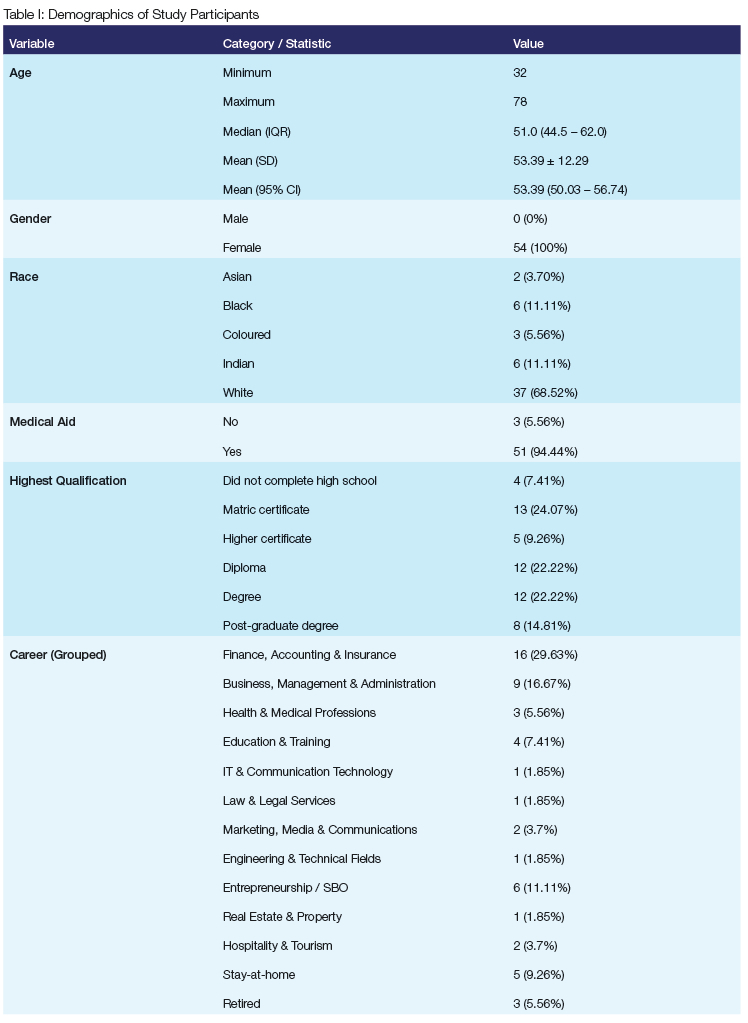
Participants ranged in age from 32 to 78 years, with a mean age of respondents of 53.39 ± 12.29. The majority identified as White (68.52%, n = 37), followed by Black and Indian participants (11.11% each, n = 6), Coloured (5.56%, n = 3), and Asian (3.70%, n = 2). The demographics of study participants are presented in Table I.
Most participants, 94.44% (n = 51), had medical insurance. However, 5.56% (n = 3) did not. Educational attainment was varied: 24.07% (n = 13) had completed a Matric certificate, 22.22% (n = 12) held a diploma, 22.22% (n = 12) held a degree, and 14.81% (n = 8) had completed a post-graduate degree. A smaller proportion 9.26% reported having only a higher certificate (9.26%, n = 5) or not completing high school (7.41%, n = 4). Most participants worked in professional careers, while a small percentage were unemployed or retired.
Cancer Diagnosis and Treatment
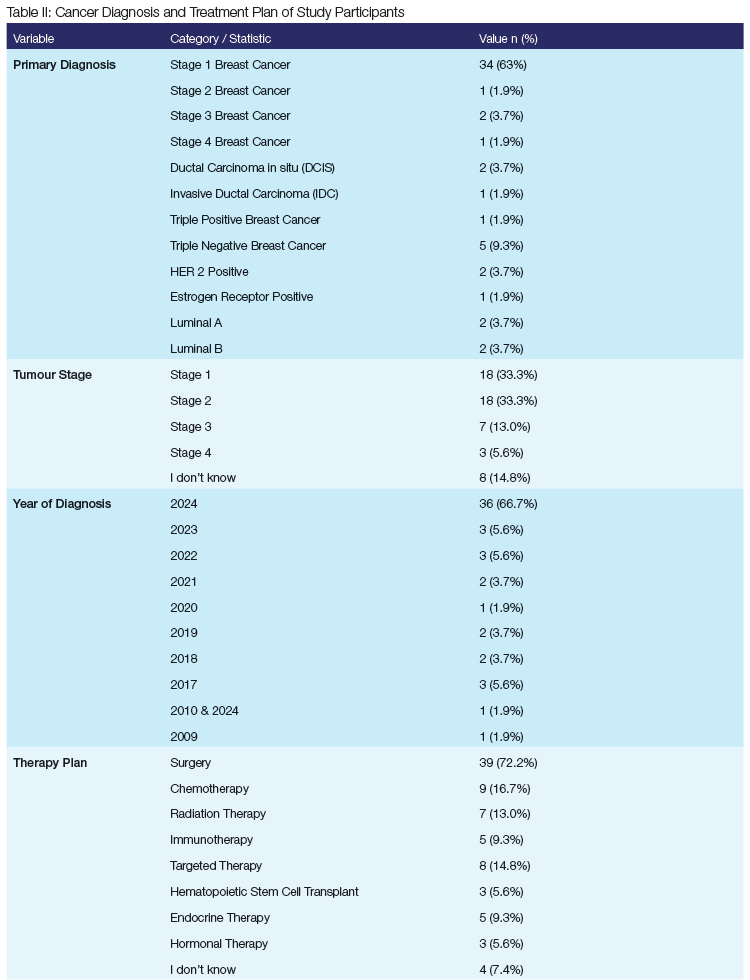
A summarised table of the cancer diagnoses and treatment plans of patient participants data is captured in Table II.
Most patients were diagnosed with stage 1 or 2 disease, each at 33.3% (n = 18), followed by stage 3 at 13% (n = 7), and stage 4 at 5.6% (n = 3). Some patients, 14.8% (n = 8), did not know the stage of their tumour. A significant proportion, 66.7% (n = 36), received their diagnosis in 2024. Most participants, 72.2% (n = 39), planned to undergo surgery, followed by chemotherapy at 16.7% (n = 9), radiation therapy at 13% (n = 7), immunotherapy at 9.3% (n = 5), and targeted therapy at 14.8% (n = 8). One participant each (1.9%) planned to receive a hematopoietic stem cell transplant, endocrine therapy, or hormonal therapy. Some participants remained uncertain about their treatment plans. Since multiple treatment modalities could be selected, the total exceeds 100%.
Medical History
Most participants, 74.1% (n = 40), reported never smoking cigarettes, while 9.3% (n = 5) currently smoked, 3.7% (n = 2) smoked occasionally or socially, and 13% (n = 7) had quit smoking. Among the smokers, three participants reported using vapes, and eleven identified as cigarette smokers, consuming between 1 and 40 cigarettes per day.
The duration of smoking varied significantly. Reported smoking histories were as follows: 28.57% (n = 4) for 0-10 years of tobacco use, 42.86% (n = 6) for 10 - 20 years, 7.14% (n = 1) for 20 - 30 years, 14.29% (n = 2) for 30 - 40 years, and 7.14% (n = 1) for 40 -50 years.
Regarding bisphosphonate use, 3.7% of patients (n = 2) confirmed current or prior use.
Dental and Oral Care
The majority, 82.5% (n = 46) of patients reported no known history of gingivitis or periodontitis. A smaller percentage, 13% (n = 7) expressed uncertainty, while one patient (1.9%) confirmed experiencing gingivitis and/or periodontitis.
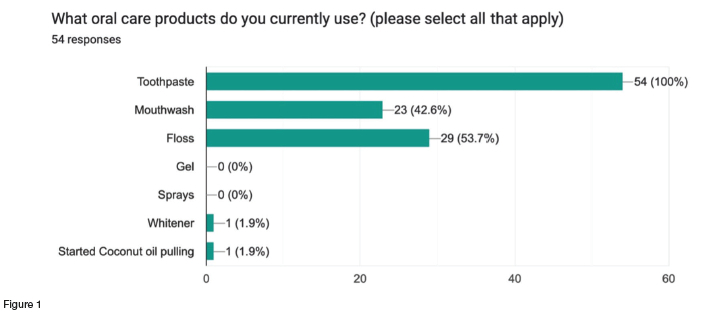
Figure 1 summarizes patient responses on oral care practices and products. Toothpaste was the most commonly used product by all patient participants, followed by floss at 53.7% (n = 29) and mouthwash at 42.6% (n = 23). Only one patient participant reported the use of whiteners and coconut oil pulling, whilst no participants used gel or sprays.
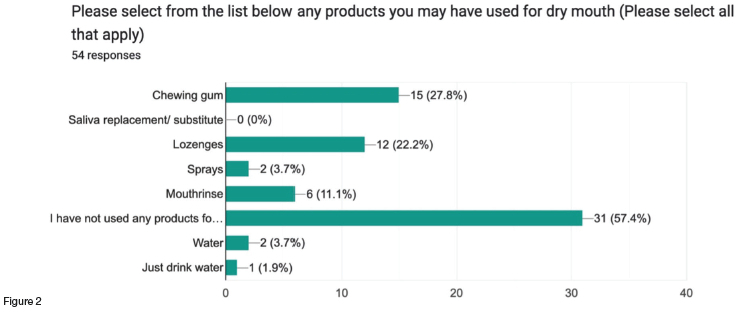
More than half, 57.4% (n = 31), reported not using any products for dry mouth (Figure 2). Among those who did, the most common choice was chewing gum at 27.8% (n = 15), followed by lozenges at 22.2% (n = 12). Other products, such as mouth rinse at 11.1% (n = 6), sprays at 3.7% (n = 2), and water at 3.7% (n = 2), were used less frequently. No participants reported using saliva replacements or substitutes.
Varying monthly expenditures on oral care products were reported. Most patients (40.7%, n = 22) spent between R50 - R100, followed by 22.2% (n = 12) spending between R100 - R150, 22.2% (n = 12) between R150 - R200, 11.1% (n = 6) spending over R200, and 3.7% (n = 2) spending less than R50 per month.
Oral hygiene practices were generally consistent: 87% (n = 47) of patients reported brushing teeth twice daily, 11.1% (n = 6) brushed once a day, and only one patient brushed more than twice daily. No patients reported brushing less than once per day.
Flossing habits showed significant variability, with 31.5% (n = 17) flossing a few times a week, 25.9% (n = 14) flossing daily, 24.1% (n = 13) flossed rarely, 14.8% (n = 8) admitted to never flossing, and 3.7% (n = 2) flossed more than once daily.
Fluoride Use
Regarding fluoridated toothpaste, 18.5% (n = 10) of patients were unsure if their toothpaste contained fluoride, one patient used non-fluoride toothpaste, and the remaining 79.6% (n = 43) use fluoride containing toothpaste. Among those who used mouthwash, one patient used non-fluoride mouthwash, 27.8% (n = 15) used mouthwash with fluoride, 35.2% (n = 19) did not know if their mouthwash contained fluoride and the remaining 35.2% (n = 19) of patients did not use mouthwash.
Considering professional fluoride applications, 33.3% (n = 18) of patients received fluoride treatments at the dentist, with 5.6% (n = 3) receiving treatments bi-annually. A larger proportion, 35.2% (n = 19), never received professional fluoride applications, 9.3% (n = 5) were unsure, and 16.7% (n = 9) of patients had received a fluoride treatment over a year ago.
Mouthwash Use
Some patients, 16.7% (n = 9), reported using mouthwash daily, while only one patient used it more than once daily. Meanwhile, 25.9% (n = 14) never used mouthwash, and 27.8% (n = 15) used it rarely or only a few times per week. Regarding brand preferences, Listerine was the most popular at 60% (n = 24), followed by Colgate at 20% (n = 8) and Listerine Zero at 12.5% (n = 5). Additionally, individual patients (2.5% each) selected White Glo, Andolex C, and Curaprox Perio Plus.
When exploring the purpose of mouthwash use, 60% (n = 24) use mouthwash as an additional oral hygiene aid, 42.5% (n = 17) to freshen breath, 5% (n = 2) as a floss replacement, and one patient used mouthwash to whiten teeth, treat sore gums, and as a source of fluoride.
Oral Care
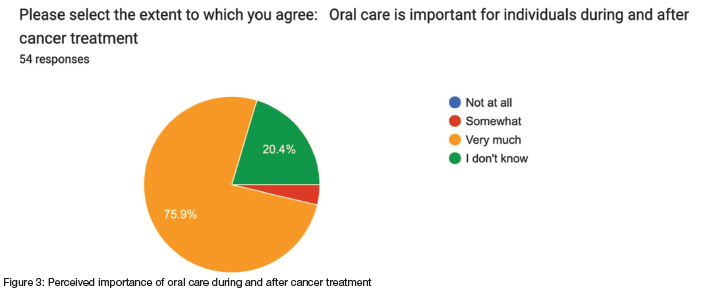
All patients agreed on the importance of oral care during and after cancer treatment (Figure 3). The majority, 75.9% (n = 41), strongly agreed that oral care is very important, while 20.4% (n = 11) were uncertain. A small percentage, 3.7% (n = 2), believed oral care was only somewhat important, and no participants selected "Not at all."
Figure 3: Participant agreement on the importance of oral care during and after cancer treatment (N = 55).
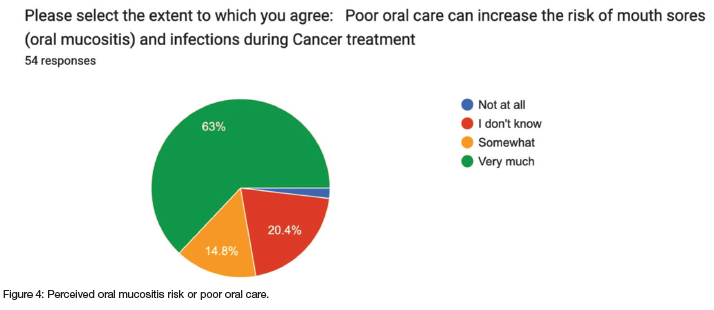
Most participants, 63% (n = 34), identified poor oral care as a risk factor for oral complications (Figure 4). The pie chart illustrates how strongly patient participants agreed with this statement: 63% (n = 34) selected "Very much," 14.8% (n = 8) chose "Somewhat," 20.4% (n = 11) responded with "I don't know," and one participant selected "Not at all."
Figure 4: Distribution of responses to the statement: "Poor oral care can increase the risk of mouth sores (oral mucositis) and infections during cancer treatment."
When asked, "Have you received dental/oral care 'Preventive Instruction' that included information on how to maintain your oral/dental health during and after cancer treatment?" only 9.3% (n = 5) of patients answered yes, while 90.7% (n = 49) answered no.
Of the 5 patients, each reported a different source for the preventive education they received: one from a general dentist, one from an oral hygienist, one from a dental assistant at a cancer centre, one from a dentist referred by her cancer centre (a dentist who routinely treats cancer patients), and one patient who had not disclosed her diagnosis to her general dentist but intended to, aiming to ensure better treatment outcomes.
Only 5.6% (n = 3) of patients were recommended by their oncologist or cancer centre to have a dental examination, leaving the majority, 94.4% (n = 51), without this recommendation. Furthermore, only 3.7% (n = 2) actually underwent a pre-treatment dental examination before starting cancer treatment.
The primary reason for not completing dental treatment before starting cancer treatment was lack of awareness, with 65.4% (n = 34) indicating they were unaware of the need for a dental exam or that it was not recommended to them. Additionally, 15.4% (n = 8) cited insufficient time to schedule a dental examination, 9.6% (n = 5) were unsure or didn't know, and 3.8% (n = 2) attributed it to cost. Other responses included patients who had not yet started cancer treatment or were not advised to see a dentist.
Of the only two (3.8%) patients who received a pre-treatment dental examination by their general dentist, one had the exam coincidentally during their annual checkup on the day of their cancer diagnosis. During their exams, neither of the two patients received any preventive instructions on maintaining oral health during cancer treatment. No dental treatment was needed before starting cancer treatment; however, one patient had a routine dental cleaning, and the other received emergency root canal treatment. No start to cancer treatment was delayed due to any outstanding dental treatment.
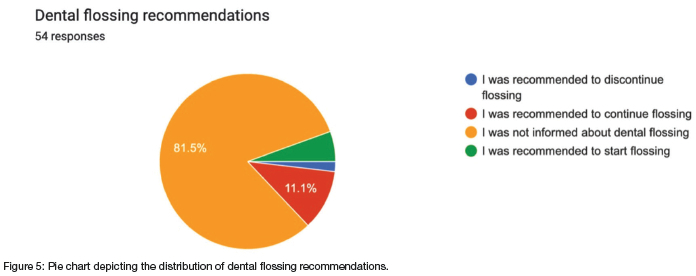
The majority of participants, 81.5% (n = 44), were not informed about flossing. A smaller portion received recommendations to either continue (11.1%, n = 6) or start (5.6%, n = 3) flossing, with one patient advised to discontinue. (Figure 5)
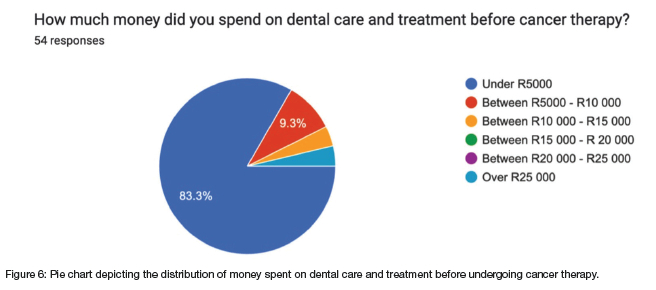
Majority of patients, 83.3% (n = 45), spent less than R5000 on dental care before starting cancer treatment, followed by 9.3% (n = 5) who spent between R5000 - R10,000. A few individuals reported spending between R10,000 - R15,000 (3.7%, n = 2), and over R25,000 (3.7%, n = 2). (Figure 6)
Only 16.7% (n = 9) of patients were made aware of possible oral complications during cancer treatment, while the remaining 83.3% (n = 45) were not. Some patients were made aware by their oncologist, a nurse, researching online, dentists, or - in one case - through their own experience as a healthcare professional.
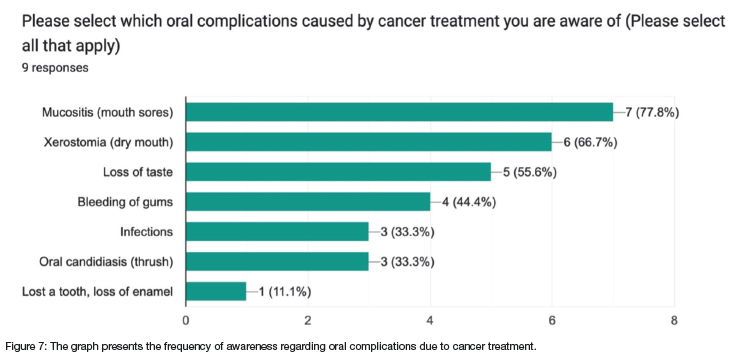
Oral complications which patients believed to be caused by cancer treatment was mucositis (77.8%, n = 7), xerostomia (66.7%, n = 6), loss of taste (55.6%, n = 5), followed by bleeding of gums (44.4%, n = 4), infections (33.3%, n = 3), and oral candidiasis (thrush) at 33.3% (n = 3). One patient participant (11.1%) selected loss of teeth and enamel. Figure 7 shows oral complications selected by patient participants; more than one answer could be selected.
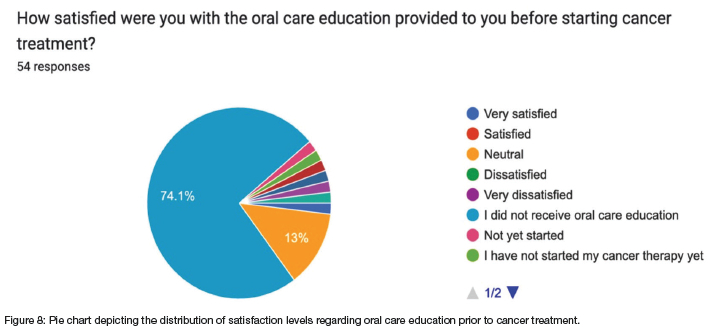
When investigating patient satisfaction; the majority of participants, 74.1% (n = 40), reported not receiving any oral care education. A smaller proportion, 13% (n = 7), indicated a neutral level of satisfaction, while only one patient (1.9%) reported being very satisfied. Additionally, one participant (1.9%) noted that they had not started cancer treatment yet. (Figure 8)
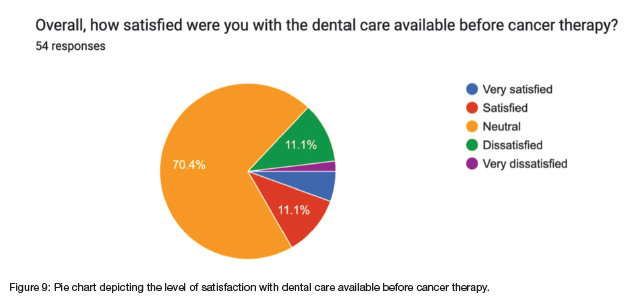
When asked about their satisfaction with the dental care available before starting cancer therapy, most patients, 70.4% (n = 38), gave a neutral response. Smaller percentages reported being satisfied (11.1%, n = 6), dissatisfied (11.1%, n = 6), or very satisfied (5.6%, n = 3). One participant (1.9%) reported very dissatisfied with the care they received. (Figure 9)
Free response section summary:
Participants reported a range of oral health concerns related to cancer care. Several had ongoing or pending dental work, such as crowns and extractions.
A common theme was the lack of dental advice/oral care education given prior to cancer treatment; one patient had underwent a full dental clearance, struggling with dentures and seeking implants and was unsure of how to navigate this concern prior to starting cancer treatment.
Many patients reported limited awareness of oral side effects or treatment restrictions during chemotherapy. Many reports elaborated on receiving no referral to a dentist and expressed a need for more information related to oral hygiene. Financial barriers to receiving dental care were also reported.
DISCUSSION
This study evaluated 55 female breast cancer patients to assess their knowledge, attitudes, and practices of oral health care, the importance of oral health during cancer treatment, and oral complications associated with cancer therapy.
Dental and Oral Care
Most patients followed good oral care routines, with 87% brushing their teeth twice daily as recommended. However, a significant portion admitted they never or rarely used dental floss, which may contribute to poor oral hygiene awareness. This was underscored by the finding that 13% of patients did not know whether they had gingivitis or periodontitis, raising concerns about undiagnosed or unrecognized oral health conditions, given the rates of periodontitis (52.2%) and gingivitis (53.6%) in South Africa.18
Epstein et al., (2014) highlighted that patients with poor oral health before cancer treatment face a greater risk of oral complications during cancer therapy than those without pre-existing oral disease.9 Tsuji et al., (2015) demonstrated that when patients with hematopoietic malignancies followed a pre-cancer therapy dental care protocol, they experienced significantly fewer systemic (15.8% vs. 37.4%) and dental complications (2.9% vs. 34.0%) compared to those who did not undergo any pre-cancer dental treatment.19
Overall, 79.6% of participants used fluoride toothpaste, and 33% had received professional fluoride applications, indicating that many patients understand fluoride's benefits in dental care. However, most patients had not received professional fluoride treatments or had not done so in over a year, suggesting they had not visited a dentist for an extended period. Anti-fluoridation movements dominating social media and internet platforms may be spreading misinformation to patients regarding health benefits and safety concerns of fluoride use. This may influence patients to discontinue fluoride use and possibly lead to greater oral complications.
Most patients (79.5%) acknowledged the importance of oral care during cancer treatment, while 20.4% remained uncertain about its significance. However, only 63% recognized that poor oral health increases the risk of oral mucositis and infections, leaving a substantial number unaware or unsure.
This reveals a gap in patient education on the link between poor oral health and the development of oral complications during cancer treatment. It may also stem from insufficient interdisciplinary communication and referrals between oncology and dental care providers. Dang et al., (2020) surveyed Massachusetts dentists and found that, even when treating cancer patients, they rarely received responses from oncology teams when seeking input on patient care.20 Similarly, Epstein et al., (2014) stressed the importance of early planning and coordination between dentists and oncology teams to ensure patients receive appropriate oral care.9
Dental Education
An overwhelming 90.7% of patients had not received any preventive guidance on maintaining oral health during cancer treatment, while only 9.3% had. This significant gap in dental education for oncology patients increases their risk of oral complications during treatment. Similarly, Epstein et al., (2007) reported that fewer than half (43.75%) of United States national cancer centers offered oral examinations and preventive treatment to oncology patients - excluding those undergoing radiation therapy - before they began cancer treatment.21
Breast cancer patients who received preventive education obtained information from various sources, including a general dentist, oral hygienist, dental assistant at a cancer center, or a dentist recommended by a cancer center. This highlights the lack of standardised care protocols and significant variation in oral care for cancer patients. Similarly, Epstein et al., (2018) found that patients received pre-cancer treatment oral education from diverse sources, including general dentists, medical and dental staff at cancer centers, referred practitioners, and specialists.16 However, there is an opportunity to educate and expand the multidisciplinary team to a diverse group of oral healthcare providers who encounter and treat cancer patients.
Only 3% of patients were recommended by their oncologist or cancer center to undergo a dental examination. This highlights a potential gap in oncologists' referrals to dental practitioners, increasing the risk of oral complications during cancer treatment. Since 90.7% of patients did not receive any preventive education before starting cancer treatment, this indicates that oncology staff are not emphasizing the importance of dental and oral health. As a result, patients may not be receiving recommendations to visit their general dental provider before beginning cancer therapy.
Only 16.3% of patients were informed about potential oral complications during cancer treatment, leaving 83.3% unaware. Jones et al., (2022) stressed the importance of cancer patients being examined for the presence of oral conditions even without showing any symptoms to prevent the development of oral complications. Evidently, dentists should form part of the oncology multi-disciplinary team.22
Licitra et al., (2016) emphasized that effective prevention and management of therapy-induced oral complications require a multidisciplinary healthcare approach, with coordinated care provided at appropriate stages.23 Without collaboration between dental and oncology teams, the prevention and treatment of cancer-therapy induced oral complications becomes near impossible.
A 2018 online-survey study also conducted by Epstein et al. included 76 cancer patient participants, of which 72.6% of patients reported receiving dental education prior to starting cancer treatment, but, with low satisfaction rates reported.16 This finding suggests that patients may respond positively to healthcare provider recommendations regarding pre-treatment evaluations and education.
Patient Satisfaction
Patient satisfaction with oral health education and care prior to cancer treatment was mixed. While many patients had not received any oral health education or treatment, leading to neutral responses, smaller proportions expressed more varied opinions. The overall neutral sentiment likely reflects the limited oral care provided before initiating cancer therapy.
Barriers of Dental Care
A lack of awareness about the importance of oral and dental health was the leading reason (65.4%) why patients did not complete necessary dental treatments before starting cancer therapy. Additional factors included limited time, financial constraints, and logistical challenges. These barriers align with those identified by Epstein et al. (2014) and Dang et al. (2020), which include difficulty accessing skilled and willing dental practitioners, lack of insurance or financial support, transportation difficulties, work and family responsibilities, and cultural or educational influences.9,20
Limitations
This study relies on patient-reported responses rather than clinical records, which may introduce inaccuracies and biases. Given the sensitive nature of an oncology diagnosis, patients may struggle to recall whether they received dental instructions due to the stress of their diagnosis. The study also includes a small sample size. Although oncologists refer patients from various parts of Gauteng, the study population comes from the BCCE and may not represent the entire Gauteng breast cancer patient population. Patient response bias must also be considered, as participation may have been more likely among breast cancer patients with a particular interest in their oral health.
However, the results align with findings from other studies and highlight significant variability in oral care provision for patients undergoing cancer therapy. The lack of interdisciplinary communication between oncology and dental care providers likely contributes to this inconsistency. This gap may lead to increased oral complications during cancer treatment, higher referral rates with additional costs, and a diminished quality of life.
CONCLUSIONS
This study reveals gaps in oral health awareness, education, and collaboration between oncology and dental care for breast cancer patients. Although most patients practiced basic oral hygiene, nearly 91% had not received preventive dental education from a dental professional, and very few were referred for dental checkups by their oncologists before starting chemotherapy or radiation treatment.
These oversights increase the risk of preventable oral complications that may affect treatment outcomes and impact overall quality of life for patients. The study calls for a multidisciplinary approach that integrates dental professionals into oncology care teams, standardised oral care protocols for patients undergoing cancer therapy, and increased patient education. Addressing financial and communication barriers is also essential to improving oral health support during cancer treatment.
REFERENCES
1. Epstein J.B., Thariat J., Bensadoun R.J. Oral complications of cancer and cancer therapy: from cancer treatment to survivorship. CA Cancer J Clin. 2012;62(November-December (6)):400-422. [PubMed] [Google Scholar] [ Links ]
2. Sung H, Ferlay J, Siegel RL, Laversanne M, Soerjomataram I, Jemal A, et al. Global cancer statistics 2020: GLOBOCAN estimates of incidence and mortality worldwide for 36 cancers in 185 countries. CA Cancer J Clin. (2021) 71:209-49. doi: 10.3322/caac.21660 [ Links ]
3. García-Chías, B., Figuero, E., Castelo-Fernández, B., Cebrián-Carretero, J.L. and Cerero-Lapiedra, R. (2019). Prevalence of oral side effects of chemotherapy and its relationship with periodontal risk: a cross sectional study. Supportive Care in Cancer, [online] 27(9), pp.3479-3490. doi:https://doi.org/10.1007/s00520-019-4650-6. [ Links ]
4. Biswal BM. Current trends in the management of oral mucositis related to cancer treatment. Malays J Med Sci. 2008 Jul;15(3):4-13. PMID: 22570584; PMCID: PMC3341902. [ Links ]
5. Lalla, R.V., Bowen, J., Barasch, A., Elting, L., Epstein, J., Keefe, D.M., McGuire, D.B., Migliorati, C., Nicolatou-Galitis, O., Peterson, D.E., Raber-Durlacher, J.E., Sonis, S.T. and Elad, S. (2014). MASCC/ISOO clinical practice guidelines for the management of mucositis secondary to cancer therapy. Cancer, [online] 120(10), pp.1453-1461. doi:https://doi.org/10.1002/cncr.28592. [ Links ]
6. Sonis ST, Elting LS, Keefe D, Peterson DE, Schubert M, Hauer-Jensen M, Bekele BN, Raber-Durlacher J, Donnelly JP, Rubenstein EB; Mucositis Study Section of the Multinational Association for Supportive Care in Cancer; International Society for Oral Oncology. Perspectives on cancer therapy-induced mucosal injury: pathogenesis, measurement, epidemiology, and consequences for patients. Cancer. 2004 May 1;100(9 Suppl):1995-2025. doi: 10.1002/cncr.20162. PMID: 15108222. [ Links ]
7. Direct costs associated with the management of mucositis: A systematic review. Rodrigues-Oliveira L, Kowalski LP, Santos M, Marta GN, Bensadoun RJ, Martins MD, Lopes MA, Castro G Jr, William WN Jr, Chaves ALF, Migliorati CA, Salloum RG, Rodrigues-Fernandes CI, Kauark-Fontes E, Brandão TB, Santos-Silva AR, Prado-Ribeiro AC. Oral Oncol. 2021 Jul;118:105296. doi: 10.1016/j.oraloncology.2021.105296. Epub 2021 Apr 29. PMID: 33933777 Review. [ Links ]
8. Epstein, J.B., Parker, I.R., Epstein, M.S. and Stevenson-Moore, P. (2004). Cancer-related oral health care services and resources: a survey of oral and dental care in Canadian cancer centres. Journal (Canadian Dental Association), [online] 70(5), pp.302-304. Available at: https://pubmed.ncbi.nlm.nih.gov/15132812/. [ Links ]
9. Epstein, J.B., Güneri, P. & Barasch, A. Appropriate and necessary oral care for people with cancer: guidance to obtain the right oral and dental care at the right time. Support Care Cancer 22, 1981-1988 (2014). https://doi.org/10.1007/s00520-014-2228-x [ Links ]
10. Siegel, R.L., Miller, K.D., Fuchs, H.E. and Jemal, A. (2022). Cancer statistics, 2022. CA: A Cancer Journal for Clinicians, [online] 72(1), pp.7-33. doi:https://doi.org/10.3322/caac.21708. [ Links ]
11. Arzanova E, Mayrovitz HN. The Epidemiology of Breast Cancer. In: Mayrovitz HN, editor. Breast Cancer [Internet]. Brisbane (AU): Exon Publications; 2022 Aug 6. Chapter 1. Available from: https://www.ncbi.nlm.nih.gov/books/NBK583819/doi:10.36255/exon-publications-breast-cancer-epidemiology [ Links ]
12. Gomez-Espinosa E, Marroquín Velásquez G. CO149 epidemiology and burden of oral complications following breast cancer treatment-a systematic literature review (PROSPERO CRD42021272130)-mucositis and stomatitis [ Links ]
13. Poulopoulos, A., Papadopoulos, P. and Andreadis, D. (2017). Chemotherapy: oral side effects and dental interventions. A review of the literature. Stomatological Disease and Science, 1(2). doi:https://doi.org/10.20517/2573-0002.2017.03. [ Links ]
14. Hsieh, Tina Yi Jin & Huang, Pin-Chia & Sroussi, Herve & Chen, Sheng-Yin & Lu, Chuan & Ma, Kevin. (2023). Oral complications in patients with breast cancer treated with HER2-targeted therapies: A population-based cohort study across the United States.. JCO Oncology Practice. 19. 296-296. 10.1200/OP.2023.19.11_suppl.296. [ Links ]
15. Taichman LS, Havens AM, Van Poznak CH. Potential implications of adjuvant endocrine therapy for the oral health of postmenopausal women with breast cancer. Breast Cancer Res Treat. 2013;137:23-32. [ Links ]
16. Epstein J.B., Smith, D.K., Vilines, D., Parker, I., Hameroff, J., Hill, B.R., & Murphy, B.A. (2018). Patterns of oral and dental care education and utilization in head and neck cancer patients. Supportive Care in Cancer, 26(1), 2591-2603. DOI: 10.1007/s00520- 0l 8-4099-z. [ Links ]
17. Smith, A. (2021). Knowledge, Perception, and Implementation of Oral Care in Patients with Head and Neck Cancer Before, During, and After Radiation Therapy. Undergraduate Honors Theses. [online] Available at: https://thekeep.eiu.edu/honors_theses/165/. [ Links ]
18. Chikte U, Pontes CC, Karangwa I, Kimmie-Dhansay F, Erasmus RT, Kengne AP, Matsha TE. Periodontal Disease Status among Adults from South Africa-Prevalence and Effect of Smoking. Int J Environ Res Public Health. 2019 Sep 29;16(19):3662. doi: 10.3390/ijerph16193662. PMID: 31569503; PMCID: PMC6801877. [ Links ]
19. Tsuji K, Shibuya Y, Akashi M, Furudoi S, Yakushijin K, Kawamoto S, et al. Prospective study of dental intervention for hematopoietic malignancy. Journal of dental research. 2015;94(2):289-96. doi: 10.1177/0022034514561768. [ Links ]
20. Dang, R.R., Brar, B., Pasco, J.M., Rebhun, C., Sohn, W. and Salama, A. (2020). Dental Practice Patterns for Oral Care in Medical Oncology Patients-a Survey-Based Assessment of Massachusetts Dentists. Journal of Cancer Education. doi:10.1007/s13187-020-01845-8 [ Links ]
21. Epstein, J.B., Parker, I.R., Epstein, M.S., Gupta, A., Kutis, S. and Witkowski, D.M. (2007). A survey of National Cancer Institute-designated comprehensive cancer centers' oral health supportive care practices and resources in the USA. Supportive Care in Cancer, 15(4), pp.357-362. doi:10.1007/s00520-006-0160-4. [ Links ]
22. Jones, J.A., Chavarri-Guerra, Y., Corrêa, L.B.C., Dean, D.R., Epstein, J.B., Fregnani, E.R., Lee, J., Matsuda, Y., Mercadante, V., Monsen, R.E., Rajimakers, N.J.H., Saunders, D., Soto-Perez-de-Celis, E., Sousa, M.S., Tonkaboni, A., Vissink, A., Yeoh, K.S. and Davies, A.N. (2022). MASCC/ISOO expert opinion on the management of oral problems in patients with advanced cancer. Supportive Care in Cancer, [online] 30(11), pp.8761-8773. [ Links ]
23. Licitra, L., Keilholz, U., Tahara, M., Lin, J.-C., Chomette, P., Ceruse, P., Harrington, K. and Mesia, R. (2016). Evaluation of the benefit and use of multidisciplinary teams in the treatment of head and neck cancer. Oral Oncology, [online] 59, pp.73- 79. doi:10.1016/j.oraloncology.2016.06.002. [ Links ]
 Correspondence:
Dr Sarah Duarte
Address: 271 Hull Road Terraces, Rynfield, Benoni, 1514
Cell: 071 674 7945; E-mail: u17014485@tuks.ac.za