Services on Demand
Journal

Article
 English (pdf)
 Article in xml format
 Article references
 Automatic translation
 Send this article by e-mail
Indicators
Related links
-
 Cited by Google
 -
 Similars in Google
Share

 Permalink
Journal of Construction Project Management and Innovation
On-line version ISSN 2959-9652Print version ISSN 2223-7852
JCPMI vol.15 n.1 Johannesburg 2025
https://doi.org/10.36615/jcpmi.v15i1.3745
RESEARCH PAPER
Procurement Planning Improvement Strategies and Challenges in Construction Project Delivery within the Public Tertiary Education Sector
Jima Bassey OffiongI; Amaka Chinweude OgwuelekaII
IDepartment of Quantity Surveying, University of Uyo, Nigeria
IIDepartment of Quantity Surveying, University of Uyo, Nigeria
ABSTRACT
The tertiary education sector projects are increasingly plagued by delay and budget blow-out, resulting in persistent cost and time overruns. The study investigates the influence of procurement planning improvement strategies and challenges in construction project delivery in the public tertiary sector. Data was collected from a random sample of 517 stakeholders in Rivers and Akwa Ibom State and analyzed using Mean Item Scores (MIS) and structural equation modeling (SEM). The research findings reveal that the procurement planning strategies with the most critical effect are improving the institutional framework, incorporating sustainability into procurement planning, and monitoring and evaluating procurement performance. The factors with high effect inhibiting procurement planning were identified as inadequate institutional framework/policy/regulation, poor supplier relationship management, and ineffective procurement regulation. The results of the path diagram indicate that implementing the procurement planning improvement strategies policy produces a perfect correlation (r = 1.00; very high) with challenges inhibiting effective procurement planning. This implies that the validated strategies could comprehensively and holistically mitigate the archetypes of challenges inhibiting procurement planning in the tertiary education sector in Akwa Ibom and Rivers State. The study concludes that non-compliance with procurement procedures can lead to delays, cost overruns, and poor project outcomes, therefore, procurement laws and procedures should be enforced. Therefore, this provides practical implications for policymakers on the need for institutional reforms and compliance within tertiary institutions. The study recommends that stakeholders develop risk management plans, conduct long-term dialed needs assessments, and embrace digital technologies such as e-procurement to improve procurement planning.
Keywords: Procurement planning, public tertiary sector, construction projects, project delivery
1. INTRODUCTION
Public sector procurement involves a very significant proportion of the national budget globally. In the UK, over $ 150 billion is spent yearly to deliver public works; in Nigeria, public spending gulps about 4Trillion annually (Budgit, 2022). Public procurement represents 12-13% of the global GDP (Ali, 2020; Bosio and Djankov, 2020). This large spending requires the maximum professional standards to optimize value for money. Due to the high expenditure, notably on construction procurement, and its role in the provision of support infrastructure to the different segments of the national economies, procurement needs to follow a structured procedure. Unfortunately, Billions of Naira are lost annually in the public sector due to ineffective procurement planning (Ezinwa et al., 2012). On the other hand, facts also exist that public expenditure can be lessened through efficient procurement planning (Muhwezi et al., 2020). Structured planning of procurement is essentially geared toward the sustainability of processes, sustainable development, and the efficiency of procured goods and services (Para, 2021). The procuring entities can tackle the difficulties encountered in public procurement through the effective implementation of regulated procurement practices (Ilyas et al., 2018). The total alignment of stakeholders with a clear strategic vision can increase the chances of public projects' success (Flyvberg, 2014). This will ensure the involvement of stakeholders in the decision-making process, thereby enhancing transparency and accountability. Bourne and Walker (2006) stated that stakeholder influence can have a significant impact on project outcomes.
Procurement planning is a critical component of construction project management, as it sets the foundation for the entire project delivery process. Effective procurement planning can significantly impact the success of a construction project, while inadequate planning can lead to delays, cost overruns, and poor quality (Oladapo, 2016; Adequare, 2017). Procurement planning is the process adopted by an organization to prepare purchasing activities for a specific project within a stipulated time through structured guidelines that spell out the processes (Bamidele et al., 2020). These requirements exist as institutional frameworks of respective sectors and, in certain climes, as a regulatory instrument implemented at the national level of government. In Nigeria, Agonsi et al. (2020) affirmed that there are traces of procurement planning requirements in the public procurement law, which are insignificantly implemented in building contracts executed in tertiary education sector projects. Non-implementation of procurement planning requirements and the dearth of competence by procurement personnel are detrimental to project success (Bamidele et al., 2020). These factors, among several other issues, have contributed to inhibiting the roles of procurement in effective project performance. In recent years, there has been a growing interest in the effect of procurement planning on project performance. Procurement planning involves identifying the necessary materials and services, potential suppliers, and developing a procurement schedule (Office of Government Commerce, 2007). Effective procurement planning is essential for project success as it ensures the timely availability of resources, reduces project costs, and improves project quality (Nigussie and Mulugeta, 2018; Alshammari et al., 2019). It consists of several distinct processes, and the underlying knowledge of the relevant processes differs. Muhwezi et al. (2020) identified three loops, namely initiation, intermediate, and execution.
From the existing practice, the understanding of the scope of procurement planning extends beyond the pre-contract issues popularly advanced across public procurement regulations. The comprehensive processes cover the decision on what/when is needed and how it is acquired and mainstreamed into the existing system (Muhwezi et al., 2020). However, despite the plethora of relevant procurement regulations in public construction project delivery globally, the poor performance of public sector projects is alarmingly high (Akinradewo et al., 2022). According to the "iron law" as stipulated by Flyvberg (2014), there is an inherent tendency for mega projects to be over budget, over time, and underperform in terms of benefits. Those inherent tendencies can be influenced by sublimates such as political, economic, and social factors. Reports related to the failures of public sector procurement due to poor procurement planning are enormous, including poor need analysis, inaccurate estimating, delayed take-off, and approvals, among other issues (Adedokun, et al., 2021). The public sector procurement accounts for a larger proportion of a country's national budget, relevant actions are needed to improve value for money in the public sector by stakeholders across different sectors. Flyvberg (2005) emphasized the need to develop and implement procurement planning procedures for mega-projects to curb cost overruns, benefit shortfalls, and risks that can destabilize a country's finances.
In Nigeria, public sector construction projects under current public procurement regulations are increasingly characterized by cost and time overrun (Kasimu and Ngowi, 2017; Oluyemi and Ngwu, 2019; Eboh et al., 2019). Therefore, there is a need to investigate the existing strategies, challenges, and find ways of improving the project procurement planning. The study investigates the procurement planning strategies and the factors inhibiting procurement planning efficiency in the public tertiary sector in Nigeria. Understanding this relationship can help public sector project managers improve their procurement planning processes and enhance project outcomes. The research objectives are: (a) to evaluate the procurement planning improvement strategies in project delivery, (b) to assess factors inhibiting procurement planning efficiency, and (c) to examine the effect of procurement planning improvement strategies on the challenges inhibiting effective procurement planning.
2. LITERATURE REVIEW
2.1. Strategies for Improving Procurement Planning
Procurement planning is a critical aspect of project management, and it involves the process of identifying the goods and services required for a project, determining the best sources of those goods and services, and developing a plan for acquiring them. Effective procurement planning is essential for ensuring that projects are completed on time, within budget, and with the desired quality. Procurement planning is a critical component of the procurement process that involves identifying, evaluating, and selecting suppliers for the acquisition of goods or services. Effective procurement planning is essential for ensuring that the procurement process runs smoothly, meets the organization's needs, and achieves value for money. In recent years, there has been an increasing body of knowledge on the strategies for improving procurement planning, including conducting a needs assessment, which is a critical first step in procurement planning, as it helps to identify the goods and services that will be required for the project. According to the World Bank, a needs assessment should be conducted to determine the specific goods and services that are required, as well as the quantity and quality standards for those items (World Bank, 2021).
Developing a risk management plan, which is a document that outlines the potential risks associated with the procurement process and identifies strategies for mitigating those risks. According to the PMI, a risk management plan should be developed early in the procurement planning process and updated throughout the project (PMI, 2017). Risk management is another critical strategy for improving procurement planning. Effective risk management can help to reduce the likelihood of procurement-related risks and mitigate the impact of any risks that do occur. Research has shown that the use of risk management strategies can lead to improved procurement outcomes, including increased efficiency, reduced procurement costs, and improved supplier performance (González-Torre and Adenso-Díaz, 2015; Tukamuhabwa et al., 2015). Collaborating with stakeholders, including vendors, contractors, and project team members, is essential for effective procurement planning. By involving stakeholders in the planning process, their expertise and insights can be leveraged to identify potential risks and develop strategies for mitigating them (PMI, 2017). Collaboration and stakeholder engagement have been identified as crucial strategies for improving procurement planning. Effective collaboration between procurement professionals, internal stakeholders, and suppliers can help ensure that procurement activities are aligned with organizational goals and objectives. Research has shown that collaboration and stakeholder engagement can lead to improved procurement outcomes, including increased efficiency, reduced procurement costs, and improved supplier performance (Barratt et al., 2015; Bhatia and Ahuja, 2018).
Embracing technology to improve procurement planning by automating processes, reducing manual errors, and increasing efficiency. For instance, e-procurement systems can help streamline the procurement process, reduce processing time and costs, and provide real-time data on procurement activities (World Bank, 2021). The use of technology has been identified as a key strategy for improving procurement planning. Technology can help to automate and streamline the procurement process, reducing the time and effort required to complete procurement activities. Research has shown that using e-procurement systems can lead to significant cost savings, improved efficiency, and increased transparency in the procurement process (Bakhtari et al., 2015; Kumari and Kumar, 2017). Monitoring and evaluating procurement performance is essential for identifying areas of improvement and ensuring that procurement processes are effective and efficient. According to the World Bank, procurement performance should be monitored regularly, and evaluations should be conducted periodically to assess the overall effectiveness of the procurement process (World Bank, 2021). Performance measurement and evaluation are crucial strategies for improving procurement planning. Effective performance measurement and evaluation can help ensure that procurement activities are aligned with organizational goals and objectives and that procurement outcomes are achieved. Research has shown that the use of performance measurement and evaluation can lead to improved procurement outcomes, including increased efficiency, reduced procurement costs, and improved supplier performance (González-Torre and Adenso-Díaz, 2015; Ramanathan and Gunasekaran, 2014).
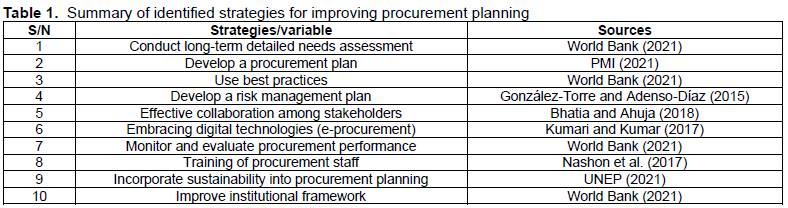
Capacity building and training are important strategies for improving procurement planning. Effective capacity building and training can help ensure that procurement professionals have the necessary skills and knowledge to carry out procurement activities effectively. Research has shown that capacity building and training can lead to improved procurement outcomes, including increased efficiency, reduced procurement costs, and improved supplier performance (Nashon et al., 2017; Ramanathan and Gunasekaran, 2014). Incorporating sustainability into procurement planning can help to reduce the environmental impact of projects and improve their long-term sustainability. According to the United Nations Environment Programme (UNEP), sustainable procurement involves considering environmental, social, and economic factors in the procurement process and selecting suppliers that demonstrate sustainable practices (UNEP, 2021). Table 1 displays the strategies required to improve procurement planning as compiled from the literature review.
2.2. Factors Challenging Procurement Planning Efficiency
Procurement planning is a crucial aspect of construction project management, particularly in the public tertiary education sector, and they are affected by several factors. One of the most important factors affecting procurement planning is the organizational strategy (Muhwezi et al., 2020). The procurement function must align with the overall strategy of the organization to ensure that the procurement activities contribute to the achievement of the organization's goals and objectives. Another critical factor affecting procurement planning is the availability of resources (Changalima et al., 2021). Resources such as finances, personnel, and technology are required in procurement planning. Oyegoke et al. (2018) ascertained that the availability of resources is a critical factor in the procurement process. The market dynamic condition of suppliers, including fluctuations in demand and supply, has a direct impact on the availability of goods and services, which in turn influence the procurement planning process. A study by Garvin et al. 2016) found that procurement planning should consider the market conditions to ensure that the organization can acquire goods and services at the most favorable prices. Akintoye and Fitzgerald (2000) asserted that stakeholder involvement can have a significant impact on the success of procurement planning. When stakeholders are involved in the procurement planning process from the beginning, they can provide valuable insights into the organization's needs and help to develop a procurement plan that meets those needs.
The culture within an organization plays a significant role in shaping procurement planning as it influences the values, beliefs of individuals involved in the procurement process. Procurement regulations are another critical factor affecting procurement planning. According to lyagba and Ogunsemi (2016), procurement regulations can have a significant impact on the procurement planning process by dictating the procurement methods, procedures, and requirements. Procurement professionals need to be familiar with the procurement regulations to develop a procurement plan that complies with the regulations. Technological advancement is also a critical factor affecting procurement planning. According to Chileshe and Kikwasi (2016), technological advancements can impact the procurement planning process by providing new tools and techniques for procurement professionals. A study by Muhwezi et al. (2020) found that the use of e-procurement systems can enhance procurement planning and improve the procurement process's efficiency. Politics can also have a significant impact on procurement planning. According to Osei-Kyei and Chan (2017), political factors such as changes in government, policies, and regulations can affect the procurement planning process. Procurement professionals need to be aware of political factors to develop a procurement plan that aligns with the political environment.
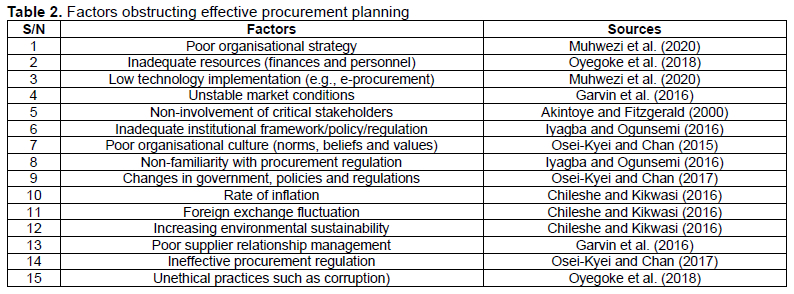
Economic factors are another important factor affecting procurement planning. According to Chileshe and Kikwasi (2016), economic factors such as inflation, currency exchange rates, and market conditions can impact the procurement planning process. Procurement professionals need to be aware of economic factors to develop a procurement plan that aligns with the economic environment. Legal factors are also a critical factor affecting procurement planning. According to lyagba and Ogunsemi (2016), legal factors such as procurement regulations and contract laws can have a significant impact on the procurement planning process. Procurement professionals need to be familiar with legal factors to develop a procurement plan that meets the legal requirements. The legal and regulatory framework is another critical factor affecting procurement planning. Procurement planners must be aware of the legal and regulatory environment in which they operate to ensure compliance with relevant laws and regulations. A study by Alktaifi et al. (2020) found that procurement planning must be aligned with the legal and regulatory framework to ensure that the organization avoids legal and reputational risks. Procurement planning is also influenced by cultural factors, which can impact the procurement process and outcomes, including communication styles, trust, and relationships with suppliers. Environmental factors are also a critical factor affecting procurement planning. According to Chileshe and Kikwasi (2016), environmental factors such as climate change, natural disasters, and sustainability can impact the procurement planning process. The identified factors obstructing procurement planning efficiency from the literature are summarized as shown in Table 2.
3. RESEARCH METHODOLOGY
The study evaluates the procurement planning improvement strategies in project delivery, assesses factors inhibiting procurement planning efficiency, and examines the effect of procurement planning improvement strategies on the challenges inhibiting effective procurement planning. The study was conducted in the South-South geo-political zone of Nigeria because there is no existing empirical study on the studied constructs in the region. Therefore, the study tends to provide a guide for the effective implementation of procurement planning processes. This zone comprises six States, namely Akwa Ibom, Bayelsa, Cross River, Delta, Edo, and Rivers States. Of the six states, Akwa Ibom and Rivers States were selected for the study because the two states have recorded rapid development in infrastructure, and the economic activities are more dominant in the two states when compared to other states in the region. The study focused on procurement planning in the tertiary education sector, which is peculiar to only Federal government institutions. For the study, fourteen (14) tertiary institutions benefiting from the structured budgetary allocation of the Federal Government of Nigeria were selected from the two states. A total of six Universities, five Polytechnics, and three Colleges of Education in the two States were adopted for the study. The study covers construction experts who are actively involved in project execution in those institutions, and they include employees from the Physical Planning Directorate or Department of Works, Contractors, Consultants, and/or Procurement Officers. These respondents are construction professionals comprising architects, builders, engineers, and quantity surveyors, and the total study population is 825. A sampling technique stipulated by Al-Sedary (1994) was adopted to reduce the large number to a smaller unit, which aligns with the study of Kothari (2017) that small units can represent a larger population through the sampling technique. The sample size was calculated using the Yamane formula, and 536 respondents were for the survey.
The study explores the research onion approach as stipulated by Ebokozun et al. (2025), considering the six procedures involved in data collection. These procedures are philosophy, approach to theory development, methodological choice, strategies, time horizon, and procedures/techniques. The research philosophy for the studied constructs is centered on epistemology and axiology, and the assumption is based on subjectivism. Saunders et al. (2023) state that epistemology focuses on assumptions about knowledge, while axiology involves values and ethics within the research process, which incorporates questions about the opinions of research participants. The research design espouses the deductive approach to conducting empirical research to explore the study's phenomenon and identify and examine the research objectives. The study adopts a multi-methods quantitative survey to obtain opinions, narratives, interpretative, and perceptions of respondents to convey the realities while claiming to have a value-bound, reflexive axiology. The use of a questionnaire was considered adequate for the field survey because of the ease of obtaining standard data appropriate for achieving the research objectives (Ogwueleka, 2011). Pallant (2020) also emphasized that achieving the research objectives that are based on the experience/perception of respondents can be easily obtained through a structured questionnaire that can be measured using an ordinal scale of measurement. The literature review identified ten strategies for improving procurement planning and fifteen factors obstructing procurement planning. There are two sections in the questionnaire, the first section uncovers the information relating to the profession of respondents, educational qualification, type of tertiary institution, professional qualification, years of experience, State, and Institution. The second section involves three categorical questions, which are evaluating procurement planning improvement strategies in project delivery, assessing factors inhibiting procurement planning efficiency, and examining the effect of procurement planning improvement strategies on the challenges inhibiting effective procurement planning. A five-point Likert scale of 5 representing very high to 1 is very low was adopted to collect responses from the respondents. The questionnaire was distributed to 536 respondents through either an online survey or in-person contact. The respondents were given three weeks to collect the questionnaire for each State. The valid questionnaires collected were 517 in number and they were used for data analysis, with a response rate is 96 percent.
4. RESULTS AND DISCUSSION
4.1 Respondents' Characteristics
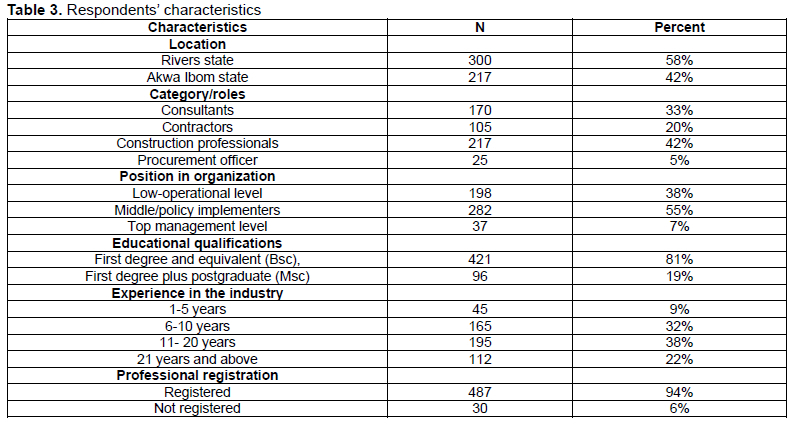
The respondents' characteristics were measured using six parameters to determine the suitability of responses on the studied construct. Those parameters were location, role of respondent, position, educational qualification, work experience, and professional qualification, and their results are displayed in Table 3. Under the location of respondents, 58 percent of respondents reside in Rivers State, while 42 percent are from Akwa I bom State. This is consistent with the level of economic development, where Rivers State has more construction activities than Akwa Ibom State. The consultants and construction professionals comprise 75% of the respondents, while procurement officers have the least representation of 5 percent. In Nigeria, the word "procurement officer" cuts across every discipline. In the construction-related practices, the bulk of procurement officers are also consultants, contractor representatives, and construction professionals within the context of this study. The few representations in the study are likely other professionals from allied fields like social sciences, law, and other engineering fields. The analysis of the position of respondents in their organizations reveals that middle-class employees have the highest score of 55 percent while low-level managers have 38 percent, and top-level managers have 7 percent. It is important to note that policy implementers are those directly involved in initiating actions that define effective procurement planning, designing organizational policy and programs. In terms of educational qualifications, 81 percent of the respondents have obtained a first degree, while 19 percent have obtained a first degree plus a postgraduate degree. Professionally, 94% of the sample are certified professionals in the cognate professions related to construction project delivery. The combined results of the qualifications, as well as the experience in the industry, are appropriate to conclude that the data generated from the sample can be applied to make inferences about the role of procurement planning in construction project performance in the tertiary education sector.
4.2 Strategies for Effective Procurement Planning
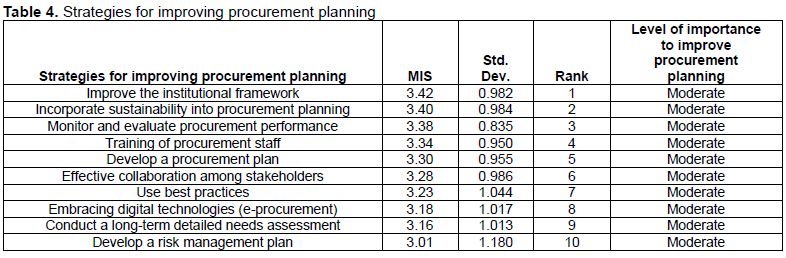
The identified ten strategic instruments/strategies for improving procurement planning from the literature were analyzed using Mean Item Score (MIS). The result is presented in Table 4 with mean scores ranging from 3.42 to 3.01, which is above 3.00. This implies that these strategies were all effective for improving procurement planning. From the analysis, improving the institutional framework has the highest MIS of 3.42, followed by incorporating sustainability into procurement planning with an MIS of 3.40, and then monitoring and evaluating procurement performance with an MiS of 3.38. The least ranked is developing a risk management plan, with an MIS of 3.01. Using the benchmark of 5.00-3.51 (High), 3.50-2.01 (Medium), and 2.00-0.00 (Low) to categorize the level of importance, the strategies are categorized as moderately effective in implementing procurement planning in the study area. The descriptive analysis of variance in respondents' collective level of agreement about the strategies for improving procurement planning in the tertiary education sector of Rivers and Akwa Ibom States suggests a significant discrepancy (Standard deviation < 1.00 and > 1.00). Hence, the study emphasizes that the respondents' opinions about the level of importance of these strategies in improving procurement planning vary.
4.3. Factors Inhibiting Procurement Planning in the Tertiary Education Sectors
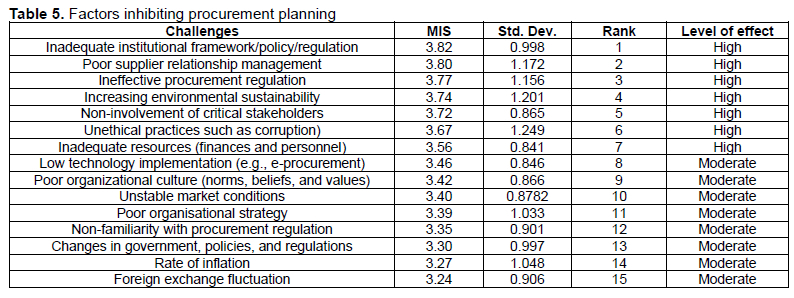
The understanding of factors in this study is limited to barriers and challenges inhibiting effective procurement planning. From this understanding, 15 challenges were identified from the literature review as parameters to measure the studied construct. The results of descriptive analyses involving the Mean Item Score (MIS) and the standard deviation are presented in Table 5. The results indicate that all the identified challenges were significant in inhibiting procurement planning in the study area, with the level of effect showing seven parameters as high and eight parameters as moderate. However, the most important level with high effect impeding procurement planning is analyzed as inadequate institutional framework/policy/regulation, poor supplier relationship management, ineffective procurement regulation, increasing environmental sustainability concerns, non-involvement of critical stakeholders, unethical practices, and inadequate resources. The factors inhibiting procurement planning with a moderate effect are low technology implementation, poor organizational culture, unstable market conditions, poor organizational strategy, non-familiarity with procurement regulation, changes in government, policies, and regulations, rate of inflation, and foreign exchange fluctuation. Descriptive analysis of variance in the respondents' collective level of agreement about the results relating to the factors inhibiting procurement planning suggests a significant discrepancy (Standard deviation greater than 1.00). Hence, the study concludes that the potential for variation among respondents concerning the results of the factors inhibiting procurement planning is very high. This implies that the overall opinions of respondents were inconsistent.
4.4 Modelling the Effect of Procurement Planning Improvement Strategies on the Challenges Inhibiting Effective Procurement Planning
The third objective of this study involves the modelling of the effect of procurement planning improvement strategies on the challenges inhibiting effective procurement planning in the tertiary education sector. The model is recursive and is termed SIPP-CIPP (Strategies for Improving Project Planning -Challenges Inhibiting Procurement Planning). The data underpinning the SIPP-CIPP model is the data analyzed in Tables 4 and 5. However, with the aid of path analysis in structural equation modelling (SEM), the study performed a factorization of the key factors inhibiting procurement planning, where four components emerged with the KMO value (0.840 > 0.50) and explained variance (68.99%). The factorization is deemed a preliminary test of the data suitability for SEM, and the four principal challenges were modelled against ten (10) strategies for improving procurement planning in the tertiary education sector. Therefore, the SIPP-CIPP model comprises 14 variables, and when the number of variables is evaluated against the sample size to determine the theoretical suitability of data for model, the data-model is compactible.
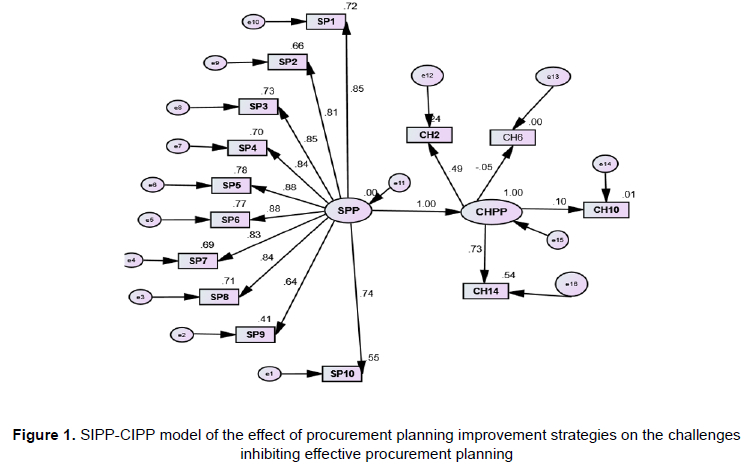
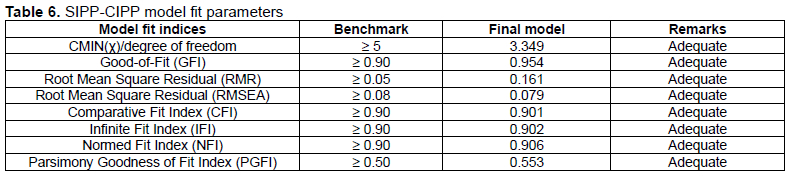
The Maximum Likelihood estimate of the causal relationship in the structural paths in the research model, the initial solution that's the model could not be rejected but adequately supported based on the key indices such Goodness of Fit Index and RSMEA among others. However, the study modified the model once based on indices under the relevant component of the AMOS software to obtain model performance. The final model produced CMIN (χ, 3.348 < 5.00, p (0.000)) and significant fit indices based on other parameters. The results of the path-diagram shown in Figure 1 indicate that the implementing the policy termed procurement planning improvement strategies produces a perfect correlation (r, 1.00; very high) with challenges inhibiting effective procurement planning. This indicates that the validated strategies could mitigate comprehensively and holistically the archetypes of challenges inhibiting procurement planning in the tertiary education sector in Akwa Ibom and Rivers state.
The model validity is presented in Table 6. The sum of the validity indices adopted in the study shows adequate fit in support of both initial and final structural models.
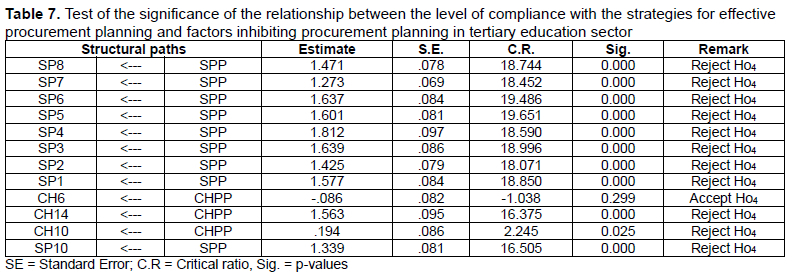
To determine the significant effect of the strategies for effective procurement planning on factors inhibiting procurement planning in the tertiary education sector in the study area. The test statistics involve path regression estimates and the critical ratio of the SIPP-CIPP model, and the validity is based on the critical p-values. The null hypothesis Ho4 is rejected where the p-value is less than 0.05 and accepted if the p-value is greater than 0.05. The result presented in Table 7 shows the p-value (0.000 > 0.05), and the null (Ho) hypothesis is rejected for ten paths. The implication indicates that there is a very high relationship between the strategies for effective procurement planning and factors inhibiting procurement planning in the tertiary education sector in Rivers and Akwa Ibom states for 10 structural paths. The results further indicate that all the parameter estimates supporting the rejection of Ho4 are statistically significant, realistic, and appropriate. The inference is that the strategies for effective procurement planning have a significant effect on factors inhibiting procurement planning in the study area. The result for the remaining path (CH10 <--- CHPP) shows that CH10 cannot mitigate the challenges inhibiting effective procurement planning in isolation. The null hypothesis for this path obtained p-values (p=0.025 > 0.05). The implication indicates that there is no significant relationship between the strategies for effective procurement planning and factors inhibiting procurement planning in construction project delivery within the tertiary education sector in Rivers and Akwa Ibom states. The results further indicate that the parameter estimates supporting the rejection of Ho4 for this path are statistically significant, realistic, and appropriate.
5. DISCUSSION OF FINDINGS
All strategies validated in the study emerged as significant strategic tools for improving procurement planning. However, improving the institutional framework, incorporating sustainability into procurement planning, monitoring and evaluating procurement performance, training of procurement staff, and developing a procurement plan emerged as the most important strategies for improving procurement planning (MIS ranging from 3.42 - 3.30 > 3.00). Importantly, developing a risk management plan, conducting long-term, detailed needs assessment, embracing digital technologies such as e-procurement, and collaborating effectively among stakeholders are also imperative to improving procurement planning. The results of the path diagram shown in Figure 1 indicate that the validated strategies could comprehensively and holistically mitigate the archetypes of challenges inhibiting procurement planning in the tertiary education sector in Akwa Ibom and Rivers State. These results compare and agree with past studies. For instance, Aliyu and Aliyu (2018) in their study identified the strategies to improve procurement compliance as strengthening the legal framework, increasing awareness and training among procurement officials and contractors, and promoting transparency and accountability in the procurement process. Similarly, Adeyemi and Adeyinka (2018) found that the increase in facility funding can improve the quality of education. Adeboyejo and Ogunlana (2019) recommended institutional capacity building, ethics training, and frequent monitoring and evaluation as measures to enhance compliance with public procurement guidelines in Nigeria.
However, the effective implementation of public procurement policies remains a challenge, and measures such as training, enhanced transparency, and strengthening of regulatory frameworks are necessary for success. Oluyemi and Ngwu (2019) stated that future research should focus on developing strategies to address these performance issues and improve the overall performance of construction projects in the tertiary education sector in Nigeria. Oyewobi and Ajadi (2020) found that enforcement of procurement regulations, capacity building for procurement officials, and the adoption of new technologies in procurement processes are imperative to improving public procurement. Ogwueleka and Achebe (2018) recommended the need for effective procurement monitoring and evaluation systems, capacity building for procurement officials, and effective communication among stakeholders to enhance compliance with procurement regulations. Aliyu and Aliyu (2018) suggested that strengthening the legal framework, increasing awareness and training among procurement officials and contractors, and promoting transparency and accountability in the procurement process could enhance project performance. Eyo and Fashina (2015) showed the establishment of a central procurement office, the adoption of electronic procurement systems, and the implementation of monitoring and evaluation mechanisms to enhance compliance with procurement regulations. Also, ICPC (2019) reported that strict compliance with procurement laws and procedures, as well as the use of technology and other innovative approaches, improve transparency and accountability in public procurement processes in Nigeria.
Armiya'u and Danjuma (2017) recommended for strict compliance with procurement procedures to improve project delivery in Nigeria. Oni and Olubunmi (2018) recommended the need for better planning and management of public procurement processes in Nigerian universities. Adedokun and Afolabi (2017) and Ogunlana et al. (2018) recommended the need for better enforcement of procurement laws and procedures in Nigeria. Dauda and Dauda (2019) recommended better planning and management of public procurement processes in Nigerian universities. Adenuga et al. (2019) also recommended the training of procurement officials, the strengthening of regulatory frameworks, and the use of technology to enhance transparency and accountability in procurement processes. Odeyinka et al. (2012) recommended that there should be prompt payment to contractors and the use of technology to improve the procurement process. The success of these reforms has been mixed, and the issues of corruption and inefficiency persist (Aluko and Arogundade, 2020).
All the identified factors were considered significant, with an overall level of effect indicating either a high or moderate level. However, the most important factors inhibiting procurement planning with high effect were identified as inadequate institutional framework/policy/regulation, poor supplier relationship management, ineffective procurement regulation, increasing environmental sustainability concerns, non-involvement of critical stakeholders, unethical practices, and inadequate resources. Similarly, Adeboyejo and Ogunlana (2019) observed that weak institutional capacity and corruption were major hindrances to the effective implementation of public procurement guidelines in Nigeria. Bamidele (2020) stated that tertiary institutions in Nigeria encouraged corruption in the procurement process through non-compliance with clauses demanding unrestricted access to unclassified procurement records, thereby negating the desire for transparency, integrity, openness, and elimination of corruption. Shwarka (2019) reinforced that this practice is prevalent due to the poor rating of public sector PPR processes and project performance, and transparency of bidding. Adenuga et al. (2019) examined the challenges of implementing public procurement policies in the tertiary education sector in Nigeria. The research identified factors such as lack of transparency, inadequate monitoring and evaluation, and weak regulatory frameworks as key challenges to the effective implementation of public procurement policies in the sector. The study recommended the training of procurement officials, the strengthening of regulatory frameworks, and the use of technology to enhance transparency and accountability in procurement processes. The causes of these issues vary, but inadequate budgeting, poor project planning and scheduling, poor workmanship, the use of substandard materials, inadequate supervision, and inadequate maintenance have been identified as major contributing factors.
Ogunsanmi and Ogunsemi (2012) investigated the factors influencing the procurement of construction projects in Nigerian universities. The study identified factors such as lack of transparency, corruption, and inadequate funding as major challenges to the procurement process. The study recommended that there should be greater transparency in the procurement process and the provision of adequate funding for construction projects. In the context of universities, Muhammad and Agarwal (2018) noted that public procurement is critical to maintaining quality and value for money in the procurement of goods and services. However, universities in Nigeria have faced several challenges in this area, including a lack of capacity, an inadequate legal framework, and corruption. Owoeye and Komolafe (2018) investigated the factors influencing procurement compliance in Nigerian public universities. Their findings indicate that factors such as corruption, inadequate government funding, and lack of awareness among procurement officials and contractors are among the key challenges that hinder procurement compliance in the Nigerian education sector. Maduekeh and Obinwa (2022) highlighted that corruption, high cost of tendering, less involvement of professionals, and disputes are some prevalent issues inherent in the current procurement reforms in Nigeria.
6. CONCLUSION
The study investigates the procurement planning strategies and the factors inhibiting procurement planning efficiency in construction project delivery within the public tertiary sector in Nigeria. In the procurement planning strategies, the research findings reveal that an improved institutional framework has the highest MIS of 3.42, followed by incorporating sustainability into procurement planning with an MIS of 3.40, and then monitoring and evaluating procurement performance with an MIS of 3.38. The least ranked is developing a risk management plan, with an MIS of 3.01. The factors inhibiting procurement planning were examined, and factors such as inadequate institutional framework/policy/regulation, poor supplier relationship management, ineffective procurement regulation, increasing environmental sustainability concerns, non-involvement of critical stakeholders, unethical practices, and inadequate resources were identified as having a high effect. The modelling of the effect of procurement planning improvement strategies on the challenges inhibiting effective procurement planning in the tertiary education sector was performed. A factorization of the key factors inhibiting procurement planning, where four components emerged with the KMO value (0.840 > 0.50) and explained variance (68.99%). The results of the path diagram indicate that implementing the procurement planning improvement strategies policy produces a perfect correlation (r = 1.00; very high) with challenges inhibiting effective procurement planning. This indicates that the validated strategies could comprehensively and holistically mitigate the archetypes of challenges inhibiting procurement planning in tertiary education. The study offers practical implications for policymakers in Nigeria on institutional reforms and compliance within tertiary institutions. It also provides valuable insights into the challenges confronting Nigeria's tertiary education systems and strategies that can be implemented to eradicate those challenges. The study emphasizes that non-compliance with procurement procedures can lead to delays, cost overruns, and poor project outcomes, therefore, procurement laws and procedures should be enforced. This will ensure that there is better planning and management of public procurement processes within the tertiary education sector. The study recommends that stakeholders develop risk management plans, conduct long-term dialed needs assessments, and embrace digital technologies such as e-procurement to improve procurement planning.
REFERENCES
Adeboyejo, B. T., & Ogunlana, S. O. (2019). Corruption and governance challenges in project procurement in developing countries: Lessons from Nigeria. In U. Bardi (Ed.), Addressing societal challenges towards sustainable construction (pp. 113-127). Springer, Cham.
Adedokun, O., Aje, I., Awodele, O., & Egbelakin, T. (2021). Are the public tertiary education building projects devoid of risks in the Nigerian construction context? Journal of Financial Management of Property and Construction, 27(2), 259-278. [ Links ]
Adedokun, O. A., & Afolabi, A. (2017). Evaluating the effectiveness of public procurement in Nigeria: An analysis of the procurement act 2007. Journal of Public Procurement, 17(3), 315-338. [ Links ]
Adenuga, O. A., Oyeyipo, O. O., & Awodele, O. A. (2017). Evaluation of factors affecting performance of construction projects in Nigeria. International Journal of Civil Engineering and Technology, 8(7), 1229-1237. [ Links ]
Adequate, O. (2017). Procurement planning and project performance in Nigeria construction industry. Journal of Construction Management, 11(2), 123-135. [ Links ]
Adeyemi, A. Y., & Opawole, A. (2015). The impact of procurement regulations on project performance in the Nigerian construction industry. Journal of Accounting and Management, 5(3), 48-60. [ Links ]
Adeyemi, T. O., & Adeyinka, T. A. (2018). Public sector performance in Nigerian higher education: A study of selected universities. International Journal of Management and Applied Research, 5(2), 1-18. [ Links ]
Akinradewo, O. F., Bamidele, O. A., & Ogunsemi, D. R. (2022). Assessment level of compliance with Public Procurement Act. Journal of Engineering, Project, and Production Management, 12(2), 126-136. [ Links ]
Akintoye, A., & Fitzgerald, E. (2000). A survey of current cost estimating practices in the UK. Construction Management and Economics, 18(2), 161-172. [ Links ]
Ali, N. I. (2020). Can public procurement bring socio-economic empowerment? Retrieved from https://blogs.worldbank.org/can-public-procurement-bring-socio-economic-empowerment? (Accessed May 15, 2021).
Aliyu, R., & Aliyu, L. (2018). Non-compliance with public procurement due process in Nigeria: Imperatives for compliance and monitoring. International Journal of Applied Business and Economic Research, 16(20), 81-97. [ Links ]
Alktaifi, A., Al-Momani, A. H., & Al-Shuraifi, H. (2020). The impact of legal and regulatory frameworks on procurement management practices in Jordanian public universities. International Journal of Public Sector Management, 33(2), 174-191. [ Links ]
Al-Sedary, A. (1994). Evolution of raw materials procurement strategies. Journal of Human Evolution, 2(2), 18-28. [ Links ]
Alshammari, T., Alshammari, R., & Al-Dubai, S. (2019). The impact of procurement planning on project success in the Saudi Arabian construction industry. Journal of Engineering, Design and Technology, 17(4), 711-726. [ Links ]
Aluko, O. A., & Arogundade, O. B. (2020). Public procurement reform in Nigeria: A critical assessment of progress, challenges, and prospects. Public Administration Review, 80(5), 748-761. [ Links ]
Armiya'u, A. Y., & Danjuma, I. (2017). The impact of procurement procedures on public construction project delivery in Nigeria. International Journal of Engineering Research in Africa, 31, 1-11. [ Links ]
Bakhtari, M., Kazemi, M., & Kazemi, A. (2015). An investigation of the impact of e-procurement on reducing procurement costs. Journal of Industrial Engineering and Management, 8(2), 339-357. [ Links ]
Bamidele, E. (2020). Effect of institutional status on the level of compliance with public procurement regulations in public tertiary institutions in Southwest Nigeria. Journal of Women in Technical Education and Employment, 1(1), 9-16. [ Links ]
Bamidele, E. O. (2020b). Comparing levels of compliance with Public Procurement Act, 2007 in project delivery between federal and state tertiary institutions in Southwest Nigeria. International Journal of Civil Engineering and Technology, 11(4), 161-170. [ Links ]
Barratt, M., Choi, T. Y., & Li, M. (2015). Qualitative case studies in operations management: Trends, research outcomes, and future research implications. Journal of Operations Management, 41, 91-103. [ Links ]
Bhatia, S., & Ahuja, I. P. S. (2018). Stakeholder collaboration and its impact on green supply chain management and firm performance. Journal of Cleaner Production, 172, 4139-4151. [ Links ]
Bhattacherjee, A. (2021). Social science research-principles, methods, and practice. University of South Florida, LibreText. https://autocad.libretexts.org/ (Note: Verify link and book publisher if needed)
Bourne, L., & Walker, D. H. T. (2006). Using a visualizing tool to study stakeholder influence: Two Australian examples. Project Management Journal, 37(1), 5-21. [ Links ]
Budgit. (2022). Leveraging budget reforms for economic development: Key insights from FG's 2022 budget proposal analysis. https://www.yourbudgit.com
Changalima, I. A., Ismail, I. J., & Mwaiseje, S. S. (2021). Obtaining the best value for money through procurement planning: Can procurement regulatory compliance intervene? Journal of Money and Business, 2(2), 133-148. https://doi.org/10.1108/JMB-11-2021-0056 [ Links ]
Chileshe, N., & Kikwasi, G. J. (2016). Improving public procurement performance in Tanzania: The role of e-procurement. Journal of Public Procurement, 16(1), 38-61. [ Links ]
Dauda, Y. A., & Dauda, M. A. (2019). Public procurement procedures and project performance in Nigerian universities. Journal of Construction Project Management and Innovation, 9(1), 2179-2196. [ Links ]
Ebekozien, A., Aigbavboa, C. O., & Thwala, W. D. (2025). A practical research process for developing a sustainable built environment in emerging economies. CRC Press. https://doi.org/10.1201/9781003562207
Eyo, O. A., & Fashina, O. O. (2015). Compliance with procurement regulations in Nigerian universities: Lessons from the University of Calabar. International Journal of Education and Research, 3(6), 47-56. [ Links ]
Ezinwa, A. U., & Silas, A. B. (2012). Construction cost factor in Nigeria.
Flyvbjerg, B. (2005). Policy and planning for large infrastructure projects: Problems, causes, cures. World Bank Policy Research Working Paper No. 3781. https://doi.org/ (add DOI if available)
Flyvbjerg, B. (2014). What you should know about megaprojects and why? An overview. Project Management Journal, 45(2), 6-19. [ Links ]
Garvin, T., O'Toole, W. J., & O'Brien, W. J. (2016). Procurement market conditions and the use of auction mechanisms in sourcing. Journal of Purchasing & Supply Management, 22(1), 65-87. [ Links ]
González-Torre, P. L., & Adenso-Díaz, B. (2015). A literature review on the impact of investment in procurement practices on firm performance. Journal of Purchasing & Supply Management, 21(3), 147-161. [ Links ]
ICPC. (2019). Independent Corrupt Practices and Other Related Offences Commission 2019 Annual Report. https://icpc.gov.ng.org
Ilyas, M., Mohammed, S. K., Fien, Z., & Shanty, K. D. (2018). Impact of inventory management and procurement practices on organization's performance. Singaporean Journal of Business Economics and Management Studies, 6(3), 32-39. [ Links ]
Iyagba, R. O., & Ogunsemi, D. R. (2016). Procurement policy implementation and its impact on procurement outcomes in Nigeria. International Journal of Construction Management, 16(4), 274-282. [ Links ]
Kothari, C. (2017). Research methodology: Methods and techniques (2nd ed.). New Age International (P) Ltd. http://methods.sagepub.com
Kumari, R., & Kumar, D. (2017). E-procurement implementation: A review of critical success factors. Journal of Advances in Management Research, 14(3), 273-291. [ Links ]
Maduekeh, C. O., & Obinwa, I. N. (2022). Impacts of the Public Procurement Act 2007 on the procurement of public projects in Nigerian tertiary institutions. Malaysian E-Commerce Journal, 6(2), 89-95. [ Links ]
Muhammad, U., & Agarwal, R. K. (2018). Public procurement and quality in Nigerian universities. Journal of Public Procurement, 18(4), 468-492. [ Links ]
Muhwezi, L., Musiime, F. T., & Onyutha, C. (2020). Assessment of the effects of procurement planning processes on performance of construction contracts in local governments in Uganda. Journal of Civil, Construction and Environmental Engineering, 5(6), 151-160. https://doi.org/10.11648/j.jccee.20200506.12 [ Links ]
Nashon, S., Ndwiga, J., & Kimani, W. (2017). Impact of capacity building on the performance of public procurement entities in Kenya. International Journal of Supply Chain Management, 6(4), 155-161. [ Links ]
Nigussie, D. G., & Mulugeta, Y. T. (2018). The impact of procurement planning on road construction project performance in Ethiopia. Journal of Construction in Developing Countries, 23(1), 1-23. [ Links ]
Odeyinka, H. A., Yusif, A. M., & Olomolaiye, P. O. (2012). Procurement of construction projects in Nigerian universities: The contractor's perspective. Journal of Financial Management of Property and Construction, 17(1), 57-72. [ Links ]
Office of Government Commerce. (2007). Achieving excellence in procurement: Value for money. https://www.gov.uk/government/publications/achieving-excellence-in-procurement-value-for-money
Ogunlana, S. O., Promkuntong, K., & Jearkjirm, V. (2018). An empirical study of procurement procedures in the Nigerian construction industry. Journal of Engineering, Design and Technology, 16(4), 542-561. [ Links ]
Ogunsanmi, O. E., & Ogunsemi, D. R. (2012). An investigation into the factors influencing the procurement of construction projects in Nigerian universities. Journal of Construction Project Management and Innovation, 2(2), 263-279. [ Links ]
Ogwueleka, A. C. (2013). The critical success factors influencing project performance in Nigeria. Journal of Management Science and Engineering, 6(5), 343-349. [ Links ]
Ogwueleka, F. N., & Achebe, C. (2018). Procurement regulations compliance and project performance in the Nigerian construction industry. Journal of Construction Engineering and Management, 144(5), 04018021. [ Links ]
Oladapo, A. (2016). Reforms in public procurement in Nigeria: A critical analysis. African Journal of Public Affairs, 11(2), 1-22. [ Links ]
Oluyemi, J. A., & Ngwu, A. A. (2019). Public sector performance in Nigerian higher education: Issues and challenges. Journal of Education and Practice, 10(4), 1-7. [ Links ]
Oni, O. A., & Olubunmi, F. (2018). Public procurement process and project performance in Nigeria: A study of selected universities. Journal of Construction in Developing Countries, 23(1), 101-119. [ Links ]
Osei-Kyei, R., & Chan, A. P. (2018). Review of studies on the critical success factors for public-private partnership (PPP) projects from 1990 to 2015. International Journal of Project Management, 36(5), 773-794. [ Links ]
Owoeye, S., & Komolafe, O. (2018). Factors influencing procurement compliance in Nigerian public universities. Indian Journal of Public Health Research and Development, 9(10), 283-287. [ Links ]
Oyewobi, L. O., & Ajadi, A. O. (2020). Procurement compliance and project success: Evidence from Nigerian public universities. Journal of Engineering, Design and Technology, 18(5), 1380-1391. [ Links ]
Pallant, J. (2020). SPSS survival manual: A step-by-step guide to data analysis using IBM SPSS (7th ed.). Open University Press.
Parra, J. D. A. (2021). Public procurement. https://jusmundi.com/en/document/wiki/en-public-procurement (Accessed June 15, 2021)
Project Management Institute. (2017). A guide to the project management body of knowledge (PMBOK® Guide) (6th ed.). PMI.
Ramanathan, U., & Gunasekaran, A. (2014). Supply chain risk management and resilience: A research agenda. International Journal of Production Economics, 147, 277-285. [ Links ]
Saunders, M. N. K., Lewis, P., & Thornhill, A. (2023). Research methods for business students (9th ed.). Pearson Education Limited, UK.
Shwarka, M. S. (2019). Impact of the Nigerian procurement reform on planning practices of construction practitioners. FUTY Journal of Environment, 13(2), 14-28. [ Links ]
Tukamuhabwa, B. R., Stevenson, M., Busby, J., & Zorzini, M. (2015). The impact of risk management on procurement performance of public entities in Uganda. International Journal of Risk Assessment and Management, 18(1), 73-91. [ Links ]
United Nations Environment Programme. (2021). Sustainable public procurement. https://www.unep.org/explore-topics/resource-efficiency/what-we-do/sustainable-public-procurement
World Bank. (2021). A global procurement partnership for sustainable development. https://documents1.worldbank.org/pdfs
 Correspondence:
Amaka Chinweude Ogwueleka
Department of Quantity Surveying, University of Uyo
Nigeria
Email address: amakaogwueleka@gmail.com
Received: 25-01-2025
Revised: 26-03-2025
Accepted:30-04-2025