




Services on Demand
Journal

Article
 English (pdf)
 Article in xml format
 Article references
 Automatic translation
 Send this article by e-mail
Indicators
Related links
-
 Cited by Google
 -
 Similars in Google
Share

 Permalink
Journal of Vocational, Adult and Continuing Education and Training
On-line version ISSN 2663-3647Print version ISSN 2663-3639
JOVACET vol.8 n.1 Cape Town 2025
https://doi.org/10.14426/jovacet.v8i1.506
ARTICLES
Exploring the role of artificial intelligence (AI) in recognition of prior learning: Opportunities for transforming adult learning and assessment
Rekha Rambharose
Directorate of Learning, Teaching and Student Success, Recognition of Prior Learning Unit, Faculty of Education, Institute for Post-School Studies, University of the Western Cape, Cape Town, South Africa. ORCID LINK: https://orcid.org/0009-0000-6601-5545; rrambharose@uwc.ac.za
ABSTRACT
Artificial intelligence (AI) is reshaping higher education and potentially the recognition of prior learning (RPL) by enhancing assessment processes, ensuring fairness and expanding access to adult learners. This study explored a new and fairly under-researched area that focuses on Al's role in supporting adult learners, who enter higher education through alternative pathways, by automating the evaluation of portfolios and improving the accuracy of assessments. It also focused on Al's role in supporting personalised learning pathways. It examined key digital approaches, ethical considerations and the challenges of integrating Al-driven tools in the RPL and adult learner context. The study, framed within constructivist learning theory, highlighted AI's potential to tailor learning experiences based on prior knowledge. The constructive alignment of adult learning principles and AI was explored. Reflective thematic analysis was used to identify transformative tools, digital support, student empowerment and academic upskilling as key themes throughout this study. The findings indicate that AI, with ethical safeguards in place, could streamline and enhance RPL processes and render assessments more efficient, transparent and equitable.
Keywords: Artificial intelligence (AI); recognition of prior learning (RPL); adult learning; digital andragogy; higher education; assessment
Introduction
Recent developments with artificial intelligence (AI) in higher education have both significantly and rapidly had an impact on conventional teaching, learning and assessment practices, thus opening numerous channels of engagement with AI-related tools and applications (Popenici & Kerr, 2017). AI-driven technologies, such as natural language processing (NLP), machine learning (ML) and generative AI, are enhancing the personalisation of education by improving the accuracy of assessments and by providing real-time support to students (Soundarya et al., 2025; Vetrivel et al., 2025). Existing scholarship has extensively explored the integration of AI in higher education, focusing on its applications, benefits, challenges and transformative potential (Pedro et al., 2019). The use of AI in higher education institutions (HEIs) across multiple disciplines has evoked an astonishing range of possibilities and opportunities for teaching and learning practices in dentistry (Shan et al., 2021), mathematics (Lee & Yeo, 2022), physics (Chung et al., 2025) and economics (Ruiz-Real et al., 2021). The perspective of this work is based on the synthesis of current research findings to provide a comprehensive understanding of AI's impact on higher education from an adult learning standpoint.
AI applications include adaptive learning systems, automated assessment and feedback, intelligent tutoring systems and predictive analytics (Gupta et al., 2022). AI-driven tools personalise learning experiences by analysing student data to adjust the presentation of content or the mode of delivery, in these ways enhancing a student's engagement and comprehension (Galindo-Domínguez et al., 2024). In an independent study, the causal feedback mechanisms of AI transformation in a typical higher education institution (HEI) setting were mapped using a causal loop diagram (CLD). The findings of that study showed that these systems can identify individual learning styles and provide customised resources to meet diverse student needs (Katsamakas et al., 2024).
In this study, the term 'learning styles' is used not as a predictor of learning outcomes but as a conceptual lens through which to acknowledge the diversity of the ways in which adult learners engage in constructing knowledge in recognition of prior learning (RPL) processes and in their university studies (Knowles, 1978). It is important to note that, here, 'learning styles' refers to the varied orientations and strategies adult learners bring to navigating RPL rather than a strict matching tool for instruction. AI tools have been applied to facilitate efficient grading and feedback mechanisms, particularly in large-scale courses (Mahapatra, 2024). Another research study explored AI applications in various areas of professional and knowledge work. Specific attention was paid to emotions and the role they play in integrating the use of technology in the workplace. The findings indicated that, by automating routine assessment tasks, educators can allocate more time to interactive and personalised teaching activities (Eshraghian et al., 2024). Another interesting application to advance higher education is the use of AI-powered tutors that offer real-time assistance by guiding students through complex problem-solving processes and by adapting to their learning pace (Chan & Tsi, 2023).
Collectively, these systems or applications have been shown to improve student performance and retention rates (Kamalov et al., 2023). In addition, AI can align academic and behavioural data to forecast student outcomes and enable early interventions for those students at risk of underperforming (Krause et al., 2024). This proactive approach supports student success and institutional effectiveness. It is well known that student learning abilities are unique and diverse. Therefore, given the advances of the Fourth and Fifth Industrial Revolutions, it is necessary to have a multi-layered approach that will cater to the diversity and learning needs of students (Lubinga et al., 2023).
AI in higher education also offers students the opportunity for personalisation, as it enables the tailoring of educational experiences to individual student needs, which promotes deeper understanding and motivation (Loos, Gröpler & Goudeau 2023). It can also increase efficiency by automating administrative and instructional tasks, which tends to reduce the workload of educators, allowing them to focus on pedagogical innovation and research (Alimardani, 2024). Furthermore, AI tools can increase accessibility by providing support for students with disabilities in the form of alternative formats and personalised assistance to enhance learning inclusivity (Einarsson et al., 2024).
Al's integration with higher education is not merely a technological enhancement but a catalyst for systemic transformation in the digital era. It encourages a shift towards more learner-centred approaches, fosters innovation in curriculum design and promotes the development of digital literacy skills that are essential for the modern workforce (Krause et al., 2024). The current body of research indicates that, although AI offers substantial benefits to higher education, its successful implementation requires careful consideration of ethical, practical and pedagogical factors (Galindo-Domínguez et al., 2024). Ongoing collaboration among educators, technologists, policymakers and students is essential to harness Al's potential responsibly and effectively (Loos et al., 2023). In recognition of the advances made by AI in higher education, the purpose of this article is to enhance an understanding of the ways in which AI can be applied in the context of RPL and adult learning.
This article is structured as follows: first, key research questions are outlined. Subsequently, the theoretical framework grounding this discussion is introduced, situating AI within the constructivist learning theory. This is followed by a discussion of the qualitative methodology employed to analyse AI's role in RPL. The study then examines the intersection of AI and RPL in the context of adult learners and discusses the transformative potential of AI-driven assessments, while considering the ethical and practical implications. The discussion section expands on how AI can be leveraged for personalised student support; it is followed by recommendations for best practices and alignment with adult learning principles. The discussion includes essential themes such as the purpose and benefits, practice and ethical use of AI in addition to the impact of AI on RPL and the adult learning domain. Although the aim is not to advocate one point of view over another, the goal is to foster a comprehensive discourse that embraces and informs a balanced perspective on the use of AI in RPL practices (Butson & Spronken-Smith, 2024). In particular, it explores the potential impact that the use of AI could have on adult learners from marginalised and disadvantaged backgrounds.
Recognition of prior learning through an artificial intelligence lens
For many adult learners, RPL is a gateway to higher education and provides recognition of informal and non-formal learning gained through work experience, self-directed learning or vocational training. However, the manual nature of traditional RPL - which relies heavily on subjective evaluations, extensive documentation and institutional bureaucracy - often creates barriers to accessing higher education (Kizito, 2006). It is proposed that AI can streamline RPL processes by automating the assessment of prior learning, enabling faster, fairer and more transparent evaluations.
Therefore, the research focus of this study was on critically examining the role of AI in RPL and assessing the way in which AI-driven technologies can enhance assessment accuracy, fairness and efficiency while maintaining the integrity of human judgement in evaluating prior learning. This article explores the following key areas:
1. The potential benefits of AI-driven RPL assessment;
2. Ethical challenges and concerns related to bias, transparency and data privacy;
3. Best practices for integrating AI into RPL frameworks, and
4. The future of AI in supporting adult learners who navigate RPL processes.
The key research questions identified in this study were:
1. How can AI enhance the assessment and validation processes in RPL?
2. What are the ethical implications of using AI in RPL assessments?
3. How can AI-driven tools be integrated into adult learner support systems within RPL frameworks?
4. What are the future directions for AI in RPL, and how can it support equitable access, student success and inclusive lifelong learning for adult learners?
AI offers promising advancements for RPL by enabling the automated assessment of prior learning, reducing subjectivity in evaluations and providing personalised learning pathways. AI-powered tools such as ML algorithms, NLP and predictive analytics have the potential to streamline RPL assessments, making them more consistent, objective and scalable. However, concerns about fairness, the ethical use of AI and the role of human evaluators in AI-mediated assessments must be carefully dealt with to ensure that AI serves as an enabler of, rather than a replacement for, human judgement (Al-Zahrani & Alasmari, 2024).
The use of AI in the RPL domain is not without challenges and there are ethical considerations that must be used to drive this innovation. These challenges include the extensive use of student data that necessitates robust measures to protect privacy and ensure ethical data-handling (Roivainen, 2023). Another challenge is that AI systems can unintentionally perpetuate biases encoded in their training data, resulting in unfair or discriminatory outcomes (Katsamakas et al., 2023). To mitigate these risks, continuous monitoring, contextual validation and algorithmic auditing - periodic model retraining - are essential (Chan & Tsi, 2023).
Furthermore, the proliferation of Al-generated text introduces new challenges in maintaining academic integrity, because learners may misuse AI tools to produce or substantially enhance their submissions (Mahapatra, 2024). In an attempt to counter this, institutions are adopting Al-detection software; for example Turnitin now integrates an Al-writing report in its similarity checker. This tool flags Al-generated or Al-paraphrased text in two categories and suppresses low-level alerts (< 20%) to reduce false positives. However, according to some scholars, Turnitin clearly states it is not infallible; therefore, the results cannot be treated as definitive proof of misconduct. Instead, institutions are expected to interpret the findings in the light of academic integrity policies, disciplinary guidelines and professional judgement. In practice, this means that AI-detection results should serve as one piece of evidence within a broader evaluative process rather than as a stand-alone determinant of academic dishonesty (Ibrahim et al., 2025).
Critically, since its April 2023 release, Turnitin has evolved its system by updating thresholds, enabling paraphrase detection and expanding language support (including for Japanese and Spanish texts). Yet it acknowledges limitations in the case of near-human writing, hybrid AI-human mimicry and the risk of misflagging English second-language work. Given these constraints, no AI detector should be used as a stand-alone tool for making decisions about academic misconduct; rather, it should prompt a deeper review that is aligned with transparent institutional policy and educator oversight.
An interesting parallel is Grammarly's emerging 'Authorship' feature, which now distinguishes between AI-generated, AI-edited and human-typed text, offering users context and transparency about AI usage. Tools such as this emphasise the supportive, not the punitive, use of AI technology - fostering integrity while acknowledging the evolving academic ecosystem (Rao & Al-Obaidi, 2025).
Theoretical framework: Constructivist learning theory and artificial intelligence in recognition of prior learning
This study is underpinned by the constructivist learning theory (CLT), according to which learning is an active contextualised process in which individuals construct new knowledge based on their prior experiences and interactions with their environment (Piaget, 2005; Vygotsky, 1978). In the context of RPL, constructivism provides a robust foundation for understanding how adult learners integrate and apply previous knowledge to formal learning experiences. Recent scholarship, post-2022, has expanded our understanding of the way generative AI (GenAI) platforms align with constructivist learning principles in adult education. Adarkwah (2024) highlights the GenAI-infused Adult Learning Ecology (GenAI-ALE) framework, which demonstrates how tools such as ChatGPT and Midjourney enable adult learners to engage actively with personalised learning pathways and to construct new knowledge in authentic contexts.
Similarly, Storey and Wagner (2024) discuss the ways generative AI tools foster metacognitive awareness and self-regulation by prompting learners to articulate their thinking and refine their understanding - key tenets of constructivist learning. Laupichler et al. (2022) further emphasise the need for AI literacy in higher education and suggest that integrating AI with adult learning environments can scaffold reflective and collaborative learning processes when approached with pedagogical intentionality. These emerging studies reinforce the reality that GAI can serve as an enabler of constructivist learning and support learners in contextualising, adapting and building on prior knowledge. Consequently, the inclusion of these recent insights, together with foundational constructivist theories, strengthens the rationale for exploring AI within RPL frameworks as a means to support inclusive, active and personalised adult learning.
The integration of AI in RPL assessment and learning aligns with constructivist principles by facilitating personalised, adaptive and self-directed learning pathways (Siemens, 2005). Al-driven tools can align prior learning, offer real-time feedback and provide customised learning interventions to ensure that adult learners engage in meaningful self-regulated learning experiences. Let us consider the following theoretical viewpoints. One of the key tenets of constructivist learning is that learners must actively engage with content, reflect on their understanding and apply knowledge in authentic contexts (Jonassen & Rohrer-Murphy, 1999). Al-powered adaptive learning platforms align with these principles by tailoring instruction based on learner progress, prior knowledge and learning preferences. For example, intelligent tutoring systems (ITSs), such as Carnegie Learning's MATHia and Knewton Alta, use ML algorithms to assess learners' strengths and weaknesses and adjust instruction dynamically (Ma et al., 2014).
In an RPL context, similar AI-driven systems can analyse portfolios and experiential learning narratives to identify competencies. Based on these learning gaps, AI tools can identify and recommend tailored learning modules to fill knowledge gaps. Further to this, scaffolding the learning processes through AI-based tutors can be offered to provide justin-time support, taking the technology-enhanced implementation of RPL to greater heights. By incorporating constructivist AI tools, RPL processes are able to validate and build upon learners' existing knowledge, ensuring a learner-centred, contextualised assessment of prior learning (Ouyang, Zheng & Jiao, 2022).
The role of social constructivism can be used effectively to make sense of AI and scaffolding in RPL. This is because Vygotsky's (1978) social constructivist theory highlights the importance of social interaction and scaffolding in knowledge construction (Vygotsky, 1978). When effectively integrated with digital learning environments, the theory can facilitate peer collaboration, mentorship and guided learning - essential components of constructivist learning (Okunlaya, Syed Abdullah & Alias, 2022).
For instance, collaborative Al-powered platforms such as IBM Watson Education and Microsoft Teams AI Insights can align discussions and suggest relevant resources to support group learning (Jose, 2024; Holmes et al., 2018). In an RPL setting, AI can:
• Support peer review processes by providing automated feedback on written reflections;
• Facilitate expert mentoring by matching learners with industry professionals based on AI-driven skill analysis; and
• Enable AI-powered discussion forums where learners engage in reflective dialogue and receive AI-generated content recommendations.
These AI applications align with constructivist principles by promoting active engagement, reflection and collaborative knowledge construction (Laurillard, 2013).
Another key element of constructivist learning is metacognition - the ability to reflect on and regulate one's own learning processes (Schraw & Moshman, 1995). AI enhances self-regulated learning (SRL) in digital environments by providing personalised dashboards, predictive analytics and AI-generated study plans that can assist adult learners in driving their own learning. In RPL, these AI-driven SRL tools help learners to track their competency progress, reflect on their learning achievements and make informed decisions about their educational pathways (Sclater et al., 2016).
Most interesting in the domain of RPL is the potential to apply AI as a reflective learning partner in RPL. Reflection is central to constructivist learning (Moon, 2013). Moreover, AI can serve as a reflective learning partner by prompting learners to articulate their learning experiences, justify decisions and critically evaluate their own knowledge gaps. In these ways, they are led towards understanding their own student learning philosophy within a higher education setting. A good example of this application is the AI-powered writing assistants such as Grammarly's AI Tutor and Turnitin's Revision Assistant that provide personalised feedback on students' writing. This helps RPL learners to refine their learning narratives and portfolio submissions, self-assessment reflections on competencies and critical thinking (Haubt, 2024). By integrating AI into reflective learning activities, RPL frameworks can enhance learners' critical engagement with their prior knowledge and ensure deeper knowledge construction and retention (Boud et al., 2013).
Methodology
This study adopted a qualitative reflective research approach underpinned by constructivist learning theory (Piaget, 2005; Vygotsky, 1978). A reflective thematic analysis (Braun & Clarke, 2021; Braun et al., 2023) was accordingly employed to explore critically the ways in which AI can enhance RPL practices in adult education, focusing on the themes of transformation, ethical practice, personalisation and empowerment. The research drew on a combination of scoping review findings, empirical case studies, and theoretical insights from digital pedagogy and AI integration in higher education.
Data sources and literature selection criteria
To ensure rigour, a comprehensive and systematic literature search was undertaken across multiple electronic databases, aiming for a broad and inclusive coverage of relevant studies. Given the varied terminology used to describe RPL across different regions and contexts, alternative terms such as validation of prior learning (VPL), prior learning assessment and recognition (PLAR) and accreditation of prior learning (APL) were incorporated into the search. This strategy expanded the search scope and reduced the likelihood of omitting relevant key literature.
The selected databases included Academic Search Premier (EBSCOhost), ERIC (EBSCOhost), Google Scholar, Web of Science, Sabinet African Journals and several institutional research repositories. Each was purposefully chosen for its relevance and capacity to provide access to high-quality, peer-reviewed research. For example, Web of Science and Academic Search Premier enabled access to internationally recognised journals, offering a global perspective, whereas Sabinet African Journals was included to capture context-specific research from South Africa - an essential element for understanding local RPL practices.
To establish credibility, a systematic and transparent search strategy was employed. Search terms were thoughtfully developed and aligned with the research questions and informed by existing literature. These terms were refined and applied consistently across databases to support the study's focus on technology, online learning and RPL, which served to ensure reproducibility and methodological integrity. The review included 26 of the most relevant papers that could answer the research questions posed in this study. The literature screening process followed clear inclusion criteria to ensure that only studies which met the following criteria were included:
• A focus on AI applications in RPL assessment or validation contexts;
• Dealing with adult learning in post-secondary education;
• Presenting empirical evidence (qualitative, quantitative, mixed-methods) or systematic reviews; and
• Examining ethical and assessment-related implications of AI in RPL.
Studies focusing exclusively on traditional non-AI methods, K-12 settings or editorial- or opinion-based content were excluded. A holistic judgement approach ensured alignment with the thematic concerns of this study (Laupichler et al., 2022).
Thematic analysis process
A six-phase, reflexive thematic analysis approach (Braun & Clarke, 2021; Braun et al., 2023) was adopted to analyse the extracted data. The steps included:
1. Familiarisation with the literature and reflective materials;
2. Initial coding of repeated patterns and keywords related to AI integration, ethics, assessment and learner empowerment;
3. Generation of preliminary themes;
4. Review and refinement of themes in the light of constructivist theory and adult learning principles (Knowles et al., 2014);
5. Definition and naming of key themes: transformative tools, digital support, student empowerment and academic upskilling; and
6. Synthesising themes into a coherent narrative aligned with the research questions and theoretical framework.
This analytical strategy allowed for the integration of both the conceptual and the empirical dimensions of AI-enhanced RPL. The themes were subsequently mapped to a student-centred model for AI-RPL integration proposed in the discussion section.
As ethical challenges emerged strongly across the included literature, these were coded and categorised based on the following dimensions:
• Data privacy and consent (Al-Zahrani & Alasmari, 2024);
• Algorithmic fairness and bias (Stahl & Stahl, 2021);
• The transparency and explainability of AI systems (Chan & Tsi, 2023), and
• The role of human oversight (Butson & Spronken-Smith, 2024).
Results
This section presents the results of the reflective thematic analysis, systematically unpacking how AI applications intersect with RPL practices and adult learning in higher education. Drawing on recent empirical and conceptual studies, and also on foundational theories of adult learning and digital andragogy, the findings highlight the dynamic and transformative potential of AI in RPL. Key themes - transformative tools, digital support, student empowerment and academic upskilling - emerged as central pillars that can guide AI integration to support adult learners, particularly in the contexts of disadvantage and lifelong learning. The analysis synthesises both global and local perspectives, reflecting on ethical considerations, institutional practices and the broader implications for inclusive, equitable access in higher education. These findings establish the groundwork for exploring Al's potential to reshape RPL in the post-school education and training sector, as detailed in the following subsections.
Artificial intelligence and recognition of prior learning: Transformative intersection
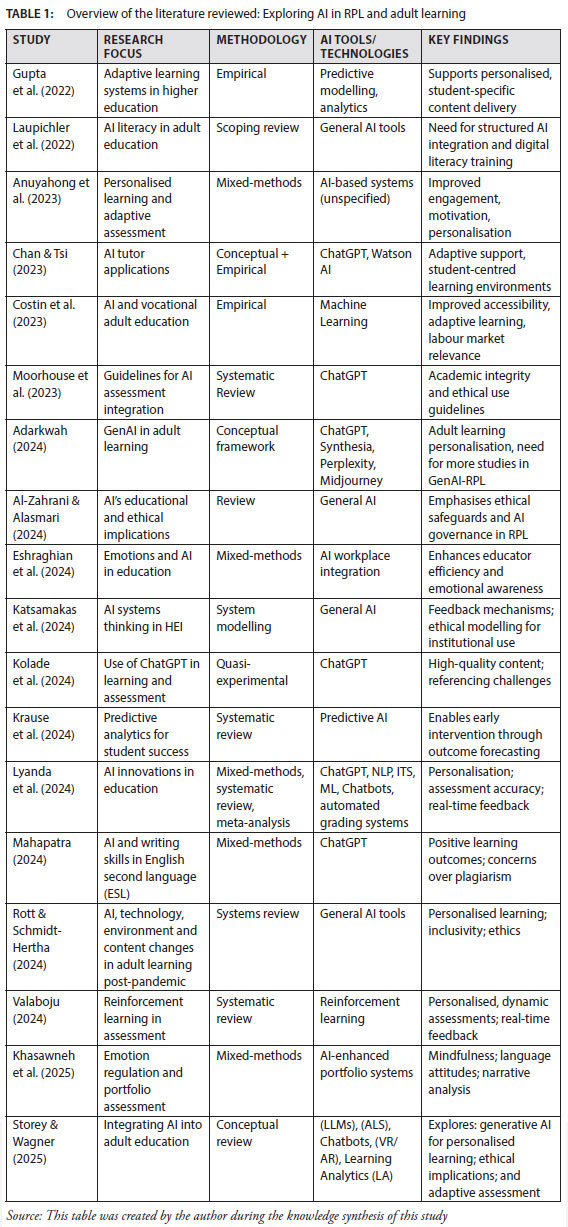
A critical, reflective thematic analysis of AI applications in RPL and adult learning has highlighted the fact that there is a critical need for innovation in RPL, specifically to support adult learners in the digital age. Transformative tools, digital support, student empowerment and academic upskilling were identified as key themes throughout this study. An overview of the literature covered in this study is given in Table 1. Furthermore, these themes were applicable not only in the RPL adult learning setting but could also be applied to the post-school education and training setting, especially in the context of technical and vocational education and training (TVET) and industrial or workplace intersections.
The use of AI in RPL represents a substantial milestone and a transformative intersection for people from disadvantaged backgrounds - especially in the South African context where RPL is rooted in a policy to redress or eradicate social injustice and broaden access to higher education (Osman, 2003).
Globally, RPL - sometimes referred to as validation of prior learning (VPL) or prior learning assessment and recognition (PLAR) - is a critical mechanism for providing access to higher education by validating informal and non-formal learning and life experiences (Conrad, 2008). Traditionally, RPL assessments rely heavily on human evaluators, making the process time-consuming and subjective. But AI-powered tools, such as ML algorithms and NLP, now offer solutions for automating portfolio assessment, for analysing experiential learning narratives and for personalising feedback (Khasawneh et al., 2025). AI-enhanced RPL systems have the potential to analyse textual and multimedia evidence submitted by learners, which provides adaptive assessments that tailor evaluation to an individual's knowledge base. Moreover, Chatbots and AI tutors are used to guide learners through the RPL process and ensure consistency in assessment judgements by reducing human bias (Khasawneh et al., 2025). However, despite its advantages, integrating AI into RPL assessment requires careful consideration of the ethical and practical challenges, particularly regarding bias and fairness. AI models must be trained on diverse representative datasets to prevent perpetuating biases that could disadvantage under-represented learners (Stahl & Stahl, 2021).
Other critical factors for consideration include transparency: AI decision-making processes should be explainable and ensure that learners understand how their prior learning is evaluated. There should be an adequate level of human oversight: AI should complement, not replace, human judgement in assessing complex learning experiences. Finally, protecting learners' personal and experiential data is paramount in AI-driven assessments (Stahl & Stahl, 2021). In RPL, the opportunities for AI to support the analysis of portfolios, experiential learning narratives and prior coursework in order to assess competencies objectively is an innovation within the transformational and developmental models of RPL applications. Examples of these applications are AI-Powered Chatbots and Virtual Tutors and AI-driven chatbots such as IBM Watson Tutor; they provide around-the-clock academic support, helping adult learners navigate their studies. These tools are especially beneficial to RPL students, who often require flexible support outside traditional academic hours (Costin et al., 2023).
In another application related to RPL and adult learners, GAI in research and writing tools such as ChatGPT and Claude can help with academic writing, literature reviews and research synthesis (Ferrag & Bentounsi, 2024). Although beneficial, these tools also raise ethical concerns about plagiarism and academic integrity; nonetheless, they open new opportunities for transformation in teaching and learning (Al-Zahrani & Alasmari, 2024; Stahl & Stahl, 2021). The existing literature emphasises that efficiency, scalability, equity, access and ethical challenges are key factors that will drive the synergistic impact of AI and RPL in higher education (Butson & Spronken-Smith, 2024).
AI has the potential to accelerate the assessment processes of RPL applications, thereby reducing the administrative burden and allowing adult learners to explore their potential and career opportunities ahead of formal assessment procedures offered in higher education (Osman, 2003). In a recent study, the deep integration of administrative actions and AI-driven algorithms has given rise to algorithmic administration in university governance, showcasing unique advantages in administrative efficiency, decision-making, management models, service delivery, resource allocation, internationalisation and communication (Fasi, 2022).
AI has the ability to drive equity and access, as it minimises human bias in assessments and promotes fairness (Stahl & Stahl, 2021). In addition, ethical challenges must be carefully considered to ensure that matters such as data privacy, algorithmic bias and accountability are managed to ensure responsible AI integration (Humerick, 2017). These advancements and potentially viable applications suggest that AI will continue to revolutionise higher education, particularly for those adult learners seeking recognition for their prior knowledge and experience. Future research should explore AI's long-term impact on student outcomes, their lived experiences and the institutional policies that support the use of AI in the RPL sector. AI is rapidly transforming higher education by reshaping the ways in which teaching, learning and assessment are conducted and has significant implications for adult learning and RPL. The integration of AI in RPL presents both opportunities and challenges, requiring a careful balance to be struck between technological efficiency and ethical considerations.
By exploring the intersection of AI and RPL, this article contributes to ongoing discussions in higher education about the role of technology in widening access to learning opportunities. By specifically examining key themes such as transformative tools, digital support, student empowerment and academic upskilling, AI can be purposefully interconnected as a central aspect of AI and adult learning across the context of the post-school education and training sector. AI has the potential to revolutionise RPL by making it more accessible, transparent and equitable. However, the successful integration of AI in RPL requires a commitment to ethical AI implementation, continuous improvement of AI models, extensive resources and collaboration between AI developers, educators and policymakers to ensure that adult learners are supported in meaningful and inclusive ways (Katsamakas et al., 2024).
The use of AI in the adult learning domain has received attention through multiple frameworks that have been proposed to enhance adult learning experiences. In a German study, the generative artificial intelligence adult learning ecology (GenAI-ALE) framework was used to highlight key applications in adult learning through the use of Dall-E-2, ChatGPT, Synthesia, Midjourney, Perplexity and InstructGPT (Adarkwah, 2024). The present study has also reported a comparison of traditional adult learning methods with GenAI-infused learning approaches (see Table 1 for more information). The study emphasises that, despite the expanding literature on GenAI's impact on education recently, there are still few studies that focus on adult education and learning. As a theoretical implication, the study calls for further investigations into implementing GenAI in adult higher education such as implementing and contextualising the GenAI-ALE framework in different educational settings in the post-school education and training sector (Adarkwah, 2024).
In Romania, the implications of leveraging ML and AI for the transformation of adult education and vocational training was explored (Costin et al., 2023). The study indicated that ML and AI enhance adult education by enabling personalised learning, adaptive assessments and greater accessibility, making education more efficient and inclusive. These technologies transform knowledge acquisition and align learning with the evolving demands of the labour market. This independent study reiterates that the application of digital tools, technology and AI collectively have the potential to reshape adult education and training. This results in a more adept and adaptable workforce, thus creating lasting benefits for society (Costin et al, 2023).
In another study, the intersection of sustainability, pandemic-related distance learning and AI-driven opportunities in adult education was explored (Rott & Schmidt-Hertha, 2024). The argument indicated that sustainable education integrates environmental and social awareness while ensuring inclusivity and resource efficiency, with distance learning providing flexible access for adult learners who have to balance work and family against their learning. AI enhances learning processes by personalising learning, streamlining administration and creating immersive experiences, although challenges such as digital equity, data privacy and algorithmic bias must be resolved. In a comprehensive scoping review, Laupichler et al. (2022) emphasised the rapid growth and integration of AI in the education sector. They therefore identified the need for adult learners to be integrated with the associated benefits of AI in a well-structured and social approach. The present study argues that as AI becomes more integrated into daily life, developing AI literacy among adult learners in higher education is becoming increasingly essential to enabling effective interaction with the technology and the students' success (Laupichler et al., 2022).
Discussion
This discussion systematically answers the four research questions posed in this study using the conceptual motion model (Figure 1) as an organising framework that systematically aligns the AI-enhanced RPL practices with the adult learner and the themes associated with the findings of this study.
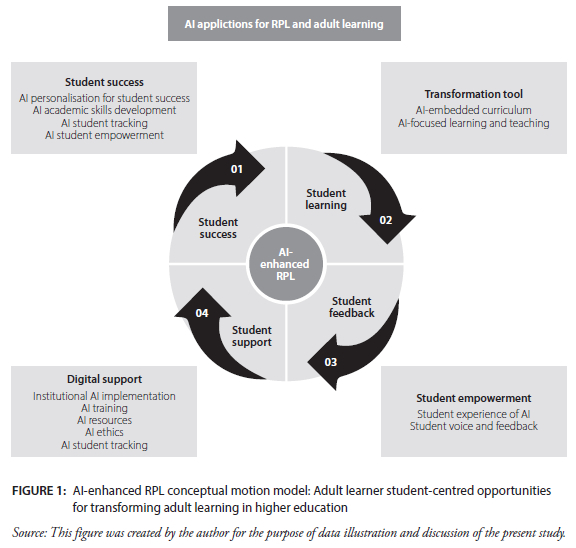
The model - developed from the identified themes of transformative tools, digital support, student empowerment and academic upskilling - illustrates how AI can be strategically integrated to support adult learners navigating RPL processes.
In addition, the research questions presented in this study are revisited with a view to promoting an understanding of the themes revealed in the study.
1. How can AI enhance assessment and validation processes in RPL?
AI has the potential to revolutionise assessment in RPL by automating traditionally subjective, labour-intensive evaluations. ML algorithms, NLP and predictive analytics can analyse experiential learning narratives, reducing human bias by offering more objective and consistent evaluations (Khasawneh et al., 2025). In line with the motion model's transformative tools pillar, these AI applications support equitable assessment by validating diverse adult learning experiences (Adewale, 2024). This enhanced assessment process promotes fairness and efficiency, streamlining portfolio evaluations and supporting broader access for adult learners, particularly for those from historically disadvantaged groups (Kizito, 2006; Stahl & Stahl, 2021).
2. What are the ethical implications of using AI in RPL assessments?
Despite these benefits, ethical concerns are paramount. AI models can inadvertently perpetuate existing biases if trained on unrepresentative data, potentially disadvantaging under-represented learners (Katsamakas et al. 2024). Dealing with these concerns requires deliberate attention to be paid to data diversity, algorithmic transparency and human oversight (Stahl & Stahl, 2021; Chan & Tsi, 2023). Within the motion model, the digital support pillar emphasises the importance of explainable AI and accessible digital environments to foster trust and accountability. Institutions must ensure that AI complements rather than replaces human judgement, which serves to reinforce that fairness and integrity remain central to RPL assessments (Butson & Spronken-Smith, 2024).
3. How can AI-driven tools be integrated into adult learner support systems within RPL frameworks?
AI-driven tools such as chatbots - for example, IBM Watson Tutor - and intelligent tutoring systems offer flexible, personalised support to adult learners, especially those balancing work, family and studies (Siemens, 2005; Ferrag & Bentounsi, 2024). The motion model's student empowerment and digital support pillars encapsulate this alignment: AI-powered platforms provide adaptive guidance, real-time feedback and tailored learning modules that help adult learners to self-regulate and build confidence. Furthermore, generative AI tools such as ChatGPT and Claude facilitate academic writing and reflective learning processes, opening up new avenues for lifelong learning, although they raise important questions about plagiarism and academic integrity (Al-Zahrani & Alasmari, 2024; Mahapatra, 2024).
4. What are the future directions for AI in supporting adult learners navigating RPL processes?
Looking ahead, AI will continue to evolve, offering increasingly sophisticated support for adult learners in RPL contexts. The motion model's academic upskilling pillar emphasises the need for AI-powered interventions that not only assess prior learning but also recommend targeted micro-learning modules and digital literacy training - enabling learners to bridge knowledge gaps and thrive in dynamic work environments (Costin et al., 2023; Adarkwah, 2024). As demonstrated by studies on algorithmic administration in higher education (Fasi, 2022), Al's role in RPL extends beyond assessment to broader institutional processes that have an impact on access, fairness and administrative efficiency.
The integration of the motion model (see Figure 1) illustrates this conceptual motion model for AI-RPL, detailing the four pillars - transformative tools, digital support, student empowerment and academic upskilling - as interconnected target areas. These pillars are not static; rather, they represent dynamic outcomes that should be continuously refined through ethical AI governance, policy development and human-centred design (Laupichler et al., 2022). By explicitly aligning these pillars with the research questions, the model emphasises a holistic approach that leverages AI to create equitable, transparent and empowering RPL experiences for adult learners.
In addition to the conceptual motion model and its alignment with the four research questions, this section explores best practices, adult learning principles and broader systemic considerations that strengthen AI's transformative potential in RPL further. This expanded discussion also highlights best practices for AI implementation in RPL, aligning it with the four pillars of the motion model (Chan & Tsi, 2023; Vetrivel et al., 2025). These practices emphasise the importance of hybrid AI-human assessment models, where AI enhances - rather than replaces - human judgement. Moreover, ongoing professional development for educators ensures that they can ethically and effectively leverage AI tools in RPL contexts, while learner-centric approaches such as those embedded in the motion model (Figure 1) ensure that AI applications remain inclusive and aligned with adult learner needs.
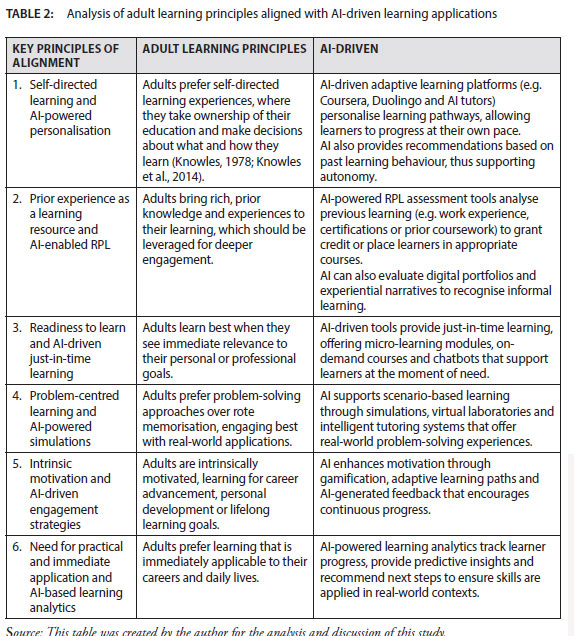
Equally important is the synergy between Al-enhanced learning and adult learning principles. As shown in Table 2, AI-powered personalisation, adaptive assessments and real-time feedback align strongly with Knowles' andragogical framework (Knowles, 1978; Knowles et al., 2014). For example, AI-driven analytics offer self-directed and problem-centred learning opportunities, whereas gamified learning environments and virtual laboratories promote intrinsic motivation and readiness to learn (Paranjape et al., 2019; Banik & Gullapelly, 2025). These alignments highlight AI's ability to honour adult learners' autonomy and leverage their prior experiences for meaningful engagement (Krause et al., 2024).
Despite these promising intersections, challenges remain. The digital divide persists as a significant barrier to marginalised adult learners, who may have limited digital literacy or lack access to Al-driven RPL tools (Aithal & Aithal, 2024; Al-Zahrani & Alasmari, 2024).
Dealing with algorithmic bias, data privacy and ethical concerns is essential to ensuring that AI does not inadvertently reinforce existing inequities (Humerick, 2017; Lin, 2024). Stakeholders - including educators, policymakers and AI developers - must engage in ongoing dialogue to ensure that Al-enhanced RPL processes are transparent, fair and accountable (Storey & Wagner, 2024).
Comparisons of traditional adult learning methods with GenAI-infused approaches (Adarkwah, 2024) also demonstrate the potential for AI to transform learning activities, assessment practices and feedback mechanisms for adult learners. However, technology-enhanced RPL processes remain underdeveloped compared with other digital education innovations (Cameron et al., 2014). Without deliberate strategies for equitable AI adoption, there is a risk of perpetuating exclusion rather than democratising access to education.
Encouragingly, the principles of adult learning (andragogy) and Al-enhanced learning align in multiple ways, creating a synergy that supports adult learners in higher education. Table 2 comprises an analysis of Knowles' adult learning principles and their alignment with AI-driven learning applications (Knowles, 1978; Knowles et al., 2014; Malcolm, 1978).
Conclusion
The integration of AI into RPL presents transformative opportunities for adult learners, enabling greater access to higher education through more efficient, transparent and equitable assessment processes. AI-driven tools offer a range of benefits, from automating portfolio evaluations to providing personalised learning pathways. However, the successful implementation of AI in RPL depends on balancing technological efficiency with ethical practice and human-centred andragogy. Transformative tools, digital support, student empowerment and academic upskilling emerged as key themes in this study, highlighting the motion model's relevance in framing Al's role in inclusive adult learning.
Importantly, while generative AI offers promising applications for scaffolding, reflection and personalising learning, challenges regarding hallucinations - where AI generates inaccurate or fabricated outputs when data is missing - pose a significant concern. Such inconsistencies emphasise the need for rigorous human oversight and transparent vetting processes to ensure the integrity and accuracy of AI-enhanced assessments. As this discussion has shown, the intersection of AI and RPL holds significant promise for adult learners who navigate lifelong learning pathways, but it also demands careful, critical implementation to avoid reinforcing biases or compromising educational standards.
Future research should prioritise empirical evaluations of AI's impact on adult learner outcomes, particularly in marginalised communities, and explore the ways in which frameworks such as GenAI-ALE (Adarkwah, 2024) can be adapted to ensure equitable RPL practices. Collaborative innovation among educators, AI developers and policymakers will be essential to realising AI's transformative potential - ensuring that RPL processes become more inclusive, transparent and empowering for a diverse range of adult learners worldwide.
Disclosure statement
The author declares no competing interests. The author declares no relevant or material financial interests that relate to the research described in this article.
REFERENCES
Adarkwah, MA. 2024. GenAI-infused adult learning in the digital era: A conceptual framework for higher education. Adult Learning, 10451595241271161.
Adewale, T. (2024). The intersection of sustainability, distance learning, and AI: Opportunities in adult education. PDF. [No further source information].
Aithal, P & Aithal, S. 2024. Future ofhigher education through technology prediction and forecasting. Poornaprajna International Journal of Management, Education & Social Science, 1(1):1-50. [ Links ]
Alimardani, A. 2024. Generative artificial intelligence vs law students: An empirical study on criminal law exam performance. Law, Innovation and Technology, 16(2):777-819. [ Links ]
Al-Zahrani, AM & Alasmari, TM. 2024. Exploring the impact of artificial intelligence on higher education: The dynamics of ethical, social, and educational implications. Humanities and Social Sciences Communications, 11(1):1-12. [ Links ]
Anuyahong, B, Rattanapong, C & Patcha, I. 2023. Analyzing the impact of artificial intelligence in personalized learning and adaptive assessment in higher education. International Journal of Research and Scientific Innovation, 10(4), 88-93. [ Links ]
Banik, BG & Gullapelly, A. 2025. AI-powered gamification and interactive learning tools for enhancing student engagement. In: T Murugan & AM Abirami (eds), Driving quality education through AI and data science. IGI Global Scientific Publishing, 283-310.
Boud, D, Keogh, R & Walker, D. 2013. Reflection: Turning experience into learning. Routledge.
Braun, V & Clarke, V. 2021. One size fits all? What counts as quality practice in (reflexive) thematic analysis? Qualitative Research in Psychology, 18(3):328-352. [ Links ]
Braun, V, Clarke, V, Hayfield, N, Davey, L & Jenkinson, E. 2023. Doing reflexive thematic analysis. In: Supporting research in counselling and psychotherapy: Qualitative, quantitative, and mixed methods research. Springer, 19-38.
Butson, R & Spronken-Smith, R. 2024. AI and its implications for research in higher education: A critical dialogue. Higher Education Research & Development, 43(3):563-577. [ Links ]
Cameron, R, Travers, N & Wihak, C. 2014. Technology and RPL. In: P Andersson, A Fejes & F Sandberg (eds), Handbook of the recognition of prior learning. Routledge, 284-314.
Chan, CKY & Tsi, LH. 2023. The AI revolution in education: Will AI replace or assist teachers in higher education? Available at: <arXiv preprint arXiv:2305.01185 >.
Chung, DJ, Gao, Z, Kvasiuk, Y, Li, T, Münchmeyer, M, Rudolph, M, Sala, F & Tadepalli, SC. 2025. Theoretical Physics Benchmark (TPBench) - a dataset and study of AI reasoning capabilities in theoretical physics. Available at: <arXiv preprint arXiv:2502.15815 >.
Conrad, D. 2008. Situating prior learning assessment and recognition (PLAR) in an online learning environment. The Theory and Practice of Online Learning, 75. [ Links ]
Costin, D, Cristian, AF, Georgian, DI, Ionut, CS & Alexandru, MS. 2023. The implications of leveraging machine learning and artificial intelligence for the transformation of adult education and vocational training. Journal of Management and Quality, 14-20.
Einarsson, H, Lund, SH & Jónsdóttir, AH. 2024. Application of ChatGPT for automated problem reframing across academic domains. Computers and Education: Artificial Intelligence, 6:100194. [ Links ]
Eshraghian, F, Hafezieh, N, Farivar, F & De Cesare, S. 2024. AI in software programming: Understanding emotional responses to GitHub Copilot. Information technology & people. Advance online publication. Available at: <https://doi.org/10.1108/ITP-01-2023-0084>.
Fasi, C. 2022. Application of artificial intelligence in administrative decision-making. In: Proceedings of the Central and Eastern European eDem and eGov Days, 147-152.
Ferrag, F & Bentounsi, I. 2024. The use of artificial intelligence in academic translation tasks: Case study of Chat GPT, Claude and Gemini. Ziglobitha, 2:173-192. [ Links ]
Galindo-Domínguez, H et al. 2024. Design and validation of a multidimensional scale for assessing teachers' perceptions towards artificial intelligence in education. International JournalofLearning Technology 1(1):1-22. Available at: <DOI: 10.1504/IJLT.2023.10062094 > [ Links ].
Gupta, P, Kulkarni, T & Toksha, B. 2022. AI-cased predictive models for adaptive learning systems. In: Artificial intelligence in higher education. CRC Press, 113-136.
Haubt, R. 2024. AI in education writing and the role of Turnitin. Available at: <https://www.uandai.org/navigating-the-complexities-ai-in-education-writing-and-the-role-of-turnitin/>.
Holmes, W, Bialik, M & Fadel, C. 2019. Artificial intelligence in education promises and implications for teaching and learning. Center for Curriculum Redesign. Boston, MA. USA.
Humerick, M. 2017. Taking AI personally: How the EU must learn to balance the interests of personal data privacy & artificial intelligence. Santa Clara High Tech LJ, 34:393. [ Links ]
Ibrahim, KHS, Al Otaibi, D & Sibai, FN. 2025. The robustness of AI-classifiers in the face of AI-assisted plagiarism: The case of Turnitin AI Content Detector. International Journal of Computer-Assisted Language Learning and Teaching, 15(1):1-27. [ Links ]
Jonassen, DH & Rohrer-Murphy, L. 1999. Activity theory as a framework for designing constructivist learning environments. Educational Technology Research and Development, 47(1):61-79. [ Links ]
Jose, J. 2024. The impact of integrating Microsoft Teams-Reading Progress as an artificial intelligence (AI) platform for promoting learners' reading aloud skills. Education and Information Technologies, 1-39.
Kamalov, F, Santandreu Calonge, D & Gurrib, I. 2023. New era of artificial intelligence in education: Towards a sustainable multifaceted revolution. Sustainability, 15(16):12451. [ Links ]
Katsamakas, E, Pavlov, OV & Saklad, R. 2024. Artificial intelligence and the transformation of higher education institutions: A systems approach. Sustainability, 16(14):6118. [ Links ]
Khasawneh, MAS, Aladini, A, Assi, SA & Ajanil, B. 2025. Portfolio assessment in AI-enhanced learning environments: A pathway to emotion regulation, mindfulness, and language learning attitudes. Language Testing in Asia, 15(1):5. [ Links ]
Kizito, R. 2006. The future is not so bleak: Challenges with recognition of prior learning (RPL) systems and processes at Unisa. Progressio, 28(1-2):127-139. [ Links ]
Knowles, M. 1978. Andragogy: Adult learning theory in perspective. Community College Review, 5(3):9-20. [ Links ]
Knowles, M, Holton, E & Swanson, R. 2014. The adult learner: The definitive classic in adult education and human resource development. Routledge.
Kolade, O, Owoseni, A & Egbetokun, A. 2024. Is AI changing learning and assessment as we know it? Evidence from a ChatGPT experiment and a conceptual framework. Heliyon, 10(4), e25953. [ Links ]
Krause, S, Panchal, BH & Ubhe, N. 2024. The evolution of learning: Assessing the transformative impact of generative AI on higher education. International Conference on Artificial Intelligence in Education Technology.
Laupichler, MC, Aster, A, Schirch, J & Raupach, T. 2022. Artificial intelligence literacy in higher and adult education: A scoping literature review. Computers and Education: Artificiallntelligence, 3:100101. [ Links ]
Laurillard, D. 2013. Teaching as a design science: Building pedagogical patterns for learning and technology. Routledge.
Lee, D & Yeo, S. 2022. Developing an AI-based chatbot for practicing responsive teaching in mathematics. Computers & Education, 191:104646. [ Links ]
Lin, X. 2024. Exploring the role of ChatGPT as a facilitator for motivating self-directed learning among adult learners. Adult Learning, 35(3):56-166. [ Links ]
Loos, E, Gröpler, J & Goudeau, M-LS. 2023. Using ChatGPT in education: Human reflection on ChatGPT's self-reflection. Societies, 13(8):196. [ Links ]
Lubinga, SN, Maramura, TC & Masiya, T. 2023. Adoption of Fourth Industrial Revolution: Challenges in South African higher education institutions. Journal of Culture and Values in Education, 6(2):1-17. Available at: <https://cultureandvalues.org> [ Links ].
Lyanda, JN, Owidi, SO & Simiyu, AM. 2024. Rethinking higher education teaching and assessment in-line with AI innovations: A systematic review and meta-analysis. African Journal of Empirical Research, 5(3), 325-335. [ Links ]
Ma, W et al. 2014. Intelligent tutoring systems and learning outcomes: A meta-analysis. Journal of Educational Psychology, 106(4):901. [ Links ]
Mahapatra, S. 2024. Impact of ChatGPT on ESL students' academic writing skills: A mixed methods intervention study. Smart Learning Environments, 11(1):9. [ Links ]
Malcolm, K. 1978. Andragogy: Adult learning theory in perspective. Community College Review, 5(3):9-20. [ Links ]
Moon, JA. 2013. A handbook of reflective and experiential learning: Theory and practice. Routledge.
Moorhouse, BL, Yeo, MA & Wan, Y. 2023. Generative AI tools and assessment: Guidelines of the world's top-ranking universities. Computers and Education Open, 5, 100151. [ Links ]
Okunlaya, RO, Syed Abdullah, N & Alias, RA. 2022. Artificial intelligence (AI) library services innovative conceptual framework for the digital transformation of university education. Library Hi Tech, 40(6):1869-1892. [ Links ]
Osman, R. 2003. The recognition of prior learning (RPL): An emergent field of enquiry in South Africa. Unpublished PhD dissertation, University of the Witwatersrand, South Africa. [ Links ]
Ouyang, F, Zheng, L & Jiao, Ε 2022. Artificial intelligence in online higher education: A systematic review of empirical research from 2011 to 2020. Education and Information Technologies, 27(6):7893-7925. [ Links ]
Paranjape, K, Schinkel, M, Panday, RN, Car, J & Nanayakkara, P. 2019. Introducing artificial intelligence training in medical education. JMlR Medical Education, 5(2):e16048. [ Links ]
Pedro, F, Subosa, M, Rivas, A & Valverde, P. 2019. Artificial intelligence in education: Challenges and opportunities for sustainable development. Working Papers on Education Policy, 7(14). Available at: <https://unesdoc.unesco.org/ark:/48223/pf0000366994> [ Links ].
Piaget, J. 2005. The psychology of intelligence. Routledge.
Popenici, SA & Kerr, S. 2017. Exploring the impact of artificial intelligence on teaching and learning in higher education. Research and Practice in Technology Enhanced Learning, 12(1):22. [ Links ]
Rao, MN & Al-Obaidi, JA. 2025. Embracing how AI responsibly empowers students and faculty in higher education: Theoretical perspectives. In: Emerging technologies transforming higher education: Instructional design and student success. IGI Global, 1-32.
Roivainen, E. 2023. I Gave ChatGPT an IQ Test. Here's what I discovered. <https://www.scientificamerican.com/author/eka-roivainen/>.
Rott, K & Schmidt-Hertha, B. 2024. Transforming adult learning in the digital age: Exploring environmental, content, and technological changes. International Journal of Lifelong Education, 43(4):319-323. [ Links ]
Ruiz-Real, JL Uribe-Toril, J, Arriaza Torres, JA & De Pablo Valenciano, J. 2021. Artificial intelligence in business and economics research: Trends and future. Journal of Business Economics and Management, 22(1):98-117. [ Links ]
Schraw, G & Moshman, D. 1995. Metacognitive theories. Educational Psychology Review, 7:351-371. [ Links ]
Sclater, N, Peasgood, A & Mullan, J. 2016. Learning analytics in higher education. London: Jisc, 176. [ Links ]
Shan, T, Tay, F & Gu, L. 2021. Application of artificial intelligence in dentistry. Journal of Dental Research, 100(3):232-244. [ Links ]
Siemens, G. 2005. Connectivism: A learning theory for the digital age. International Journal of Instructional Technology and Distance Learning. Available at: <http://www.idtl.org/Journal/Jam_05/article01.html>.
Soundarya Devapitchai, JJ, Krishnakumari, S & Manickam, T. 2025. Applications of artificial intelligence techniques in education. In: Integrating micro-credentials with AI in open education. IGI Global Scientific Publishing, 429-450.
Stahl, BC & Stahl, BC. 2021. Ethical issues of AI. Artificial intelligence for a better future: An ecosystem perspective on the ethics of AI and emerging digital technologies. SpringerBriefs in Research and Innovation Governance, 35-53.
Storey, VA & Wagner, A. 2024. Integrating artificial intelligence (AI) into adult education: Opportunities, challenges, and future directions. International Journal of Adult Education and Technology, 15(1):1-15. [ Links ]
Valaboju, VK. 2024. Reinforcement learning in AI-driven assessments: Enhancing continuous learning and accessibility. International Journal of Scientific Research in Computer Science, Engineering and Information Technology, 10(5), 297-305. https://doi.org/10.32628/CSEIT241051014 [ Links ]
Vetrivel, S, Vidhyapriya, P & Arun, V. 2025. The role of AI in transforming assessment practices in education. In: AI applications and strategies in teacher education. IGI Global, 43-70.
Vygotsky, LS. 1978. Mind in society: The development of higher psychological processes (Volume 86). Harvard University Press.
Weber-Wulff, D Anohina-Naumeca, A, Bjelobaba, S, Foltynek, T, Guerrero-Dib, J, Popoola, O, Sigut, P & Waddington, L. 2023. Testing ofdetection tools for AI-generated text. International Journal for Educational Integrity, 19(1):1-39. [ Links ]
