




Services on Demand
Journal

Article
 English (pdf)
 Article in xml format
 Article references
 Automatic translation
 Send this article by e-mail
Indicators
Related links
-
 Cited by Google
 -
 Similars in Google
Share

 Permalink
Journal of Education (University of KwaZulu-Natal)
On-line version ISSN 2520-9868Print version ISSN 0259-479X
Journal of Education n.103 Durban 2026
https://doi.org/10.17159/2520-9868/i103a03
ARTICLES
Ethics in the age of generative AI: Student perceptions, use and transparency in South African private higher education
Shamola Pramjeeth
Management, Faculty of Commerce, The Independent Institute of Education, Emeris, Durban, South Africa. spramjeeth@emeris.ac.za. https://orcid.org/0000-0002-8673-1634
ABSTRACT
Artificial Intelligence (AI) is transforming higher education in raising complex questions about ethics, academic integrity, and responsible use. In this study, I investigate students' perceptions of the ethical use of generative AI (GenAI) tools across five South African private higher education institutions (PHEIs). Based on a survey of 1,866 students across disciplines and modes of study, I investigated perceptions of integrity, perceived reliability, quality assurance practices, and disclosure behaviours. Students (n=1866) demonstrated mixed confidence in GenAI, with ChatGPT viewed as the most reliable tool (66.5%). However, uncertainty regarding ethical use persisted, with 53.2% expressing neutral concern about integrity. Gender, study mode, and level of study significantly shaped perceptions and disclosure, with males and postgraduate students reporting greater confidence and lower concern. Although 66% cross-referenced AI outputs with credible sources, fewer critically evaluated or proofread them, and 13.5% admitted non-disclosure. Grounded in the Normative Theory of Academic Integrity and the Theory of Planned Behaviour, I offer theoretical insight into how values, norms, and perceived behavioural control shape ethical AI engagement. I further provide policy guidance for PHEIs to formalise AI governance, strengthen ethical AI literacy, and embed transparent disclosure protocols.
Keywords: academic integrity, generative AI, ethical use, private higher education, South Africa
Introduction
Integrating Generative Artificial Intelligence (GenAI) tools into higher education (HE) has sparked intense debate regarding the ethical implications, particularly about academic integrity. While these tools offer unprecedented opportunities for innovation in teaching and learning, ranging from personalised feedback to academic support, they simultaneously challenge foundational values that underpin credible scholarship. Academic integrity, defined by principles such as honesty, trust, fairness, respect, responsibility, and courage (International Centre for Academic Integrity, 2018), is increasingly threatened as students gain access to AI systems capable of generating essays, solving problems, and producing code.
The growing use of tools such as ChatGPT and Grammarly, for example, has raised questions about where to draw the line between technological assistance and academic misconduct. Concerns include plagiarism, overreliance on machine-generated content, data privacy breaches, and the undermining of critical thinking and original authorship (Almassaad et al., 2024; Davis, 2025; Guillén-Yparrea, 2024; Qadir, 2022). These issues are particularly urgent in the context of private higher education institutions (PHEIs), where there is limited, empirical evidence exploring students' ethical awareness, attitudes, and engagement with GenAI. Further complicating matters is the inability of current detection tools to reliably identify AI-generated content, which challenges educators' ability to uphold academic standards (Chaka, 2024).
While much of the existing research focuses on the transformative benefits of GenAI in education (Chaivisit et al., 2024; Katsamakas et al., 2024; Noroozi et al., 2024; Wang et al., 2023; Caldarini et al., 2022), there is a growing body of scholarship that warns of its potential to disrupt traditional pedagogical norms and compromise ethical learning environments (Qadir, 2022; Almassaad et al., 2024; Guillén-Yparrea, 2024). As HEIs grapple with how to integrate these tools responsibly, it becomes essential to examine how students engage with GenAI and to what extent their use aligns with institutional expectations of ethical conduct and integrity. Currently, empirical research in South Africa has disproportionately focused on public HEIs (Chaka et al., 2024; Chigwada, 2024; Dlamini et al., 2025; Dube & Setlalentoa, 2024; Mulaudzi & Hamilton, 2024), leaving a notable gap in understanding student experiences in PHEIs. Recent research by Pramjeeth and Ramgovind (2024a, 2024b) signals a shift towards addressing this gap in private higher education (PHE.) However, a dearth of research still exists on student perceptions and their use of GenAI. In this study, I aimed to address this gap by investigating PHEI students' perceptions of the ethics and integrity surrounding the use of generative AI tools, their perceived reliability of the tools, how they quality assured their generative AI outputs, and how they disclosed their use of 13 specified generative AI tools in their coursework.
Literature review
The increased adoption of GenAI tools in higher education has prompted widespread concern about academic misconduct. The International Centre for Academic Integrity (2018) emphasised that academic integrity is underpinned by honesty, fairness, trust, respect, responsibility, and courage. Students who use GenAI tools to produce academic work without proper attribution violate these fundamental values (Pramjeeth & Ramgovind, 2024a). Despite this, not all tools are viewed equally. Grammarly, for instance, is generally accepted, while tools like ChatGPT continue to attract scrutiny (Currie, 2023, as cited in Pramjeeth & Ramgovind, 2024a). The challenges are further compounded by the unreliability of AI detection tools (Chaka, 2024) and the increasing use of AI-generated content in assessments across South African universities (Davis, 2025). Fosner (2024) found that while only 1% of students relied entirely on AI for assessment completion, 31% used GenAI tools for most tasks, and 76% admitted that AI tools were not always accurate. Acknowledging the limitations yet continuing to use AI, highlights in its duality a concerning gap in ethical literacy among students.
Further, overreliance on GenAI tools for content generation risks eroding students' ability to think critically, write independently, engage meaningfully with content, and participate in intuitive decision making (Kasneci et al., 2023; Salim & Khan, 2024; Wang et al., 2024). Al-Zahrani (2024) added that overuse can degrade creativity, problem-solving, and originality, with Günay (2025) having noted that AI has the potential to degrade creativity and problem-solving in the design process. While some scholars advocate banning GenAI in assessment, others recommend revising academic practices to embed AI use ethically, through reflective assessments, critical engagement with AI outputs, transparency declarations, and effective AI literacy training (Pramjeeth & Ramgovind, 2024b).
GenAI adoption also raises serious data privacy and equity issues. Simpson (2025) and Shimalla (2026) along with Yilmaz and Yilmaz (2022) have reported that while students are interested in knowing how their data is used, many lack sufficient awareness to express concerns or make informed decisions. In South Africa, HEIs must adhere to the Protection of Personal Information Act (POPIA) (2021), ensuring data security and responsible AI use. Chanda et al. (2024) found that 27% of respondents identified privacy and data security as being of primary ethical concern in their study.
Moreover, the digital divide in regions like South Africa exacerbates inequities in access and awareness of GenAI tools. Students in rural or low-income areas may lack the infrastructure, resources, and thorough understanding of how to use the tools ethically and responsibly to benefit from these technologies (Chanda et al., 2024; Muyambi & Ahiaku, 2024). Accordingly, Francis et al. (2025) and Kasneci et al. (2023) advocated for an equitable, context-sensitive GenAI rollout in HE, with continued institutional oversight to protect vulnerable student populations.
Despite the ethical risks, the affordances of GenAI tools in supporting learning are significant. Researchers such as Caldarini et al. (2022), Chaivisit et al. (2024), and Wang et al. (2023) identified the potential of GenAI to offer adaptive learning environments and generate rapid, individualised feedback, thereby enhancing the teaching and learning experience. Noroozi et al. (2024) noted that these tools improve engagement and academic writing, while Ogunleye et al. (2024) reported gains in students' problem-solving and analytical abilities when AI tools were used appropriately.
Nevertheless, the benefits vary across disciplines, and their effectiveness and ethical use depend on students' responsible use of the technology (Guillén-Yparrea, 2024), their proficiency in prompt engineering, and AI literacy. Ethical use requires that students be educated not only in how to use the tools but also in understanding their limitations and potential risks, including misinformation and algorithmic bias (Francis et al., 2025). To fully harness GenAI's potential while mitigating its risks, there is an urgent need for curriculum reform that embeds AI ethics, critical thinking, and digital literacy. Borenstein and Howard (2020) argued for AI ethics education that prepares students for responsible tool use.
In summary, while existing literature has highlighted the opportunities and challenges of GenAI integration in higher education, most studies focus predominantly on public universities and broad policy contexts and offer limited empirical evidence on how students in South African PHEIs perceive and ethically engage with these tools in practice. There remains a notable gap in understanding students' disclosure behaviours, quality assurance practices, and perceived reliability of GenAI outputs in the unique regulatory, technological, and socio-cultural environment of PHEIs. Addressing this gap, this study investigates students' perceptions of ethics and integrity, the reliability of GenAI tools, their quality assurance approaches, and disclosure patterns across five South African PHEIs.
Theoretical framework
This study was guided by the Normative Theory of Academic Integrity and Ajzen's (1991) Theory of Planned Behaviour (TPB) two complementary frameworks that collectively support the investigation of students' perceptions of the ethical use, reliability, quality assurance, and disclosure of generative AI tools in South African PHEIs. The Normative Theory of Academic Integrity, anchored in the fundamental values of honesty, trust, fairness, respect, responsibility, and courage (International Center for Academic Integrity, 2018), provides a values-driven perspective from which to examine how students make ethical judgements about GenAI use and how they interpret institutional expectations about transparency and academic conduct. Given that GenAI challenges traditional notions of authorship, originality, and responsible scholarship, issues highlighted in contemporary literature on AI and misconduct (Pramjeeth & Ramgovind, 2024a), this theory is well-suited to illuminate how students conceptualise integrity when engaging with algorithmically generated content. At the same time, TPB offers a behavioural framework for understanding the psychological mechanisms that shape students' intentions and actions regarding GenAI use. Its core constructs, attitudes toward GenAI, subjective norms relating to expectations from peers and institutions, and perceived behavioural control over their ability to use and evaluate AI outputs, align directly with aim of this study to examine perceptions, confidence levels, quality assurance practices, and disclosure behaviours (Ajzen, 1991). By integrating a values-based ethical framework with a behavioural decision-making model, I am able to determine not only how students interpret the moral and academic implications of GenAI use, but also the behavioural drivers that influence whether and how they adopt, verify, or disclose such use in their academic work. This theoretical combination therefore provides the conceptual grounding needed to understand students' ethical stances, behavioural choices, and the broader institutional context shaping the responsible use of GenAI in PEI.
Contributions of the study
This study makes a substantive contribution to the growing body of knowledge on GenAI in higher education by addressing several critical gaps in existing scholarship. First, while most empirical research on GenAI use in South Africa has focused on public institutions (e.g., Chaka et al., 2024; Chigwada, 2024; Dlamini et al., 2025; Dube & Setlalentoa, 2024; Mulaudzi & Hamilton, 2024;), very little is known about student engagement with GenAI in PHEIs. By surveying 1,866 students across five PHEIs, this study provides one of the largest and most comprehensive empirical examinations of GenAI perceptions, ethical reasoning, behavioural intentions, and disclosure patterns in this under-researched sector. It therefore expands geographical and institutional coverage in GenAI literature and contributes new insights specific to the regulatory, pedagogical, and demographic characteristics of PHEIs in the Global South.
Second, the study advances theoretical knowledge by applying and integrating the Normative Theory of Academic Integrity with the TPB in a GenAI context, an approach seldom used in empirical research on AI in education. Existing literature often examines GenAI from a technological, pedagogical, or policy perspective but rarely situates student use in a dual framework that explains both ethical judgement (integrity values) and behavioural intention formation (attitudes, subjective norms, and perceived behavioural control). By demonstrating how these frameworks collectively illuminate students' evaluations of GenAI and their subsequent actions regarding quality assurance and disclosure, the study contributes a novel behavioural-ethical model for understanding responsible AI engagement in higher education.
Third, the research generates new empirical knowledge on student-level ethical ambiguity, particularly regarding disclosure behaviours, perceptions of qualification validity, and quality-assurance practices. These insights fill a gap identified in the literature concerning how students navigate emerging AI-related expectations in the absence of clear institutional guidelines or consistent norms. Finally, the study contributes practical and policy-relevant knowledge for PHEIs by identifying areas where AI literacy, academic integrity policies, and institutional communication need to be strengthened to support ethical and transparent use of GenAI in learning environments.
Together, these contributions enhance both theoretical understanding and practical decision-making in a rapidly evolving educational landscape, offering a foundational evidence base for future research, policy design, and pedagogical innovation in South Africa and comparable higher-education contexts.
Methodology
This quantitative study adopted a positivist paradigm to investigate the use of GenAI tools among undergraduate and postgraduate students across all disciplines and study modes at five South African PHEIs. Data was collected via an anonymised structured online questionnaire, MsForms, featuring Likert-scale items, which was distributed through a centralised student mailing list from 3 to 15 October 2024. Participant eligibility was confirmed using a screening question. The study investigated students' perceptions of the ethics and integrity surrounding the use of GenAI tools, the perceived reliability of the tools, quality assurance of outputs, and the disclosure patterns for 13 specified GenAI tools: Gemini (Google Bard), Grammarly, Microsoft Bing, QuillBot, Midjourney, ChatGPT, GitHub Copilot, YouChat, Microsoft Copilot, DALL-E, Zotero/Mendeley/Cite This For Me, AIWriter/CoWriter, and Perplexity AI. The instrument was anonymous. Participation in the study was voluntary. The study included only students from five PHEIs, under the Independent Institute of Education umbrella, across postgraduate and undergraduate degrees, across disciplines and modes of delivery. The institution's ethics committee and two academic experts reviewed and approved the instrument's validity. Out of a population of 40,000 students, a total of 1,866 students responded to the survey call. The responses were analysed using SPSS, employing descriptive and inferential statistics, including chi-square goodness-of-fit tests and a Pearson's chi-square test was done to establish the relationships in a cross-tabulation across gender, level of study, and mode of delivery. A Binomial test was conducted to determine whether a significant proportion of respondents selected one of two possible responses. Ethical clearance was obtained under protocol R.00084. The ethical considerations extended to participant confidentiality, anonymity, privacy, and informed consent.
Findings
Demographics
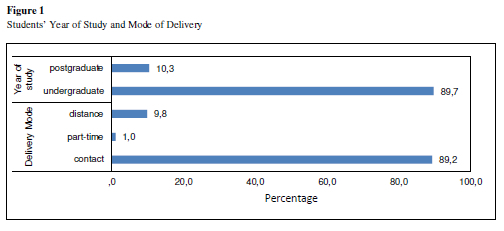
In terms of demographics, females comprised 70.3% of the respondents, followed by males (28.0%) and others (0.9%). According to Figure 1, most students, 89.2%, were enrolled in full contact mode, and 89.7% were undergraduates.
Perceptions of GenAI usage in the classroom and module
A chi-square goodness-of-fit test was conducted to explore students' perceptions of GenAI use in classroom and module contexts. (The significant responses are in red font in Table 1.) Overall, most students expressed moderate comfort with using GenAI, with "somewhat comfortable" emerging as the dominant response (χ2 = 576.370, df = 2, p < .000). Students also indicated that they could "somewhat" use GenAI in theory-based modules (χ2 = 339.023, df = 2, p < .000).
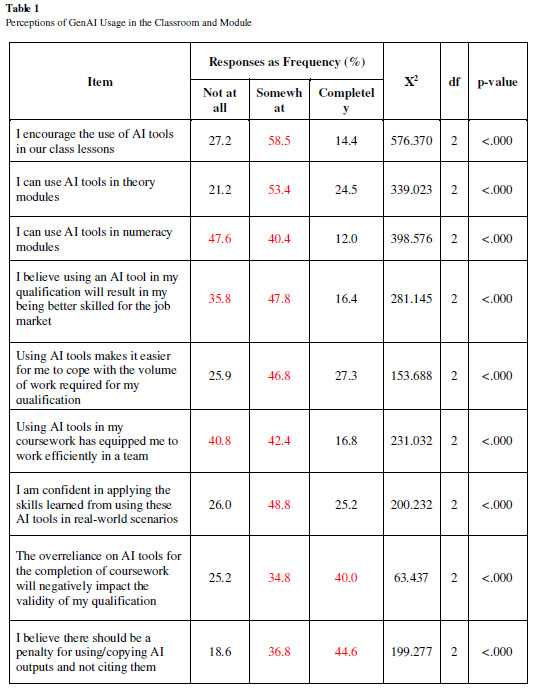
Perceptions were more divided regarding numeracy modules: 47.6% felt they could not use GenAI, and 40.4% felt they could somewhat use it (χ2 = 398.576, df = 2, p < .000). When considering job-market readiness, 47.8% believed GenAI would somewhat improve their skills, although 35.8% believed it would not improve them (χ2 = 281.145, df = 2, p < .000). Students were similarly split on teamwork benefits: 42.4% felt GenAI somewhat supported teamwork, while 40.8% felt it did not (χ2 = 231.032, df = 2, p < .000).
Concerns about qualification validity were notable. A combined 74.8% believed overreliance on GenAI would negatively affect the validity of their qualification (χ2 = 63.437, df = 2, p < .000). Students also strongly supported penalties for failing to reference GenAI outputs, with 36.8% selecting "somewhat" and 44.6% selecting "completely" (χ2 = 199.277, df = 2, p < .000).
Pearson chi-square tests further revealed significant demographic differences.
• Gender: Males demonstrated more positive perceptions of GenAI integration. Significant associations were observed for encouraging GenAI use in lessons (χ2 = 10.107, df = 4, p < .039), GenAI use in numeracy modules (χ2 = 33.576, df = 4, p < .000), job-market preparedness (χ2 = 24.098, df = 4, p < .000), workload management (χ2 = 18.213, df = 4, p < .000), teamwork (χ2 = 19.202, df = 4, p < .001), and real-world application of AI skills (χ2 = 24.909, df = 4, p < .000).
• Level of Study: Postgraduate students more strongly believed GenAI supported teamwork (χ2 = 8.915, df = 2, p < .012) and were less concerned about impacts on qualification validity (χ2 = 6.232, df = 2, p < .044).
• Mode of Delivery: Distance students perceived fewer benefits from GenAI. Significant associations emerged for workload management (χ2 = 12.767, df = 4, p < .012), teamwork support (χ2 = 9.621, df = 4, p < .047), and perceptions of qualification validity (χ2 = 19.214, df = 4, p < .001).
Overall, the results show that perceptions of GenAI use are not uniform; they vary systematically by gender, level of study, and mode of delivery. This highlights the need for differentiated institutional approaches to AI literacy, policy communication, and pedagogical integration.
The patterns observed in students' comfort levels, perceived usefulness, and concerns about GenAI use directly reflect the attitudinal component of the TPB. Students' "somewhat" responses across most items suggest moderately positive but cautious attitudes toward GenAI, which TPB identifies as central to shaping behavioural intentions. Their mixed beliefs about job readiness and teamwork further illustrate the influence of behavioural outcome expectations on intention formation. Differences across gender, level of study, and delivery mode indicate variations in perceived behavioural control, particularly regarding confidence in using GenAI across learning contexts. Concerns about overreliance and qualification validity align with the Normative Theory of Academic Integrity, reflecting underlying values related to responsibility, fairness, and the preservation of authentic learning. These normative considerations appear to temper students' attitudes and contribute to ambivalence in their overall perceptions.
Research indicates that men generally show higher awareness and engagement, in terms of frequency and their engagement being broader with GenGenAI tools, such as GenAI chatbots. At the same time, women prioritise text-related tasks (Møgelvang et al., 2024), compared to their female counterparts, who express more concerns regarding critical thinking and the ethical implications of AI use (Møgelvang et al., 2024; Sundet et al., 2023; Vogels, 2023). For instance, Iddrisu et al. (2025) found no significant gender differences in the perceived effectiveness of AI writing tools among undergraduate students. Similarly, Yadav et al. (2024) found minimal gender differences in AI attitudes, although postgraduate students demonstrated greater knowledge of AI applications.
Gasaymeh et al. (2024) also found that gender and educational level had little effect on university students' familiarity, concerns, and perceived benefits regarding generative AI writing tools, indicating no significant differences in AI usage and awareness levels. Armutat et al. (2024) cautioned that while usage may converge, women still perceive AI knowledge as key to stimulating interest, thus suggesting different motivational and educational dynamics.
Postgraduate students tend to display more positive attitudes and greater integration of GenAI into academic tasks than undergraduates (Singer-Freeman et al., 2025). Chan and Hu (2023) found that undergraduates and postgraduates acknowledged GenAI's learning benefits, although postgraduates reported higher levels of critical and analytical engagement. Nyaaba et al. (2024) found that use increased with both academic year and age, thus suggesting a growing confidence and strategic engagement with GenAI tools over time. Dzhanegizova et al. (2024) found that the mode of delivery enhanced the perceived benefits of the tools, and the digital nature of the tools enabled access and increased engagement.
Ethics and integrity
Students were asked how concerned they were about the ethics and integrity of using GenAI tools in their coursework. As shown in Figure 2, over half of the respondents (53.2%) selected a neutral option, while 33.1% indicated they were very concerned, and 13.7% were not concerned. A chi-square goodness-of-fit test confirmed that the neutral category was selected by a significantly higher proportion of students (χ2 = 435.478, df = 2, p < .000).
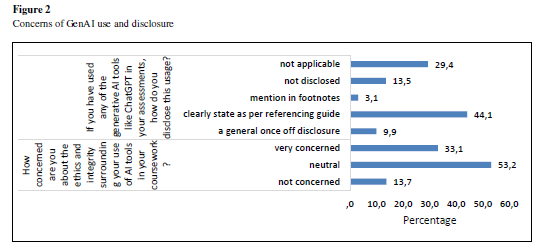
Students were also asked how they disclose their use of GenAI tools in assessments. The most frequent response was disclosure according to the institution's referencing guide (44.1%), followed by "not applicable" for those who had not used GenAI (29.4%). Notably, 13.5% reported that they did not disclose their GenAI use. The chi-square test indicated that "referencing-guide disclosure" and "not applicable" were significantly more common than other categories (χ2 = 1024.477, df = 4, p < .000).
A Pearson chi-square test assessed the relationship between gender and concern for ethical use. A significant association was found (χ2 = 11.032, df = 4, p < .026), with a higher proportion of males (17.4%) reporting no concern, compared to females who predominantly selected neutral or very concerned options.
Delivery mode also showed a significant association with ethical concern (χ2 = 9.995, df = 4, p < .041). Distance students were more likely to be very concerned (38.5%) or unconcerned (18.7%) than were contact or part-time students.
Regarding disclosure behaviour, gender was again significantly related (χ2 = 19.192, df = 8, p < .014). A higher proportion of males (16.7%) indicated they had not disclosed their GenAI use, while females more often selected "not applicable," reflecting lower usage. Level of study was also significantly associated with disclosure (χ2 = 12.132, df = 4, p < .016), with postgraduate students being more likely to report non-disclosure (19.7%).
The ethics and disclosure findings illustrate the interaction between subjective norms and actual behaviour in the TPB model. Although many students expressed concern about ethical use, the high proportion of neutral responses may suggest uncertainty regarding institutional expectations. The mixed disclosure behaviours, including 13.5% who did not disclose, reflect a gap between attitudes and enacted behaviour, a phenomenon TPB predicts when subjective norms or perceived control are unclear or inconsistently internalised. Gender- and mode-related differences in disclosure further suggest that students' perceptions of expected behaviour vary across groups. From the perspective of the Normative Theory of Academic Integrity, support for penalties and for proper citation demonstrates alignment with core integrity values (honesty, responsibility), even though some students fail to apply these values consistently in practice. This tension underlines the need for institutional reinforcement of integrity-aligned norms to strengthen ethical decision-making.
Perceived reliability and accuracy of the GenAI tools
Students were asked which GenAI tools they perceived as most reliable and accurate. As shown in Figure 3, the majority selected ChatGPT (66.5%), followed by Microsoft Bing (13.0%), Copilot (9.1%), and Gemini (7.1%). Only small proportions selected AI Writer (3.2%) or Co-Writer (1.2%). A chi-square goodness-of-fit test confirmed that ChatGPT was chosen at a significantly higher rate than all other tools (χ2 = 3428.675, df = 5, p < .000). A Pearson chi-square test found a significant association between gender and the tool perceived as most reliable (χ2 = 29.653, df = 10, p < .001). A higher proportion of females viewed Microsoft Bing (14.3%) and AI Writer (3.9%) as reliable, while 72.4% of males selected ChatGPT. Students identifying as "other" showed comparatively higher preferences for Copilot and Gemini.
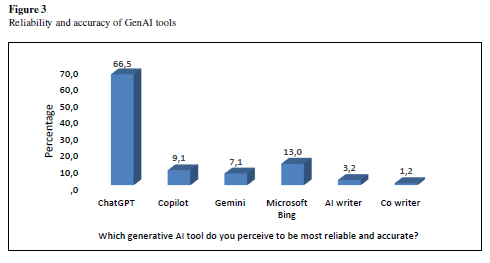
Students' assessments of GenAI tool reliability represent key attitudinal antecedents in the TPB framework. Trust in ChatGPT and varying confidence across tools shape students' perceptions of the usefulness and accuracy of GenAI systems, which in turn influence their likelihood of using these tools in academic tasks. Such trust also contributes to perceived behavioural control since students are more likely to engage with tools they believe produce reliable outputs. Gender differences in tool preferences indicate differentiated attitudinal formations across cohorts, which may lead to varying behavioural intentions. These findings highlight how beliefs about tool performance operate as foundational inputs into decision-making processes related to GenAI use.
Despite the associated benefits GenAI brings to education, ethical concerns remain widespread. Students worry about misinformation, reduced critical thinking, and potentially eroding academic integrity (Fosner, 2024). Many remain aware of GenAI's limitations, especially accuracy; 76% agreed that chatbot outputs were unreliable but continue to use it because of its perceived efficiency (Fosner, 2024). Kurniahtunnisa et al. (2025) also found concerns in relation to reliability and accuracy, with only 2.8% of students being always satisfied with their AI outputs (ChatGPT), with 63.9% somewhat satisfied. Al Zaidy (2024) found similar results: despite the high usage (86%), most students were concerned about trust, fairness and over-reliance on AI.
Quality assurance of the GenAI outputs
Students who had used GenAI were asked how they ensured the quality of the outputs they received. As shown in Table 2, 66% reported cross-referencing GenAI outputs with reliable sources such as books, databases, and academic articles, a proportion significantly higher than chance (Binomial Test: p < .000). Proofreading for accuracy, coherence, errors, and bias was performed by 44% of students, while 47% reported critically evaluating GenAI outputs for misleading content or factual inaccuracies. Smaller proportions cross-checked responses with other chatbots (10%) or consulted peers or instructors (25%), both of which were significantly lower than expected (p < .000).
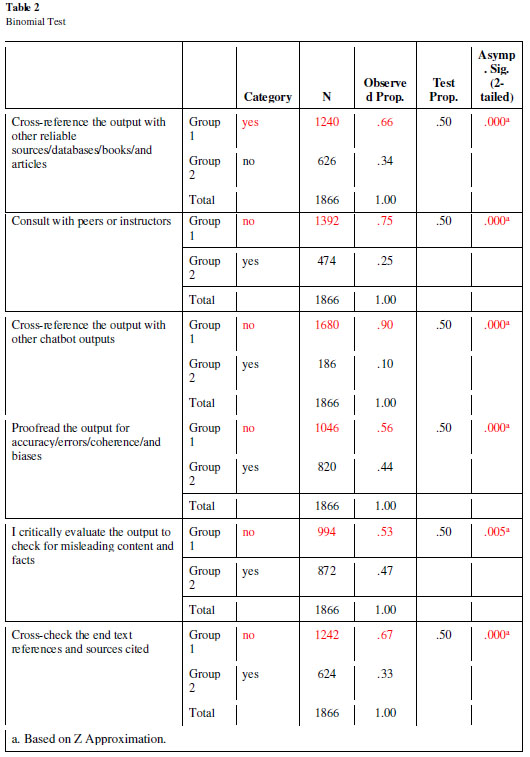
A Pearson chi-square analysis revealed significant relationships between gender and two quality-assurance behaviours. A higher proportion of females (77.4%) did not consult peers or instructors, whereas 32.7% of males did consult (χ2 = 21.878, df = 2, p < .000). Gender was also associated with cross-checking using other chatbots, with 14.3% of males reporting this behaviour compared to no significant proportion among females (χ2 = 15.816, df = 2, p < .000).
Mode of delivery showed one significant association. Distance-mode students were less likely to consult peers or instructors (85.7%) compared to contact and part-time students (χ2 = 13.152, df = 2, p < .001). No other significant relationships were found across the remaining quality-assurance behaviours.
Students' quality-assurance behaviours, namely cross-referencing, proofreading, critical evaluation, and peer consultation, reflect actual behaviours that the TPB characterises as outcomes of perceived behavioural control. The relatively low levels of proofreading, critical evaluation, and consultation suggest that many students may feel only partially capable of assessing GenAI accuracy or may not perceive strong normative expectations for doing so. Gender and delivery-mode variations indicate unequal levels of control and confidence across groups. From the perspective of the Normative Theory of Academic Integrity, these behaviours signal partial engagement with responsible academic practice: while many students verify content through external sources, fewer demonstrate full alignment with integrity-driven expectations for rigorous evaluation. This disparity highlights the need for institutions to strengthen both skill-based capacity (control) and integrity-aligned norms to support more consistent ethical engagement with GenAI.
Empirical research on how students ensure the quality of their AI outputs is limited. Ishihara et al. (2024) advised that programming students use AI to create solutions for programming problems but use numerous in-depth test cases to validate the solutions' accuracy. Al Zaidy (2024) found that only 5% of students in their study are fully aware of institutional guidelines on AI use.
Discussion and Implications of the findings
Student confidence and GenAI use varies by context and capability
While most students expressed moderate comfort with using GenAI in theory-based modules, there remains significant discomfort with its application in numeracy subjects, especially among females. This suggests that students differentiate the appropriateness of GenAI tools based on the perceived cognitive demands of the subject matter. A large proportion of students remain unconvinced that GenAI use meaningfully contributes to employability or teamwork skills, reflecting a limited understanding of how GenAI tools might be harnessed beyond academic tasks. Thus, PHEIs must tailor GenAI literacy and training interventions to discipline-specific contexts, with targeted support for numeracy-intensive programmes. Moreover, institutions should integrate GenAI into employability and soft-skills training to bridge the perception gap regarding workplace readiness.
Ethical ambiguity and inconsistent disclosure norms
Over half of the respondents were neutral regarding their concern for ethical and integrity issues in GenAI use, while one-third were "very concerned." Despite institutional referencing guidelines being in place, 13.5% of students reported not disclosing GenAI use in assessments, and a significant number selected "not applicable," suggesting limited or concealed engagement. Notably, male and postgraduate students did not disclose the use of GenAI in their assessments. Hence, there is an urgent need for clearer institutional policy, awareness campaigns, and scaffolding on ethical GenAI use and disclosure practices. Ethics cannot be assumed; it must be taught, contextualised, and reinforced. PHEIs must move beyond policy compliance to actively foster an ethical digital scholarship culture.
Perceived reliability is tool-specific, but critical engagement is limited
Students overwhelmingly viewed ChatGPT as the most reliable tool (66.5%), followed by Microsoft Bing and AI Writer. However, gender-based perceptions varied, with males showing higher trust in ChatGPT and other chatbot outputs. While 66% of students cross-referenced GenAI outputs with credible sources, other forms of critical engagement, such as proofreading (44%) or cross-checking with other chatbots (10%), were less common. Consultation with peers or instructors was particularly low (25%), especially among females and distance learners. However, a significant proportion of males (32.7%) consult with peers and instructors, and 14.3% cross-check their output with other chatbots. Thus, PHEIs must strengthen students' critical AI literacy, going beyond tool usage to developing skills in verification, triangulation, and collaborative knowledge validation. To model ethical engagement, teaching strategies should embed GenAI tools in critical thinking exercises, paired assignments, and AI-augmented writing tasks.
Perceptions and practices are gendered, stratified, and mode-dependent
Statistical analysis revealed that male students consistently reported higher confidence in GenAI use, greater perceived benefit to workload and employability, and stronger belief in GenAI's contribution to teamwork. Females were more cautious, less confident, and more likely to abstain from GenAI use altogether. Distance students saw decreased value in GenAI for collaboration or workload management and were more concerned about ethics. This stratification suggests differential access, exposure, and trust. By designing inclusive support strategies, PHEIs must address gendered and mode-based disparities in AI integration. Distance learners, in particular, require greater access to peer interaction, ethical guidance, and GenAI-specific training. Gender-sensitive interventions should explore the confidence gap and aim to build digital trust and efficacy across diverse student cohorts.
Students support accountability for misuse, but uncertainty prevails
An encouraging finding is that most students believe penalties should apply to GenAI-related misconduct, including copying outputs without citation. However, the dominant "somewhat" responses across many items indicate a general hesitancy or lack of conviction regarding best practices in GenAI use. This ambiguity likely stems from limited institutional clarity, evolving norms, and inconsistent exposure to GenAI-focused pedagogy. Thus, it is advised that PHEIs adopt multi-level responses, from updating academic integrity policies and guidelines to embedding AI-use scenarios in orientation programmes, course outlines, and formative assessment feedback. Student codes of conduct should address GenAI explicitly, and institutional AI use guidelines must be visibly and consistently enforced.
The findings of this study align closely with the Normative Theory of Academic Integrity given that students demonstrated varied interpretations of ethical responsibility, with over half expressing neutrality toward integrity concerns and a notable minority admitting to non-disclosure of GenAI use. This reflects a gap between institutional norms and individual ethical reasoning. The Theory of Planned Behaviour further explains these patterns, highlighting how students' attitudes (e.g., confidence in GenAI tools), perceived social norms (e.g., peer practices), and perceived behavioural control (e.g., knowledge of disclosure protocols) influence their use and ethical engagement with GenAI.
Conclusion
The ethical use of GenAI tools by students in PHEIs is located at the intersection of opportunity and risk. While GenAI has the potential to transform teaching and learning through personalised experiences and improved academic engagement, it also challenges traditional notions of academic integrity, data protection, and equitable access. The findings reveal a student body that is cautiously navigating the new terrain of GenAI, often without sufficient guidance or confidence in its ethical and academic implications. While students demonstrate some awareness of ethical expectations and value critical engagement, they also express uncertainty and underreport use.
For PHEIs, this study signals a call to action to formalise GenAI integration into academic integrity frameworks, support equitable AI literacy development, and create environments in which students are not only users of GenAI, but informed, ethical, and critical participants in its evolving role in education. South African PHEIs must respond not only by regulating usage but also by embedding AI literacy, ethical reasoning, and critical assessment practices into their curricula. Doing so will prepare students for ethical, informed participation in an increasingly AI-driven educational and professional landscape.
While this study presents valuable insights into GenAI usage, ethics, and disclosure among students in five South African PHEIs, its findings are limited by my use of a non-random, voluntary online survey sample. As such, results may reflect self-selection bias, with responses potentially skewed toward students more engaged or familiar with GenAI tools. Additionally, the overrepresentation of undergraduate and contact-mode students may limit the generalisability of the findings to postgraduate or distance-learning populations. The study also focused on self-reported behaviours, which may not always reflect actual practices. This study was limited to PHEIs in South Africa, hence the generalisation of findings to public and global institutions must be done cautiously. It is recommended that a comparative study with public institutions be conducted.
References
Ajzen, I. (1991). The theory of planned behavior. Organizational Behavior and Human Decision Processes, 50(2), 179-211. https://doi.org/10.1016/0749-5978(91)90020-T [ Links ]
Armutat, S., Wattenberg, M., & Mauritz, N. (2024, April 25-26). Artificial intelligence -Gender-specific differences in perception, understanding, and training interest (Conference session). 7th International Conference on Gender Research, Barcelona, Spain. https://doi.org/10.34190/icgr.7.1.2163
Almassaad, A., Alajlan, H., & Alebaikan, R. (2024). Student perceptions of generative artificial intelligence: Investigating utilization, benefits, and challenges in higher education. Systems, 12(10), 385. https://doi.org/10.3390/systems12100385 [ Links ]
Al Zaidy, A. (2024). The impact of generative AI on student engagement and ethics in higher education. Journal of Information Technology, Cybersecurity, and Artificial Intelligence (JITCAI), 1(1), 30-38.https://doi.org/10.70715/jitcai.2024.v1.i1.004 [ Links ]
Al-Zahrani, A. M. (2024). Balancing act: Exploring the interplay between human judgment and artificial intelligence in problem-solving, creativity, and decision-making. IgMin Research, 2(3), 145-158. https://doi.org/10.61927/igmin158 [ Links ]
Borenstein, J., & Howard, A. (2020). Emerging ethical concerns in AI education. AI & Society, 35(2), 355-364. https://doi.org/10.1007/s43681-020-00002-7 [ Links ]
Caldarini, G., Jaf, S., & McGarry, K. (2022). A literature survey of recent advances in chatbots. Information, 13(1), 41. https://doi.org/10.3390/info13010041 [ Links ]
Chaka, C. (2024). Reviewing the performance of AI detection tools in differentiating between AI-generated and human-written texts: A literature and integrative hybrid review. Journal of Applied Learning and Teaching, 7(1), 115-126. https://doi.org/10.37074/jalt.2024.7.1.14 [ Links ]
Chaka, C., Shange, T., Nkhobo, T., & Hlatshwayo, V. (2024). An environmental review of the generative artificial intelligence policies and guidelines of South African higher education institutions: A content analysis. International Journal of Learning, Teaching and Educational Research, 23(12), 487-511. https://doi.org/10.26803/ijlter.23.12. [ Links ]
Chaivisit, S., Asino, T. I., Jongsermtrakoon, S., Thompson, P., Rezaie, F., & Siripipattanakul, S. (2024). Empowering educators with generative AI tools and support. In R. Sharma & A. Bozkurt (Eds.), Transforming education with generative AI: Prompt engineering and synthetic content creation (pp. 56-81). IGI Global Scientific Publishing. https://doi.org/10.4018/979-8-3693-1351-0.ch003
Chan, C.K.Y., Hu, W. (2023). Students' voices on generative AI: Perceptions, benefits, and challenges in higher education. International Journal of Education Technology in High Education, 20(43). https://doi.org/10.1186/s41239-023-00411-8 [ Links ]
Chanda, T., Sain, Z., Yusuf, R. D., Shogbesan, O., Vinandi, T.H., Wisdom, T. H., & Akpan, W. (2024). Ethical implications of AI and machine learning in education: A systematic analysis. International Journal of Instructional Technology (IJIT), 03(01), 2024, 1-13. [ Links ]
Chigwada, J. (2024). A proposed framework for a digital literacy course for artificial intelligence in academic libraries. South African Journal of Libraries and Information Science, 90(1), 1-15. https://sajlis.journals.ac.za/pub/article/view/2388 [ Links ]
Dlamini, R., Simuja, C., Feldman, J., & Wyk, van. (2025). AI in education: Challenges, opportunities, and possibilities. Journal of Education (University of KwaZulu-Natal), 98, 1-4. https://www.scielo.org.za/scielo.php?script=sci_arttext & pid=S2520-98682025000100001 [ Links ]
Davis, R. (2025, April 5). CheatGPT - SA universities faced with a burgeoning degree of AI-written academic assignments. Daily Maverick. https://www.dailymaverick.co.za/article/2025-04-05-cheatgpt-crisis-sa-universities-faced-with-a-burgeoning-degree-of-ai-written-academic-assignments/
Dube, B., & Setlalentoa, W. (2024). Artificial intelligence in education: Embracing change, addressing challenges, and shaping tomorrow's curriculum. Interdisciplinary Journal of Education Research, 6(s1), 1-2. https://doi.org/10.38140/ijer-2024.vol6.s1.01 [ Links ]
Dzhanegizova, A., Nurseiit, A. M., & Vyborova, K. S. (2024). Artificial intelligence in education: Analysis of dynamics, perception, and prospects for integration. Qainar Journal of Social Science, 2(4), 34-49. https://doi.org/10.58732/2958-7212-2023-4-34-49 [ Links ]
Fosner, A. (2024). University students' attitudes and perceptions towards AI tools: Implications for sustainable educational practices. Sustainability, 16(19), 8668. https://doi.org/10.3390/su16198668 [ Links ]
Francis, N. J., Jones, S., & Smith, D. P. (2025). Generative AI in Higher Education: Balancing Innovation and Integrity. British Journal of Biomedical Science, 81. https://doi.org/10.3389/bjbs.2024.14048 [ Links ]
Gasaymeh, A. M. M., Beirat, M., & Abu Qbeita, A. A. (2024). University students' insights of generative artificial intelligence (AI) writing tools. Education Sciences, 14(10), 1062. https://doi.org/10.3390/educsci14101062 [ Links ]
Günay, M. (2025). Artificial intelligence and originality in design. ART/Icle Sanat ve Tasarım Dergisi, 4(3), 449-469. https://doi.org/10.56590/stdarticle.1548924 [ Links ]
Guillén-Yparrea, N., & Hernández-Rodríguez, F. (2024, May 8-11). Unveiling Generative AI in Higher Education: Insights from Engineering Students and Professors (Conference session) IEEE Global Engineering Education Conference (EDUCON) 2024, Kos Island, Greece. https://doi.org/10.1109/educon60312.2024.10578876
Iddrisu, H. M., Iddrisu, S. A., & Aminu, B. (2025). Gender differences in the adoption, usage, and perceived effectiveness of AI writing tools. International Journal of Educational Innovation and Research, 4(1), 110-111. https://doi.org/10.31949/ijeir.v4i1.11717 [ Links ]
International Center for Academic Integrity. (2018). The fundamental values of academic integrity (3rd ed.). Clemson University. https://academicintegrity.org/resources/fundamental-values
Ishihara, N., Huda, S., & Nogami, Y. (2024, November 25-29). A proposal of quality assurance programming exercise (Conference session). International Conference on Computers in Education, Quezon City, Philippines. https://doi.org/10.58459/icce.2024.4825
Kasneci, E., Sessler, K., Küchemann, S., et al. (2023). ChatGPT in education: Challenges and opportunities. Learning and Individual Differences, 103, 102274. https://doi.org/10.1016/j.lindif.2023.102274 [ Links ]
Katsamakas, E., Pavlov, O. V., & Saklad, R. (2024). Artificial intelligence and the transformation of higher education institutions: A Systems approach. Sustainability, 16(14), 6118-6118. https://doi.org/10.3390/su16146118 [ Links ]
Kurniahtunnisa, K., Manuel, M. Y., Aini, M. S., & Agustina, T. P. (2025). Persepsi dan Sikap Siswa Terhadap Penggunaan Artificial Intelligence. Scholaria: Jurnal Pendidikan Dan Kebudayaan, 15(1), 47-59. https://doi.org/10.24246/j.js.2025.v15.i1.p47-59 [ Links ]
Møgelvang, A., Bjelland, C., Grassini, S., & Ludvigsen, K. (2024). Gender differences in the use of generative artificial intelligence chatbots in higher education: Characteristics and consequences. Education Sciences, 14(12), 1363. https://doi.org/10.3390/educsci14121363 [ Links ]
Mulaudzi, L., & Hamilton, J. (2024). Student perspectives on optimising AI tools to enhance personalised learning in higher education. Interdisciplinary Journal of Education Research, 6(s1), 1-15. https://doi.org/10.38140/ijer-2024.vol6.s1.03 [ Links ]
Muyambi, G. C., & Ahiaku, P. K. A. (2024). Inequalities and education in South Africa: A scoping review. International Journal of Educational Research Open, 8, 100408. https://doi.org/10.10167j.ijedro.2024.100408 [ Links ]
Nyaaba, M., Shi, L., Nabang, M., Zhai, X., Kyeremeh, P., Ayoberd, S. A., & Akanzire, B. N. (2024). Generative AI as a learning buddy and teaching assistant: Pre-service teachers' uses and attitudes. arXiv. https://arxiv.org/abs/2407.11983
Noroozi, S., Hajiheydari, N., & Delaram, M. (2024). ChatGPT in academic feedback: A learner perspective. Education and Information Technologies, 29(1), 205-225. https://doi.org/10.1007/s10639-023-12104-9 [ Links ]
Ogunleye, B., Zakariyyah, K. I., Ajao, O., Olayinka, O., & Sharma, H. (2024). Higher education assessment practice in the era of generative AI tools. Journal of Applied Learning and Teaching, 7(1). https://doi.org/10.37074/jalt.2024.7.1.28 [ Links ]
Protection of Personal Information Act. (2021). https://popia.co.za/
Pramjeeth, S., & Ramgovind, P. (2024a). Generative artificial intelligence (ai) tools in higher education: A moral compass for the future? African Journal of Inter/Multidisciplinary Studies, 6(1), 1-13. https://doi.org/10.51415/ajims.v6i1.1560 [ Links ]
Pramjeeth, S., & Ramgovind, P. (2024b). Reconceptualizing assessment design in the age of AI: Is it genuine or faux? New Directions for Teaching and Learning, 2025(182) 29-40. https://doi.org/10.1002/tl.20625 [ Links ]
Qadir, J. (2022). Academic integrity and AI-generated content. AI & Ethics, 3(4), 445-458. https://doi.org/10.1007/s43681-022-00115-7 [ Links ]
Salim, H., & Khan, R. A. (2024). Is AI the death of creativity or a blessing? Advances in Healthcare Information Systems and Administration Book Series, 147-170. https://doi.org/10.4018/979-8-3693-7051-3.ch006
Shimalla, A. (2026, January 05). AI in higher education: Protecting student data privacy. EdTech Magazine. https://edtechmagazine.com/higher/article/2026/01/ai-higher-education-protecting-student-data-privacy-perfcon
Simpson, R., (2025, November 19). AI in Education Data Privacy Concerns - What You Must Know. ED Tech RCE. [Blog post]. https://edtechrce.org/ai-in-education-data-privacy-concerns/
Singer-Freeman, K. E., Verbeke, K., & Barre, B. (2025). Generative AI use among university students depends on academic level and task. Higher Learning Research Communications, 15(2). https://doi.org/10.18870/hlrc.v15i2.1616 [ Links ]
Sundet, M., Jansen, J., & Bakken, J. (2023). Gender differences in generative AI chatbot use in higher education: A survey of Norwegian students. Education Sciences, 13(12), 1363. https://doi.org/10.3390/educsci13121363 [ Links ]
Vogels, E. A. (2023, May 24). A majority of Americans have heard of ChatGPT, but few have tried it themselves. Pew Research Center. https://www.pewresearch.org/short-reads/2023/05/24/a-majority-of-americans-have-heard-of-chatgpt-but-few-have-tried-it-themselves/
Wang, X., Liu, Q., Pang, H., Tan, S. C., Lei, J., Wallace, M. P., & Li, L. (2023). What matters in AI-supported learning: A study of human-AI interactions in language learning using cluster analysis and epistemic network analysis. Computers & Education, 194, 104703. https://doi.org/10.1016/j.compedu.2022.104703 [ Links ]
Wang, W., Gao, G., & Agarwal, R. (2024). Friend or foe? Teaming between artificial intelligence and workers with variation in experience. Management Science, 70(9), 5753-5775. https://doi.org/10.1287/mnsc.2021.00588 [ Links ]
Yadav, D., Jaiswal, P., Kumari, N., Jemini, I., Verma, Y., Tandon, Dr. S., & Srivastava, D. (2024). Knowledge, attitude, and practice regarding artificial intelligence (ai) and its usage in dental academics curriculum among dental undergraduates and postgraduates. EPRA International Journal of Multidisciplinary Research, 10(7), 154-165. https://doi.org/10.36713/epra17709 [ Links ]
Yilmaz, R. M., & Yilmaz, F. G. K. (2022). Students' perceptions of data privacy in smart learning environments. Computers & Education, 180, 104443. https://doi.org/10.1016/j.compedu.2022.104443 [ Links ]
Received: 17 July 2025
Accepted: 17 March 2026
