Services on Demand
Journal

Article
 English (pdf)
 Article in xml format
 Article references
 Automatic translation
 Send this article by e-mail
Indicators
Related links
-
 Cited by Google
 -
 Similars in Google
Share

 Permalink
South African Journal of Libraries and Information Science
On-line version ISSN 2304-8263Print version ISSN 0256-8861
SAJLIS vol.91 n.1 Pretoria 2025
https://doi.org/10.7553/91-1-2485
RESEARCH ARTICLES
Information literacy skills and the youth not in employment, education, or training in everyday life contexts: a case of Khuma and Kokosi townships in South Africa
Dina MashiyaneI; Sabelo ChizwinaII; Maropene Thomas RamabinaIII; Lindi MahlanguIV; Jo-Ann Krystel Kenny-ManotwaneV; Mathew MoyoVI
ISenior Manager in the Outreach, Project and Quality at the North-West University, South Africa. dina.mashiyane@nwu.ac.za ORCID: 0000-0003-4043-1377
IIDirector in the Information and Learning Services at the North-West University, South Africa. sabelo.chizwina@nwu.ac.za ORCID: 0000-0001-9842-4060
IIIManager in the Information and Learning Services at the North-West University, South Africa. maropene.ramabina@nwu.ac.za ORCID: 0000-0002-2685-3912
IVLibrarian at the University of Witwatersrand, South Africa. lindi.ntamirukiro@wits.ac.za ORCID: 0009-0001-3954-7893
VLibrary Assistant in the Information and Learning Services at the North-West University, South Africa. Jo-ann.manotwane@nwu.ac.za ORCID: 0009-0000-4664-183X
VIChief Director in the Library and Information Services at the North-West University, South Africa. matt.moyo@nwu.ac.za ORCID: 0000-0003-4418-5011
ABSTRACT
The ability to find and use information effectively and successfully must be considered a prerequisite in everyday life contexts. Without adequate information literacy (IL), members of society, particularly the young generation raised in the information era, will find it difficult to advance in life. The purpose of this study was to explore the IL skills of the NEET youth in Khuma (Stilfontein) and Kokosi (Fochville) townships in South Africa. A participatory action research approach was employed, utilising questionnaires and a focus group to collect data. The findings revealed that the NEET youth lacked basic IL skills. In addition, the participants highlighted a lack of devices needed to access information, as well as internet connectivity to search for educational and job opportunities, among other things. The government and local authorities need to enhance access to information by establishing well-equipped libraries and other information centres within communities. Additionally, further studies should explore the role of community leaders in promoting access to information and identifying the skills necessary to navigate various information sources.
Keywords: Everyday life, Information needs, youth, information literacy, NEET
1 Introduction
Information literacy (IL) is critical in enhancing individuals' ability to identify the need for information, and effective access to, and evaluation and use of the sourced information, particularly in today's information-rich environment (Eisenberg, 2008). As individuals navigate through an era characterised by information overload, the ability to discern credible sources, critically evaluate content, and apply relevant information is increasingly vital. This ability not only supports academic and professional success but also empowers individuals to make informed decisions in everyday life (Njani, 2022). The focus of this study was on exploring the information literacy skills and needs of the NEET (defined by Folles0 (2015) and Dickens and Marx (2020) as those youth who are not in Education, Employment, or Training) within the specific context of Khuma (Stilfontein) and Kokosi (Fochville) townships in South Africa. NEET youth face unique challenges, as they are often disconnected from formal education, employment, or training opportunities (Rahmani & Groot, 2023). This disconnect can exacerbate difficulties in accessing and utilising information, thereby limiting their ability to improve their life circumstances and make informed decisions (Dickens & Marx, 2020). Individuals in this group often face higher levels of anxiety, depression, and other mental health issues, as well as social isolation. A lack of participation in structured activities can contribute to feelings of isolation and disconnection from society (Lindblad et al., 2024). This observation is supported by Rawlings (2024), who cites a census of NEET youth in the UK, which revealed that three in five individuals reported experiencing a mental health crisis, while 49% acknowledged feelings of community disconnection.
IL is crucial for this demographic, as it helps bridge gaps in their access to opportunities and resources. There is a deep interconnectedness between IL and information needs, as these skills enable individuals to recognise not only when information is needed but also when different kinds of information are needed (Amusa, Bello, Omotoso & Osunrinade, 2016). The ability to locate and interpret relevant information can significantly impact NEET youth by enhancing their employability, educational prospects, and overall quality of life.
Understanding the NEET's specific information needs and information-seeking behaviours is essential for developing targeted support systems and interventions (Matli & Ngoepe, 2019). Despite the well-documented importance of IL, there remains a significant gap in research regarding the IL skills and needs of NEET youth in the literature. While prior studies have addressed information-seeking behaviours among adolescents and various challenges faced by NEET youth (Hopkins & Martínez, 2018; Naidoo, 2017), there is limited insight into how these youths navigate information in their daily lives. Research often overlooks the practical aspects of IL as it pertains to the daily challenges and opportunities that NEET youth encounter. In addition, there is a dearth of literature on the phenomenon, especially within the African context. Therefore, this study addressed this knowledge gap. Examining their IL skills and the barriers they face enhances understanding of their specific needs. Such insights are crucial for developing effective interventions tailored to their unique contexts, which could range from educational programmes to community-based support systems to enhance their literacy skills. The study's findings are expected to contribute to the broader discourse on IL by providing empirical evidence on the challenges and needs of NEET youth. This understanding will aid in the design of targeted strategies to support their IL development, ultimately helping them to navigate and leverage information more effectively.
2 Background
The North-West University (NWU) is a South African multi-campus model institution, with three campuses spread across two provinces, Potchefstroom Campus and Mahikeng campus in the North-West, and Vanderbijlpark campus in Gauteng. This study was part of a Science Shop Project conducted at the NWU under the umbrella study titled "Re-imagining community education post COVID 19: Mobilizing unemployed youth as community assets to reduce the educational divide in a South African township". It aims to capacitate NEET youth at two community centres, namely Mandawana Youth Club, located in Kokosi township in Fochville in Gauteng Province and Gatelepele Youth Skills Development Consultancy, based in Khuma, Stifontein, in the North-West Province, South Africa.
The project is a collaboration between various NWU stakeholders, led by the Faculty of Education. The NWU Library and Information Service (NWU LIS) participated as a collaborative stakeholder in the project as part of contributing to Goal 3: Integrate and align community engagement with teaching-learning and research to develop a culture of active citizenship of the university strategic plan, 2024 and Beyond (NWU, 2023), and also the aligned NWU LIS strategic priority of Engage and Position, which aims to promote the library as a changemaker in bridging social disparities within communities. This project also contributes to Goal 4 (Quality Education), Goal 10 (Reduced Inequalities), and Goal 17 (Partnerships) of the Sustainable Development Goals. Some stakeholders in the project were the Faculty of Education (project lead), Natural and Agricultural Sciences, Economic and Management Sciences (EMS), and Engineering, all contributing unique expertise.
The Department of Science and Innovation (DSI) and the National Research Foundation (NRF) funded the Science Shop Project, as part of the Science Shop. A science shop is a facility, frequently affiliated with a specific university department or a non-governmental organisation (NGO), that provides independent, free, participatory research support in response to civil society concerns and issues. It takes a demand-driven, bottom-up approach to research (SAASTA, 2024). NWU is one of the institutions spearheading this project within the academic environment such as the University of Western Cape (UWC), the University of Cape Town (UCT), the Durban University of Technology (DUT), the Cape Peninsula University of Technology (CPUT), and the University of Pretoria (UP).
3 Literature review
According to the American Library Association (ALA), an information-literate person is one who recognises when they need information and can locate, evaluate, and use the needed information effectively (ALA, 1989). Recent research, such as that by Saunders (2020), continues to build on this definition, suggesting that IL is essential not only for academic success but also for personal decision-making in a complex, digital environment.
One of the groups in society affected by the Covid-19 pandemic has been the NEET youth (Chauke, 2022). According to Rahmani and Groot (2023), the International Labour Organisation reported that in 2021, youth employment globally had reduced by 8.7% compared to 3.7% among adults. Aina et al. (2024) further add that the Covid-19 pandemic has increased the probability of being a NEET, with the age group 25 to 34 years being the most affected; the age when one can be classified as a NEET is 15 years. Similarly, Brunet (2020) found that youth aged 25 to 29 with a trade diploma showed the largest increase in NEET rates. From these studies, the age group where most NEETs can be found is from the age of 25 years. Another variable is the level of education, as Brunet's (2020) findings were that they held trades diplomas. This study sought to examine the common age range and the level of education of the NEET youths.
The issue of NEET is reported to have dominated youth policy discussions in many countries (Buheji, 2019). Rahmani and Groot (2023) postulate that the analysis of NEET youth has mostly been conducted by agencies such as local governments, educational institutions, and central government agencies. Regarding educational institutions, Aina et al. (2024) specified that educational institutions should develop policies at regional levels that would provide an education that will reduce the probability of the youth being a NEET. In addition, Strecker et al. (2023) opine that policies established for the youth should be based on the actual needs and wants and not on perceptions about the youth. Some researchers state that the NEET situation is problematic with youth often being seen as either victims or as lacking urgency to change their circumstances, and as homogeneous and static groups of individuals in nature (Bathembu, 2023; Rahmani & Groot, 2023; Strecker et al. 2023; Aina et al., 2024; Wrigley, 2024).
Research on individuals classified as NEET youth remains relatively underexplored, especially regarding the role IL can play in supporting their re-entry into education or employment. The literature indicates the social and economic challenges that NEETs face, particularly in developing nations; however, research into practical interventions, such as fostering IL skills, is sparse. However, several studies have explored various dimensions of IL, including Buchanan and Tuckerman (2016), who investigated information behaviours. Alvarado et al. (2020) concentrated on the influence of cognitive skills, socioemotional skills, aspirations, and expectations on the probability of being NEET. Additionally, Matli and Ngoepe (2019) examined the significance of digital literacy skills in employment searching, while Matli and Ngoepe (2022) highlighted the deficiencies in digital skills among NEETs and their lack of resources for accessing online information.
3.1 Challenges experienced by the NEET youth in satisfying their everyday life information needs
Access to, and use of, information are critical challenges for NEET youth, significantly impacting their opportunities for reengagement in education or the labour market. NEET youth often face difficulties accessing relevant information about educational programmes, job opportunities, and support services due to limited digital literacy, inadequate access to technology, and a lack of guidance from mentors or advisers (Van Deursen & Van Dijk, 2014; Houghton, Armstrong & Okeke, 2021). Research indicates that a lack of information can perpetuate social exclusion and hinder their ability to navigate pathways back into education or employment (Mascherini, Salvatore, Meierkord & Jungblut, 2012). Furthermore, the digital divide exacerbates these issues, as NEET youth from lower socioeconomic backgrounds may struggle with poor internet access or insufficient digital skills, limiting their ability to leverage online resources for career development and job search (Van Deursen & Van Dijk, 2014). Therefore, addressing these barriers through improved information dissemination and training in digital skills is essential for reducing NEET rates and supporting successful transitions into the workforce or higher education (Carcillo & Königs, 2015).
A significant barrier is the lack of access to relevant and timely information on the opportunities available to them. According to Houghton et al. (2021), many NEET youth struggle with information asymmetry, where they lack knowledge of educational programmes, job openings, or vocational training due to inadequate outreach or communication strategies from relevant institutions. This information gap often results from systemic issues, such as ineffective career counselling services and inadequate use of technology to disseminate information (Houghton et al., 2021). The disconnect between the skills employers' demand and those possessed by NEET youth can be attributed to various factors, including inadequate educational attainment and limited access to skill development programmes (Isherwood, 2023). A study by Karyda (2015) highlighted that NEET youth often lack soft skills such as communication and problem-solving, which are increasingly valued in the labour market. Additionally, there is often a mismatch between the vocational training offered and the employers' actual needs, exacerbating the skills gap (Houghton et al., 2021; Isherwood, 2023).
Socioeconomic factors also play a significant role in creating barriers for NEET youth. Research by Carcillo and Königs (2015) shows that socioeconomic disadvantages, such as low family income and unstable living conditions, can hinder access to educational resources and employment opportunities. These factors contribute to a cycle of disadvantages in which NEET youth face greater difficulty in acquiring the skills and information necessary to transition into the workforce or further education (Karyda, 2015). Furthermore, poverty exacerbates the barriers to information and skills acquisition for NEET youth, as limited financial resources often restrict access to educational opportunities, training programmes, and essential tools, thus widening the skills gap and perpetuating cycles of economic disadvantage (Mngoma & Ayonrinde, 2023). Barriers such as financial constraints, a lack of family support and limited public funding, compounded by the negative impact of economic recessions and labour market segmentation, contribute to the increase in NEET rates among youth (Carcillo & Königs, 2015; Coates, 2016). Addressing these barriers requires a comprehensive approach that includes improved information dissemination, targeted skill development programmes, and support systems that address the underlying socioeconomic challenges (Carcillo & Königs, 2015).
Various studies have been conducted on NEET youth and mental health (Tayfur et al. 2022; Berry et al., 2024; Rahmani, Groot & Rahmani, 2024). This is associated with not being exposed to opportunities to enhance these socioeconomic statuses, leading to feelings of anxiety, stress and depression. A systematic review conducted by Lindblad et al. (2024) highlighted that a total of 41 studies involving 8,914,123 young individuals reported that poor mental health conditions, such as attention deficit hyperactivity disorder (ADHD), autism, depression, borderline personality disorder, and psychosis, during childhood and adolescence are strongly associated with becoming NEET. In their study among NEET young women in the deprived coastal communities in South-East England, Berry et al. (2024) developed an intervention to support this group of individuals in dealing with psychosocial issues and stimulating hope to enhance goal setting. Access to health information is crucial for NEET youth and can significantly impact how they address mental health issues (Buchanan & Tuckerman, 2016). However, the literature highlights several challenges this community faces, including low health literacy skills, which contribute to difficulties locating and understanding basic health information (Kim & Syn, 2014). Additionally, a study by Bowler et al. (2011) explored the visibility of public health portals for youth and reported that these resources often lack tailored content and visibility. The study also emphasised concerns about the credibility of the information provided.
Unfortunately, the literature reveals a significant gap in research focusing on the NEET and IL. While there is a growing body of work addressing literacy among students and working professionals, studies exploring how NEET youth access, evaluate and utilise information remain scarce, especially in the South African context. This lack of research is concerning, given that IL is a critical skill for growth and lifelong learning. Addressing this gap in the literature is essential to understanding the unique challenges NEET youth face and design-specific interventions.
4 Methodology
This is a Participatory Action Research (PAR) consisting of three phases, which involved a pre-evaluation in assessing the IL skills and needs of NEET youth, followed by an intervention in the form of targeted training and, lastly, a post-evaluation. This paper reports on the findings from the pre-evaluation phase. PAR is communitarian and social, which seeks to bring about social change and improvement to the quality of individuals in respective communities, involving a recursive and systematic process of learning, with planning, action, analysis and reflection leading to further planning, action, analysis and reflection (Creswell, 2013; Cohen, Manion & Morrison, 2018). This coincides with the current study, which investigated the study phenomenon study in developing an intervention for the NEET to equip them with skills relevant to everyday life information use.
The study employed a convergent design, collecting data concurrently from two sites (Fochville and Khuma) where the youth centres are located in July 2024. This study triangulated data by combining quantitative methods (questionnaires) and qualitative methods (focus groups). By combining these methods, different types of data were produced, which enabled the researchers to understand subjective meanings, develop a description of NEET youth IL skills and needs, and localise participants' statements within social patterns of interaction. A convenience sampling method was employed, whereby individuals present at the youth centres during that specific period were selected for the sample. According to Ellis (2020:82), this sampling method is practical in identifying participants in exploring the research phenomenon in a representative rather than generalisable manner.
Quantitative data was collected using questionnaires, which focus groups subsequently followed. There were 49 participants at the sites at the time of data collection, who all completed the survey, resulting in a 100% response rate. The questionnaire comprised single and multi-point Likert scale questions. The first section of the questionnaire focused on demographic data, such as age, gender, educational level, race, and home language. The second section dealt with their IL awareness. The third section focused on access to information, followed by the fourth section engaging in their current IL skills. Section five dealt with the challenges and prior training, that is, obstacles faced by the NEET in accessing information, particularly in an online environment and their prior training in this regard. Lastly, section six focused on the IL training preferences of the youth.
To complement quantitative data, a focus group interview was conducted with 15 NEET youth to do a more in-depth analysis of the phenomenon of the study. Focus group interview data was transcribed and conceptualised using an inductive coding approach. Qualitative was represented in direct quotations compared to the survey findings. The researcher received gatekeepers, ethical clearance from the university's ethical committee and written consent from the participants before data was collected. Ethical norms such as anonymity, privacy, no harm, analysis, and reporting were observed.
5 Findings
This section reports the survey and the focus group interview findings.
5.1 Demographics
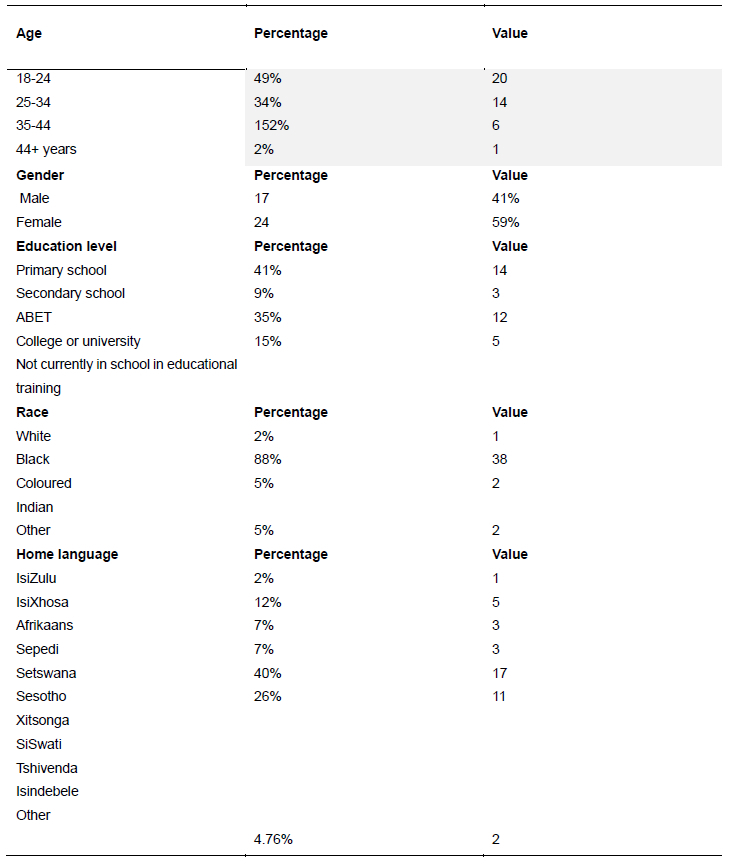
The survey was used to ascertain the IL skills and needs of the NEET. The first section was on the participants' demographics, as depicted in Table 1.
The data depicted in Table 1 reveals a diverse demographic profile with notable variations across age, gender, education level, race, and home language. Most participants fell within the 18-24 age range (49%) and the 25-34 age range (34%), with a smaller representation from older age groups. In line with the gender distribution, there were more females than males making up a total of 59%, whereas males made up 41%.
In terms of education, most participants have completed primary school (41%) or ABET (35%), with fewer having attended secondary school (9%) or college/university (15%). The racial composition was predominantly Black (88%), with minimal representation from other racial groups. Setswana was the most common home language (40%), followed by Sesotho (26%), while other languages were less represented. This demographic data highlights a young, predominantly Black and female population, with a strong presence of Setswana and Sesotho speakers and varying levels of educational achievement.
5.2 Information literacy familiarity
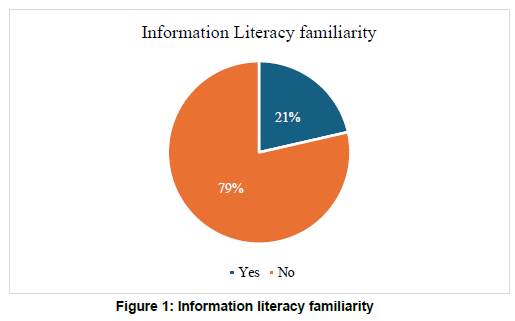
The data indicates that most NEET youth, 79% (33 out of 42), had not heard of IL before participating in the survey. Only 21% (9 out of 42) were familiar with the term. This suggests a general lack of awareness or understanding of IL, highlighting a potential area for intervention and training in this area.
The following were responses:
"At the TV, library".
"Skills set on what, where, how to find and appropriately use information for a specific reason".
"Knowing on how to get information and knowing how to use it".
"Library information literacy".
"Ability to find, organise and use communicate information in all its various formats".
5.3 Information access channels
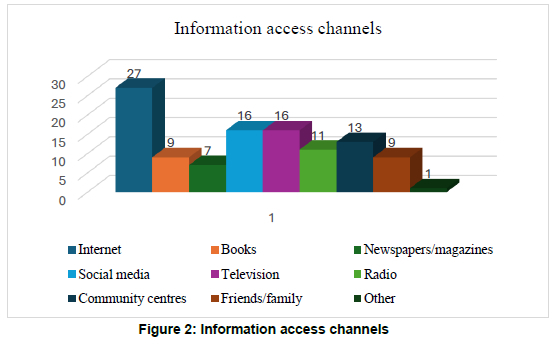
The data on the channels that NEET youth used to access information for everyday life reveals that the internet was the most popular source, with 27 respondents (33%) relying on it. Social media and television were equally significant, each being used by 16 respondents (20%). Community centres were also a notable source, with 13 respondents (16%) turning to them for information. Radio was used by 11 respondents (13%), while books and friends/family were each utilised by 9 respondents (11%). Newspapers and magazines were slightly less common, with 7 respondents (9%) using them, and only 1 respondent (1%) reporting using other sources. This distribution highlights the predominant role of digital platforms and community resources in accessing information.
The focus group interview responses corroborated the survey responses on the type of information access channels, where a significant majority indicated the internet, social media, and television as prominent channels. Their views are quoted below:
"By interacting with relevant informative people and by doing a lot of research to obtain information regarding something
you are basically working on".
"Google".
"Radio".
"Going to the library". "Newspapers".
5.4 Types of information accessed
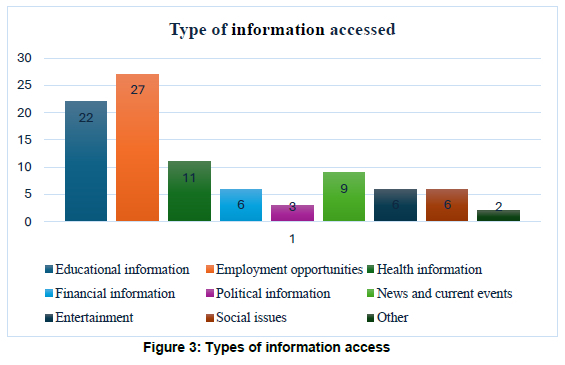
Data on the types of information accessible by NEET youth for their everyday life needs revealed a clear prioritisation of certain areas. Employment opportunities were the most sought-after, with 27 respondents (29%) focusing on this type of information. Educational information followed closely, accessed by 22 respondents (24%). Health information was also a notable area of interest, with 11 respondents (12%) seeking it. News and current events attracted 9 respondents (10%), while financial information, entertainment, and social issues each attracted the attention of 6 respondents (7%). Political information was accessed by 3 respondents (3%), and the least accessed category was "Other," with 2 respondents (2%). This distribution highlighted the NEET youth's primary focus on employment and education, reflecting their immediate needs and concerns in navigating everyday life.
Based on the feedback from the focus group, the following sentiments were shared.
"Television news".
"Weather",
"I use my phone to check the weather, current affairs, and actually your phone well most smartphones will tailor the type of information according to the way you research, or you often search, it calculates the algorithm that you use, and it will sort of feed you every last, I am sports fan I am a soccer fan, every now and then, when I come to Wi-Fi area or switch on my data, the first thing that pop out apart from WhatsApp will be this team has won that team has lost. I think that our phones are mostly what we use, not that the news is far off, but our phones are the main source of information".
5.5 Online information evaluation
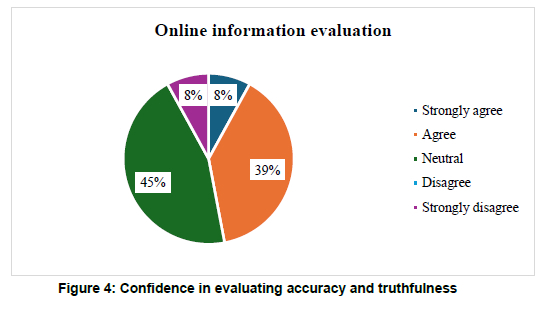
The data depicted in Figure 4 on NEETs' confidence in evaluating online information revealed varied responses. A significant portion remained neutral (45%), indicating uncertainty or lack of confidence, followed by a larger proportion of 39% who "agreed" to be confident in evaluating online information, while a minority of respondents "strongly agreed" (8%). This was similar to those who "strongly disagreed" 8%, highlighting a smaller proportion with low confidence. The absence of data for "Disagree" suggested either a lack of representation in this category or data omission. This distribution indicated that while some NEETs felt confident in their abilities, a significant number were either neutral or lacking confidence, highlighting a potential area for targeted training or support.
Participants in the focus group said the following, particularly in terms of their confidence in evaluating the truthfulness and accuracy of information accessed online:
"There are different sites that you came to look at, like depending on the type of information you are looking for you will know the most reliable sources of that type of information. With me, if I were to search something on, regarding sports regarding soccer, regarding anything, I'd actually search the magazine of, like a publication, any sort of reliable publication instead of searching the news itself. Rather, I'd search Sportsworld, it's a publication, with Sportsworld they would verify the information for me, and they would put it up. So, I wouldn't want to just look at pictures and scroll and find that small extracts from you know those smaller sites only".
"You are not certain enough or not more accurate that so reliable you have to find with research to check that it's accurate by going through various channel to check if it's accurate or not through research".
As a probing mechanism, a follow-up question was posed where the NEET youth were asked how to spot fake news and misinformation, and these were their sentiments: P1:
"By asking people".
"Maybe asking the source, the main provider, main source that disseminated that information that whether it's true or not".
As a probing mechanism, a follow-up question was posed where the NEET youth were asked how to spot fake news and misinformation, and these were their sentiments: P1 :
"By asking people".
"Maybe asking the source, the main provider, main source that disseminated that information that whether it's true or not".
5.6 Challenges in accessing online information
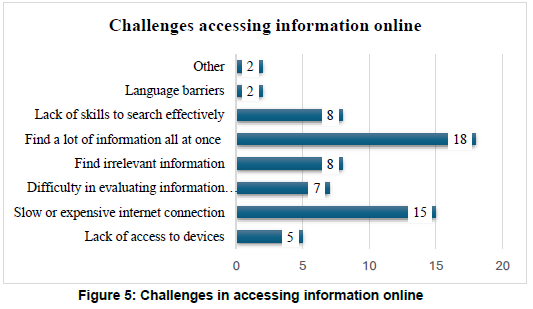
The data highlighted significant challenges NEET youth faced in accessing online information, with the most prominent issue being the overwhelming amount of information available at once (18 responses), making it difficult to sift through and identify relevant content. Slow or expensive internet connections (15 responses) emerged as a critical barrier, underscoring the need for affordable and reliable internet access. Challenges in evaluating information reliability and accuracy (7 responses) and lacking skills to search effectively (8 responses) indicated a gap in IL that needed to be addressed through targeted training. Issues such as finding irrelevant information (8 responses) and lack of access to devices (5 responses) compounded the problem. While language barriers and other factors were less frequently reported (2 responses each), they still represented notable obstacles for some young people. These findings suggested the need for comprehensive interventions to improve digital access, affordability, and IL skills. The survey findings are corroborated by what participants highlighted during the focus group interview, where their challenges included information overload, limited access to the internet and devices, and information, which was behind paywalls, patented, and not easily accessible on the internet. These were some of their assertions:
"Getting too much information sometimes, it overfeeds".
"Not having a smart device".
"Limited access to the internet".
"No network".
"Non-existent websites".
One participant highlighted the challenge of accessing information which was not readily or freely accessible online.
"I'm also into genetics and zoology. What fascinates me, is how similar some animals are to human beings and how some animals can actually if you have the right DNA combination can actually avoid certain diseases live longer, for example, at one stage I researched why Chinese people live longer than most countries. I discovered that the secret lies in their diet, than any other thing. Apart from their environment, their environment is actually nicer because they are higher up than us down here. So, retrieving certain information seems difficult because probably it's been patent, probably is been banned from being published yet we do have your supplements that actually do that. So, I think that there are certain information or there are certain things that are actually kept from the internet because maybe there are people that discovered that do not want it to be public knowledge as yet".
The assertion below might indicate that the participant lacked online information evaluation skills, hence too much reliance was placed on print resources available in a library.
"I am old school, whereby I would go to the library, I prefer to find information because it is the right one physically".
5.7 Topics of interest (Future IL interventions)
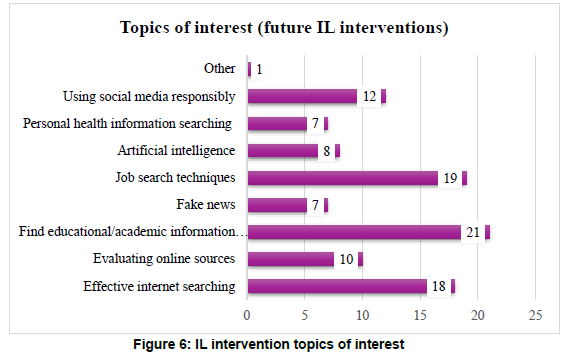
When asked which topics they would be interested in learning more about during future IL interventions, the findings showed there were varied priorities among participants. The most significant interest was in finding educational/academic information online (21 responses), highlighting the need for effective IL to support learning and research. Job search techniques followed closely with 19 responses, highlighting the relevance of skills required to search relevant and reputable careers and job sites. Effective internet searching was the third most sought-after skill, accounting for 18 responses, underscoring its foundational role in online IL. Interest in using social media responsibly (12 responses) demonstrated a growing awareness of the implications of digital interactions, as these can make or break a person.
However, contrary to the data in Figure 5, where most of the NEET highlighted low confidence levels in determining the accuracy and truthfulness of online information, they believed that this was not a priority topic of interest to them (10 responses), emphasising a moderate concern for critical thinking in digital environments. Skills related to artificial intelligence (8 responses), fake news (7 responses), and personal health information searching (7 responses) were less commonly identified but remain important niche areas of focus. Finally, only one response fell under the "Other" category, suggesting that the predefined categories effectively captured most user interests. These findings underscored the need to tailor IL programmes and interventions to address high-priority areas like academic information retrieval and job searching while incorporating critical evaluation and responsible online behaviour.
The comments from the focus group highlighted the dire need for skills on information evaluations, as opposed to the data above. These were some of the assertions from the NEET youth:
"I was once caught plagiarism and I decided not to plagiarism anymore". "Developing our skills in being information literate". "How to identify fake news". "Identifying the accuracy of information".
"The appropriate tools for learners to be able to access certain information. Introducing certain tools and also maybe introducing programmes on how to do research on certain information, maybe internet facility or community centre like this one".
Additionally, some responses highlighted a pressing need for intervention topics related to ethical information use, particularly on generative AI tools. They echoed the following:
"Sometimes you want to write a long message, and you don't have the time to, like you said, some of us are parents, so you'll be, you'd have to submit a long you know summary of something and then also check that your child is not playing around hazardous areas in the house. So, you can multitask, just ask Meta and you can even use the voice thing and say "write a financial report on...something" then you put it there".
"By saying I use MetaAI I am not saying I only use MetaAI and not do the work myself. I am saying I use it to sort of guide me in the path of knowing right things because sometimes you have this big assignment and you don't even know where to start but when if your MetaAI can maybe kick start you then you say oh this is what they mean and maybe you do know that you have that information just that you didn't know that that is the information that is required. Now Meta or I prefer Gemini also works similarly to Gemini but Gemini is the Google version of MetaAI".
"Nowadays many people don't care whether it is ethical or not, so if I have MetaAI, I have everything. Like you said about that Math problem, if I don't know Math as an individual and I ask Meta, is this formular right, Meta is gonna say it's right. So, I am going to present it to the child at the school. It's a convenient to many people".
"I think the ethics would come to the point where we ask "Is AI ethical?" because if we can agree on that and say, well AI is being produced, it is produced for who? For human beings, to do what with it? To use it. Part of that is gathering information and actually presenting it in a manner that a person would need because like your smartphones, like your micro-ovens, like your stoves. These things are meant to make our lives easier so the issue or the question of ethics will come down to the point of you know authorities telling the AI producers what would be ethically acceptable or not".
6 Discussions
The demographic data showed that most participants in NEET programmes were female. This finding was similar to those of the work by Rahmani and Groot (2023), who, in their study of 91 research articles, found that males accounted for 35.6% of the total participants, while women accounted for 47.8%. In the South African context, this can be attributed to the marginalisation of women in the economic and formal sectors (Simatele & Kabange 2022). The gender aspect, though important, should not be an important consideration, as there are other factors that need to be examined, such as the distribution of gender in the population, the enrolment statistics, and the dropout rates. Further, the age range of when one can become a NEET has been examined in literature by researchers such as Aina et al. (2024) and Brunet (2020), while the finding of this study's was in the age range is 18 to 24, the 34% in the age group 25 to 34 years was significant. The NEET problem should be addressed as a societal matter, as it affects everyone, regardless of gender.
Most participants had not heard about IL before attending the project. This indicates a high level of information poverty among the NEET. This finding supports the assertion by Alvarado et al. (2020) about the effect of specific skills, such as cognitive skills, which is reinforced in IL and the probability that without them, one can end up a NEET. As alluded to by Matli and Ngoepe (2019; 2022), who also found that participants were not aware of digital literacy, there is a lack of digital literacy skills and access to resources. Of concern is that 41% had matriculated while 35% had attended college or university. IL instruction is thus not being consistently taught in secondary schools and institutions of higher learning such as colleges and universities. This is despite the findings by Jiyane and Onyancha (2010) that most academic libraries in higher education in South Africa offer IL instruction particularly to first years. The South African challenge of access to libraries at schools and colleges is well documented and has not been prioritised by successive governments since 1994.
The preference for using digital resources such as the internet, social media, and television, as opposed to traditional media such as newspapers shows the preferences of NEETs in the 21st century. This can be attributed to the access to resources that are provided in the communities by agencies such as municipalities and community libraries. These findings contrast with those reported by Buchanan and Tuckerman (2016), which indicated that NEET youth in South Ayrshire, Scotland, primarily relied on family and friends for information, followed by the internet and television; 73% of the participants mentioned that they did not utilise public libraries. This suggests that context and culture may significantly influence these preferences.
The preference for the internet corroborated assertions from the literature, which reported that even though NEET youth, in most instances, lacked digital literacy skills, they were able to navigate the World Wide Web (Van Deursen & Van Dijk, 2014; Matli & Ngoepe, 2019). IL instruction will thus be useful in reducing search times and assisting them, as they have limited access to the internet due to the digital divide. The main focus on employment and educational information in NEET highlights the need to find solutions to address their socioeconomic statuses and improve their living standards. Similar findings were reported in a study conducted among this community in Southern Scotland, where most participants' information needs related more to employment, education, and training, such as finding appropriate job vacancies, identifying employer addresses and contact details, and accessing public transportation schedules (Coates, 2016). Information overload is constantly exacerbating the challenges NEET youth face, as most lack the skills to identify and curb the spread of fake news and misinformation. Contrary to this, a study conducted by Chauke (2022) on this community during COVID-19, reported that most participants rather opted to withdraw their participation from platforms such as social media, which fuelled psychological and emotional stress based on fake information received about COVID-19. This underscores the need to ensure that IL training equips people with skills to navigate and critically examine the information that they obtain from different sources.
The limited skills in searching for information, as reported in the findings, also exacerbate information poverty, as some NEET youth indicated that some challenges they face include not having access to some information they need, which might either not be freely available or be available on platforms they do not have access to. This is corroborated by Buchanan and Tuckerman (2016), who sought to ascertain the information behaviours of NEET youth engagement with public and third-sector support services for education and employment purposes, where there was an overwhelming manifestation of information poverty. In addition, the lack of skills in searching for essential information is an attribute of information poverty, as highlighted by Matli and Ngoepe (2022), also stating that most South African NEET people are deprived of the right to access work and developmental information because of the lack of social enabling infrastructure and adequate skills. As a remedy, Buheji (2019) believes that the development of appropriate and targeted policy interventions is pertinent in bridging the information gap experienced by the NEET. The finding also highlights the need for the use of authentic interventions that are relevant to the community.
The ethical use of AI tools such as Meta is an area on which respondents had mixed views. The ethical use of the tools, the reliability and validity of the results obtained by such tools, and the need for "authorities" to provide oversight are some issues indicated. As AI continues to evolve, there is a need for IL instruction to include topics that are relevant to the ethical use of tools and also for the online safety of people. The results obtained from the responses obtained from using AI tools are accepted, as they are and are not critically evaluated.
There were limitations to this study. The study was conducted in two communities, and thus, the results cannot be generalised to all the communities in South Africa. Further, there is a need to increase the number of participants to be able to generalise the findings. However, the study can be replicated in other communities to establish if the intervention will yield similar results. The study's results should be useful to policymakers and organisations that support the NEET. Additional research is required on the topic to increase the literature base, particularly in developing countries.
7 Conclusion and recommendations
The study explored the IL skills needs of unemployed youth in two remote areas of the Gauteng and North-West provinces in South Africa. Based on the findings, it can be concluded that the NEET youth required a whole range of IL skills, from information retrieval to ethical use. It was apparent in the study that most youths had not been exposed to a formal IL intervention, although they had gone through high school level and, in some cases, college or university education system. It can be concluded that the NEET youth preferred to use digital resources over traditional forms of information, a trend attributed to advances in digital technologies. However, access to digital technologies and the internet was also a challenge due to the digital divide in South Africa. More specifically, the study concluded that the NEET youth had clear information needs, but they lacked critical thinking and evaluation skills in their efforts to find relevant information for employment opportunities, educational or academic and health purposes, among other needs. Although the study results may not be generalised across South Africa, they serve as a good pointer to the dire IL needs of most community youths, particularly in remote areas without easy access to information.
The Constitution of South Africa states that access to information is one of the fundamental human rights. NEET youth have a clear need for access to information which will help them to make informed decisions about their lives. It is therefore recommended that IL skills training should be mandatory at all levels of study to tame the challenges associated with information overload. In addition, the government should subsidise the cost of the internet to enhance access to information. The study's results should be useful to policymakers and organisations that support the NEET. Additional research is required to increase the literature base, particularly in developing countries. A comparative follow-up study on youth in similar circumstances but in different settings or environments, such as urban and rural areas, may be conducted to determine whether the needs are different or similar and find ways to address them.
Acknowledgements
This study has been funded by the Department of Science and Innovation (DSI) and the National Research Foundation (NRF) of South Africa. The authors sincerely acknowledge their financial support, which enabled this research. The views expressed in this publication are solely those of the authors and do not necessarily reflect those of the DSI or NRF.
References
Aina, C., Mussida, C. & Scicchitano, S. 2024. Even more discouraged? The NEET generation at the age of COVID-19. Applied Economics, 1-18.
Alvarado, A.C., Conde, B., Novella, R. & Repetto, A. 2020. NEETs in Latin America and the Caribbean: Skills, aspirations, and information. Journal of International Development, 32(8): 1273-1307. [ Links ]
American Library Association (ALA). 1989. Presidential Committee on Information Literacy: Final Report. Available at: https://www.ala.org/acrl/publications/whitepapers/presidential
Amusa, O.I., Bello, T.O., Omotoso, A.O & Osunrinade, O.A. 2016. Influence of information literacy skills on information needs and use among banking personnel in Ogun State, Nigeria. Library Philosophy and Practice.
Barry, R., Anderson. J., Tran, L., et al. 2024. Prevalence of mental health disorders among individuals experiencing homelessness: A systematic review and meta-analysis. JAMA Psychiatry, 81(7): 691-699. [ Links ]
Bathembu, L. 2023. Exploring challenges facing the youth not in employment, education, or training (NEET) under the restrictions of the COVID-19 pandemic: The case study of Khayelitsha Township. Master's thesis, University of Cape Town. [ Links ]
Bowler, L, Hong, W.Y. & He, D. 2011. The visibility of health web portals for teens. Online Information Review, 35(3): 443-470. [ Links ]
Brunet, S. 2020. Impact of the COVID-19 pandemic on the NEET (Not in Employment, Education or Training) indicator, March and April 2020. Education Indicators in Canada: Fact Sheet. Statistics Canada.
Buchanan, S. & Tuckerman, L. 2016. The information behaviours of disadvantaged and disengaged adolescents. Journal of Documentation, 72(3): 527-548. [ Links ]
Buheji, M. 2019. Discovering pathways for eliminating NEET and youth future type of poverty. International Journal of Human Resource Studies, 9(3): 320-340. [ Links ]
Carcillo, S., & Königs, S. 2015. NEET youth in the aftermath of the crisis: Challenges and policies. SSRN ElectronicJournal. Available: https://doi.org/10.2139/ssrn.2573655
Chauke, T.A. 2022. Promoting positive youth development through the volunteer programme in the Case of NEET youth. Commonwealth Youth & Development, 20(2). [ Links ]
Coates, H.L. 2016. Disadvantaged youth in Southern Scotland experience greater barriers to information access resulting from poor technology skills, information literacy, and social structures and norms. Evidence Based Library and Information Practice, 11(4). https://doi.org/10.18438/B85D1T [ Links ]
Cohen, L., Manion, L. & Morrison, K. 2018. Research methods in education. New York: Routledge [ Links ]
Creswell, J.W. 2013. Research design: qualitative, quantitative and mixed methods approaches. (4th ed.). Thousand Oaks, CA: Sage. [ Links ]
Dickens, L. & Marx, P. 2020. NEET as an outcome for care leavers in South Africa: The case of Girls and Boys Town. Emerging Adulthood, 8(1): 64-72. [ Links ]
Eisenberg, M.B. 2008. Information literacy: Essential skills for the information age. DESIDOC Journal of Library & Information Technology, 28(2): 39-47. [ Links ]
Ellis, P. 2020. Sampling in qualitative research. Wounds UK, 16(3): 82-83. [ Links ]
Folles0, R. 2015. Youth at risk or terms at risk? Young, 23(3): 240-253. [ Links ]
Hopkins, H. & Martinez, G. 2018. Extracurricular information seeking: Adolescents' informal information seeking practices. Available at SSRN: https://ssrn.com/abstract=3173731 or http://dx.doi.org/10.2139/ssrn.3173731
Houghton, A.M., Armstrong, J. & Okeke, R.I. 2021. Delivering careers guidance in English secondary schools: Policy versus practice. British Journal of Educational Studies, 69(1): 47-63. [ Links ]
Isherwood, L. 2023. NEET: Young people not in education, employment, or training and violent crime.
Jiyane, G.V. & Onyancha, O.B. 2010. Information literacy education and instruction in academic libraries and LIS schools in institutions of higher education in South Africa. South African Journal of Libraries and Information Science, 76(1): 11-23. [ Links ]
Karyda, M. 2015. The effect of crime in the community on becoming not in education, employment or training (NEET) at 18-19 years in England. PhD thesis, UCL Institute of Education, UK. [ Links ]
Kim, S.U. & Syn, S.Y. 2014. Research trends in teens' health information behaviour: A review of the literature. Health Information & Libraries Journal, 31(1): 4-19. [ Links ]
Ladkin, D. 2007. Action research. In C. Seale, G. Gobo, J. F. Gubrium & D. Silverman (eds), Qualitative research practice. London: Sage, pp. 478-490. [ Links ]
Lindblad, V, Ravn, R.L., Gaardsted, P.S., Hansen, L.E., Lauritzen, F.F. & Melgaard, D. 2024. Beyond the mind: Understanding the influence of mental health on youth NEET status in Europe-A systematic literature review. Journal of Adolescence, 96(7):1428-1444. [ Links ]
Mascherini, M., Salvatore, L., Meierkord, A. & Jungblut, J.M. 2012. NEETs: Young people not in employment, education or training: Characteristics, costs and policy responses in Europe. Luxembourg: Publications Office of the European Union. [ Links ]
Matli, W. & Ngoepe, M. 2022. Extending information poverty theory to better understand the digital access and inequalities among young people who are not in education, employment, or training in South Africa. Higher Education, Skills and Work-Based Learning, 12(3): 419-436. [ Links ]
Mngoma, N.F. & Ayonrinde, O.A. 2023. Mental distress and substance use among rural Black South African youth who are not in employment, education, or training (NEET). International Journal of Social Psychiatry, 69(3): 532-542. [ Links ]
Naidoo, D., 2017. Resistance, critical agency and initiatives of Black post-school youth, facilitators and organisers in a Black township in South Africa. Journal of Curriculum and Teaching, 6(1):97-109. [ Links ]
Njani, E. 2022. Graduates' experiences in seeking employment in a community in the Western Cape, South Africa. Doctoral dissertation, Cape Peninsula University of Technology. [ Links ]
Rahmani, H. & Groot, W. 2023. Risk factors of being a youth not in education, employment, or training (NEET): A scoping review. International Journal of Educational Research, 120: 102198. [ Links ]
Rahmani, H., Groot, W. & Rahmani, A.M. 2024. Unravelling the NEET phenomenon: a systematic literature review and meta-analysis of risk factors for youth not in education, employment, or training. International Journal of Adolescence and Youth, 29(1): 2331576. [ Links ]
Rawlings, L. 2024. The rapid rise in number of young people who are NEET is a warning for us all. Available at: https://www.youthemployment.org.uk/the-rapid-rise-in-number-of-young-people-who-are-neet-is-a-warning-for-us-all/
Saunders, L., 2020. Core knowledge and specialized skills in academic libraries. College & Research Libraries, 81(2):288-311. [ Links ]
Simatele, M. & Kabange, M. 2022. Financial inclusion and intersectionality: A case of business funding in the South African informal sector. Journal of Risk and Financial Management, 15(9): 380. [ Links ]
Strecker, T., López, J. & Cabasés, M.À. 2021. Examining NEET situations in Spain: Labour market, discourses and policies. Journal of Applied Youth Studies, 4(2): 119-134. [ Links ]
Tayfur, S.N., Prior, S., Roy, A.S., Maciver, D., Forsyth, K. & Fitzpatrick, L.I. 2022. Associations between adolescent psychosocial factors and disengagement from education and employment in young adulthood among individuals with common mental health problems. Journal of Youth and Adolescence, 51(7): 1-12. [ Links ]
Van Deursen, A.J. & Van Dijk, J.A. 2014. Digital skills: Unlocking the information society. Springer.
Wrigley, L. 2024. "With the pandemic everything changes!": Examining welfare reform and conditionality prior to and during the COVID-19 pandemic amongst NEET experienced young people. Journal of Applied Youth Studies, 7(1): 9-25. [ Links ]
Received: 10 December 2024
Accepted: 18 February 2025