Services on Demand
Journal

Article
 English (pdf)
 Article in xml format
 Article references
 Automatic translation
 Send this article by e-mail
Indicators
Related links
-
 Cited by Google
 -
 Similars in Google
Share

 Permalink
South African Journal of Industrial Engineering
On-line version ISSN 2224-7890
S. Afr. J. Ind. Eng. vol.36 n.2 Pretoria Aug. 2025
https://doi.org/10.7166/36-2-3117
GENERAL ARTICLES
Inventory Management Strategies to Enhance Resilience Among Automotive Suppliers
K.R. Ramdass*; T.Nair
Department of Industrial Engineering, University of South Africa, Pretoria, South Africa
ABSTRACT
The increasing vulnerability of supply chain disruptions in the automotive industry had an adverse impact on production schedules, financial performance, and customer satisfaction. This research comprehensively analyses current practices, case studies, and interviews with industry experts to propose a framework for implementing resilient inventory management strategies. Examining the root causes and effects of supply chain disruptions has identified areas where strategic interventions could mitigate risks and highlight the role of digital technologies, such as the Internet of Things, in optimising inventory management strategies. The findings emphasise the importance of real-time data analytics, diversifying suppliers, and improving the resilience of automotive suppliers.
OPSOMMING
Die toenemende kwesbaarheid van voorsieningskettingonderbrekings in die motorbedryf het produksieskedules, finansiële prestasie en klanttevredenheid nadelig beïnvloed. Hierdie navorsing ontleed omvattend huidige praktyke, gevallestudies en onderhoude met bedryfskenners om 'n raamwerk voor te stel vir die implementering van veerkragtige voorraadbestuursstrategieë. Deur die oorsake en gevolge van voorsieningsketting-onderbrekings te ondersoek, is areas geïdentifiseer waar strategiese ingrypings risikos kan verminder en die rol van digitale tegnologieë, soos die Internet van Dinge, beklemtoon om voorraadbestuurstrategieë te optimeer. Die bevindinge beklemtoon die belangrikheid van regstreekse data-analise, die diversifisering van verskaffers en die verbetering van die veerkragtigheid van motorverskaffers.
1. INTRODUCTION
Globalisation, technology, and customer expectations have changed the automotive industry in recent decades. Multicontinental stakeholder-intensive supply chains have grown in business. Automotive supply chains are complicated and subject to interruptions, affecting manufacturing, finances, and market competitiveness. Political unrest, natural disasters, pandemics, and logistical difficulties delay production, increase costs, and impede commodity flow. To mitigate these disruptions and to improve supply chain resilience, one must understand their sources and effects on the auto sector. Earthquakes, storms, trade conflicts, sanctions, economic crises, pandemics, supplier failures, and logistical bottlenecks disrupt supply chains. Just-in-time (JIT) manufacturing and global sourcing are crucial to the car industry, so even minor disruptions can delay supply chains and raise pricing. Automobile industry disruptions have several effects. Production shutdowns can result in assembly line delays, inventory shortages, and customer delivery delays. Sales loss, emergency procurement, and expedited transportation increase costs. Brand reputation, consumer trust, and market share may suffer for a long time.
Automotive companies have deployed supply chain management solutions to address these concerns. Inventory buffers, supplier variety, and flexible production plans are these strategies. Companies are exploring strategic alliances and collaborative networks to reduce risks and improve information flow. These solutions mitigate disruptions differently. Inventory can prevent short-term interruptions, it can also increase holding costs and obsolescence. Broad supplier bases reduce dependence on a single source, but they also complicate supply chain management. Automotive suppliers are especially vulnerable to supply chain disruptions because of their complicated supply networks and just-in-time (JIT) manufacturing. Rapid technology advances and supply chain complexity have raised the need for good management to withstand and respond to shocks. New digital technologies such as the Internet of Things (IoT) and advanced analytics have strengthened supply chains. These technologies may help automotive firms to recover from disruptions by delivering real-time data, predictive analytics, and better decision-making. This study will also evaluates how integrated digital technologies affect automotive supply networks' resilience to shocks. Real-time supply chain monitoring via sensors and associated devices provides valuable inventory, shipping, and equipment data. These technologies could help automotive companies to improve their supply chain insight, decision-making, and disruption recovery. Real-time data from IoT devices may reduce interruptions.
This study is conceptually framed by hybrid inventory theory and resilience theory. Hybrid inventory theory supports the strategic combination of JIT efficiency with buffer-based risk mitigation, while resilience theory provides a system-oriented view of recovery capacity in dynamic environments [1]. This study aims to identify the primary causes and effects of supply chain disruptions in the automotive industry, to evaluate the impact of different supply chain management strategies on the resilience of automotive supply chains, to assess the role of digital technologies in enhancing the recovery of automotive supply chains from disruptions, and to develop recommendations for the automotive industry's stakeholders to improve supply chain resilience and recovery capabilities.
2. LITERATURE REVIEW
The automotive industry has witnessed significant disruptions in recent years, necessitating a reassessment of traditional inventory management strategies to enhance resilience. Supply chain disruptions caused by factors such as global pandemics, geopolitical tensions, and natural disasters have highlighted the vulnerabilities of automotive suppliers. This study is grounded in resilience theory and the dynamic capabilities framework, which offer a lens through which to assess adaptive responses to disruptions. It explores the evolution of inventory management strategies while focusing on approaches that bolster resilience in the face of such disruptions.
2.1. Supply chain disruptions in the automotive industry
Several factors result in supply chain disruptions. Ivanov and Dolgui [1] highlight that the COVID-19 pandemic exposed how fragile global supply chains are, and automotive suppliers are experiencing significant production halts owing to component shortages. Other research identifies geopolitical tensions such as the United States-China trade war and environmental factors such as natural disasters as critical disruptors [2]. Recent studies emphasise the pervasive impact of supply chain disruptions on the automotive sector. Natural calamities interrupt transportation, but the COVID-l9 pandemic lowered supply and demand in the manufacturing, distribution, logistics, and supply chain industries, pushing enterprises to close [3]. The automobile supply chain is also subject to customer demand changes caused by economic conditions, market trends, and external shocks. Economic cycles, including boom and recession, affect vehicle demand. Consumer spending drops during recessions, reducing automobile demand, while demand rises when consumer confidence and purchasing power rise during economic booms [4]. Internal factors contributing to supply chain disruptions include IT system outages and faults that disrupt supply chain operations. Enterprise Resource Planning system outages can delay order processing, inventory management, and supply chain coordination, according to Aydin [5]. Poor inventory management can delay order fulfillment, increase carrying costs, and cause inefficiency in the supply chain, according to Wang et al. [6]. Warehouse capacity can limit automotive components and completed product storage and management. Warehouse space constraints can cause stockouts and inventory congestion [7]. Capacity limits can hinder picking and packing in warehouses.
Quality concerns in automotive components and finished automobiles can cause significant disruptions [8]. Automotive suppliers must meet strict quality and compliance criteria. Shah et al. [8] found that quality issues can cause production halts, rework charges, and recalls. Industry norms and standards must be followed to avoid supply chain disruptions. Automotive component quality issues can interrupt supply chains. Quality variation affects manufacturing and supply chain efficiency. Quality inconsistency can result from production process differences, supplier quality management, and lack of standardisation.
Colledani et al. [9] found that production methods, quality control, and raw material variances might cause uneven quality. Inefficiencies such as unplanned downtime, inefficient workflows, bottlenecks, downtime, quality issues, and equipment malfunctions can disrupt production and lead to delays. Inefficient inventory management practices can lead to production disruptions and supply chain inefficiencies. The research by Mweshi [10] highlights that poor inventory control can result in stockouts, overstocking, and inventory obsolescence. These issues can have an impact on production schedules, lead to increased holding costs, and cause disruptions in the supply chain.
Inefficient workforce management can affect production performance and supply chain operations. Issues such as inadequate training, high turnover rates, and low employee morale can reduce productivity and operational disruptions. Management failures can significantly disrupt the automotive supply chain, having an impact on overall performance and efficiency. Failures in strategic planning can lead to a misalignment between production capabilities and market demand, resulting in supply chain disruptions. According to Bryson [11], effective strategic planning involves aligning organisational goals with operational activities. Inadequate planning can lead to capacity constraints, underused resources, and misaligned supply chain activities. For example, the inability to anticipate changes in market demand or in supply chain dynamics can result in production imbalances and inefficiencies.
Supply chain disruptions often lead to production delays, increased costs, and customer dissatisfaction, making resilience a critical objective for automotive suppliers. Supply chain interruptions can damage supplier confidence and collaboration. Chae et al. [12] found that disruptions caused by supplier failures might cause conflict and mistrust between car manufacturers and their suppliers. Strained relationships can inhibit communication and collaboration, making it hard to handle future disruptions and to maintain a robust supply chain. Supply chain disruptions can damage brand image and reputation. Ali [13] found that disruptions can affect brand reputation, customer trust, and publicity. Companies that frequently disrupt or fail to address quality issues may need help to sustain brand image and client loyalty. Supply chain interruptions can lower stock values as investors worry about financial performance and operational stability, according to Gurta and Johny [14]. The stock market's reaction to disruptions might damage the company's market value and capacity to raise revenue for future developments. The literature underscores the importance of robust inventory management strategies in mitigating these disruptions' effects.
While most recent studies emphasise efficiency and responsivenesss, alternative perspectives such as the resource-based view and contingency theory suggest that resilience requires firm-specific capabilities that are tailored to the supply chain context. These contrasting frameworks show that there is no one-size-fits-all solution for disruptions.
2.2. Inventory management strategies
2.2.1. Just-in-time and lean inventory management
Traditionally, automotive suppliers have relied on just-in-time (JIT) and lean inventory management strategies to minimise costs and to enhance efficiency. However, JIT focus on inventory reduction can reduce resilience, especially during supply chain interruptions. JIT in the automotive sector involves matching production schedules to demand and working with suppliers to supply components on time. Htun et al. [15] found that Toyota successfully implemented JIT, which entails synchronising production with demand, using kanban systems to control inventory, and minimising setup times to increase production flexibility. Automotive manufacturers use JIT ideas in their supply chains to improve efficiency and to cut costs. However, recent research suggests that, while these strategies reduce inventory holding costs, they also increase vulnerability to supply chain disruptions [1]. To address this, some studies propose a hybrid approach that balances JIT with the strategic stockpiling of critical components [16].
2.2.2. Safety stock and buffer inventory
The concept of "safety stock" has gained renewed attention as enhancing supply chain resilience. Raj [17] argues that maintaining buffer inventory can be a shock absorber during disruptions that prevents production stoppages. Maintaining safety stock and buffering inventory are traditional strategies that have proven effective in mitigating short-term supply chain disruptions. Chang and Lin [18] show that these strategies can absorb shocks from supplier delays or sudden demand changes, although they have higher holding costs. The difficulty lies in optimising inventory levels to balance the cost of holding extra stock with the need for resilience [1]. Determining ideal safety stock levels is the most difficult part, as excessive inventory can lead to increased costs and obsolescence [19].
2.2.3. Dual sourcing and supplier diversification
Supplier diversification, including dual sourcing, has been increasingly advocated to mitigate supply chain risks. Recent studies show that relying on multiple suppliers reduces the dependency on a single source, thereby enhancing resilience [20]. Nevertheless, the effectiveness of this strategy depends on the suppliers' geographical distribution and the robustness of their own supply chains [21]. Diversifying suppliers and strategic sourcing are critical strategies for enhancing supply chain resilience. Yuhong and Zobel [22] have found that companies with a diversified supplier base are less likely to experience severe disruptions, as they can switch between suppliers when one of them is affected. This strategy was particularly beneficial during the COVID-19 pandemic, when companies with multiple suppliers could maintain their operations despite widespread disruptions [23].
2.3. The role of digital technologies
Digital technologies have emerged as crucial enablers of resilient inventory management strategies. Integrating blockchain, the loT, and artificial intelligence (AI) into supply chain operations offers real-time visibility, predictive analytics, and automated decision-making capabilities [24]. Blockchain technology has been identified as a powerful resource for enhancing supply chain transparency and traceability. Recent studies suggest that blockchain could help automotive suppliers to track the movement of components, ensuring that inventory levels are accurately monitored and managed [25]. This increased transparency would reduce the risk of disruptions caused by counterfeit parts or delays in component delivery.
IoT devices enable real-time monitoring of inventory levels, providing suppliers with immediate insights into stock availability and potential disruptions [26]. The literature highlights the potential of the loT to create a responsive supply chain when inventory decisions are based on real-time data rather than on historical trends [27]. Al-driven predictive analytics has become a tool for anticipating supply chain disruptions and optimising inventory management [28]. Recent research indicates that AI can forecast demand fluctuations, identify potential risks, and recommend inventory adjustments, thus enhancing resilience [29].
2.4. Challenges and gaps in the literature
Although this literature provides a comprehensive overview of inventory management strategies for resilience, several gaps still need to be addressed. While prior studies explored digital integration in SCM, few have contextualised it within the unique complexity of the automotive sector under crisis conditions. The effectiveness of hybrid inventory models that balance JIT with safety stock needs further empirical validation. In addition, the role of digital technologies in enhancing inventory resilience is still evolving, with questions about data security, interoperability, and the cost-effectiveness of implementation [30].
Moreover, the literature needs a thorough exploration of the human factors involved in implementing these strategies, such as the need for upskilling and change management [31]. Addressing these gaps would be essential to develop a holistic understanding of how automotive suppliers could enhance their resilience through inventory management. The literature reveals a shift towards more resilient inventory management strategies in the automotive sector. While traditional approaches such as JIT are still relevant, they are increasingly supplemented by safety stock, supplier diversification, and digital technologies. As the automotive industry faces supply chain disruptions, these strategies are integrated and address the identified gaps between suppliers.
3. RESEARCH METHODOLOGY
This study used the mixed-methods approach to investigate inventory management strategies that enhance resilience among automotive suppliers. The research design included qualitative and quantitative components to analyse comprehensively the strategies in use and their effectiveness. The qualitative phase involved in-depth interviews with industry experts, while the quantitative phase used a survey and a statistical analysis of inventory performance data from selected automotive suppliers. The qualitative component used purposive sampling to select four experts from different segments of the automotive supply chain: a supply chain manager, a logistics engineer, a production manager, and procurement specialists, considering their extensive industry experience and involvement in inventory management decisions. Semi-structured interviews were conducted with the selected experts to gain insights into the current inventory management practices and their effectiveness in enhancing resilience. The interviews focused on topics such as adopting safety stock, dual sourcing, and integrating digital technologies such as blockchain, the IoT, and AI. Each interview lasted 38 to 57 minutes and was recorded and transcribed for analysis.
The quantitative phase involved structured surveys distributed to 39 employees, focusing on their experiences of disruptions, management strategies, and adopting digital technologies. The stratified random sampling method was identified and used to select the survey participants, ensuring a representative sample from the automotive supply chain industry. The impact of interruptions and recovery methods was also ascertained by analysing industry reports, financial statements, and other pertinent records. The survey included questions on inventory management practices, such as safety stock levels, supplier diversification, and digital technologies. In addition, participants were asked to provide data on key performance indicators (KPIs) related to inventory management, such as inventory turnover, stockout rates, and lead times, both before and after implementing specific strategies to enhance resilience.
The qualitative data was analysed using thematic analysis. The transcriptions of the interviews were coded to identify common themes related to inventory management strategies and their perceived effectiveness in enhancing supply chain resilience.
SPSS software was used to analyse the quantitative data. Descriptive statistics and inferential statistics were used to summarise the data to test the relationships between inventory management practices and supply chain resilience. Specifically, regression analysis was used to assess the impact of different strategies on inventory-related KPIs. A comparative study evaluated changes in these KPIs before and after adopting resilience-enhancing strategies. The T-test was used to compare conventional inventory management strategies and digital technologies.
Statistical tools (T-test, ANOVA, regression analysis) were used to analyse the data to ensure that the findings were statistically significant and reliable. The qualitative and quantitative data allowed for triangulation, which helped to corroborate the findings from different data sources, enhancing the conclusions' validity. The data analysis process was documented in detail, including the rationale for choosing specific methods, the steps taken to prepare the data, and how the results were interpreted.
4. RESULTS AND DISCUSSION
The research highlights that supply chain disruptions at ABC Manufacturing were primarily driven by issues related to supplier reliability, operational inefficiencies, logistics and transportation problems, and external factors such as economic fluctuations and regulatory changes. The effects of these disruptions were production delays, increased operational costs, operational inefficiencies, and a negative impact on customer service. Addressing these problems through improved supplier management, enhanced inventory and production processes, and better logistical strategies would be crucial to improving supply chain resilience and ensuring sustained operational efficiency. It is important to note that the findings primarily reflect a correlation, not a definitive causality, between digital adaption and recovery time.
4.1. Adoption of hybrid inventory management approaches
Based on the interview data, the thematic analysis revealed a growing trend among automotive suppliers to adopt hybrid inventory management strategies. While JIT remained prevalent, many suppliers had begun to incorporate safety stock for critical components. This shift was driven by the need to balance efficiency with resilience, particularly in response to recent global disruptions. One participant noted: "We used to rely heavily on JIT, but now we keep a buffer stock of essential parts to avoid production halts". It must be acknowledged that the results indicated strong correlations rather than verified causal relationships. Although recovery time improved alongside digital adoption, further controlled studies would be required to confirm causal direction.
4.2. Increased supplier diversification
Supplier diversification emerged as a key theme, with many experts emphasising the importance of dual or multiple sources to mitigate the risks associated with supplier dependency. The participants emphasised that, while dual sourcing can increase procurement costs, it significantly enhances supply chain resilience by reducing the risk of disruptions. One expert explained: "We've diversified our supplier base, especially for critical components, to ensure continuity even if one supplier faces issues". The comparative analysis showed that suppliers who diversified their supplier base experienced a 15% reduction in production delays and a 10% improvement in on-time delivery rates. However, the impact on overall costs was mixed, with some suppliers reporting increased procurement expenses. Despite the cost implications, the overall sentiment was that the benefits of enhanced resilience outweighed the additional costs. The regression analysis indicated a positive relationship between adopting safety stock and supply chain resilience (p < 0.05). Suppliers that implemented safety stock reported a decrease in stockout rates and an improvement in lead times. The average inventory turnover ratio also improved, suggesting that the buffer stock did not lead to excessive inventory holding costs.
Building on the strategic and structural inventory adaptations, the next section investigates how digital tools support resilience in supply chains.
4.3. Digital technologies and their influence on resilience
Integrating digital technologies, particularly blockchain and the loT, was widely discussed. Participants noted that these technologies had improved transparency and traceability in the supply chain, enabling better inventory management and quicker responses to disruptions. However, the adoption of AI for predictive analytics was in the early stages, with some suppliers expressing concerns about the cost and complexity of implementation. Suppliers that adopted blockchain and the IoT reported significant inventory accuracy and traceability improvements. The quantitative data showed a 20% reduction in inventory discrepancies and a 25% improvement in real-time inventory tracking capabilities. However, the adoption of AI was associated with only marginal improvements in predictive accuracy, possibly because of the early stage of its implementation in the industry.
The analysis of secondary data from company databases indicated an average 54% increase in lead times, coupled with a 32% increase in production costs and a 44% decrease in delivery performance following major supply chain disruptions. These effects underscored the critical need for resilient supply chain strategies.
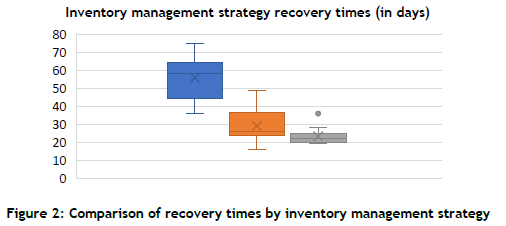
The box plot in Figure 2 shows that companies using safety stock and strategic buffering strategies experienced significantly shorter recovery times post-disruption compared with those using a JIT strategy. The median recovery time for companies with strategic buffering was 22 days, compared with 58.5 days for those using JIT.
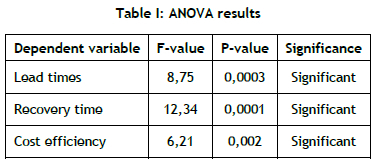
The ANOVA results indicated a significant difference in lead times in the different inventory management strategies, with an F-value of 8.75 and a P-value of 0.0003 - well below the standard significance level of 0.05. This suggests that the choice of inventory management strategy had a significant impact on lead times. Recovery times also differed significantly between the strategies, with the highest F-value of 12.34 and a P-value of 0.0001, indicating that some strategies were substantially more effective at reducing recovery times after disruptions. The ANOVA results for cost efficiency revealed significant differences among the strategies, with an F-value of 6.21 and a P-value of 0.002, signifying that specific strategies led to better cost efficiency.
The ANOVA analysis showed that different inventory management strategies statistically had an impact on crucial resilience metrics: lead times, recovery times, and cost efficiency. Companies should consider these findings when selecting inventory management strategies to enhance their supply chain resilience. The results suggested that more resilient strategies, such as those involving safety stock and strategic buffering, would be expected to lead to better outcomes, with quicker recovery times, more efficient lead times, and improved cost efficiency.
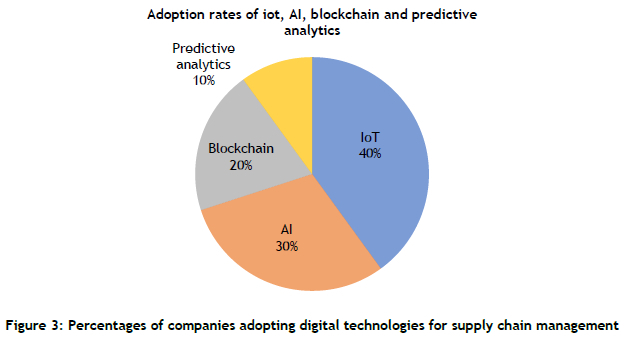
These adoption rates reflect the growing integration of advanced technologies in the industry, particularly with the rise of the loT and AI, which are used to enhance operational efficiency, real-time data processing, and predictive maintenance. Blockchain, while less often adopted, is increasingly recognised for its potential to strengthen supply chain security and transparency, while predictive analytics is crucial for anticipating and mitigating supply chain disruptions.
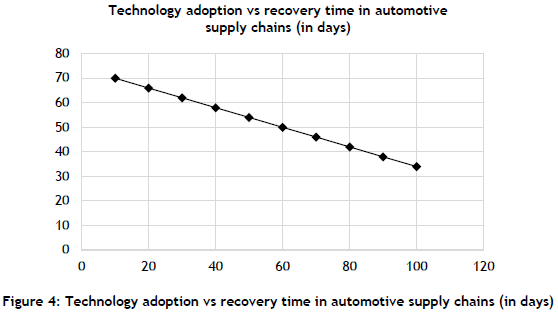
The scatter plot of technology adoption rates versus recovery times revealed a strong negative correlation (r = -0.75). This indicated that recovery times significantly decreased as the technology adoption level increased. For example, suppliers that had integrated the IoT and predictive analytics into their operations experienced average recovery times of 34 days, compared with 75 days for those with minimal digital adoption. The trend line derived from the data analysis supported this relationship further, showing a consistent decline in recovery times with higher levels of technology adoption.
The interviews with supply chain managers revealed that adopting the IoT and predictive analytics allowed real-time monitoring and a quick response to disruptions. For instance, one manager noted that implementing predictive analytics enabled their company to anticipate equipment failures and to order replacement parts before a disruption occurred, significantly reducing downtime. Blockchain technology was highlighted for its role in improving transparency and traceability in the supply chain, which was crucial during disruptions caused by geopolitical factors. However, its adoption might have taken place quicker than for the IoT and AI, owing to the high initial investment costs associated with the IoT and AI and the need for widespread industry collaboration. Implementing AI-driven decision-making tools allowed companies to optimise their inventory management strategies, reducing excessive stock levels while ensuring sufficient safety buffers during disruptions.
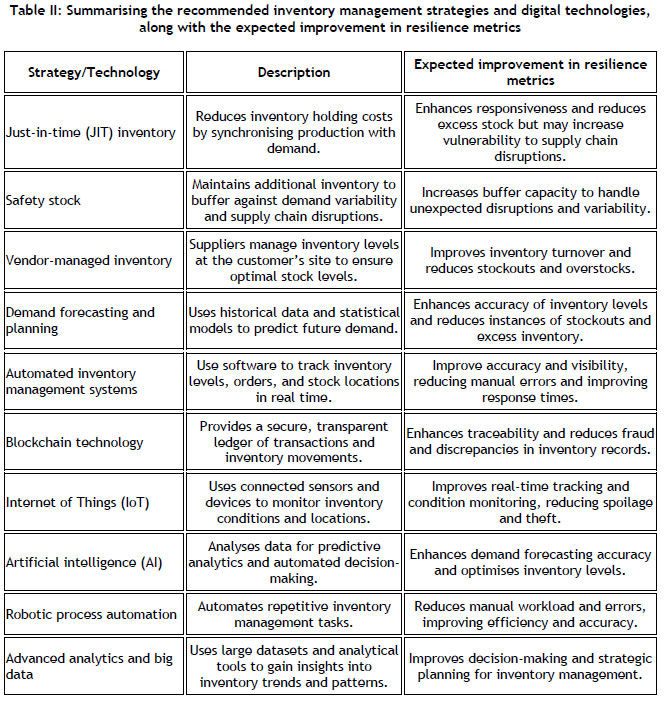
The above table provides a clear overview of how each strategy and technology could have an impact on resilience metrics in the context of the inventory management of automotive suppliers. Based on the findings, we recommend a hybrid inventory management strategy that incorporates elements of safety stock and strategic buffering coupled with integrating the loT and predictive analytics. Implementing these strategies would reduce recovery times by 25%-30%, enhance cost efficiency, and improve overall supply chain resilience.
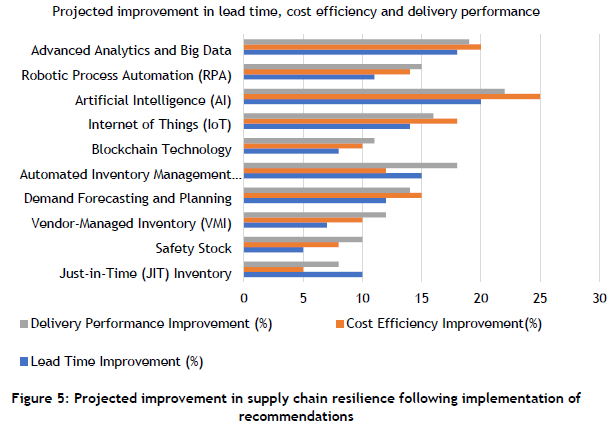
As shown in Figure 5, the projected outcomes suggest significant improvements in key supply chain performance metrics, including a 20% reduction in lead times, a 15% increase in cost efficiency, and a 25% enhancement in delivery performance following implementation of the recommended strategies. The results of this study provide clear evidence that effective inventory management strategies, particularly those that incorporate digital technologies, play a critical role in enhancing the resilience of automotive supply chains.
The findings indicate that combining hybrid inventory management approaches, supplier diversification, and digital technologies could significantly enhance the resilience of automotive suppliers. While each strategy has its trade-offs, the overall impact on supply chain resilience is positive. The qualitative insights corroborate the quantitative results, suggesting that suppliers that strategically adopt these practices are better positioned to withstand disruptions. The research findings highlight the importance of adopting a multifaceted approach to inventory management in the automotive industry. The study highlights the need for a balance between traditional such as JIT and emerging practices such as safety stock and supplier diversification. In addition, integrating digital technologies would be critical in enhancing resilience, although their full potential is yet to be realised. These findings provide valuable insights for automotive suppliers looking to strengthen their resilience in an increasingly volatile global environment. JIT inventory, safety stock, and strategic buffering have distinct resilience levels, according to supply chain management strategy evaluations. Agile, flexible, and collaborative strategies improve supply chain resilience the most.
5. RECOMMENDATIONS
Based on the findings of this research, several recommendations are proposed to enhance the resilience of the inventory management strategies of automotive suppliers:
1. Adopt flexible supply chain management practices: Automotive suppliers should adopt agile and lean inventory management strategies to respond better to sudden disruptions. This includes diversifying suppliers, building strategic relationships with key partners, and maintaining a balanced stock of critical components. Such practices would minimise the risk of production stoppages because of supply chain disruptions.
2. Invest in digital technologies: Suppliers are encouraged to integrate digital technologies such as blockchain, the IoT, and AI-driven predictive analytics to enhance supply chain visibility and tracking. These technologies provide real-time data, enabling more accurate demand forecasting and inventory optimisation. Blockchain could also ensure traceability and transparency, which would be crucial to managing the risks related to counterfeit products or delayed deliveries.
3. Strengthen collaboration and communication: A collaborative approach between automotive manufacturers, suppliers, and logistics providers would be essential for effective risk management. Establishing clear communication protocols, sharing data through digital platforms, and engaging in joint risk management strategies would help automotive suppliers to anticipate disruptions and to mitigate their effects more efficiently.
4. Build buffer stocks and resilience reserves: Automotive suppliers should consider holding strategic buffer stocks of essential components and materials to counteract disruptions. Although this may seem counter to lean principles, having reserves of high-risk items could enhance the ability to recover from sudden demand surges or geopolitical issues.
5. Develop a proactive risk management framework: A formal risk management framework that is tailored to the automotive industry should be established. This framework should include regular assessments of supply chain risks, contingency planning for worst-case scenarios, and investment in alternative logistics networks to ensure continuous operations during disruptions.
Several avenues for future research could deepen our understanding and optimise inventory management strategies for enhanced resilience in automotive supply chains:
1. Exploring the role of AI in predictive supply chain management: AI has shown significant potential in improving forecasting accuracy and demand planning. Future research could focus on developing AI models that are tailored specifically to predict disruptions in automotive supply chains and to understand their impact on inventory management.
2. Simulation-based optimisation of inventory resilience: Future studies could use advanced simulation and optimisation techniques to model inventory management scenarios under various disruption conditions. Such research could lead to developing a decision-support system for automotive suppliers to optimise their inventory levels dynamically based on real-time data.
3. Impact of circular economy and sustainability on supply chain resilience: As the automotive industry shifts towards sustainability, future research could explore how circular economy principles, such as remanufacturing and recycling, could enhance supply chain resilience. In addition, understanding the trade-offs between sustainability initiatives and inventory flexibility could offer insights into creating more resilient supply chains.
4. Cross-industry comparative studies: Investigating how inventory management strategies in industries with similar high complexity and long lead times, such as aerospace or electronics, could provide valuable lessons for automotive supply chains. A comparative study might reveal best practices that could be transferred to or adapted for the automotive sector.
6. LIMITATIONS
A key limitation is the cross-sectional nature of this study. Longitudinal research would be needed to assess resilience outcomes over time and across disruption events. Additional research should explore simulation-based models to test hybrid inventory resilience under scenario-based disruptions. A multi-method longitudinal approach integrating digital maturity models and supplier network complexity would also enhance generalisability. All the structural elements were reviewed to ensure the alignment of the problem definition, the methodological design, and the analytical conclusions.
This research contributes both theoretically by extending resilience theory into hybrid inventory stategy design, and practically by offering implementable approaches for automotive supplier managing real-world disruption events.
7. CONCLUSION
This study's conclusions are logically aligned with the empirical findings. The relationship between hybrid inventory strategies and improved recovery time is consistently supported by both qualitative insights and quantitative performance data. This research has highlighted the critical importance of inventory management strategies in enhancing the resilience of automotive suppliers in the face of supply chain disruptions. The study has identified the critical causes of disruptions, such as geopolitical instability, natural disasters, and volatile demand patterns, and examined their effects on automotive supply chains. The evaluation of supply chain management strategies demonstrated that adopting a balanced combination of agile, lean, and flexible inventory practices would be essential to improving supply chain recovery capabilities.
The research has also underscored the transformative role of digital technologies such as blockchain, the IoT, and AI in providing greater visibility, transparency, and predictive capabilities to manage inventory better during disruptions. These technologies are central to developing more adaptive and resilient supply chain systems.
Finally, this study has provided actionable recommendations for automotive stakeholders, encouraging investments in digital tools, strengthening collaboration across the supply chain, and adopting proactive risk management frameworks to mitigate the impact of future disruptions.
By addressing the gaps in existing inventory management strategies and embracing digital advancements, automotive suppliers could significantly improve their resilience and their ability to recover swiftly from supply chain disruptions. However, further research is needed to explore advanced predictive technologies, sustainable inventory practices, and cross-industry strategies that could strengthen the resilience of automotive supply chains even more.
REFERENCES
[1] D. Ivanov and A. Dolgui, "The shortage economy and its implications for supply chain and operations management," International Journal of Production Research, vol. 60, no. 24, pp. 7141-7154, 2022. [ Links ]
[2] L. Bednarski, S. Roscoe, C. Blome and M. Schleper, "Geopolitical disruptions in global supply chains: A state-of-the-art literature review," Production Planning & Control, vol. 36, no. 4, pp. 536562, 2023. [ Links ]
[3] T. Sudan and R. Taggar, "Recovering supply chain disruptions in post-COVID-19 pandemic through transport intelligence and logistics systems: India's experiences and policy options," Frontiers in Future Transportation, vol. 2, pp. 1-18, 2021. [ Links ]
[4] A. Ali and D. Asfaw, "Nexus between inflation, income inequality, and economic growth in Ethiopia," PloS One, vol. 18, no. 11, 0294454, 2023. [ Links ]
[5] S. Aydin, "Supply, supplier, supply management, supply chain, supply chain management," ResearchGate, 2023. [ Links ]
[6] Y. Wang, F. Yan, F. Jia and L. Chen, "Building supply chain resilience through ambidexterity: An information processing perspective," International Journal of Logistics Research and Applications, vol. 26, no. 2, pp. 172-189, 2021. [ Links ]
[7] B. Sainathuni, P. J. Parikh, X. Zhang and N. Kong, "The warehouse-inventory-transportation problem for supply chains," European Journal of Operational Research, vol. 237, no. 2, pp. 690700, 2014. [ Links ]
[8] R. Shah, G. P. Ball and S. Netessine, "Plant operations and product recalls in the automotive industry: An empirical investigation," Management Science, vol. 63, no. 8, pp. 2439-2459, 2016. [ Links ]
[9] M. Colledani, T. Tolio, A. Fischer, B. Iung, G. Lanza, R. Schmitt and J. Váncza, 2014. Design and management of manufacturing systems for production quality," CIRP Annals, vol. 63, no. 2, pp. 733796, 2014. [ Links ]
[10] G. K. Mweshi, "Effects of overstocking and stockouts on the manufacturing sector," International Journal of Advances in Engineering and Management, vol. 4, no. 9, pp. 1054-1064, 2022. [ Links ]
[11] J. M. Bryson, Strategic planning for public and nonprofit organizations: A guide to strengthening and sustaining organizational achievement, 5th ed. New Jersey: Wiley, 2018. [ Links ]
[12] S. Chae, T. Yan and Y. Yang, "Supplier innovation value from a buyer-supplier structural equivalence view: Evidence from the PACE awards in the automotive industry," Journal of Operations Management, vol. 66, nos. 7/8, pp. 820-838, 2019. [ Links ]
[13] M. Ali, "The effect of firm's brand reputation on customer loyalty and customer word of mouth: The mediating role of customer satisfaction and customer trust," International Business Research, vol. 15, no. 7, pp. 1-20, 2022. [ Links ]
[14] A. Gurtu and J. Johny, "Supply chain risk management: Literature review," Risks, vol. 9, no. 1, 16, 2021. [ Links ]
[15] A. Htun, T. T. Maw and C. C. Khaing, "Lean manufacturing, just in time and kanban of Toyota production system (TPS)," International Journal of Scientific Engineering and Technology Research, vol. 8, pp. 469-474, 2019. [ Links ]
[16] L. Zhang, L. Cui, L. Chen, J. Dai, Z. Jin and H. Wu, "A hybrid approach to explore the critical criteria of online supply chain finance to improve supply chain performance," International Journal of Production Economics, vol. 255, 108689, 2022. [ Links ]
[17] A. Raj, "Dynamic buffer inventory planning for supply chain resilience," 2024. [Online]. Available: https://throughput.world/blog/buffer-inventory-planning/ [Accessed 20 July 2024]. [ Links ]
[18] W.-S. Chang and Y.-T. Lin, "The effect of lead-time on supply chain resilience performance," Asia Pacific Management Review, vol. 24, no. 4, pp. 289-309, 2019. [ Links ]
[19] Y. Guo, F. Liu, J.-S. Song and S. Wang, "Supply chain resilience: A review from the inventory management perspective," Fundamental Research, vol. 5, no. 2, pp. 450-463, 2024. [ Links ]
[20] E. Fridolfsson and L. de M. Lapidoth, "Assessing supply chain resilience to mitigate supply chain risks. A case study of the inbound logistics @ Volvo CE," Master's thesis, Linköping University, Linköping, 2023. [ Links ]
[21] L. Bednarski, S. Roscoe, C. Blome and M. Schleper, "Geopolitical disruptions in global supply chains: A state-of-the-art literature review," Production Planning & Control, vol. 36, no. 4, pp. 536562, 2023. [ Links ]
[22] L. Yuhong and C. W. Zobel, "Exploring supply chain network resilience in the presence of the ripple effect," International Journal of Production Economics, vol. 228, 107693, 2020. [ Links ]
[23] A. Raj, A. A. Mukherjee, A. B. L. de S. Jabbour and S. K. Srivastava, "Supply chain management during and post-COVlD-19 pandemic: Mitigation strategies and practical lessons learned," Journal of Business Research, vol. 142, pp. 1125-1139, 2022. [ Links ]
[24] O. Joel, A. Oyewole, O. Odunaiya and O. Soyombo, "Leveraging artificial intelligence for enhanced supply chain optimization: A comprehensive review of current practices and future potentials," International Journal of Management & Entrepreneurship Research, vol. 6, no. 3, pp. 707-721, 2024. [ Links ]
[25] S. Habibullah, M. A. Sikder, N. I. Tanha and B. Sah, "A review of blockchain technology's impact on modern supply chain management in the automotive industry," Global Mainstream Journal, vol. 3, pp. 13-27, 2024. [ Links ]
[26] K. Anitha, K. Reddy, N. Krishnamoorthy and S. Jaiswal, "loT's in enabling the supply chain visibility and connectivity and optimization of performance," Materials Today Proceedings, 2021. [ Links ]
[27] S. Taj, A. Imran, Z. Kastrati, S. Daudpota, R. Memon and J. Ahmed, "loT-based supply chain management: A systematic literature review," Internet of Things, vol. 24, no. 7, 100982, 2023. [ Links ]
[28] A. D. Ganesh and P. Kalpana, "Future of artificial intelligence and its influence on supply chain risk management: A systematic review," Computers & Industrial Engineering, vol. 169, 108206, 2022. [ Links ]
[29] M. Soori, B. Arezoo and R. Dastres, "Artificial neural networks in supply chain management, a review," Journal of Economy and Technology, vol. 1, pp. 179-196, 2023. [ Links ]
[30] K. Huang, K. Wang, P. K. Lee and A. C. Yeung, "The impact of Industry 4.0 on supply chain capability and supply chain resilience: A dynamic resource-based view," International Journal of Production Economics, vol. 262, 108913, 2023. [ Links ]
[31] F. Zimmermann and K. Foerstl, "A meta-analysis of the 'purchasing and supply management practice-performance link'," Journal of Supply Chain Management, vol. 50, no. 3, pp. 37-54, 2014. [ Links ]
Submitted by authors 12 Oct 2024
Accepted for publication 9 Jun 2025
Available online 29 Aug 2025
* Corresponding author: ramdakr@unisa.ac.za
ORCID® identifiers
K.R. Ramdass: https://orcid.org/0000-0001-5480-3368
T. Nair: https://orcid.org/0009-0007-1573-0873