Services on Demand
Journal

Article
 English (pdf)
 Article in xml format
 Article references
 Automatic translation
 Send this article by e-mail
Indicators
Related links
-
 Cited by Google
 -
 Similars in Google
Share

 Permalink
Water SA
On-line version ISSN 1816-7950Print version ISSN 0378-4738
Water SA vol.52 n.2 Pretoria Apr. 2026
https://doi.org/10.17159/wsa/2026.v52.i2.4193
RESEARCH PAPER
Train vacuum toilet blackwater: composition analysis, treatment and resource recovery opportunities
Dries ParmentierI, II; Nazia HassanI, III; Pengyu DongI; Roemer GoossensenII; Bahram BaratiI, II; Stijn Wim Henk Van HulleI, IV
ILaboratory for Industrial Water and Ecotechnology (LIWET), Department of Green Chemistry and Technology, Ghent University Campus Kortrijk, Sint-Martens-Latemlaan 2B/5, 8500 Kortrijk, Belgium
IINoah Water Solutions bvba, Burchtweg 7, B-9890 Gavere, Belgium
IIIEnvironmental Science Discipline, Khulna University, Khulna-9208, Bangladesh
IVCentre for Advanced Process Technology for Urban Resource recovery (CAPTURE), Frieda Saeysstraat 1, 9052 Zwijnaarde, Belgium
ABSTRACT
The widespread integration of vacuum toilet technology, observed across diverse sanitation infrastructures such as trains, airplanes, festivals, and residential houses, not only achieves a remarkable 90% reduction in fresh water consumption but also demonstrates true sustainability. In this article, the composition of such vacuum toilet water from rush-hour trains is analysed with respect to its subsequent treatment to meet stringent discharge limits for surface water. Based on this compositional analysis, opportunities for resource recovery of valuable substances (e.g., volatile fatty acids, phosphate, zinc, and silicon) and for biogas production are identified. Conventional pH adjustment was applied to show the potential of valuable mineral recovery (respectively, 50% of calcium, 66% of magnesium, 87% of zinc, 57% of ammonium, 99% of phosphate and 30% of sulphate). Electrocoagulation flotation was explored at a low coagulant/tCOD ratio and proved to be a promising sanitation technology for COD and phosphate removal, at 60% and 69%, respectively.
Keywords: blackwater, chemical composition, electrocoagulation-flotation, nutrient recovery, sanitation technology, vacuum toilet
INTRODUCTION
Train vacuum toilet systems are widely implemented to improve passenger comfort and hygiene during travel (Lewandowski, 2020). In Western Europe, on-board sanitation technology has evolved significantly, from early systems that discharged faeces and urine directly onto railway tracks, to modern vacuum toilets that collect the waste in sealed blackwater tanks. These tanks are subsequently emptied into municipal sewer networks, where the wastewater undergoes complete treatment at centralized facilities. This evolution has led to safer sanitation practices and markedly improved hygienic and environmental conditions for communities living along railway corridors.
Vacuum toilets are a technical innovation in train sanitation, as they reduce weight by requiring less fresh water to flush the toilets and minimize blockages, which are unpleasant for travellers. In addition to trains, vacuum toilets are also the sanitation technology of choice for airplanes and seagoing passenger vessels. Recently, vacuum toilets have also been proposed as a sustainable sanitation option for festivals, as they significantly reduce water consumption from 10 to 6 L per flush to 0.5 to 0.35 L per flush. Resulting in actual environmental benefits due to a more than 90% reduction in freshwater consumption and reduced volume of faeces to be treated. Even in the construction of conventional households, vacuum toilets are introduced to enhance the separation at source of greywater (e.g. waste water from the bathroom) and blackwater (toilet water). Greywater can then be easily recycled as toilet flush water. The obtained blackwater has a high potential for resource recovery, e.g., biogas (Moerland et al., 2021). Kitchen waste is then often included in this blackwater stream in order to have a higher biogas production rate. However, concentrating treatment at the source enhances opportunities for resource recovery; it simultaneously increases treatment complexity, thereby increasing the risk of colloidal deposition, pipe clogging, and difficulty meeting required discharge standards.
Most blackwater in Flanders, Belgium, is currently produced in residential houses, from which it is transported via the urban sewerage system, together with the greywater, towards the municipal wastewater treatment plant (MWTP). There, it undergoes three main steps of treatment: mechanical treatment with sieves, and biological treatment (nitrification, denitrification), followed by a last sedimentation step. From there, it is then discharged according to the discharge limits towards surface water. Increasing research has examined greenhouse gas emissions from urban sewage systems, including energy-related (indirect CO2) and fugitive (direct) emissions such as nitrous oxide (N2O) and methane (CH4) (Daelman et al., 2012). In order to avoid these emissions from the sewage system, there is increasing interest in decentralized municipal wastewater (MWW) treatment methods, e.g., wetlands (Rousseau et al., 2022). Biological treatment in MWTPs, as well as in wetlands, also emits greenhouse gases, for which knowledge of their sources and magnitudes (particularly N2O) remains incomplete. The U.S. Environmental Protection Agency (USEPA, 2006) reported that nitrous oxide emissions from wastewater treatment plants account for approximately 3% of total global anthropogenic N2O emissions, making wastewater treatment the 6th most significant sectoral contributor to global N2O release (Mannina et al., 2018). Decentralized physicochemical wastewater treatment systems, such as electrocoagulation flotation (ECF), could be a solution to reduce greenhouse gas emissions during wastewater treatment. ECF is an electrochemical process that works with sacrificial electrodes. Applying electricity results in the dissolution of the electrodes by which coagulants are dosed into the water to be treated. These coagulants destabilize the charges of the pollutants and trap pollutants in flocs that can be separated from the electrolytic mixture, resulting in a fast separation of organics into a solid sludge phase from the liquid phase (Tahreen et al., 2020; Hassan et al., 2023). This solid sludge phase can then be converted in a controlled way in biogas digesters. Therefore, by applying ECF treatment, valuable elements such as phosphate are recovered as a mineral precipitate. Although centralized wastewater treatment infrastructure is available, on-board or depot-level pre-treatment of concentrated blackwater can significantly reduce transport emissions, operational costs, and load on municipal plants, while enabling on-site recovery of resources such as biogas and phosphate (Wang et al., 2022).
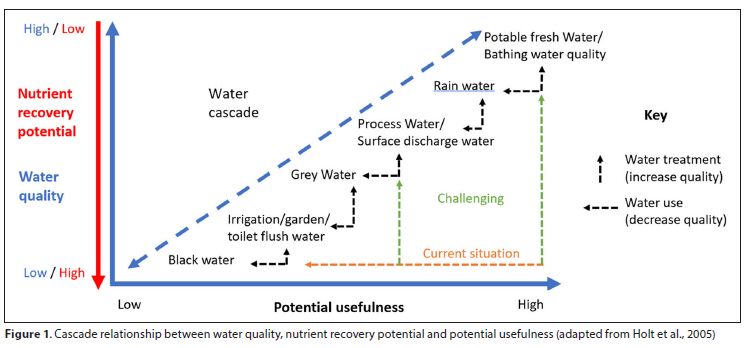
Figure 1 highlights that the current situation in Europe, in which potable fresh water is applied as toilet flush water, is not sustainable. The reverse treatment of concentrated blackwater towards surface discharge water, and especially back to potable fresh water, is technologically challenging and very energy-intensive. A sustainable water management approach requires fit for purpose use and reuse of the water, in which an optimized recovery of nutrients has to be considered. In order to create and achieve these closed water cycle loops, one should not only look to large-scale centralized wastewater treatments, but also more and more to smaller decentralized wastewater treatments (e.g., using the ECF technology) (Hassan et al., 2023; Das et al., 2022). It becomes evident that there is a high resource recovery potential for toilet water and especially for vacuum toilet sanitation water. However, less can be found in the literature on its exact composition. Synthetic faeces solutions are most often applied during testing, for biohazard reasons (Haupt et al., 2023; Penn et al., 2018). Our experience is that these synthetic samples are mainly composed of soluble organics, which do not reassemble the real faecal samples that were collected during our research (Barrios-Hernández et al., 2020; Dong et al., 2024). In this article, we give an overview of the average chemical composition of vacuum toilet sanitation water obtained from M60 passenger trains from the Belgian railroad company (NMBS). The potential and issues for resource recovery of this type of water are discussed, with the possibility of treating this water via ECF on a decentralized scale.
Despite growing global interest in decentralized sanitation and source-separated wastewater systems, detailed information on the composition and treatability of real vacuum toilet blackwater, particularly from mobile sanitation units such as trains, remains limited. Understanding the characteristics of these concentrated waste streams is crucial because they differ substantially from municipal sewage and from the synthetic or laboratory-prepared blackwater often used in research (Haupt et al., 2019; Rose et al., 2015; Moerland et al., 2021). Synthetic analogues generally lack the particulate and colloidal fractions, variable organic load, and mineral complexity of actual effluents, which can lead to over- or under-estimation of treatment and recovery performance (O'Flaherty and Gray, 2013). Previous decentralized sanitation studies, most notably the Sneek DESAR demonstration in The Netherlands (Zeeman et al., 2008), focused mainly on anaerobic treatment and nutrient recovery through struvite or calcium-phosphate precipitation (Tervahauta et al., 2014). However, train-generated blackwater, characterized by intermittent loading, limited flush water, and continuous mechanical mixing, has seldom been examined under real operating conditions. Thus, the present study addresses this knowledge gap by (i) systematically characterizing the physicochemical composition of blackwater collected from operational train vacuum toilet systems (in Belgium), and (ii) evaluating the performance of ECF as a compact, decentralized treatment and resource-recovery process. The findings provide a realistic basis for the design and optimization of on-board or depot-level treatment units, promoting energy-efficient pollutant removal and the recovery of valuable nutrients such as phosphate and ammonium. By bridging laboratory investigations and real-world conditions, this work contributes to the ongoing transition toward circular, off-grid sanitation systems for mobile and decentralized applications.
MATERIALS AND METHODS
Sampling
Samples were collected from rush-hour passenger trains from the NMBS (model M6 produced by Alstom and Bombardier) in the depot of Kortrijk, Belgium. Vacuum toilets present on these trains consume 0.350 L per flush. On average, there are 9 flushes per hour on these toilets. Each vacuum toilet has its own collection tank in which wastewater from the vacuum toilet is collected, as well as the water from the hand washer inside the toilet. Samples were taken when emptying the collection tanks, which had not yet been flushed with rinsing water. It is estimated that most of the toilet wastewater, when collected, is a maximum of 5 h old. Average data for the municipal wastewater of the city of Kortrijk, sampled at the municipal wastewater treatment plant (MWTP) Harelbeke, Belgium (Hassan et al., 2023; Chys et al., 2018) were also collected. Comparison with this water was done as the concentrated blackwater in trains in Belgium is disposed of in the local sewage grid and eventually treated in this MWTP. Within the sewage grid, this water gets diluted by the input of household wastewater, rainwater run-off and groundwater intrusion.
Chemical analysis
The samples collected from the blackwater storage tanks on the trains were analysed for conductivity (Hach multimeter HQ 30d, probe CDC 401 with a detection limit of 0.01 mS/cm), pH (Hach multimeter HQ 30d, probe IntelliCalTM pH PHC101 with a detection limit of 0.1), dissolved oxygen (DO; Hach multimeter HQ 30d, probe LDO10103 with a detection limit of 0.01 mg O2/L). Total suspended solids (TSS) and volatile suspended solids (VSS) were determined using a 1 µm glass-fibre filter (GF-3, Macherey-Nagel). This slightly higher cut-off, compared with the conventional 0.45 µm threshold, was intentionally selected to retain the larger flocs characteristic of ECF-treated and blackwater samples. For each measurement, 50 mL of sample was filtered, after which the filters were dried at 105°C and subsequently at 550°C to quantify TSS and VSS, respectively. Reported total chemical oxygen demand (tCOD) values are the sum of the VSS with the soluble COD (sCOD) fraction (<1 µm). COD was measured according to ISO 15705:2002. Density was determined by measuring the empty and water-filled weight of 500 mL volumetric flasks. Dynamic viscosity was determined by applying a Ubbelohde viscometer type 1 from Irmeco (Germany) (Kol et al., 2022). Detailed anion and cation analyses were always done on the filtered solution. NO3-N (Hach test kit, LCK339) and NH4-N (Hach test kit, LCK303) were measured following the standard method ISO 15923-1:2013 (ISO, 2013). TN (Hach test kit, LCK238) was measured according to ISO 5663:1984 (ISO, 1984) and EN 25663:1993 (CEN, 1993). PO4-P (Hach test kit, LCK349), SO42− (Hach test kit, LCK153), and Cl− (Hach test kit, LCK311) were also measured at the beginning (n = 3), with test kits according to ISO 15923-1:2013 (ISO, 2013). Due to possible interference within the testing period, it was decided to measure anions via IC (Metrohm IC, ECO IC combined with 863 Autosampler, MetroSep A supp 19-150/4.0 column, Swiss). Calibration liquid contained the elements ortho-PO43−, Cl−, SO42−, F−, NO2−, NO3− and Br−. Analysis was done via MagicNet 4.0. The same IC with the column MetroSep Organic Acids-250/7.8 was applied in order to determine small fatty acids, i.e., glycolate, formate, acetate, propionate, butyrate, and valerate. Cations were measured via inductively coupled plasma optical emission spectrophotometer (ICP-OES, Agilent 7000 series ICP OES, USA) and analysed after 0.45 µm filtration and dilution. The stock solution and standard solutions of different concentrations, 10, 5, 2, 1, and 0.5 μg/L, were prepared from the ICP multi-element standard solution XIII, combined with the single ICP element K solution, and diluted with ultrapure water. A titration method was used to measure total alkalinity (expressed as mg CaCO3/L) using a pH meter (HQ 30d, Hach) (Yang et al., 2021).
Anaerobic digestion
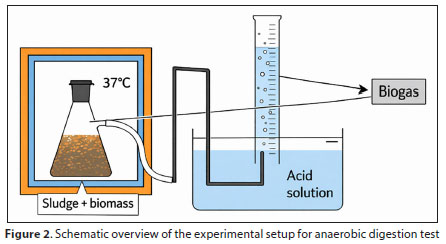
The anaerobic digestion (AD) tests were carried out in a specifically designed biogas experimental platform. A ratio of 0.5 (g VS feedstock/g VS inoculum) was applied to digest the collected vacuum-toilet sanitation water. VS data for the biogas analysis was determined by determining the weight differences of 30 mL of sample in porcelain crucibles, which are stepwise dried in a hot air oven at 105°C and afterwards in a muffle furnace at 550°C (Schroyen et al., 2014). Inoculum was obtained from the WWTP in Harelbeke, Belgium, which also has a biogas facility. The experimental protocol is described elsewhere in detail (Daels et al., 2009; Schroyen et al., 2014; Schroyen et al., 2018). In short, a 500 mL unmixed AD reactor was employed for the experiments, and the initial volume of the substrate-inoculum mixture introduced into the reactor was 400 mL. The produced gas was collected in cylindrical glass tubes that were closed at the top and inserted at the bottom into an alkaline water bath. pH of the water bath was 8.2 at the end of the experiment. The schematic view of the experimental setup conducting AD is presented in Fig. 2. Methane production was quantified daily throughout a 30-day testing period. Each test was conducted in triplicate.
ECF experiment
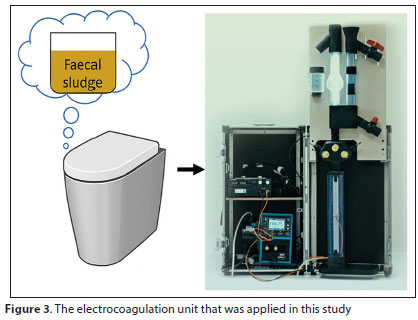
The ECF test was performed in a continuous tubular coaxial reactor with an aluminium anode and a stainless-steel cathode, as previously reported. The lab reactor that was used in this study is shown in Fig. 3. 10 L of fresh collected blackwater was first homogenized for 20 min with a commercial Grundfos Sololift 2 WC-1 grinder and afterwards filtered with a 2 mm metal sieve before being treated. The experiment was performed at 10 L/h and operated at a current density of 3 A, 120 A/m2. During treatment, there was continuous floc/sludge separation in a flotation tower with the separation of treated effluent. Effluent was left for 30 min for sedimentation before analysis.
RESULTS AND DISCUSSION
Chemical composition
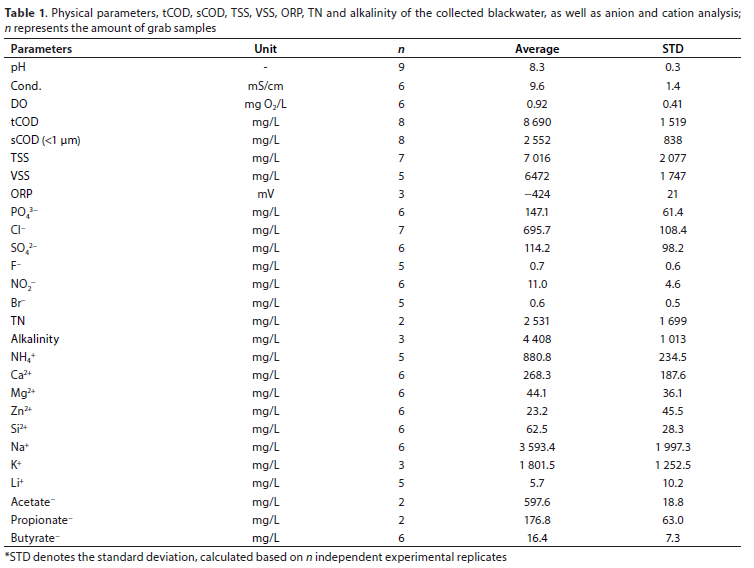
Determination of the physical parameters (Table 1) revealed an elevated pH, mainly due to urease-mediated hydrolysis of urea into ammonium and carbonate/bicarbonate ions, which increases alkalinity in stored blackwater (De Paepe et al., 2020). This degradation also accounts for the low DO concentration in these samples and the absence of nitrate, with high ammonium concentrations instead. An elevated conductivity was also determined, primarily due to the high chloride concentration, as evidenced in Table 1. Despite this, the conductivity is considerably lower than that of pure urine (i.e., 160 mS/cm) (Rose et al., 2015). This disparity can only be partially explained by the dilution of the urine by flushing water. The increase in pH of fresh urine (pH 6.2) (Rose et al., 2015) vs. the collected sanitation water (pH 8.3) leads to mineral precipitation, contributing to the high concentration of inorganic suspended solids (TSS−VSS). This results in a further reduction of the conductivity compared to fresh urine. The very negative oxidation-reduction potential (ORP) value indicates a highly reductive environment. From one sanitation sample, density (1 004 kg/m3) and dynamic viscosity (0.95 mPa·s) were also determined. The measured TN and NH4+ values indicate that approximately 35% of the total nitrogen was already present as ammonium, while the remaining 65% occurred mainly as organic nitrogen in the form of urea and its hydrolysis intermediates. Cation concentrations determined in these samples showed NH4+ and Na+ the most abundant. Ammonium arises from the biological breakdown of urea, while sodium originates from urine excretion (De Paepe et al., 2020). Calcium was present at much lower concentrations. Zinc and silicon, which are valuable trace elements excreted by the human body, were consistently detected in all samples. Additionally, ICP analysis for some of the measured samples detected aluminium, copper, and lead above the limits of detection.
The charge balance calculation revealed a 58% deficit in anions compared to cations in the filtered blackwater solution. Assigning an elemental charge equivalent for the sCOD fraction of 0.01, akin to natural organic matter (NOM), reduced this deficit to 38% (Rokicki et al., 2011). Only when assuming a charge equivalent of 0.04 for the organic matter in this water is the mass balance closed. This higher charge equivalent can be explained by the high concentration of fatty acids, particularly acetate and propionate, which have an elemental charge balance of 1 (see Table 1). These are valuable products if they could be separated from the sanitation water and further converted to higher-value chemicals like fuels or bioplastics. In addition, the precipitate formed upon pH elevation - typically comprising mineral phases such as calcium-, magnesium- and zinc-phosphates mixed with faecal particulates - represents a recoverable resource stream. The faecal solids act as nucleation sites that enhance precipitate formation, leading to a mixed mineral-organic sludge. This composite material could be directed either to anaerobic digestion, where the organic fraction contributes to biogas production, or to downstream recovery processes such as acid leaching or controlled crystallization to extract phosphorus and ammonium (Wang et al., 2023). Therefore, pH-induced precipitation not only improves separation but also creates a recoverable product that can be valorised within a circular treatment approach.
Imbalances in macronutrient composition may inhibit the efficiency of biological processes for the direct treatment of faeces and urine. AD operates optimally when the C:N ratio is around 20:1 to 30:1 (Rose et al., 2015). The C:N ratio in the sanitation water under study (Table 1) was 3.4:1 (COD:TN). Other authors have stated that the high ammonium concentrations present in this wastewater results in an inhibition of AD (Yenigün, 2013; Colón, 2015). Still, the biogas potential of pure vacuum-toilet sanitation water was determined, yielding a specific methane accumulative production of 261.12 ± 3.84 mL/g volatile solids. AD processes are widely employed to convert organics in wastewater and sludge into biogas (methane), which can be utilized in a household environment directly for cooking and heating or converted into electrical energy (Abdelrahman et al., 2023). For aerobic treatment, a ratio for C:N:P of 100:10:1 to 100:5:1 is recommended (Rose et al., 2015). In this study, the C:N:P ratio was 59:17:1. The measured concentrations of COD, TN, and TP in train-collected blackwater were comparable to or slightly higher than those reported for vacuum-collected blackwater from the Sneek demonstration site in The Netherlands (Zeeman et al., 2008). The influent COD ranged between 8 and 10 g/L, TN between 1.5 and 2.0 g/L, and TP around 0.3 to 0.4 g/L. Such high-strength characteristics confirm the concentration potential of vacuum collection systems and highlight their suitability for decentralized treatment. The COD:N:P ratio of approximately 100:20:3 observed here falls within the typical range for concentrated blackwater, indicating balanced nutrient loads for combined treatment and recovery.
Treatment: waste problem or resource solution?
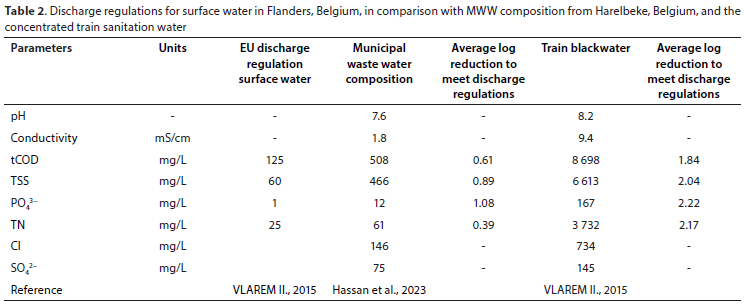
Highly concentrated blackwater from trains must undergo treatment to meet surface water discharge limits, especially considering the level of reduction in bacterial concentrations that should be met. Table 2 outlines the logarithmic reduction targets that must be achieved for the average municipal wastewater and average train blackwater composition in order to comply with the discharge regulations for surface water. Emphasizing the logarithmic reduction for treatment highlights the considerable challenge posed by the levels of tCOD, ortho-PO4, and especially TN in the blackwater. The elevated concentrations of tCOD, ortho- PO43-, and TN result from the limited flushing volume used in vacuum toilets, which leads to an intense concentration of urine and faecal matter. This explains why the nitrogen and phosphorus levels in the collected blackwater are considerably higher than those typically found in municipal wastewater (Table 2).
These concentrations are comparable to the ranges reported for vacuum toilet blackwater by Haupt et al. (2019) (tCOD ≈ 6 000- 10 000 mg/L, NH4+ ≈ 700-1 000 mg/L) and Moerland et al. (2021), confirming the representativeness of the sampled trains. Similar to the digestate of biogas installations, these very highly concentrated aqueous streams can be regarded as resource-rich solutions. This could be directly utilized as, e.g., liquid fertilizer or as a source for recovery of fuels or nutrients such as biogas, phosphorus, and ammonium.
Increasing the pH as a resource recovery option
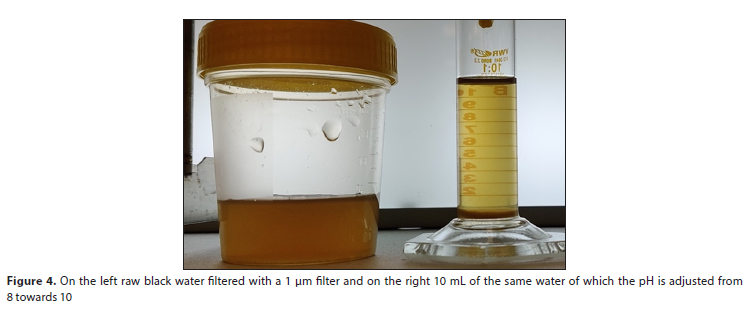
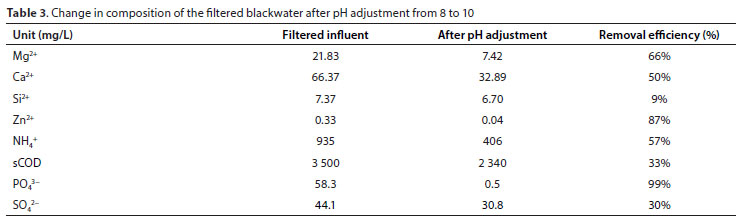
Considering the elevated pH of this blackwater (Table 1), along with the elevated concentrations of calcium and zinc, and the solubility data of these elements in relation to pH, shows that there is also a potential to harvest these minerals by increasing the blackwater's pH above 9. Raising the pH of the filtered blackwater above pH 9 is expected to facilitate the sedimentation of all Ca and Zn. Due to the considerable buffering capacity of this wastewater a 10% (v/v) addition of 1M NaOH was required to elevate the pH of the blackwater sample from 8 to 10. This adjustment in pH led to the prompt sedimentation of flocs, yielding a clear supernatant, as illustrated in Fig. 4. ICP analysis of this supernatant (Table 3), indicates that only 50% of Ca2+ is precipitated, 66% of Mg2+, and 57% of NH4+. A substantial portion of the Zn2+ is precipitated (87%), as anticipated, whereas silicon removal is negligible. Anion analysis also reveals a very high removal efficiency of PO43- and moderate removal of sCOD and SO42−. Concluding that increasing the pH presents possibilities in recovering valuable elements, such as zinc, ammonium, and phosphate, Increasing the pH of the blackwater not only enhances the removal of dissolved minerals but also results in the formation of a solid precipitate that contains both mineral and organic matter when faecal solids are present. The mineral fraction is mainly composed of phosphate and metal hydroxides (e.g., Ca-P, Mg-P, Zn(OH)2), while the organic fraction originates from faecal particles and colloids that act as nucleation sites for precipitation. Such a mixed sludge can be considered a resource stream, as phosphorus can potentially be recovered in crystalline form (e.g., struvite or hydroxyapatite), and the remaining organic material could still be digested for biogas production. Depending on the separation process, the recovered solid could either be directed to an anaerobic digester or processed for fertilizer recovery following stabilization and pathogen removal. Further work should quantify the recoverable nutrient content and evaluate the dewaterability and safety of this precipitate.
Electrocoagulation-flotation as blackwater treatment?
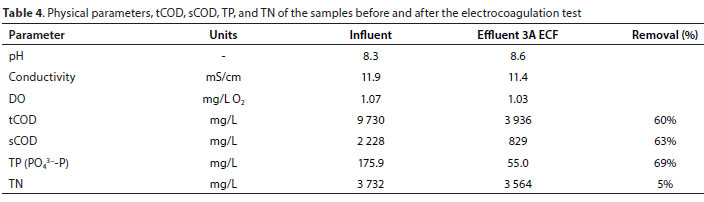
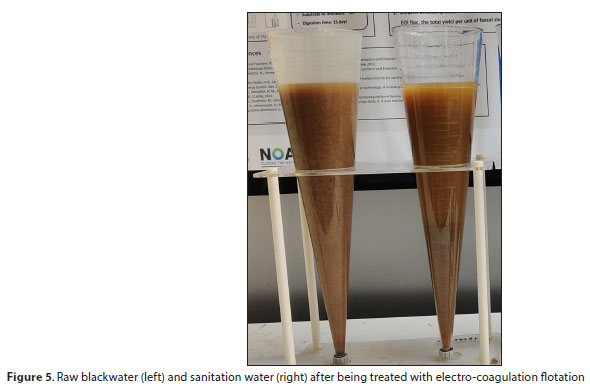
Given the operational convenience of an ECF reactor, which can be switched on and off as required, when compared to biological treatment methods ECF holds promise as a viable technique for treating concentrated blackwater from vacuum toilets on a small scale (Nguyen et al., 2016; Dede et al., 2022). Electrocoagulation under low-alkalinity conditions generally causes an increase in pH due to hydrogen evolution at the cathode and hydroxide formation during electrolysis, which is beneficial in view of the discussion above on the advantages of elevated pH for mineral precipitation and nutrient recovery. An initial exploratory test was conducted using a continuous tubular ECF lab reactor. Fresh blackwater was collected and, within a time span of 1 h, underwent shredding and treatment employing standard settings of 10 L/h and 3A in a continuous mode via a tubular ECF (Parmentier et al., 2020). The electrical cell was running stably at 2.7 V, resulting in a significant sludge generation and effluent exhibiting a marginally elevated pH and good removal of non-soluble organics, as visually observed (Table 4, Fig. 5). Even at this very low coagulant/tCOD ratio, substantial removal of both tCOD and sCOD fraction was observed. Effective phosphate removal was also achieved, while total nitrogen removal will require an additional technology. The energy consumption during this test was recorded at only 0.81 kWh/m3, indicating a promising potential for ECF as blackwater treatment. Still, optimization at higher coagulant/tCOD ratios is required to enhance treatment efficacy. Furthermore, EC demonstrates potential as a disinfection method, with previous validation on MWW effluent exceeding a bacterial removal of 3.5 log10 (Bicudo et al., 2021). This presents an additional benefit of this technology for treating solely sanitation wastewater and warrants further investigation in subsequent studies. The results demonstrate that ECF can achieve rapid and simultaneous removal of suspended solids and phosphate without the need for chemical dosing, making it particularly suitable for mobile or small-scale units. This finding complements the work of Tervahauta et al. (2014), who observed in situ precipitation of calcium-phosphate granules (11-13 wt% P) during anaerobic treatment of vacuum blackwater. Similarly, Zeeman et al. (2008) reported a promising phosphorus recovery potential through struvite precipitation at the Sneek site. The present results show that ECF achieved high phosphate-removal efficiency within short retention times, suggesting that comparable overall recovery yields could be reached after scaling. Such sludge, containing metal-phosphate complexes, could be further valorised through controlled release or acid leaching to yield recoverable phosphate, offering an alternative route to conventional biological or chemical precipitation.
Although the removal efficiencies achieved in this initial test (60% tCOD, 63% sCOD, and 69% phosphate) do not yet meet the stringent discharge standards for direct release to surface water (Table 2), they demonstrate that ECF can substantially reduce the pollutant load of highly concentrated blackwater at very low energy input (0.81 kWh/m3). These results indicate that ECF could serve as a compact pre-treatment or polishing step within a decentralized sanitation system, reducing the organic and phosphorus load before further treatment (e.g., biological polishing, adsorption, or filtration). The incomplete nitrogen removal indicates the need for integrated treatment trains, such as coupling ECF with air stripping/ion exchange (for ammonium removal). From a resource perspective, the ECF-generated sludge, rich in metal hydroxides and phosphate, could be further explored for nutrient recovery or safe reuse. Overall, these results emphasize that even partial removal at source can significantly reduce the burden on centralized wastewater infrastructure and open opportunities for gridless sanitation and circular resource recovery. Comparisons with nutrient recovery studies from urine and blackwater systems further emphasize the broader applicability of decentralized treatment. Lind et al. (2000) demonstrated that up to 80% of nitrogen could be captured from urine via struvite crystallization combined with zeolite adsorption, while Kuntke (2013) achieved simultaneous ammonium recovery and power generation from urine in microbial fuel cells, producing 20 kWh/m3 of energy alongside 5 kg/m3 struvite. Integrating electrocoagulation with such recovery or polishing units could therefore enable closed-loop operation for mobile sanitation platforms. The compactness, short hydraulic retention, and minimal reagent requirement of the ECF system tested here make it a promising front-end module for decentralized or on-board wastewater management. By bridging the gap between laboratory-based nutrient recovery and real operational conditions, this study provides a realistic basis for designing circular sanitation technologies tailored to transport and remote infrastructures.
CONCLUSION
Gridless or decentralized solutions, such as ECF, differ from current centralized treatment systems (in size and functionality) and can offer an alternative treatment option. It is noteworthy to mention that it is not permissible to dilute concentrated flows after treatment to reach discharge levels. This limitation underscores the need for careful consideration in the discussion around blackwater treatment and its compliance with the discharge limits. The concentration of blackwater, particularly through technologies like vacuum toilets as opposed to conventional toilets (i.e., 0.35 L per flush vs 6 to 10 L per flush), increases the potential for nutrient recovery. However, achieving the discharge limits becomes increasingly challenging. In order to understand the potential of source separation, one needs to consider the possibility of a highly concentrated stream of resources for nutrients or biogas. Elevating the pH of this blackwater from 8 to 10 results in a good separation of valuable elements, with respective removal percentages of 50% for calcium, 66% for magnesium, 87% for zinc, 57% for ammonium, and 99% for phosphate. Initial testing with ECF has proven it to a promising technology in order to treat this water for tCOD, sCOD, and phosphate removal, achieving removal efficiencies of 60%, 63% and 69%, respectively. However, further optimization remains necessary.
DECLARATION OF COMPETING INTEREST
The authors declare that they have no known competing financial interests or personal relationships that could have appeared to influence the work reported in this paper.
ACKNOWLEDGEMENT
This research did not receive any specific grant from funding agencies in the public, commercial, or not-for-profit sectors.
DATA AVAILABILITY
Data will be made available on request.
AUTHOR CONTRIBUTIONS
Dries Parmentier: conceptualization and methodology of the study, data collection and fieldwork, sample/data analysis, interpretation of results, visualization, writing of the initial draft, revision after review; Nazia Hassan: data collection and fieldwork, sample/data analysis; Pengyu Dong: data collection and fieldwork, sample/data analysis; Roemer Goossensen: conceptualization and methodology of the study, Bahram Barati, revision and editing; revision of the initial draft; Stijn Wim Henk Van Hulle: revision and editing of the initial draft.
ORCID
Dries Parmentier https://orcid.org/0009-0005-5785-1951
REFERENCES
ABDELRAHMAN AM, KOSAR S, GULHAN H, CICEKALAN B, UCAS G, ATLI E, GUVEN H, OZGUN H, OZTURK IA, KOYUNCU I, VAN LIER JB, VOLCKE EIP and ERSAHIN ME (2023) Impact of primary treatment methods on sludge characteristics and digestibility, and wastewater treatment plant-wide economics. Water Res. 235 119920. https://doi.org/10.1016/j.watres.2023.119920 [ Links ]
BARRIOS-HERNANDEZ ML, BUENANO-VARGAS C, GARCIA H, BRDJANOVIC D, VAN LOOSDRECHT MCL and HOOIJMANS CM (2020) Effect of the co-treatment of synthetic faecal sludge and wastewater in an aerobic granular sludge system. Sci. Total Environ. 741 140480. https://doi.org/10.1016/j.scitotenv.2020.140480 [ Links ]
BICUDO B, VAN HALEM D, TRIKANNAD SA, FERRERO G and MEDEMA G (2021) Low-voltage iron electrocoagulation as a tertiary treatment of municipal wastewater: removal of enteric pathogen indicators and antibiotic-resistant bacteria. Water Res. 188 116500. https://doi.org/10.1016/j.watres.2020.116500 [ Links ]
CEN (European Committee for Standardization) (1993) EN 25663: Water quality - Determination of Kjeldahl nitrogen - Method after mineralization with selenium. CEN, Brussels. [ Links ]
CHYS M, DEMEESTERE K, NOPENS I, AUDENAERT WTM and VAN HULLE SWH (2018) Municipal wastewater effluent characterization and variability analysis in view of an ozone dose control strategy during tertiary treatment: The status in Belgium. Sci. Total Environ. 625 1198-1207. https://doi.org/10.1016/j.scitotenv.2018.01.032 [ Links ]
COLÓN J, FORBIS-STOKES AA and DESHUSSES MA (2015) Anaerobic digestion of undiluted simulant human excreta for sanitation and energy recovery in less-developed countries. Energ. Sustain. Dev. 29 57-64. https://doi.org/10.1016/j.esd.2015.09.005 [ Links ]
DAELMAN MRJ, VAN VOORTHUIZEN EM, VAN DONGEN UGJM, VOLCKE EIP and VAN LOOSDRECHT MCM (2012) Methane emission during municipal wastewater treatment. Water Res. 46 3657-3670. https://doi.org/10.1016/j.watres.2012.04.024 [ Links ]
DAELS T, WILLEMS B, VERVAEREN H, DEJANS P, MAES G, DUMOULIN A and VAN HULLE SWH (2009) Calibration and statistical analysis of a simplified model for the anaerobic digestion of solid waste. Environ. Technol. 30 1575-1584. https://doi.org/10.1080/09593330903358278 [ Links ]
DEDE SAGSOZ Y, YILMAZ AE, EKMEKYAPAR TORUN F, KOCADAGISTAN B and KUL S (2022) The investigation of COD treatment and energy consumption of urban wastewater by a continuous electrocoagulation system. J. Electrochem. Sci. Technol. 13 261-268. https://doi.org/10.33961/jecst.2021.00647 [ Links ]
DE PAEPE J, DE PRYCK L, VERLIEFDE ARD, RABAEY K and CLAUWAERT P (2020) Electrochemically induced precipitation enables fresh urine stabilization and facilitates source separation. Environ. Sci. Technol. 54 3618-3627. https://doi.org/10.1021/acs.est.9b06804 [ Links ]
DONG P, PARMENTIER D, LORRE D, HASSAN N and VAN HULLE SWH (2024) Influence of toilet flushing water when using an on-site faecal sludge treatment combining electrocoagulation-flotation and anaerobic digestion. J. Water Process Eng. 60 105141. https://doi.org/10.1016/j.jwpe.2024.105141 [ Links ]
DONG P, LI J, WOLDEYOHANS AM, PARMENTIER D and VAN HULLE SWH (2024) Coagulation in combination with anaerobic digestion for enhancement of resource recovery from faecal sludge. J. Environ. Manage. 358 120902. https://doi.org/10.1016/j.jenvman.2024.120902 [ Links ]
HASSAN N, LEZY J, PARMENTIER D and VAN HULLE SWH (2023) Electrocoagulation-flotation as a municipal wastewater (pre-) treatment technology: Effect of weather conditions and current density. J. Environ. Manage. 345 118906. https://doi.org/10.1016/j.jenvman.2023.118906 [ Links ]
HAUPT D, MUDDEMANN T, KUNZ U and SIEVERS M (2019) Evaluation of a new electrochemical concept for vacuum toilet wastewater treatment - comparison with ozonation and peroxone processes. Electrochem. Commun. 101 115-119. https://doi.org/10.1016/j.elecom.2019.02.020 [ Links ]
HOLT PK, BARTON GW and MITCHELL CA (2005) The future for electrocoagulation as a localised water treatment technology. Chemosphere 59 355-367. https://doi.org/10.1016/j.chemosphere.2004.10.023 [ Links ]
ISO (International Organization for Standardization) (2013) ISO 159231: Water quality - Determination of selected parameters by discrete analysis systems. Part 1: Ammonium, nitrate, nitrite, chloride, orthophosphate, sulfate and silicate. ISO, Geneva. [ Links ]
ISO (International Organization for Standardization) (1984) ISO 5663: Water quality - Sampling - Part 3: Guidance on the preservation and handling of water samples. ISO, Geneva. [ Links ]
KEHREIN P, VAN LOOSDRECHT M, OSSEWEIJER P, GARFI M, DEWULF J and POSADA J (2020) A critical review of resource recovery from municipal wastewater treatment plants: Market supply potentials, technologies and bottlenecks. Environ. Sci. Water Res. Technol. 6 877-910. https://doi.org/10.1039/C9EW00905A [ Links ]
KOL R, NACHTERGAELE P, DE SOMER T, D'HOOGE DR, ACHILIAS DS and DE MEESTER S (2022) Toward more universal prediction of polymer solution viscosity for solvent-based recycling. Ind. Eng. Chem. Res. 61 10999-11011. https://doi.org/10.1021/acs.iecr.2c01487 [ Links ]
KUNTKE M, ŚMIECH, KM, BRUNING H, ZEEMAN G, SAAKES M, SLEUTELS THJA, HAMELERS HVM and BUISMAN CJN (2012) Ammonium recovery and energy production from urine by a microbial fuel cell. Water Res. 46 2627-2636. https://doi.org/10.1016/j.watres.2012.02.020 [ Links ]
LEWANDOWSKI K (2020) Toilet in the train. Transportation Overview - Przeglad Komunikacyjny 36-54. https://doi.org/10.35117/A_ENG_20_05_03 [ Links ]
LIND B, BAN Z and BYDEN S (2000) Nutrient recovery from human urine by struvite crystallization with ammonia adsorption on zeolite and wollastonite, Bioresour. Technol. 73 169-174. [ Links ]
MANNINA G, BUTLER D, BENEDETTI L, DELETIC A, FOWDAR H, FU G, KLEIDORFER M, MCCARTHY D, MIKKELSEN PS, RAUCH W, SWEETAPPLE C, VEZZARO L, YUAN Z and WILLEMS P (2018) Greenhouse gas emissions from integrated urban drainage systems: Where do we stand? J. Hydrol. 559 307-314. https://doi.org/10.1016/j.jhydrol.2018.02.058 [ Links ]
MOERLAND MJ, PEREZ LC, RUIZ-VELASCO SOBRINO ME, CHATZOPOULOS P, MEULEMAN B, DE WILDE V, ZEEMAN G, BUISMAN CJN and VAN EEKERT MHA (2021) Thermophilic (55°C) and hyper-thermophilic (70°C) anaerobic digestion as novel treatment technologies for concentrated black water. Bioresour. Technol. 340 125705. https://doi.org/10.1016/j.biortech.2021.125705 [ Links ]
HASSAN N, XU C, FENG S, ZHOU J, ZHANG Y, DU J and LIU H (2023) Electrocoagulation-flotation as a municipal wastewater (pre-) treatment process: Continuous reactor design and performance evaluation. J. Environ. Manage. 340 117835. https://doi.org/10.1016/j.jenvman.2023.117835 [ Links ]
NGUYEN DD, NGO HH, GUO W, NGUYEN TT, CHANG SW, JANG A and YOON YS (2016) Can electrocoagulation process be an appropriate technology for phosphorus removal from municipal wastewater? Sci. Total Environ. 563 549-556. https://doi.org/10.1016/j.scitotenv.2016.04.045 [ Links ]
O'FLAHERTY E and GRAY NF (2013) A comparative analysis of the characteristics of a range of real and synthetic wastewaters. Environ. Sci. Pollut. Res. 20 (12) 8813-8830. https://doi.org/10.1007/s11356-013-1863-y [ Links ]
PARMENTIER D, MANHAEGHE D, BACCINI L, VAN MEIRHAEGHE R, ROUSSEAU DPL and VAN HULLE SWH (2020) A new reactor design for harvesting algae through electrocoagulation-flotation in a continuous mode. Algal Res. 47 101828. https://doi.org/10.1016/j.algal.2020.101828 [ Links ]
PENN R, WARD BJ, STRANDE L and MAURER M (2018) Review of synthetic human faeces and faecal sludge for sanitation and wastewater research. Water Res. 132 222-240. https://doi.org/10.1016/j.watres.2017.12.063 [ Links ]
ROKICKI CA and BOYER TH (2011) Bicarbonate-form anion exchange: affinity, regeneration, and stoichiometry. Water Res. 45 1329-1337. https://doi.org/10.1016/j.watres.2010.10.018 [ Links ]
ROSE C, PARKER A, JEFFERSON B and CARTMELL E (2015) The characterization of feces and urine: A review of the literature to inform advanced treatment technology. Crit. Rev. Environ. Sci. Technol. 45 1827-1879. https://doi.org/10.1080/10643389.2014.1000761 [ Links ]
ROUSSEAU DPL, LOUAGE F, WANG Q and ZHANG R (2022) Constructed wetlands for urban wastewater treatment: An overview. In: Encyclopedia of Inland Waters (2nd edn.) 272-284. Elsevier. https://doi.org/10.1016/B978-0-12-819166-8.00108-0 [ Links ]
SCHROYEN M, VERVAEREN H, VAN HULLE SWH and RAES K (2014) Impact of enzymatic pretreatment on corn stover degradation and biogas production. Bioresour. Technol. 173 59-66. https://doi.org/10.1016/j.biortech.2014.09.030 [ Links ]
SCHROYEN M, VERVAEREN H, RAES K and VAN HULLE SWH (2018) Modelling and simulation of anaerobic digestion of various lignocellulosic substrates in batch reactors: Influence of lignin content and phenolic compounds II. Biochem. Eng. J. 134 80-87. https://doi.org/10.1016/j.bej.2018.03.017 [ Links ]
TAHREEN A, JAMI MS and ALI F (2020) Role of electrocoagulation in wastewater treatment: A developmental review. J. Water Process Eng. 37 101440. https://doi.org/10.1016/j.jwpe.2020.101440 [ Links ]
TERVAHAUTA T, VAN DER WEIJDEN RD, HERNÁNDEZ LEAL L, ZEEMAN G and BUISMAN CJN (2014) Calcium phosphate granulation in anaerobic treatment of black water: a new approach to phosphorus recovery. Water Res. 48 632-642. https://doi.org/10.1016/j.watres.2013.10.012 [ Links ]
VLAREM II Subafdeling 6.2.2.4 (2015) Flemish Environmental Legislation. URL: https://navigator.emis.vito.be/detail?woId=23962&woLang=nl (Accessed 10 February 2023). [ Links ]
WANG X, CHEN J, LI Z, CHENG S, MANG H-P, ZHENG L and JAN I (2022) Nutrient recovery technologies for management of blackwater: A review. Front. Environ. Sci. 10 1080536. https://doi.org/10.3389/fenvs.2022.1080536 [ Links ]
WHO (World Health Organization) and UNICEF (United Nations International Children's Education Fund) (2017) Progress on Drinking Water, Sanitation and Hygiene: 2017 Update and SDG Baselines. WHO and UNICEF, Geneva. [ Links ]
YANG Y, DEMEESTERE K and VAN HULLE SWH (2021) Ozone-based advanced oxidation of biologically treated landfill leachate: oxidation efficiency, mechanisms, and surrogate-based monitoring for bulk organics. J. Environ. Chem. Eng. 9 106459. https://doi.org/10.1016/j.jece.2021.106459 [ Links ]
YENIGUN O and DEMIRER B (2013) Ammonia inhibition in anaerobic digestion: a review. Process Biochem. 48 901-911. https://doi.org/10.1016/j.procbio.2013.04.012 [ Links ]
ZEEMAN G, KUJAWA-ROELEVELD K, DE MES T, HERNANDEZ L, DE GRAAFF M and BUISMAN CJN (2008) Anaerobic treatment as a core technology for energy, nutrients and water recovery from source-separated domestic waste(water). Water Sci. Technol. 57 (8) 1207-1213. https://doi.org/10.2166/wst.2008.101 [ Links ]
 Correspondence:
Dries Parmentier
Email: dries.parmentier@ugent.be
Received: 9 January 2025
Accepted: 11 April 2026