Services on Demand
Journal

Article
 English (pdf)
 Article in xml format
 Article references
 Automatic translation
 Send this article by e-mail
Indicators
Related links
-
 Cited by Google
 -
 Similars in Google
Share

 Permalink
Journal of the South African Institution of Civil Engineering
On-line version ISSN 2309-8775Print version ISSN 1021-2019
J. S. Afr. Inst. Civ. Eng. vol.67 n.2 Midrand Jun. 2025
https://doi.org/10.17159/2309-8775/2025/v67n2a1
TECHNICAL PAPER
Flexible management of critical path method schedules in complex construction projects
Ö Ökmen
ABSTRACT
The Critical Path Method (CPM), the primary and widely used method of scheduling, is known to be inadequate when applied to complex construction projects characterised by high uncertainty and dynamic conditions. Additionally, when managing CPM schedules, utilising traditional plan-driven approaches that lack sufficient flexibility can worsen the situation. This study aims to propose a hybrid approach that incorporates both plan-driven and change-driven features for the flexible management of CPM schedules in complex construction projects. The approach leverages the flexibilities inherent in CPM and a number of flexibility-enabling agents identified from relevant literature. Because project phases have different conditions, two distinct hybrid processes were designed for implementation - one for the preconstruction phase and the other for the construction phase. The applicability of the approach was demonstrated retrospectively in a design project that faced a significant delay compared to the contractual requirement. This application revealed deficiencies that contributed to the delay of the project. The findings suggest that the delay could have been avoided with the proposed approach. Consequently, this approach has the potential to contribute to the development of enhanced project management methodologies. This study represents an initiative in this regard, specifically focusing on schedule management, a major component of project management.
Keywords: flexible project management, project schedule management, construction project management, complex construction projects, critical path method schedules
INTRODUCTION
Today's complex construction projects are characterised by high uncertainty and dynamic conditions. Schedules and their management are crucial to success in these projects, because schedules serve as the primary means for tracking progress and managing time, cost, and other resources. The relevant literature mainly focuses on how to manage today's complex projects - either in a traditional plan-driven manner, as had been mostly done in projects of the past, or in a change-driven, flexible (adaptable) way, which seems more suitable for the complicated and dynamic conditions of future projects (Atkinson et al 2006; Koppenjan et al 2011; Blom 2014). Would another midway (hybrid) approach be more appropriate, at least for today's projects? This dilemma and its potential answer gain importance, especially concerning the schedule management process, a major component of project management (PMI 2017).
The Critical Path Method (CPM), the primary and widely used method of scheduling, is known to be inadequate when applied to complex construction projects characterised by high uncertainty and dynamic conditions. Additionally, when managing CPM schedules, utilising traditional plan-driven approaches that lack sufficient flexibility can worsen the situation. In this context, and based on the above-mentioned argument, the aim of this study is to propose a hybrid approach that incorporates both traditional plan-driven and adaptable change-driven features for the flexible management of CPM schedules in complex construction projects. The approach leverages the flexibilities inherent in CPM and a number of flexibility-enabling agents identified from relevant literature.
The following sections firstly present a literature review, followed by an explanation of the research methodology used. Then, the flexibility-enabling agents used to develop the proposed approach are described. Subsequently, the approach is introduced. Thereafter the applicability of the approach is demonstrated retrospectively on a completed design project that had been significantly delayed, compared to its planned contractual duration. Next, the results of this application are discussed and the proposed approach is compared with previous studies. Then the limitations of the study are pointed out and recommendations for future research are made. Finally, conclusions are provided, including the strengths of the approach, and its advantages, contributions for theory and practice, and potential to improve project management in construction organisations.
LITERATURE REVIEW
Investigations frequently point at the low success rates recorded worldwide regarding the completion of projects within planned time and cost, along with the shortcomings in terms of scope and quality (Flyvbjerg et al 2004; Chapman 2016).
One of the reasons for failure in projects in general is the increasing complexity (Vidal & Marle 2008; Hertogh & Westerveld 2010; Braglia & Frosolini 2014; Chapman 2016; Rad et al 2017) and its underestimation (Bosch-Rekveldt et al 2011). In this respect, understanding and addressing the effects of complexities will help achieve success in complex construction projects (Dao et al 2017; Luo et al 2017a; Luo et al 2017b; Ma & Fu 2020). Mainly, the aim of traditional project management can be considered as reaching the predetermined goals (Aritua et al 2009), generally defined based on budget, time and performance (Koppenjan et al 2011). In other words, in traditional project management, it is basically assumed that it would be possible to define the goals at the beginning of a project (Atkinson et al 2006). However, project complexities and uncertainties upset the upfront planning, which could result in a compromised end result (Williams 2005). As a result, recent studies explore the development of new methods for coping with both complexity and uncertainty, and in turn for managing risk and improving project performance (Blom 2014; Jalali-Sohi et al 2016; 2019; 2020a; 2020b).
These new approaches therefore aim to increase flexibility in project management (Atkinson et al 2006; Koppenjan et al 2011).
No consensus seems to exist among researchers such as Baccarini (1996), Parwani (2002), Bosch-Rekveldt et al (2011), Vidal et al (2011), Ochieng et al (2013), and Fitsilis and Damasiotis (2015) on what the definition of complexity should be. For instance, while Baccarini (1996) considers complexity as being a situation of having many and various parts interrelated in-between (which can be explained based on their differentiation level and interdepend-ency), Vidal and Marle (2008) propose that complexity is a project characteristic which renders a project difficult to comprehend, predict and fully control, even if complete and reasonable information is given about the project. The drivers of project complexity are presumed to be the factors related to the size, variety, interdependence and context of the project (Vidal & Marle 2008).
Literature on project management reveals a number of different definitions for flexibility, such as the capability and preparedness to cope with the dynamics of projects and the uncommitted potential towards change (Bateson 1972; Jalali-Sohi et al 2019). Taking these definitions into account, flexibility in projects can be considered as the adaptability of a project to complex, uncertain and dynamic conditions. A paradigm shift in traditional project management is needed to gain flexibility, and in turn adaptability, for change. One of the ways of providing flexibility is to develop new project management methodologies by utilising modern project management approaches, such as lean and agile (Fernandez & Fernandez 2008; Jalali-Sohi et al 2016; Agile Manifesto 2022).
The traditional plan-driven approach, long dominant in project management, has recently shifted towards a more flexible and change-driven model (Koppenjan et al 2011). This change reflects the need to adapt to the dynamic, complex and uncertain nature of projects. Alternatively, a balanced and tailored perspective can be achieved through a hybrid approach, considering the unique needs and conditions of each project, rather than strictly adopting a purely flexible method like agile project management (PMI 2017; Agile Manifesto 2022). In essence, moving away from the rigid plan-driven paradigm towards a flexible change-driven management style using hybrid approaches, as explored in this study, is becoming essential for construction organisations. This adaptation is crucial, given the varied characteristics of construction projects, enabling these organisations to succeed in complex projects and gain a competitive edge in today's highly competitive landscape. This study aims to address this issue from the perspective of schedule management.
RESEARCH METHODOLOGY
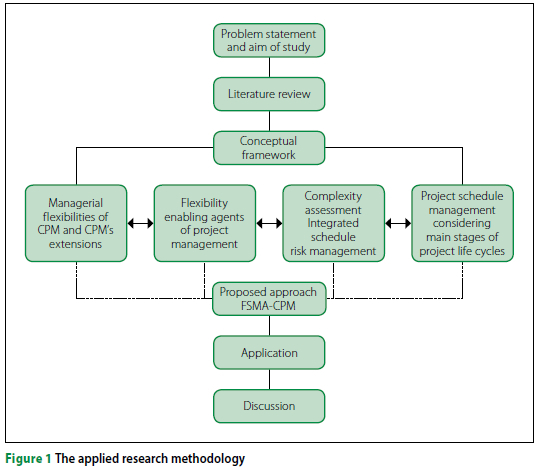
The CPM schedules offer several managerial flexibilities at different levels, including activity, path, and project (network) levels, such as activity float times, path float times, and resource levelling capability (Ökmen et al 2020). These flexibilities can be expanded through advanced forms of CPM, such as simulation-based CPM models capable of risk analysis (Ökmen & Öztaş 2008; Ökmen et al 2021). However, the managerial flexibilities inherent in CPM and its extensions (Ökmen 2013; Ökmen & Öztaş 2014) fall short of adequately providing the flexibility needed to manage complex construction projects. Therefore, the schedules of complex projects need to be integrated with complexity and risk assessments, and managed in a more flexible manner based on the principles of flexible project management methodologies such as agile (Scrum 2013) and lean (Fernandez & Fernandez 2008; Jalali-Sohi et al 2016; Scrum 2013; Agile Manifesto 2022). Furthermore, diverging conditions throughout the life cycles of construction projects stand out as another concerning issue. Thus, tailored solutions are required for different stages. The proposed approach, namely the Flexible CPM-Based Schedule Management Approach (FSMA-CPM), or simply referred to as the Flexible Procedure in this paper, is founded on these arguments, following an inductive research methodology as illustrated in Figure 1 (p 3).
DETERMINATION OF AGENTS FOR ENABLING MANAGERIAL FLEXIBILITY
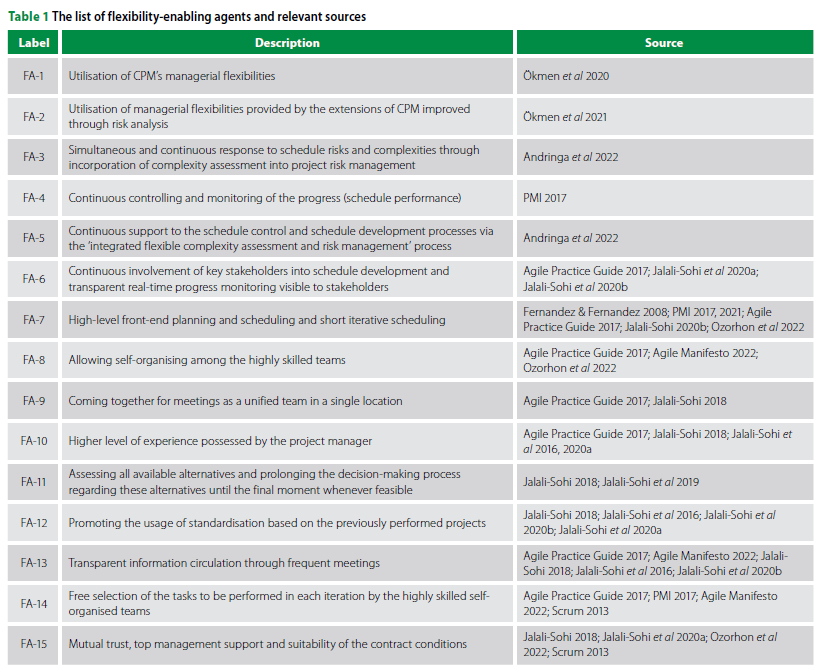
To introduce a flexible approach to managing CPM schedules, the first step is to identify agents that contribute to flexibility from a managerial perspective and are directly or indirectly linked to scheduling. In this regard, a search was conducted in the relevant literature for this purpose, resulting in the identification of 15 flexibility-enabling agents. These agents were subsequently utilised to modify traditional project schedule management processes to ensure flexibility. The flexibility-enabling agents (FAs) are included in Table 1 along with their brief descriptions, as well as the sources utilised.
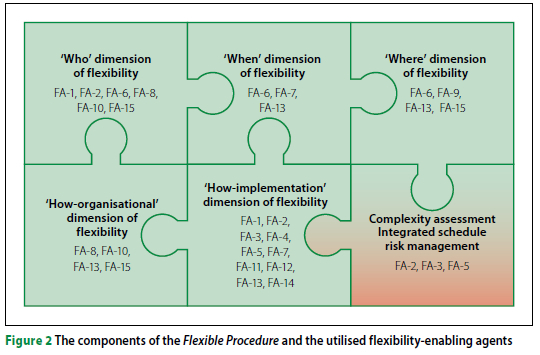
Inspired by the studies of Osipova and Eriksson (2013) and Jalali-Sohi et al (2020b), the flexibility-enabling agents listed in Table 1 were aggregated into five different dimensions of flexibility on which the Flexible Procedure is built: 'who' (teams, participants and stakeholders), 'how-organisational' (organisational structure), 'how-implementation' (schedule implementation), 'where' (physical conditions and equipment provided), and 'when' (types and frequency of meetings). In addition to these five flexibility dimensions, the approach also contains a separate sixth component labelled as the 'complexity assessment integrated schedule risk management' to concurrently deal with the project complexities and risks in a flexible and integrated way. Figure 2 demonstrates these six components with the flexibility agents utilised in each.
DEVELOPMENT OF THE FLEXIBLE PROCEDURE
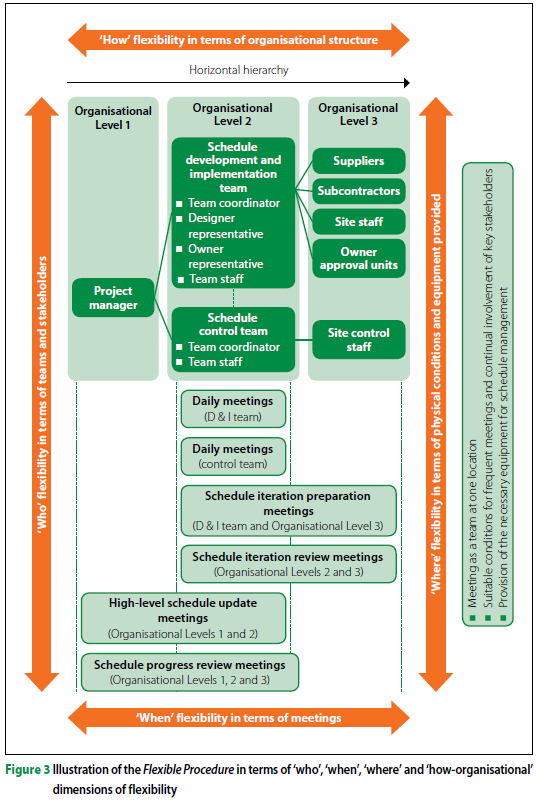
The Flexible CPM-Based Schedule Management Approach (FSMA-CPM), or Flexible Procedure for short, was developed by the incorporation of the aforementioned flexibility-enabling agents into the schedule management process, with special focus on CPM scheduling. By this way, it is aimed to convert the traditional schedule management to a more flexible but hybrid form. Below, the Flexible Procedure is described disclosing the six components on which it is built and by referring to the flexibility-enabling agents used in each component, as illustrated in Figure 2. Along with Figure 2, Figure 3 should also be followed to capture the details of the Flexible Procedure and the underlying logic. Figure 3 was established based on four components out of the six components of the approach as depicted in Figure 2 - 'who' (teams, participants and stakeholders), 'how-organisational' (organisational structure), 'where' (physical conditions and equipment provided) and 'when' (types and frequency of meetings). Figures to introduce the remaining two components, 'how-implementation (schedule implementation)' and 'complexity assessment integrated schedule risk management', are included in the subsequent sections. The design of Figure 3 was enriched based on the requirements of the handled components, which are addressed in the following sections, such as horizontal hierarchy, involvement of stakeholders and self-organising teams, frequency and type of meetings, and provision of appropriate physical conditions and equipment.
Teams and organisational structure: The 'how-organisational' and 'who' dimensions of flexibility
The Flexible Procedure suggests a horizontal organisational structure to provide flexibility to be able to self-organise, cross-function, and in turn pick out the optimum steps to deliver value to the stakeholders on time. The typical configuration of the scheduling teams and their different organisational levels have been set up as shown in Figure 3. An organisational structure as such fulfils the requirement of the 'how-organisational' flexibility dimension of the proposed procedure based on the FA-8, FA-10, FA-13 and FA-15.
Within Organisational Level 1, the project manager carries the coordinator role compatible with the horizontal organisational structure. In Organisational Level 2, two separate self-organising teams act under the names 'schedule development and implementation' and 'schedule control'. These teams are directly responsible for managing the schedule and monitoring progress. On the other hand, the parties involved in Organisational Level 3 indirectly affect the implementation of the schedule. The parties and relationships in-between this horizontal organisational structure at three different levels fulfil the requirement of the 'who' flexibility dimension of the Flexible Procedure based on FA-1, FA-2, FA-6, FA-8, FA-10 and FA-15. Depending on different conditions specific to different projects, new parties may be included in this organisational structure, in line with the flexible nature of the procedure.
Meetings and location: The 'where' and 'when' dimensions of flexibility
The 'where' dimension of flexibility entails a physically appropriate meeting location including tools and equipment, such as a sufficiently sized working board, computers, printers, scheduling software, a projection device, a big LCD monitor, and a big working table. This accommodates the idea of a 'unified team in a single location' in accordance with FA-9. Meeting together, discussing the schedule, and taking decisions in collaboration and with transparency emerge as the main objectives in line with FA-6 and FA-13. Additionally, these elements should be given a place in the contract in line with FA-15. As the flexible project management represents a paradigm change, the support of the top management, the constitution of mutual trust, and the legalisation of this new and modified system are crucial matters to be considered in the contract to ensure the required flexibility and to prevent possible disputes between parties during execution.
The 'when' dimension of flexibility relates to frequency, content, type and function of the meetings (refer to Figure 3). Since flexibility is necessary to deal with the complexity, uncertainty and dynamics in a project, and because the flexibility to some extent means the capability of adapting to varying project conditions, having separate 'daily meetings' with the 'schedule development and implementation' and 'schedule control' teams (included in Organisational Level 2) are needed. The managerial flexibilities of CPM are intended to be utilised during these meetings, in accordance with FA-1 and FA-2.
Another type of meeting to be held is the 'schedule iteration preparation meeting', which the 'schedule development and implementation team' from Organisational Level 2 and the parties from Organisational Level 3 will attend, and which will be performed at the beginning of each schedule iteration. During these meetings, the parties within Organisational Levels 2 and 3 come together at one location in line with FA-9 to discuss and determine the content of the schedule that will be handled in the next schedule iteration. The 'schedule development and implementation team' later prepares the detailed schedule to be used during that iteration, based on the decisions taken at this meeting.
Subsequently, 'schedule iteration review meetings' (weekly or further apart according to the iteration duration determined in compliance with the size and complexity of the project) are to be held with the participation of the parties from Organisational Levels 2 and 3. During these meetings, the progress on the latest completed schedule iteration is reviewed, and related issues are discussed between the 'schedule development and implementation team', 'schedule control team', and the parties from Organisational Level 3 such as the suppliers, subcontractors and site staff.
The monthly 'high-level schedule update meetings' are to be held through the participation of parties from Organisational Levels 1 and 2. The purpose of the high-level schedule update meetings is to update the high-level schedule based on the milestones or work packages set out at the beginning of the project, depending on the owner's requirements in the contract. The Flexible Procedure avoids the preparation of a detailed schedule at the beginning of the project. Instead, in line with FA-7, only a high-level schedule should be prepared at the beginning of the project and this schedule is used as a reference schedule for the preparation of the detailed schedules during short schedule iterations or execution cycles. This type of meeting allows for including the up-to-date requirements of the owner, the project itself, the results of the 'schedule iteration review meetings' and the reports of the 'schedule control team'.
The 'schedule progress review meetings' are to be held every three months with the participation of the parties from Organisational Levels 1, 2 and 3. The purpose of these meetings is to discuss and evaluate the progress achieved with the participation of all relevant parties.
Iterative scheduling: The 'how-implementation' dimension of flexibility
Purely flexible approaches such as agile, specifically developed for software development projects, may not be entirely suitable or effective when applied to construction projects, although many other industries, including the construction industry, have adapted the agile approach (Jalali-Sohi et al 2016; Van Kralingen 2017; Agile Manifesto 2022). Accordingly, this study leverages a hybrid approach based on iterative scheduling instead of strictly following a purely flexible approach.
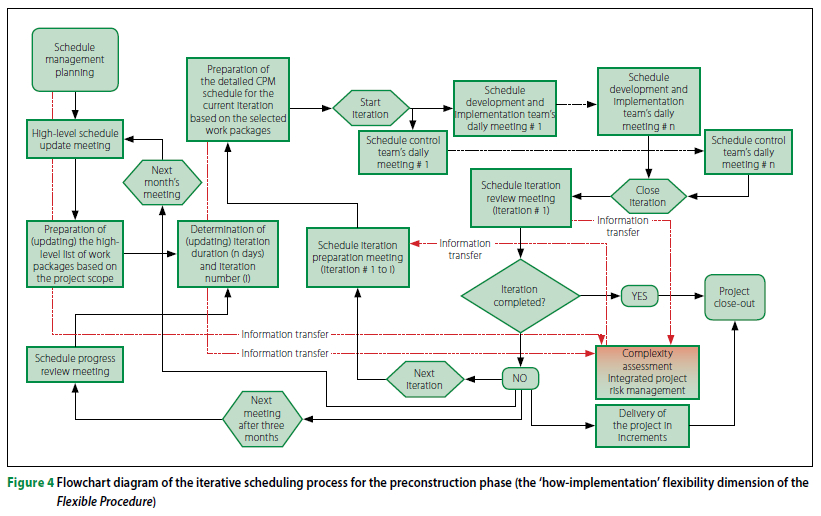
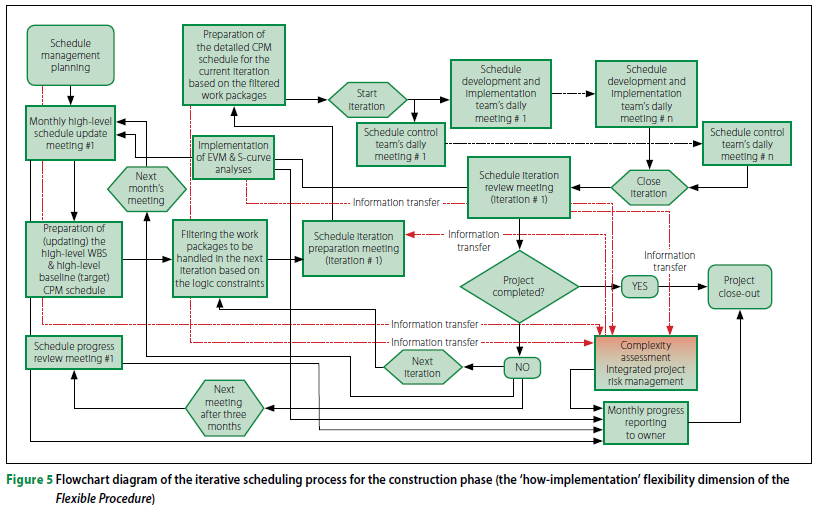
However, the extent to which flexibility is activated would be dependent not only on the project type, but also on the project phase (PMI 2017; Jalali-Sohi et al 2020b). In this context, early project stages such as concept development, feasibility study, and design, referred to as preconstruction phases in this paper, provide a more suitable environment for utilising the flexible features of the Flexible Procedure compared to the construction phase. As the project nears completion, the suitability of flexible iterative scheduling diminishes, while a traditional control-based approach, despite its lack of adaptability for scope changes, becomes more preferable. This situation can be explained by various arguments, including but not limited to the conditions of construction sites, the reduced capacity to accommodate scope changes as the project nears completion, and the suitability of preconstruction stages for utilising flexible iterative scheduling. The preconstruction stages are considered suitable for implementing flexible iterative scheduling due to the similarities they share with software development projects (Jalali-Sohi et al 2016; Van Kralingen 2017; Hobbs & Petit 2017) In practice, as per the aforementioned argument, it is essential to establish a balance between flexible iterative scheduling and traditional control-based scheduling across various phases of the project life cycle. Consequently, the Flexible Procedure serves as an intermediary between pure flexibility and pure tradition regarding schedule management implementation. In this context, two distinct processes were devised within the Flexible Procedure for implementing iterative scheduling - one for the preconstruction phase (depicted in Figure 4) and another for the construction phase (illustrated in Figure 5). These processes were designed using the flexibility-enabling agents, FA-1, FA-2, FA-3, FA-4, FA-5, FA-7, FA-11, FA-12, FA-13, and FA-14.
In this way a flexible and dynamic schedule management methodology was created, taking into account the features needed for flexibility, such as:
■ continuously monitoring the schedule performance
■ high-level front-end planning and short iterative scheduling
■ evaluation of all the alternatives and, as far as possible, extending the decision-making process related to the alternatives until the last moment
■ transparent information circulation through frequent meetings, and
■ free selection of the tasks to be performed in each iteration by the highly skilled self-organised teams.
Incremental delivery is deemed more appropriate during the preconstruction phase compared to the construction phase, based on a comparison of the conditions and characteristics of these project phases. Studies conducted on software development projects, which share similarities with the preconstruction phase in construction projects, support this assertion (Jalali-Sohi & Wohlin 2012; Jalali-Sohi et al 2016; Van Kralingen 2017). Therefore, during the construction phase (refer to Figure 5), instead of incremental delivery, which is the case for the preconstruction phase (refer to Figure 4), monthly progress reporting to the owner is preferred. This activity is performed benefitting from the data obtained during the monthly 'high-level schedule update meeting', the 'schedule progress review meeting', and through the 'complexity assessment integrated schedule risk management process', alongside the implementation of EVM and S-Curve progress analyses.
For the preconstruction phase (refer to Figure 4), depending on the nature of the activities to be performed (e.g. designing, technical calculations and report preparation, and data gathering from the construction site) and the working conditions (most of the time in the office, and other times at the construction site to make observations and collect data), it would be possible to start the project with a high-level list of work packages instead of a detailed CPM schedule. Eventually, the self-organising teams are given the opportunity of freely determining and selecting the work packages that they will perform before each iteration. However, in the case of the construction phase (refer to Figure 5), more parties and stakeholders exist, complexities are more intensive, and a higher number of risk factors are in effect, which necessitate the use of a high-level WBS and a baseline CPM schedule at the beginning, at the expense of the degree of freedom allocated to the teams. Rather than selecting the work packages freely as in the preconstruction phase, the teams will now have to filter the work packages to be handled during an iteration based on the logic constraints in the baseline CPM schedule. This situation allows for a more flexible process to be established in the early stages of the project compared to the construction phase, as can be observed when comparing Figure 4 with Figure 5.
The sixth component: The 'complexity assessment integrated schedule risk management'
The 'complexity assessment integrated schedule risk management' process illustrated in Figures 4 and 5 represents the sixth component of the Flexible Procedure (refer to Figure 2). This process is based on the integrated usage of complexity assessment models, such as the Technical, Organisational and External (TOE) Framework of Bosch-Rekveldt et al (2011) and simulation-based schedule risk analysis models such as the Correlated Schedule Risk Analysis Model (CSRAM) of Ökmen & Õztaç (2008). Interfaces assigned between this component and the other five components of the Flexible Procedure (refer to Figure 2) are represented in the form of 'information transfer channels' in Figures 4 and 5. These information channels facilitate the transmission of information between components, as indicated by FA-3 and FA-5. Additionally, FA-1 and FA-2 are achieved by managerial flexibilities provided by CPM and its extensions, enhanced by risk analysis.
EXAMPLE APPLICATION
This section presents a retrospective application of the Flexible Procedure to the design phase of an irrigation project. The objective is to assess the potential benefits of its implementation compared to the actual situation where the procedure was not utilised. To achieve this, a hypothetical scenario was constructed based on the actual project information provided below:
The baseline schedule officially submitted to the Contracting Authority (owner - the state institution responsible for water resources of the country where the project was realised) by the Designer (the contractor responsible for the design) was a simple bar chart. There were 19 activities and the project completion date was 300 calendar days on this approved schedule. However, during the execution of the design phase, the Designer requested time extensions on several occasions from the Owner and the Owner had to accept some of these requests in compliance with the contract conditions. As a result, the 300 calendar days of contractual (planned) project completion time increased to 683 days (the actual project completion time), i.e. a delay of 383 days.
The Flexible Procedure was hypothetically and retrospectively applied to determine
how the occurrence of the long delay in this project could have been avoided, if this procedure had been implemented. A detailed description of this example application is provided next, in accordance with the components of the Flexible Procedure shown in Figures 2 and 3, as well as the process flowchart in Figure 4, since the project is a design job and part of the preconstruction phase.
Step 1 - Teams and organisational structure: The 'who' and 'how-organisational' dimensions of flexibility
In Step 1 the designer and owner jointly establish a horizontal organisational structure (refer to Figure 3). Three organisational levels exist in that structure. At the lateral top (Organisational Level 1 in Figure 3), the project manager, at Organisational Level 2, the Schedule Development & Implementation Team (SDIT comprising the team coordinator, the owner's representative and the team staff), and the Schedule Control Team (SCT comprising the team coordinator and team staff) take place. These teams consist of highly skilled engineering staff who are experienced either in CPM scheduling and/or irrigation projects. Therefore, they are capable of working in a self-organised manner. Rather than commanding the teams, the team coordinators are responsible for coordinating the meetings with the parties from different organisational levels and regularly reporting progress to the project manager. The representatives of the owner (RO) comprise a team involving design engineers from the owner's organisation and are authorised to convey the owner's requirements regarding the project to the SDIT. Such a configuration would create flexibility in terms of schedule management, as it will become possible to transfer the requirements of the owner to the SDIT in a timely manner, and in turn will guide the implementation of the project to the owner's satisfaction. For this purpose, the RO functions as a member of the SDIT. The mandates, authorities and responsibilities of the SDIT and SCT are separated from one another for the sake of ensuring unbiased reporting to the project manager and to the parties in Organisational Level 3.
Organisational Level 3 comprises internal participants from both the designer's and the owner's organisations, as well as third-party external stakeholders. While the participants of the designer's organisation are the design units, reporting units, cost estimation unit, risk assessment unit and site staff, the participants of the owner's organisation are the planning, design, construction, expropriation, geotechnical, maintenance, operation, risk management units, and the regional office (contracting authority). Furthermore, the farmers (end-users), farmer associations, and sub-designer firms constitute the external stakeholders.
The parties constituting Organisational Level 3 are not directly responsible for schedule management like the teams in Organisational Level 2. However, related parties, such as the design units, are involved in schedule management processes either directly through tasks under their responsibility concerning the schedule, or indirectly through their external impacts on the schedule, such as the farmers as end-users. All parties involved within this horizontal three-level organisational structure are expected to act as constituents of the same organisation, aligning with the working spirit aimed at by the Flexible Procedure. Only in this way, the 'who' and the 'how-organisational' dimensions of flexibility will be ensured.
Step 2 - Meetings and location: The 'when' and 'where' dimensions of flexibility
The 'when' dimension of flexibility pertains to the type and timing of meetings. Necessary steps in this regard are taken according to the configuration outlined in Figure 3. The information about the teams, organisational structure, meetings, location and the implementation of the iterative scheduling, which represent the first five components of the Flexible Procedure, is included in the schedule management plan. On the other hand, information about the implementation of the 'complexity assessment integrated schedule risk management' process, which is the sixth component of the Flexible Procedure (refer to Figure 2), is incorporated into the complexity/risk management plan. The designer undertakes the responsibility of meeting the requirements regarding the 'where' dimension of flexibility by supplying a suitable working place and appropriate working conditions for the meetings to be held and the necessary equipment and software needed to properly manage the CPM schedule through the highly skilled self-organised teams, i.e. SDIT and SCT.
While the schedule management plan contains detailed information related to these issues (i.e. information regarding the type of meetings, the parties that will attend these meetings, the properties of the meeting location and the necessary equipment), this information is also mentioned in the contract to establish the legal framework for the proper implementation of the Flexible Procedure.
Step 3 - Iterative scheduling: The 'how-implementation' dimension of flexibility
The designer prepares the above-mentioned schedule management plan after the project begins. The owner's 'design and construction unit' reviews and approves the schedule management plan at the beginning of Step 3. Thereafter the implementation of the iterative scheduling begins. First, the monthly 'high-level schedule update meeting' is held (refer to Figure 4). Rather than being an update meeting, the first high-level schedule update meeting is actually more like a high-level schedule 'preparation' meeting. During this meeting, the OR introduces the requirements of the owner regarding the project in detail, based on the project scope and preliminary explanations put forward within the contract. After the meeting, the SDIT prepares the high-level list of work packages in agreement with the decisions taken during the high-level schedule update meeting. Figure 6 presents the list of work packages and the high-level schedule prepared based on these work packages. According to this high-level schedule, the project is aimed to be completed within 300 calendar days from project start, which is compatible with the official project duration issued in the contract. Next, the SDIT determines the iteration duration and iteration number as 60 days and 4, respectively, through considering the views of the relevant participants from Organisational Level 3 based on the high-level list of work packages, high-level schedule and envisaged project duration.
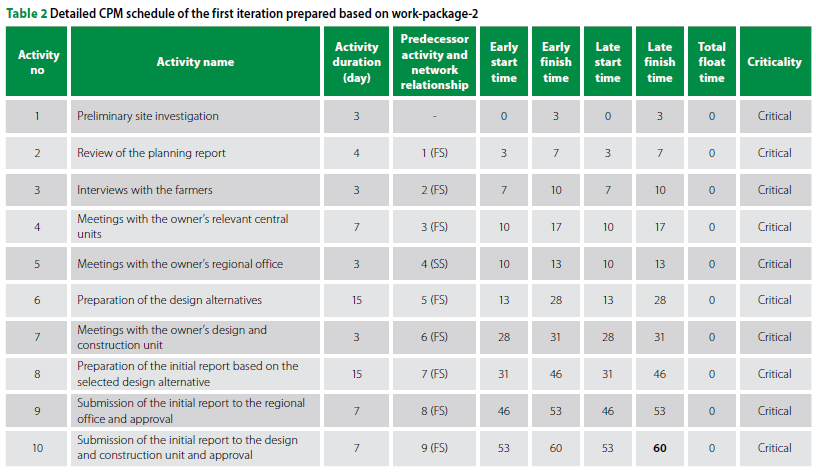
The gathered information regarding the schedule management plan, the high-level list of work packages, and the high-level schedule are transferred to the Complexity Assessment Integrated Schedule Risk Management process as shown in Figure 4. Next, the schedule iteration preparation meeting of the first schedule iteration is performed with the participation of the SDIT, design units, risk assessment unit, site staff, design and construction unit, the farmers, and other relevant parties. The risk assessment unit transfers information from the Complexity Assessment Integrated Schedule Risk Management process to this meeting. In terms of the decisions taken during the first schedule iteration preparation meeting, the work packages to be handled during this iteration are determined and subsequently the SDIT prepares the detailed CPM schedule. The detailed CPM schedule prepared for use in the first schedule iteration is shown in Table 2.
The work package handled in the first iteration is the 'preparation of the initial report', i.e. work-package-2 of the high-level schedule in Figure 6. It can be seen in Table 2 that the number of activities used in the preparation of the detailed CPM schedule of the first iteration is 10, although only one work package (work package 2), is to be dealt with. Furthermore, the duration of the first iteration is 60 days (i.e. late finish time of activity 10 in Table 2), which agrees with the iteration duration determined previously.
Finally, the first iteration begins. The SDIT manages the schedule on behalf of the project manager through daily meetings and by communicating with the relevant parties from Organisational Level 3. The managerial flexibilities of CPM (Ökmen et al 2020) are utilised during this iteration under the coordination of SDIT. The schedule is updated daily by means of scheduling software based on the actual data provided from the stakeholders, and then the updated version is shared transparently with the stakeholders. Besides the SDIT, the SCT also performs daily meetings and monitors the schedule progress during the first iteration for the purpose of reporting the progress to the project manager. At the end of the first iteration, the schedule iteration review meeting is conducted by the parties from Organisational Levels 2 and 3. Since the iteration duration is 60 days, the second high-level schedule update meeting is held 30 days after the start of the first iteration.
At the end of the third high-level schedule update meeting, information is transferred to the 'complexity assessment integrated schedule risk management' process, as well as from this process to the next 'schedule iteration review meeting'. The 'complexity assessment integrated schedule risk management' process is implemented at the end of each iteration. The schedules are managed in accordance with the risk/complexity response strategies determined by the implementation of this process before each iteration. This would provide the advantage of completing the iterations in time without any delay. The information transferred mutually between the Flexible Procedure and the 'complexity assessment integrated schedule risk management' process through the interfaces provided, as demonstrated in Figure 4, ensures the management and control of the complexities and the risks effective on the schedule. After the completion of the first iteration, the whole process starts from the beginning with the schedule iteration review meetings of the second, third and fourth iterations. During the second, third and fourth iterations the work-packages 3 to 5, 6 to 8, and 9 to 15 shown in Figure 6 are handled, respectively. Meanwhile, the 'schedule progress review meetings' are conducted every three months with the parties from all three organisational levels.
The project is delivered to the owner in increments by the closure of each iteration. The owner's feedback about the delivered project increments, along with the design changes or further requirements, is conveyed to the designer by the OR before the beginning of each succeeding iteration. However, since the OR acts as a member of the SDIT, a similar information transfer is also provided continuously from the owner to the SDIT during the iterations. These feedback and information transfer channels would create continuous flexibility in terms of scope throughout the project. Furthermore, flexibility is also provided by the continuous information transfer from the parties involved within the third organisational level through the daily, schedule iteration preparation, schedule iteration review, and schedule progress review meetings (refer to Figure 3).
The iterations in the Flexible Procedure carry the purpose of revisiting the high-level list of work packages periodically rather than processing the same tasks on a specific model iteratively for converging towards a result. In other words, through the iterations, the Flexible Procedure aims at delivering the project in increments instead of delivering it as a whole at the end as shown in Figure 4. However, while the incremental project delivery can be implemented easily for the preconstruction phase, it might be inappropriate during the construction phase. Therefore, the Flexible Procedure proposes incremental reporting instead of incremental project delivery for the construction phase through schedule iterations, as illustrated in Figure 5. Accordingly, the implementation of the schedule through iterations, along with the delivery of the project in increments, is the basis of Step 3, because the project is a design work and can thus be considered as a stage of the preconstruction phase. Keeping the scope sufficiently flexible against the owner's and other stakeholders' changing requirements, increasing the adaptability of the project by this way, keeping the time (targeted project duration) and the cost (targeted project budget) sufficiently rigid, and finally managing the schedule through iterations, while considering the risks, uncertainties and complexities, all help towards the completion of the project without delay. Since each schedule iteration takes 60 days, as shown in Table 2 for the first iteration, the project is aimed to be completed in 240 days after the start, which is earlier than the 300-day duration that the high-level schedule in Figure 6 offers and that the project contract officially requires. Thereby the 60-day period is reserved as a time contingency or time buffer to compensate for the delays that might occur during the schedule iterations.
Step 4 - The project complexity and uncertainty: Implementation of the Complexity Assessment Integrated Schedule Risk Management process
In Step 4, the 'Complexity Assessment Integrated Schedule Risk Management' process is implemented under the responsibility of the project risk assessment unit of the designer repetitively during each schedule iteration by taking into consideration the detailed CPM schedules prepared after the schedule iteration preparation meetings. The purpose of processing the iterative feature of the Complexity Assessment Integrated Schedule Risk Management process as much as possible in this manner is to ensure the synchronisation of this process with the Flexible Procedure in terms of flexibility through the interfaces depicted in Figure 4. Since the SDIT aims to complete the project in four iterations within 240 days, i.e. 60 days earlier than the contractual duration to keep this period as a time buffer, the risk/complexity response plan established by means of the Complexity Assessment Integrated Schedule Risk Management process becomes crucial for success. In addition, the managerial flexibilities provided by the CPM (Ökmen et al 2020, 2021) become the other supportive features used by the SDIT during the management of schedule iterations.
Discussion of results
Had the designer employed a CPM schedule instead of a simple bar chart schedule (which was the actual case), and implemented the Flexible Procedure while managing the schedule, she would have had the opportunity to finish the project in just 240 days, 60 days earlier than the 300 days initially negotiated with the owner as the contractual duration. However, the project ended up taking 683 days to complete (the actual project completion time), resulting in a delay of 383 days. Such a significant delay could have been largely mitigated by using a more advanced CPM-based schedule, proposing a more realistic project completion time to the owner based on this schedule before commencing the project, and managing the CPM schedule using the Flexible Procedure during execution.
The completion of the project in 683 days, while experiencing significant delays, can be attributed to several key factors:
■ the inadequacy of the bar chart schedule to effectively manage a project of this scale
■ inaccuracies in schedule predictions
■ the absence of risk analysis and risk management measures
■ a lack of awareness regarding the project's inherent complexities, and
■ insufficient consideration of the demands and recommendations from involved parties and external stakeholders.
Clearly, a basic bar chart schedule was unable to reveal the interdependencies of the various activities and the critical tasks that significantly impact the project duration. Additionally, the absence of the Complexity Assessment Integrated Schedule Risk Management process, i.e. the sixth component of the Flexible Procedure (refer to Figure 2), hindered the identification and management of the effects of various risks and complexities on the schedule. Moreover, by not implementing the processes outlined in the Flexible Procedure's five other components (refer to Figures 2, 3 and 4), the project management lacked the interactive and flexible conditions necessary for success. This was due to several reasons, such as:
■ not leveraging the managerial flexibilities inherent in CPM and its extensions
■ a lack of continuous control and monitoring of progress
■ insufficient transparency in information circulation through frequent meetings
■ failure to implement short iterative scheduling and incremental progress, and
■ most importantly, neglecting the needs of external stakeholders, including farmers who are the end-users of the project.
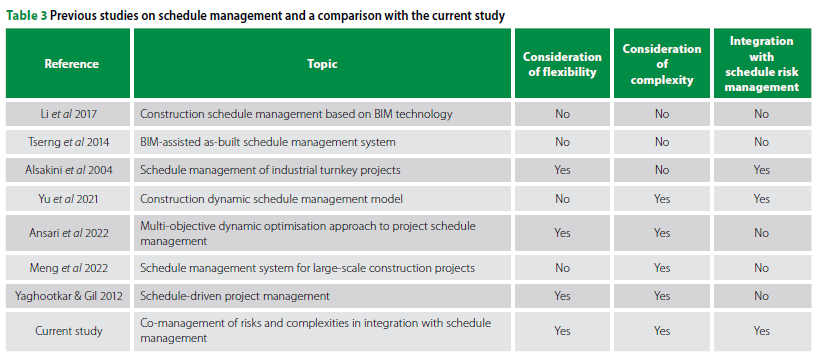
While previous research has explored schedule management from various angles, there are still gaps in simultaneously considering flexibility and complexity, as well as in integrating schedule risk management with schedule management. The results of the example application underscored the significance of a holistic view, i.e. integrating flexibility, complexity and risks, when managing project schedules to ensure projects are completed within schedule objectives. Table 3 provides an overview of previous studies in terms of these interrelated aspects and compares them with the current study. Through this literature review, it becomes evident that no studies have concurrently addressed flexibility, complexity and risks. Consequently, the current study endeavours to bridge this research gap.
LIMITATIONS OF THE STUDY AND RECOMMENDATIONS FOR FUTURE RESEARCH
This section discusses the limitations of the current study, which can be addressed in future research, and offers recommendations in this regard.
Firstly, the Flexible Procedure relies entirely on CPM scheduling, which is the predominant method for scheduling activity networks. However, CPM alone may not be ideal for scheduling repetitive or linear projects like highways, railways and high-rise buildings. Also, considering the project scale, such projects often require CPM to be combined with other scheduling methods such as Line of Balance or Linear Scheduling. Incorporating these methods could enhance the Flexible Procedure significantly.
Secondly, it is crucial to implement the procedure in real-time to assess its strengths and weaknesses, and to facilitate ongoing enhancements. Only one case study was considered in this study; generalised results obtained from a comprehensive validation process using various projects where the proposed procedure was applied are still needed. With an increasing number of projects utilising the Flexible Procedure in real time during both the preconstruction and construction phases, it will be possible to comprehensively validate the procedure and measure its effectiveness across different project phases. Additionally, this will enable a direct comparison between the proposed approach and traditional methods in actual application, offering insights into how promising the approach is in meeting project schedule objectives. These subjects are recommended for future research.
CONCLUSIONS
This study proposes a hybrid (in-between traditional and pure flexible) integrated approach called the Flexible CPM-Based Schedule Management Approach (FSMA-CPM) (labelled as Flexible Procedure throughout the paper) for flexible management of CPM schedules of complex construction projects. The Flexible Procedure entails the participation of relevant participants and external stakeholders, and schedules are incrementally developed and implemented in an iterative fashion, all within conducive working conditions and within a horizontally structured organisation.
This study indicated that, alongside various flexibilities included and activated, incorporating complexity assessment into risk management and then integrating the process with schedule management has the potential to enhance schedule management processes. Enhanced schedule management in this regard, i.e. sufficiently flexible and change-driven as well as complexity- and risk-based, creates a superior system for complex construction projects. This development can contribute significantly to the success of such projects in terms of achieving schedule objectives. Construction organisations could benefit from the approach proposed in this study to manage their schedules flexibly while considering complexities and risks concurrently, thereby improving their project management. This approach will provide an advantage for these organisations to successfully complete complex projects under high uncertainty, complexity and dynamic conditions.
Based on the relevant literature, this study can be considered an important effort in its field, particularly because prior studies have been noted for their insufficiency in concurrently considering flexibility and complexity with a focus on scheduling, along with overlooking the need for interaction of risk management with schedule management. This study aims to contribute towards filling this gap and initiates a discussion on the necessity of incorporating flexibility into schedule management across various dimensions. The effectiveness of the procedure proposed in this study stems from its capacity to:
■ integrate complexity assessment and risk management
■ incorporate this unified approach into schedule management
■ utilise the inherent flexibilities of CPM
■ leverage additional flexibilities offered by CPM-based schedule risk analysis modelling, and
■ include a range of features that promote flexibility in schedule management.
In theoretical terms, this inductive approach has combined the strengths of each of these elements, thereby creating a practical hybrid procedure that includes both traditional and flexible features for managing CPM schedules in complex construction projects.
As for the major limitation of the study, only one case study was considered in this study, and generalised results from a comprehensive validation process using various projects applying the proposed procedure are still needed. With an increasing number of projects utilising the Flexible Procedure in real time during both the preconstruction and construction phases, it will be possible to comprehensively validate the procedure and measure its effectiveness across different project phases.
The prevalent plan-driven approach in project management, which has historically dominated, is now shifting towards a more adaptable and flexible model. This transformation is spurred by the need to respond to the dynamic nature, complexities and uncertainties inherent in projects. Alternatively, a balanced and tailored approach can merge these two primary perspectives, considering the specific project needs and conditions, rather than solely adopting a flexible method like agile project management. In essence, rather than rigidly adhering to the traditional plan-driven project management paradigm, transitioning to a flexible, adaptable management style through hybrid methodologies influenced by modern project management, as proposed in this study, seems imperative for organisations in the construction industry. This transition can facilitate success in managing complex projects and provide a competitive edge in today's fiercely competitive environment.
ACKNOWLEDGEMENTS
The author of this article would like to express his gratitude to the Jean Monnet Scholarship Programme, which is funded by the European Union under the Instrument for Pre-accession Assistance and is implemented based on an agreement between the Republic of Türkiye and the European Commission.
This document has been produced with the financial assistance of the European Union. The contents of this document are the sole responsibility of Önder Ökmen and can under no circumstances be regarded as reflecting the position of the European Union.
REFERENCES
Agile Manifesto 2022. Principles behind the Agile Manifesto. Available at: http://agilemanifesto.org/principles.html. [ Links ]
Agile Practice Guide 2017. Pennsylvania: Project Management Institute. [ Links ]
Alsakini, W, Wikström, K & Kiiras, J 2004. Proactive schedule management of industrial turnkey projects in developing countries. International Journal of Project Management, 22(1): 75-85. [ Links ]
Andringa, L, Ökmen, Ö, Leijten, M, Bosch-Rekveldt, M & Bakker, H 2022. Incorporating project complexities in risk assessment: Case of an airport expansion construction project. Journal of Management in Engineering, 38(6): 05022015 https://doi.org/10.1061/(ASCE)ME.1943-5479.0001099. [ Links ]
Ansari, R, Khalilzadeh, M & Hosseini, M R 2022. A multi-objective dynamic optimization approach to project schedule management: A case study of a gas field construction. KSCE Journal of Civil Engineering, 26(3): 1005-1013. [ Links ]
Aritua, B, Smith, N J & Bower, D 2009. Construction client multi-projects: A complex adaptive systems approach. International Journal of Project Management, 27(1): 72-79. [ Links ]
Atkinson, R, Crawford, L & Ward, S 2006. Fundamental uncertainties in projects and the scope of project management. International Journal of Project Management, 24(8): 687-698. [ Links ]
Baccarini, D 1996. The concept of project complexity - a review. International Journal of Project Management, 14(4): 201-204. [ Links ]
Bateson, G 1972. Ecology and Flexibility in Urban Civilization. Steps to an Ecology of Mind, pp 494505. Chicago: Chandler Publishing Company. [ Links ]
Blom, R 2014. Embracing change: The road to improvement? MSc Thesis. The Netherlands: Delft University of Technology. [ Links ]
Bosch-Rekveldt, M, Jongkind, Y, Mooi, H, Bakker, H & Verbraeck, A 2011. Grasping project complexity in large engineering projects: The TOE (Technical, Organizational and Environmental) framework. International Journal of Project Management, 29(6): 728-739. [ Links ]
Braglia, M & Frosolini, M 2014. An integrated approach to implement Project Management Information Systems within the Extended Enterprise. International Journal of Project Management, 32(1): 18-29. [ Links ]
Chapman, R J 2016. A framework for examining the dimensions and characteristics of complexity inherent within rail megaprojects. International Journal of Project Management, 34(6): 937-956. [ Links ]
Dao, B, Kermanshachi, S, Shane, J, Anderson, S & Hare, E 2017. Exploring and assessing project complexity. Journal of Construction Engineering and Management, 143(5): 04016126. [ Links ]
Fernandez, D J & Fernandez, J D 2008. Agile Project Management - Agilism versus Traditional Approaches. Journal of Computer Information Systems, 49(2): 10-17. [ Links ]
Fitsilis, P & Damasiotis, V 2015. Software Project's Complexity Measurement: A case study. Journal of Software Engineering and Applications, 8(10): 549-556. [ Links ]
Flyvbjerg, B, Skamris Holm, M K & Buhl, S L 2004. What causes cost overrun in transport infrastructure projects? Transport Reviews, 24(1): 3-18. [ Links ]
Hertogh, M & Westerveld, E 2010. Playing with complexity. Management and organization of large infrastructure projects. Rotterdam: Erasmus University. [ Links ]
Hobbs, B & Petit, Y 2017 (July). Agile approaches on large projects in large organizations. Project Management Institute. [ Links ]
Jalali-Sohi, A 2018. Flexibility in project management: Towards improving project performance. PhD Thesis, The Netherlands: Delft University of Technology. [ Links ]
Jalali-Sohi, A & Wohlin, C 2012. Global software engineering and agile practices: A systematic review. Journal of Software: Evolution and Process, 24(6): 643-659. [ Links ]
Jalali-Sohi, A, Hertogh, M, Bosch-Rekveldt, M & Blom, R 2016. Does lean & agile project management help coping with project complexity? Procedia -Social and Behavioral Sciences, 226: 252-259. [ Links ]
Jalali-Sohi, A, Bosch-Rekveldt, M & Hertogh, M 2019. Practitioners' perspectives on flexible project management. IEEE Transactions on Engineering Management, 68(4): 911-925. https://doi.org/10.1109/TEM.2019.2914833. [ Links ]
Jalali-Sohi, A, Bosch-Rekveldt, M & Hertogh, M 2020a. Four stages of making project management flexible: Insight, importance, implementation and improvement. Organization, Technology & Management in Construction: An international journal, 12(1): 2117-2136. [ Links ]
Jalali-Sohi, A, Bosch-Rekveldt, M & Hertogh, M 2020b. Does flexibility in project management in early project phases contribute positively to end-project performance? International Journal of Managing Projects in Business, 13(4): 665-694. https://doi.org/10.1108/IJMPB-07-2019-0173. [ Links ]
Koppenjan, J, Veeneman, W, Van der Voort, H, Ten Heuvelhof, E & Leijten, M 2011. Competing management approaches in large engineering projects: The Dutch RandstadRail project. International Journal of Project Management, 29(6): 740-750. https://doi.org/10.1016/J.IJPROMAN.2010.07.003. [ Links ]
Li, X, Xu, J & Zhang, Q 2017. Research on construction schedule management based on BIM technology. Procedia Engineering, 174: 657-667. https://doi.org/10.1016/j.proeng.2017.01.214. [ Links ]
Luo, L, He, Q, Xie, J, Yang, D & Wu, G 2017a. Investigating the relationship between project complexity and success in complex construction projects. Journal of Management in Engineering, 33(2). https://doi.org/10.1061/(ASCE)ME.1943-5479.0000471. [ Links ]
Luo, L, He, Q, Jaselskis, E J & Xie, J 2017b. Construction project complexity: Research trends and implications. Journal of Construction Engineering and Management, 143(7). https://doi.org/10.1061/(ASCE)CO.1943-7862.0001306. [ Links ]
Ma, L & Fu, H 2020. Exploring the influence of project complexity on the mega construction project success: A qualitative comparative analysis (QCA) method. Engineering, Construction and Architectural Management, 27(9): 2429-2449. [ Links ]
Meng, F, Yu, S & Xue, J 2022. Construction schedule management system for large-scale construction projects based on multisensor network. Computational Intelligence and Neuroscience, 2022. https://doi.org/10.1155/2022/3003552. [ Links ]
Ochieng, E G, Hughes, L, Ruan, X, Price, A D F & Egbu, C 2013. Mapping and simplifying construction project delivery. Journal of Architectural Engineering Technology, 2(1). https://doi.org/10.4172/2168-9717.1000109. [ Links ]
Ökmen, Ö 2013. A procedure for critical path method-based scheduling in linear construction projects. Journal of the South African Institution of Civil Engineering, 55(2): 12-20. [ Links ]
Ökmen, Ö & Öztaş, A 2008. Construction project network evaluation with correlated schedule risk analysis model. Journal of Construction Engineering and Management, 134(1): 49-63. [ Links ]
Ökmen, Ö & Öztaş, A 2014. A CPM-based scheduling method for construction projects with fuzzy sets and fuzzy operations. Journal of the South African Institution of Civil Engineering, 56(2): 2-8. [ Links ]
Ökmen, Ö, Bosch-Rekveldt, M & Bakker, H 2020. Evaluation of managerial flexibilities in critical path method-based construction schedules, Proceedings, 8th (online) IPMA (International Project Management Association) Research Conference, Berlin. Also available (2022) in: Research on Project, Programme and Portfolio Management: Projects as an Arena for Self-Organizing (pp 267-285). Cham: Springer International Publishing. [ Links ]
Ökmen, Ö, Bosch-Rekveldt, M G C & Bakker, H L M 2021. Evaluation of expansion of managerial flexibilities of critical path method scheduling under uncertainty through a risk simulation model. Proceedings, 14th International Congress on Advances in Civil Engineering (ACE 2020-2021, Istanbul), pp 318-325. [ Links ]
Osipova, E & Eriksson, P E 2013. Balancing control and flexibility in joint risk management: Lessons learned from two construction projects. International Journal of Project Management, 31(3): 391-399. [ Links ]
Ozorhon, B, Cardak, F & Caglayan, S 2022. Investigating the agile hybrid approach in construction. Journal of Management in Engineering, 38(4): 04022022. https://doi.org/10.1061/(ASCE)ME.1943-5479.0001052. [ Links ]
Parwani, R R 2002. Complexity: An introduction. Singapore: National University of Singapore. arXiv preprint physics/0201055. [ Links ]
PMI (Project Management Institute) 2017. A Guide to the Project Management Body of Knowledge (PMBOK® Guide - 6th edition). Pennsylvania: PMI. [ Links ]
PMI 2021. A Guide to the Project Management Body of Knowledge (PMBOK Guide - 7th edition). Pennsylvania: PMI. [ Links ]
Rad, E K M, Sun, M & Bosché, F 2017. Complexity for megaprojects in the energy sector. Journal of Management in Engineering, 33(4). https://doi.org/10.1061/(ASCE)ME.1943-5479.0000517. [ Links ]
Scrum, A 2013. What is Scrum? We've been covering scrum in such detail it makes you sick. and Now. https://www.scrum.org. [ Links ]
Tserng, H P, Ho, S P & Jan, S H 2014. Developing BIM-assisted as-built schedule management system for general contractors. Journal of Civil Engineering and Management, 20(1): 47-58. https://doi.org/10.3846/13923730.2013.851112. [ Links ]
Van-Kralingen, A M C 2017. Added value through agile project management during early project phases in the construction industry. MSc Thesis. Delft University of Technology: Netherlands. [ Links ]
Vidal, LA & Marle, F 2008. Understanding project complexity: Implications on project management. Kybernetes, 37(8): 1094-1110. [ Links ]
Vidal, L A, Marle, F & Bocquet, J C 2011. Measuring project complexity using the Analytic Hierarchy Process. International Journal of Project Management, 29(6): 718-727. [ Links ]
Williams, T 2005. Assessing and moving on from the dominant project management discourse in the light of project overruns. IEEE Transactions on Engineering Management, 52(4): 497-508. [ Links ]
Yaghootkar, K & Gil, N 2012. The effects of schedule-driven project management in multi-project environments. International Journal of Project Management, 30(1): 127-140. [ Links ]
Yu, F, Chen, X, Cory, C A, Yang, Z & Hu, Y 2021. An active construction dynamic schedule management model: Using the fuzzy earned value management and BP neural network. KSCE Journal of Civil Engineering, 25(7): 2335-2349. [ Links ]
 Correspondence:
Ö Ökmen
Ministry of Transport and Infrastructure
Ankara, Turkiye
E: onder.okmen@uab.gov.tr
Faculty of Civil Engineering and Geosciences, Delft University of Technology
Delft, Netherlands. E: o.okmen@tudelft.nl

DR ÖNDER ÖKMEN holds a PhD in Civil Engineering (Construction Management). He conducted post-doctoral research between 2020 and 2021 in Engineering Project Management at Delft University of Technology in the Netherlands, supported by the Jean Monnet Scholarship Program of the European Union, and is still affiliated with this university as distance researcher in his capacity as associate professor. He currently works as an internal auditor at the Ministry of Transport and Infrastructure in Türkiye. His areas of interest mainly include schedule and cost risk analysis models in construction projects, network and linear scheduling methods, complexity in large engineering projects, and flexible project management methodologies.