Services on Demand
Journal

Article
 English (pdf)
 Article in xml format
 Article references
 Automatic translation
 Send this article by e-mail
Indicators
Related links
-
 Cited by Google
 -
 Similars in Google
Share

 Permalink
South African Journal of Agricultural Extension
On-line version ISSN 2413-3221Print version ISSN 0301-603X
S Afr. Jnl. Agric. Ext. vol.54 n.1 Pretoria 2026
https://doi.org/10.17159/2413-3221/2026/v54n1a20274
ARTICLES
Socio-economic Factors Influencing Marketing Practices and Opportunities for the Smallholder Pig Farming Enterprise in the Cape Metropole District, South Africa
Mathobela R.M.I; Chikwanha O.C.II; Katiyatiya C.L.F.III; Molotsi A.H.IV; Marufu M.C.V; Strydom P.E.VI; Mapiye CVII
IPhD graduate: Stellenbosch University and Senior Agricultural Advisor at Western Cape Department of Agriculture, Elsenburg, South Africa. mmamakgone@gmail.com, ORCID ID 0000-0002-9118-0312
IIPost-doctoral researcher: Department of Animal Sciences, Stellenbosch University, South Africa. occhikwanha@gmail.com, ORCID ID 0000-0002-8804-7617
IIIPost-doctoral researcher: Department of Animal Sciences, Stellenbosch University, South Africa. chenny.katiyatiya@gmail.com, ORCID ID 0000-0002-0119-8237
IVLecturer: Department of Animal Sciences, Stellenbosch University, South Africa. annelind@sun.ac.za or Molotah@unisa.ac.za, ORCID ID 0000-0001-7115-454X
VAssociate Professor: Department of Veterinary Tropical Diseases, University of Pretoria, South Africa. chris.marufu@up.ac.za, ORCID ID 0000-0003-4784-6153
VIFull professor: Department of Animal Sciences, Stellenbosch University, South Africa. pestrydom@sun.ac.za, ORCID ID 0000-0001-6855-688X
VIIAssociate Professor: Department of Animal Sciences, Stellenbosch University, South Africa. cmapiye@sun.ac.za, ORCID ID 0000-0002-1474-8648
ABSTRACT
Urban smallholder pig production is one of the farming systems that dominate urban agriculture in South Africa. However, the challenges of urban smallholder pig farmers in adopting sustainable marketing practices have not been identified. Therefore, a survey was conducted amongst 160 pig farmers from five suburbs of the Cape Metropole District in South Africa to determine the impact of socio-economic factors on marketing practices and the accompanying challenges for urban smallholder farms. Data was collected using a convenience sampling technique and subjected to descriptive statistics, analysis of variance, and binomial logistic regression. The main challenges experienced by farmers were a slow growth rate in pigs (54% of respondents), scarcity of production inputs (25%), and difficulty in finding marketing information (20%). The main sustainable marketing practices adopted by smallholder pig farmers included the use of a farmgate marketing channel (82% of respondents), the sale of live pigs (52%), and affiliation with marketing organisations (16%). Logistic regression marginal effects revealed that farmers who were women, older, African traditional religion adherents, and had less farming experience, education, training, and access to extension services, relied on paid labour and one source of income, farmed extensively and off-plot, and owned small farms, one livestock type, indigenous breeds and small pig herds, were more likely to face challenges and fail to adopt sustainable marketing practices (P < 0.05). In conclusion, the identified socioeconomic factors have a significant impact on farmers' decision-making and should be incorporated in devising sustainable marketing strategies and policies to enhance market access and pig sales on smallholder urban farms in developing countries.
Keywords: Animal Slaughter, Farmgate, Formal Markets, Marketing Information, Pig Sales.
1. INTRODUCTION
Pig production plays a significant role in the agricultural industry, providing pork as a vital source of protein for human consumption (Roesel et al., 2019). The demand for pork in South Africa has increased gradually due to rising population, urbanisation, and per capita income (Davids et al., 2014). At the same time, the demand for high-quality and safe pork amongst consumers in urban areas has also been rising (Department of Agriculture, Land Reform and Rural Development [DALRRD], 2021; Davids et al, 2014; Levy et al, 2013). Such attributes include hygienic slaughtering standards and pork that is lean, flavoursome, healthful, free from diseases and harmful residues (Baltenweck et al., 2018; Magqupu et al., 2023). In this context, it is essential to comprehensively develop the smallholder urban pork value chain, identify sustainable pig marketing practices, and understand the socio-economic factors influencing the adoption of such practices, as well as their relationship to consumer preferences (Kimbi et al., 2016; Mathobela et al., 2024a). This could help to optimise the circular bioeconomy, enhance marketing efficiency, and address the diverse needs of different consumer segments of smallholder urban pig farmers (Mathobela et al., 2024a; Magqupu et al., 2024).
Smallholder pig farming is more convenient in urban areas, as it is practised on small landholdings compared to the larger tracts of land required for cattle, sheep, and goat farming (Mathobela et al., 2024b; Okello et al., 2021). Owing to its proximity to traders, slaughterhouses, high-quality markets, and efficient road networks, urban smallholder pig farming is more market-oriented than rural pig farming (Mathobela et al., 2024a; Strom et al.,
2017). Effective marketing in the urban smallholder piggery enterprise is essential for economic growth and poverty reduction (Ajala & Adesehinwa, 2008; Levy et al., 2013). However, the marketing of pigs in the urban smallholder sector is subject to several challenges, including non-compliance with animal welfare, biosecurity, slaughter and waste management regulations (Kagira et al., 2010; Majunder & Cherala, 2021). Pork sold in these informal markets is perceived to be less safe compared to that from retail stores, due to a lack of efficient cooling systems and poor hygiene conditions (Deka et al., 2007; Dietze, 2011). In addition, the value chain is not sufficiently structured and informal markets are poorly organised with limited access to technology, production information, and services (Mugonya et al., 2021; Ouma et al., 2015). To create effective development strategies for the urban smallholder pig enterprise in developing countries, it is essential to identify the existing challenges and sustainable pig marketing practices, as well as the socio-economic factors influencing them.
Previous studies on urban smallholder pig marketing practices have been more concentrated on evaluating smallholder pig marketing systems to enhance farmers' access to high-value markets (Kimbi et al., 2016; Levy et al., 2013). However, there is a knowledge gap regarding the socio-economic variables influencing the challenges faced by urban smallholder pig farmers and the sustainable marketing practices they adopt. The socio-economic factors influencing smallholder farming practices and marketing decisions can be broadly categorised into farm (economic/financial), farmer (personal/demographic) and institutional characteristics (Mathobela et al., 2024a, b). Understanding farmers' socio-economic factors may enable the development of effective interventions for the long-term growth of the urban smallholder pig industry. Therefore, the current study aimed to determine the socio-economic factors that have bearing on the challenges experienced by smallholder farmers and on the adoption of sustainable marketing practices by pig smallholder farms in the Cape Metropole District, South Africa.
2. RESEARCH METHODOLOGY
2.1. Ethical Clearance and Precautionary Measures
In accordance with the South African National Health Act No. 61 of 2003 (RSA, 2004), the Social, Behavioural, and Education Research (REC: SBE-17285) Ethics Committee at Stellenbosch University approved the current study. Since the study was conducted during the COVID-19 pandemic, in May 2021, all safety precautions, research guidelines, laws, and regulations, as emphasised by the Research Ethics Committee, were followed. The research team adhered to all the necessary COVID-19 Occupational Health and Safety protocols as a mitigating strategy, including the use of cloth face masks, sanitisers, boxes of tissues, non-contact infrared thermometers and record-keeping sheets. Furthermore, the five rules of good hygiene to prevent the spread of COVID-19 were observed. These included regular washing of hands with soap and water or disinfecting with a 70% alcohol-based hand sanitiser, the wearing of a cloth mask at all times to cover the mouth and nose, adhering to the social distancing rule of at least 1.5 m and avoiding meeting in groups, coughing or sneezing into a tissue or elbow, not touching the face with unwashed hands, and staying at home when feeling unwell. The South African Animal Diseases Act 35 of 1984 (RSA, 1984) was also enforced due to an outbreak of African swine fever (ASF) in the study area. All necessary mitigating strategies, biosecurity measures, and precautionary measures were followed during farm visits to prevent the spread of the disease. The study's objectives and potential benefits were explained to the participants prior to the interviews. Following this, each participant provided written informed consent, and they were assured of their privacy and anonymity. Participation was entirely optional, and individuals were informed that they could withdraw from the interview process at any moment.
2.2. Study Site and Selection of Farmers
The study was carried out in the low-income, high-density suburbs of Eerste River (GPS coordinates: -34.020630, 18.711254), Khayelitsha (-34.040539, 18.714261), Mfuleni (34.008137, 18.675448), Penhill (-33.973532, 18.717577) and Strand (-34.129302, 18.881187), all located in the Cape Metropole District of South Africa's Western Cape province. These five suburbs were selected because of the large population of smallholder farmers who raise pigs there, according to officials from the Western Cape Department of Agriculture. The sampling unit consisted of the head of household, who owned at least two adult pigs. A study sample of 160 pig farmers from Mfuleni (n = 31), Eerste River (n = 33), Penhill (n = 30), Khayelitsha (n = 36), and Strand (n = 30) was obtained using a convenience sampling technique. For convenience, the sampling technique involved selecting pig farmers based on their availability and willingness to participate in the study, with the assistance of extension officers and animal health professionals from the Western Cape Department of Agriculture. Slovin's formula (Yamane, 1967) was used to determine the acceptable sample size, as follows:
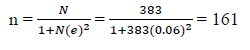
where n = sample size required, N = the total number of small-scale pig farmers in the five surveyed suburbs, and e = the acceptable sampling error. Since participants were not selected randomly, the opportunistic (i.e., convenience) sampling technique may have introduced bias, making the results less representative of the larger population. Nevertheless, the technique enabled the researchers to conduct the interviews at a convenient time during the day, with close observations of the animals, infrastructure, production and marketing practices. This helped validate the data and enhance the accuracy of the results.
2.3. Data Collection
Data was collected through face-to-face personal interviews with pig farmers using pre-tested structured questionnaires administered in local languages (i.e., Afrikaans, isiXhosa, and English). The questionnaire was pre-tested on 15 April 2021 with 10 farmers in Kayamandi (GPS coordinates: -33.926706, 18.843263), using a prototype that had been developed. Kayamandi is a low-income, high-density suburb of Stellenbosch in the Western Cape province of South Africa, sharing similar socio-economic characteristics with the surveyed suburbs. Pretesting examined whether the survey was properly completed and whether respondents truly understood the questions, ensuring they would provide all the required data. Following the pretest, changes were made to the questionnaire, including the rewording and rearranging of several questions to guarantee clarity, a logical question flow, and adequate guidance. The survey comprised 61 closed-ended, open-ended, and multiple-choice questions about household demographics (8 questions), farm characteristics (10), pig marketing practices (16), challenges (4), opportunities (4), and agricultural support services (19). The average interview time was approximately 45 minutes per respondent. Personal observations, physical examinations, reviews of pre-existing records, and, when appropriate, photos were used to supplement the data collected via questionnaires.
2.4. Statistical Analysis
The PROC FREQ of SAS 9.4 (SAS Institute Inc., Cary, NC, USA) was used to analyse descriptive statistics for demographics, pig marketing practices, and agricultural support services data. To evaluate the associations between suburbs and characteristics of general pig marketing practices, a Chi-square test was performed. The Shapiro-Wilk and Levene tests were used to determine the normality and homoscedasticity of this dataset, respectively. The PROC GLM of SAS was used to separate the means of the data on pig body weight, number of sales and slaughtered pigs, price, and distance to market at a 5% (P < 0.05) level of probability using Tukey's test.
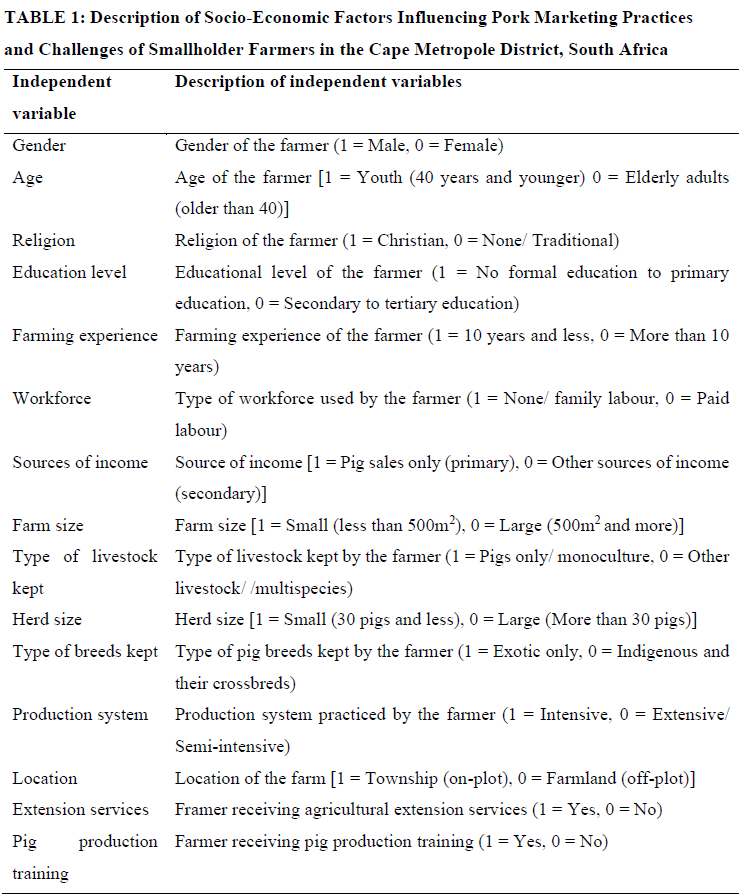
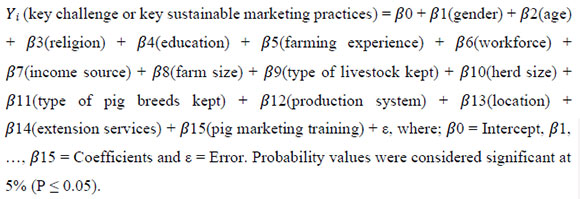
Logistic regression analysis was employed to identify the variables influencing the key challenges faced by farmers and their adoption of key marketing practices. The PROC LOGISTIC model estimated the log chances of farmers choosing a specific marketing practice or facing a specific challenge. Socio-economic factors such as gender, age, religion, education level, farming experience, workforce, source of income, farm size, type of livestock, herd size, type of breeds kept, production system, location, agricultural advisory services, and pig management training were included in the model as independent variables (Table 1). The change in the likelihood that pig farmers could encounter a specific challenge or adopt a specific key marketing practice for a unit change in each socio-economic and ecological component was predicted using the marginal effects of logistic regression, based on the binomial logistic model. The binomial logistic regression model was selected based on its ability to accommodate numerous explanatory factors, account for the effects of confounding variables, facilitate the interpretation of dichotomous preference aspects, and ease data interpretation. However, if the differences in the independent variables are not verified, the projected values generated by the logistic regression may fall outside the range, and the relationship between the input and response may not be linear. Greene (2020) stated the model as follows:

Equation 1 was linearised into (2):

where: Prob (Yj = i) is the the probability of a farmer to experience a key challenge or adopt key sustainable marketing practices with two response categories of either 'yes' or 'no' coded as 1 or 0; β0 = Intercept; β1, β2, βn = coefficients of independent variables; X1,X2, ..., Xn = independent variables. Following the variables' fitting, the residual model was:
3. RESULTS
3.1. Attributes of the Farmers and Pig Herds
Farmer and herd attributes were reported in a companion study by Mathobela et al. (2024b). Briefly, most participants were men, practised Christianity, aged 36-60 years, secondary school graduates, and had more than six years of experience in pig farming. In addition, the majority of the surveyed participants farmed on small, privately owned farms and relied primarily on unpaid family labour and income from the sale of live pigs and pork. Pigs were mainly raised for sale and consumption. In the surveyed suburbs, pig herd sizes ranged between 24 and 36. Participants in the surveyed suburbs also raised chickens, cattle, sheep and goats.
3.2. Pig Weighing Practices
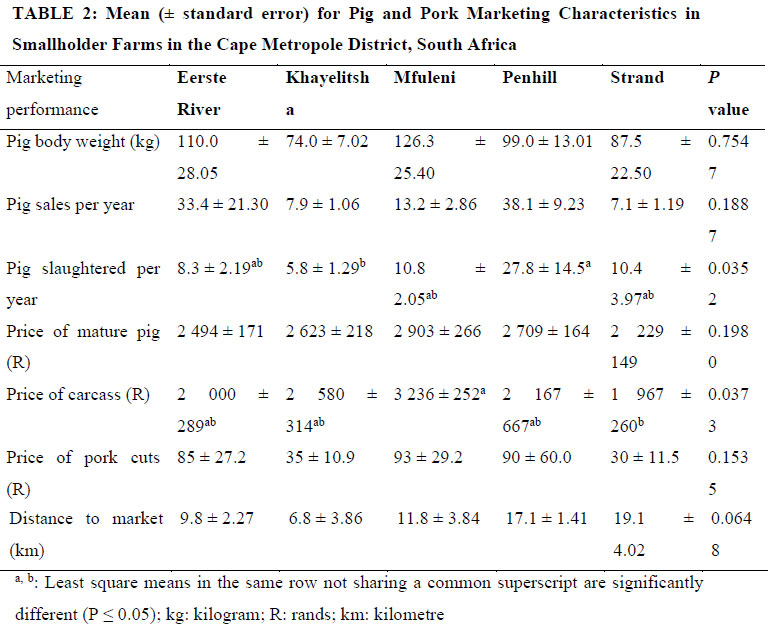
Only 4% of the farmers weighed the pigs, and over 80% used visual body appearance to estimate pig weight, with more respondents from Khayelitsha, Mfuleni, and Penhill (x2 = 22.63; φc = 0.53; P < 0.05) than the other suburbs. No differences (P > 0.05) were observed in the body weight of mature pigs across the five suburbs (Table 2).
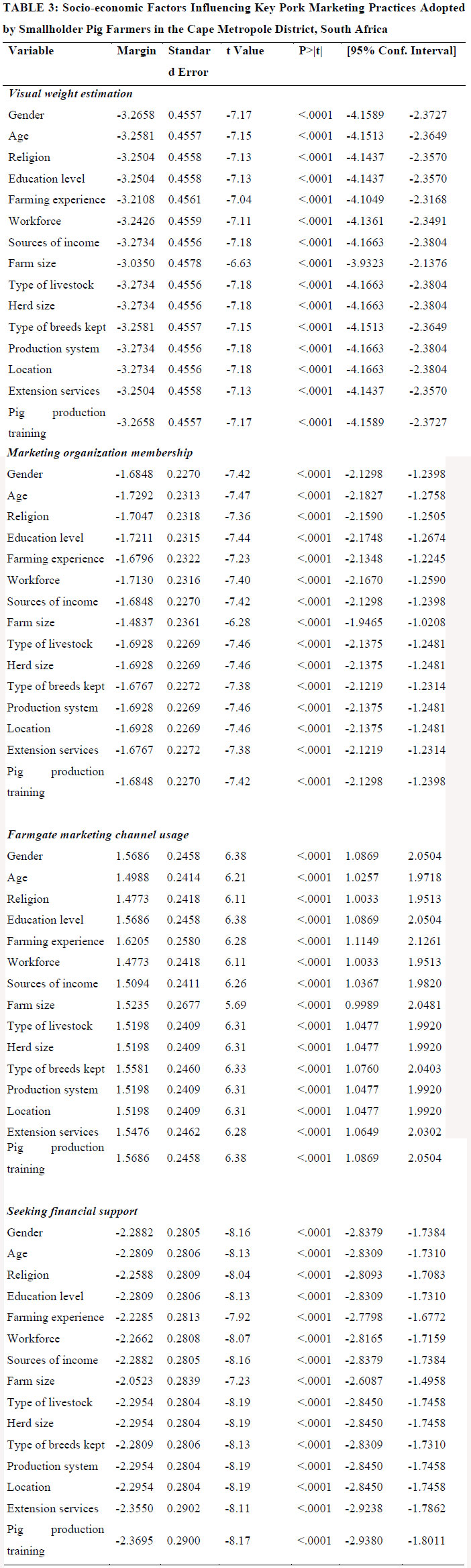
Farmers who weighed pigs only did so prior to slaughter or selling. The likelihood of using visual weight estimation for pigs decreased (P < 0.05) by 304, to 327%, with a unit increment in males, youths, Christians, level of education, farming experience, family labour, sources of income, farm size, type of livestock kept, herd size, use of exotic breeds, intensive and on-plot farming, extension services, and training in pig production (Table 3).
Poor pig growth rate (54% of respondents) was the most common challenge experienced by the farmers across all five suburbs. To avert this challenge, farmers suggested providing the pigs with supplementary feed (49% of respondents), adequate medicine (9%), minimising inbreeding (9%) and acquiring training on pig husbandry (9%) as solutions. The probability of pig farmers experiencing a slow growth rate in pigs was not influenced (P > 0.05) by any of the investigated predictor variables.
3.3. Pig Slaughtering Practices
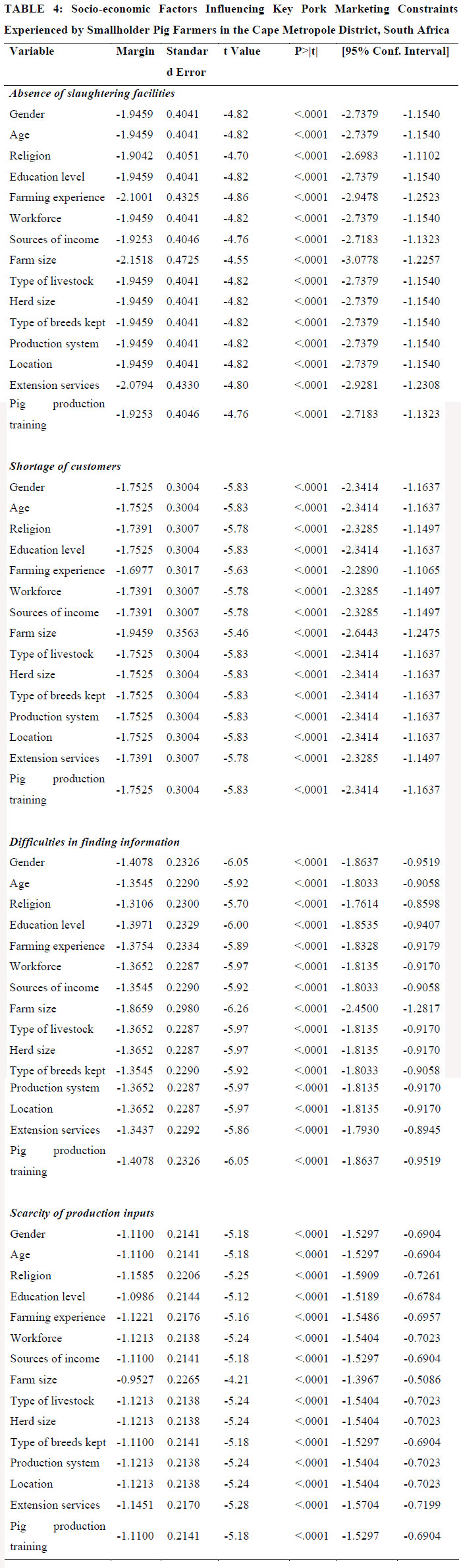
Across the five suburbs, 61% of the farmers slaughtered pigs on-farm, with more respondents (x2 = 23.56; φc = 0.39; P < 0.05) coming from Mfuleni compared to the other suburbs. Penhill had a greater (P < 0.05) number of pigs slaughtered annually than Khayelitsha (Table 2). Porkers (56%), baconers (37%), and weaners (18%) were the most slaughtered pig classes. Sixty percent of the farmers did not experience slaughter-related challenges. The remaining 40% faced several slaughter challenges, including unavailability of slaughtering facilities (13%), high slaughter costs (7%), restraint bars (6%) and stunning equipment (5%), insufficient energy to boil scalding water (5%) and lack of refrigerators for carcass preservation (4%). Most (74%) of the farmers proposed building a proper slaughtering facility as one of the slaughter solutions. However, 5% suggested access to information on recommended slaughter practices, use of offal as a payment method to reduce slaughter costs, selling live pigs only, storage of wood for boiling scalding water in a dry place, and provision of electricity for operating the refrigerator as possible solutions that they could implement to counteract challenges associated with pig slaughter. The likelihood of lacking slaughter facilities decreased (P < 0.05) by 190 to 215%, with a unit increase in males, youths, Christians, level of education, farming experience, family labour, sources of income, farm size, type of livestock kept, herd size, use of exotic breeds, intensive and on-plot farming, extension services, and training in pig production (Table 4).
3.4. Pig and Pork Marketing Practices
Across all five suburbs, income was primarily generated by selling live pigs (52% of respondents), carcasses (18%), or a combination of both (29%). Eerste River had more (x2 = 34.03; 9c = 0.34; P < 0.05) respondents who sold live pigs than the other suburbs. There were no differences (P > 0.05) in annual pig sales, price of mature live pigs, retail cuts, and distance to the market across the five suburbs (Table 2). However, Mfuleni had higher (P < 0.05) prices for whole/half carcasses than Strand (Table 2). The likelihood of pig farmers selling live pigs was not influenced (P > 0.05) by any of the investigated predictor variables. About two-thirds of farmers sold whole carcasses and retail cuts of pork. The class of pigs commonly sold were porkers (56% of respondents), baconers (40%), and weaners (35%). Pigs were mainly sold to the local community (73% of respondents), with Khayelitsha having more (x2 = 37.75; 9c = 0.34; P < 0.05) sales than the other suburbs. Only 18% and 6% of the pigs were sold to informal traders and family members, respectively. A total of 54% of pigs were transported to the market in small trucks and 13% by trailers. The transport was arranged either by the buyers (69% of respondents), farmers (28%), or middlemen (3%). About 85% of the farmers belonged to a marketing organisation that largely provided information on pig production (55% of respondents), neighbourhood watch (14%), pig sales (9%), and access to land (9%). Farmers who did not participate in any organisations cited lack of representation (36%), provision of inadequate information (20%), and perceived no value in joining (19%) as the main reasons. The probability of a farmer to be a member of a marketing organisation decreased (P < 0.05) by 148 to 173%, with a unit rise in males, youths, Christians, level of education, farming experience, family labour, sources of income, farm size, type of livestock kept, herd size, use of exotic breeds, intensive and on-plot farming, extension services, and training in pig production (Table 3).
Farmgate (82% of respondents) was the dominant marketing channel used by the farmers, followed by the use of middlemen (9%), abattoirs (8%), and auctions (3%). Farmgate markets were primarily used due to convenience (71% of respondents), the lack of alternatives (9%), and limited funds (9%). The likelihood of farmers to adopt the farmgate marketing channel increased (P < 0.05) by 148 to 162%, with a unit increment in males, youths, Christians, level of education, farming experience, family labour, sources of income, farm size, type of livestock kept, herd size, use of exotic breeds, intensive and on-plot farming, extension services, and training in pig production (Table 3). Farmers who opted to work with middlemen for marketing purposes did so based on network referrals (57% of respondents) or convenience (43%). Four-fifths of the farmers used the formal market for convenience, while 13% and 7% benefited from better management and competitive prices for the product, respectively. Most farmers (79% of respondents) preferred to sell their pigs throughout the year, whereas 8% and 13% sold pigs in the wet and dry seasons, respectively. A large flock size (67% of respondents) and regular cash flow (20%) were the main reasons why farmers preferred to sell pigs all year round. Two-fifths of farmers did not encounter pork marketing challenges. However, some farmers reported a lack of clientele (15%), absence of formal markets (9%), non-payments from clients who purchase on credit (7%), negative perceptions of pork healthfulness (7%), limited marketing exposure (6%), inadequate marketing tools (6%) and unreliable markets (5%) as other challenges. Farmers offered a variety of marketing solutions including marketing training (23%), access to formal markets (15%), assistance in advertising (13%), producing high-quality pigs (10%), using reliable markets (5%), selling pigs or pork for cash (5%), maintaining stable selling prices (5%) and growing herd size (5%). The probability of farmers experiencing customer shortage decreased (P < 0.05) by 170 to 195%, with a unit increase in males, youths, Christians, level of education, farming experience, family labour, sources of income, farm size, type of livestock kept, herd size, use of exotic breeds, intensive and on-plot farming, extension services, and training in pig production (Table 4).
3.5. Agricultural Support Services
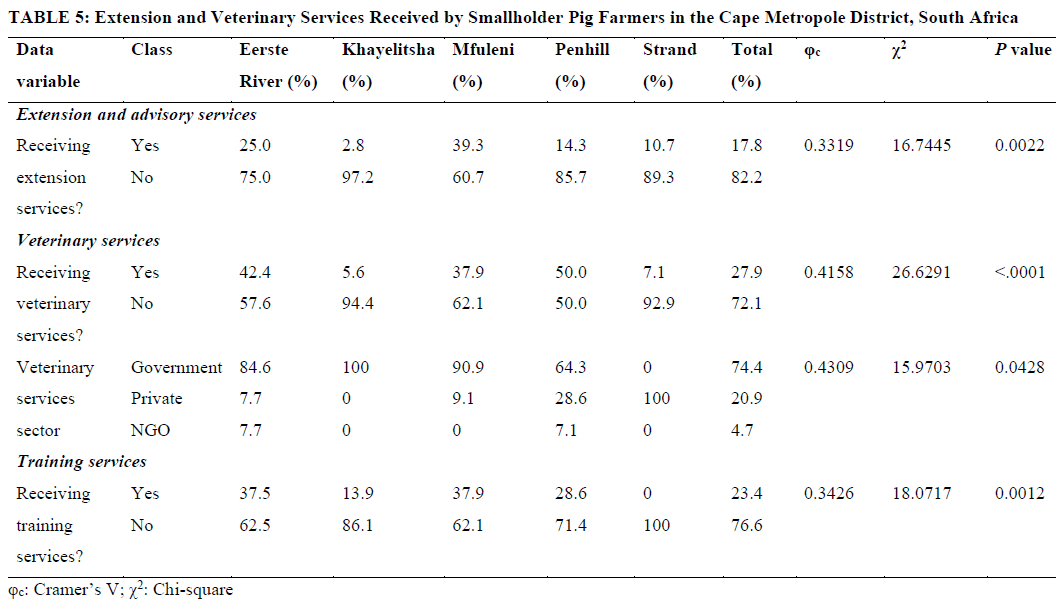
An overview of the extension and veterinary services received by smallholder pig farmers in the Cape Metropole District, South Africa, is presented in Table 5. Two-fifths of the farmers received information about pig marketing from the other farmers, while 17% accessed it from social media, 13% from customers, and 10% from elders. Only 18% of the farmers received extension services, and 82% of these services came from government departments. Mfuleni had more (x2 = 16.75; φc = 0.33; P < 0.05) respondents who received extension services than other suburbs. The extension services were provided to nearly 40% of the farmers on a need-to-know basis, while the rest received the services on either a quarterly (30%) or annual basis (17%). Only 28% of the farmers received veterinary care, with more respondents (x2 = 26.63; φc = 0.42; P < 0.05) coming from Penhill than from the other suburbs. The government provided nearly three-quarters of the veterinary services, with Khayelitsha receiving more (x2 = 15.97; φc = 0.43; P < 0.05) services compared to other suburbs. The frequency of farmers receiving veterinary services was mainly quarterly (41%) or as needed (34%).
One-fifth of the farmers in each of the five surveyed suburbs acquired training services, with government officials providing 74% of them (Table 5). Eerste River and Mfuleni had more respondents (x2 = 18.07; φc = 0.34; P < 0.05) who received training services than other suburbs. Two-fifths of the farmers received need-based training when necessary, while one-third received training on an annual basis. According to respondents, the training received covered the pig value chain (36% of respondents), pig production (27%), and animal health (15%), with Eerste River having the highest number of respondents who received training (x2 = 44.57; φc = 0.67; P < 0.05). Only 9% of the farmers received financial support once, and the support was mainly from the government (83%). The probability of seeking financial support decreased (P < 0.05) by 205 to 237%, with a unit rise in males, youths, Christians, level of education, farming experience, family labour, sources of income, farm size, type of livestock kept, herd size, use of exotic breeds, intensive and on-plot farming, extension services, and training in pig production (Table 3).
Farmers across all five suburbs reported experiencing a scarcity of production inputs (25%), limited access to information on pig production and marketing (20%), lack of service delivery (18%), not receiving feedback after farm visits from extension officers (6%), farming on illegal communal land (5%), lack of training and advice (4%) and no farm visits by extension officers (3%). According to the farmers, possible solutions proposed included the provision of production inputs (30%), delivering need-based training (23%), advocating for more site visits by extension officials (15%), establishing proper communication channels (15%), employing more government extension personnel (6%) and acquiring title deeds to land (4%). The likelihood of encountering difficulties in finding information and scarcity of production inputs decreased (P < 0.05) by 131 to 187% and 100 to 120%, respectively, with a unit rise in males, youths, Christians, level of education, farming experience, family labour, sources of income, farm size, type of livestock kept, herd size, use of exotic breeds, intensive and on-plot farming, extension services, and training in pig production (Table 4).
4. DISCUSSION
The information obtained from this study provides insight into the pig marketing practices and agricultural support services adopted by urban smallholder pig farmers, as well as the accompanying challenges in the Cape Metropole District, South Africa. In agreement with the current study, most smallholder pig farmers used visual appraisal to determine the weight of pigs before slaughter and sale (Berihu & Tamir, 2016; Mulindwa et al., 2016; Mutua et al., 2020). As a result, farmers are often exploited by buyers who undervalue and underpay for their pigs (Mugonya et al., 2021; Mulindwa et al., 2016; Ouma et al., 2015). The use of the visual weight estimation method could be related to the unavailability of farm resources such as weighing scales, which are costly (Kimbi et al., 2016). Due to its drawbacks, the visual weight estimation method offers a more suitable alternative, providing a comparatively precise, reliable, and affordable method for estimating the live weight of pigs for resource-limited farmers (Kabululu, 2023). The decline in farmers' probability of visually estimating pig weight, given a unit increase in farming experience, education level, extension services, and production training, was expected. This could be explained by the fact that resourceful and knowledgeable farmers often utilise technology, which may include weighing scales, rather than the visual weight estimation method. The decrease in the likelihood of using the visual weight estimation method among more educated farmers agrees with Mulindwa et al. (2016), who reported that knowledge and information on pig husbandry positively influence farmers' ability to weigh their pigs.
The majority of respondents in the survey practised on-farm pig slaughtering, confirming earlier reports by Qekwana and Oguttu (2014). The decreased likelihood of lacking slaughtering facilities, with a unit increase in the number of Christians, could be attributed to Christianity's humane animal welfare practices (Adam et al., 2019). The decline in the probability of not having slaughter facilities, with a unit increase in males, could be related to the observation that men have greater access to resources and are frequently in charge of tasks requiring strength, expertise, and abilities such as slaughtering. At the same time, women have limited access to resources and are primarily responsible for mundane household tasks (Nguyen-Thi-Duong et al., 2022). The observed positive influence of extension services and training on ownership of slaughtering facilities may have been attributed to farmers being more knowledgeable about on-farm informal pig slaughter, meat safety regulations, and inappropriate meat handling that can pose a health risk to customers (Dietze, 2011; Mutua et al., 2020). Additionally, farmers who sell slaughtered pigs typically pay substantial transaction expenses, including expensive fees for slaughter, cold storage and transportation (Antwi & Seahlodi, 2011).
Farmers sold live pigs more frequently than carcasses or meat, confirming previous findings by Shongwe et al. (2020), who reported that 68% of farmers sold live pigs, while 57% slaughtered for household consumption. The high sales of live pigs may be attributed to several factors, primarily driven by farmers' preference due to convenience or the absence of slaughter facilities among smallholder farmers (Atherstone et al., 2019; Mathobela et al., 2024a, 2025; Ndwandwe & Weng, 2018). To ensure the efficient marketing of pork, the provision of low-cost slaughterhouses or mobile abattoirs, along with information about formal markets, is recommended (Atherstone et al., 2019; Ndwandwe & Weng, 2018). Despite a high number of live pig sales, socio-economic factors had no influence on the mode of sale. This study found that price differentials between suburbs may be linked to a lack of market information, differences in pig live weight estimation skills and price bargaining power among urban smallholder pig farmers (Le et al., 2016).
Informal slaughter without proper meat inspection was a common practice among urban smallholder pig farmers. Such a practice poses health risks to consumers (Mutua et al., 2020). As a result, this could lower pork sales from the informal market and reduce profit for the urban smallholder pig producers (Dietze, 2011). The influence of age on the shortage of customers agrees with the study by Madzimure et al. (2014), who reported that young farmers (<30 years) had better chances of selling pigs than older farmers. The age of pig farmers is directly related to their condition as human resources, who manage the day-to-day production and marketing of pigs, and have a direct impact on working productivity (Ajala & Adesehinwa, 2008; Manese et al., 2016).
Regarding education and training, similar findings were reported where farmers with more knowledge of pig husbandry and marketing practices sold more pigs than those without such knowledge (Madzimure et al., 2014). Educated farmers with access to updated market information possess stronger market networking, negotiating power, and enterprise management skills, and are more likely to adopt new technological advances in farming, thereby increasing their market access (Tilahun et al., 2023). The finding that herd size positively influences the customer base aligns with the study by Antwi and Seahlodi (2011), who reported that smallholder pig farmers who produce on a reasonably large and effective scale have access to high-value markets and higher profit margins. Additionally, they may utilise crossbreeding systems to expand the breeding herd, as this strategy has been proven beneficial for commercial pork producers.
The shortage of customers experienced by the pig farmers in the current study is not surprising. It is possible that some people in the community may not accept pigs due to cultural, spiritual, and religious reasons (Weka et al., 2021). Additionally, some individuals refrain from consuming pork due to financial constraints and personal taste preferences (Roesel et al., 2019). Some consumers perceive pork as being less healthy and more oily than beef and lamb, which is contrary to its high proportion of health-beneficial polyunsaturated fatty acids (Roesel et al., 2019).
The finding that non-membership in farmers' associations or organisations is one of the major constraints faced by urban smallholder pig farmers concurs with previous reports (Kirima et al., 2017). The active participation of farmers in agribusiness associations serves as a source of empowerment, facilitating access to the market and the sharing of technical knowledge and information (Mugonya et al., 2021; Nwachukwu & Udegbunam, 2020; Ouma et al., 2015). In this regard, farmers have been recommended to leverage the opportunities offered by such agribusiness organisations to enhance production efficiency, herd size, value-added, and market share (Ndwandwe & Weng, 2018).
The finding that socio-economic factors influence the likelihood of farmers having a marketing organisation has been reported previously (Dietze, 2011; Ouma et al., 2015). Gender had an influence on market organisation in the current study, and the dominance of men reduced the likelihood of farmers adopting such associations. The decrease in the likelihood of men's affiliation with farmer organisations can be attributed to the gender-sensitive and women's empowerment policies of urban farmers' organisations, which specifically target women (Ouma et al., 2015). However, it has also been observed that women in the pig farming sector tend to frequently face social obstacles that limit their ability to take the lead in marketing sectors (Dietze, 2011). Regarding knowledge transfer, some marketing programmes are based on membership, and smallholder farmers who do not operate in organised groups seldom receive agricultural advisory services (Tatwangire, 2013). This explains the effect of extension services on adopting marketing organisation in the current study. Thus, farmers operating in isolation and who have limited exposure to extension services tend to inadvertently limit their production performance due to the difficulties of collectively sourcing funding, accessing markets, and controlling market prices (Ndwandwe & Weng, 2018).
The identification of farmgate and middlemen as the dominant marketing channels used by the farmers agrees with previous research (Abu et al., 2016; Berihu & Tamir, 2015; Levy et al., 2013). On the one hand, although farmgate sales are less remunerative, they are convenient, reduce transportation costs, and mitigate stress-related losses in pigs (Berihu & Tamir, 2015).
On the other hand, sales through middlemen play a crucial role by linking farmers to end markets, reducing the costs and risks associated with maintaining a market, and often offering better prices (Mutua et al., 2020). However, middlemen can take a large share of the profits in the value chain, thereby limiting smallholder farmers' opportunities for upgrading (Abebe et al, 2016).
The influence of education level, training, and extension services on pig and pork marketing channels was expected. The less knowledgeable and informed smallholder pig farmers often lack animal husbandry skills and the ability to network, resulting in struggles with increasing production and securing reliable markets (Madzimure et al., 2014). Similarly, location influenced farmers' adoption of the market channel, with on-plot farmgate sales being the preferred choice over off-plot sales. This is because on-plot farmers are located near urban areas, away from farmlands, which renders their pig sales easily accessible (Madzimure et al., 2014). Besides these factors, breed choice also influenced pig production, with farmers having a higher preference for exotic breeds due to their larger body size and faster growth rates compared to indigenous breeds (Ouma et al., 2015). As expected, farmers who rear exotic breeds had greater sales and marketing options. Thus, even though some farmers raised and valued indigenous breeds for their meat in the current study, no effort had been made to improve the local breeds into the niche market due to their small body size, slow growth rate and perceivably inferior carcass quality (Halimani et al., 2010; Madzimure et al., 2014).
The lack of agricultural support services, including access to extension, training, agribusiness, and financial services reported in the present survey corresponds with previous reports (Atherstone et al., 2019; Nwachukwu & Udegbunam, 2020). The lack of agricultural support services may result in inadequate information, poor skill development, and ineffective farm management (Nwachukwu & Udegbunam, 2020). Most of the agricultural support services in the surveyed areas were provided by government-affiliated organisations; however, challenges remain concerning the capacity of the personnel responsible for disseminating these services. Therefore, training government extension officers on how to disseminate knowledge to farmers could improve the production capacity and market access of urban smallholder pig farmers (Mathobela et al., 2024a; Ndwandwe & Weng, 2018). Financing is a critical barrier for urban smallholder farmers to transform into market-oriented production (Dietze, 2011). Smallholder farmers are often overlooked by financial institutions because they lack the collateral to secure loans or other forms of financial support. Additionally, cultural barriers among farmers influence their reluctance to acquire loans (Okello et al., 2021). Therefore, it is essential for governments, donors, and other development actors to develop innovative models that provide a comprehensive package of inputs, support, and financing for urban smallholder pig farmers (Okello et al., 2021).
All the investigated socio-economic factors influenced the provision of financial support, but sources of income and herd size were the most prominent. The influence of income source and herd size on the provision of financial support was expected, as smallholder farmers with multiple income sources tend to maintain large herd sizes because they can afford the necessary production inputs (Dietze, 2011). Key production inputs in pig farming (i.e., feed, medicines and slaughter equipment) are costly but essential for efficient pig production and marketing (Dietze, 2011), warranting government support. It was not surprising that pig farmers with small herd sizes, due to a lack of finance, were unable to restructure their production into a market-driven model.
5. CONCLUSIONS AND RECOMMENDATIONS
The main challenges faced by urban smallholder farmers in the studied low-income suburbs were slow pig growth rates, scarcity of production inputs, and difficulties in accessing marketing information. The use of the farmgate marketing channel and sales of live pigs were the key sustainable marketing practices adopted by smallholder pig farmers in the surveyed areas. The likelihood of farmers to encounter marketing challenges and not to adopt sustainable marketing practices was high among the women, older, African traditional religion adherents, and those with less farming experience, education, training, and access to extension services, as well as those that relied on paid labour and on only one source of income, farmed extensively and off-plot, owned small farms, one livestock type, indigenous breeds, and small pig herds. Considering these farmers' socio-economic factors can guide the creation of effective pig marketing strategies, ultimately increasing market access and the sustainability of small urban pig farming enterprises in developing countries. To ensure consistency of supply and sustainable access to high-value markets, urban smallholder farmers are encouraged to network with key value chain actors, identify markets and understand their specifications prior to production.
6. ACKNOWLEDGEMENTS
The authors would like to express their appreciation to the smallholder pig farmers in the Cape Métropole District and officials from the Western Cape Department of Agriculture for their participation in this study. Special thanks are due to the Technology Innovation Agency (TIA), acting through the Red Meat Industry Research Association, the South African Pork Producers' Organisation (SAPPO), Stellenbosch University's Social Impact Division, and the National Research Foundation (NRF) for their financial support.
REFERENCES
ABEBE, G.K., BIJMAN, J. & ROYER, A., 2016. Are middlemen facilitators or barriers to improve smallholders' welfare in rural economies? Empirical evidence from Ethiopia. J. Rural Stud., 43: 203-213. [ Links ]
ABU, B.M., ISSAHAKU, H. & NKEGBE, P.K., 2016. Farmgate versus market centre sales: a multi-crop approach. Agric Econ., 4: 21. [ Links ]
ADAM, M.B., CLOUGH, D.L. & GRUMETT, D., 2019. A Christian Case for Farmed Animal Welfare. Animals (Basel)., 9(12): 1116. [ Links ]
AJALA, M.K. & ADESEHINWA, A.O.K., 2008. Analysis of Pig Marketing in Zango Kataf Local Government Area of Kaduna State, Nigeria. Tropicultura., 26(4): 229-239. [ Links ]
ATHERSTONE, C., GALIWANGO, R.G., GRACE, D., ALONSO, S., DHAND, N.K., WARD, M.P. & MOR, S.M., 2019. Analysis of pig trading networks and practices in Uganda. Trop. Anim. Health Prod., 51(1): 137-147. [ Links ]
ANTWI, M. & SEAHLODI, P., 2011. Marketing Constraints Facing Emerging Small-Scale Pig Farmers in Gauteng Province, South Africa. J. Hum. Ecol., 36(1): 37-42. [ Links ]
BALTENWECK, I., THINH, N.T., NGA, N.T.D., HUNG, P., VAN NHUAN, N.H., HUYEN, T.T.N., LAPAR, M.L. & NILSTEUFEL., 2018. Assessing competitiveness of smallholder pig farming in the changing landscape of Northwest Vietnam. ILRI Research Report 52. Nairobi, Kenya: International Livestock Research Institute (ILRI). [ Links ]
BERIHU, M. & TAMIR, B., 2016. Marketing practices and constraints of pig production under small scale intensive farming in East Shewa, Ethiopia. Glob. Vet., 16(3): 261-267. [ Links ]
DEPARTMENT OF AGRICULTURE, LAND REFORM AND RURAL DEVELOPMENT (DALRRD)., 2021. A profile of the South African pork market value chain 2021. Available from chrome-extension://efaidnbmnnnibpcajpcglclefindmkaj/http://webapps1.daff.gov.za/AmisAdmin/upload/Pork%20Market%20Value%20Chain%20Profile%202021.pdf [ Links ]
DAVIDS, P., JOOSTE, A. & MEYER, F.H., 2014. Evaluating the South African pork value chain. Available from https://www.researchgate.net/publication/314082560_Evaluating_the_South_African_pork_value_chain [ Links ]
DEKA, R., THORPE, W., LAPAR, M.L. & KUMAR, A., 2007. Kamrup'spig sub-sector: Current status, constraints and opportunities. Nairobi: ILRI (International Livestock Research Institute). [ Links ]
DIETZE, K., 2011. Pigs for prosperity. Rural Infrastructure and Agro-Industries Division, Food and Agriculture Organization of the United Nations. Report No. ISBN 978-92-5107068-0. [ Links ]
GREENE, W.H., 2020. Econometric Analysis: Global Edition (8th ed). Pearson Education. [ Links ]
HALIMANI, T.E., MUCHADEYI, F.C., CHIMONYO, M. & DZAMA, K., 2010. Pig genetic resource conservation: The Southern African perspective. In Ecol. Econ., 69(5): 944951. [ Links ]
KABULULU, M.L., 2023. Heart girth best predicts live weights of market-age pigs in Tanzania. PLoS ONE., 18(12): e0295433. [ Links ]
KAGIRA, J.M., MAINGI, N., KANYARI, P.W.N., GITHIGIA, S.M., NG'ANG'A, J.C. & GACHOHI, J.M., 2010. Characteristics of pig trade in low income settings in Busia District, Kenya. Tanz. Vet. J., 27(1): 27-35. [ Links ]
KIMBI, E.C., MLANGWA, J., THAMSBORG, S., MEJER, H. & LEKULE, F.P., 2016. Smallholder pig marketing systems in the southern Highlands of Tanzania. J. Nat. Sci. Res., 6(14): 87-98. [ Links ]
KIRIMA, K., IKUSYA, K., APHAXARD, N. & MURANGIRI, M., 2017. Characterization of pig production systems in Embu West Sub County, Embu County, Kenya. Int. J. Adv. Res., 5(6): 1527-1533. [ Links ]
LE, T.T.H., MUTH, P.C., MARKEMANN, A., SCROLL, K., & ZÁRATE, A.V., 2016. Potential for the development of a marketing option for the specialty local Ban pork of a Thai ethnic smallholder cooperative group in Northwest Vietnam. Trop. Anim. Health Prod., 48(2): 263-271. [ Links ]
LEVY, M., DEWEY, C., WEERSINK, A., MUTUA, F. & POLJAK, Z., 2013. Pig marketing and factors associated with prices and margins in Western Kenya. J. Dev. Agric. Econ., 2: 371-383. [ Links ]
MADZIMURE, J., BOVULA, N. & NGORORA, G.P., 2014. Market Opportunities and Constraints Confronting Resource-Poor Pig Farmers in South Africa's Eastern Cape. JJIDB., 5(2): 29-35. [ Links ]
MAGQUPU, S., KATIYATIYA, C.L.F., CHIKWANHA, O.C., STRYDOM, P.E. & MAPIYE, C., 2023. Quality and safety of pork sold in the informal urban street markets of the Cape Metropole, South Africa. Meat Sci., 204: 109270. [ Links ]
MAGQUPU, S., CHIKWANHA, O.C., KATIYATIYA, C.L.F., STRYDOM, P.E. & MAPIYE, C., 2024. Consumers' purchasing behaviour and quality preferences for pork sold in the informal street markets of the Cape Metropole, South Africa. Agrekon., 63(3): 113-132. [ Links ]
MAJUNDER, P.P. & CHERALA, H., 2021. Marketing pattern and constraint analysis of swine farming in Telangana State of India. Int. J. Livest. Res., 11(7): 37-43. [ Links ]
MANESE, M.A.V., SANTA, N.M. & BUKANAUNG, E.P., 2021. Contribution of pig farming to household in Tenga Subdistrict, South Minahasa District. IOP Conf. Ser.: Earth Environ. Sci., 892: 012016. [ Links ]
MATHOBELA, R.M., MOLOTSI, A.H., MARUFU, M.C., STRYDOM, P.E. & MAPIYE, C., 2024a. Transitioning opportunities for sub-Saharan Africa's small-scale urban pig farming towards a sustainable circular bioeconomy. Int. J. Agric. Sustain., 22: 2315918. [ Links ]
MATHOBELA, R.M., CHIKWANHA, O.C., KATIYATIYA, C.L.F., MOLOTSI, A.H., MARUFU, M.C., STRYDOM, P.E. & MAPIYE, C., 2024b. Farmer-oriented predictors of smallholder urban pig farming challenges and adoption of sustainable management practices in the Cape Metropole, South Africa. Environ. Dev. Sustain. Available from https://link.springer.com/article/10.1007/s10668-024-05299-6 [ Links ]
MATHOBELA, R.M., CHIKWANHA, O.C., KATIYATIYA, C.L.F., SEMWOGERERE, F., MOLOTSI, A.H., MARUFU, M.C., STRYDOM, P.E. & MAPIYE, C., 2025. Preslaughter practices, pork physicochemical attributes and fatty acid profiles of pigs raised and slaughtered on smallholder urban farms in the Cape Metropole, South Africa. Vet. Anim. Sci., 28: 100454. [ Links ]
MUGONYA, J., KALULE, S.W., NDYOMUGYENYI, E.K. & TEJADA MORAL, M., 2021. Effect of market information quality, sharing and utilisation on the innovation behaviour of smallholder pig producers. Cogent Food Agrio., 7(1): 1948726. [ Links ]
MULINDWA, C., JOHN, K., KYATEREKERA, M., MFTUMUKIZZA, E. & JOHN, K. 2016. Strengthening farmers ' capacities for profitable pig and pigmeat marketing in selected districts of Uganda. Kampaña (Uganda): CGIAR RTB. [ Links ]
MUTUA, F., LINDAHL, J. & RANDOLPH, D., 2020. Possibilities of establishing a smallholder pig identification and traceability system in Kenya. Trop. Anim. Health Prod., 52(2): 859-870. [ Links ]
NDWANDWE, S.B. & WENG, R.C., 2018. Competitive analyses of the pig industry in Swaziland. Sustain., 10: 4402. [ Links ]
NGUYEN-THI-DUONG, N., PHAM-VAN, H., DUONG-NAM, H., NGUYEN-THI-THU, H., NINH-XUAN, T., DANG-XUAN, S., UNGER, F., NGUYEN-VIET, H. & GRACE, D., 2022. Gender-focused analysis and opportunities for upgrading within Vietnam's smallholder pig value chains. Front. Vet. Soi., 9: 906915. [ Links ]
NWACHUKWU, C.U. & UDEGBUNAM, C., 2020. Rural pig production and pork consumption in Imo State, Nigeria. Niger. J. Animal Soi., 22(1): 165-185. [ Links ]
OKELLO, D.M., ODONGO, W., ALIRO, T., & NDYOMUGYENYI, E., 2021. An assessment of pig feed diversity amongst smallholder pig farmers in Northern Uganda. Cogent Food Agric., 7(1): 1937867. [ Links ]
OUMA, E., DIONE, M., LULE, P., PEZO, D., MARSHALL, K., ROESEL, K., MAYEGA, L., KIRYABWIRE, D., NADIOPE, G. & JAGWE, J., 2015. Smallholder pig value chain assessment in Uganda: results from producer focus group discussions and key informant interviews. ILRI Project Report. Nairobi, Kenya: ILRI. [ Links ]
QEKWANA, N.D. & OGUTTU, J.W., 2014. Assessment of food safety risks associated with preslaughter activities during the traditional slaughter of goats in Gauteng, South Africa. J. Food Protect., 77(6): 1031-1037. [ Links ]
ROESEL, K., EJOBI, F., DIONE, M., PEZO, D., OUMA, E., KUNGU, J., CLAUSEN, P.H. & GRACE, D., 2019. Knowledge, attitudes and practices of pork consumers in Uganda. Glob. Food Sec., 20: 26-36. [ Links ]
RSA. (1984). Government Gazette: Animal Diseases Act 35 of 1984. Report No. 9152. [ Links ]
RSA. (2004). Government Gazette: National Health Act 61 of 2003. Report No. 26595. [ Links ]
SHONGWE, N.A., BYARUHANGA, C., DORNY, P., DERMAUW, V. & QEKWANA, D.N., 2020. Knowledge, practices and seroprevalence of Taenia species in smallholder farms in Gauteng, South Africa. PLoS ONE., 15(12): e0244055. [ Links ]
STROM, G., DJURFELDT, A.A., BOQVIST, S., ALBIHN, A., SOKERYA, S., SAN, S., DAVUN, H. & MAGNUSSON, U., 2017. Urban and peri-urban family-based pigkeeping in Cambodia: Characteristics, management and perceived benefits and constraints. PLoS ONE., 12(8): e0182247. [ Links ]
TATWANGIRE, A., 2013. Successes and failures of institutional innovations to improve access to services, input and output markets for smallholder pig production systems and value chains in Uganda. Nairobi, Kenya: ILRI. [ Links ]
TILAHUN, Y., TADESSE, B., GEBRE, E., HAILE, K., BAYU, M., ADIMASU, Z., TOLERA, Z., ZEGEYE, B. & BAYU, A., 2023. Factors influencing the intensity of market participation of smallholder livestock producers in southwest Ethiopia. Cogent Econ. Financ., 11(2): 2258672. [ Links ]
WEKA, R., BWALA, D., ADEDEJI, Y., IFENDE, I., DAVOU, A., OGO, N. & LUKA, P., 2021. Tracing the Domestic Pigs in Africa. IntechOpen. [ Links ]
YAMANE, T., 1967. Statistics, an Introductory Analysis (2nd ed). New York, USA: Harper and Row. [ Links ]
 Correspondence:
C. Mapiye
Correspondence Email: cmapiye@sun.ac.za