




Services on Demand
Journal

Article
 English (pdf)
 Article in xml format
 Article references
 Automatic translation
 Send this article by e-mail
Indicators
Related links
-
 Cited by Google
 -
 Similars in Google
Share

 Permalink
South African Journal of Agricultural Extension
On-line version ISSN 2413-3221Print version ISSN 0301-603X
S Afr. Jnl. Agric. Ext. vol.52 n.3 Pretoria 2024
https://doi.org/10.17159/2413-3221/2024/v52n3a15733
ARTICLES
Can Agroecology Close the Health Disparities Gap for Urban Vulnerable Communities in South Africa?
Rudolph MI; Muchesa EII
IDirector: Centre for Agroecological Intelligence, Faculty of Engineering and the Built Environment (FEBE), University of Johannesburg, E-mail: michaelr@uj.ac.za
IIPostdoctoral Fellow: Centre for Agroecological Intelligence, Faculty of Engineering and the Built Environment (FEBE), University of Johannesburg, E-mail: emuchesa@uj.ac.za
ABSTRACT
Approximately 34% of households in Johannesburg grapple with food insecurity, with 60% allocating R1000 (roughly $57) or less per month for food. The advent of COVID-19 exacerbated the situation, particularly for socially disadvantaged low-income populations, limiting their access to optimal health options. The pandemic underscored the importance of a balanced diet and consuming various vegetables and herbs rich in vitamins and other essential minerals to boost the immune system. The pandemic further highlighted the disparities in South Africa's food and health systems. This article delves into the core challenges, including food insecurity, the lasting impact of COVID-19, and poor public health facilities and interventions in South Africa. It explores the potential of agroecology in addressing health disparities in South Africa's urban communities. A transdisciplinary literature review was conducted, primarily utilising secondary data from two key sites: the Research, Teaching and Food Systems Hub at the Auckland Park Bunting campus of the University of Johannesburg and research reports from the Siyakhana Growth and Development team. This study posits that the agroecological approach can effectively address the high prevalence of food and nutrition insecurity. Promoting localised food production is essential for the successful implementation of agroecology. This should be complemented by appropriate and personalised training and capacity-building initiatives through consolidated stakeholder mobilisation. A supportive policy framework advocating for urban farming and agroecology is also crucial.
Keywords: Urban Agriculture, Capacity Building Community Health, Nutrition, Environmental Stewardship
1. INTRODUCTION
There are significant disparities in community health in South Africa, across the African continent, and globally. These disparities, although challenging, are manageable and can be addressed through concerted efforts at the global, national, and local levels (Morris et al., 2021). The challenges of health and food insecurity are unprecedented and have been further intensified by the lasting impact of the COVID-19 pandemic and the ongoing economic recession in South Africa (Plamondon et al., 2020). The pandemic has amplified the social, economic, and environmental issues, contributing to numerous health complications. Despite some progress since 1994, South Africa is marked by stark inequalities in health and wealth, with poverty and unemployment pervasive (Hlongwane et al., 2022). According to Erokhin et al. (2020), the economic impact of COVID-19 and the economic downturn, evident in rising prices, especially food, and an unemployment rate nearing 35%, amplifies the devastating impact on health (Gumata et al., 2021).
South Africa is grappling with a wide array of health issues, including low birth weight, stunting, Tuberculosis (TB), cardiovascular disease, hypertension, diabetes, and cancer (Singer et al., 2021). Numerous studies underscore the importance of plant-based foods such as vegetables, fruits, whole grains, legumes, nuts, and seeds in preventing many diseases. These foods provide essential vitamins, minerals, and other plant compounds (Mullins et al., 2021; Rock et al., 2020; Kaparapu et al., 2020). Agroecology, an essential agricultural and developmental intervention, is pivotal in enhancing the availability of diverse foods, addressing health disparities, and raising awareness about ecological health. In addition to being a source of a balanced and appropriate organic diet rich in safe and nutritious food, it is a crucial component of environmental health (Rudolph et al., 2020).
1.1. Purpose of the Paper
This paper aims to study and assess agroecology as a potential strategy for enhancing nutrition, augmenting food accessibility and availability, promoting environmental stewardship, and reducing household food expenditure.
2. METHODOLOGY
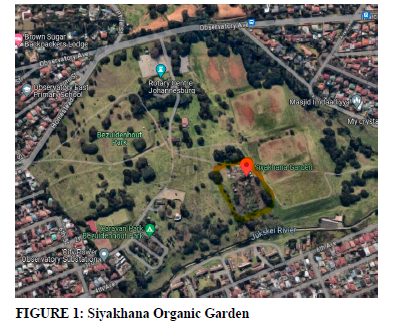
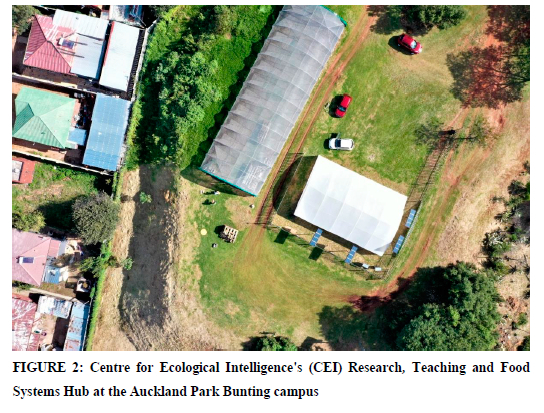
A comprehensive, transdisciplinary literature review was undertaken, utilising secondary data sources predominantly from two key sites: the Centre for Ecological Intelligence's (CEI) Research, Teaching and Food Systems Hub at the Auckland Park Bunting campus of the University of Johannesburg and reports by the Siyakhana Growth and Development NPO. The collected data was meticulously synthesised, establishing several thematic topics, including agroecology, health disparities, organic produce promotion, dietary diversity, and sustainable community development. These themes provided a structured framework for the analysis and interpretation of the data.
Several secondary reports linked to the sites were scrutinised. These included the Conservation Agriculture Report (GDARD, 2017), which offered insights into conservation practices in agriculture; the Gauteng City-Region Observatory Food Systems Review Paper (Working Paper Series, 2017), which provided a comprehensive overview of the food systems in the Gauteng City-Region; The City of Johannesburg Prevalence of Food Security Report (2017), which shed light on the state of food security in the greater Johannesburg Metropole; and the GDARD Mid-Term Evaluation of the Siyazondla Homestead Food Gardens Programme (2014). These reports were supplemented by data collected and interventions conducted at the CEI hub, including initiatives related to food justice and innovative agroecological elements. These innovative elements encompassed food production systems, the circular economy and waste management. A rigorous and methodical approach to data collection and analysis ensured a thorough understanding of the subject matter, providing comprehensive data and a strong argument for discussion and the recommendations made in this paper.
3. INTERVENTIONS
3.1. Small-Scale Farming and Urban Agriculture
According to Rudolph et al. (2023), the agroecological farming system presents a viable alternative to enhance food production, particularly for the most vulnerable communities and households. This system, backed by substantial evidence, is instrumental in augmenting dietary diversity locally and mitigating the numerous health and environmental risks associated with industrial agriculture. Agroecology not only has the potential to feed the poorest segments of the population but also offers a source of income and access to high-quality food at a low cost. For middle-income families, it presents an opportunity for savings and a return on their investment in urban property. Furthermore, it can be profitable for small and large entrepreneurs. A report by the European Union (EU) (2023) confirmed that investing in agroecology can yield a return on investment of between 7 to 30 US dollars for every dollar invested.
However, implementing agroecological methods must be contextualised within the broader framework of the rapid urbanisation of peri-urban arable land. This urbanisation could lead to declining agricultural production (Sumbo et al., 2023). Compounding factors such as limited and erratic access to water and energy could further inhibit affordable food supply (Altieri et al., 2020; Abdulai et al., 2023). While agroecology offers numerous benefits, its application must be carefully considered within urbanisation and resource availability to ensure sustainable and equitable food production (Mondal et al., 2021).
Despite these challenges, Chandia (2020) argues that small-scale and alternative farming, such as rooftop and vertical gardens, and the effective use of small spaces using innovative methods, systems, and materials in public open spaces such as parks, schools, and clinics, can generate substantial food in urban and peri-urban environments. Thus, executing an urban agriculture strategy could provide a solution to producing a wide range and diversity of food, thereby addressing food shortages and waste management while also impacting health, education, and economic benefits (Rudolph et al., 2023).
Nino et al. (2020) showed that a 100 m2 plot can sustain a family for a year with fruits and vegetables, providing a nutritional intake of vitamins A, C, and B and iron. Furthermore, gardening has been identified as a form of exercise that can promote health and reduce the incidence of heart disease, obesity, and diabetes, offering a generally therapeutic environment.
The potential of small-scale farming as a solution for food insecurity must be considered (Dasa et al., 2018). With sufficient entrepreneurship skills and support, small-scale agriculture can hugely contribute to the country's economic development and well-being by providing employment services and raw materials for agriculture and other industries. Small-scale farms also tend to be more natural and organic than commercial farms, as small-scale farmers cannot afford agrochemicals, fertilisers and genetically modified seeds. Hence, the food produced from small-scale farms is healthier and contains fewer chemicals. Small-scale agriculture can break the cycle of poverty, but only if it is productive, profitable, sustainable, resilient, and, very importantly, linked to markets (Rudolph et al., 2020). To ensure that beneficiaries can achieve optimal health, agricultural projects should be nutrition-oriented, promoting adequate, healthy food and creating local markets while protecting and contributing towards environmental sustainability (Mwadzingeni et al., 2021).
Agroecology promotion enables people to increase control over and improve their health. This approach recognises that the urban environment can significantly impact public health. Health benefits to the broader population can be achieved by facilitating the development of urban environments that promote health, equity, and economic development (Pereira et al., 2018).
Given the high prevalence of food and nutritional insecurity among South Africans, one of the strategies used to improve food availability and access in urban centres is the establishment of community food gardens. Indeed, it has been demonstrated that community food gardens can significantly transform poor communities by subsidising household supplies, supplying households with an income, and increasing food diversity (Alessandro et al., 2021). Chetty-Mhlanga et al. (2021) posited that establishing gardens in schools can increase awareness of the importance of good nutrition and spread it to communities. Growing food in schools could enhance learning, skills, health, and well-being outcomes for children and young people, particularly in diet and nutrition. Integrating health and nutrition education into the curriculum promotes healthy habits such as improved hygiene and sanitation, dietary diversity, nutrient preservation, and informed food choices. Furthermore, ensuring that girls remain in school can prevent the intergenerational transmission of malnutrition, low birth weight, and child malnutrition (Rudolph et al., 2023; Adidja et al., 2019). Despite all the positive aspects of agroecology, it is important to understand and appreciate that simultaneously addressing all factors related to health disparities may be challenging. Nevertheless, breaking the cycle at various critical points in the systemic feedback loop, which links disparities with public, environmental and socio-economic challenges, is essential (Wezel et al., 2020).
4. FINDINGS AND DISCUSSION
4.1. City of Johannesburg (CoJ) Food Resilience Report
Rudolph et al. (2021), drawing from the CoJ Food Resilience Report (2017), showed that 34% of households in the greater Johannesburg Metropole experience food insecurity. Furthermore, 60% of these households spend R1000 (approximately $57) or less on food per month. Households employ various coping strategies to manage their limited resources, including purchasing and consuming less preferred but inexpensive foods, buying only essential items, adhering to a strict budget, reducing portions, or borrowing food or money from friends or relatives (Nkosi, 2017). However, these strategies often compromise the quality and quantity of the diet. This is evidenced by the fact that one in five households reported limited nutritional diversity. Most households consume foods and drinks high in starch and sugar, while consuming fruits, vegetables, and pulses is less frequent. This dietary pattern could potentially increase the risk of non-communicable diseases and weaken immunity, leading to significant health and financial implications (Jamshidi-Naeini et al., 2021).
A focus group discussion held at the Siyakhana Organic Garden in Bezuidenhout Park, Johannesburg, revealed that certain demographic groups, including the elderly, women, the unemployed, and individuals with low levels of education, are particularly susceptible to food insecurity. This underscores the need for systemic and economic interventions that can address social determinants related to food and nutritional disadvantages. Mazenda et al. (2021) further emphasised the crucial role of municipalities in enhancing food security by implementing appropriate policies and support programs. These findings highlight the urgent need for broad, targeted interventions to improve food security and nutrition in the greater Johannesburg Metropole.
4.2. Gauteng Department of Agriculture and Rural Development (GDARD) Conservation Agriculture
The GDARD report (2017) evaluation of local and provincial initiatives provided an insightful analysis of the state of urban agriculture and food gardens. The data revealed that only a small fraction of households are engaged in urban agriculture and food gardens. Many households refrained from participating in agricultural activities, which could be attributed to many factors. One of the primary deterrents is the stringent city by-laws that govern agricultural practices within urban settings. These regulations pose significant barriers for households interested in urban agriculture or setting up food gardens. Another major obstacle is limited access to land. Open spaces suitable for agriculture are often scarce in densely populated urban areas, restricting households' opportunities to engage in agricultural activities. These findings were confirmed by a recent study by Mkhize et al. (2023).
Furthermore, there is a noticeable lack of knowledge regarding innovative or alternative farming practices among households. This knowledge gap further hinders their ability to invest time and effort in urban agriculture effectively and efficiently and sustain these interventions. An observation from the feedback was a general disinterest in agriculture amongst most households, which could be attributed to the perceived labour intensity of agricultural activities, lack of immediate economic returns, or simply a preference for other forms of livelihood. The above findings demonstrate substantial barriers to adopting urban agriculture and food gardens. Policy, systems thinking, short-, medium- and longer-term strategic and targeted interventions addressing these challenges could increase household participation in these practices (Fantini, 2023).
In addition, the development of small-scale food gardens and farms in diverse environments is hindered by limited resources such as water and energy and a deficiency in capacity building and training (Rudolph et al., 2023). Despite these obstacles, the agroecology systems approach is perceived as a feasible and sustainable resolution to these challenges (GDARD Report, 2017).
The two projects under scrutiny implemented agroecological methods, and the results validated numerous advantageous assertions expressed above. These advantages include the revitalisation and augmentation of agriculture through enhanced soil quality, heightened soil resistivity, and the soil's increased ability to retain essential nutrients. Furthermore, it promoted a circular economy through the valorisation of waste and the creation of multiple revenue streams, improved governance of the agroecology project, and environmental sensitivity (Shrestha et al., 2020; Fantini, 2023). In summary, despite the considerable impediments to adopting urban agriculture, the agroecological approach presents promising solutions for enhancing agricultural practices and outcomes (Mkhize et al., 2023).
Mabapa et al. (2017) and Steglich et al. (2023) posit that agroecology enhances the resilience of livelihoods by fostering the development and implementation of multiple agricultural enterprises. This, in turn, offers solutions for mitigating and adapting to climate change while providing a consistent income source. The CEI hub's multi and cross-disciplinary work related to food systems further highlighted the effectiveness of various elements of agroecology. These include diversity, co-creation of knowledge, synergies, efficiency, recycling, resilience, human and social values, culture and food traditions, responsible governance, and circular and solidarity economy. These elements have proven successful and could be replicated in other community sites, yielding numerous benefits, particularly in water and energy conservation. However, despite the myriad advantages of agroecology, certain challenges were identified. These challenges encompass human error, poor farm management and maintenance, and inefficient use of resources. There are also difficulties in accurately measuring farm inputs and outputs, which can lead to inaccuracies and inefficiencies. It is important to note that, on the one hand, agroecology is vulnerable to the climate conditions of the surrounding environment (Pereira, 2018). On the other hand, agroecology farming best practices are efficient for ensuring resilient, sustainable farming systems even under climate change and variability (Akanmu et al., 2023).
In essence, while agroecology offers many benefits and has the potential to enhance the resilience of livelihoods, it has its challenges. This complexity must be clearly understood to harness agroecology's potential fully (Khalid et al., 2023).
4.3. Siyazondla Household Food Security Programme
The Gauteng Department of Agriculture and Rural Development (GDARD), through its Siyazondla household food security programme, invested R45 million, distributed 26,032 garden starter packs, offered training, and evaluated 380 of the recipients (GDARD, 2014; Mcata, 2019). Ninety percent of the participants interviewed received food garden training, but it was primarily focused on basic information rather than practical application. Although 87% of the households were still trying to maintain their gardens after one year, they faced barriers such as accessing seedlings, water problems, and soil health issues. Additionally, 96% of households consumed limited produce from their gardens. Fewer than 20% of households reported selling homegrown produce and saving money from their gardens. The programme evaluation identified key limitations, such as the need for improved food security and household incomes. Babalola (2021) noted that about 6.6 million South Africans faced severe hunger due to the COVID-19 lockdown restrictions, and it's unlikely that this worrying statistic has changed two years later. The negative influence of this public health pandemic on food security in South Africa was massive, and the impact is still being felt with severe disruptions in the agricultural production and food supply chain. Babalola (2021) further asserts that families and communities should be encouraged to grow their produce to be food secure and even create a source of income. These recommendations are supported by Kazungu et al. (2023).
4.4. Sustainable Social Entrepreneurship Models for Urban Agribusiness Initiatives in Johannesburg
A comprehensive case study focusing on farming initiatives within the Johannesburg City Metropole collected data through in-depth interviews with eight experts in the field. The findings indicated that the concept of social entrepreneurship in the context of urban farming initiatives remains somewhat nebulous and ill-defined, resulting in varying interpretations and understandings. Despite this lack of clarity, certain farm-level interventions have been identified as essential for the success of these initiatives. These interventions include applying innovative precision farming technologies, allowing for more efficient and effective farming practices, and using the agroecological approach. This combination of precision agriculture and agroecology seems to be a suitable blend of current practice (Mafuwane et al., 2023).
Furthermore, establishing a supportive policy environment within local government that actively promotes urban farming was deemed necessary. Such a policy framework can provide legal and regulatory support for urban farming initiatives. In addition, the importance of multi-stakeholder collaboration is emphasised. This involves stakeholders' active participation and cooperation, including farmers, local communities, government agencies, non-governmental organisations, and businesses. In essence, while the concept of social entrepreneurship in urban farming is still evolving, certain key interventions and approaches have been identified as essential for the success of these initiatives (Mello, 2019; Rudolph et al., 2021).
5. CONCLUSIONS
Agroecology has received much attention as a sustainable production strategy capable of leveraging the agricultural-nutrition linkages to positively impact community health. The agroecological food production approach and methods improve nutrient adequacy through higher production diversity, environmental sensitivity and sustainable solutions. The various local and provincial government and other reports mentioned above all emphasise the need for government to play a more decisive role and support broader systemic and economic drivers to address food and nutritional insecurity. Universities can contribute by adding value through research and training, developing replicable models, and providing institutional support. Social entrepreneurship in urban farming initiatives confirms and reinforces the importance of leveraging technology and dedicated management solutions for urban farming, thereby increasing production and generating income.
Investment in agroecology is an important strategy to boost food production and economic development. South Africa can exploit and build on its extensive public and agricultural extension systems network to address health and nutrition issues by using agroecology in combination with precision farming. Farmers can learn how to grow various nutritious crops within available budgets and apply biodiversity methods. There is a need for consolidated efforts from local, provincial, and national governments to promote and ensure healthier urban and inner-city environments. This should include allocating funding towards research interventions addressing water, air, and soil pollution, as well as the nutritional status of urban populations. Additionally, zoning specific land for agroecology and providing appropriate and accredited training at all levels are essential components of this comprehensive approach.
South Africa faces challenges, including epidemics of chronic illness such as diabetes and hypertensive cardiac disease, as well as high maternal, neonatal, and childhood mortality rates, compounded by the aftermath of COVID-19. These challenges highlight the urgency of prioritising health promotion and primary prevention through school-based and public health initiatives, including nutrition interventions. Learning opportunities for schools and communities, where agroecology promotion is a health promotion and disease prevention tool, should include small-scale agriculture nutrition courses, workshops, growing food, greening initiatives, environmental awareness, and entrepreneurship. Key issues for successful implementation involve community ownership, a clear vision, and decisive action. Addressing extreme malnutrition levels lays the foundation for promoting the health and well-being of current and future generations. This approach should be at the core of public extension efforts. Embedded in broader systemic shifts towards food security, policies supporting food gardens and organic foods can contribute to sound and sustainable nutrition practices essential for poverty reduction. The partnership between Siyakhana Growth and Development and CEI has made impressive progress in raising a broader awareness of the challenges of food security and nutrition and their connections to health and sustainable development.
To successfully implement agroecology, it is imperative to motivate families and communities to cultivate their own produce. This not only ensures food security but, more importantly, creates a potential source of income. Challenges like human error, poor farm management, and maintenance, which lead to inefficient use of resources, can be effectively addressed through precision farming and targeted training and capacity-building initiatives.
Creating a supportive policy environment that actively advocates for urban farming can offer the necessary legal and regulatory backing for urban farming initiatives. Furthermore, the significance of multi-stakeholder collaboration, aligned with Goal 17 of the Sustainable Development Goals (SDGs), cannot be overstated. Through the collective efforts of all stakeholders, we can truly harness the full potential of agroecology.
REFERENCES
ABDULAI, I.A., KUUSAANA, E.D. & AHMED, A., 2023. Toward sustainable urbanization: Understanding the dynamics of urban sprawl and food (in) security of indigenous households in peri-urban Wa, Ghana. J. Urban Aff., 1-26. [ Links ]
ADIDJA, M.W., MWINE, J., MAJALIWA, J.G.M. & SSEKANDI, J., 2019. The Contribution of Agroecology as a Solution to Hunger in the World: A Review. J. Agric. Ext. Econ. Socio, 33(2): 1-22. [ Links ]
AKANMU, A.O., AKOL, A.M., NDOLO, D.O., KUTU, F.R. & BABALOLA, O.O., 2023. Agroecological techniques: Adoption of safe and sustainable agricultural practices among the smallholder farmers in Africa. Front. Sustain. Food Syst., 7: 1143061. [ Links ]
ALESSANDRO, A., JÖRG, K., MAHMOUD, I.H.E.H. & MORELLO, E., 2021. Urban Living Labs as an instrument for co-creating sustainable cities?-Reflections on Hamburg and Milan in the CLEVER Cities project. In Delivering Urban Transformation through Co-production, pp. 19-20. [ Links ]
ALTIERI, M.A. & NICHOLLS, C.I., 2020. Agroecology and the reconstruction of a post-COVID-19 agriculture. Peasant Stud., 47(5): 881-898. [ Links ]
CHANDIA, M., 2020. Gardens in the Johannesburg Inner-city: An Analysis of the Multifunctionality of Urban Agriculture. Masters thesis. University of Johannesburg. [ Links ]
CHETTY-MHLANGA, S., FUHRIMANN, S., BASERA, W., EEFTENS, M., RÖÖSLI, M. & DALVIE, M.A., 2021. Association of activities related to pesticide exposure on headache severity and neurodevelopment of school-children in the rural agricultural farmlands of the Western Cape of South Africa. Environ Int., 146: 106237. [ Links ]
DASA, F. & ABERA, T., 2018. Factors affecting iron absorption and mitigation mechanisms: A review. Int. J. Agric. Sci. Food Technol., 4(2): 024-030. [ Links ]
EROKHIN, V. & GAO, T., 2020. Impacts of COVID-19 on trade and economic aspects of food security: Evidence from 45 developing countries. Int. J. Environ. Res. Public Health, 17(16): 5775. [ Links ]
EU REPORT., 2023. Donor and investor convening boosting food systems transformation through agroecology. Rome, Italy. Available from: https://knowledge4policy.ec.europa.eu/sites/default/files/Report%20Boosting%20Food%20Systems%20Transformation%20through%20Agroecology.pdf [ Links ]
FANTINI, A., 2023. Urban and peri-urban agriculture as a strategy for creating more sustainable and resilient urban food systems and facing socio-environmental emergencies. Agroecol Sust Food., 47(1): 47-71. [ Links ]
GDARD., 2014. Mid-Term Evaluation of the Siyazondla Homestead Food Gardens Programme. The Siyakhana Initiative for Ecological Health and Food Security, a division of the Wits Health Consortium. [ Links ]
GDARD., 2017. Conservation Agriculture in two sites Gauteng- Siyakhana and Gan Eiden. Gauteng Department of Agriculture and Rural Development (GDARD) Report. [ Links ]
GUMATA, N. & NDOU, E., 2021. Achieving price, financial and macro-economic stability in South Africa. Springer International Publishing. [ Links ]
HLONGWANE, T.M. & SHEEFENI, J.P., 2022. Examining the Effect of Financial Markets Shocks on Financial Stability in South Africa. Int. J. Econ. Financ. Issues., 12(6): 30. [ Links ]
JAMSHIDI-NAEINI, Y., MOYO, G., NAPIER, C. & OLDEWAGE-THERON, W., 2021. Food and beverages undermining elderly health: three food-based dietary guidelines to avoid or delay chronic diseases of lifestyle among the elderly in South Africa. South Afr J Clin Nutr, 34(si1): S27-S40. [ Links ]
KAPARAPU, J., PRAGADA, PM. & GEDDADA, M.N.R., 2020. Fruits and vegetables and their nutritional benefits. In R.E. Aluko (ed.), Functional Foods and Nutraceuticals. Cham: Springer, pp. 241-260. [ Links ]
KAZUNGU, I. & KUMBURU, N.P., 2023. Agripreneurship as a panacea for food security in Tanzania: A systematic review. Heliyon, 9(2): e13305. [ Links ]
KHALID, S., NADEEM, A., SHAHEEN, S., MAMMADOVA, R. & BAKHSH, A., 2023. Crop Protection for Sustainable Agriculture in the Era of Climate Change. In M. Hasanuzzaman (ed.), Climate-Resilient Agriculture, Vol 1: Crop Responses and AgroecologicalPerspectives. Cham: Springer International Publishing, pp. 349-361. [ Links ]
MABAPA, M.P., AYISI, K.K. & MARIGA, I. K., 2017. Effect of planting density and harvest interval on the leaf yield and quality of moringa (Moringa oleífera) under diverse agroecological conditions of Northern South Africa. Int. J. Agron. https://doi.org/10.1155/2017/2941432 [ Links ]
MAFUWANE, H.C. & MUCHIE, M., 2023. Evaluating whether indigenous knowledge, social innovation, and youth social entrepreneurship play a role towards the reduction of poverty and the creation of sustainable jobs in Mpumalanga, South Africa. J Adv Zool., 44(S2): 5082-5097. [ Links ]
MAZENDA, A., MUSHAYANYAMA, T., MASIYA, T. & SIMAWU, M., 2021. Cities, poverty and food: The role of municipalities in enhancing food security. Available from: https://repository.up.ac.za/handle/2263/82221 [ Links ]
MCATA, B., 2019. Garden ownership as a solution to food insecurity in urban areas of South Africa: Case of food gardens in Alice town, Eastern Cape province. J. Agribus. Rural Dev., 3(53): 215-224. [ Links ]
MELLO, M.A., 2019. Sustainable Urban Farming in Johannesburg, South Africa. University of the Witwatersrand, Faculty of Commerce, Law and Management. [ Links ]
MKHIZE, X., MTHEMBU, B.E. & NAPIER, C., 2023. Transforming a local food system to address food and nutrition insecurity in an urban informal settlement area: A study in Umlazi Township in Durban, South Africa. J. Agric. Food Res., 12: 100565. [ Links ]
MONDAL, S. & PALIT, D., 2021. Agroecology for sustainable food system and footprint mitigation. In A. Banerjee, R.S. Meena, M.K. Jhariya & D.K. Yadav (eds.), Agroecological Footprints Management for Sustainable Food System. Singapore: Springer, pp. 69-114. [ Links ]
MORRIS, L.D., GRIMMER, K.A., TWIZEYEMARIYA, A., COETZEE, M., LEIBBRANDT, D.C. & LOUW, Q.A., 2021. Health system challenges affecting rehabilitation services in South Africa. DisabilRehabil, 43(6): 877-883. [ Links ]
MULLINS, A.P. & ARJMANDI, B. H., 2021. Health benefits of plant-based nutrition: Focus on beans in cardiometabolic diseases. Nutrients, 13(2): 519. [ Links ]
MWADZINGENI, L., AFARI-SEFA, V., SHIMELIS, H., N'DANIKOU, S., FIGLAN, S., DEPENBUSCH, L., SHAYANOWAKO, A.I., CHAGOMOKA, T., MUSHAYI, M., SCHREINEMACHERS, P. & DERERA, J., 2021. Unpacking the value of traditional African vegetables for food and nutrition security. Food Sec, 13: 1215-1226. [ Links ]
NINO, E.C., LANE, S., OKANO, K., RAHMAN, I., PENG, B., BENN, H., FATTI, C.C., MAREE, G., KHANYILE, S. & WASHBOURNE, C., 2020. Urban agriculture in the Gauteng City-Region's green infrastructure network. Gauteng City Region Observatory (GCRO). Available from: https://discovery.ucl.ac.uk/id/eprint/10107843/ [ Links ]
NKOSI, N., 2017. Evaluation of public participation and poverty alleviation programmes: the case of the City of Johannesburg (CoJ). Doctoral dissertation. North-West University. [ Links ]
PEREIRA, L., WYNBERG, R. & REIS, Y., 2018. Agroecology: The future of sustainable farming? Environ: Sci. Policy. Sustain. Develop., 60(4): 4-17. [ Links ]
PLAMONDON, K.M., BOTTORFF, J.L., CAXAJ, C.S. & GRAHAM, I.D., 2020. The integration of evidence from the Commission on Social Determinants of Health in the field of health equity: A scoping review. Critical Public Health., 30(4): 415-428. [ Links ]
ROCK, C.L., THOMSON, C., GANSLER, T., GAPSTUR, S.M., MCCULLOUGH, M.L., PATEL, A.V... & DOYLE, C., 2020. American Cancer Society guideline for diet and physical activity for cancer prevention. CA Cancer J Clin., 70(4): 245-271. [ Links ]
RUDOLPH, M., KROLL, F., MUCHESA, E., PAIKER, M. & FATTI, P., 2021. Food Security in Urban Cities: A Case Study Conducted in Johannesburg, South Africa. J. Food Secur., 9(2): 46-55. [ Links ]
RUDOLPH, M., MELLO, M.A. & MUCHESA, E., 2021. Sustainable social entrepreneurship models for urban agribusiness initiatives in Johannesburg. J. Food Secur., 9(3): 126-135. [ Links ]
RUDOLPH, M., MUCHESA, E. & KROLL, F., 2020. Use of urban agriculture in addressing health disparities and promotion of ecological health in South Africa. Current Health., 10: 12. [ Links ]
SHRESTHA, J.I.B.A.N., SUBEDI, S.U.B.A.S.H., TIMSINA, K.P., CHAUDHARY, A., KANDEL, M. & TRIPATHI, S., 2020. Conservation agriculture as an approach towards sustainable crop production: A review. Farm & Manag., 5(1): 7-15. [ Links ]
SINGER, M., BULLED, N., OSTRACH, B. & LERMAN GINZBURG, S., 2021. Syndemics: A Cross-Disciplinary Approach to Complex Epidemic Events Like COVID-19. Annu. Rev. Anthropol., 50: 41-58. [ Links ]
STEGLICH, M., DUVVUR, R., BANSAL, P., KATENBRINK, G.K.M., KAUTZ, A., KOPALEYSHVILI, A., PANDEY, M., PYKA, D., STEINMETZ, C., THAKUR, S. & THOMAS, A., 2023. Improving climate resilience through agroecology and adaptive policies. [ Links ]
SUMBO, D.K., ANANE, G.K. & INKOOM, D.K.B., 2023. Peri-urbanisation and loss of arable land: Indigenes' farmland access challenges and adaptation strategies in Kumasi and Wa, Ghana. Land Use Policy., 126: 106534. [ Links ]
TRAN, E., 2021. Right to Soweto: Contextualizing the modern fire station to cultivate community hope and agency in Soweto, South Africa. [ Links ]
WEZEL, A., HERREN, B.G., KERR, R.B., BARRIOS, E., GONÇALVES, A.L.R. & SINCLAIR, F., 2020. Agroecological principles and elements and their implications for transitioning to sustainable food systems. A review. Agron. Sustain. Dev., 40: 1-13. [ Links ]
 Correspondence:
M. Rudolph
Correspondence Email: michaelr@uj.ac.za
