




Services on Demand
Journal

Article
 English (pdf)
 Article in xml format
 Article references

 Automatic translation
 Send this article by e-mail
Indicators
Related links
-
 Cited by Google
-
 Similars in Google
Share

 Permalink

South African Journal of Science
On-line version ISSN 1996-7489Print version ISSN 0038-2353
S. Afr. j. sci. vol.122 n.3-4 Pretoria Mar./Apr. 2026
https://doi.org/10.17159/sajs.2026/25577
BOOK REVIEW
Hearing the voices of the people in Zulu: Ilanga Lase Natal Newspaper: A chronicle of our times
Tessa Dowling
African Languages and Literatures, University of Cape Town, Cape Town, South Africa. Email: Tessa.dowling@uct.ac.za
Book Title: Ulibambe Lingashonil A History of Ilanga lase Natal Newspaper
Editor: Bongani Ngqulunga
ISBN: 9781431435616 (paperback, 521 pp)
Publisher: Jacana, Johannesburg; ZAR450
Published: 2025
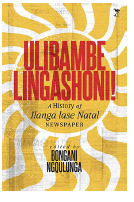
Scholars of African languages, particularly Zulu, will treasure this history of Ilanga lase Natal, a newspaper which was founded in 1903 and is still published today. The polemical and poetic nature of the language is represented (usually with English translations) in the many illustrative extracts. The editor, Bongani Ngqulunga, explains that the phrase 'Ulibambelingashonil', which is the title of the volume, was chosen because its literal meaning ('Seize it [the sun] and don't let it setl') speaks to the "collective wish for Ilanga to survive for another century" (p.xxi). Although I hear that Ilanga lase Natal has lost some of its market share to the popular iSolezwe newspaper, the fact that it still has thousands of readers and an online presence in 2025 is testimony to its staying power.
Researchers wanting to hear the voices of ordinary people during South Africa's colonial and apartheid years will find them in this history, in references to, and extracts from, letters to the editor, although Ilanga strove for a more complex understanding of 'audience'. In various chapters, the writers note that the newspaper wanted to create a space in which editors, publishers and readers nurtured each other, and also one in which diverse opinions were encouraged, but they also point out the reality that many people were left out of this mutual support system because of their 'precarious' social conditions (p.48), which is a gentle way of saying they had been forced to live in abject poverty.
Students and academics involved in Media Studies will be delighted by the wealth of original material (and analyses thereof) now made available to them, including extracts from the newspaper's inaugural 1903 edition right up to its recent lifestyle supplement aimed at the urban youth. But running like a string of Zulu beads through the volume is reference to Ilanga's critical role in voicing communal outrage and political dissent, while at the same time often toeing a more conservative line. On that note - yes, I know it shows how old I am - I kind of liked John Dube's desire for everyone to get a skill, rather than just book knowledge.
Scholars of journalism who focus on the role played by powerful personalities in shaping the moral and political character of a newspaper will be fascinated by the chapters chronicling the rise (and demise) of huge and complex role players like the Dubes, the slightly mad, bad, brave and angry Robert Grendon and the milder A.W.G. Champion, who "offended and pleased Ilanga's readers every week" (p.265). Smaller (but no less important) parts are played by minoritarians (I had to look that word up) like Magema Fuze, football enthusiasts, and humorists like R.R.R. Dhlomo and Msimbithi. These chapters provide intriguing insights into how creative and popular media personalities were able to offer alternative and challenging opinions and, in the case of the humorists, exploit stereotypes for comedic effect.
Political scientists can expect detailed information and comment on the role of Ilanga lase Natal in African politics. As Peter Limb observes, "political coverage rapidly increases from the period 1906-1908 onwards", during which time Dube's own political ambitions were realised (on his becoming president of the South African National Native Congress from 1912 to 1916) (p.136). Ilanga was used both by Dube's rivals - ANC heavyweights Joshua Gumede and Stephen Mini - and himself to air their criticisms of each other and, in Dube's case, to launch an unsuccessful campaign from 1927 against Gumede (p.159).
Academics interested in worker unions will find some criticism of the Ilanga's editorial coverage, which "remained brief, with no apparent interviews of workers" (p.163), and its less than enthusiastic response to the rise of radical ANC leaders, the Industrial and Commercial Workers Union and the Communist Party of South Africa (p.187).
Medical historians should find the chapter on Ilanga's coverage of the 1918 Spanish flu instructive in terms of how the disease came to be named by Zulu speakers and how, during the early stages of the pandemic, the newspaper would report on prominent people getting ill and whip up panic about it (just like during the pandemic of our own time). But Ilanga reporters also tried to faithfully describe the exact nature of the disease and its impact on the population and gave people a platform to reassert "their human agency in the face of this calamity" (p.133).
This book has relevance for Gender Studies scholars because, aside from occasional (but nevertheless valuable) references to women (who were largely unheard of as contributors until 1934) throughout the work, there is a chapter dedicated to the presence and treatment of women in the newspaper. This chapter includes Ilanga's reporting of a women's march to the native commissioner on 20 March 1937 protesting the pass laws. The journalist was admiring of the women but also patronising, "presenting the women's actions as apolitical and charmingly traditional" (p.218). The newspaper's editors then tried to create a page for women, 'Page for the Ladies', which largely featured columns in English "devoted to an ideal of female domesticity" (p.219). Women were encouraged to contribute to the page, but remained silent. But "at the same time, Ilanga's letters to the editor began to feature contributions from women" (p.221).
Chapters are presented roughly in terms of a chronological progression from Ilanga's inception to the present day, but there are overlaps. Another possible perspective for the reader on the organisation of this book is via various topics (as I have tried to outline above). What would have helped is a simple timeline listing the major developments at Ilanga by date, because the newspaper's history involves so many names and dates that one does get a little confused. But not being an historian by training, perhaps I am too easily befuddled.
This book fills an important gap in South African historiography, as it brings to light a rare chronicle of the lives and thoughts of ordinary Zulu people during more than a century of South Africa's turbulent and cruel history.
Published: 26 March 2026
