




Services on Demand
Journal

Article
 English (pdf)
 Article in xml format
 Article references
 Automatic translation
 Send this article by e-mail
Indicators
Related links
-
 Cited by Google
 -
 Similars in Google
Share

 Permalink
South African Journal of Science
On-line version ISSN 1996-7489Print version ISSN 0038-2353
S. Afr. j. sci. vol.121 n.5-6 Pretoria May./Jun. 2025
https://doi.org/10.17159/sajs.2025/21516
BOOK REVIEW
Tackling the complex question of transforming the South African higher education system: Decolonisation and deracialisation of knowledge
Nkosinathi E. Madondo
Teaching and Learning Development Centre, Mangosuthu University of Technology, Durban, South Africa. Email: madondone@mut.ac.za
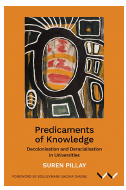
Book Title: Predicaments of Knowledge: Decolonisation and Deracialisation in Universities
Author: Suren Pillay
ISBN: 9781776149056 (paperback, 216 pp)
Publisher: Wits University Press, Johannesburg; USD20
Published: 2024
Universities worldwide, including those in South Africa, face numerous challenges, such as the impact of neoliberalism on institutional culture, the lingering effects of apartheid's racial and economic disparities, and the need to decolonise knowledge, curricula, and the university itself, in order to create a more equitable and transformed post-apartheid institution.
In South Africa - where the higher education systems are the primary focus of this book - universities are also expected to go beyond theorising about what decolonising knowledge can look like in a post-apartheid South Africa. Pillay tackles the intricate and multifaceted challenges of transforming the university system after apartheid, posing critical questions and offering potential solutions on how to navigate this complex landscape. Ultimately, Pillay seeks to reimagine university knowledge by decolonising it and the institutions that produce it, for the benefit of all stakeholders.
Pillay offers insightful and critical solutions within the context of the humanities and social sciences. Although the book focuses on decolonising knowledge and institutions within these fields, its lessons extend to broader issues of decolonising university knowledge. A key strength of the book is its caution against uncritically adopting theories that critique colonialism, providing valuable practical insights that can be applied more widely.
Pillay offers a nuanced and theoretically rich understanding of decolonisation, decoloniality, colonialism, and coloniality, which refreshingly diverges from prevailing views in contemporary debates on decolonising university knowledge. Notably, Pillay critiques the universal application of coloniality as a concept for understanding colonialism's impact in contexts like South Africa. While acknowledging the concept's value, he cautions against uncritical adoption, given its origins in Latin-American scholarship, and, in that context, coloniality highlights how colonial powers enforced cultural assimilation, which is a key aspect of the intellectual and psychological harm they inflicted. In South Africa, Pillay advocates for context-specific approaches.
South Africa's experiences with colonialism reveal complexities that exceed simplistic theories of cultural assimilation, and instead highlight the imposition of cultural divisions, promoting separate and unequal development based on race. According to Pillay, this issue is central to discussions on decolonising university knowledge and institutions. Pillay's work offers fresh perspectives on this topic, which is another significant strength of the book, especially for those involved in decolonisation efforts.
Another crucial aspect of decolonising university knowledge, particularly in the humanities and social sciences, is addressing the silence surrounding language. Pillay highlights the oversight in academic conventions, where language has not been substantially addressed. He commendably emphasises translation as a necessary scholarly endeavour. Given South Africa's multilingual context, language issues are increasingly pertinent. However, the book could have benefitted from a more detailed proposal on how to move beyond translation and intellectually elevate previously marginalised languages as viable media for learning, teaching and research.
Existing literature provides valuable insights on how to intellectually elevate indigenous languages by identifying underlying theories and principles that guide indigenous practices, rather than relying on Western scientific frameworks.1 The key point is that language proficiency involves more than just grammar, syntax and vocabulary. True language proficiency has a "hidden" dimension that goes beyond surface-level language use. The question remains whether indigenous languages have been developed to the point where they can be used to produce sophisticated academic writing. Currently, much indigenous knowledge is presented as descriptive accounts of cultural practices, lacking explanatory power and generalisability to other contexts.1
By uncovering the underlying principles and theories that inform indigenous practices, African scholars can develop a systematic and explanatory body of knowledge, but only if they take on the task of excavating and articulating these foundational concepts.1
While developing translations for abstract concepts may seem like a step towards decolonisation, it often relies on Western knowledge frameworks. To truly empower indigenous languages, it is essential to identify and develop the underlying indigenous theories and principles that guide cultural practices, rather than simply translating Western concepts.
In the book's final chapter, Pillay expands the scope of decolonisation beyond the humanities and social sciences, exploring how to decolonise the historical foundations of scientific knowledge and methodologies. Pillay effectively challenges the common assumption that scientific knowledge originated solely in Western civilisation and examines how this perspective is contested by advocates of decolonising knowledge.
In this chapter, Pillay argues that decolonising scientific knowledge does not mean replacing Western knowledge with African knowledge, as some scholars suggest. Instead, Pillay proposes re-examining the history of science to challenge Eurocentric views and recognise the contributions of colonised cultures to what is currently considered Western knowledge. This approach aims to democratise knowledge, acknowledging that scientific knowledge belongs to everyone, not just the West. By valuing diverse knowledge systems, we can foster a more inclusive and sustainable coexistence with nature and other species, promoting collective well-being and environmental harmony.
Pillay's book focuses on transforming the way we teach and learn in universities, by decolonising university curricula, institutions and knowledge systems, as discussed earlier, to create a more inclusive and diverse academic environment. It is worth reading.
References
1. Boughey C. The language story. Cape Town: African Minds; Forthcoming 2025. [ Links ]
Published: 29 May 2025
