The Significance of Environmental History in South Africa's School History Curriculum within a VUCA Context
Abstract
Environmental history investigates the interactions between humans and the natural environment over a specific period, exploring how these relationships have shaped ecological systems and human societies. The relationship between nature and humanity is analogous to a tapestry woven thread by thread, emphasising the importance of the depth of the connection between the two. The scholarly neglect of environmental history in the history Curriculum Assessment Policy Statement (CAPS) is increasingly difficult to justify and understand in the face of global land, ecological and climate crises. The history curriculum commits itself to ensuring environmental justice. At the same time, it excludes history which is necessary for achieving this environmental justice, and there are also pressing environmental issues that require immediate attention. This conceptual paper employs a critical inquiry approach to examine the absence of environmental history in the history CAPS and argues for its inclusion in this curriculum. The paper aims to critically interrogate the epistemic exclusions within the CAPS history curriculum and proposes integrating environmental history as a pathway to curricular justice. Using the decolonial and rhizomatic approaches as theoretical frameworks, the argument is developed through conceptual analysis of curriculum policy documents and the broader historical context of epistemic exclusion in the Volatile, Uncertain, Complex, Ambiguous (VUCA) world. Environmental history offers learners critical tools to understand the intersection of humans and nature, from colonial land dispossession to contemporary environmental issues. Therefore, this paper argues for including environmental history to promote epistemic, social and environmental justice. Its inclusion will equip learners to critically reflect on the evolving relationship between human societies and the natural environment, fostering environmental consciousness and contextual historical understanding. This would help learners critically engage with Indigenous Knowledge Systems (IKS) and draw insights to address environmental issues.
Environmental education; Environmental history; School history curriculum; VUCA world; CAPS
Introduction
The African Renaissance has called for decolonisation, Africanisation and the inclusion of Indigenous Knowledge Systems (IKS) in the South African curriculum, challenging historically accepted practices. Colonial authorities imposed systems that kept Africans passive and subservient, profoundly influencing education and knowledge production. As a result, South Africa's school curricula are being critically examined to address past injustices, particularly regarding epistemological and ontological gaps in the history curriculum. The History Ministerial Task Team (HMTT) report of 2018 highlights progress and ongoing challenges in curriculum reform, specifically regarding content selection and inclusivity (Ndlovu et al., 2018). While it supports reintroducing a subject-based curriculum, concerns remain about the superficial treatment of content and its inclusivity. One glaring injustice is excluding environmental history from the history CAPS (Kgari-Masondo, 2013a; Maluleka, 2024).
Despite the growing importance of environmental history, it remains largely absent from the history CAPS, relegated to geography or environmental education. Geography and environmental education's focus on physical and social phenomena overlooks the historical dimensions of environmental issues. While the history CAPS includes topics such as the colonisation of Southern Africa and industrialisation, it omits an explicit focus on how these processes altered landscapes, ecosystems and Indigenous ecological knowledge. This exclusion represents an epistemological injustice, as the historical roots of environmental struggles, such as land dispossession, are central to South Africa's history (Kgari-Masondo, 2013b). The ongoing land disputes highlight the need to include environmental history in the curriculum, which would help learners understand the intersection of human and ecological systems, from colonial land dispossession to contemporary environmental issues. As a curricular imperative, environmental justice requires learners to understand the historical roots of ecological inequality. Yet, these histories are absent from the current CAPS curriculum. This paper aims to critically explore the exclusion of environmental history from the CAPS history curriculum, arguing for its integration to promote decolonial, environmental, and epistemic justice-that is, ensuring that historically marginalised perspectives are reflected in what is taught. Through the lens of decolonial and rhizomatic theoretical frameworks, this paper argues that including environmental history in the Grades 10-12 history curriculum is essential for fostering critical thinking and enabling students to navigate the complexities of our rapidly changing world. This argument is premised on the belief that incorporating environmental history into the history CAPS would address South Africa's environmental challenges and promote epistemic, social and environmental justice. The growing urgency of climate change and ecological crises further strengthens the case for this inclusion. Hence, recommendations are provided for the HMTT to consider this vital component in developing South Africa's history curriculum.
Methodological approach
This study adopts a conceptual and qualitative approach, grounded in critical inquiry. It draws mainly on the history CAPS documents for further education and training (Grades 10-12). These documents were carefully examined to understand their priorities, particularly their aims, content choices and teaching intentions. It focused on how the curriculum presents or omits environmental themes, historical relationships to land and IKS, using a purposive document analysis to guide this exploration. Decolonial perspectives shaped the analysis by foregrounding epistemic exclusion and coloniality in curriculum content, prompting a close reading of how IKS and histories ofland are omitted and the rhizomatic approach informed the study's attention to non-linear, interconnected themes across content strands, allowing for the identification of silences and subtexts within the curriculum structure. The discussion in this paper is based on a close reading of curriculum policy documents, particularly the history CAPS document, alongside relevant scholarly publications in curriculum studies, environmental education and history education. Through conceptual and thematic analysis, informed by decolonial perspectives
and a rhizomatic lens, recurring patterns of exclusion, silencing and knowledge hierarchy were identified. While the paper does not draw on empirical data such as interviews, it offers a theoretically grounded critique of how environmental history is marginalised in curriculum content and broader epistemic structures.
Theoretical framework: Decolonial theory and the rhizomatic approach
Decolonial scholars, often Indigenous or First Nations people, argue that colonialism remains an ongoing structure, rather than a past event (Noxolo, 2017: 342-344). Decolonial theory critiques Western representations of the "other". It exposes how knowledge produced in the West is saturated with colonial power, sustaining an epistemic hierarchy that privileges Western ways of knowing while marginalising non-Western perspectives (Manning, 2021: 1204). Applying this lens to the exclusion of environmental history in South African curricula reveals how colonial power dynamics have shaped knowledge production and curriculum development. This lens highlights how including environmental history in the curriculum can disrupt colonial narratives, foreground African perspectives and create a more contextually relevant and epistemically just historical discourse.
The rhizomatic approach challenges linear, hierarchical structures of knowledge production and dissemination. Introduced by Deleuze and Guattari (1987), the rhizomatic approach serves as a metaphor for non-linear, interconnected ways of knowing, akin to plant roots' sprawling, unpredictable growth (Honan & Sellers, 2006). Rather than viewing knowledge as fixed and structured, the rhizome offers a framework for understanding knowledge, culture and society in fluid and dynamic ways. It is grounded in a philosophical stance that directly challenges traditional Western thought (Drumm, 2024). This paper draws on three key principles of the rhizomatic approach, namely connection, heterogeneity and non-linearity, to critique the exclusion of environmental history from the curriculum. These principles expose the limitations of Western ideologies that disconnect Africans from nature, reinforcing an education system that produces uncritical and environmentally unconscious learners.
The decolonial theory and rhizomatic approach offer a fresh and critical way to rethink South Africa's secondary school history curriculum. These perspectives encourage a more inclusive, flexible and contextually rich approach to teaching history. They also open the door for integrating environmental history to reflect the country's diverse historical, cultural and ecological realities.
Colonialism and apartheid in South Africa
Colonialism in South Africa marked the commencement of extensive environmental exploitation, which was closely tied to the dispossession of Indigenous communities across Southern Africa (Nyathi, 2025: 396 - 399). European settlers introduced capitalist agricultural practices and mining industries, disrupting traditional land-use systems and ecosystems in pursuit of economic gain. Their interaction with these environments in the late nineteenth century produced one of the most dramatic transformations across Africa (Beinart & Delius, 2014: 669; Shanguhyia, 2023). This was because the colonial governments focused on resource extraction, which led to widespread deforestation, soil degradation and the displacement of local populations (Cebekhulu et al., 2024; Skosana, 2022).
The significant land dispossession occurred well before the Native Land Act of 1913 (Nyathi, 2025: 396), however, it intensified in the first half of the twentieth century by enforcing the 1913 and 1936 Land Acts. These laws allocated most arable land to white farmers, while confining Black communities to overcrowded and environmentally degraded homelands. Desmond (2015) observed that this dispossession ignored people's deep spiritual connection with the lands from which they were removed. Similarly, Skosana (2022) highlighted how, in South Africa's coalfields, people's heritage is reduced to a mere transaction, disregarding their spiritual ties to the land from which they are evicted. Supporting this, Kgatla (2013) concluded that these forced removals during the colonial and apartheid periods were deeply humiliating and dehumanising. The land dispossession also serves as evidence that the "scramble for Africa" was driven not only by colonial ambitions, but also by the exploitation of natural resources and the domination of African cultures (Munyai, 2020: 2). In South Africa, access to resources in the late nineteenth and early twentieth centuries was shaped by complex interactions between colonial political economies and environmental transformations. As social and cultural dynamics shifted, individuals adapted to new realities, often relying on forest resources for their livelihoods (Tropp, 2006).
Apartheid, formally introduced in 1948 by the National Party (NP) government, was rooted in the belief that whites and Blacks were so culturally distinct that they could not coexist harmoniously in a unified society. This belief fuelled fears that the numerically more substantial African population would eventually overpower and marginalise the white minority (Nattrass, 2017: 169). The NP proposed territorial separation as a solution,
dividing South Africa in a way that granted full citizenship to white settlers, while relegating Black South Africans to separate homelands known as Bantustans. These homelands, characterised by poverty and a lack of political autonomy, were designed to contain the Black population, while perpetuating economic dependence on white-dominated areas. The policy of 'divide and rule' was further entrenched by reviving 'tribal' authorities, which acted as extensions of the state to govern these homelands and foster divisions among Black communities. Blacks were excluded from meaningful participation in national politics, and according to Nattrass (2017), the government argued that they could not achieve political independence until they had economic strength, a goal that apartheid policies intentionally sabotaged.
Social and educational apartheid
The education of Blacks has a deeply contested history, spanning nearly three centuries within present-day South Africa. Seroto (2013) argues that a comprehensive understanding of Black education requires examining the broader socio-philosophical, political, religious and cultural forces that shaped the country. This is most evident in the formulation and implementation of Bantu Education, which institutionalised racial discrimination and economic marginalisation. At the heart of this policy was Dr Werner Eiselen, a key architect of Bantu Education and a passionate proponent of white supremacy. A member of the Broederbond, a secretive Afrikaner nationalist organisation, Eiselen believed Afrikaners were divinely ordained to rule South Africa (Seroto, 2013). This belief was reflected in the recommendations of the Commission he chaired, which aligned with the NP's apartheid agenda and reinforced racial hierarchies to sustain white minority rule.
The Commission on Native Education (1949), established under Eiselen's leadership, was a strategic move by the NP to use education as a mechanism of social control. The Commission's findings culminated in the Eiselen report (1951), which argued that Western education had given Africans unrealistic aspirations. The Eiselen report recommended redirecting Black education to prepare learners for their "appropriate" place in a segregated society, ensuring their continued economic and political subordination (Seroto, 2020: 108). It not only reinforced the apartheid ideology but actively structured it. As Soudien (2005) notes, the commission's recommendations established the philosophical and structural foundations for Bantu Education. The NP, concerned with the growing political consciousness of the Black working class, sought to contain Black aspirations through an education system designed to limit access to economic mobility and political participation. This policy of containment redefined Black education within the broader apartheid framework of segregation and socioeconomic exclusion (Soudien, 2005).
The Bantu Education Act of 1953 formalised this system, giving the apartheid government complete control over Black schools. All Black schools were required to register with the state, placing their existence at the discretion of the Minister of Education (Christie & Collines, 1982). The Act also centralised control over key aspects of Black education, including teacher appointments, curriculum development and governance. Christie and Collins (1982) note that this centralised control ensured that Blacks were denied access to an education that could empower them economically or politically, thus, perpetuating their marginalisation.
The historiography of school history curriculum in South Africa
History is crucial to understanding the past and present, and shaping the future and national identity. The history curriculum and classroom teaching have long been debated in South Africa, reflecting broader discussions about education and historiography. Traditionally, South African historiography has been shaped by distinct schools of thought, including the British imperialist, settler-colonialist, Afrikaner nationalist, liberal, revisionist or radical and African nationalist schools (Maluleka & Ledwaba, 2023). These historiographical perspectives have influenced the writing and teaching of history, determining what narratives are emphasised or omitted in the school curriculum.
Historically, the dominant narratives presented in South African classrooms have been primarily shaped by British imperialist and Afrikaner nationalist perspectives (Kallaway, 2012). This resulted in a Eurocentric approach, reinforcing colonial and apartheid-era ideologies. The HMTT acknowledged that the historiography of the school history curriculum had been well documented in academic discourses (Ndlovu et al., 2018). However, debates persist regarding how much history education has transformed to reflect a more inclusive and balanced perspective.
Over the years, scholars have examined shifts in the curriculum, notably the transition from an outcomes-based approach to a more content-driven model. Some researchers have explored whether these changes have ensured parity between skills development and historical content. In contrast, others have assessed how this shift has impacted learners' engagement and enjoyment of history as a subject (Ndlovu et al, 2018). Despite these reforms, history teaching in South Africa has primarily remained rooted in traditional fact-learning, emphasising rote memorisation rather than critical engagement (Bertram, 2020: 7). This Eurocentric and Afrikaner nationalist perspective has contributed to ongoing debates about the relevance and inclusivity of the curriculum.
Under apartheid, history was used as a tool for indoctrination, ensuring that learners internalised and perpetuated Western values. This legacy continues to shape contemporary debates on decolonising history education. While some scholars advocate overhauling the curriculum, others call for incremental revisions to address its Eurocentric bias. After 1994, the government sought to create a new national curriculum representative of all racial groups in South Africa (see Bertram, 2020). This process, termed "superficial cleansing of the inherited curriculum" by Jansen (1999: 57), aimed to eliminate racist and sexist elements from the educational framework.
Decolonising history requires a fundamental reappraisal of existing theories, concepts and Western epistemologies that constrain authentic learning and limit South Africa's ability to address contemporary challenges; teachers, academics and policymakers broadly agree that South African history classrooms remain tied to Western cultural norms, doing little to promote African histories, cultures and identities (Moloi et al., 2023; Ndlovu et al., 2018). This concern has also been echoed by former Minister of Basic Education, Angie Motshekga, who called for history to be made compulsory in all public secondary schools. Consequently, HMTT was established to explore how this transformation could be achieved.
The interest of colonial powers in Nature
Nature, colonialism and apartheid in South Africa have an inextricable relationship. Nature is an umbrella term encompassing all natural phenomena, including human and non-human resources. In South Africa, this includes (but is not limited to) gold, coal, diamonds and fertile lands. Natural resources such as forests, rangelands, lakes and coastal ecosystems are crucial for economic activities (Nelson, 2010). Kgari-Masondo (2013a) emphasises the importance of humans as part of nature, arguing that the relationship between humans and their environment is fundamental for achieving a holistic life (Kgari-Masondo, 2013a).
The 1913 Native Land Act is a pertinent example of the colonial exploitation of natural resources in South Africa. Indigenous communities were forcibly removed from their land and relegated to barren, unproductive areas. The infertile land amounted to only 7 per cent of the 93 per cent of land that was seized from Indigenous communities. This dispossession contributed to rural marginalisation, exploitation and the oppression of Blacks (Stull et al., 2015). Historically, elders and chiefs were crucial in managing community resources through established rules and traditions (Kameri-Mbote & Cullet, 1997: 27). However, colonial tenure policies and legislation shifted these roles, undermining traditional
governance systems. The extraction of resources enriched Europe, but it underdeveloped Africa (Munyai, 2020).
The systematic apartheid that is often discussed was underpinned by environmental apartheid, given the central role of natural resources in the colonial project. The exploitation of the environment enabled the establishment of unjust laws, policies and systems that legitimised the dispossession of black people's natural resources. Since the onset of colonialism and apartheid, the focus has been on transferring formal authority over land and resources from Indigenous people to national political jurisdictions (Nelson, 2010). This expropriation intensified inequalities that persist to date (Murombedzi, 2016).
Nyathi and Ajani (2023) contend that the devastation caused by land dispossession was immense, as the land was central to the survival and prosperity of Southern African communities in the pre-colonial period. Masuku and Shadrack (2023: 57) prefer the term "land looting" to "appropriation" as it highlights the socioeconomic injustices and the resulting food insecurities for Blacks. The colonial authorities' agenda of displacing Blacks is also evident in Kaziboni's (2024: 45-52) examination of water scarcity during apartheid and colonialism. Kaziboni (2024) argues that water governance was placed under white control, leading to unequal water distribution that excluded Blacks and jeopardised their livelihoods. This reflects an environmental injustice shielded by the Glen Grey Act of 1894, which prohibited Blacks from landownership and tied water access to property rights, which they did not have.
Kameri-Mbote and Cullet (1997) suggest that colonial authorities imposed the privatisation of property due to their flawed understanding of nature and indigenous management practices. This misunderstanding led to the imposition of Western practices, resulting in the mismanagement of natural resources. As Wynn et al. (2022) argue, the interest in environmental care has declined, partly due to economic growth models prioritising short-term development over long-term sustainability. This shift has contributed to widespread environmental mismanagement, including land degradation, deforestation and climate vulnerability. Within history education, this declining emphasis is reflected in the marginalisation of environmental history in the curriculum, weakening learners' ability to understand the historical roots of current ecological crises.
Moreover, relocating Blacks to barren lands projected an image of their inferiority. Stull et al. (2015) convincingly argue that colonial authorities sought to reinforce the notion of separate citizenship and the backwardness of Blacks by stripping them of their resources and relegating them to desolate areas. This narrative of Black inferiority was promoted in writings from the early nineteenth and twentieth centuries.
Despite these historical injustices, colonial laws and policies still influence the management of African natural resources (Kameri-Mbote & Cullet, 1997). This enduring influence is partly due to neglecting environmental perspectives in historical writing, shifting environmental issues to geographers. Nature cannot be studied separately from human interaction, since the two are intrinsically linked. The Western approach to compartmentalising nature and humanity fails to recognise this interconnectedness (Kgari-Masondo, 2013a). Solutions must be integrative rather than fragmented to promote ecological and social justice (Gardner, 2005). The fragmented approach to environmental issues is not Afrocentric, but a product of Western thought. The ideologies underpinning the separation of nature and humans must be critically interrogated and challenged. In a democratic society like South Africa, which prioritises inclusion and social and environmental justice, there is no place for ideologies that conflict with these principles.
Colonialism and apartheid were based on flawed perceptions of nature in African communities, and their legacies continue to shape South Africa. The ongoing controversy over forced removals highlights the need for inclusive solutions that actively involve affected communities. Integrating environmental history into history education is crucial for environmental progress, as studying history without it constitutes multiple injustices. According to Shivji (1998), nature has always been central to South African history, linking its use to power structures. Colonial ideologies should not be romanticised in a democratic South Africa, and learners must critically engage with these histories to understand contemporary complexities (Kgari-Masondo, 2013a).
Unpacking environmental history
Environmental history is a dynamic field within the humanities that examines the intricate relationship between human societies and their physical environments (Mauch & Robbin, 2014). It explores the dynamic interactions between humans and the natural environment over time, investigating how they have influenced ecological systems and human societies. The relationship between nature and humanity can be likened to a carefully woven tapestry, with each thread symbolising the profound interdependence between the two. It extends
beyond traditional historical narratives by integrating environmental dimensions into contemporary political, economic and cultural histories. According to O'Connor (1997), environmental history can be seen as the culmination of all previous histories, provided these histories account for environmental factors.
The environmental revolution unfolded uniquely in Africa, shaped significantly by apartheid and the contrasting perspectives of Black and white citizens in South Africa (Mauch & Robbin, 2014). This field draws on insights from literature and science to critically evaluate and analyse its subject matter (Atkinson, 1992). Kwashirai (2011) observes that African environmental historiography provides valuable lessons on the risks of preservationist and desiccation rhetoric and the misrepresentation ofAfrican people and landscapes by external technocratic authorities. Similarly, Carruthers (2004) highlights that African environmental history emerged from a robust social history tradition deeply rooted in environmental justice issues.
The significance of environmental history
Environmental history can be understood as a lens through which the development of capitalism and its associated political, economic, social, cultural and environmental revolutions are explored. It provides insights into the broader historical forces, connecting these elements with environmental changes (O'Connor, 1997). One of the key contributions of environmental history is its ability to ofier a more nuanced interpretation of the past. It challenges traditional historical narratives by providing fresh perspectives that reinvigorate the study ofhistory itself. This approach prevents history from becoming overly static, instead providing a reinterpretation of historical processes and their environmental dimensions (Mauch & Robbin, 2014).
Environmental history also addresses universal themes that transcend cultures, such as food production, property, power and the interconnectedness of human societies with their natural environments. As a global and transnational field, it traces the movement of ideas, goods and technologies across boundaries at difierent times. This enriches national histories and the broader environmental discourse, ofiering new insights into established historical themes (Carruthers, 2004). Environmental history would help learners gain the ability to critically engage with IKS, ofiering valuable perspectives on addressing contemporary environmental challenges rooted in historical injustices. Moreover, environmental history would foster critical thinking, ethical reflection, and an appreciation of human resilience in response to ecological changes. It would equip learners to navigate modern environmental
challenges, while providing a deeper understanding of how historical human-environment interactions have shaped contemporary society. Including environmental history would enrich the history CAPS, empowering learners to critically engage with the evolution of environmental issues across colonial, apartheid and post-apartheid periods.
The historical interactions between Indigenous African communities and European colonists further underscore the need for environmental history in the curriculum. Colonial policies curtailed traditional hunting practices, encouraged concentrated village settlements and intensified labour migration, reshaping ecosystems. For instance, as Beinart (2000) notes, colonial interventions exacerbated the efiects of the nineteenth century Ngoni invasions by expanding areas dominated by bush, wildlife and tsetse fly populations. However, such histories remain marginal in school history textbooks, obscuring a more nuanced understanding of Indigenous communities' encounters with white settlers and the environmental transformations that followed.
Other key themes of environmental history-such as forced removals, dispossession and the creation of protected areas like game reserves-are also camouflaged within the current curriculum. These topics are often presented simplistically without fully engaging with their environmental and social consequences on affected communities and ecosystems. The curriculum, which includes environmental history, could give learners a deeper and more critical perspective on how historical processes have shaped contemporary environmental and social landscapes in South Africa.
Environmental history, VUCA conditions and curriculum development
Global climate change is one of the most pressing environmental challenges in the contemporary world. As we recognise humanity's capacity to reshape the planet's future, environmental history offers a critical framework for understanding the human agency involved in such changes. This field is essential in shifting perspectives on the human-environment relationship (Carruthers, 2004). Considering the escalating climate and ecological crises, environmental history is essential for countering harmful historical distortions and providing the knowledge and emotional resilience needed to confront these urgent challenges. As Holmes et al., (2020) emphasise, environmental history helps one navigate the complex environmental issues of our time by offering deep insights into past environmental practices and their implications.
The call for including environmental history in the curriculum is not a mere rhetorical appeal. It is premised on social, environmental and cognitive justice as well as the environmental consciousness of learners. We live in a world of chaos, unpredictability and perplexity. VUCA describes this chaotic and unstable world (Horstmeyer, 2019). The acronym VUCA was first used in the US military college after the end of the Cold War (Stein, 2021; Taskan et al., 2022). It became dominant in the business sector, especially in leadership scholarship (see Bennett and Lemoine, 2014; Kaivo-oja & Lauraeus, 2018; Putro et al., 2022; Sembiring, 2023; Setiawati, 2021).
Over time, using the acronym VUCA has also become evident in educational scholarship. It is also worth noting that most of these studies mainly recognise emerging technologies and the twenty-first century context as the drivers of the VUCA conditions. Admittedly, these factors challenge many education systems and educational policies. This paper, however, diverges from these factors. It draws from environmental issues such as the propellers of the VUCA conditions in South Africa and the commitment to decolonising the history curriculum. These issues stimulate VUCA conditions in that environmental issues rapidly disrupt many South Africans' livelihoods. Although environmental issues have traditionally been considered scientific issues, this paper positions them within the social and humanities modalities and addresses them accordingly.
In the VUCA acronym, Volatile speaks to the environments characterised by rapid and sudden change and the inability to predict or record patterns (Taskan et al., 2022). The speed and pace of events and changes are fast-paced and rapid. In the context of the highlighted environmental issues, these issues occur at a concerning rate. Interestingly, these environmental issues are historical, yet when they resurface, or the effects of the historical causes materialise, the history CAPS is not linked or contextualised with the historical events that have contributed to these.
Uncertainty is the inability to predict incoming or possible occurrences. Uncertainty describes the unclearness of the significance of an event in contributing to a meaningful cause (Bennett & Lemoine, 2014). This leads to problems in determining what the future of the issues at hand may look like. Accordingly, with the colonised history curriculum and the exclusion of environmental history, understanding and predicting environmental problems that may occur in future becomes difficult. For example, Nyathi (2025) and Nyathi and Ajani (2023) explore the issue of the forced removals of the Dukuduku community from their forest, describing the dynamics around land disposition, the interaction between nature and the Indigenous people and land claims. These issues are historical, therefore, it is
essential to revert to environmental history to predict or devise solutions, leading to the key historical events that have shaped the current land and claim crisis (Bennett & Lemoine, 2014). Beckman et al. (2016: 210) argue that individuals who are differently affected by environmental issues do not interrogate the interests of the assurances of corporations. As a result, they become vulnerable to environmental uncertainties. Similarly, suppose learners, especially those from communities such as Dukuduku, do not question the historical interests of colonial authorities in their land. As a result, they will likely pass on this environmental injustice and uncertainties to the next generation.
Complexities allude to the intricacies of the issues and events at hand. Beckman et al. (2016) explain a complex situation as one that has several parts and aspects that interconnect, making it difficult to understand. Following this, complexities are reflected by the difficulties of understanding and determining the causes of the current environmental issues, evident due to the interconnectedness of social, economic and political issues and systems such as colonialism and apartheid. Finally, ambiguity accentuates the difficulties in handling issues because of the multiplicity of the dynamics of the problem. It occurs when multiple viable solutions have unclear interpretations, causing haziness in the reality of these issues (Taskan et al., 2022). In the case of environmental issues, ambiguity is highlighted by multiple suggestions, recommendations and solutions for environmental problems. Voices emanate from all different aspects of life. While some propose solutions and insights from a Western-oriented perspective, others explore the possibility of drawing from the African IKS to address contemporary environmental problems.
The environmental issues within the VUCA conditions make it challenging to justify the epistemicide of environmental history in the history CAPS. Environmental history is excluded from the curriculum, prioritising Western-centric content over indigenous perspectives. Arguably, to improve future predictability, many seek to expand their knowledge, overlooking that growing complexity naturally restricts what can be known (Schick et al., 2017). Sometimes, the knowability may be muddy, leading to an inconsistent understanding of being. These are essential areas to decolonise by bringing environmental history into the history CAPS. In addressing these injustices, the focus should be on these issues, and understanding VUCA conditions that nurture and stimulate these issues is essential.
The continued exclusion of environmental history will produce learners who lack a deeper understanding and appreciation of the impacts of socioeconomic and political events on the environment (Kgari-Masondo, 2013a). In line with the above logic, it can be argued that curriculum development must consider that learners need vision, understanding, clarity and agility to navigate environmental issues in the VUCA world and develop curriculum policies that prioritise these attributes. The consideration of environmental history in the history curriculum could enable learners to understand the role of the environment in shaping historical events. The inclusion of environmental history is essential, because it will allow learners to understand the impact of segregationist policies and forced removals on the environment, the livelihoods of Blacks, especially those who were displaced during colonial and apartheid periods, and the poverty and destruction of cultural and economic systems. Lastly, McNeill (2010) contends that while climate change necessitates scientific and technical solutions, historical narratives can also play a vital role in shaping public consciousness. Stories of past environmental challenges and disasters can prompt societies to reconsider their consumption habits, while more optimistic histories can inspire action toward a sustainable future.
Environmental history and the history CAPS
Human activities have significantly altered natural landscapes, ecosystems and water sources, leading to severe environmental consequences (Ndumeya & Maluleka, 2024). These disruptions have contributed to increased natural disasters, as recently seen in KwaZulu-Natal, South Africa, where unpredictable weather patterns have caused widespread damage to infrastructure and loss of life (Ndumeya & Maluleka, 2024). While environmental education and geography have played a crucial role in disseminating knowledge about ecological issues and natural processes, they alone are insufficient. Addressing contemporary environmental challenges requires a historical understanding of how human-environment interactions have shaped landscapes over time.
Scholars have argued that environmental history should be included in the history CAPS. They emphasise that history education must actively contribute to environmental awareness and sustainability efforts. Ndumeya and Maluleka (2024) advocate for incorporating histories that explore how human interactions with the environment have contributed to atmospheric changes, climate shifts, and evolving weather patterns. Such an approach would give learners a more comprehensive perspective on environmental change, linking past human activities to present-day ecological crises.
Similarly, Kgari-Masondo (2013a) critiques the history CAPS for neglecting socio-environmental history. The author argues that under colonial and apartheid regimes, education was not designed to foster critical thinking, problem-solving or active participation in environmental and political decision-making. Instead, it served as a tool of control, ensuring that Black learners remained passive and subservient to white rulers. This legacy continues to shape the curriculum, where environmental history remains largely absent, despite CAPS aiming to address environmental issues and cultivate responsible global citizens. Given South Africa's historical struggles over land, natural resources and environmental justice, this omission undermines a holistic understanding of the nation's past.
William Beinart (2000) echoes these concerns, arguing that African environmental history provides crucial insights into colonial encounters and power dynamics between colonisers and the colonised. Beinart (2000) highlights how this field has begun challenging colonial narratives that celebrated Western knowledge, while portraying Africans as reckless in their environmental practices. Environmental history would help learners develop a more nuanced understanding of historical and contemporary environmental struggles, fostering critical engagement with land use, conservation and sustainability issues.
A shift towards integrating environmental history into the history CAPS
The history CAPS is underpinned by values that recognise and commit to social and environmental justice. It stipulates its commitment to instilling human rights, inclusivity and environmental and social justice. The curriculum also proclaims that history supports democratic citizens by encouraging responsibility in leadership and civics, which includes addressing current social and environmental issues. Furthermore, history CAPS claims to value IKS, referencing the rich South African history and heritage. In addition, history CAPS commits to prepare and develop locally and globally accountable learners. These commitments indicate that history CAPS recognises the importance of environmental justice and consciousness as well as the holistic development of learners in these areas during these VUCA times. History CAPS also acknowledges and validates the significance of progress in fighting for a socially just society driven by humanistic principles and values.
These commitments, however, are not evident in the history content and teaching, because environmental history is excluded from the curriculum. There is a lack of clarity on the engagement of Indigenous communities with the environment (Kgari-Masondo, 2013a). Scholars maintain that the silencing and erasing of environmental history are concerning, especially considering that the curricula in post-apartheid South Africa have undergone cleansing. The development of the history school curriculum must centralise environmental history to achieve social and environmental justice. The curriculum cannot be decolonised, while the fundamental histories that continue to impact present-day South Africa are marginalised. From environmental history, learners must be exposed to the knowledge that will help them build environmental consciousness.
Considering the role of environmental history in South African history, it is difficult to understand how the history CAPS can claim value in the IKS. Understanding the significance of African Indigenous knowledge necessitates an appreciation of its cultural heritage and ecological framework (Obiora & Emeka, 2015). IKS cannot be understood and embraced without the community and the environment in which they are produced (Abah et al., 2015). The lack of IKS in history CAPS concludes that it is incomplete, even in cases where the sight of this knowledge is addressed from the Western perspective (see Kgari-Masondo, 2013a). The calls to return to African Indigenous knowledge also require environmental history, and to a particular extent, the calls for the substantial use of natural resources require environmental history. It is necessary to rehabilitate Black environmental activism. Therefore, the exclusion of environmental history may impede progress in Africanising the curriculum with African Indigenous Knowledge.
The commitment to civic responsibility and leadership in the history CAPS is questionable. Encouraging civic responsibility around current social and environmental concerns must begin at home with issues that affect local communities. The exclusion of environmental history in this area implies that civic responsibility conceptualised in CAPS excludes environmental consciousness and accountability, which means that the curriculum will produce environmentally unconscious leaders. Hence, concerns are raised following the environmental policies that South Africa has committed to. Furthermore, for learners to be global citizens and competent in international matters, they must also be informed about their histories, contemporary issues and connections.
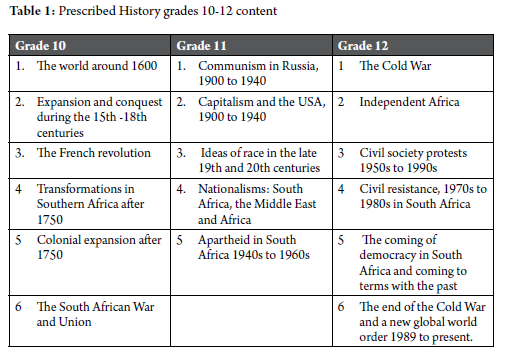
Table 1 shows history topics prescribed in history CAPS for Grades 10-12, in which environmental history should be included. In Grade 10, for instance, environmental history can be introduced through topics like The world around 1600 and Expansion and conquest during the 15th-18th centuries. These themes provide an opportunity to explore how early civilisations interacted with their environments, including the impact of European exploration on indigenous lands and natural resources. The transformations in Southern Africa after 1750 and colonial expansion after 1750, further allow discussions on environmental changes caused by colonial settlement, land dispossession and resource exploitation. The South African War and Union can also examine how conflicts over land and resources shaped historical developments and later resulted in new policies like the Land Act. This could further address the issues of environmental and social justice as scores of people were displaced, detaching them from the ancestral lands they had occupied for decades before the enactment of such legislation.
In Grade 11, environmental history can be woven into economic and political transformations. The study of Communism in Russia (1900-1940) and Capitalism in the USA (1900-1940) can incorporate discussions on industrialisation, resource consumption and environmental degradation. This could address the rapid industrialisation in Russia and the amalgamation of state farms that resulted in landscape changes. How did the weather play in favour of, or against the people during this time? Learners could explore how industrialisation in the Soviet Union during the first half of the twentieth century was influenced by, and in turn affected, weather conditions. This theme, Ideas of race in the late 19th and 20th centuries, offers a chance to explore how racial ideologies influenced land dispossession and environmental and social injustices. Australia could be used as an example to examine how the Aborigines were displaced and how that contributed to the global environmental challenges of this time. Similarly, Nationalism in South Africa, the Middle East and Africa can highlight how struggles for independence were often tied to control over land and natural resources, and it could offer insights into how the legislation and their opposition thereofimpacted the landscapes and environmental issues in Southern Africa in general and South Africa in particular. The history of Apartheid in South Africa (l940s-1960s) can be enriched by examining environmental discrimination, such as forced removals and the establishment of racially segregated landscapes.
In Grade 12, environmental history can deepen learners' understanding of global and local environmental struggles. The Cold War can include analysing how geopolitical conflicts influenced environmental policies and resource extraction. Independent Africa provides an avenue to discuss how the newly independent nations dealt with environmental challenges, resource management and the injustices of the former colonial governments in their territories. Civil Society Protests (1950s-1990s) and Civil Resistance (1970s-1980s) in South Africa can integrate discussions on environmental activism and the role of communities in resisting environmental injustices. Finally, The coming of democracy in South Africa and coming to terms with the past can address environmental justice and policies to redress historical land and resource dispossession. The end of the Cold War and a New Global World Order (1989-Present) can allow learners to explore contemporary global environmental challenges, including climate change and sustainable development.
Conclusion
This paper has critically discussed the colonial and apartheid landscapes, examining the role of nature during these times in a responsive manner. The discussion has demonstrated mainly that nature played a crucial role in both pre-colonial communities in South Africa and colonial authorities. For the colonial authorities, control over nature was equivalent to power and authority. Hence, many of the policies, legislation and systems as well as the exploitation of Africans discussed in this paper, were intended to protect nature to fuel colonial greed and the subjugation of Blacks in Southern Africa. The historical tracing of the neglect and exclusion of environmental history from the history curriculum and the significance of environmental history itself justifies the epistemicide of environmental history. The history curriculum has historically been used as an instrument for many political agendas; hence, environmental history has often been excluded because it unveils the extreme brutality and cruelty of the colonial authorities. Given the environmental challenges in the VUCA South Africa, this paper called for the inclusion of environmental history in the history curriculum to equip learners to be environmentally conscious and competent in addressing environmental challenges in the VUCA world. It argued that it is essential for a decolonised history curriculum to incorporate environmental history. The paper also offered a detailed discussion demonstrating how environmental history can be included.
References
- Abah, J Mashebe, P & Denuga, DD 2015. Prospect of integrating African indigenous knowledge systems into the teaching of sciences in Africa. American Journal of Educational Research, 3(6): 668-673.
- Atkinson, J 1992. Environmental history. Environmental History Review, 16(1)5-8.
- Beckman, T, Khare, A & Matear, M 2016. Does the theory of stakeholder identity and salience lead to corporate social responsibility? The case of environmental justice. Social Responsibility Journal, 12(4): 806-819.
- Beinart, W 2000. African history and environmental history. African Affairs, 99(395): 269302.
-
Beinart, W & Delius, P 2014. The historical context and legacy of the Natives Land Act of 913. Journal of Southern African Studies, 40(4): 667-688. DOI: 10.1080/03057070.2014.930623
» https://doi.org/10.1080/03057070.2014.930623 - Bennett, N & Lemoine, GJ 2014. What a difference a word makes: Understanding threats to performance in a VUCA world. Business Horizons, 57(3): 311-317.
- Bertram, C 2020. Remaking history: The pedagogic device and shifting discourses in the South African school history curriculum. Yesterday & Today, 23: 1-29.
- Carruthers, J 2004. Africa: Histories, ecologies, and societies. Environment and History, 10(4): 379-406.
-
Cebekhulu, MB, Nyathi, PA & Mbatha, MP 2024. Advancing economic development at the expense of Black communities: A study of the Somkhele Mine, since 2007. OIDA International Journal of Sustainable Development, 17(11): 91-100. Available at SSRN: https://ssrn.com/abstract=4929398
» https://ssrn.com/abstract=4929398 -
Christie, P & Collins, C 1982. Bantu Education: Apartheid ideology or labour reproduction? Comparative Education, 18(1): 59-75. Available at: http://www.jstor.org/stable/3098501
» http://www.jstor.org/stable/3098501 - Deleuze, G & Guattari, F 1987. Introduction: rhizome. A thousand plateaus: Capitalism and schizophrenia, 2: 3-25.
- Desmond, C 1970. The discarded people: An account of African resettlement. Christian Institute of South Africa.
- Drumm, L 2024. Becoming rhizome: Deleuze and Guattari's rhizome as theory and method. In: Theory and method in higher education research (pp. 37-55). Emerald publishing. DOI: 10.1108/S2056-375220240000010003
- Gardner, M 2013. Linking activism: Ecology, social justice, and education for social change. Routledge.
-
Holmes, K, Gaynor, A & Morgan, R 2020. Doing environmental history in urgent times. History Australia, 17(2): 230-251. DOI: 10.1080/14490854.2020.1758579
» https://doi.org/10.1080/14490854.2020.1758579 - Honan, E & Sellers, M 2006. So how does it work? - Rhizomatic methodologies. In: AARE Annual Conference, Adelaide.
- Horstmeyer, A 2019. How VUCA is changing the learning landscape-and how curiosity can help. Development and Learning in Organizations: An International Journal, 33(1): 5-8.
-
Jansen, JD 1999. The school curriculum since apartheid: Intersections of politics and policy in the South African transition. Journal of Curriculum Studies, 31(1): 57-67. DOI: 10.1080/002202799183296
» https://doi.org/10.1080/002202799183296 - Kaivo-Oja, JRL & Lauraeus, IT 2018. The VUCA approach as a solution concept to corporate foresight challenges and global technological disruption.foresight, 20(1): 2749.
- Kallaway, P 2012. History in Senior Secondary School CAPS 2012 and beyond: A comment. Yesterday and Today, (7): 23-62.
- Kameri-Mbote, AP & Cullet, P 1997. Law, colonialism, and environmental management in Africa. Review of European Community and International Environmental Law, 6(1): 23-31.
- Kaziboni, A 2024. Exclusion and invented water scarcity: A historical perspective from colonialism to apartheid in South Africa. Water History, 16: 45-63.
- Kgari-Masondo, MC 2013a. Incomplete history curriculum? Teaching socio-environmental history in South African high schools from an indigenous perspective. Yesterday and Today, 10: 101-124.
- Kgari-Masondo, MC 2013b. The usable past and socio-environmental justice: From Lady Selborne to Ga-Rankuwa. New Contree, 66.
- Kgatla, ST 2013. Forced removals and migration: A theology of resistance and liberation in South Africa. Missionalia: Southern African Journal of Mission Studies, 41(2): 120-132.
- Kwashirai, VC 2011. Environmental history of Africa. In: M Agnoletti, E Johann, and SN Serneri (eds.), World environmental history. Oxford: Encyclopedia of Life Support Systems (EOLSS).
-
Maluleka, P & Ledwaba, LT 2023. Attempts to (re) capture the school history curriculum? Reflections on the history ministerial task team's report. Yesterday and Today, 29(1): 7299. DOI: http://dx.doi.org/10.17159/2223-0386/2023/n29a5
» http://dx.doi.org/10.17159/2223-0386/2023/n29a5 -
Maluleka, P 2024. The Earth is what we all have in common: Valorizing environmental knowledge in the history curriculum in South Africa. Global South Perspectives Journal, 2(1): 1-1 DOI: 1013140/RG.2.235966.40003
» https://doi.org/1013140/RG.2.235966.40003 - Manning, J 2021. Decolonial feminist theory: Embracing the gendered colonial difference in management and organisation studies. Gender, Work & Organization, 28(4): 12031219.
- Masuku, MM & Shadrack, M 2023. Land dispossession and food insecurity in contemporary South Africa. In: MM Masuku, D Ngobese, MD Maguvhe & S Ndlovu (eds.), The Afrocentricity trajectories of looting in South Africa.
- Mauch, C & Robin, L (eds.) 2014. The edges of environmental history: Honouring Jane Carruthers. RCC Perspectives. DOI: 10.5282/rcc/6255
- McNeill, JR 2010. The state of the field of environmental history. Annual Review of Environment and Resources, 35(1): 345-374.
- Moloi, KC, Lebelo, RS, Akindeinde, S & Adesanya, SO 2023. Decolonisation of history in the South African school curriculum. Mitteilungen Klosterneuburg (Communications from Klosterneuburg), 73(5): 23-35.
- Munyai, A 2020. African renaissance: Effects of colonialism on Africa's natural resources and the right to development. Journal for Juridical Science, 45(1): 1-27.
- Murombedzi, JC 2016. Inequality and natural resources in Africa. World Social Science Report, pp. 59-62.
- Nattrass, G 2017. A short history of South Africa. Biteback Publishing.
- Ndlovu, SM, Lekgoathi, SP, Esterhuysen, A, Mkhize, NN, Weldon, G, Callinicos, L & Sithole, J 2018. Report of the history ministerial task team for the Department of Basic Education. Department of Basic Education: Pretoria.
- Ndumeya, N & Maluleka, P 2024. Can history teaching contribute towards saving the planet? Reflections on the value of including environmental history in the Zimbabwean advanced level history curriculum. In: History education in Africa: Research, perspectives and practices (pp. 47-68). Cham: Springer Nature Switzerland.
- Nelson, F (ed.), 2010. Community rights, conservation and contested land: The politics of African natural resource governance. Routledge.
-
Noxolo, P 2017. Decolonial theory in a time of the re-colonisation of UK research. Transactions of the Institute of British Geographers, 42(3): 342-344. Available at: http://www.jstor.org/stable/45147097
» http://www.jstor.org/stable/45147097 - Nyathi, PA 2025. Exploring forced removals and dispossession in the Dukuduku Forest, KwaZulu-Natal, before and after 1994. History, 110(391): 393-412.
- Nyathi, PA & Ajani, OA, 2023. Investigating the historical development, socioeconomic, and political aspects of the Dukuduku forest community in KwaZulu-Natal up to the 1990s. Multicultural Education, 9(3): 1-12.
- Obiora, AC & Emeka, EE 2015. African indigenous knowledge system and environmental sustainability. International Journal of Environmental Protection and Policy, 3(4): 88-96.
-
O'Connor, J 1997. What is environmental history? Why environmental history? Capitalism Nature Socialism, 8(2): 3-29. DOI: 10.1080/10455759709358733.
» https://doi.org/10.1080/10455759709358733 - Putro, S, Rianto, R & Wibisana, BH 2022. Making business policies and strategies in the Vuca Era with technology development: a literature review. International Journal of Innovative Technologies in Social Science, 1(33).
- Schick, A, Hobson, PR & Ibisch, PL 2017. Conservation and sustainable development in a VUCA world: The need for a systemic and ecosystem-based approach. Ecosystem Health and Sustainability, 3(4): e01267.
- Sembiring, MG, 2023. Society and technology: Promoting public awareness in the VUCA world characterized by disruption. In: Open Society Conference, 1: 376-390.
- Seroto, J 2013. A revisionist view of the contribution of Dr Eiselen to South African education: New perspectives. Yesterday and Today, 9: 91-108.
- Seroto,J 2020. Apartheid education in South Africa: Racialisation and institutionalisation of education (1948-1994). In: CC Wolhuter, J Seroto, and MN Davids (eds.) Decolonising education in the Global South: Historical and comparative international perspectives (pp. 93-121). Pearson.
- Setiawati, L 2021. The effect of agile leadership and work environment to employees' performance in a VUCA world (study on millennial generation employees in Jabodetabek). International Journal of Social Science and Human Research, 4(11): 31233131.
-
Shanguhyia, MS 2023. The environment under colonialism. In: WS Nasong'o, MN Amutabi & T Falola (eds.), The Palgrave handbook of Kenyan history (pp. 163-175). Cham: Palgrave Macmillan. Available at: https://doi.org/10.1007/978-3-031-09487-3_14
» https://doi.org/10.1007/978-3-031-09487-3_14 - Shivji, IG 1998. Not yet democracy: Reforming land tenure in Tanzania.
- Skosana, D 2022. Grave matters: Dispossession and the desecration of ancestral graves by mining corporations in South .Africa. Journal of Contemporary African Studies, 40(1): 47-62.
- Soudien, C 2005. Racial discourse in the commission on native education (Eiselen Commission), 1949-1951: The making of a 'Bantu' identity. Southern African Review of Education with Education with Production, 11(1): 41-57.
- Stein, S 2021. Reimagining global citizenship education for a volatile, uncertain, complex, and ambiguous (VUCA) world. Globalisation, Societies and Education, 19(4): 482-495.
- Stull, V, Bell, MM & Ncwadi, M 2016. Environmental apartheid: Eco-health and rural marginalization in South Africa. Journal of rural studies, 47: 369-380.
- Taskan, B, Junça-Silva, A & Caetano, A 2022. Clarifying the conceptual map of VUCA: A systematic review. International Journal of Organizational Analysis, 30(7): 196-217.
-
Tropp, JA 2006. Remapping historical landscapes: Forest species and the contours of social and cultural life. In: Natures of Colonial Change: Environmental Relations in the Making of the Transkei, 1st ed. (pp. 125-144). Ohio University Press. Available at: http://www.jstor.org/stable/j.ctt1j7x7r3.10
» http://www.jstor.org/stable/j.ctt1j7x7r3.10 - Wynn, G, Carruthers, J & Jacobs, NJ (eds.) 2022. Environment, power, and justice: Southern African Histories. Ohio University Press.