History Education during COVID-19: Reflections from Makerere University, Uganda
Abstract
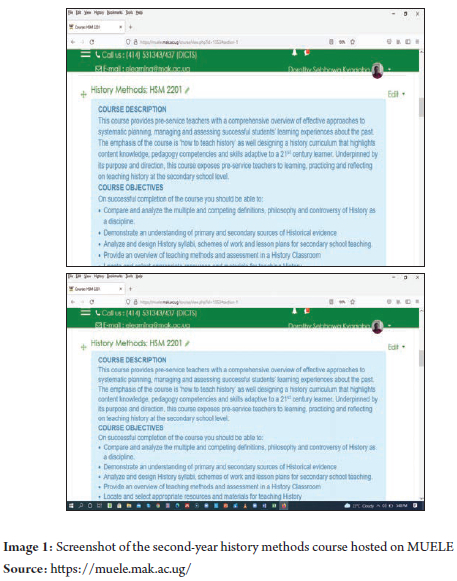
The COVID-19 pandemic forced most governments in Africa to temporarily close educational institutions in attempt to reduce the spread of the pandemic. In Uganda particularly, Higher Education Institutions, Universities and schools adopted the online and blended approaches to afford continuity of learning during the lockdown. This article provides a reflection of the opportunities, challenges and lessons learnt in teaching and learning of history during the COVID-19 pandemic. Qualitative data was obtained from a narrative inquiry of the researcher's own teaching experience and interviews with pre-service history teachers from Makerere University. Findings indicated that, while online and blended approaches facilitate history education through Makerere University e-Learning (MUELE) Learning Management System, WhatsApp exchanges, Zoom, emails, mobile phone text messaging and print media; there were persistent challenges such as limited Information Communication Technology (ICT) tools, digital illiteracy, digital divide, increased workloads as well as social-emotional stress and distractions at home. The article concludes with a key lesson for Teacher Education programmes to shift the way they train pre-service history teachers to embrace online learning with access to offline, downloadable, print learning materials to facilitate blended learning approaches. This is relevant in preparation of different generations of teachers to integrate blended pedagogy in History Education in response to the new normal caused by the COVID-19 pandemic.
History Education; COVID-19; Pre-service history teacher; online learning; Makerere University
 Thumbnail