When History Education and English Literature Merge: Teaching the 1976 Soweto Uprising through Athol Fugard's "My Children! My Africa!"
Abstract
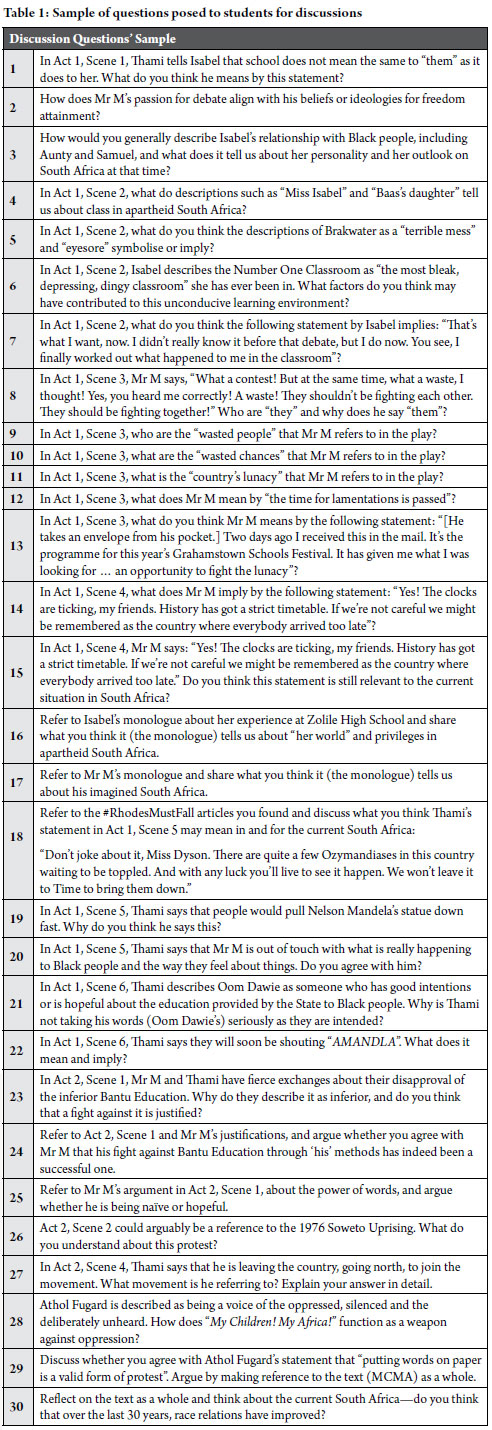
Literature transcends mere literary analysis and aesthetics. This is what I always tell my students. It plays a crucial role in shaping responsible, empathic, and cultured citizens in a non-racial and non-prejudiced society. In reference to the quote, "those who do not learn history are doomed to repeat it" by George Santayana (1905), it is important, therefore, to reflect on and constantly conscientize ourselves about our histories. However, in South Africa, as in many nations that have experienced oppression and segregation, debates or discussions on race relations and the violent past still spark considerable rage among those who were oppressed, thus making it difficult to carry out constructive dialogues on the current state of the nation and the envisioned future. Drawing on personal experience as a lecturer of English literature for education or applied literature studies, this reflective practitioner article aims to demonstrate how the play "My Children! My Africa! (MCMA)" by Athol Fugard succeeds in narrating, commemorating, and motivating discussions or debates on hot-potato issues, such as race, racism, race relations, and other related matters, as well as historical events such as the 1976 Soweto Uprising. These are issues and events that most of the population still finds difficult to engage with without their blood boiling or pointing a finger at the 'other'. Such a demonstration entails a discussion on the appropriateness of the text as an enabler of discussions of this nature. Subsequently, the author discusses the method used in his English literature classes to facilitate race-related discussions and the type of questions that enable students to look beyond what the text means in the classroom and to use the text to engage in discussions that may potentially promote and contribute to a socially cohesive society.
Athol Fugard; My Children! My Africa!; 1976 Soweto Uprising; Social justice language education (SJLE); Fiction-based social justice pedagogy/practice
 Thumbnail
 Thumbnail