Prompting change: Reflections on third-year archaeology students use of generative AI at a distance university
Abstract
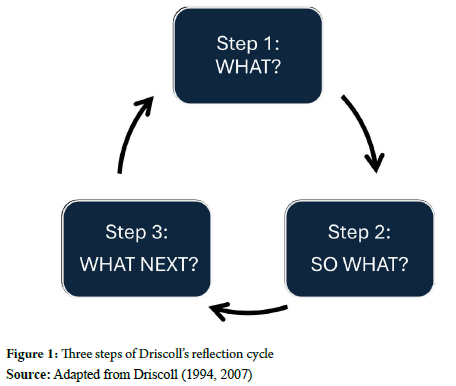
Generative AI (GenAI) has undeniably become part of a continuum of everyday use with apps, chatbots and curated content to optimise online experiences. In higher education, AI is reshaping teaching pedagogies and holds the potential to augment learning and provide personalised learning experiences. However, an ongoing challenge is getting students to make the connection that GenAI is a tool to support learning, rather than a crutch to replace thinking processes. This paper draws on Kolb's experiential learning theory to assess personal experiences of teaching undergraduate archaeology to students in the era of GenAI. Using reflection as a method with Driscoll's three-step reflection cycle, this reflection provides insight into the pedagogical implications of over-reliance on GenAI tools. Reflection further serves as an (introspective) didactic tool for assessing teaching strategies for scaffolding responsible use of GenAI. Based on the nuanced insights, the reflection suggests that a prompt, copy and paste approach characterises student use of these tools. The pedagogical challenges for fostering the suite of critical thinking skills pertinent in archaeology and history education are also highlighted.
Archaeology; distance learning; generative AI; over reliance on AI; structured reflection; student use of AI
 Thumbnail