Perceptions of drivers of land use-land cover change in the Bangweulu Wetland and surrounding areas, Zambia
Abstract
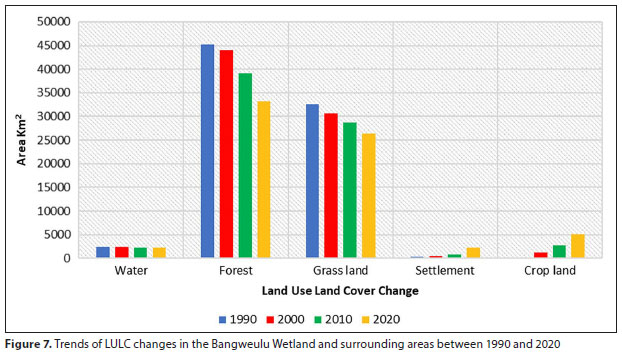
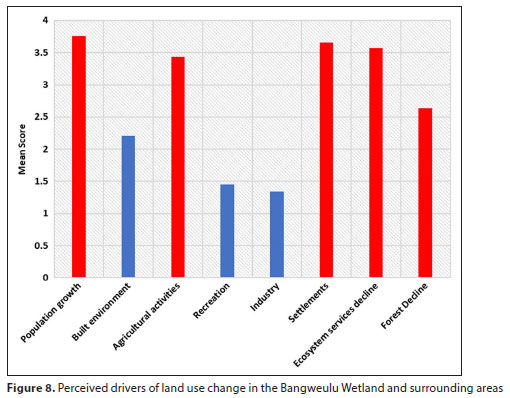
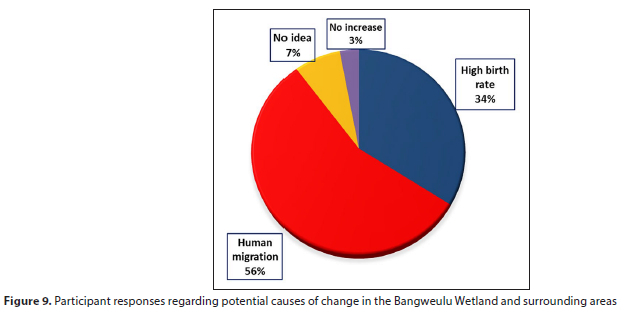
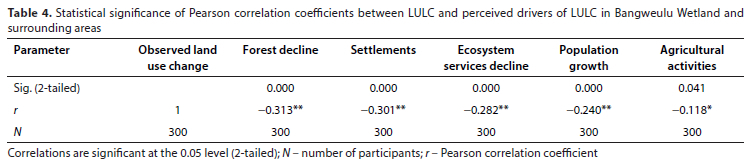
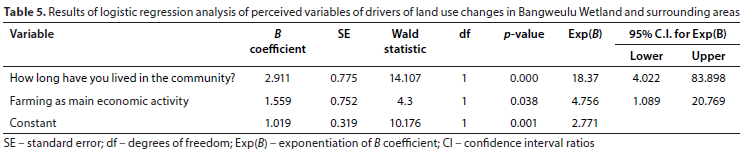
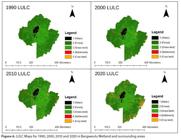
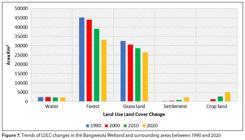
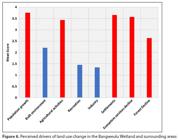
Wetlands are vital to healthy ecosystems as they control floods and perform other important roles. Globally, the primary cause of wetland degradation is land use-land cover (LULC) change, a situation that also applies to Zambia. This research investigated LULC changes in the Bangweulu Wetland and its perceived drivers, using remote sensing, geographic information systems (GIS), questionnaires, and key informant interviews. The land was categorized into five types: settlements, grassland, cropland, water, and forest. The results showed a decline in forest (from 45 298.93 km2 to 33 233.52 km2), grassland (from 32 557.91 km2 to 26 418.19 km2), and water (from 2 410.72 km2 to 2 278.31 km2) between 1990 and 2020. In contrast, settlements grew from 356.69 km2 to 2 210.38 km2, and cropland expanded from 165.27 km2 to 5 108.13 km2. The perceived drivers of this change were also identified. Population growth was the most significant (3.76/5), followed by settlement expansion (3.66/5), declining ecosystem services (3.57/5), and forest loss (2.64/5). Minor perceived drivers included the built environment (2.21/5), recreation (1.54/5), and industry (1.34/5). Underlying causes involved agricultural development and energy needs, driven by market demands for charcoal and cash crops, which accelerate farming and deforestation. Understanding these local perspectives is essential for creating effective land management strategies and sustainable policies to conserve the Bangweulu Wetland's ecological functions.
Bangweulu Wetland; ecosystems; land use land cover change; socio-economic activities; wetland degradation
 Thumbnail
 Thumbnail
 Thumbnail
 Thumbnail
 Thumbnail
 Thumbnail
 Thumbnail
 Thumbnail
 Thumbnail
 Thumbnail
 Thumbnail
 Thumbnail
 Thumbnail