A new spectrophotometric method for determination of residual polydiallyldimethylammonium chloride flocculant in treated water based on a diazotization-coupled ion pair
Abstract
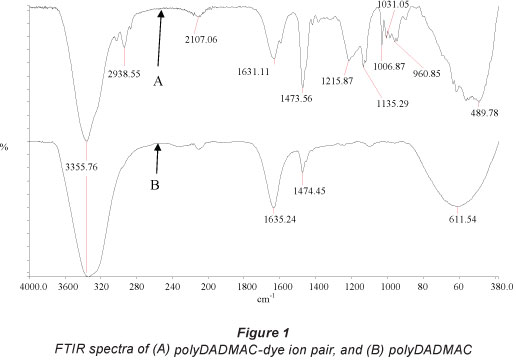
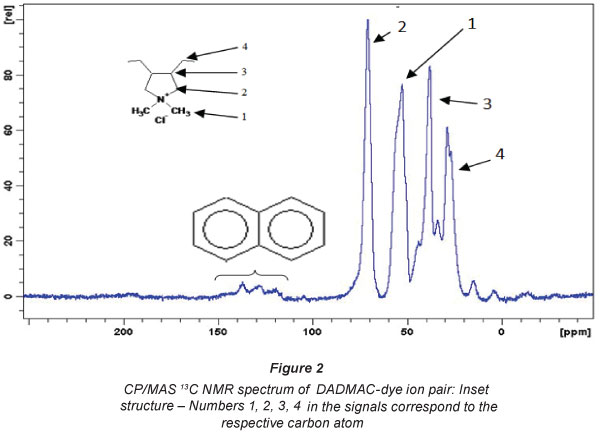
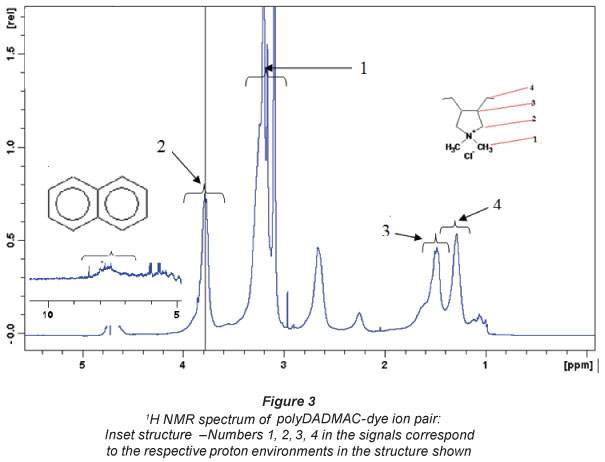
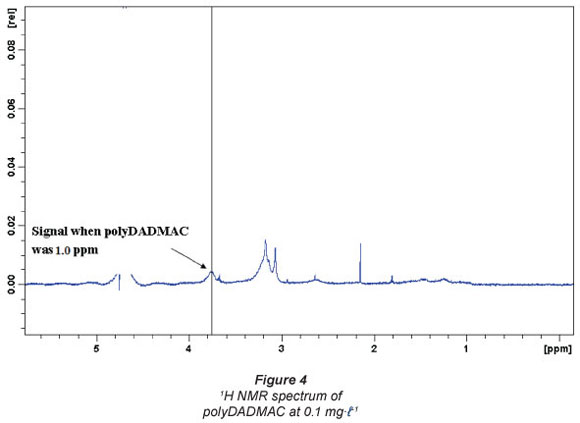
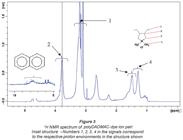
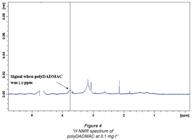
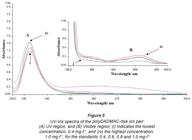
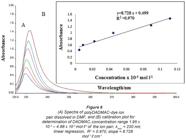
Polydiallyldimethylammonium chloride (polyDADMAC) is a water-soluble cationic polyelectrolyte used for water treatment. Its residues in treated water are contaminants as they react with chlorine to produce a carcinogenic compound. Commonly-used techniques for quantification of the polycation, such as colloidal and potentiometric titration as well as Ή NMR, have poor sensitivity and detection limits. This paper describes a more sensitive UV spectrophotometric method for quantitative determination of residual polyDADMAC in treated water, through formation of an ion pair with (4-hydroxy-1-napthylazo) benzene-sulphonic acid (dye). The ion pair, which is a colloidal solid material, was characterised by FTIR, 13C NMR and Ή NMR techniques. The colloid materials formed with different concentrations of polyDADMAC were dissolved in either N,N-dimethylformamide or 1,4-dioxane, followed by determination with UV spectrophotometry. The wavelength of maximum absorption (λ ) was found to be dependent on the solvent used, with 1,4-dioxane showing a better linear range of 0.1-1.8 mg-l-1 polyDADMAC. Varying the pH of the solutions had no significant effect on λ max.
Polydiallyldimethylammonium chloride; flocculant; UV spectrophotometry; (4-hydroxy-1-napthyl-azo) benzene-sulphonic acid; treated water
 Thumbnail
 Thumbnail
 Thumbnail
 Thumbnail
 Thumbnail
 Thumbnail