Cyclopia subternata growth, yield, proline and relative water content in response to water deficit stress
Abstract
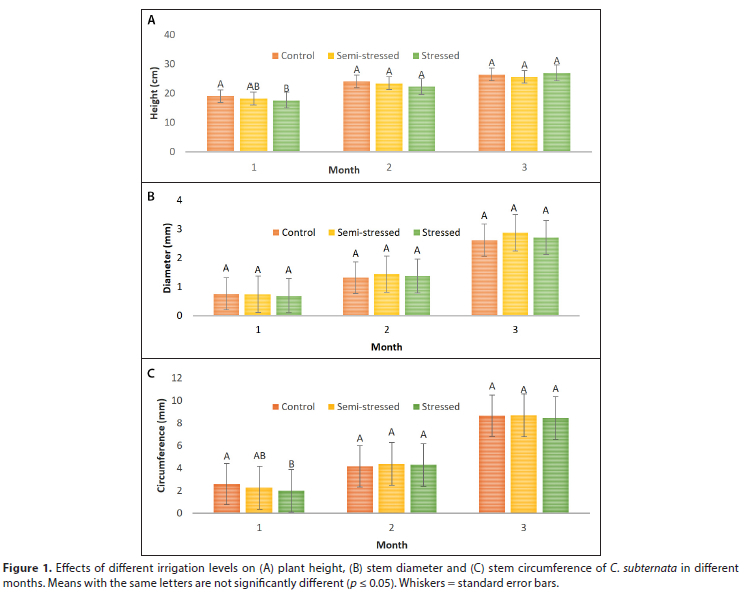
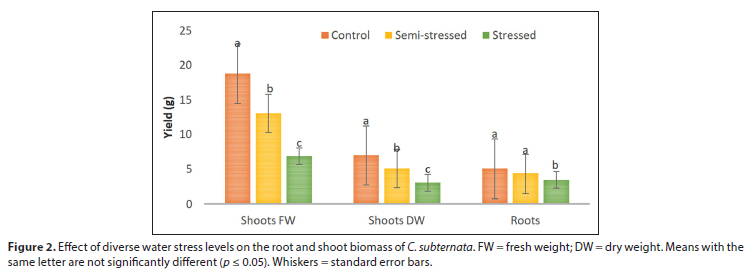
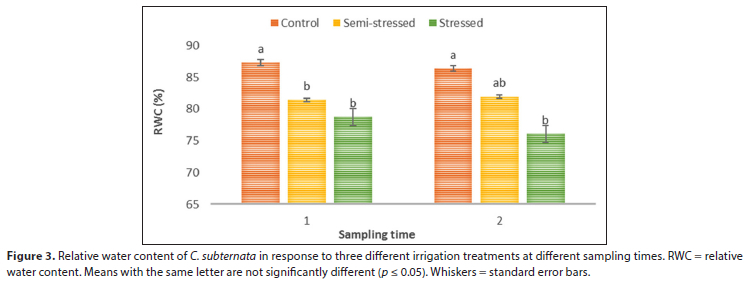
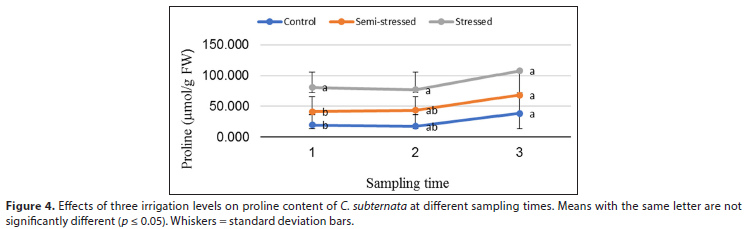
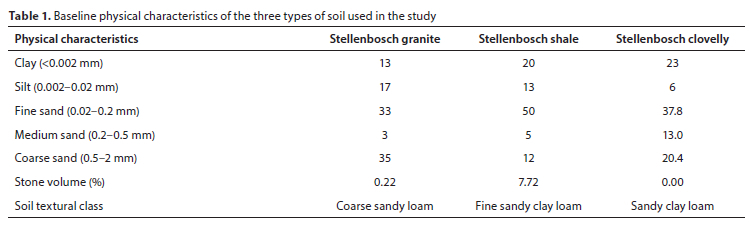
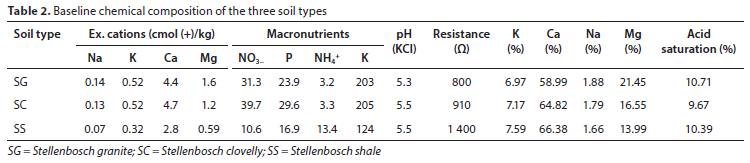
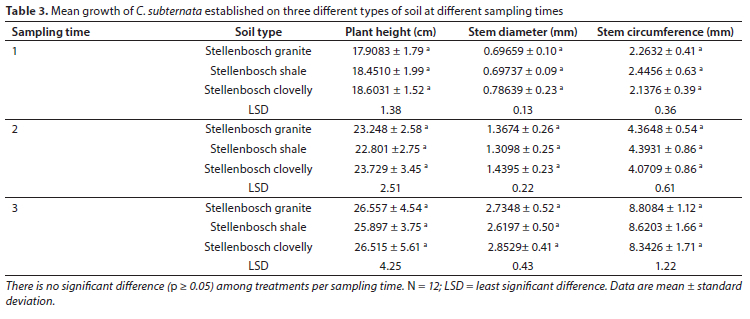
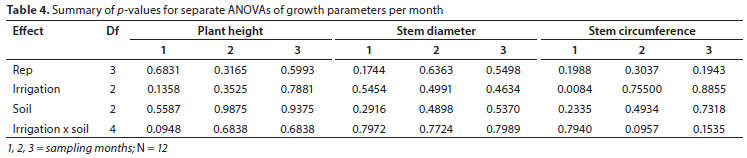
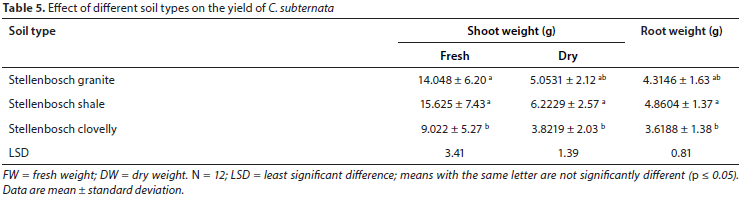
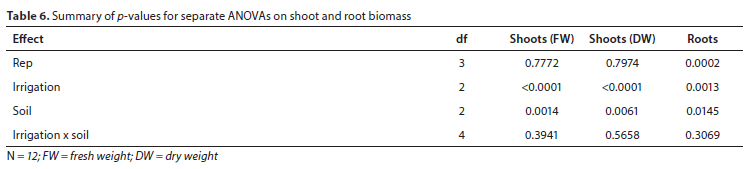
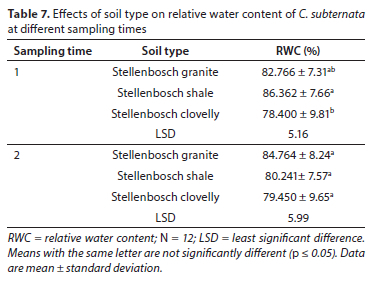
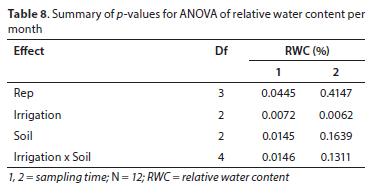
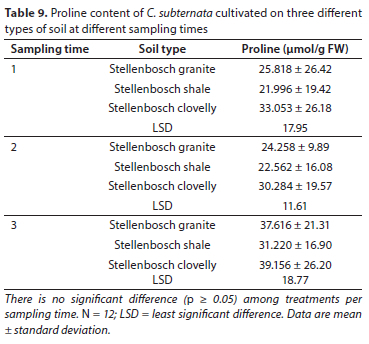
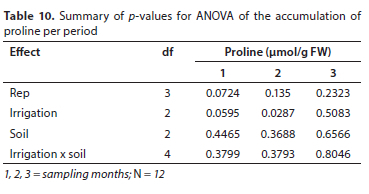
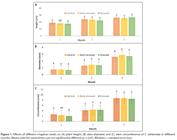
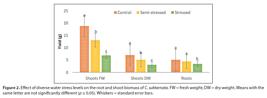
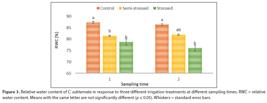
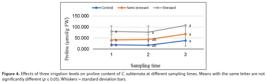
Cyclopia, generally known as honeybush, and belonging to the Fabaceae family, originates from the Cape Floristic Region of the Eastern Cape and Western Cape provinces of South Africa. Currently, 6 honeybush species are commercially cultivated but, to date, there have been limited trials attempting to study their agronomic water demand. A pot trial was conducted where Cyclopia subternata plants were cultivated on different soil types (Stellenbosch granite, Stellenbosch shale and Stellenbosch clovelly) and subjected to three different water-deficit stress levels (well-watered, semi-stressed and stressed). Remarkably, irrigation treatments and soil types did not significantly affect the growth of the plants. However, the well-watered treatment consistently had higher yields compared to the other two treatments. The water-stressed (semi-stressed and stressed) treatments had lower relative water contents (RWC) with higher concentrations of proline, which signify water stress, compared to the control treatment. Higher proline and lower RWC contents found in this study are indications of water stress.
honeybush; proline content; relative water content; tea plant; water deficit stress
 Thumbnail
 Thumbnail
 Thumbnail
 Thumbnail