In-line rheological characterisation of wastewater sludges using non-invasive ultrasound sensor technology
Abstract
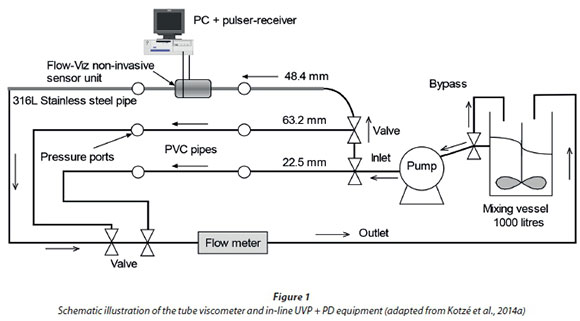
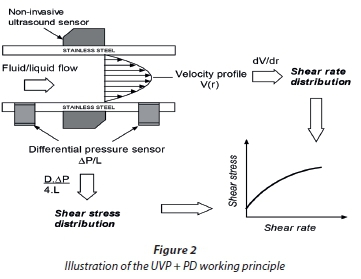
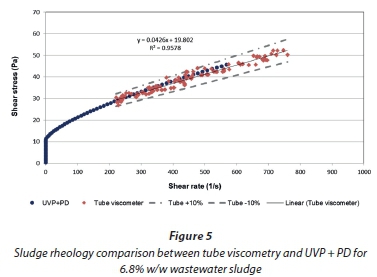
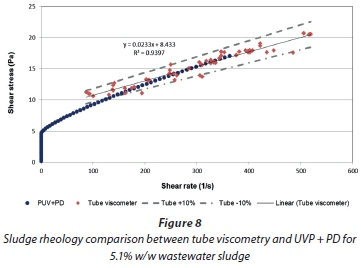
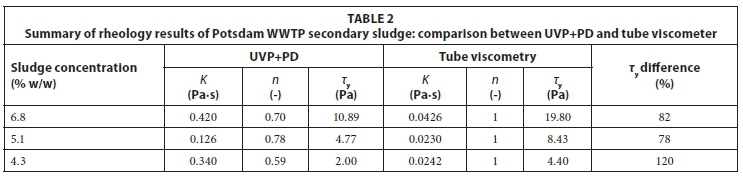
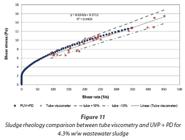
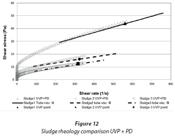
The performance of a new ultrasound transducer, which can measure velocity profiles non-invasively through high-grade stainless steel pipes, was evaluated for the first time with secondary wastewater sludges. This work is a follow-up study on the feasibility work initially done by the same authors. In-line process control based on accurate rheological characterisation for treated wastewater sludge could lead to significant savings in chemicals and will optimise dewatering processes producing drier sludges. In this work, a wastewater sludge at three concentrations was tested in order to investigate the capabilities of the in-line ultrasound technique for different viscosities and fluid properties. The rheological parameters obtained using the new ultrasound sensor and ultrasonic velocity profiling with combined pressure difference (UVP + PD) technique were compared with results obtained using conventional tube viscometry. Comparison with tube viscometer results showed that yield stresses could be overestimated by 120% if data are not available in the low shear-rate ranges. This non-invasive transducer proved to be sensitive enough to obtain flow curves over a large shear-rate range, improving the prediction of the yield stress and requiring about 50% less energy than the invasive system.
ultrasonic velocity profiling; UVP + PD methodology; sludge rheology; non-Newtonian; tube viscometry; non-invasive; sludge dewatering
 Thumbnail
 Thumbnail
 Thumbnail
 Thumbnail
 Thumbnail
 Thumbnail
 Thumbnail
 Thumbnail
 Thumbnail
 Thumbnail
 Thumbnail
 Thumbnail