Biosorptive removal of Pb2+, Cd2+ and Zn2+ ions from water by Lagenaria vulgaris shell
Abstract
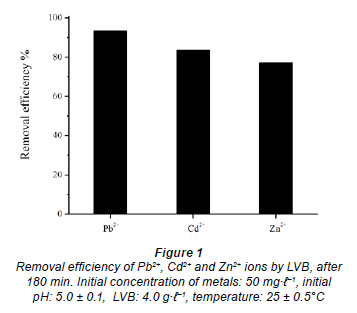
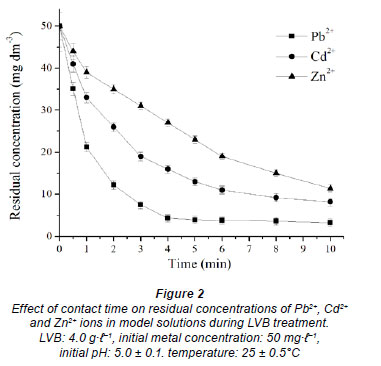
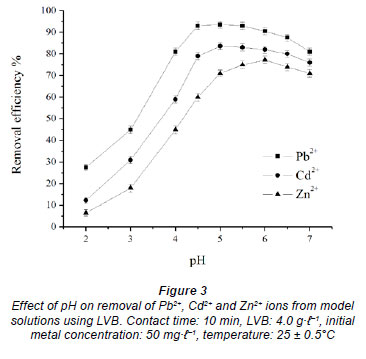
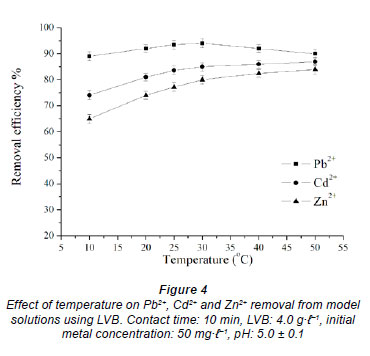
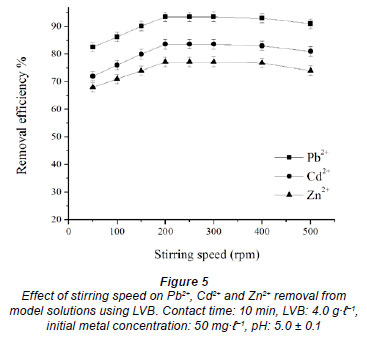
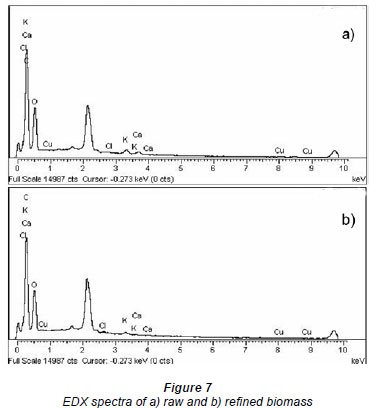
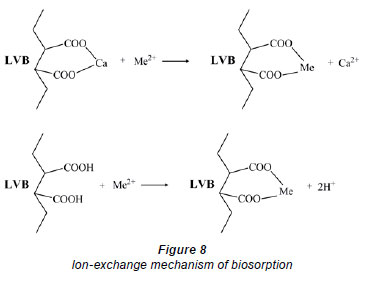
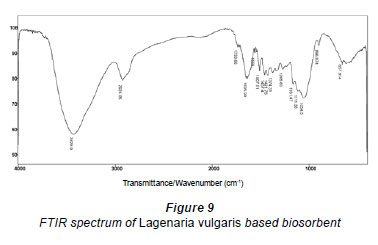
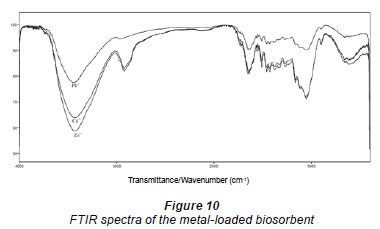
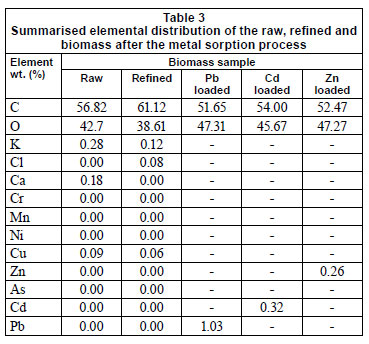
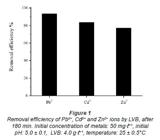
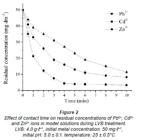
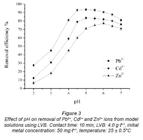
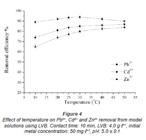
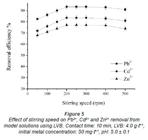
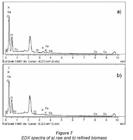
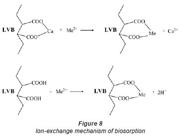
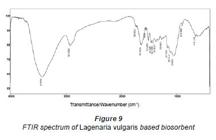
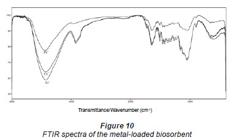
Lagenaria vulgaris (LV) shell was used as a biosorbent for the removal of heavy metal ions, Pb2+, Cd2+ and Zn2+, from aqueous solutions. Experiments were carried out under batch conditions. The effects of contact time, initial pH, temperature and stirring speed on removal efficiency are presented. Sorption of the investigated metals was fast, reaching equilibrium after about 5 to 10 min, depending on the metal. Biosorption was highly pH-dependent, and the optimal pH for investigated metals was in the range of 4.5 to 6.0. The effects of temperature demonstrated that biosorption of the metals is a chemical process. SEM analysis revealed interesting morphological changes after acid refinement of the raw biosorbent and metal uptake that is related to the chemical nature of the biosorption process. EDX analysis of Lagenaria vulgaris biosorbent (LVB) before and after metal sorption revealed that the ion exchange mechanism was the principal sorption process. Fourier transform infrared spectroscopy (FTIR) analysis has shown that major functional groups (carboxyl and hydroxyl) on the biosorbent surface took part in the metal ion uptake process as active sites. The results obtained showed that Lagenaria vulgaris based biosorbent could be used as an effective and low-cost pre-treatment step for removal of toxic metals from wastewaters.
Lagenaria vulgaris; heavy metals; biosorption; contact time; pH; temperature; FTIR; SEM-EDX
 Thumbnail
 Thumbnail
 Thumbnail
 Thumbnail
 Thumbnail
 Thumbnail
 Thumbnail
 Thumbnail
 Thumbnail