Improving the accuracy of estimation of eutrophication state index using a remote sensing data-driven method: A case study of Chaohu Lake, China
Abstract
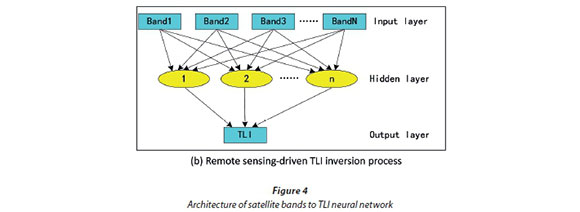
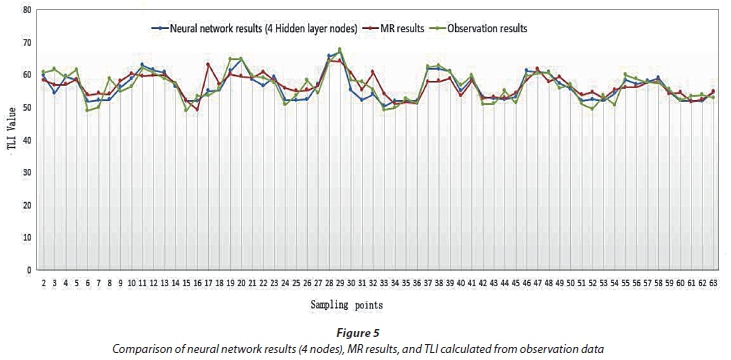
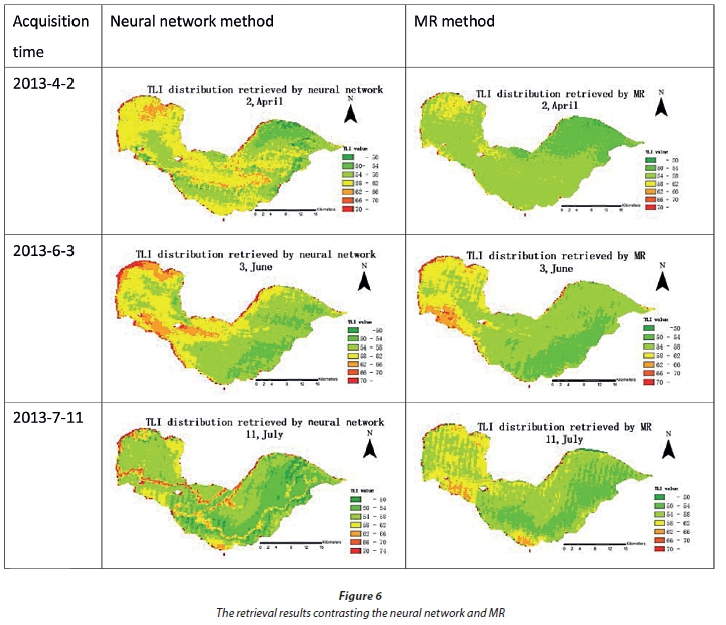
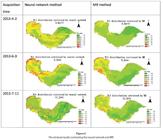
Trophic Level Index (TLI) is often used to assess the general eutrophication state of inland lakes in water science, technology, and engineering. In this paper, a data-driven inland-lake eutrophication assessment method was proposed by using an artificial neural network (ANN) to build relationships from remote sensing data and in-situ TLI sampling. In order to train the net, Moderate Resolution Imaging Spectroradiometer (MODIS, which has a revisit cycle of 4 times per day) data were combined with in-situ observations. Results demonstrate that the TLI obtained directly from remote-sensing images using the data-driven method is more accurate than the TLI calculated from the water quality factors retrieved from remote-sensing images using a multivariate regression method. Spatially continuous and quasi-real time results were retrieved by using MODIS data. This method provides an efficient way to map the TLI spatial distribution in inland lakes, and provides a scheme for increased automation in TLI estimation.
data driven; trophic level index; MODIS; artificial neural network; inland lake
 Thumbnail
 Thumbnail
 Thumbnail
 Thumbnail
 Thumbnail
 Thumbnail
 Thumbnail