Clustering of groundwaters by Q-mode factor analysis according to their hydrogeochemical origin: a case study of the Cariri Valley (Northern Brazil) wells
Abstract
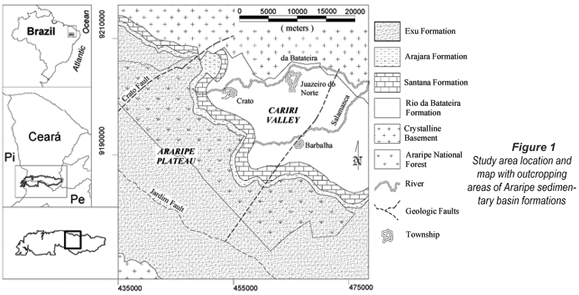
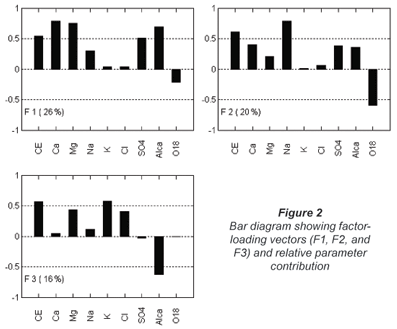
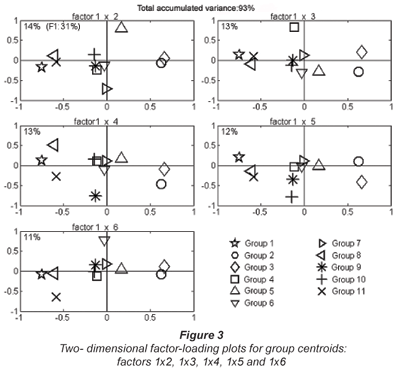
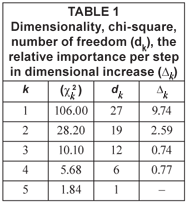
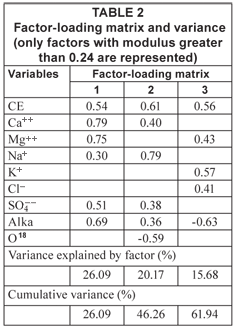
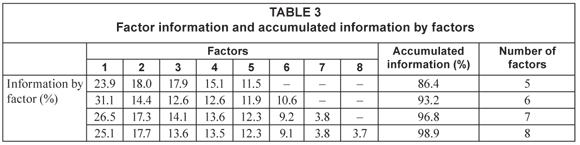
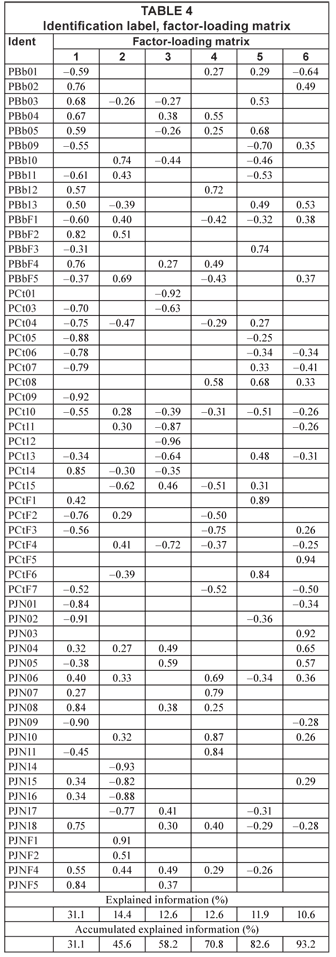
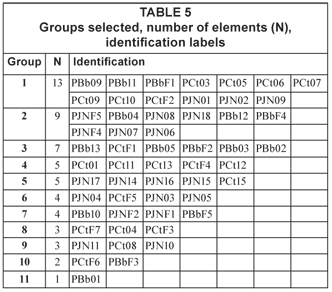
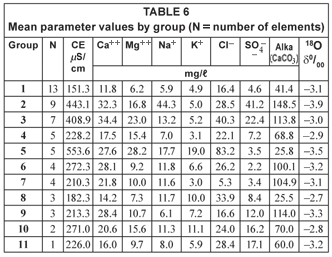
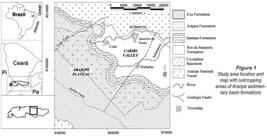
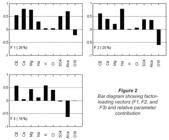
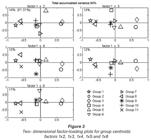
Factor analysis was applied to 56 groundwater samples collected from wells located in the Araripe Sedimentary Basin, in the north-east of Brazil. The parameters are a set of 9 physicochemical, chemical, and isotope data, constituted by electrical conductivity (EC), ionic concentrations of Ca2+, Mg2+, Na+, K+, Cl-, SO42-, alkalinity and δ18Oº/00. In R-mode factor analysis, the first 3 factors explain 62% of the variance, their loadings allowing the interpretation of hydrogeochemical processes that take place in the area. Q-mode factor analysis on the 56 water samples decreases space dimensionality to 6, explaining 93% of the total database information. With the aid of a scalar and angular measurement method, objects were clustered, resulting in 11 groups classified according to their inherent characteristics, related to their hydrogeological origin.
hydrogeochemistry; R-mode factor analysis; Q-mode factor analysis; Araripe sedimentary basin; Cariri valley
 Thumbnail
 Thumbnail
 Thumbnail