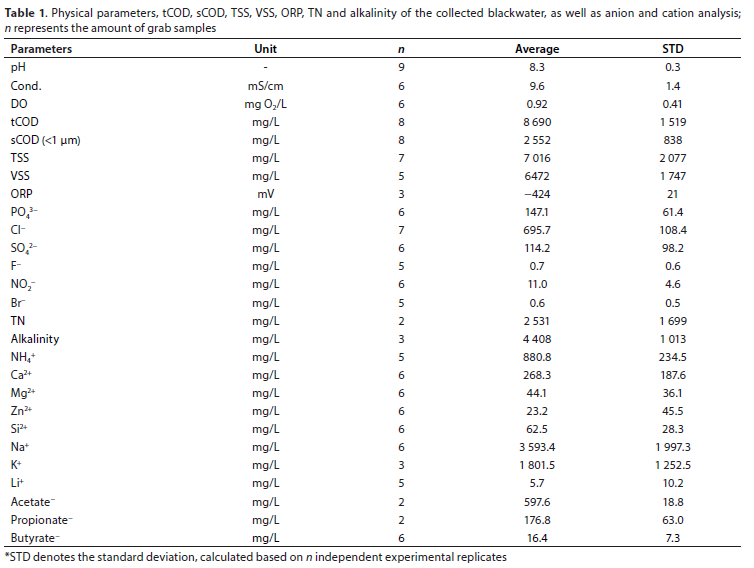
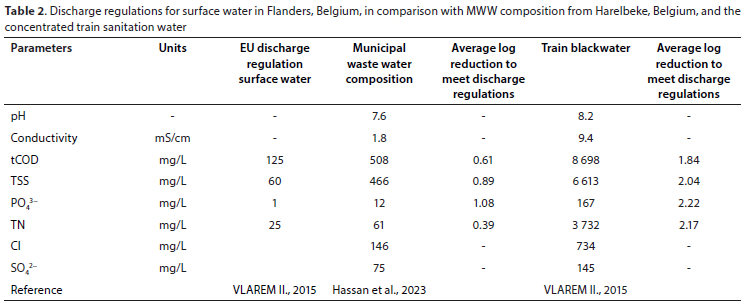
Train vacuum toilet blackwater: composition analysis, treatment and resource recovery opportunities
Abstract
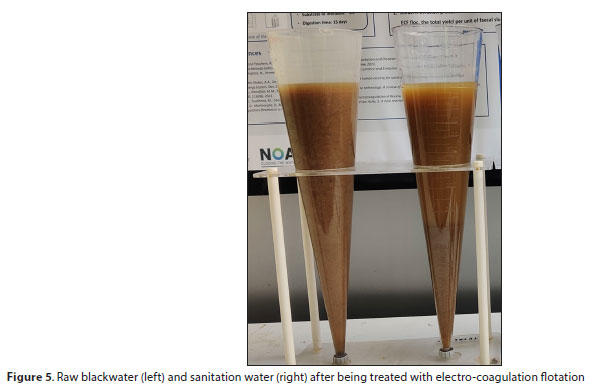
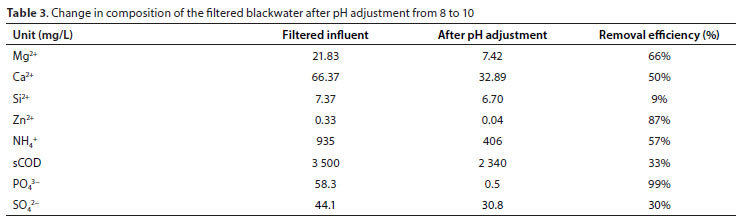
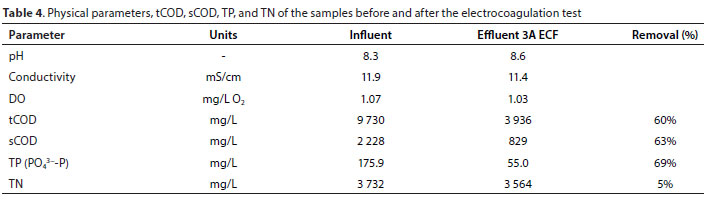
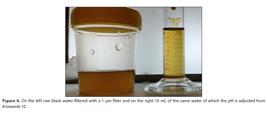
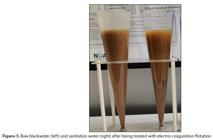
The widespread integration of vacuum toilet technology, observed across diverse sanitation infrastructures such as trains, airplanes, festivals, and residential houses, not only achieves a remarkable 90% reduction in fresh water consumption but also demonstrates true sustainability. In this article, the composition of such vacuum toilet water from rush-hour trains is analysed with respect to its subsequent treatment to meet stringent discharge limits for surface water. Based on this compositional analysis, opportunities for resource recovery of valuable substances (e.g., volatile fatty acids, phosphate, zinc, and silicon) and for biogas production are identified. Conventional pH adjustment was applied to show the potential of valuable mineral recovery (respectively, 50% of calcium, 66% of magnesium, 87% of zinc, 57% of ammonium, 99% of phosphate and 30% of sulphate). Electrocoagulation flotation was explored at a low coagulant/tCOD ratio and proved to be a promising sanitation technology for COD and phosphate removal, at 60% and 69%, respectively.
blackwater; chemical composition; electrocoagulation-flotation; nutrient recovery; sanitation technology; vacuum toilet
 Thumbnail
 Thumbnail
 Thumbnail
 Thumbnail
 Thumbnail