Cd(II) biosorption using bacterial isolates from sawdust: optimization via orthogonal array Taguchi method
Abstract
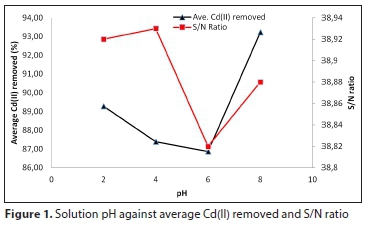
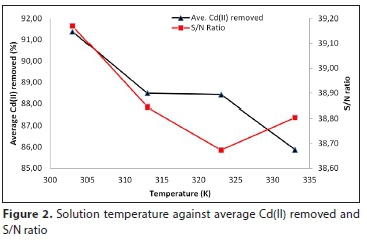
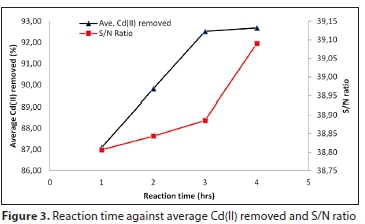
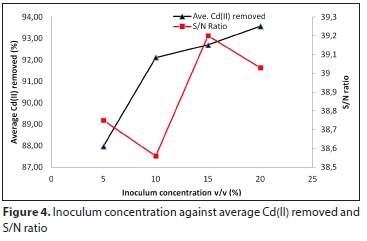
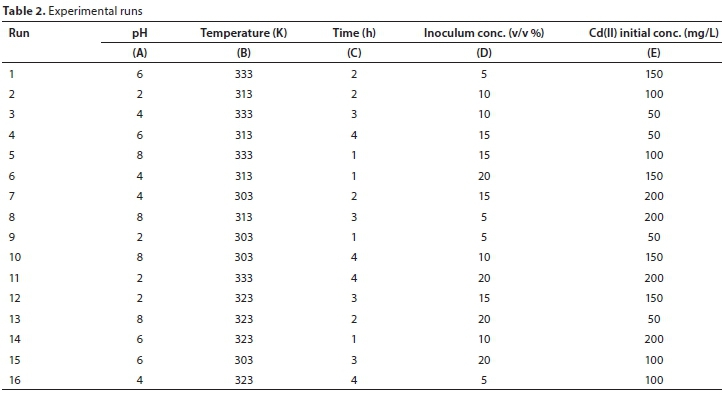
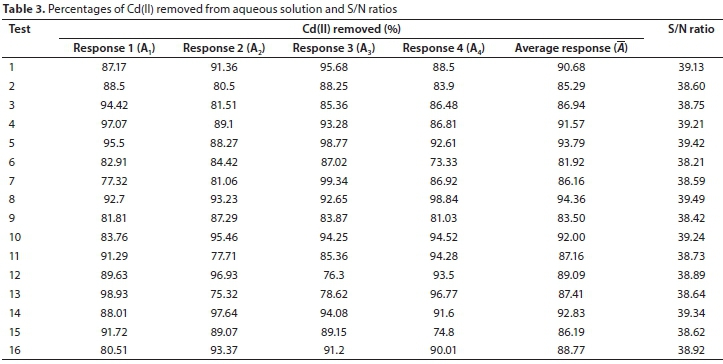
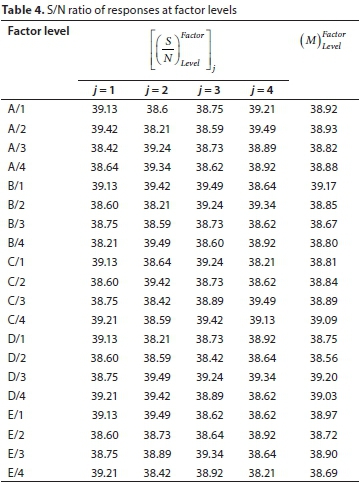
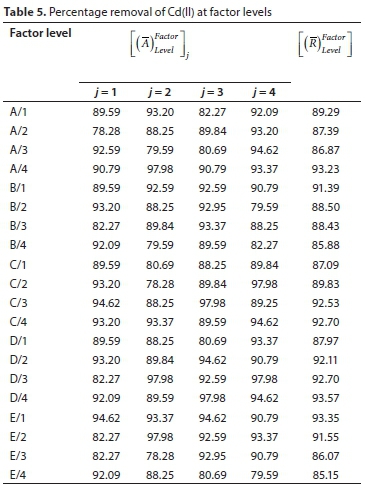
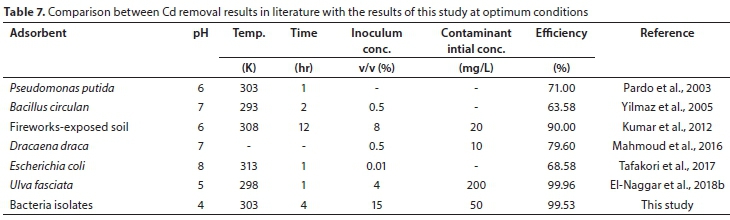
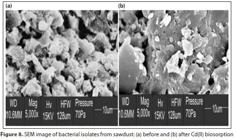
Orthogonal array of Taguchi experimental design with L16 four-level factors: pH (2-8), temperature (303-333 K), time (1-4 h), inoculum concentration (5-20 v/v) and Cd(II) initial concentration (50-200 mg/L) was applied to optimize Cd(II) biosorption from aqueous solution via bacterial isolates from sawdust. The optimum conditions were found to be 4, 303 K, 4 h, 15 v/v % and 50 mg/L for pH, temperature, time, inoculum concentration and Cd(II) initial concentration, respectively. A confirmatory experimental run at these conditions revealed 99.53% Cd(II) removal. Fourier transform infrared revealed the presence of -OH on the bacterial surface enhancing Cd(II) biosorption. The presence of small cavities on the bacterial surface with a porous inner multilayer was shown by scanning electron microscopy analysis. Proposed biosorption mechanisms were electrostatic interaction, surface complexation and ion exchange. In conclusion, bacterial isolates from sawdust could effectively be applied as biosorbent for Cd(II) removal from aqueous solution.
cadmium; bacterial isolates; biosorption; aqueous solution; sawdust
 Thumbnail
 Thumbnail
 Thumbnail
 Thumbnail
 Thumbnail
 Thumbnail
 Thumbnail