Removal of lead in water using activated carbon prepared from Acacia catechu
Abstract
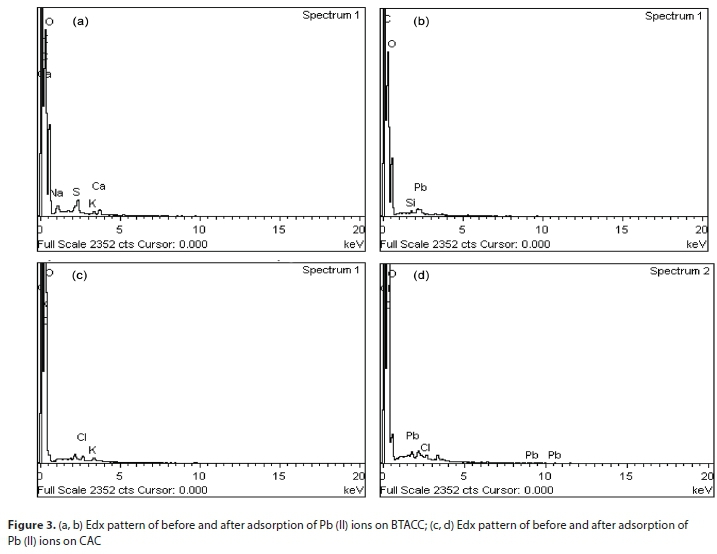
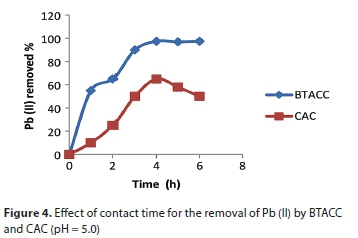
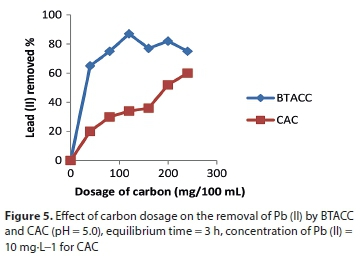
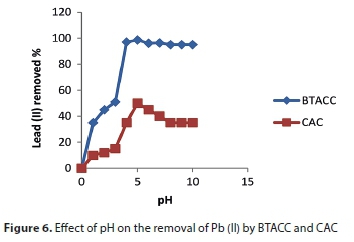
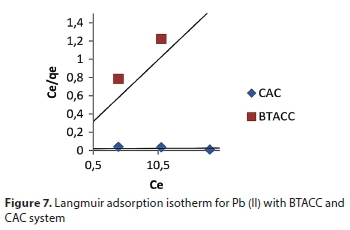
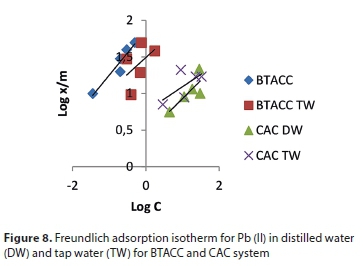
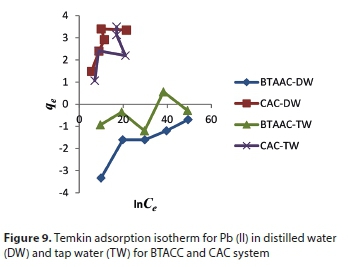
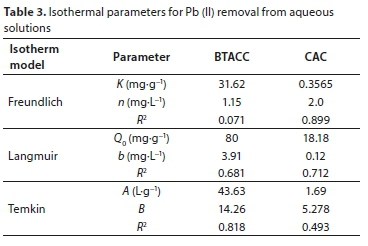
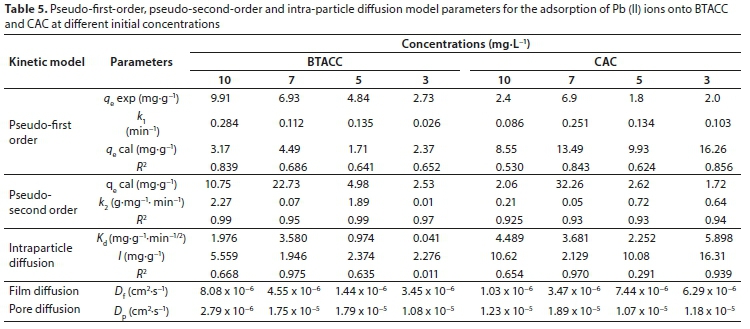
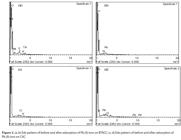
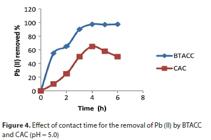
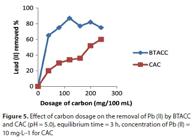
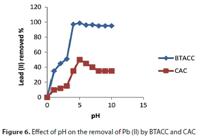
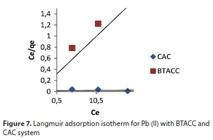
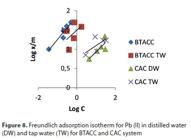
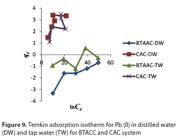
The adsorption of Pb (II) on bicarbonate-treated Acacia catechu carbon (BTACC) and commercial activated carbon (CAC) was investigated to assess the possible use of this adsorbent for Pb (II) removal from aqueous solutions. The results obtained from batch studies showed that 98% Pb (II) adsorption for BTACC occurs within 4 h of contact time, within a pH range of 4-10 and a carbon dosage of 100 mg with initial Pb (II) concentration of 10 mg∙L−1, whereas for CAC 52% Pb (II) adsorption occurred within 5 h of contact time and a narrow range of pH 5 and carbon dosage of 100 mg. Adsorption followed pseudo-second-order kinetics for both carbon sources, with the mechanism of adsorption being intra-particle diffusion and film-diffusion. The best fitting adsorption isotherm for both BTACC and CAC were the Langmuir, Freundlich and Temkin models. Surface characteristics were studied using FT-IR, SEM, EDX.
Acacia catechu; commercial activated carbon; adsorption isotherms; kinetics
 Thumbnail
 Thumbnail
 Thumbnail
 Thumbnail
 Thumbnail
 Thumbnail
 Thumbnail