A new method for the determination of water quality
Abstract
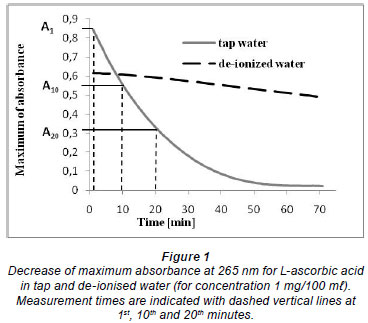
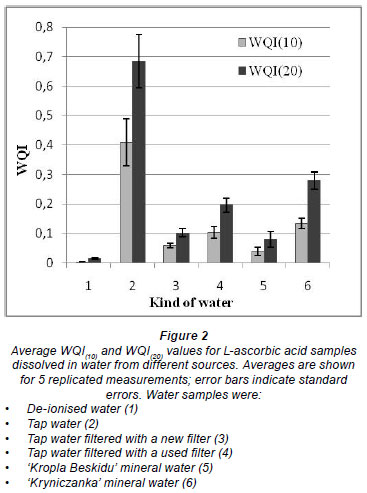
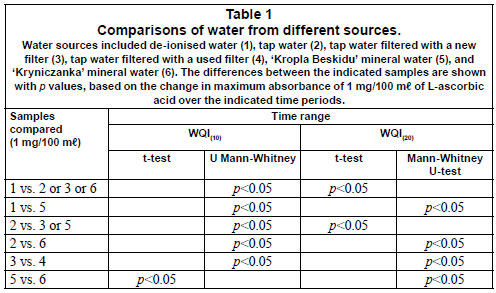
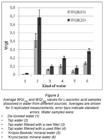
The aim of this study was to develop and test a novel screening method for determining water quality. We hypothesised that L-ascorbic acid would be a good indicator of water quality, due to its sensitivity to pollutants. We investigated the absorption spectra of L-ascorbic acid dissolved at different concentrations in water from different sources. We defined a water quality index (WQI) as the change in maximum L-ascorbic acid absorbance at 265 nm over two arbitrarily chosen time periods, i.e. between the 1st and 10th minutes and 1st and 20th minutes. We found that a high WQI value was significantly associated with low water quality, and vice versa. The proposed technique is a quick, simple and inexpensive method for obtaining a preliminary estimate of water quality.
water quality; L ascorbic acid; spectrophotometric method
 Thumbnail
 Thumbnail