Membrane fouling in thermophilic aerobic membrane distillation bioreactor treating hospital wastewater
Abstract
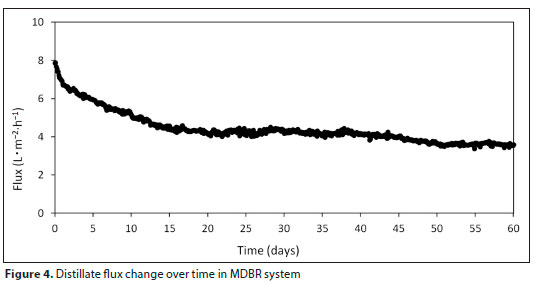
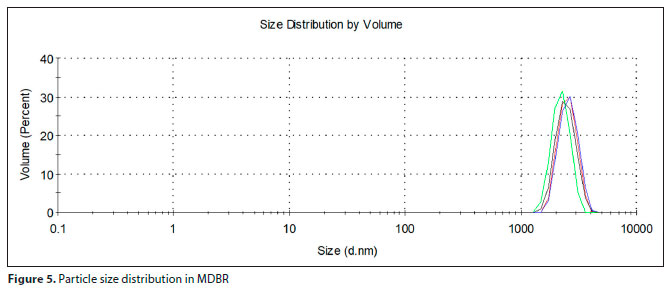
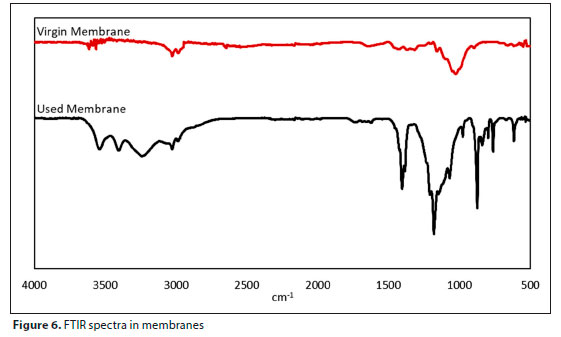
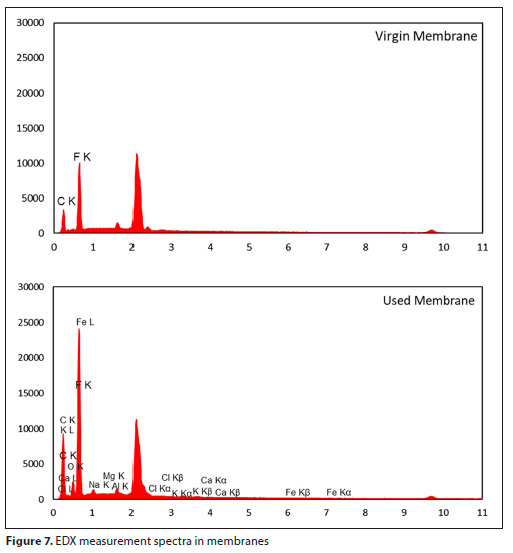
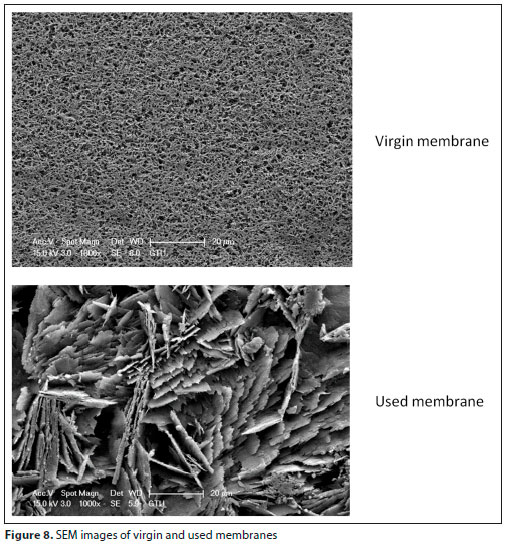
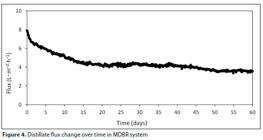
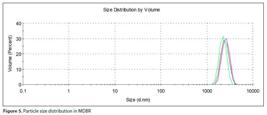
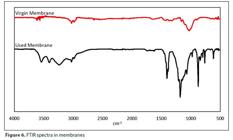
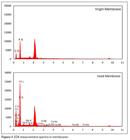
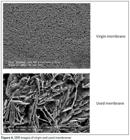
In the membrane distillation bioreactor (MDBR) process, flux increases with increasing feed temperature, but the presence of microorganisms limits the feed temperature. Also, the accumulation of cells and other substances on the membrane surface can affect the efficiency of MDBR. In this study, hospital wastewater was treated by thermophilic activated sludge MDBR. In the MDBR, the initial flux was 7.87 L-m-2-h-1 and the stable flux was 3.88 L-m-2-h-1. The particle size, zeta potential and hydrophobicity of the activated sludge in MDBR were 2.25 urn, -14 mV and 24%, respectively. In addition, EPS (extracellular polymeric substances) and SMP (soluble microbial products), having a significant effect on membrane fouling, were determined to be 201.50 mg-L-1 and 669.35 mg-L-1 in MDBR, respectively. Contact angle, FTIR (Fourier transform infrared), SEM (scanning electron microscope) and EDX (energy dispersive X-ray spectroscopy) measurements were also made on a virgin membrane and used membrane. Analysis of EDX, SEM and F-TIR showed that the membrane fouling was caused by CaCO3 and EPS.
membrane distillation; bioreactor; membrane fouling; SEM; FTIR; EDX
 Thumbnail
 Thumbnail
 Thumbnail
 Thumbnail
 Thumbnail
 Thumbnail
 Thumbnail
 Thumbnail