Standardisation of alien invasive Australian redclaw crayfish Cherax quadricarinatus sampling gear in Africa
Abstract
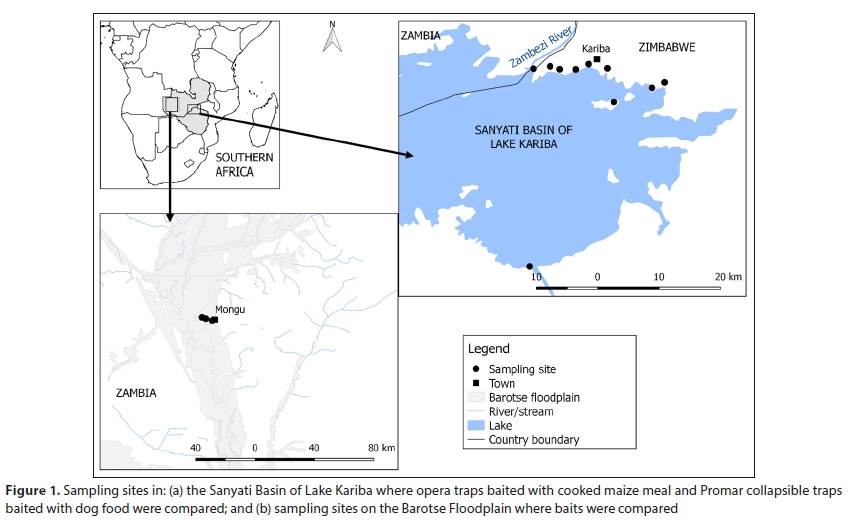
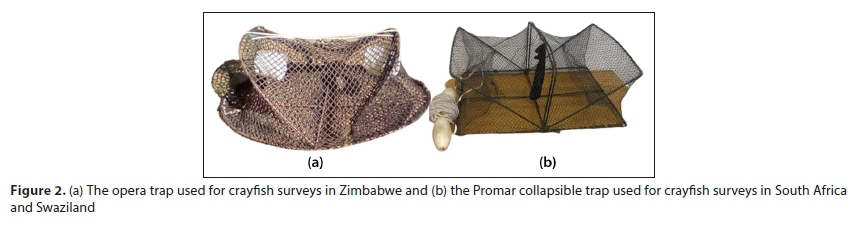
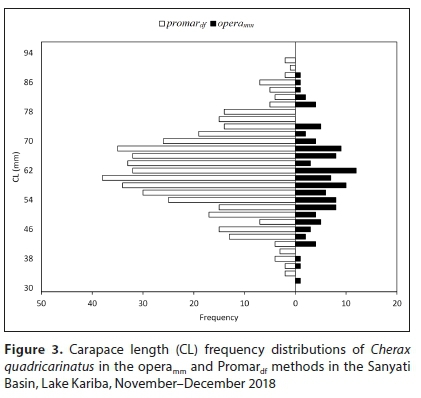
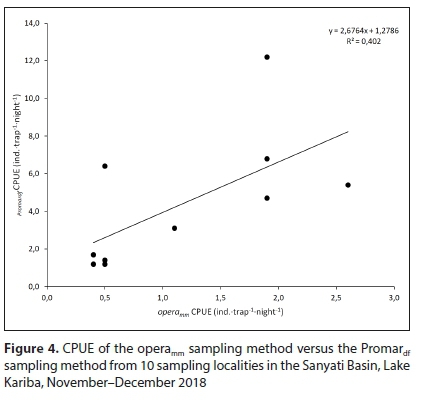
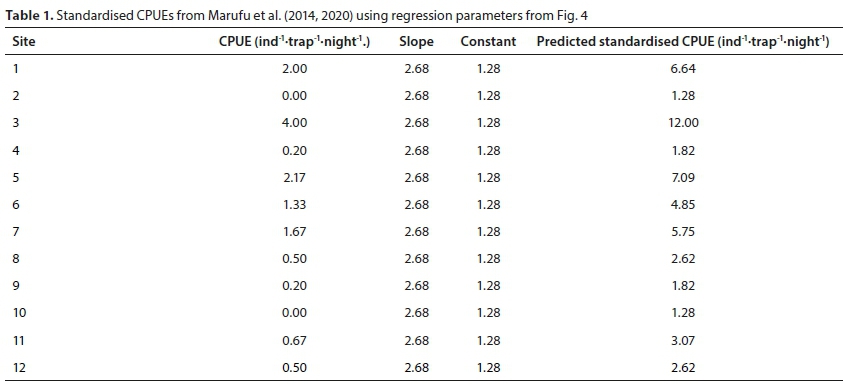
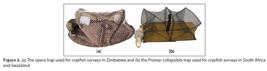
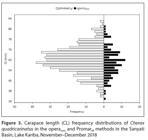
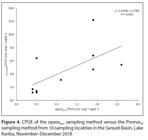
Freshwater crayfish are damaging invaders across southern Africa; however, monitoring techniques and efforts are disparate across the region as different sampling methods have been used. To develop a standard method for assessing redclaw crayfish Cherax quadricarinatus abundance, a survey was conducted to assess for differences in detection and catch per unit effort (CPUE) in Lake Kariba. Two sampling approaches were compared: opera traps baited with cooked maize meal historically used in crayfish surveys in Zimbabwe, and Promar collapsible traps baited with dry dog food, which have been used for assessments in South Africa and Swaziland. Baits were compared in the Barotse Floodplain in Zambia using the Promar trap. Detection probability (Pcapture) and CPUE were significantly lower for opera traps baited with cooked maize meal (Pcapture = 0.41; CPUE = 1.19 ± 0.24 ind.•trap -1•night -1) compared to the Promar traps baited with dry dog food (Pcapture = 0.67; CPUE = 4.53 ± 0.82 ind•trap -1•night -1). The Pcapture and CPUE for Promar traps baited with dog food (Pcapture = 0.89; CPUE = 4.29 ± 0.83 ind•trap-1•night -1) was significantly higher than for maize meal baited traps (Pcapture = 0.29; CPUE = 0.25 ± 0.17 ind•trap -1•night -1). Sex ratio and carapace length of crayfish sampled did not differ between sampling methods. Due to higher CPUE, the authors consider the Promar collapsible trap baited with dog food approach as the better method for determining crayfish population abundance and suggest that comparisons of abundance take this into consideration by applying conversion factors if different methods are applied.
Barotse Floodplain; crayfish; freshwater; Lake Kariba; opera trap; Promar trap; bait type
 Thumbnail
 Thumbnail
 Thumbnail
 Thumbnail